
Asian
J. Arts
Cult. 2026;
26(3): 101
A Cross-Cultural Comparative Study of the Dai Peacock Dance in China and the Kinnara/Kinnari Image in South and Southeast Asia
Bai Hui
Music and Dance Studies, Krirk University, Bangkok 10110, Thailand
(*Corresponding author’s e-mail: 154819299@qq.com)
Received: 21 August 2025, Revised: 1 December 2025, Accepted: 18 December 2025, Published: 19 December 2025
Abstract
Based on the anthropological cultural circle theory, this study systematically sorts out the core characteristics of Kinnara/Kinnari in the Theravada Buddhism cultural circle of South and Southeast Asia, as well as their localized evolution path after being introduced to the Dai-inhabited areas of Yunnan, China. Adopting the literature research method, field investigation method, and comparative research method, this study first verifies the cross-regional unity of the Kinnara/Kinnari cultural circle, then analyzes the dual-track localization logic of the “Kinnara Dance” and “Peacock Dance” in the Dai-inhabited areas of China, and finally distinguishes the similarities and differences between the two and the core elements of the Kinnara/Kinnari cultural circle from the dimensions of mythological connotations, artistic forms, and cultural functions. The research results indicate that cultural identity is not a static and fixed entity but a dynamically constructed product in the process of cross-cultural interaction. By transforming and adapting elements of the cultural circle, the Dai people have shaped a unique artistic identity in the dialogue between South and Southeast Asian cultures and local characteristics. This study provides a theoretical basis and practical reference for the protection of cross-border cultural heritage and artistic mutual learning in the context of globalization.
Keywords: Kinnara/Kinnari, Chinese Dai Peacock Dance, Theravada Buddhism, Cross-cultural comparison, South East Asia
Introduction
Scholars in the fields of art and anthropology have discussed the Kinnara/Kinnari culture in South and Southeast Asia, which serves as a semi-divine artistic symbol spreading across regions. Existing studies have clearly established that Kinnara (male) and Kinnari (female), as semi-divine celestial beings endowed with exceptional singing and dancing talents, exist extensively in Hindu and Buddhist myths. In mythology, Kinnara is usually depicted as a composite creature that is half-human and half-bird or half-human and half-horse, while Kinnari often takes the form of a half-woman and half-bird. In the Hindu context, they are a type of Gandharvas, performing songs and dances, playing music, and offering flowers in the temples of Kubera or Shiva, and are renowned for their outstanding musical and dancing abilities. After entering Buddhist legends, both are classified as “lower-ranking deities,” with their duties transformed into serving the Buddha and Bodhisattvas and playing music for the gods (Akhil & Nayar, 2022). They are also regarded as symbols of loyal love, inhabiting the Himalayan region and descending to protect humans when they face difficulties. This adaptive adjustment of their religious attributes laid the foundation for their cross-regional spread, enabling them to break through the framework of a single religion and integrate into different cultural contexts. In addition, the images of Kinnara and Kinnari are widely prevalent in South Asian art. They can be found in the reliefs of Bharhut, Sanchi, and Mathura, as well as in the murals of the Ajanta Caves, often appearing in the half-human and half-bird form (Sharma, 2015). With the spread of Buddhism, the concepts and images of the two further diffused to mainland Southeast Asia, including Myanmar, Thailand, Laos, Cambodia, Vietnam, and the Dai-inhabited areas in Yunnan, China. They frequently appear in temple sculptures, murals, and ornaments in these regions, showing diverse localized characteristics due to regional cultural differences. Myanmar regards them as kind guardian deities, often depicting them in murals. In Thailand, Kinnari is sometimes portrayed as a half-human and half-swan figure and becomes the protagonist in folk stories and dances (such as the Nora or Manora dance dramas) (Akhil & Nayar, 2022). In the Dai-inhabited areas of Yunnan, China, which are deeply influenced by Theravada Buddhism, traditional singing and dancing are deeply integrated with religious beliefs. For example, in the ancient murals and carvings of Dai Buddhist temples, the Kinnara image with a human face and a bird body is believed to be an early posture of the Peacock Dance, suggesting that there may be a historical origin between the Peacock Dance and Kinnara/Kinnari. This also provides physical clues for cross-cultural comparative studies.
However, current academic research on the relationship between Kinnara/Kinnari and the Peacock Dance has limitations, failing to form a systematic exploration of cross-cultural connections. This is mainly reflected in the following aspects:
First, in the field of Kinnara/Kinnari research, scholars from South and Southeast Asia have mostly focused on their mythological origins and the expression in plastic arts, with relatively few studies on the dance forms of Kinnara/Kinnari. Centering on Hindu and Buddhist classics, they have clarified their sacred functions and symbolic systems, defining their “half-human, half-horse” or “half-human, half-bird” forms as well as their roles as celestial musicians, attendants of the Buddha, and protectors of humans (Akhil & Nayar, 2022). Art history studies have paid great attention to morphological variations in different regions, such as the “human-headed, bird-bodied Kinnara holding offerings to worship the Buddha in the Sanchi Stupa and Bharhut reliefs in ancient India before the 8th century; the “couple combinations” in the Ajanta Caves that are deeply tied to music and dance; and the “bird-bodied, human-shaped” images in Southeast Asia, which serve as narrative elements or decorations in the murals of Myanmar’s Ananda Temple, the stucco sculptures in Thailand’s Nakhon Pathom, and the carvings of Cambodia’s Angkor Wat.Chinese scholars’ research has focused on Kinnara/Kinnari relics in southwest China and the Dunhuang region, showing the characteristics of “image studies dominating, music and dance studies being fragmented, and research related to Kinnara being scarce.” In the CNKI database, only 13 papers are retrieved using Kinnara as the keyword, among which 6 are image analyses, and only 3 involve music and dance, mostly with descriptions of partial phenomena. Among these 3, 2 focus on the form and inheritance protection of the Dai Kinnara, and 1 concerns the Kinnara dance of the Tai Lü people in northern Thailand, failing to form a systematic research framework.
Second, in the field of research on the Peacock Dance, most studies focus on isolated descriptions of single regions, with insufficient exploration of its connections with the Kinnara/Kinnari of South and Southeast Asia. Although it has become a hotspot in Chinese dance academia due to its prominent cultural value—with over a hundred academic articles discussing folk and stage peacock dances in the CNKI database, and related topics analyzed in printed books—the core research limitation lies in tracing the origin of the “divine bird” motif. Existing achievements mainly revolve around the origin, development context, stylistic characteristics, and inheritance protection of the Peacock Dance, such as analyzing the connection between the Dai ancestors and peacocks, the influence of Buddhist culture, and the evolution from folk to stage performances. Only three scholars—Yang (2014), Zhu (2018), and Shen (2022)—have, based on their mastery of materials and field observations, expressed views on the appellation, changes, and social background of the folk Peacock Dance.From an ethnological perspective, they traced the specific origin of the “divine bird” motif, but their analysis remains confined to the context of local culture, lacking direct discussion on its connections with the divine bird images of South and Southeast Asia. Peng Li (2024) conducted fieldwork on the Kinnara dance of the Tai Lü people in northern Thailand and provided a detailed description of its performance forms, yet failed to conduct a comparative study with the Peacock Dance in China, missing the opportunity to reveal their potential connections.
Third, in terms of cross-cultural correlation research, current achievements are even scarcer. Only a few studies have indirectly mentioned the possibility of cultural transmission. For instance, Akhil and Nayar (2022) sorted out the sacred attributes of Kinnara/Kinnari in Hindu and Buddhist myths, the characteristics of their composite images in Southeast Asian art, and their manifestations in temple sculptures and murals, and mentioned the localized adaptation of their artistic images, but did not involve the Dai-inhabited areas in China. Although Chinese academic circles have noticed the particularity of the “divine bird” motif in the Peacock Dance, there are few studies that connect it with the “divine bird” attribute of Kinnara/Kinnari. Existing literature has neither systematically compared the connections and differences between the two in terms of image evolution and functional transformation, nor explored the influence of Kinnara/Kinnari culture on the formation of the Peacock Dance.
The aforementioned research limitations provide an important opportunity for the conduct of this study. In the context of the Belt and Road Initiative, research on cross-border cultural heritage has continued to deepen. Clarifying the cultural connections between Southwest China and South and Southeast Asia, and revealing the diverse paths of the localization of foreign cultures, have become practical needs in academic research. As an important cultural symbol linking South Asia, Southeast Asia, and the Dai-inhabited areas of China, Kinnara/Kinnari offers a focal point for exploring cross-cultural correlations with the Peacock Dance. This study attempts to supplement new perspectives for research in this field and provide some empirical references for deepening the understanding of cross-border cultural heritage.
Objective
Framed by the cultural circle theory, this study focuses on the connections between the Kinnara/Kinnari culture of South and Southeast Asia and the Peacock Dance of the Dai ethnic group in China, aiming to achieve the following core objectives:
First, systematically sort out the core characteristics of the Kinnara/Kinnari culture in South and Southeast Asia in terms of mythological connotations, artistic representations, and dance forms, verify its cross-regional unity as a shared symbol in the Theravada Buddhism cultural circle, and clarify the cultural foundation for its cross-regional dissemination.
Second, conduct an in-depth analysis of the localized evolution path of the Kinnara/Kinnari culture after it was introduced to the Dai-inhabited areas in Yunnan, China, and clarify the underlying drivers for its differentiation into two forms—” primordial preservation type” (e.g., the Kinnara Dance in Gengma, Menglian and other areas) and “creative transformation type” (e.g., the Peacock Dance in Ruili and Mangshi of Dehong)—due to differences in geographical environment and social context.
Third, from three dimensions—inheritance and variation of mythological connotations, reference and innovation of artistic forms, and evolution of cultural functions—systematically distinguish the similarities and differences between the original Kinnara/Kinnari culture and the Dai Peacock Dance, reveal the essential connections between “cultural homology” and “differences in local transformation” behind them, supplement empirical cases for research on the localization of cross-cultural art, and provide a theoretical basis for the protection of cross-border cultural heritage and cultural mutual learning under the context of the Belt and Road Initiative.
Method
This study takes the Kinnara/Kinnari culture and the Peacock Dance as its research objects, aiming to explore their cultural connections, similarities and differences in forms, and elaborate on the localized development process of the Kinnara/Kinnari culture in China. This study will adopt a comprehensive research approach that combines the “literature research method”, “field investigation method” and “comparative research method”.
Literature review method
This study centers on the “cultural context of Kinnara/Kinnari and the “development trajectory of the Peacock Dance” to build a multidisciplinary and cross-regional literature analysis system. In terms of Kinnara/Kinnari literature, three types of materials are focused on:
First, mythological and religious classics such as the Mahabharata and Treatise on the Great Perfection +of Wisdom, as well as Jataka tales, from which core characteristics such as the “half-human, half-animal form” and “function as celestial musicians” are extracted; Second, archaeological reports and art history papers from South and Southeast Asia, to sort out the laws of image evolution; Third, literature on the eastward spread of Buddhism and cultural exchanges among ethnic groups in Southwest China, providing a background for exploring transmission connections.
In terms of literature on the Peacock Dance, four types of materials are focused on:
First, local historical and ethnographic materials, to unearth written records of the early forms of the Kinnara; Second, monographs on the Peacock Dance, papers on its morphological evolution, and intangible cultural heritage materials, to clarify the use of props and the transformation of its function from “entertaining the Buddha” to “entertaining humans”;Third, works on the spread of Theravada Buddhism and Buddhist temple regulations, to analyze the influence of Buddhism on the “Kinnara” imagery; Fourth, scattered discussions on the connection between Southeast Asian Kinnara/Kinnari culture and ethnic dances in Southwest China, to identify directions for supplementary research.
Field investigation method
Focusing on the core distribution areas of the Peacock Dance in Dehong and the Dai Kinnara dance in Gengma, Yunnan, this study adopts a strategy of “fixed-point in-depth investigation and regional comparison” to ensure the representativeness and richness of the data.
The research will conduct in-depth investigations in Dai-inhabited areas such as Ruili and Gengma, where researchers will observe immersive performances by intangible cultural heritage inheritors of the two dance forms, participate in traditional activities, and directly perceive the aesthetic characteristics and unique qualities of the dances. Meanwhile, it will sort out data such as the number of practitioners and the lineage of masters and disciples.
During the investigation, in-depth interviews will be conducted with key inheritors and folk artists, including Yue Xiang, Wang La, Hansi, Shang Maoxiang, and Wang Feng. Oral historical materials, performance videos, and teaching recordings will be collected to explore the forms, cultural connotations, and inheritance models of the two dances from the perspective of the inheritors.
Comparative research method
The Kinnara/Kinnari dances in Southeast Asia and the Peacock Dance of the Dai ethnic group in China share the same cultural origin in the ancient Indian divine bird belief system. Both take “divine bird worship” and “musical and dance expression” as their core genes, and have forged cross-regional cultural connections with the spread of Theravada Buddhism (Southern Transmission). However, during the long-term historical evolution, influenced by the religious contexts, social environments, and aesthetic systems of different regions, the two have gradually diverged, forming dance forms with both homology and differences. To systematically clarify the cultural connections and essential differences between them, this study will conduct an in-depth comparative analysis from the dimensions of mythological connotations, artistic forms, cultural functions, and localized creation.
Finding
Mythological origin and artistic representation of Kinnara/Kinnari in south and southeast Asia
To understand the logic behind the artistic representation of Kinnara/Kinnari in South and Southeast Asia, it is necessary to first trace their mythological roots. As a semi-divine symbol permeating the cultures of both regions, the artistic expressions of Kinnara/Kinnari have always revolved around the core attributes endowed by mythology. Therefore, we start with their mythological origins, sorting out the context of their genesis and symbolic connotations, so as to lay a theoretical foundation for the subsequent analysis of their artistic forms.
Mythological origins and core symbols of Kinnara/Kinnari
The mythological images of Kinnara/Kinnari are not fixed in a single form; instead, they have developed distinct characteristics as the contexts of Hinduism and Buddhism evolved. Their core symbols also embody diverse connotations through the interweaving of “divine functions” and “humanistic meanings”, with relevant records mutually corroborated by religious scriptures and cultural relics.Kinnara/Kinnari first appeared in epic literatures such as the Mahābhārata and Rāmāyaṇa, with their most prominent feature being “compositeness”: they are described both as “half-human and half-horse” (e.g., the form of “horse-headed with human body, holding musical instruments” recorded in the Mahābhārata) and “half-human and half-bird” (human-headed with bird body, covered in feathers). Both forms are defined as “celestial semi-divine beings, “whose main function is to serve as court musicians for Kubera and Shiva, entertaining the gods with singing and dancing (Sharma, 2015). The symbolic meaning at this stage focuses on “sacred craftsmanship”. The singing and dancing of Kinnara/Kinnari are regarded as “the embodiment of celestial rhythm”, symbolizing both “the harmony of cosmic order” and due to records of them “staying together for life and never leaving”, deriving the humanistic meaning of “faithful love”. The Indian epic Rāmāyaṇa describes Kinnaras immersed in love, rejoicing with their wives, making them a symbol of monogamous love in Hinduism (Nayar & Akhil, 2022).
With the spread of Buddhist culture, the mythological images and symbolic meanings of Kinnara/Kinnari underwent adaptive adjustments, gradually integrating into the Buddhist narrative system. In Pali Buddhist classics such as the Mahāsāṃghika Vinaya and Jātaka Tales, their “half-human, half-bird” form became dominant, while the “half-human, half-horse” feature gradually faded. Their function shifted from “serving Hindu deities” to “guarding the Buddha and Buddhist Dharma”. In Buddhist mythology, Kinnara and Kinnari are classified as “lower-ranking deities”, whose duties are to serve the Buddha and Bodhisattvas. They are sacred artists who play music for the gods in the celestial realm and reside on the “Ten Jewel Mountain”. At this stage, their symbolic meanings retained the connotation of “faithful love” while adding new layers of “sacred protection” and “guidance of good intentions”. The differences in mythological images and symbolic meanings essentially reflect the adaptive adjustments of Kinnara/Kinnari culture along with religious dissemination: in the Hindu context, emphasis is placed on “interaction with deities”, highlighting their “divine craftsmanship” and “humanistic emotions”; in the Buddhist context, focus shifts to “connection with Buddhist Dharma”,emphasizing their “protective function” and “moral guidance”.These two contexts together established the core symbolic status of Kinnara/Kinnari in the cultural circles of South and Southeast Asia, and also provided a mythological basis for the creation of subsequent artistic forms (images, dances).
Interpretation of iconographic relics of Kinnara/Kinnari in South and Southeast Asian art
In the context of Indian and Southeast Asian art, the composite images of Kinnara/Kinnari exhibit rich diversity, yet their core forms are mainly categorized into two types: one is the half-human, half-bird form, and the other is the half-human, half-horse form. Moreover, different regions have developed distinctive artistic expressions based on their religious cultures and aesthe.
Human-Bird Form: This is the most common representation of Kinnara/Kinnari in artistic creations, particularly dominant in Buddhist art. Its typical features are “a human upper body with avian characteristics in the lower body.” It retains the human torso, arms, and head while incorporating avian elements such as feathers, wings, and clawed feet.For example, In the relief carvings of the Bharhut Stupa in India (Figure 1), Kinnaras/Kinnaris mostly appear in a form “with wings and bird-like clawed feet,” vividly embodying their role as “celestial attendants of music and dance” within the Buddhist context.Kinnaras frequently depicted in Myanmar temple murals are most distinctively characterized by their “half-human and half-bird form with wings” , emphasizing the visual symbolic meaning of “sacred protection.”(Figure 2).In Thai art, Kinnara/Kinnari are widely found across murals, framed paintings, decorative door panels, ceramics, and window grilles. Among them, Kinnari (female) has higher cultural recognition, often depicted as “a princess with a human upper body and a bird lower body.” Compared to other Southeast Asian countries, the wing decorations of Kinnara in Thai plastic arts are relatively simple (Figure 3-4), while paintings emphasize the elaborate nature of tail decorations. Their images mostly serve as decorative elements rather than roles in specific narratives.
Ancient temple murals and carvings in China’s Dai-inhabited areas also retain numerous relics of Kinnara/Kinnari dance forms. For instance, the Kinnari in the gold-leaf stenciled murals of Mantingxing Buddhist Temple in Xishuangbanna (Figure 5) features a “human-faced, bird-bodied”. Adorned with headdresses symbolizing stupas, it gestures with “flower-holding fingers” (thumb and index finger joined, the other three fingers spread like a crown), carrying profound religious implications. Its body adopts a “three-curved” posture, with wings outstretched behind, a long tail trailing below, hips slightly twisted, and feet in an avian form (one foot supporting, the other bent), echoing the “three curves” of the arm movements. This posture bears a striking resemblance to the existing Peacock Dance, suggesting a cultural connection between the two.
The form of Kinnara/Kinnari in Cambodian culture is largely consistent with that in most Southeast Asian countries. Carvings in the 12th-century Angkor Wat temple (Figure 6) preserve the image of Kinnara “holding a flower garland”, reflecting the functional attribute of “offering homage to the Buddha”. In Indonesia, the term Kinnara aligns with its usage in the Indian cultural context, and their image relics are widely distributed across multiple temples, including Kalasan, Sewu, Sari, Borobudur, Mendut, Pawon, and Prambanan. Their images mainly fall into two categories (Figure 7-8): one is a composite form of “human upper body and bird lower body,” and the other features “a human head replacing a bird’s head.” Unlike other Southeast Asian countries, Indonesian Kinnara images are not confined to a single religious setting, appearing in both Hindu and Buddhist temples, reflecting the integration of religious cultures.
The half-man, half-horse form is also mentioned in Hindu texts and early art, and can be further subdivided into two categories: horse-headed with a human body and human-headed with a horse body (Figure 9-10). Although the half-human, half-bird image is more prevalent in visual art, texts such as the Citrasūtra (Treatise on Painting) provide detailed descriptions of the half-man, half-horse Kinnara, specifying that horse-faced Kinnara should wear jewelry, hold musical instruments, and display a radiant posture. Some Sanskrit dictionaries, such as the Amarakośa, explicitly record Kinnara as humanoid creatures with horse heads.
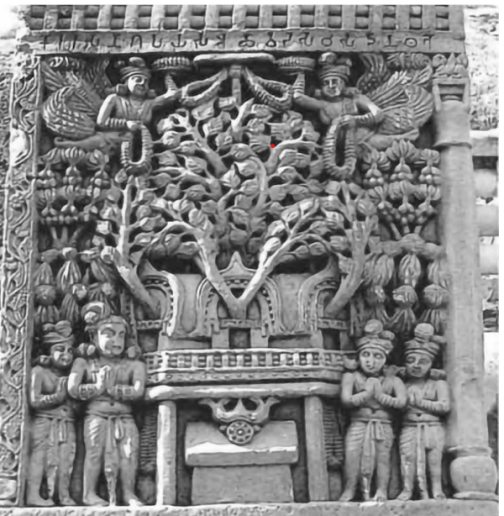
Figure 1 Relief of a Musical Ensemble in the First Panel on the Right Column of the East Gate of the Bharhut Stupa (featuring 2 female dancers and 4 musicians)
Source: Yang (2012)
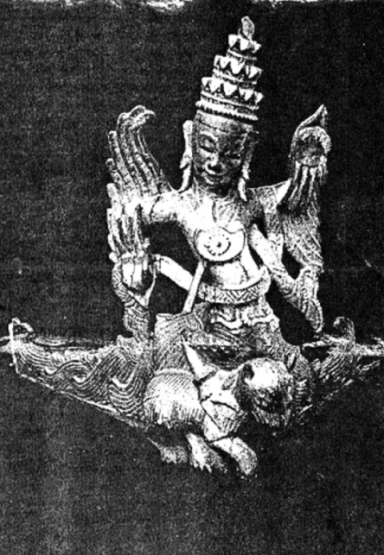
Figure 2 Image of Kinnara depicted on an 18th-century wooden carving from Myanmar
Source: Akhil and Nayar (2022)
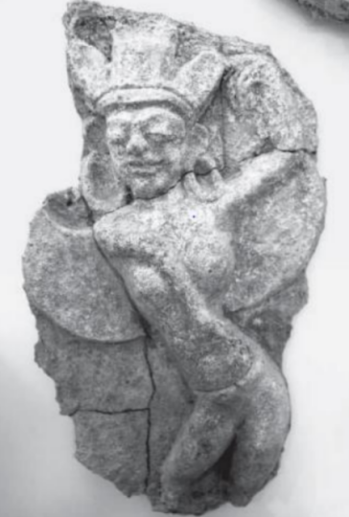
Figure 3 11th-century CE Thai Kinnari Dancer, Relief Sculpture
Source: Akhil and Nayar (2022)
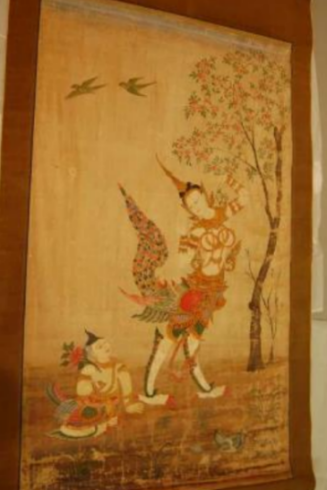
Figure 4 Kinnari, paper painting of early 20th century CE.
Source: Akhil and Nayar (2022)
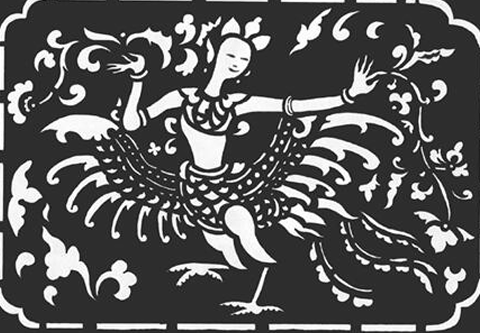
Figure 5 The Kinnari in the gold-leaf stenciled murals of Mantingxing Buddhist Temple of the Dai people in Xishuangbanna, China.
Source: Shi (2011)
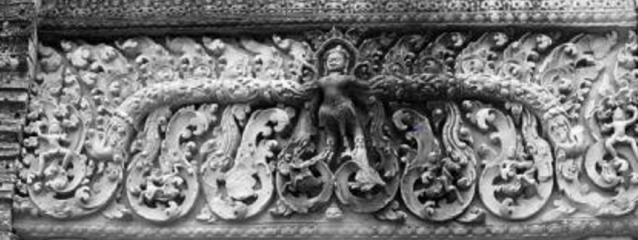
Figure 6 The Kinnara with hybrid garland, Angkor Wat temple, Cambodia, 12th.
Source: Akhil and Nayar (2022)
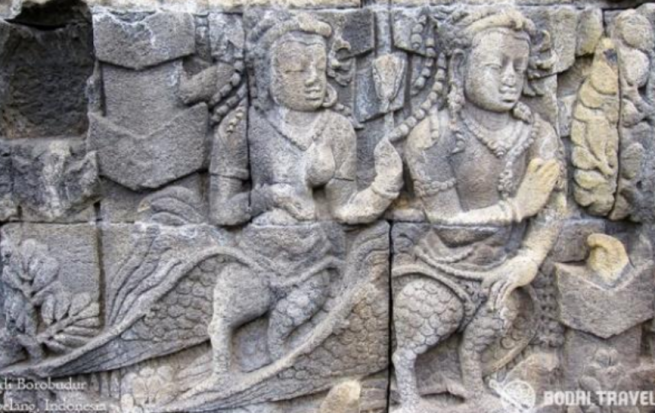
Figure 7 Kinnara/Kinnari, Apsara, and Devata guarding Kalpataru, 8th century CE, Pawon temple, Java, Indonesia.
Source: Akhil and Nayar (2022)
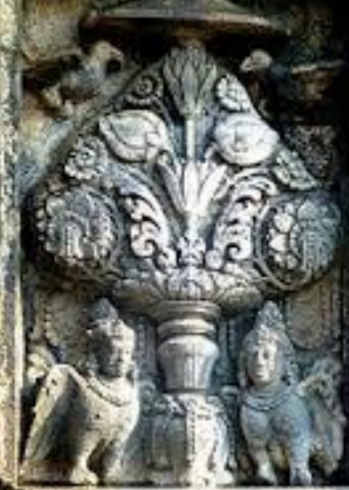
Figure 8 Kinnara on the wall of Prambanan Hindu temple, Java Island, Indonesia.
Source: Akhil and Nayar (2022)
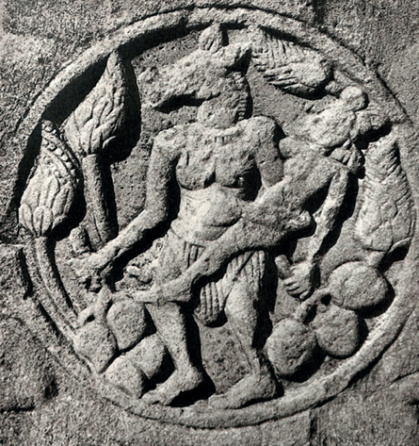
Figure 9 Aśvamukhi (horse-headed) kinnarī, Sanchi
Source: Kramrisch (1965)
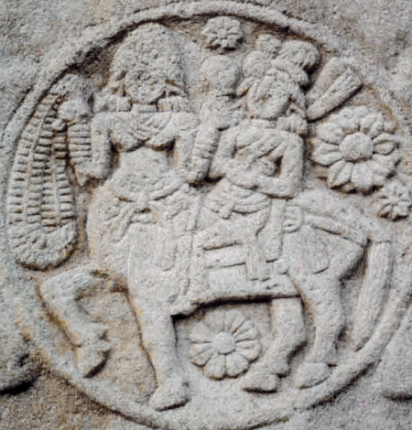
Figure 10 Kiṃpuruṣa (human-head, horse body), Sanchi.
Source: Lin and Chen (2011)
Analysis of representative dance forms of Kinnara/Kinnari in southeast Asia—taking Thailand and Myanmar as examples
The previous section has sorted out the artistic image characteristics of Kinnara/Kinnari in South and Southeast Asia. As a living representation of image symbols, dance is inherently connected with elements such as the “half-human, half-bird form” and “religious props” in the images. The Kinnara/Kinnari dances in Thailand and Myanmar are particularly representative among Southeast Asian countries. The following will take these two countries as examples to interpret the characteristics of their dance forms.
1.Kinnara/Kinnari dance in Thailand
Thailand’s Thai-Yai bird dance is a Kinnara/Kinnari dance of the Shan people, serving as a cultural symbol that carries the Shan people’s spiritual beliefs, customs, and aesthetic consciousness. Its dance characteristics exhibit distinct ethnicity and religiousity across multiple dimensions. In terms of movement forms, the dance centers on the “three-curved” posture, creating graceful curves through the frontward and lateral undulations of the hands, feet, and body. It also incorporates numerous bird-like imitative movements, such as walking, spreading wings, playing in water, jumping, preening feathers, fluttering wings, and the mutual display of affection between Kinnara/Kinnari—consistent with the mythological portrayal of Kinnara/Kinnari as paragons of love and loyalty.
The footwork of the Kinnara dance draws on the “foreheel tapping” and “head-tilting with cheek-circling” postures from Thai dance, as well as elements from Myanmar dance. Due to restrictions on lower limb movement imposed by props, the dance emphasizes prop manipulation. Solo performances feature sequences such as opening obeisance to the Buddha, multi-directional hand-pushing turns, and twisted-body arm-spreading movements, following a structured dance routine. Duet performances add interactions like circling between performers and coordinated stage position exchanges. Throughout the dance, gestures such as “hands pressed together in salutation” and “lotus hands” appear, highlighting the charm of Theravada Buddhism’s “dancing for the Buddha” (Peng, 2024).
In terms of costumes and props, the props are mainly made of bamboo, consisting of three parts: wings, tail, and body frame. The frames of the wings and tail are covered with lace or Thai silk, decorated with colorful beads and sequins. Traditionally, these parts were separate, but now they are mostly integrated into one piece and connected to the wrists with ropes for easier manipulation. Early masks and bird-head decorations are no longer popular, and are now mostly replaced by bright headscarves. The body costumes are divided into two types: the general style includes loose shorts paired with long-sleeved tops, adorned with lace and jewelry, resembling the shape of a butterfly; the Tai Lü people in northern Thailand, however, wear Lanna-style shirts, tube skirts, and tie a pha sabei scarf. Additionally, the costumes and props need to be remade every year.
In terms of folk taboos, a teacher-worshipping ceremony must be held before the performance, involving bowing to the teacher, costumes, props, and musical instruments. When buying, selling, or borrowing relevant costumes and musical instruments, one must offer popcorn and fresh flowers, and it is forbidden to step over the costumes, musical instruments, or props. Dancers can only perform upon receiving a formal invitation; performances are prohibited at weddings and funerals. Seven days before the start of the Rains Retreat (Vassa), selected performers must go to the temple to receive precepts. Once performers put on the costumes, which symbolize sacred spirits, they must not take them off casually. To enter a temple, they must wait for an invitation from the abbot and will be presented with popcorn and flowers.
Performance times are concentrated on days such as the end of the Rains Retreat, the rice harvest festival, the ordination days of monks or novices, as well as festivals like Songkran (Water Festival), the Opening Festival, and the Closing Festival. Performance venues mainly include temples, village centers, and Tai Lü cultural heritage institutes in various villages. Regarding the selection of performers, traditionally, they were required to be males aged 15 and above from the village, and either only children or the youngest in their families. Fifty to sixty years ago, women were not allowed to participate, but now women can join the performances (Peng, 2024).
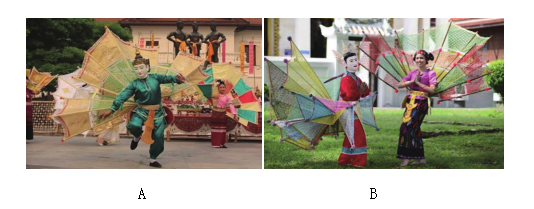
Figure 8 A is Sangkhom, Thailand’s national-level Kinnara master; B is a in a Thai folk duet performance.
Source: Peng, (2024)
In Myanmar, the male is called Keinn-ra and the female Keinn-ri. They are regarded as kind guardian deities, and their images often appear in temple murals. The Keinn-ra dance in central Myanmar has a long history. According to scholars’ research, during the Konbaung Dynasty, the Keinn-ra dance already used pulleys on stage to depict the movement of flying in the sky. On stage, Keinn-ra is represented mainly by a bird-head hat, golden wings on the arms, and sparkling pearls and treasures adorning the entire body, all of which highlight the noble image of the divine bird. They often appear in pairs, performing the free and unrestrained life of divine birds soaring in nature. The Keinn-ra dance has been passed down from ancient times to the present, spreading across the entire Myanmar and being loved by all ethnic groups (Zhu, 2001).
The dance movements imitate the free postures of birds in nature, such as the peacock’s trembling, wing-displaying, wing-spreading, wing-shaking, playing in water, drinking water, preening feathers while looking at their reflection, starting to run, pecking for food, playing, and even showing affection to each other. The dance posture emphasizes the graceful curve of the “three-curved” form. The hand movements are flexible and expressive, often adopting religiously symbolic gestures such as lotus hands, palm-shaped hands, peacock beak, peacock eye, and claw-shaped hands. Sometimes, the dance of the Shan people in Myanmar also incorporates the mythical beast “Doe” (a kind of deer) as a dancing companion.
The accompanying music is usually played by a live band, with core instruments including the “long elephant-foot drum,” “row of gongs,” and “large cymbals.” The band typically starts with the row of gongs, followed by the cymbals, and finally the elephant-foot drum. These three instruments cooperate with each other, not only highlighting the rhythmic characteristics of traditional Myanmar music but also precisely echoing the rhythm of the dancers’ movements. Together, they create a performance atmosphere that combines religious solemnity and natural agility, making the Keinn-ra dance a vivid epitome of Myanmar’s diverse culture and religious beliefs.
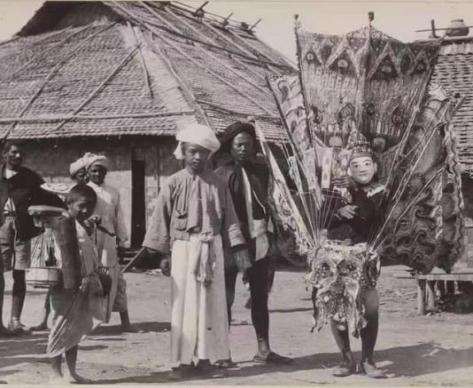
The localization path of Kinnara/Kinnari in the Dai-inhabited areas of Yunnan, China
The localization of Kinnara/Kinnari in the Dai-inhabited areas of China is essentially the overlapping interaction between the “Theravada Buddhism cultural circle” and the local “cultural strata”. According to the “Kulturkreis” (Cultural Circle/Strata) theory proposed by anthropologist Fritz Graebner, when a culture spreads to a new region, it overlaps with the existing local cultural strata (such as religious beliefs and aesthetic systems), thereby undergoing adaptive variations.
In the Dai-inhabited areas of China, the pre-existing “Theravada Buddhism cultural stratum” and “nature worship cultural stratum” perfectly align with the “Buddhist attribute” and “divine bird gene” of Kinnara/Kinnari culture. The former provides a local religious carrier for the “divine-serving function” of Kinnara/Kinnari, while the latter lays an aesthetic foundation for the localized transformation of their “bird-like elements”. It is precisely this overlap of cultural strata that ultimately gave rise to two localized forms: the “primitively preserved type” (Kinnara Dance) and the “creatively transformed type” (Peacock Dance).
The Kinnara Dance, popular in areas such as Menglian, Gengma, and Xishuangbanna, deeply inherits the core traits of Southeast Asian Kinnara/Kinnari in terms of form, function, and cultural connotation. It is a product of the “primitive localization” of Kinnara/Kinnari in China. In contrast, the Peacock Dance, which took shape in Ruili and Mangshi of Dehong, takes Kinnara/Kinnari culture as its implicit core. It integrates the Dai people’s natural aesthetic concepts, strips away religious symbols, and completes its formal reconstruction under a specific political context, making it a typical representative of the “creative localization” of Kinnara/Kinnari. Although these two dances exhibit significant differences in artistic characteristics and functions, they collectively form a complete panorama of the localization process of Kinnara/Kinnari culture in the southwest border areas of China. The following sections will conduct a detailed analysis of the localization features of each form.
The Dai “Peacock Dance”: A creatively localized form of Kinnara/Kinnari
The Peacock Dance, originating from Ruili and Mangshi in Dehong Dai and Jingpo Autonomous Prefecture, Yunnan Province, China, the Peacock Dance is a product of “innovative localization”—a result of the deep integration of Kinnara/Kinnari culture into the Dai aesthetic system and its reconstruction within specific social contexts. With Kinnara/Kinnari culture as its implicit gene, it has undergone “symbolic transformation,” “aesthetic adaptation,” and “functional restructuring,” ultimately evolving into an independent dance form distinct from the Kinnara/Kinnari dances of Southeast Asia. Endowed with distinct characteristics of the Dai ethnicity in China, it stands as a typical example of “adaptive innovation” in the localization process of Kinnara/Kinnari culture in China.
From the perspectives of historical context and symbolic transformation, the formation of the Dehong Peacock Dance stems from the fusion of the Kinnara/Kinnari “divine bird” symbol with the imagery of the peacock, while its identity reconstruction was driven by a specific political environment. Notably, however, there exists a significant “cognitive bias regarding origin and development” both in official recognition and folk dissemination. The Peacock Dance enjoys widespread popularity and, on May 20, 2006, was approved by the State Council of the People’s Republic of China for inclusion in the first batch of the National Intangible Cultural Heritage List, becoming the first Dai traditional dance officially recognized as a representative of the ethnicity. In contrast, the “Kinnara Dance”—its cultural source—remains known only to a small number of scholars researching Dai dance. Even the “Kinnara Dance” prevalent in Gengma County was not added to the fifth batch of the Yunnan Provincial Intangible Cultural Heritage Protection List by the People’s Government of Yunnan Province until 2022.
This phenomenon fully demonstrates that the Peacock Dance dominates in terms of official recognition and folk popularity, whereas the Kinnara Dance—its cultural origin—has long remained “on the margins of cognition.” This status quo of “knowing the derivative but not the origin” has hindered a comprehensive understanding of the complete localization context of Kinnara/Kinnari culture in the Dai-inhabited areas of China.
During the author’s fieldwork in Ruili, Wang La, a national-level inheritor of the Peacock Dance, recalled: “Before liberation, when performing the Divine Bird Dance, dancers had to wear bird-head masks and carry bamboo wings” (Wang La, interview, 2019). The special social environment of the 1950s-1970s (the “Cultural Revolution” period) became a key driving force for the finalization of the Peacock Dance form. The Kinnara/Kinnari dance (Divine Bird Dance) with obvious Buddhist symbols was regarded as “feudal superstition.” To adapt to the needs of the times, folk artists and literary workers began to strip away its religious symbols (removing bird-head masks, stupa-shaped hats, etc.), emphasize the secular symbol of “peacock”, and shift the dance theme from “entertaining the Buddha” to “celebrating labor” and “praising a new life.” During this period, it was not called Kinnara or even Peacock Dance, but Harvest Dance, with its function reconstructed as “showcasing the happy life of the Dai people.” In an interview with folk artist Qiao Ersuo in Mangshi on April 12, 2019, the author was told that the Peacock Dance was first introduced by a master from Myanmar, who then taught it to local Dai people. Its original name was “Jingala.” Since the Kinnara dance taught by Burmese artists was performed with bamboo peacock feathers, which greatly restricted bodily expressiveness, Mao Xiang, a Dai dancer from Ruili, made bold innovations: he pioneered the removal of the “bamboo wing” props, simulated peacock postures through bare-handed performances, and created Duet Peacock Dance, which won an award at the 1957 Moscow World Youth Festival. This further established the independent identity of the Peacock Dance, making it an “ethnic dance” that broke away from religious contexts and aligned with mainstream discourse.
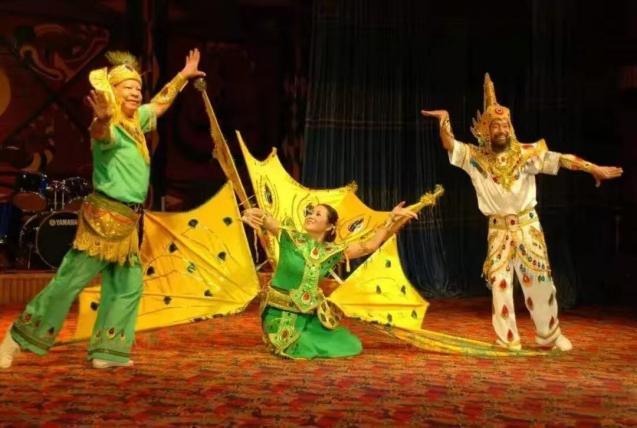
Figure 10 The dancer on the left is Wangla, a national-level inheritor of the Peacock Dance; the dancer in the middle is Hansi, a provincial-level inheritor of the Peacock Dance; and the dancer on the right is Yuexiang, a national-level inheritor of the Peacock Dance.
Source: Photographed by the author
The Dai people in Dehong, living along the banks of the Ruili River, inhabit a region with a humid climate and lush vegetation, where peacocks (especially green peacocks) were once common birds. The Dai ancestors, captivated by the peacock’s “gorgeous plumage and elegant posture,” gradually regarded it as a cultural symbol of “auspiciousness and kindness,” forming an aesthetic orientation of “valuing beauty in peacocks.” With the integration of Theravada Buddhism and local nature worship, the sacred attributes of Kinnara/Kinnari as “divine birds” gradually overlapped with the “auspicious imagery” of peacocks. For example, a folk legend of the Dai people in Ruili states that “when the Buddha descended, Kinnara transformed into peacocks and danced,” laying a cultural foundation for the symbolic transformation of Kinnara/Kinnari dance into the Peacock Dance.
In terms of the aesthetic modification of dance forms, although the Peacock Dance retains the core rhythm of Kinnara/Kinnari dance, it incorporates the Dai aesthetic trait of “softness with underlying strength,” achieving localized reconstruction of movements and costumes. In the movement system, the “three-curved” posture (curvature of the neck, waist, and hips) in Kinnara/Kinnari dance is refined in the Peacock Dance into “three curves of the arms,” “three curves of the body,” and “three curves of the legs.” For instance, the posture in Ruili’s Peacock Dance of “elbows bent with raised hands, waist slightly twisted, and one leg pointing sideways” not only inherits the core of “curvilinear beauty” from Kinnara/Kinnari dance but also simulates the agile qualities of peacocks “preening feathers,” “playing in water,” and “strolling in the forest” through typical movements such as “trembling shoulders” and “expressive eye movements,” aligning with the Dai’s aesthetic preference for “softness and delicacy”.
In addition, the stylized hand gestures in the Peacock Dance, such as the “crown-shaped hand”, “peacock-beak hand”, and “claw-shaped hand”, seem to be direct imitations of the peacock’s form, but in fact, they originate from the secular transformation of religious hand gestures in Kinnara/Kinnari dances, such as the “lotus hand” and “offering hand”. For instance, the “peacock-beak hand” gesture (with the thumb and index finger interlocked while the other three fingers stretched straight) evolved from the hand gesture for “holding a garland in service” in Kinnara/Kinnari dances; the only difference is that the implication of “religious offering” has been transformed into a bionic expression of “a peacock pecking at food”.
In terms of costumes and props, although the Peacock Dance has eliminated the religious props of Kinnara/Kinnari dances, it has retained the logic of “props assisting in form expression” and integrated traditional Dai craftsmanship: the “bamboo wings” used in early Kinnara/Kinnari dances evolved into the frame Peacock Dance in the Peacock Dance. The frame still uses bamboo as the raw material, but traditional Dai silk and colored beads have replaced the lace and sequins from Southeast Asia, and the decorative patterns have been changed from Buddhist symbols such as “lotus flowers and bodhi leaves” to “peacock feather patterns” and “geometric patterns”.
Before 1980 in China, women were not allowed to perform the Peacock Dance; it was exclusively performed by men. After the end of the Cultural Revolution, female dancers gradually began to perform it. In terms of traditional costumes for male performers: a traditional Dai men’s head wrap, one shoulder ornament, one waist ornament, a pair of wrist ornaments, a loose-fitting long-sleeved thin shirt with a turned-down collar and a front opening for the upper body, and loose straight-leg wide-leg pants for the lower body.
In terms of the reconstruction of cultural functions, although the Peacock Dance has broken away from the religious functions of Kinnara/Kinnari dances, it has inherited their core value as a “carrier of cultural identity” and been endowed with new contemporary significance and diverse functions. While Southeast Asian Kinnara/Kinnari dances mainly serve as “carriers of religious rituals,” the reconstructed Dehong Peacock Dance has gradually evolved into a multi-functional carrier integrating “religious functions, ethnic identity, and international communication.”
In religious scenarios, it still retains part of the connotation of “prayer.” For example, the Dai people in Ruili perform the Peacock Dance during the Opening Festival, symbolizing “welcoming the Buddha’s return”—a localized simplification of the Kinnara/Kinnari function of “serving the Buddha.” In secular contexts, it has become a symbol of the Dai people’s “ethnic identity.” For instance, in festivals such as the Water-Splashing Festival and the Harvest Festival, the performance of the Peacock Dance conveys meanings of “ethnic unity” and “a better life.” In the international context, it has stepped onto the world stage as a “cultural symbol of China’s Dai people.” A typical example is The Spirit of the Peacock choreographed by Yang Liping, which transforms the agility of Kinnara/Kinnari as “celestial musicians” into the artistic conception of “harmonious coexistence between humans and nature.” It not only preserves the core of Kinnara/Kinnari culture—the “divine beauty”—but also aligns with China’s contemporary narrative of “ecological civilization,” thus becoming an important medium for cross-cultural communication.This expansion of functions has enabled the Peacock Dance to transcend the single religious attribute of Kinnara/Kinnari dances, emerging as a fruit of “creative localization” that integrates the values of cultural inheritance, identity recognition, and international communication.
The Dai “Kinnara dance”: A primordially localized form of Kinnara/Kinnari
In the Dai-inhabited areas of Yunnan, China, such as Menglian, Gengma, and Xishuangbanna, the prevalent kinnara dance is a typical form of “primordial preservation” after the introduction of Kinnara/Kinnari culture. It maintains a high degree of homology with South and Southeast Asian Kinnara/Kinnari culture in terms of historical origins, dance forms, and cultural connotations.
In terms of historical origins, the formation of the Dai Kinnara Dance is deeply tied to the dissemination path of Theravada Buddhism, and documents clearly record its direct connection with Southeast Asian Kinnara/Kinnari. The existing Pali and Dai Na Buddhist classics in local temples in Mengding describe the “human-faced, bird-bodied” image of Kinnara, which is basically identical in name and characteristics to the Shan Divine Bird Dance introduced in Burmese books of the 1950s (Zhu, 2018).
The ancient murals in Guangyun Burmese Temple in Cangyuan preserve numerous images of Kinnara/Kinnari, featuring wings growing from the waist, flowers in their hands, and body movements as if dancing with flowers and stepping on rhythm. These images echo the cross-regional visual symbols and religious meanings of the Kinnara in the murals of Myanmar’s Payathun zu Temple (with wings on the back, spreading wings to dance) and the Kinnara carvings in Cambodia’s Angkor Wat (wearing flower garlands). This “iconographic homology” confirms that the Kinnara Dance Dance is not an indigenous Dai dance but a product of “primordial localization” of Kinnara/Kinnari culture in local temple art and folk rituals after its eastward spread along with Buddhism.
In terms of dance form, the Dai Kinnara Dance deeply inherits the core essence of Southeast Asian Kinnara/Kinnari dances, from props and movements to performance scenarios. In the use of props, flexible bamboo strips are used as the frame, which is covered with colored cloth and decorated with colorful beads and sequins. In some regions, early bird-head masks and “ban gong” (tower-shaped pointed hats) are still retained. The production process is completely consistent with the prop logic of the Kinnara dances of the Shan people in Myanmar and the Thai people in Thailand. All of them use natural materials such as bamboo, cloth, and clay, and the techniques of hand-sewing and weaving also highly overlap with the traditional prop-making traditions of Kinnara/Kinnari dances in various Southeast Asian countries.
In terms of movement form, the Dai Kinnara Dance incorporates Dai boxing. The traditional steps are mainly “hook-kick steps” and “point steps,” with light and cheerful dance steps and vigorous and powerful movements. The knees take the trembling rhythm as the core movement, combined with hand movements such as “spreading-wing hands,” “flat-pulling hands,” and “flower-circling hands,” which highlight the vivid demeanor of the divine bird. Moreover, the hand movements mostly retain stylized gestures with religious implications, such as “hands pressed together in salutation,” “lotus hands,” and “wrist circling,” which are consistent with the tradition of Southeast Asian Kinnara/Kinnari dances of “conveying sacred meanings through hand gestures.”
In terms of cultural functions and performance scenarios, the Dai Kinnara Dance has always been deeply tied to Theravada Buddhist rituals, undertaking the religious functions of “entertaining the Buddha” and “praying for blessings”—exactly consistent with the core functions of Southeast Asian Kinnara/Kinnari dances.
China’s Dai Kinnara Dance is mainly performed during occasions such as the Vassa (Rains Retreat), the Opening Festival, and merit-making ceremonies (dan). This highly aligns with the ritual significance of the Kinnara dance in Myanmar’s Shan State as “dancing to offer blessings to the Buddha” and the function of the Kinnari dance in Thailand’s Vassa as “guarding the Dharma.”
Furthermore, the Dai Kinnara Dance also inherits the symbolic system of Kinnara/Kinnari as “loyal love” in its narratives. The Dai folk legends in Xishuangbanna, such as The Peacock Princess and Zhao Shutun and Nanmunuona, share an inherent connection with the narrative of Kinnari as “loyal lovers” in Thailand’s Pannas Jataka and the implication of Kinnara as “guardians of humans” in Myanmar’s Candakinnara Jātaka. This further confirms its primordial preservation of the core connotations of Kinnara/Kinnari culture.
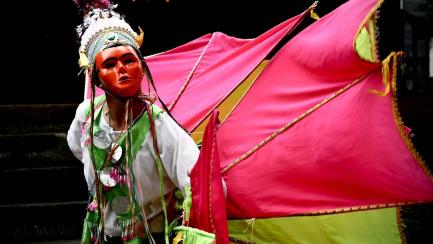
Figure 11 The Kinnara dance of the Dai people in Gengma County, China
Source: Photographed by the author
“Preservation” and “Transformation”: An interpretive analysis of the relationship between the two localized forms
The Kinnara Dance (kinnara dance) in Menglian, Gengma and other regions of China, and the Peacock Dance in Ruili, Dehong, may seem like two independent localized forms derived from Kinnara culture in China. In fact, they are deeply connected in terms of historical context and cultural genes, and together form a complete picture of the localization of Kinnara culture in the southwest border areas of China.
From the perspective of historical inheritance, the Kinnara Dance (kinnara dance) in the Gengma area is the “initial form” of Kinnara culture after it was first introduced to China, laying the cultural foundation for the emergence of the Peacock Dance. The early Divine Bird Dance in the Dehong region shared the same origin as those in Menglian and Gengma, all preserving the core elements of Kinnara culture: the “half-human, half-bird” imagery and the functional attribute of “serving through singing and dancing.”
However, with the increasing openness of Dehong as a “commercial hub” and the impetus of specific political contexts, the Peacock Dance gradually diverged from the Kinnara Dance. In contrast, regions such as Menglian and Gengma, due to their relatively isolated geographical environments, have retained the original form of the Kinnara Dance. This “homologous differentiation” is reflected in their dance forms through a corresponding relationship between “prototypes and variants”: The Kinnara Dance uses “religious props” (masks, wings), while the Peacock Dance employs “secularized props” (colorful feather frames); the Kinnara Dance adopts “Buddhist gestures,” whereas the Peacock Dance utilizes “imitative gestures.”
From a cultural logic standpoint, both dance forms follow the same adaptive path: “from Kinnara culture to Theravada Buddhism, and further into Dai aesthetics,” with differences only in the degree of adaptation. The Kinnara Dance places greater emphasis on the integration of “Kinnara culture and Theravada Buddhism,” retaining more religious attributes; in contrast, the Peacock Dance represents a deeper integration of “Kinnara culture with the Dai people’s natural aesthetics and political context,” achieving a transformation from “religious art” to “ethnic art.”
Their commonality lies in never straying from the core gene of Kinnara culture—” revering birds as divine and using dance for worship (or to express beauty).” The only difference is that the Kinnara Dance preserves the function of “worshipping deities (ritual offerings),” while the Peacock Dance places greater emphasis on the expression of “beauty.” From the perspective of cross-cultural significance, these two forms collectively confirm Kinnara culture’s capacity for “diversified localization” in China, and also provide a case study for understanding “mutual adaptation” in cultural exchanges against the backdrop of the Belt and Road Initiative.
The existence of the Kinnara Dance proves the “cultural homology” between China and Southeast Asian cultural circles; on the other hand, the formation of the Peacock Dance demonstrates China’s ability to achieve “creative transformation” of foreign cultures through its local culture. It is neither a simple copy of Kinnara culture nor a complete separation from it. Instead, by preserving the core gene, integrating local aesthetics, and adapting to the needs of the times, it has finally developed into a dance form with Chinese characteristics. This is precisely the most valuable cultural practice in the localization process of Kinnara culture in China.
A cross-cultural analysis of similarities and differences between Kinnara/Kinnari and the Dai peacock dance in China
The similarities and differences between Kinnara/Kinnari culture (prevalent in South and Southeast Asia) and the Peacock Dance of the Dai ethnic group in China are essentially the result of the dual effects of “preservation of core elements in the cultural circle” and “transformation of local cultural strata”. Their commonalities stem from the inheritance of the core genes of the Kinnara/Kinnari cultural circle, while the emergence of differences is rooted in adaptive adjustments to the local cultural context of the Dai people.
This chapter will further focus on the Peacock Dance, placing it in a cross-cultural perspective and comparing it with Kinnara/Kinnari culture—originating in India and widespread in South and Southeast Asia—to explore their similarities and differences in core dimensions. This research not only deepens the previous analysis of the localization process but also clearly defines the uniqueness of the Peacock Dance, while revealing the continuity of its cultural genes. The following content will first start from the perspective of mythological connotations to analyze the similarities and differences between the two.
Analysis of similarities and differences in terms of mythological connotations
Commonalities: The core essence of divine bird attributes and musical dance service. Both take the “divine bird” as the core mythological symbol and endow it with “semi-divine nature” and the function of “serving through music and dance.” In South and Southeast Asia, Kinnara/Kinnari are musicians in the temples of Kubera and Shiva in Hinduism, and in Buddhism, they transform into “lower gods” serving the Buddha, conveying sacred meanings through singing and dancing. China’s Dai Divine Bird Dance directly inherits this setting; the Pali classics in Mengding’s Buddhist temples clearly record that Divine Bird Dance (Kinnara), with a human face and bird body, dances and plays music for the Buddha.” Although the Dehong Peacock Dance uses the “peacock” as its symbol, it retains the implicit logic of “sacred service” through the folk legend that “when the Buddha descends, the divine bird transforms into a peacock and dances.”
Differences: Differentiation in Concrete Form Representation and Emphasis on Implications.The mythological images of Kinnara/Kinnari exhibit “complexity”: Hindu texts record two forms—” half-human, half-horse” and “half-human, half-bird”. Although Buddhism primarily features the “half-human, half-bird” form, it still clearly retains the compound characteristic of being “human-headed and bird-bodied”. Their implications cover multiple dimensions such as “faithful love” and “human guardianship”. The Kinnara/Kinnari dance forms spread in Southeast Asian countries mostly present the integrated form of “human and bird as one”, emphasizing a sacred identity.
In contrast, the Peacock Dance in China shows “symbolic simplification”: The Dehong Peacock Dance completely eliminates the “half-human” trait, simplifying the “divine bird” into “pure peacock mimicry”. Its implication shifts from “sacredness” to “secular auspiciousness”—for example, the “spreading of tail feathers” (peacock displaying its plumage) symbolizes a bumper harvest, which forms a distinction from the divine implications of Kinnara/Kinnari.
Analysis of similarities and differences in terms of artistic form
Commonalities: The “three-curved” posture and the logic of bird imitation. Both share the core “three-curved” posture and the movement gene of “bird imitation.” In South and Southeast Asian Kinnara/Kinnari dances, the “curvature of the neck, waist, and hips” of Kinnara in Sanchi reliefs of India, and the “bodily curves” of Kinnari in Thailand’s Nora dance, are homologous with the “three curves of the body” in the Dai Kinnara Dance and the “three curves of the arms” in Dehong’s Peacock Dance. In terms of movements, the Kinnara dances of Myanmar and Thailand, as well as the Dai Kinnara Dance and Peacock Dance, all follow the logic of imitating birds—such as movements of walking, spreading wings, playing in water, jumping, preening feathers, flapping wings, and flying. Additionally, their hand movements all feature stylized characteristics.
Differences: Divergences in Prop Symbols and Movement Semantics.Firstly, in terms of prop design, Kinnara/Kinnari dances retain “religious props.” For example, Kinnara dancers in Myanmar wear bamboo wings and bird-head masks, with props directly linked to their sacred identity. In contrast, Dehong’s Peacock Dance in China completely strips away religious props, either simplifying them into “colorful feather frames” or performing without any props at all. In terms of movement semantics, Kinnara/Kinnari dances focus on “sacred narratives.” For instance, Thailand’s Kinnara dance depicts “serving the Buddha,” with movements carrying religious connotations. Although the movements of the Dai Kinnara Dance are related to Buddhism, their religious narratives are simplified. Dehong’s Peacock Dance, however, has shifted entirely to “secular expression”—movements like “spreading the tail” and “playing in water” only convey joy and festivity, having no connection to religion.
Analysis of similarities and differences in terms of cultural functions
Both serve as bonds for “ethnic and religious identity.” In Southeast Asia, Kinnara/Kinnari dances strengthen such identities: Thailand’s Kinnari dance reinforces the “Theravada Buddhist community,” while Myanmar’s Kinnara dance consolidates “Shan ethnic identity.” Although Dehong’s Peacock Dance has broken away from religious contexts, it has become a symbol of “Dai ethnic identity,” visually representing Dai ethnicity during festivals like the Water-Splashing Festival.
The differences between the two lie in the expansion of functional boundaries and the degree of religious dependence. Kinnara/Kinnari dances are dominated by “religious functions,” with performances strictly confined to religious rituals. For example, the Kinnara dance in northern Thailand is only performed on Buddhist occasions such as the Vassa (Rains Retreat) and monk ordination days, and requires an invitation from the temple abbot, featuring a single function isolated from secular scenarios. China’s Dai Kinnari Dance, while still primarily serving religious functions, has been integrated into secular events like the Rice Harvest Festival, with its religious role weakened. In contrast, Dehong’s Peacock Dance has achieved a diversified expansion of functions: it not only retains the implicit religious function of “welcoming the Buddha during the Opening Festival” but also adds new functions such as “showcasing ethnic unity” for national cohesion and “international cultural exchange” for communication, thus breaking through the single religious boundary of Kinnara/Kinnari dances.
Table 1 Comparison table: South & Southeast Asian Kinnara/Kinnari vs. Chinese Dai Peacock dance
Comparison Dimension |
Kinnara/Kinnari Culture in South & Southeast Asia |
Peacock Dance of the Dai Ethnic Group in China |
Mythological Connotation |
Composite form of half-human half-bird/half-human half-horse; connotations include sacredness, loyal love, and protective functions |
Imitates peacock form; connotations focus on secular auspiciousness (harvest, prosperity) as the main theme, with implicit sacred service logic retained |
Artistic Form |
Three-curved posture; performances involve masks and bamboo wings; movements carry religious meanings |
Three-curved posture; no masks; bamboo wings decorated with colorful peacock feathers; movements mainly focus on secular bird-imitating expressions |
Cultural Function |
Centered on religious ritual functions; performance scenes are limited to religious occasions |
Diversified functions: Implicit religious functions + ethnic identity; performed in multiple scenarios including religious events, festivals, and international exchanges |
Suggestion
Against the backdrop of current cross-cultural research on Kinnara/Kinnari culture and the Peacock Dance of the Dai people in China, attention to and exploration of relevant topics remain relatively limited. Existing studies mostly focus on the descriptive analysis of forms within individual regions; there is still a lack of in-depth empirical investigation into “cultural dissemination paths” and dynamic analysis of “living inheritance.” Given the research value of Kinnara dance as a cross-cultural artistic carrier, the following suggestions are put forward:
Deepen “empirical research on cross-border cultural dissemination.” Relying on Buddhist temple relics (murals, sculptures), Dai and Pali classics, and oral historical materials in Yunnan and Southeast Asia, we can employ “image comparison” and “genealogical sorting” methods to verify the specific routes of Kinnara/Kinnari culture’s eastward spread along with Theravada Buddhism. This will clarify the historical role of the Divine Bird Dance as a dissemination medium, addressing the current lack of empirical support in research on “dissemination relevance”.
Conduct comparative fieldwork on “living inheritance and contemporary adaptation.” Focusing on core subjects such as the Kinnara Dance of the Tai Lü people in northern Thailand, the Divine Bird Dance of the Shan people in Myanmar, and the Dai Divine Bird Dance and Peacock Dance in China, this research should center on inheritors’ skill transmission models, the evolution of prop-making techniques, and the expansion of performance scenarios. It aims to analyze the “adaptive transformation” strategies of Kinnara dance culture in different regions within the context of globalization and modernization, thereby providing practical references for the living protection of cross-cultural art forms.
Thirdly, expand “multi-disciplinary interpretations of functional transformation.” By integrating perspectives from ethnology, religious studies, and dance studies, we can conduct in-depth analysis of the internal logic behind the transformation of Kinnara/Kinnari’s “sacred service” function into the “secular aesthetics” of the Peacock Dance. For example, by interpreting specific texts (artist interviews, policy documents) related to the “de-religionization” of the Dehong Peacock Dance during the Cultural Revolution, we can analyze the impact of political contexts on artistic forms. Alternatively, from the perspective of “bodily semiotics,” we can deconstruct the semantic reconstruction process of such elements as the “three-curved” posture and the “peacock beak gesture” from “religious symbols” to “aesthetic expressions,” thereby enriching the theoretical interpretation of the “localization” mechanism of cross-cultural art.
Promote “cross-border joint research and cultural dialogue.” Given that Kinnara/Kinnari culture is a shared cultural heritage of southwest China and Southeast Asia, we can strengthen cooperation between China and Southeast Asian countries in the field of cultural heritage protection by organizing events such as “cross-cultural performances of Kinnara Dance and Peacock Dance” and “intangible cultural heritage inheritance forums.” This will not only provide richer transnational cases for research but also build a practical platform for cross-border cultural exchanges.
Conclusion
Based on the theory of cultural circles, this study focuses on the connection between the Kinnara/Kinnari culture in South and Southeast Asia and the Peacock Dance of the Dai ethnic group in China. By sorting out the core characteristics of Kinnara/Kinnari in mythology, graphic art, and dance forms, it analyzes the localization path of Kinnara/Kinnari culture in the Dai-inhabited areas of Yunnan, China, and differentiates the similarities and differences between the two from multiple dimensions. Ultimately, it reveals the inheritance context and transformation logic of this cross-cultural artistic phenomenon.
The diffusionism school proposes three core criteria—the “formal criterion,” “quantitative criterion,” and “continuity criterion”—which serve as a basis for determining whether identical or similar cultural elements in different regions share a homologous relationship. When examining the Kinnara/Kinnari culture in South and Southeast Asia from the perspective of cultural circle theory, the highly consistent characteristics it exhibits within the region fully confirm that the Kinnara/Kinnari culture is an iconic shared symbol of the Theravada Buddhism cultural circle. From the perspective of the “formal criterion”, the core forms of Kinnara/Kinnari exhibit a high degree of unity within the South and Southeast Asian regions covered by this cultural circle: the mural images of Kinnara with “winged bird feet” in India’s Bharhut Stupa, the mural depictions of Kinnara with “human body integrated with wings” in Myanmar’s Ananda Temple, and the carved patterns of Kinnara “holding flowers to worship the Buddha” in Cambodia’s Angkor Wat—though these are cultural relics from different countries, they all take the “half-human, half-bird” composite form as their core. This cross-geographical consensus on form effectively rules out non-diffusive factors such as independent origin and accidental similarity, directly verifying the cultural homology derived from cultural diffusion within the cultural circle. In the field of dynamic art, the “tri-curved” body posture (a rhythmic posture with soft curves in the neck, waist, and knees) commonly found in Thailand’s Nora Dance and Myanmar’s Keinn-ra Dance serves as a cross-regional shared iconic dynamic element, further strengthening the unity of the Theravada Buddhism cultural circle under the “formal criterion”.
From the perspective of the “quantitative criterion”, the Kinnara/Kinnari culture has formed a stable cross-regional consensus in three core dimensions—mythological connotation, cultural function, and artistic expression—within the Theravada Buddhism cultural circle. At the level of mythological narrative, Kinnara/Kinnari is uniformly defined across regions as a “semi-divine musician and dancer attendant”, emphasizing its dual attributes of divinity and artistry. In terms of cultural function, Kinnara/Kinnari universally undertakes the religious responsibility of “worshipping the gods through dance and praying for blessings”, serving as a core medium connecting secular believers with sacred beliefs. In terms of artistic expression, murals, sculptures, and dance have become three common forms of presentation in the region, with obvious correlations in theme selection and stylistic characteristics. This multi-dimensional and systematic consistency completely eliminates the possibility of accidental similarity between cultural elements, further consolidating the theoretical foundation that “Kinnara/Kinnari culture belongs to the Theravada Buddhism cultural circle” and providing a cultural circle-based logical premise for its cross-regional spread to the Dai-inhabited areas of Yunnan, China.
When the Kinnara/Kinnari culture spread from the core area of the Theravada Buddhism cultural circle to the Dai-inhabited areas of Yunnan, China, it evolved into two localized forms—”primitive preservation” and “creative transformation”—under the combined influence of geographical environment, social context, and local cultural layers (Theravada Buddhist beliefs and nature worship). This resulted in the differentiated adaptation of core cultural symbols in the peripheral areas of the cultural circle. Among them, the Dai Kinnara Dance popular in areas such as Menglian, Gengma, and Xishuangbanna retains in depth the “half-human, half-bird” composite form, religious props such as bamboo wings and Buddha masks, and the core function of “entertaining the Buddha”—all of which are characteristic of Kinnara/Kinnari in the core area of the cultural circle. In terms of form, connotation, and function, it is highly homologous to the Kinnara/Kinnari dances in Southeast Asia, serving as a typical example of “primitive inheritance” of core symbols of the cultural circle in peripheral areas and reflecting the stability of cultural diffusion within the cultural circle.
In contrast, the Dai Peacock Dance in Ruili and Mangshi of Dehong has achieved a creative reconstruction of the core symbols of the cultural circle. In terms of “symbolic transformation”, it replaced the “half-human, half-bird” form with the peacock image (a product of the Dai people’s nature worship), realizing the integration of cultural circle symbols with local aesthetic symbols. In “aesthetic refinement”, it refined the “tri-curved” posture shared by the cultural circle into the “three-curved” posture (a distinctive feature of Dai dance), and transformed religious gestures into movements imitating peacock habits, endowing the dynamic elements of the cultural circle with local aesthetic connotations. Particularly in the special social context of the 1950s–1970s, through “functional reconstruction”, it stripped away religious symbols, integrated into secular festivals, and completed the “de-religiousization” transformation—evolving from a “sacred art” into an independent dance form with both ethnic identity and international communication value. This transformation did not deviate from the core genes of the cultural circle; instead, while retaining the “divine bird attribute and music-dance gene”, it achieved in-depth adaptation of the cultural circle’s symbols to local culture and the context of the times.
A multi-dimensional analysis of similarities and differences further confirms that although the Dai Peacock Dance in China and the Kinnara/Kinnari culture in the core area of the Theravada Buddhism cultural circle share the core commonality of “divine bird attribute and music-dance gene”, they exhibit significant differences in mythological concreteness, artistic symbols, and functional boundaries: Kinnara/Kinnari in the core area of the cultural circle retains the complex mythological form of “half-human, half-bird/half-human, half-horse”, religious artistic symbols, and a single religious function; in contrast, the Dai Peacock Dance features peacock worship, secularized artistic symbols, and multi-functions including implicit religious significance, ethnic identification, and international communication. Essentially, these differences are the result of “adaptive adjustments” of the cultural circle’s core symbols in different regions. As the core area of the cultural circle, Southeast Asia retains more original characteristics of the core symbols due to its stable religious context; while the Dai-inhabited areas of Yunnan, China— 作为 the peripheral area of the cultural circle—have promoted the transformation of the core symbols from “sacred” to “ethnic” attributes due to changes in local cultural layers and social environment, demonstrating the dynamics and adaptability of cultural diffusion within the cultural circle.
In summary, this study not only enriches the research on the cross-cultural connection between Kinnara/Kinnari and the Dai Peacock Dance but also confirms their cultural homology rooted in the cultural circle. The research results show that cultural identity is not a static and fixed entity but a product dynamically constructed in the process of cross-cultural interaction. By transforming and adapting elements of the cultural circle, the Dai people have shaped a unique artistic identity through the dialogue between South and Southeast Asian cultures and local characteristics. This study provides a theoretical basis and practical reference for the protection of cross-border cultural heritage and artistic mutual learning in the context of globalization.
Declaration of generative AI in scientific writing
I hereby solemnly declare that, in accordance with academic integrity principles and the requirements of this journal, I provide the following detailed explanation regarding the use of generative artificial intelligence (AI) tools during the writing process of this research paper:
1. AI Tools Not Involved in Core Academic Work
In this study, generative AI tools were not involved in any core academic research links, including but not limited to the design of the research framework, the implementation of field investigations, the collection and analysis of research data, the construction and demonstration of core arguments, as well as the interpretation of research results and derivation of conclusions. All core content directly related to the innovation and scientific nature of the research was independently completed by the author(s), and there is no situation where core academic content was generated by generative AI tools.
2. Responsibility Attribution and Statement on Undisclosed AI Usage
The author(s) of this paper assume full responsibility for the scientific validity, ethical compliance, and overall academic quality of this research. It is also declared that no other undisclosed generative AI tools were used throughout the entire process of this research—from research topic selection and implementation to paper writing—and there is no situation of concealing the use of AI tools.
CRediT author statement
Bai Hui: Responsible for the Conceptualization, Methodology, Writing - Original Draft Preparation, and Investigation of this paper. Meanwhile, I independently completed the Writing - Reviewing and Editing of the manuscript. The entire process of the relevant research work and achievement presentation of this paper was independently completed by myself, with no other participants.
References
Akhil, K. N., & Nayar, P. (2022). Kinnaras and kinnaris in South and Southeast Asian art. In Syncretism in sculptural art of South and Southeast Asia, 37(3) ,172-182.
Chen, S. S. (2017). A study on the historical forms of the Dai peacock dance in Ruili (Master’ s thesis). China: Yunnan Arts University.
Moore, E., & Maw, S. S. (1995). Flights of fancy: Hintha and kinnaya, the avian inspiration in Myanmar art. Oriental Art, 41(2), 25-31.
Peng, Li. (2024). The cultural interpretation of the Kinnara Divine Bird Dance of the Dai Le people in northern Thailand. Journal of Beijing Dance Academy, 33(02), 118-124.
Sharma, M. (2015). Between men and gods: Kinnaras in texts and in the Ajanta murals (pp. 149-162). In Proceedings of the South Asian Archaeology: Fifteenth International Conference of the European Association of South Asian Archaeologists. Leiden, Netherlands: Universiteit Leiden.
Shen, B. (2022). The transition from the manifestation of holiness to aesthetics: The trajectory of the evolution and dissemination of the peacock dance from the perspective of images and oral accounts. Journal of Beijing Dance Academy, 25(01), 52-63.
Tang, G. (2003). Cultural circle theory and Shamanism cultural circle. Manchu Studies, 37(2), 132-136.
Yang, M. K. (2014). The performance of the peacock dance in the context of Theravada Buddhism and its ethnic cultural identity. Ethnic Arts, 41(05), 55-63.
Yang, Z. S. (2012). The secular charm of the Buddhist kingdom in the west: The three stupas of Sanchi. Beijing, China: SDX Joint Publishing Company.
Zhu, H. Y. (2018). The “past and present” of the Dai peacock dance music. Chinese Music, 35(01), 62-68.