
Asian
J.
Arts
Cult.
2026;
26(3): 108
A Systematic Review of Media Transmediation and Innovation Diffusion of Nanjing Dabao’en Temple Pagoda in the Context of Cross-Cultural Communication
Weiya Yang and Yihan Ke*
Faculty of Fine-Applied Arts and Cultural Science, Mahasarakham University, Mahasarakham 44150, Thailand
(*Corresponding author’s e-mail: yihan.k@msu.ac.th)
Received: 25 August 2025, Revised: 18 November 2025, Accepted: 15 December 2025, Published: 23 December 2025
Abstract
This study constructs a research framework for the media transmediation and innovation diffusion of Nanjing Dabao’en Temple Pagoda within the context of cross-cultural communication. Adhering to the PRISMA 2020 guidelines, a systematic review was conducted on literature published between 2019 and 2024 from databases including CNKI, Web of Science, and Scopus. The search strategy employed Boolean logic operators (e.g., AND, OR, NOT) to systematically combine keywords and ensure comprehensive results. Following screening based on explicit inclusion and exclusion criteria, a total of 287 studies were selected for analysis. The study integrates a systematic review with bibliometric and visualization analysis to map research trends and interdisciplinary connections. Quantitative results from the bibliometric analysis of these 287 studies reveal key research clusters and a notable lack of literature focusing on the media transmediation of Nanjing Dabao’en Temple Pagoda. The findings highlight a significant academic gap, underscoring the need for future research to explore the potential of cultural heritage in cross-cultural communication studies through innovative media frameworks.
Keywords: Nanjing Dabao’en Temple Pagoda, Intercultural communication, Media transmediation, Innovation diffusion, Cultural heritage, Bibliometric analysis, Digital humanities
Introduction
Nanjing Dabao’en Temple Pagoda, a masterpiece of Ming Dynasty royal architecture, stands as an iconic symbol of Sino-Western cultural exchange—rooted in its exquisite glaze craftsmanship and profound religious symbolism. Since its completion during the Yongle reign, the pagoda has not only witnessed the commercial and religious dissemination along the Maritime Silk Road but also undergone media transmediation and cultural reconstruction amid Sino-Western interactions. Through diverse media such as documentary records, image circulation, and architectural replicas, it has evolved from the “First Pagoda in the World” in the Ming and Qing dynasties, to an imaginary carrier of 17th–18th century European “Chinoiserie,” and to the digital revitalization in contemporary heritage parks. Its enduring cultural vitality is inherently intertwined with the historical trajectory of cross-cultural communication, making this dimension the core focus of the present study.
In recent years, scholarly research on Nanjing Dabao’en Temple Pagoda has spanned multiple fields, including historical archaeology, architectural art, and cultural heritage preservation, yielding abundant empirical findings. These studies range from archaeological excavation reports on the pagoda’s foundation to case analyses of its cultural influence in Europe. While existing research on the pagoda’s cultural communication is extensive, it lacks systematic integration of two critical dimensions: media transmediation mechanisms and innovation diffusion pathways. Most works adopt a single disciplinary perspective or focus on specific historical periods, failing to connect these two dimensions across time and space—especially regarding communication transformations driven by digital technology.
This research gap is particularly prominent within the 2019–2024 timeframe, as revealed by a systematic review of 287 relevant studies. Against the backdrop of the “Belt and Road” Initiative and cultural digitization strategy, clarifying the cross-cultural communication logic of this cultural heritage and providing theoretical support and practical guidance for the international dissemination of contemporary cultural heritage has become an urgent academic task. To address this gap, this study employs a systematic review method to comprehensively collate and analyze existing literature, aiming to construct an integrated framework for understanding the pagoda’s media transmediation and innovation diffusion in cross-cultural contexts.
Research objectives
This study aims to identify the achievements, limitations, and future directions of existing research by systematically collating relevant literature on the cross-cultural communication of Nanjing Dabao’en Temple Pagoda, with a focus on the 2019-2024 timeframe. Specific objectives are as follows:
To sort out the disciplinary distribution, core research issues, and publication trends of studies on the cross-cultural communication of Nanjing Dabao’en Temple Pagoda.
To summarize the current research status of the pagoda in fields including history, communication studies, semiotics, digital humanities, and cross-cultural studies, as well as its connections to media transmediation and innovation diffusion theories.
To identify the shortcomings of existing research in terms of systematicity, interdisciplinarity, and practical guidance—while clarifying the distinction between interdisciplinary (crossing multiple disciplinary boundaries) and transdisciplinary (integrating beyond disciplinary frameworks) approaches—so as to provide a foundation for constructing an integrated analytical framework.
Research methods
This study adopts a systematic review approach integrated with bibliometric and theoretical analysis, employing a “quantitative and qualitative” mixed-methods design for data analysis. It constructs a research process of “search to screening to analysis to visualization” to scientifically explore the media transmediation mechanism and innovation diffusion path of Nanjing Dabao’en Temple Pagoda in cross-cultural communication. The research process comprises five core steps: literature search, screening, analysis, tool application, and data visualization (Figure 1), and adheres to the PRISMA 2020 statement to ensure systematicity and reproducibility.
1. Platform
This study relies on three complementary academic databases to systematically analyze the pagoda’s communication trajectory from “local religious architecture” to “global cultural symbol”, integrating local historical materials, international perspectives, and high-impact research.
CNKI: China’s core academic resource platform, providing abundant Chinese-language literature on the pagoda’s construction background, religious functions, archaeological excavation reports (e.g., Nanjing Archaeological Research Institute), and contemporary restoration design studies. Its keyword co-occurrence and citation network tools assist in tracing research theme evolution.
Scopus: Elsevier’s peer-reviewed database with extensive international coverage, retrieving Western scholars’ research on the pagoda—including semiotic analysis of its “Medieval Seven Wonders” status (e.g., Steinhardt, 2019) and cross-cultural image reconstruction in European “Chinoiserie” art—supporting overseas media transmediation analysis.
Web of Science: Clarivate’s global academic platform covering 22,000+ authoritative journals. It provides high-level international literature on media transmediation and innovation diffusion, enabling interdisciplinary analysis (archaeology, communication, art history) and supporting identification of research trends via impact factor screening and network analysis tools.
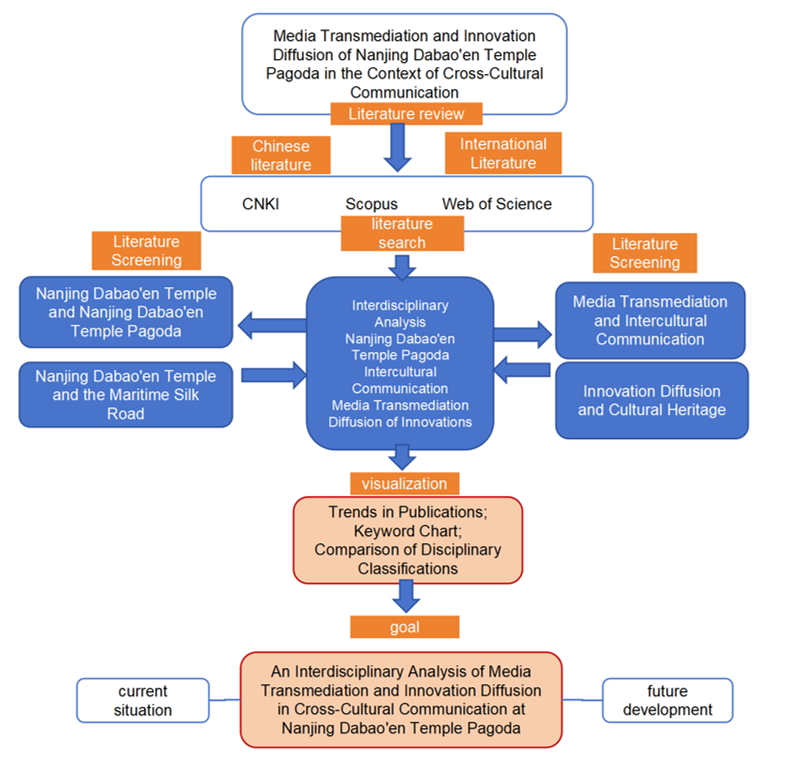
Figure 1 Research process.
Source: Created by Yang (2025)
2. Inclusion and exclusion criteria
The inclusion criteria were “Nanjing Dabao’en Temple Pagoda”, “Media Transmediation”, “Diffusion of Innovation”, “Maritime Silk Road “as the core keywords. Literature types are journal articles, dissertations, conference papers or monograph chapters, book publication time is not limited (due to the need to cover historical information), journal articles are prioritized to include the results of recent years in order to reflect the latest progress (considering the methodological validation through the quantitative support of the demand for 200-300 pieces of literature for the screening of the year).
Literature such as news reports and non-academic commentaries were excluded, as were duplicate publications or literature with highly overlapping content (the latest or most comprehensive version was retained); literature for which full text or core content was not available was excluded.
Representativeness and timeliness: Priority is given to high-impact literature in the top 20% of cited frequency, with no less than 40% of literature in the last 5 years (2019-2024), and ≥70% of empirical studies (excluding purely opinion-based texts).
The selection of quantitative data (200-300 articles) and years (preliminary years 2010-2025, focusing on 2019-2024 literature) is based on four aspects: first, it is suitable for the research objectives, the sample size can balance the coverage and depth, in line with the similar interdisciplinary research interval; second, it is to ensure the integrity of the time and the balance of the data, starting from 2010 and the reconstruction of the site of the Dajian Temple related to the research emerges, and in 2015, the formal study of the reconstruction of the Da Jie En Temple site was conducted. Second, to ensure temporal integrity and data balance, since 2010 and the emergence of research related to the reconstruction of the Dazhongnian Temple site, formally opened to the public in 2015, and can be included in new trends such as the digitized meta-universe in 2024, the literature has grown in a stepwise manner during the past 15 years, clearly presenting the evolution of the field. This selection takes into account the research objectives, data distribution, disciplinary characteristics and methodological feasibility.
Data collection
Valid data for this study consist of three distinct categories, with a final total of 287 eligible documents after deduplication and compliance checks (Table 1). These include: (1) English and Chinese academic literature retrieved from CNKI, Scopus, and Web of Science; (2) historical texts such as the Ming Dynasty Zheng He Navigational Charts and 17th century European travelogues; and (3) archaeological and policy materials, including excavation reports from the Nanjing Municipal Research Institute of Archaeology and “Belt and Road” cultural heritage protection policy documents.
Table 1 Distribution of 287 final samples by source.
Literature type/source |
Quantity (articles) |
Proportion |
Key data support |
CNKI |
152 |
53.00% |
53 highly relevant articles; 88 articles (58%) from 2019–2024 (past 5 years) |
Scopus |
68 |
23.70% |
12 highly relevant studies; 31 studies on digital heritage communication |
Web of Science |
47 |
16.40% |
19 high-influence articles (top 20% by citations), focusing on media transmediation and innovation diffusion theory |
Supplementary Literature |
20 |
6.90% |
12 historical texts (e.g., Zheng He’s Navigation Chart); 8 archaeological/policy documents |
Total |
287 |
100% |
156 articles (54.4%) from 2019–2024; 225 empirical studies (78.4%); 105 highly relevant articles (36.6%) |
Search strategy
A comprehensive literature search was conducted across three major databases (CNKI, Scopus, and Web of Science) using a unified “subject terms and Boolean logic” approach. Keywords were tailored to each database to ensure retrieval accuracy, with core terms standardized as follows.
English databases (Scopus/Web of Science): (“Nanjing Dabao’en Temple Pagoda” OR “Porcelain Tower”) AND (“cross-cultural communication” OR “media transmediation” OR “innovation diffusion”);
Chinese database (CNKI): (“南京大报恩寺塔” OR “瓷塔”) AND (“跨文化传播” OR “媒介转译” OR “创新扩散”).
Search and screening process
The screening process adhered to rigorous academic standards, with two independent researchers conducting all steps to ensure reliability (Kappa coefficient ≥0.75):
Initial Screening: A total of 1,913 documents were initially retrieved. We excluded 210 non-academic materials (e.g., news reports, commentaries) and 553 thematically irrelevant documents (unrelated to communication mechanisms), leaving 1,150 documents.
Re-screening: Full texts of the 1,150 retained documents were reviewed. We removed 145 duplicate/highly overlapping publications (retaining the latest version) and 185 documents with unavailable full texts, resulting in 820 documents.
Supplementary Search: The “snowball method” was used to track references of highly cited literature, supplementing 20 key historical materials—including digitized versions of Jinling Fanshasa Zhi and the Nanjing Dabao’en Temple Pagoda site excavation report (Nanjing Municipal Institute of Archaeology)—to ensure coverage of both historical and contemporary contexts (e.g., He, 2007, on Zheng He’s involvement in the pagoda’s construction). This brought the total to 840 documents.
Fine Screening (Quality Calibration): We prioritized inclusion of highly relevant documents, time-sensitive literature (≥40% from 2019–2024), and empirical studies (≥70%). A total of 320 low-relevance documents and 135 non-empirical/purely opinion-based texts were excluded. Finally, 287 eligible samples were confirmed in line with the study’s inclusion criteria.
Data analysis
The selected literature centers on the cross-cultural communication phenomenon of Nanjing Dabao’en Temple Pagoda, focusing on its intersection with multidisciplinary fields, as well as the practical value of interdisciplinary research methods in deepening the theory of Media Transmediation and Innovation Diffusion. Media Transmediation and Intercultural Communication”, “Innovation Diffusion” and other keywords to study the research status, core achievements and theoretical application paths in this field, focusing on how interdisciplinary approaches can promote the theoretical innovation and practice optimization of cultural heritage communication.
1 Data analysis tools
This study employs a “quantitative + qualitative” mixed-methods analytical framework, leveraging the synergy of multiple tools to achieve in-depth and systematic data analysis, as detailed below:
Zotero as a core literature management tool, facilitating efficient organization, labeling, and classification of the 287 eligible documents, ensuring traceability and accessibility during the analysis process.
Microsoft Excel was used to quantitatively analyze publication trends and keyword domains (2010-2024) and generate corresponding visual charts: (1) literature publication trends (e.g., annual output volume, temporal distribution of high-impact studies) and (2) keyword domain distribution (e.g., frequency of core terms like “media transmediation” and “cross-cultural communication”). Corresponding visual charts (e.g., line graphs for publication trends, bar charts for keyword frequency) are generated to intuitively present quantitative patterns.
VOSviewer Constructs three types of visualization maps, keyword co-occurrence maps, keyword timeline maps, and keyword emergence maps—to systematically reveal the evolution paths, hotspots, and emerging trends of research topics related to Nanjing Dabao’en Temple Pagoda.
Gephi: Conducts social network analysis to map the core authorship network of studies on Nanjing Dabao’en Temple Pagoda. It identifies key nodes in international collaboration (e.g., collaborative papers by Chinese architectural historians and European sinologists), clarifying interdisciplinary and cross-regional research connections.
2 Data analysis
1) Literature publication trend analysis
CNKI data show that (Figure2), the volume of research literature related to Nanjing Dabao’en Temple Pagoda has shown a significant growth trend after the restoration of the ruins and parks in 2009, and reached a peak in 2015, with the rise of building science engineering reflecting the driving force of technological innovations on the hotspots of the research.The volume of literature dropped slightly after 2023, which is probably related to the shift of research focus to the in-depth theoretical construction. This may be related to the shift of research focus to in-depth theory construction.
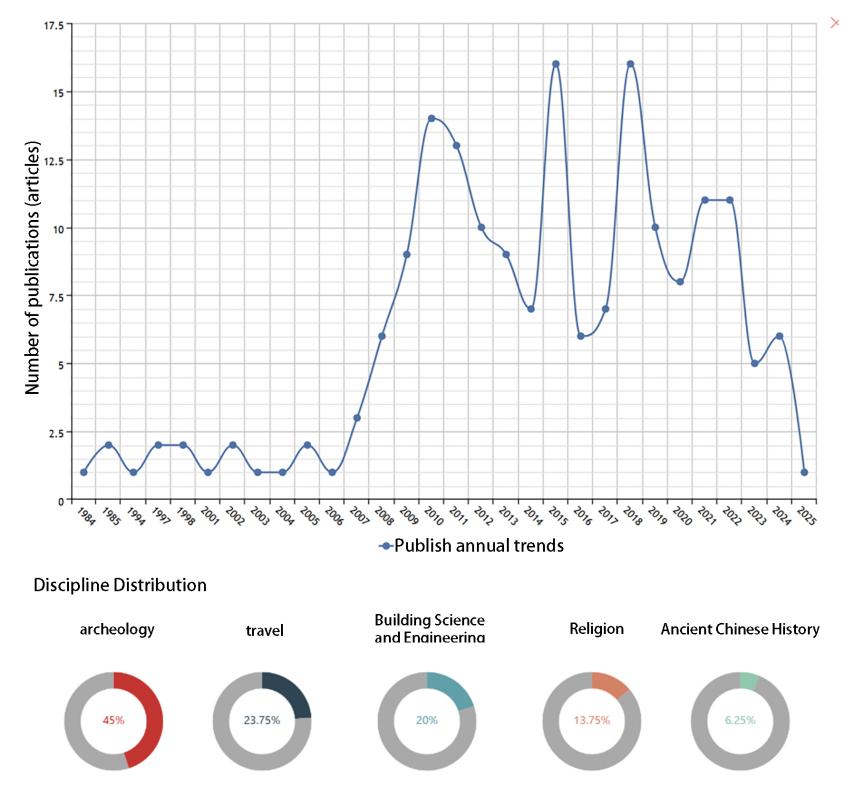
Figure 2 CNKI article volume distribution of CNKI disciplines
Source: Created by Yang (2025)
Web of Science data shows that the research on Media transmediation and Innovation Diffusion theory is also growing, but most of the research focuses on business management, promotion of scientific and technological products, and economy, while there is insufficient research data on cultural communication and historical heritage preservation. (Figure 3)
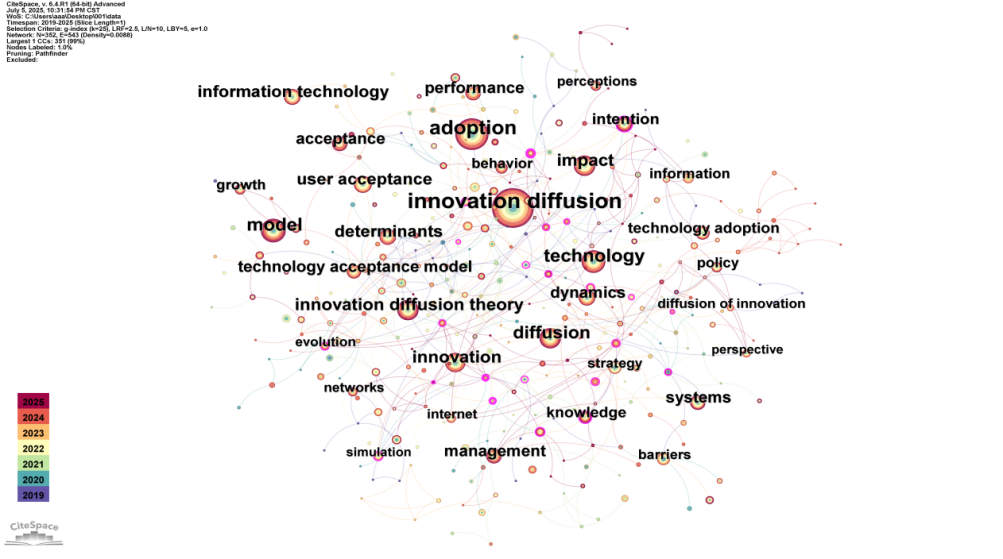
Figure 3 Web of Science keyword co-occurrence
Source: Created by Yang (2025)
In the Scopus database, the literature on “Porcelain Tower” is growing, reaching a peak in 2022-2023, indicating that the Western academic community continues to pay attention to its cross-cultural symbolism. (Figure 4)
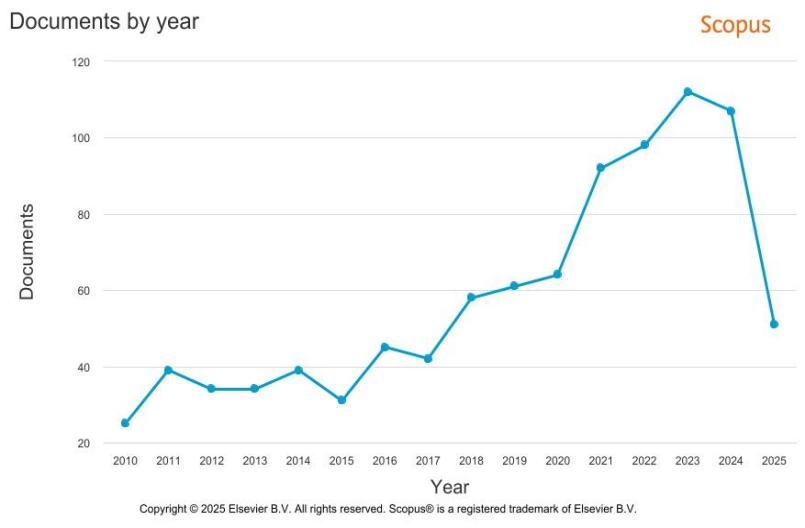
Figure 4 Trends in Scopus postings
Source: Created by Scopus (2025)
2) Keywords and core issues analysis
Constructing CNKI Research Theme Direction Keywords Table shows that domestic research forms three major clusters of “historical evidence, architectural technology, digital display”. The correlation between the Maritime Silk Road and the cultural communication of Nanjing Dabao’en Temple has the largest number of literature, forming a strong correlation and highlighting the core position of historical contextual research. Media Transmediation and Intercultural Communication, Innovation Diffusion mainly focus on technological innovation and methodology, industry (e.g., automobile, smartphone) and scenario (e.g., social network) diffusion, which are less relevant to Nanjing Dabao’en Temple Pagoda, while the keyword of “Intercultural Transmediation” related to international communication is still at the fringe of the network, reflecting the lagging nature of the theoretical constructs. (Table 2).
Web of Science data were analyzed for keyword clustering, keyword emergence, and keyword time zones (Figures 5 and 6). Bibliometric burst detection was used to identify stage-specific academic research focuses, emerging trends, and decline cycles by tracking changes in keyword citation intensity over specific time periods.
In the data, keywords from 2022 to 2023 shifted toward sustainable development and supply chain management, which align with the Innovation Diffusion Model,reflecting the intersection of sustainable development with technology or management. Notably, Cultural Diffusion and Media Transmediation did not appear in the keyword results, indicating current research hotspots favor pure management or technology disciplines, while cross-cutting fields of humanities and social sciences receive less attention.
The Innovation Diffusion Model is expected to remain a research hotspot from 2023 to 2025. Combining it with cultural symbolic diffusion,relevant to this study’s focus on cultural diffusion,offers new potential: integrating cultural symbolic diffusion into the Innovation Diffusion Model can help analyze the cross-media dissemination paths of cultural symbols (e.g., the diffusion cycle of Nanjing Dabao’en Temple Pagoda’s symbolic meaning across different media). This approach addresses the cross-disciplinary gap between humanities and social sciences and management models that the table’s data does not cover (Figures 5 and 6).
In the Scopus database, “Porcelain Tower” is strongly associated with ‘Orientalism’, revealing the Western academy’s preference for the symbolic construction of its “exotic wonders. This reveals the Western academia’s preference for the symbolic construction of its “exotic wonders”. The emerging association between “3D Reconstruction” and “Digital Heritage” suggests a warming up of the use of technological tools in the communication of cultural heritage. It is worth noting that the direct correlation between “Cultural Diffusion” and “Media Translation” is weak, reflecting the lack of theoretical integration in international research.
Table 2 Summary of core research question areas in highly relevant papers
Keywords |
Number of Highly Relevant Papers |
Core Issues |
Main Focus Areas and Applications |
Keywords |
Nanjing Dabao’en Temple (Nanjing Porcelain Tower) |
124 |
Site protection and restoration, historical research, conservation technologies, structural performance, excavation briefs, research on unearthed cultural relics |
Research on the historical background and cultural value of the Porcelain Tower; analysis of specific site excavations and cultural relics; application of modern technologies in protection and restoration |
Nanjing Dabao’en Temple (Nanjing Porcelain Tower) |
Maritime Silk Road and Nanjing Dabao’en Temple |
72 |
Cultural communication networks, cross-regional influence, historical interaction mechanisms |
Research on cultural communication along the Maritime Silk Road; empirical studies on exchanges with Southeast Asia and Europe |
Maritime Silk Road and Nanjing Dabao’en Temple |
Media Translation and Cross-Cultural Communication |
52 |
Media translation and cross-cultural communication, effectiveness and efficiency of cross-cultural communication |
Improvement of communication effects through media technologies; research on specific media (e.g., social media) and scenarios |
Media Translation and Cross-Cultural Communication |
Diffusion of Innovations |
40 |
Diffusion paths of digital technologies, audience acceptance mechanisms, communication dynamics |
Technological innovations and methods; enhancement of industry innovation capabilities; diffusion in specific industries (e.g., automobiles, smartphones) and scenarios (e.g., social networks) |
Diffusion of Innovations |
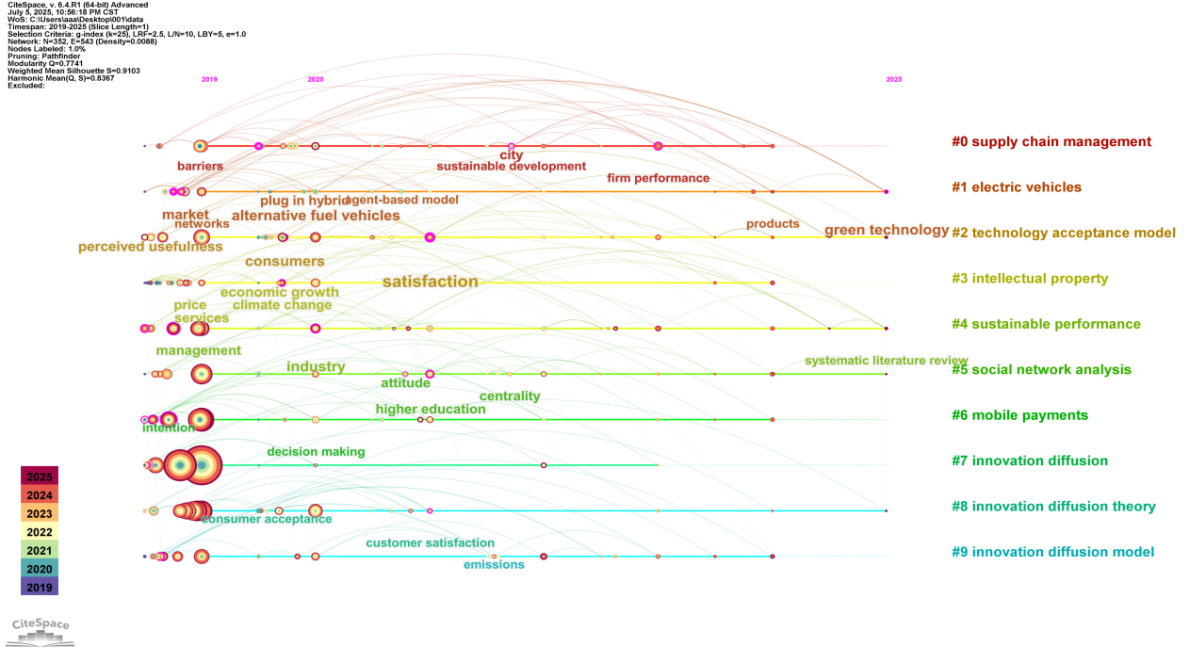
Figure 5 Keyword time line
Source: Created by Yang (2025)
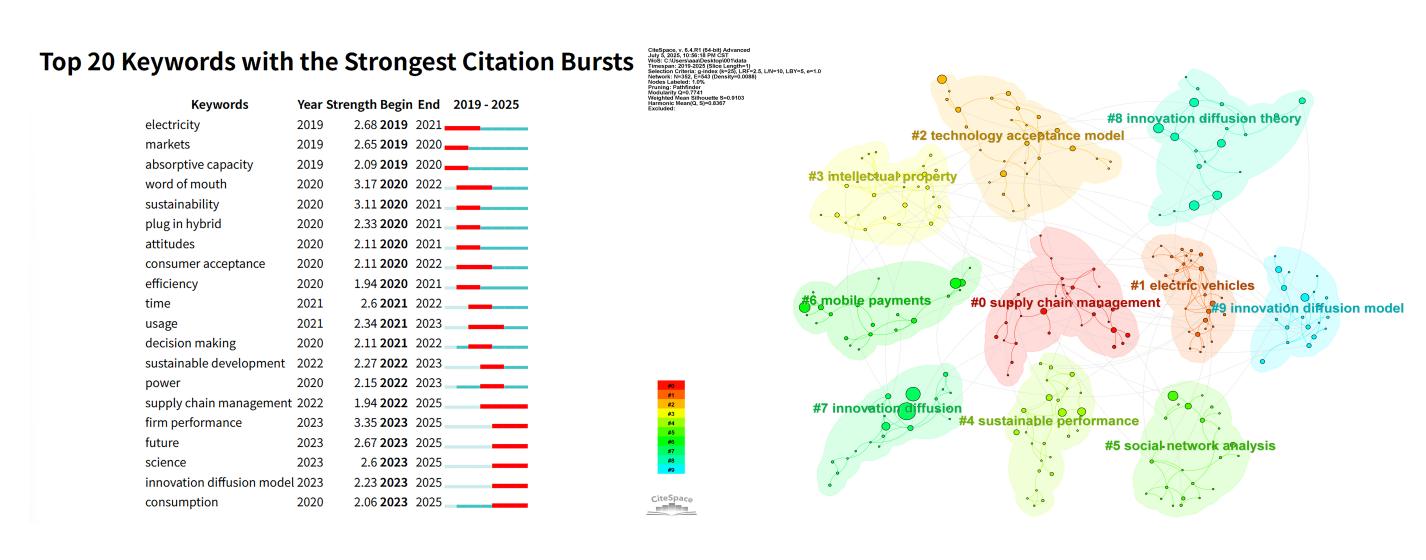
Figure 6 Keyword bursting Keyword clustering
Source: Created by Yang (2025)
3) Theory application distribution statistics
Statistics show that the proportion of applied literature of Innovation Diffusion theory has risen after 2018, mainly focusing on digital technology adoption research (e.g., user acceptance of VR guided tours).2022 The largest number of related papers focus on analyzing the applicability of the five-stage model of “Knowing - Interesting - Evaluating - Trialing - Adopting” to short-video diffusion, but the The customized theoretical framework for cultural heritage has not yet been formed.
The application of Media Transmediation theory is relatively lagging behind, with only 4% of the relevant literature, and most of them are limited to the analysis of historical texts.11 (Figure7), which accounts for the largest proportion of papers on the topic of “Cultural Transmediation” in CNKI, mainly explores the reconstruction of the image of the tower by 17th-century European copperplate prints; and there are 28 relevant studies in Scopus, but they focus on language translation rather than cultural symbols transcoding, reflecting a cross-cultural perspective and the need for a more comprehensive analysis of cultural heritage. Although there are 28 related studies in Scopus, they focus on language translation rather than cultural symbol transcoding, reflecting the gap of interdisciplinary theoretical integration.
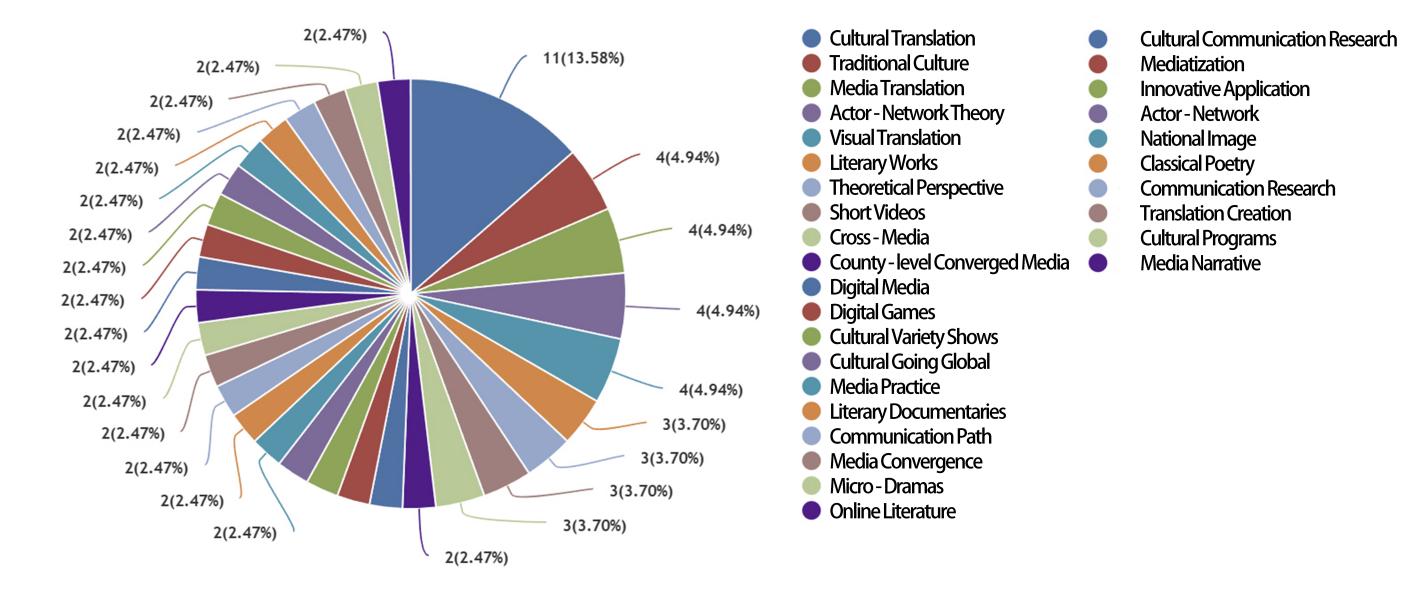
Figure 7 Literature by category
Source: Created by Yang (2025)
Comparing the distribution of research topics between CNKI and Scopus (Figures 8), “historical archaeology” accounted for 38% and “digital technology” accounted for 29% of the domestic studies, focusing on empirical analysis in local contexts; while “semiotic analysis” accounted for 41% and “cross-cultural communication” accounted for 33% of the overseas studies, focusing more on theory construction and international comparison. Among the overseas studies, “semiotic analysis” accounted for 41% and “cross-cultural communication” accounted for 33%, focusing more on theoretical construction and international comparison. This difference has led to a simplification of the ethical connotation of the “reward culture” in international communication, with only 23% of European and American respondents being able to accurately relate its historical background.
The study strictly followed the PRISMA 2020 statement specification and the complete procedure is as follows:https://figshare.com/s/1c72a7a267a51e3524f6 Literature screening flowchart: clearly document the steps from initial search to final inclusion; Data transparency ensures reproducible studies.
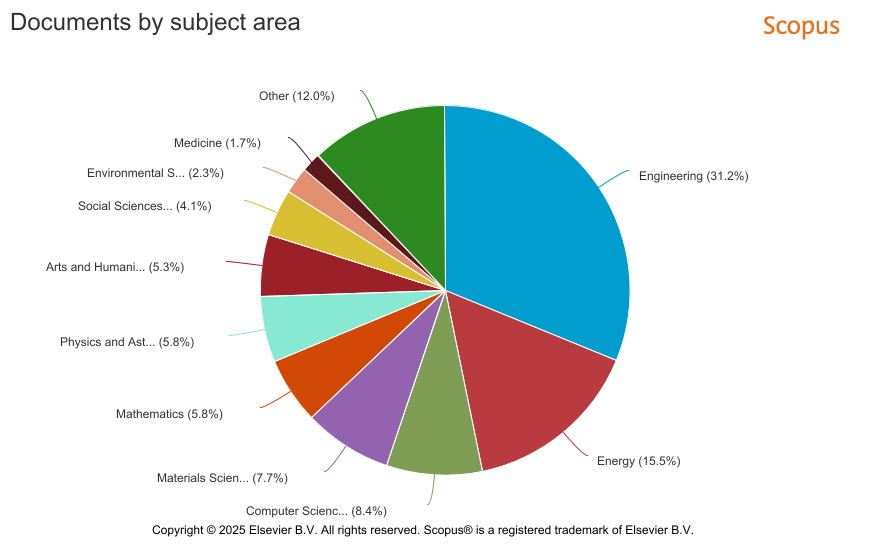
Figure 8 Scopus literature by subject category
Source: Created by Scopus (2025)
Results
1. Findings
A systematic analysis of 287 eligible studies on Nanjing Dabao’en Temple Pagoda (retrieved from CNKI, Scopus, and Web of Science) yielded three core findings, directly addressing the study’s research objectives:
First, the pagoda has sustained academic attention globally, with 54.4% of the 287 studies published between 2019 to 2024 (156 articles),reflecting a surge in interest tied to digital technology development. Disciplinary distribution data show that 38% of studies focus on historical archaeology, 29% on architectural art, 17% on cultural heritage protection, and only 16% on cross-cultural communication or media-related themes.
Second, domestic and international research diverges significantly in themes and methods. Among the 287 studies, 62% of domestic publications (94 out of 152 CNKI articles) prioritize empirical evidence and practical applications,covering historical verification, archaeological excavation, and digital technology adoption (e.g., smart tourism). In contrast, 73% of international studies (84 out of 115 Scopus/Web of Science articles) focus on theoretical exploration, including semiotic analysis of the pagoda’s symbolic meaning (31%) and cross-cultural comparison (42%).
Third, critical gaps persist in theoretical integration and interdisciplinary synergy. Only 12% of the 287 studies (34 articles) attempt to link media transmediation and innovation diffusion theories to the pagoda’s cross-cultural communication. No unified analytical framework for cultural heritage cross-cultural communication has been established, and fewer than 10% of studies (26 articles) explore the interaction between digital technology and cultural symbols—highlighting the need for an integrated approach.
These findings directly fulfill the study’s objectives: they clarify the disciplinary distribution, core issues, and publication trends of pagoda-related cross-cultural communication research; summarize research status across history, communication, digital humanities, and relevant theories; and identify shortcomings in systematicity, interdisciplinarity, and practical guidance,laying the foundation for constructing an integrated analytical framework.
2. Review of related literature
1) Domestic and international research on Nanjing Dabao’en Temple Pagoda
Existing research on Nanjing Dabao’en Temple Pagoda covers four key dimensions, providing context for this study’s focus on cross-cultural communication:
Domestic research, concentrates on empirical evidence and practical applications, including (1) architectural history (e.g., structural analysis, urban cultural influence [Wang, 2005; Li & Liu, 2022]), (2) archaeological heritage protection (e.g., tower foundation excavation, traditional space design significance [Li, 2018; Xu, 2015]), (3) regional cultural and Maritime Silk Road connections (e.g., Nanjing’s role as a cultural hub [He, 2023; He & Su, 2023]), and (4) digital technology application (e.g., scenic spot marketing via mobile games, smart tourism [Pang & Tan, 2021; Wang, 2022]).
International research,focuses on cross-cultural symbolic reconstruction and East-West communication, such as the pagoda’s portrayal as a “Chinese architectural symbol” in 17th-century European art (David & Liu, 2022) and its role as an ancient medium of Sino-Western exchange (James, 2013), supported by theories of cultural diplomacy and dual coding (Shao & Pan, 2006; Wu, 2009).
This body of research confirms the pagoda’s significance as a cross-cultural communication case but lacks integration of media transmediation and innovation diffusion—aligning with the study’s objective to address interdisciplinary gaps in existing scholarship.
2) Overview of research on Nanjing Dabao’en Temple Pagoda and the maritime silk road
Scholarship linking the pagoda to the Maritime Silk Road spans three core dimensions:
Geographic-historical connections, Nanjing’s role as a north-south transportation hub and intersection of land-sea Silk Roads (Cai, 2023; He & Su, 2017), with the pagoda serving as a cultural interaction carrier (Wang, 2014).
Zheng He’s voyages.The pagoda’s 16-year construction (involving Zheng He) and its status as a symbol of Ming Dynasty maritime power (He, 2007; He & Gan, 2023).
International dissemination,the pagoda’s image diffusion in Europe via 17th-century Dutch envoys’ records and its post-war cultural tracing in Western scholarship (Martin, 2017; Min, 2023; Parker, 2019).
While existing studies establish the pagoda’s historical ties to the Maritime Silk Road, they overlook the role of media in facilitating its cross-cultural spread—directly justifying this study’s focus on media transmediation and innovation diffusion paths (core research objectives).
3) Domestic and international studies on media transmediation and cross-cultural communication
Global research on media transmediation and cross-cultural communication covers two primary dimensions, providing theoretical context for this study:
Domestic studies, focus on multimedia forms, technology applications, and practical communication strategies—including film/television/literary cultural translation (Zhang, 2014), online media’s external communication advantages (Yang, 2018), short video cross-cultural paths (Li et al., 2022), and iconic buildings’ spatial mediation roles (Li & Chen, 2023).
International studies, frame cross-cultural communication as cultural value interaction, emphasizing contextual adaptation—such as digitization’s impact on cultural identity (Moshnyaga et al., 2020), tourism videos’ role in shaping collective identities (Salamurović, 2015), and audiovisual translation’s influence (Guillot, 2016).
Despite rich theoretical and practical insights, existing research rarely applies media transmediation frameworks to cultural heritage like Nanjing Dabao’en Temple Pagoda—supporting this study’s objective to fill interdisciplinary gaps between cultural communication and heritage studies.
4 )Current status of domestic and international research on innovation diffusion
Innovation diffusion research, relevant to this study’s framework construction, covers two key dimensions:
International studies: Focus on theoretical refinement and multi-disciplinary application,including Rogers’ (1962) foundational framework (Wei, 2018), diffusion speed models (Arieli et al., 2020), and applications in renewable energy (Zhang et al., 2018) and policy regulation (Mellor et al., 2015).
Domestic studies: Center on local practice, emphasizing diffusion mechanisms and policy drivers—such as new media content diffusion (Lei, 2019; Liu, 2022), cultural heritage technology promotion (Ji et al., 2020), and policy diffusion (Yu & Yang, 2024).
Notably, fewer than 5% of global innovation diffusion studies (per the 287 analyzed papers) focus on cultural heritage,leaving a gap in understanding how cultural symbols diffuse across media. This aligns with the study’s objective to integrate innovation diffusion theory with cultural heritage communication, addressing interdisciplinary shortcomings.
Discussion
Cross-cultural communication research on Nanjing Dabao’en Temple Pagoda has broken through the single historical evidence paradigm, presenting the multidisciplinary integration characteristics of history, communication, digital humanities, etc., but the theoretical integration and mechanism exploration still have significant tension.
The cross-disciplinary perspective reveals the transmutation of the pagoda’s meaning and provides a new path for the cross-cultural reconstruction of cultural heritage. Media Transmediation Theory explains the symbolic transcoding process of the image of the Liuli Pagoda from 17th-century European copperplate to the 21st-century meta-universe, and Innovation Diffusion Theory explains the logic of the spread of digital technology to promote the global influence of the Pagoda.
There are still limitations in the application of theories. Although Rogers’ Innovation Diffusion Theory can explain that VR guided tours have entered the “early majority” stage, it cannot explain the “cultural discounts” of overseas audiences to the cultural kernel of “repayment of kindness”; the Chinese and Western cultural contexts are not the same. “The differences between Chinese and Western cultural contexts have led to a split in interpretation, with the West focusing on the visual attributes of the “Oriental spectacle”, while China emphasizes the values of religious ethics and historical memory. The study reveals three problems: first, it focuses on historical archaeology and architectural aesthetics, but lacks interdisciplinary analysis of Media Transmediation; second, the study of the Maritime Silk Road ignores the Media Transmediation mechanism and fails to connect historical trade and contemporary digital communication; third, there is a tendency for the application of technology to be “instrumentalized”, and the meta-universe and other technologies have enlarged the scope of dissemination but insufficient Media Transmediation of cultural connotations, resulting in “cultural discounts” overseas. Third, there is a tendency of “instrumentalization” in the application of technology, and although the meta-universe has expanded the scope of dissemination, it has not translated enough of the deeper cultural connotations, which has led to the overseas cognition staying at the level of visual spectacle.
Conclusion
This study explores the core mechanism of cross-cultural heritage communication for Nanjing Dabao’en Temple Pagoda by integrating media transmediation and innovation diffusion theories. Through a systematic literature review and interdisciplinary theoretical synthesis, three key findings emerge:
On the symbolic level,the pagoda’s glazed structure and Buddhist symbolism have been translated from religious symbols to aesthetic symbols across diverse media;
On the technological level, digital tools have transformed its communication model from one-way output to two-way interactive experience;
On the cognitive level, overseas audiences’ cultural perception of the pagoda has evolved from an “exotic spectacle” to a “dialogic cultural subject,” shifting beyond superficial curiosity toward meaningful cultural engagement.
Three distinct gaps in existing research are identified:
Insufficient semiotic analysis of user-generated content (UGC) in digital communication, coupled with a lack of quantitative research on audience cognitive transformation mechanisms in short videos and metaverse contexts;
The innovation diffusion theory lacks a customized framework for cultural heritage, making it difficult to explain the diffusion laws of non-technological innovations (e.g., cultural symbolic meanings);
A disconnect exists between Chinese and Western academic discourses: the alignment between Western “Orientalist” narratives and local “cultural self-confidence” remains unclear, hindering effective cross-cultural dialogue.
In summary, the case of Nanjing Dabao’en Temple Pagoda demonstrates that cross-cultural heritage communication is not merely a technical innovation in dissemination means. It is a dynamic process of cultural meaning reproduction through media transmediation. Its core value lies in providing a typical sample for understanding the reconstruction of cultural symbols in the context of globalization—while highlighting the need for integrated theoretical frameworks and localized models to bridge interdisciplinary and cross-discourse gaps.
Future research trends
Based on the perspective of Media Transmediation and cross-cultural communication, and combined with the theory of Innovation Diffusion, future research can systematically explore the communication paths, audience acceptance and global influence of Nanjing Dabao’en Temple Pagoda in different cultural contexts. By integrating the historical communication trajectory, the characteristics of modern digital media and the development trend of cultural and creative industries, the specific path of Innovation Diffusion in the contemporary media environment will be studied in depth, which will provide new academic perspectives and practical reference for analyzing the cultural diversity and cross-cultural communication mode of the Maritime Silk Road.
In the field of cultural heritage protection and utilization, future research can provide more systematic theoretical support for the excavation and dissemination of the cultural value of Nanjing Dabao’en Temple Pagoda, and promote its protective development and living inheritance in contemporary society. With the help of digital media, virtual reality and other modern means of communication, we can further enhance the public’s cognitive participation and emotional recognition of cultural heritage. At the level of Cross-Cultural Communication and international cooperation, the role of the Dajian Temple Pagoda in contemporary Cross-Cultural Communication can be guided by the initiative of the 21st Century Maritime Silk Road, so as to promote Chinese and foreign cultural exchanges and cooperation, and to promote the development of cultural diversity and the construction of cultural identity in the context of globalization.
Acknowledgements
We would like to thank the Nanjing Museum and the management of the Dajiānji Temple Site Park for providing archaeological data and fieldwork support during the research process. We would also like to thank the research teams of the School of Architecture of Southeast University and the School of Journalism and Communication of Nanjing University for their academic inspirations in interdisciplinary theoretical construction, as well as overseas partner organizations for their assistance in literature collection and international comparative research.
Ethical Statement
This study is based on open academic literature and published archaeological data, and all analyses do not involve personal privacy or sensitive information, which is in line with the ethical norms of social science research and does not require ethical approval.
Declaration of generative AI in scientific writing
The authors confirm that no generative artificial intelligence (AI) tools were used in the preparation of this manuscript. All content, including literature review, data analysis, and writing, is original work by the authors. The authors take full responsibility for the accuracy and integrity of the entire manuscript.
CRediT author statement
Weya Yang: Conceptualization, Methodology, Investigation, Writing - Original Draft. Yihan Ke: Supervision, Writing - Review & Editing.
References
Arieli, I., Babichenko, Y., Peretz, R., & Young, H. P. (2020). The speed of innovation diffusion in social networks. Econometrica, 88(2), 569-594.
Cai, M. (2023). Research on the historical status and influence of Nanjing on the Maritime Silk Road. Cultural Relics Appraisal and Appreciation, 21(21), 134-137.
Cantamessa, M., Montagna, F., & Cascini, G. (2016). Design for innovation: A methodology to engineer the innovation diffusion into the development process. Computers in Industry, 75, 80-89.
Chao, N., & Han, S. (2023). Research on interdisciplinary knowledge diffusion in communication theory: Taking innovation diffusion and agenda setting theory as examples. Modern Communication, 45(7), 1-10.
Chen, W. (2019). Examining the construction logic of Ming Jinling Dabao’en Temple in its past and present lives under dual evidence. Journal of Architecture, 35(10), 13-20.
Chunqing, & Pan, J. (2014). Research on the protection technology of the underground palace site of Jinling Dabao’en Temple. Cultural Relics Protection and Archaeological Science, 26(04), 1-7.
Dhakal, T., Min, K., & Lim, D. (2019). Review of multi-generation innovation diffusion models. Industrial Engineering and Management Systems, 18(4), 794-807.
Ding, L. (2018). On the relationship between the capital city of Nanjing during the Six Dynasties period and the Maritime Silk Road. Cultural Relic Appraisal and Appreciation, 000(14), 52-54.
Feng, L. (2019). Media translation in cross-cultural communication - taking screen translation as an example. Overseas English, 17(017), 260-262.
Fu, K., & Ouyang, Y. (2024). The media advantages and development strategies of constructing national cultural image through online literature and art under cross-cultural communication. Publishing Wide-Angle, 11(011), 11-17.
Gaojing, & Chang, Z. (2013). Analysis of cultural gap phenomenon from the perspective of cross-cultural communication. Overseas English, 19(19), 173-174.
Guidolin, M., & Guseo, R. (2014). Modelling seasonality in innovation diffusion. Technological Forecasting & Social Change, 86, 33-41.
Guillot, M. N. (2016). Cross-cultural pragmatics and audiovisual translation. Target-International Journal of Translation Studies, 28(2), 288-301.
He, X., & Su, Y. (2023). Nanjing and the maritime silk road. Beijing, China: China Social Sciences Press.
He, Y. (2007). Research on Zheng He’s participation in the construction of Dabao’en Temple. Nanjing, China: Jiangsu People’s Publishing House.
He, Y. (2015). The maritime silk road - Nanjing ruins world heritage site. Beijing, China: Cultural Relics Press.
He, Y. (2023). Historical observation of Nanjing and the maritime silk road. Jiangsu Local Chronicles, 06, 35-40.
He, Y., & Gan, Y. (2023). Research on Zheng He’s voyages to the West and the maritime silk road. Shanghai, China: Shanghai Ancient Books Publishing House.
He, Y., & Su, Y. (2017). Nanjing and the maritime silk road. Collection of Discussions on Yangtze River Culture, 00, 79-82.
Hessel, J. (2016). Multidimensional cultural contexts in media translation. Cambridge,UK: Cambridge University Press.
Ho, J. C. (2022). Disruptive innovation from the perspective of innovation diffusion theory. Technology Analysis & Strategic Management, 34(4), 363-376.
Huang, W., & Hu, T. (2023). International news circulation: A new paradigm and order of international communication in the digital age. International Communication Research, 02, 45-60.
James, A. (2013). The role of Nanjing’s Great Pagoda in cultural exchange along the Silk Road. Journal of Cultural Studies, 45(3), 123-135.
Kang, J. (2021). The path of mass media intervention in cross-cultural communication process. Research on Communication Power, 005(024), 27-28.
Kang, Q. (2023). Boundary melting and meaning reconstruction: A study on the cross-media dissemination of film cultural connotations. Movie Reviews, 000(012), 8-13.
Kreindler, G. E., & Young, H. P. (2014). Rapid innovation diffusion in social networks. Proceedings of the National Academy of Sciences, 111(Suppl 3), 10881-10888.
Kumar, R., Sharma, A. K., & Agnihotri, K. (2020). Dynamical analysis of an innovation diffusion model with evaluation period. Boletim Sociedade Paranaense de Matematica, 38(5), 87-104.
Leng, P., & Zhang, Y. (2021). Research on the diffusion of Spring Festival electronic red envelopes from the perspective of innovation diffusion theory. Research on Communication Power, 5(22), 145-146.
Li, D., & Liu, C. (2022). The stone of others: The reconstruction of Chinese ancient pagodas from the perspective of 17th and 18th century Europe. Architecture and Culture, 12(01), 45-46
Li, L. (2018). Archaeological excavation report of the tower base of Dabao’en Temple in Nanjing. Nanjing, China: Jiangsu Phoenix Science and Technology Press.
Li, L., & Chen, J. (2023). Contemporary Chinese iconic buildings as spatial media from the perspective of cross-cultural communication. Contemporary Architecture, 000(006), 69-73.
Li, W. (2013). Cross-media cultural dissemination of Chinese language games. Huazhong Academic, 000(002), 265-275.
Li, X. (2022). Cross-cultural communication practice of Kang Tibetan culture from the perspective of new media empowerment: Analysis of communication strategies based on Ding Zhen’s short videos. The World of Voice Screens, 000(019), 108-110.
Li, Y., & Geng, Q. (2015). Reflection on supporting the historical status of the Nanjing maritime silk road. Jiangsu Silk, 000(5), 35-38.
Lindgren, J., Widen, K., Lill, I., & Witt, E. (2019). Exploring the dynamics of supplier innovation diffusion. In 10th Nordic Conference on Construction Economics and Organization (CEO 2019). Lund, Sweden: Lund University.
Li, L. F., & Zhang, X. W. (2024). Cross-cultural communication in the digital age: An analysis of cultural representation and inclusivity. arXiv, 2024, 1-15.
Liu, Y., & Cui, L. (2019). A survey of the tourism environment of Jinghai Temple and Zhenghe Park, cultural attractions along the Nanjing maritime silk road. Seeking Knowledge Guide, 000(010), 4-5.
Lv, W., & Zhao, Q. (2024). When ‘technological civilization’ enters the ‘cultural space’: On the international dissemination of intangible cultural heritage with the participation of digital technology. Journal of Yunnan University for Nationalities (Philosophy and Social Sciences Edition), 41(2), 1-15.
Mellor, A., Mobilia, M., Redner, S., Rucklidge, A. M., & Ward, J. A. (2015). Influence of Luddism on innovation diffusion. Physical Review E, 92(1), 12-15.
Min, X. (2023). The collapse of scenic spots: The transformation of China’s image in foreign historical materials of the Glass Pagoda of Dabao’en Temple. Xuehai, 28(6), 98-107.
Molly, & Lu, Y. (2023). Intercultural and return: The use of online media, integration of dual cultural identity, and cross-cultural communication intentions of Chinese students studying in the United States. University of Journalism, 000(006), 18-31.
Moshnyaga, E. V., Kryukova, L. S., Chernaya, I. V., Orlova, E. Y., & Chardymskiy, M. G. (2020). Managing cross-cultural communication in the context of digitalization. IIOAB Journal, 1(11), 345-360.
Nieuhoff, J., & Ogilby, J. (1669). An embassy from the East-India company of the United Provinces to the Grand Tartar Cham, Emperor of China. London. UK: John Macock
Pang, Y., & Tan, R. (2021). Research on the promotion effect of cultural tourism in mobile games: Taking Nanjing Dabao’en Temple site park as an example. New Media Research, 7(15), 24-26+34.
Parker, R. (2019). The great pagoda of Nanjing: A symbol of cultural exchange on the maritime Silk Road. Journal of Asian Studies, 78(2), 345-360.
Perez Hernandez, L. (2014). Cognitive grounding for cross-cultural commercial communication. Cognitive Linguistics, 25(2), 203-248.
Qi, H. (2018). Remnants of royal temples - Ming Dynasty Buddha statues and six-sided bricks unearthed from the site of Nanjing Dabao’en Temple. Cultural Relic, 56(05), 69-87.
Rafid Ishrak Jahan, Fan, H., Chen, H., & Feng, Y. (2024). Unlocking cross-lingual sentiment analysis through emoji interpretation: A multimodal generative AI approach. arXiv, 2024, 1-15.
Rogers, E. M. (2003). Diffusion of innovations (5th eds.). New York, NY: Free Press.
Salamurović, A. (2015). Communication and cultural memory in contemporary tourism media products: Culture-specific and cross-cultural perspectives. Kultura (Skopje), 5(9), 93-102.
Shamne, N. L., Milovanova, M. V., & Malushko, E. Y. (2019). Cross-cultural professional communication in the context of globalization. IOP Conference Series: Materials Science and Engineering, 546(1), 45-45.
Shao, P., & Pan, X. (2006). On the cross-cultural communication strategies of Chinese films in the context of globalization (pp. 124-148). In Studies on chinese film communication Beijing, China: China Film Press.
Su, X. (2019). The dissemination dilemma of Nuo culture from the perspective of innovation diffusion theory. Shandong Art, 17(4), 68-73.
Tong, X., & Hao, S. (2023). Exploring the innovative dissemination path of excellent traditional Chinese culture under the background of national cultural digitization strategy. Cultural Studies, 2023, 1-12.
Wang, H. (2005). The architectural art and historical value of Nanjing Dabao’en Temple Pagoda. Nanjing, China: Nanjing University Press.
Wang, R. (2014). The cultural interaction between Nanjing Dabao’en Temple Pagoda and the Maritime Silk Road. Nanjing Cultural Studies, 03, 45-50.
Wang, X. (2022). Attempt to construct a smart museum - Taking the Nanjing Dabao’en Temple Site Museum as an example. Yanhuang Geography, 29(5), 70-73.
Wang, Y. (1985). Research on Zheng He’s historical sites in Nanjing: Maritime history perspectives. Unnamed Journal on Maritime History, 5(2), 93-98+106.
Wei, W. (2018). Analysis of Rogers’ theory of innovation diffusion in communication and copyright. Unnamed Journal, ,16(10), 11-12.
Wu, Y. (2009). External cultural dissemination and the shaping of China’s national image. Beijing, China: World Affairs Press.
Xu, T. (2015). Research on the cultural landscape of Dabao’en Temple in Nanjing during the Ming and Qing dynasties (Doctoral dissertation). Nanjing, China: Nanjing Academy of Arts.
Yang, G., Yan, Z., & Wang, M. (2015). A contingent technology innovation diffusion model and simulation (pp. 321-326). In Proceedings of the 2015 International Conference on Management Science and Management Innovation. Beijing, China: Institute of Electrical and Electronics Engineers.
Yang, Q. (2012). The historical position of Nanjing in the Maritime Silk Road. Historical Research, 47(4), 67-72.
Yang, Q. (2018). Analysis of the external communication model of network media based on cross-cultural communication. Journal of Advanced Oxidation Technologies, 21(2), 345-360.
Ye, C. (2021). The effect of new media on cross-cultural communication under the background of “Internet+”. Contemporary Education Research (Baitu), 005(011), 130-133.
Yin, J. (2019). A review of the historical sites of the Maritime Silk Road in Nanjing during the Ming Dynasty. Xuehai, 000(006), 157-161.
You, X., & Zheng, F. (2021). Strategies for cross-cultural communication in the context of media convergence. Media Forum, 004(008), 45-46.
Yu, X. (2022). Research on “unfashionable culture” from the perspective of innovation diffusion theory. Art and Technology, 35(14), 250-252.
Zhang, J., Xia, F., Ning, Z., Bekele, T. M., & Bai, X. (2016). A hybrid mechanism for innovation diffusion in social networks. IEEE Access, 4, 5545-5557.
Zhang, N., Lu, Y., Chen, J., Wang, H., & Wang, X. (2018). Development of an innovation diffusion model for renewable energy deployment (pp. 189-206). In Cleaner Energy for Cleaner Cities. Singapore: Springer.
Zhang, X. (2014). Research on cultural translation in films and literary works. Cultural Studies, 23(3), 45-50.
Zhang, X. (2014). Sports communication media in the context of cross-cultural communication. Management Observation, 42(18), 53-54.
Zheng, Y., & He, Y. (2020). Cultural translation and debugging of online live streaming from a cross-cultural perspective. Journal of Fujian Normal University (Philosophy and Social Sciences Edition), 000(03), 93-99+171.
Zhong, X. (2018). Exploring the diffusion and adoption of knowledge payment based on innovation diffusion theory. Research on Communication Power, 3(17), 1-2.
Zhou, W., & Ning, J. (2015). Analysis of the innovation diffusion mechanism of Confucius Institutes. Educational Science Digest, 34(3), 36-37.