
Asian
J.
Arts
Cult.
2026;
26(3): 107
From Classroom to Cyberspace: Reinterpreting the Red Flower as a Social Symbol in Chinese Digital Culture
Chatuwit Keawsuwan*, Rueangrat Sriphumma and Ratchaneekorn Nenkaew
Department of Eastern Languages, Faculty of Humanities, Kasetsart University, Bangkok 10900, Thailand
(*Corresponding author’s e-mail: chatuwit.k@ku.th)
Received: 13 September 2025, Revised: 15 December 2025, Accepted: 16 December 2025, Published: 22 December 2025
Abstract
This study explores the symbolic transformation of the red flower (小红花) in contemporary Chinese society, tracing its evolution from a reward used in educational settings to a widely shared expression of emotional, moral, and cultural values on digital platforms. Drawing upon Roland Barthes’ theory of semiotics, the research examines how the meanings of red flower giving shift from denotation to connotation, reflecting the dynamic interaction between tradition and digital reinterpretation. A qualitative approach was used to analyze 139 social media posts collected from Weibo (微博) and Xiaohongshu(小红书), focusing on two primary contexts: school-based giving and general societal expressions. The findings reveal that while the red flower continues to symbolize achievement and conformity in educational settings, its online usage has expanded to convey empathy, encouragement, self-recognition, and collective hope. The act of giving a red flower has thus become a horizontal, emotionally resonant gesture that transcends institutional power. This study offers new insights into how cultural symbols are redefined in participatory media spaces and contributes to the understanding of vernacular semiotic practices in Chinese digital culture.
Keywords: Red flower, Chinese digital culture, Semiotics, Roland Barthes, Symbolic transformation, Social meaning, Xiaohongshu, Weibo
Introduction
“Giving” is a behavior that fosters individual happiness, positive emotions, and interpersonal understanding, ultimately contributing to a culture of generosity and social cohesion (Wayne, 2021; Rhoads & Marsh, 2023). Mauss (1925/1990, cited in Rakchat, 2015; Singsakul, 2018) argues that gift-giving is not merely an exchange of material objects, but a complex social process reflecting obligations, relationships, and social stratification. The gift, therefore, possesses a form of “spirit” and intrinsic social value. This perspective aligns with Appadurai (1986, cited in Rakchat, 2015), who posits that “things” have a “social life” that is inseparable from human contexts and systems of exchange. This view also resonates with symbolic interactionist theorists such as John Dewey, James Petras, Charles Cooley, and George Herbert Mead, who emphasize that the meaning of objects and symbols is not inherent, but constructed through social interaction. In this regard, ordinary objects—such as gifts—can evolve into symbols that reflect social values and the relational dynamics between giver and receiver (Yanyongkasemsuk, 2013). Therefore, this study utilizes these theoretical foundations to analyze how the ‘Red Flower,’ as an ordinary object, has evolved into a complex social symbol reflecting the dynamics of relationships and exchange within the Chinese digital cultural context.
In 2020, the “little red flower” (小红花) became a prominent cultural symbol in China through its representation in the film A Little Red Flower (送你一朵小红花), adapted from a short story in Han Jinliang’s (韩今谅) novel Mountain Flowers to Sea Trees (山花对海树) and directed by Han Yan (韩延). The film explores the experiences of families coping with cancer, employing the act of giving a little red flower as a metaphor for hope and encouragement (Gong, 2021). The film received both critical acclaim and commercial recognition, including nominations for Best Director at the 34th Golden Rooster Awards, and for Best Actor and Best Actress for its lead performers. Additionally, Liu Haocun (刘浩存) was awarded the Most Media-Attention-Worthy New Actress at the 24th China Movie Channel Media Awards. The film also achieved considerable commercial success, grossing over USD 216 million worldwide (Box Office Mojo, 2020).
The motif of the little red flower can also be traced back to the 2005 film Little Red Flowers (看上去很美), directed by Zhang Yuan (张元) and based on the novel by Wang Shuo (王朔). This earlier film, which won Best Adapted Screenplay at the Golden Horse Awards, presents red flowers as rewards for children demonstrating “good behavior” in a kindergarten setting, symbolizing societal expectations and the construction of the ideal “good child” as defined by adults (Yun & Tan, 2009, p. 26).
Together, these films demonstrate how the “little red flower” functions as a complex social symbol, encompassing inspiration, hope, adult expectations, and interpersonal relationships in contemporary Chinese society. Its meaning is not fixed or universal; rather, it is shaped and reshaped according to context and social interpretation. To investigate this symbolic function, this study adopts Roland Barthes’ semiotic framework, which distinguishes between denotative (literal) and connotative (implied or cultural) meanings. This approach facilitates an understanding of how the significance of the little red flower transforms across various settings, particularly through socially and culturally embedded communications on social media.
Consequently, this study examines the practice of “giving the little red flower” on Chinese social media platforms such as Weibo and Xiaohongshu. The aim is to analyze its symbolic meanings, the ways it reflects social values, and its role in constructing human relationships through contemporary sign systems. The central research question is: How does the act of giving a “little red flower” on Chinese social media reflect the transformation of symbolic meaning, and how does this symbol convey or reinforce social values and relationships in different contexts? Additionally, the study considers whether the little red flower has the potential to develop into a global symbol, analogous to the pink ribbon, which represents hope and strength for those affected by breast cancer (Breast Cancer Research Foundation [BCRF], 2011). The platforms Weibo and Xiaohongshu were selected because the data they provide are primarily text-based, allowing for systematic linguistic and semiotic analysis suitable for evidence-driven research. In contrast, platforms such as WeChat, Douyin, and Bilibili rely heavily on multimedia formats that are more difficult to extract, categorize, and employ as reliable research evidence.
Literature review
The meaning of symbols
From a social constructivist perspective, symbols are essential social objects that acquire their meaning through shared understanding and cultural conventions. As Yanyongkasemsuk (2013) asserts, a symbol may take the form of a word, a physical artifact, or even an action of which can represent an abstract concept or social value agreed upon by members of a society. Such symbols do not possess inherent meaning; rather, their significance arises from the ways in which communities interpret and use them. In summary, from a sociological perspective, a symbol gains its meaning through collective social interpretation and use. This understanding aligns with the notion that symbols represent or indicate other things contextually, thus leading to multiple interpretations (Zhao, 2022), particularly when they are appropriated into new media environments. This includes both natural and artificial signs—ranging from cultural rituals to technical symbols in disciplines such as mathematics or printing—each functioning to represent processes, quantities, relationships, or properties. Together, these perspectives underscore that symbols function as vehicles of meaning, linking individual experience with broader systems of communication and social organization. They not only reflect cultural norms but also actively shape how people understand values, identities, and interactions within their societies.
Theoretical perspectives on semiotics
Semiotics is the study of sign systems embedded in human thought and communication. It holds that everything around us—words, images, objects, and gestures—can function as signs that carry meaning (Wasinsunthon, 2013). The most fundamental unit of meaning in semiotics is the sign, which consists of two inseparable elements: the signifier (the physical form of the sign) and the signified (the concept it represents). The relationship between these elements allows for the creation of diverse and shifting meanings, depending on the context in which the sign is used (Chaiya, 2019, p. 43).
While Saussure laid the foundation for semiotics by explaining the sign as a combination of a signifier and a signified, Roland Barthes extended this concept into a two-level system of meaning (Barthes, 1972/1957). The first level is denotation, which refers to the literal or direct meaning. The second, more crucial level, is connotation, encompassing the cultural, ideological, or secondary meaning (Curtin, 2008). This layering of meaning is essential for analyzing how a simple object like the Red Flower can take on new and complex symbolic roles in different communication contexts.
Studies on the symbolism of the red flower
Red holds profound cultural significance in Chinese society, symbolizing auspiciousness, celebration, and vitality. Red is deeply embedded in traditional customs and is often associated with positive values such as happiness, success, and prosperity (Phromrod, 2010). Beyond its festive connotations, red also carries strong ideological and political implications. In modern Chinese history, red has come to represent revolution and socialism. The Chinese national flag, for instance, is red to honor the revolutionary bloodshed of early Communist martyrs. Concepts such as the “red star,” “red base,” and “red authority” further reflect how the color has been integrated into nationalistic and ideological discourse (Huang, 2011).
In addition to its symbolic use in state ideology, the red flower (小红花) emerged as a specific cultural motif in the late twentieth century. According to Fu Huizhen (付慧珍), a nationally recognized youth educator and recipient of the Guoxing Xinghuoju Medal, the symbolic use of the red flower originated in 1980 through a civic campaign initiated by the Communist Youth League of Tianjin Municipality. The campaign, titled “Everyone Competes to Wear the Red Flower of New Values” (人人争戴新风尚小红花), encouraged children and youth to embody socialist virtues through commendable behavior. Due to its overwhelming success, the central Communist Youth League (共青团中央) promoted the Tianjin model nationwide via the Young Pioneers (少先队), thereby institutionalizing the red flower as a moral symbol in youth development (China Youth Daily, 2021).
On July 18, 1980, the central office of the Communist Youth League formally endorsed Tianjin’s campaign, urging other provinces to adapt the model in accordance with local circumstances. In its statement, the League emphasized that the red flower initiative served as a powerful tool for promoting socialist ethics and fostering a spirit of civic responsibility among the younger generation (Communist Youth League of China [CYLC], 2007).
The
evolution of the ‘little red flower’ (小红花)
from the 1980s to the 2020s reflects China’s profound cultural and
social transformation (Olson & Scahill, 2012). The symbol’s
meaning has undergone three distinct shifts:
First,
during the early Reform and Opening-Up period, the flower primarily
served as an instrument of social control and collective virtue in
moral education campaigns (Tan & Xiang, 2019), amplified by
parental expectations under the One-Child Policy (Wang & Zhang,
2016).
Second,
in the 1990s and 2000s, marketization and educational competition
led its meaning to pivot toward individual achievement and
competitive performance (Zhang & Bray, 2017).
Third,
the rise of digital communication in the 2010s and 2020s enabled the
symbol to be reappropriated as an expression of emotional support in
online spaces (Craig et al., 2021; Qin et al., 2022). This shift was
further catalyzed by the film A
Little Red Flower
(2020), which reframed the symbol to convey warmth and compassion
(Wang, 2025). Collectively, this evolving symbolism chronicles
China’s transition toward an emotionally reflective and digitally
mediated society (Kong, 2014).
The symbolic meaning of the red flower in chinese society
1. The educational context
The symbolic practice of giving red flowers began in educational settings, where it was used to promote socialist moral education among children and youth. According to Liu Furu (刘福茹), a trainer with the Revolutionary Youth League, “The red flower is an effective tool for nurturing children.” Fu Huizhen (付慧珍), a nationally recognized advocate for youth development, further remarked, “The red flower is not merely a symbol of progress and encouragement—it represents the dream. Every time a child receives a red flower, that dream comes closer to reality” (Beijing-Tianjin-Hebei Alliance for Cooperative Innovation and Development, 2023).
This educational function is reflected in the film Little Red Flowers (看上去很美), which depicts a kindergarten that awards red flowers to children who conform to standards of “good behavior.” The film critiques an education system based on competition, conformity, and performance, using the red flower as a metaphor for social expectations imposed by adults (Huang, 2007). Similarly, Yun and Tan (2009) argue that the red flower marks the beginning of a reward-punishment system in Chinese education, symbolizing societal expectations of behavior and success. It reflects how adults project their ideals of virtue and discipline onto children, and how the symbol of the red flower functions as a marker of honor, social status, and conformity to normative standards.
2. Symbolic meaning in a little red flower (送你一朵小红花)
In the film A Little Red Flower (送你一朵小红花), the symbolic red flower is first introduced when the male protagonist, Wei Yihang (韦一航), confides to Ma Xiaoyuan (马小远) that he “never received a red flower in kindergarten.” This line underscores the red flower’s original association with educational recognition and social conformity, as commonly practiced in Chinese schools.
However, the film goes beyond this traditional framing and expands the symbolic scope of the red flower significantly. As Gong (2021) notes, the red flower becomes a broader metaphor for emotional support and hope. It is recontextualized as a token of encouragement for those living with illness, a gesture of appreciation for those striving to live fully, and even a promise of reunion after separation. Bao (2021) interprets the red flower as a symbol of love, strength, and resilience in the face of adversity. Zha (2021) adds that it signifies respect for individuals who pursue a meaningful life despite hardship. This diverse symbolic layering marks a shift from institutional to deeply personal and emotional connotations.
The film achieved widespread acclaim in China. By midnight on January 10, 2021, it had grossed over 1 billion yuan, making it the 79th film in Chinese box office history to surpass that milestone (Southwest Securities, 2021). On Weibo, the film’s associated hashtag (#2021送你一朵小红花) garnered over 3.97 billion views and more than 14.32 million mentions, indicating its strong social impact and resonance with contemporary audiences.
This popularity catalyzed the transformation of the red flower into a multifaceted social symbol. It has since come to represent encouragement, emotional strength, recognition, love, hope, and the promise of connection—far beyond its original role as a reward for academic achievement. While earlier studies such as Yun and Tan (2009) and Huang (2007) focus primarily on the red flower as a moral instrument in education, and Little Red Flowers (看上去很美) as a critique of educational conformity, A Little Red Flower expands the flower’s meaning into broader humanistic domains.
Nonetheless, existing research often confines its analysis to specific historical, educational, or cinematic contexts, without addressing the broader transformation of symbolic meaning in contemporary society. Notably absent are studies that apply Roland Barthes’ semiotic theory to explain this semantic shift—from denotative meanings such as institutional reward, to connotative meanings that reflect personal emotion, social empathy, and moral solidarity in modern media culture. In particular, the emergence of social platforms such as Xiaohongshu and Weibo has enabled ordinary users to reinterpret and repurpose the red flower in diverse, emotionally expressive ways. This vernacular use of the red flower remains underexamined in scholarly literature, despite its cultural relevance and rich semiotic implications.
Conceptual framework
This conceptual framework illustrates the symbolic transformation of the red flower (小红花) in contemporary Chinese society through two principal contexts: As illustrated in Figure 1,the educational institutions and general social settings. The study adopts Roland Barthes’ semiotic theory to analyze how the meaning of the red flower evolves from denotative functions—such as a reward for obedience or achievement in school—to connotative meanings that reflect emotional, moral, and social values in broader everyday interactions.
On the left side of the framework, the red flower is interpreted as a pedagogical tool used to reinforce desired behavior among children. It is linked with discipline, academic achievement, moral conformity, and social recognition. In contrast, the right side reflects a more expansive use of the red flower in informal or public settings, where it symbolizes encouragement, emotional support, hope, and appreciation for individual struggles and resilience. These shifting interpretations are enabled by social media platforms and vernacular cultural practices.
The central analytical lens—semiotic analysis—connects both contexts, allowing for an exploration of how signifiers (such as the image or act of giving a red flower) come to signify layered cultural meanings. Ultimately, the framework leads to a deeper understanding of how ordinary symbols are socially constructed, emotionally charged, and ideologically contested in contemporary China.
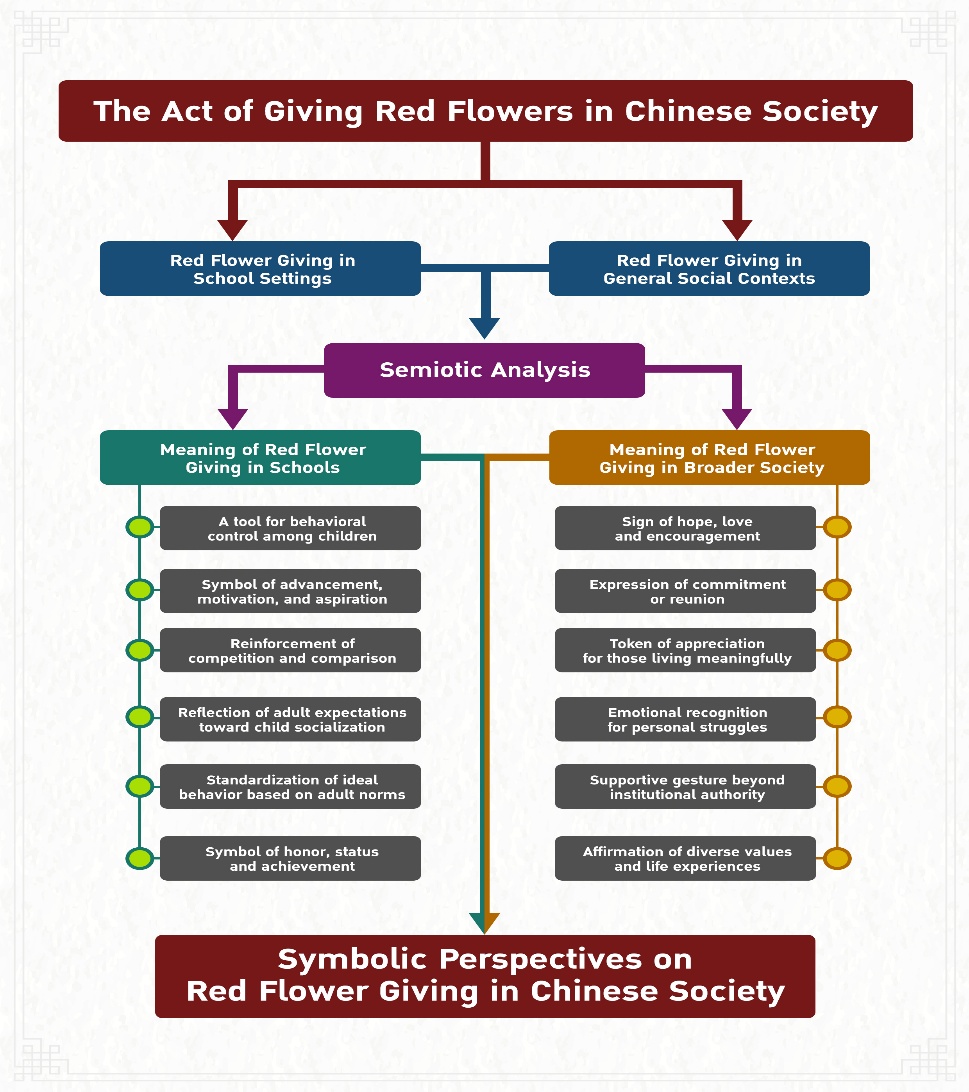
Figure 1 Conceptual Framework of Red Flower Symbolism across Educational and Social Contexts
Research objectives
1. To examine and compare the meanings of the red flower symbol in educational settings and general social contexts.
2. To analyze how the act of giving red flowers reflects semantic transformation and symbolic diversity in Chinese social media platforms.
Methodology
This study employed a qualitative research design grounded in semiotic analysis to investigate the symbolic meanings of the red flower (小红花) in contemporary Chinese digital culture. Data were collected from two major social media platforms—Weibo (微博) and Xiaohongshu (小红书) —through the hashtag #送你一朵小红花, over the period from February 7, 2025, to July 9, 2025. A total of 139 public posts were purposively sampled based on their clarity, relevance, and diversity of context. Posts were categorized into two primary domains: educational settings and general societal situations.
The analytical framework followed Roland Barthes’ semiotic model, which distinguishes between denotative meanings (literal, explicit) and connotative meanings (cultural, affective). Each post was subjected to inductive coding to extract recurring symbolic interpretations. These codes were then thematically grouped into categories reflecting shifts in meaning across contexts and user intent. To ensure methodological transparency, an initial open-coding phase was conducted to generate preliminary codes, which were subsequently refined into an explicit codebook containing operational definitions, inclusion and exclusion criteria, and representative examples. Both coders underwent a structured training session using a subset of sample posts to calibrate their interpretive approaches and to standardize the application of the codebook.
To enhance analytic rigor, researcher triangulation was employed. Two independent coders reviewed the data, and any discrepancies in interpretation were resolved through collaborative discussion. Prior to reconciliation, inter-coder reliability was assessed using Cohen’s kappa, yielding a coefficient of .82, indicating a high level of agreement. The analysis aimed not only to document semantic shifts in the red flower symbol but also to uncover its broader social and cultural functions in participatory media environments.
Result
Findings in the educational context
1. Preliminary data synthesis
A total of 25 social media posts explicitly referencing the act of giving red flowers in school settings were collected and analyzed qualitatively. These posts were selected for their clarity and diversity in expressing symbolic meaning. The analysis focused on categorizing the meanings according to the giver, recipient, and the symbolic function of the red flower within each context.
The purpose of this categorization was to compare the emergent meanings found in contemporary online discourse with traditional interpretations identified in the literature review, and to prepare for a deeper semiotic analysis based on Roland Barthes’ theoretical framework.
Among the 25 posts, the most frequently observed context was that of teachers giving red flowers to students, which appeared in 21 cases. This finding highlights the continued prevalence of the red flower as both a pedagogical and psychological tool used to reinforce desirable behaviors among students. The purposes and subcategories of flower-giving observed in this context can be classified into several types, as follows:
The findings from the 21 teacher-to-student posts were categorized into six primary functions:
1. As a Tool for Behavioral Guidance (9 posts): In this category, red flowers were used as a form of positive reinforcement, wherein teachers employed symbolic rewards instead of punishment to encourage constructive behavior. The red flower served either as a direct reward or as a motivational tool to inspire students to improve their conduct and personal development.
2. To Appreciate Positive Behavior (2 posts): These cases reflect the red flower as a gentle psychological tool to affirm that students were on the right path. It communicated encouragement and emotional validation. Subcases included appreciation of good behavior and reinforcement of desirable conduct.
3. To Construct the “Good Child” Image (3 posts): These posts illustrate the symbolic function of the red flower in reinforcing adult-defined standards of morality. It was used to reward, praise, or encourage behaviors that conformed to societal ideals of virtue, including instances where students’ self-expression was accepted despite diverging from such norms.
4. To Offer Emotional Support (3 posts): Here, the red flower symbolized encouragement in maintaining academic motivation, positive attitudes, and well-being. Subcases included use as a stimulus for academic diligence and as a gesture of emotional support.
5. As a Symbol of Achievement (1 post): In this post, the red flower marked academic or behavioral success. It represented recognition from the teacher, symbolizing student accomplishment attained through effort and discipline.
6. Other Purposes (6 posts): Several posts could not be classified into the above categories but revealed specific symbolic uses of the red flower, such as promoting personal growth (e.g., social skills, responsibility, confidence), enhancing self-worth, or acting as a general motivator without clearly defined objectives.
In addition to teacher-to-student interactions, other flower-giving contexts emerged, illustrating expanded symbolic functions:
1. Student-to-Teacher (2 posts): These posts reflect expressions of gratitude and respect from students to teachers. The red flower was used to symbolize affection, appreciation, and acknowledgment of the teacher’s influence.
2. Parent-to-Student (1 post): This context involved emotional encouragement and recognition from parents, affirming the child’s efforts and reinforcing confidence.
3. Student-to-Stranger or Public Figures (1 post):
A red flower was offered to individuals such as courageous citizens or passersby, symbolizing unreciprocated moral appreciation and spontaneous goodwill.
4. Student-to-Lei Feng (雷锋) (1 post): In this case, the red flower was used to honor Lei Feng, an icon of selfless devotion in Chinese socialist tradition. It symbolized reverence for moral excellence and social contribution.
The findings from the educational context reveal that the act of giving red flowers remains deeply embedded in school-based moral and behavioral systems. While the majority of posts reflect a continuation of the red flower as a symbol of compliance, achievement, and positive reinforcement, particularly from teacher to student—the variety of symbolic functions points to a gradual broadening of meaning beyond its original institutional boundaries.
Traditionally, as identified in earlier literature and film portrayals (e.g., Little Red Flowers), the red flower functioned as a denotative sign: a straightforward reward bestowed by authoritative figures to promote socially approved behavior. In this study, however, even within the school context, the red flower acquires connotative layers, becoming a signifier of emotional support, appreciation of student individuality, and recognition of moral effort rather than mere academic performance. The emergence of flower-giving from students to teachers, or from parents to students, further demonstrates a shift in symbolic agency. This shift decentralizes authority and suggests that symbolic value can be generated and reciprocated horizontally within the educational community.
From a semiotic perspective, this transformation reflects what Roland Barthes would describe as the “mythologization” of the red flower. What once operated as a literal tool of behavioral management has evolved into a culturally resonant symbol capable of transmitting affect, social appreciation, and emotional nuance. The red flower is thus reconstituted not merely as a reward, but as a socially constructed emblem of relational meaning. This redefinition, even within the confines of educational systems, marks the beginning of a broader symbolic reconfiguration—one that becomes even more pronounced in digital and informal settings, as discussed in the next section.
2. Semiotic analysis
Following the preliminary synthesis of posts related to red flower giving in educational contexts, this section presents selected cases that reveal nuanced or layered meanings. These examples are analyzed using Roland Barthes’ semiotic framework, which distinguishes between denotation and connotation, to better understand how symbolic meaning is constructed and transformed into different contexts of giving.
Post 1
Signifier: A red flower given by a student to a teacher
Denotation: An expression of gratitude; a gift
Connotation: Giving a red flower in this context symbolizes love and respect toward the teacher. It also reflects the idea that teachers, like students, deserve to receive recognition or rewards.
This post clearly illustrates a structural shift in the meaning of red flower giving. According to literature, it is usually the teacher who gives red flowers to students. However, in this case, the student takes the initiative to offer the flower to the teacher. This reversal of the giver–receiver role carries social implications. It shows how the teacher’s value is acknowledged from the student’s perspective, rather than being determined by an institutional system of assessment.
Post 2
Signifier: A red flower given by a parent to a student
Denotation: Encouragement; praise
Connotation: The act of giving a red flower in this case expresses familial love and support, helping the child feel valued. It signifies a shift in the role of the giver—from an institutional system to an individual within the family.
This case reflects a transformation in the symbolic role of the giver. Whereas traditionally the teacher gives red flowers to students, here the parent becomes the one who bestows the flower. This change indicates a move from institutional authority to intimate, personal relationships within the family.
Post 3
Signifier: A red flower given by a teacher to a student
Denotation: A reward; praise
Connotation: Giving a red flower in this context traditionally affirms that the student has behaved according to the teacher’s expectations. However, its meaning has gradually shifted—now symbolizing the value of individuality and the acceptance of students for who they are, rather than simply for adhering to prescribed norms.
In this case, the red flower is used as a reward for behavior deemed appropriate by adults, consistent with traditional school practices that emphasize discipline, obedience, and order. Nevertheless, this post reveals a contemporary shift: the meaning of red flower giving has expanded beyond socially expected “good behavior” to embrace positive self-expression. Today’s students no longer need to conform to standard expectations to be recognized or valued.
Post 4
Signifier: A red flower given by a teacher to a student
Denotation: A reward
Connotation: Giving a red flower in this context affirms the student’s personal value—not through academic achievement, but by recognizing inner qualities such as courage. It serves to promote individuality and acceptance of diversity within the classroom.
In this case, the red flower is used as a reward for positive behavior that is not directly linked to academic performance. This type of flower-giving reflects a shift in meaning: from a reward based on rule-following to one that encourages authentic self-expression. The act of giving is no longer solely about behavioral control or encouragement, but about communicating the student’s inherent worth back to them in a meaningful way.
Post 5
A student gives a red flower to members of the public—for example, individuals who are selfless, courageous, or simply passersby.
Signifier: A red flower given by a student
Denotation: A gift; encouragement
Connotation: Giving a red flower in this context serves as a medium for fostering a society that values and acknowledges the goodness in others. It honors moral virtue and cultivates ethical awareness in children—such as empathy and a sense of gratitude toward selfless acts.
This case demonstrates an expansion of the symbolic meaning of red flower giving. When students offer flowers to individuals who show selfless bravery or kindness without expecting anything in return, the act can be interpreted as a form of moral reward. Furthermore, it reflects a significant shift in the role of the giver—from teachers giving flowers to students, to students giving them to society. This transformation illustrates that the red flower no longer functions solely as an educational tool but has become a means for expressing and transmitting moral values between individuals in the broader community.
Findings in the general social context
1. Preliminary data synthesis
From a total of 114 social media posts related to the act of giving red flowers in general social contexts, 25 posts were purposively selected for qualitative analysis. These posts were chosen for their clarity and richness in symbolic expression. The analysis focused on categorizing the meanings found in each post according to the characteristics of the acts specifically the nature of giving, the identity of the giver and recipient, and the symbolic meaning conveyed through the content. This categorization aims to facilitate a comparison between the emergent meanings in general social settings and the traditional meanings discussed in the literature review. It also served as a foundation for the subsequent semiotic analysis based on the theoretical framework of Roland Barthes.
From the analysis of all 114 collected posts, it was found that the most common context involved users giving red flowers to members of the public, accounting for 55 posts. This finding reflects the widespread use of the red flower as a symbol for promoting moral values, providing emotional support, and creating a space for empathetic communication within Chinese society. The purposes of giving, along with specific subcategories, can be classified into several types as follows: 1. Symbol of Encouragement, the red flower is used to provide emotional support and strengthen the confidence of recipients, reflecting care, positivity, and personal affirmation; 2. Symbol of Hope, it represents positive expectations, resilience in difficult times, and emotional strength on both personal and societal levels; 3. Symbol of Love, the flower serves as a medium to convey emotional connection, warmth, compassion, and human affection in diverse social relationships; 4. Tribute to Meaningful, living It honors individuals who live purposefully, contribute to the public good, or act with selflessness and moral clarity; 5. Reward for Active Living, it recognizes effort, enthusiasm, and perseverance, appreciating the everyday determination to engage meaningfully with life; 6. Emotional Strength During Hardship, the flower acts as a silent companion, offering empathy and psychological support during times of adversity; 7. Unspecified Intentions, even without explicit meaning, the act of gifting still conveys goodwill, appreciation, and the emotional flexibility of the symbol.
The analysis of all above posts across seven thematic categories reveals that the red flower has undergone a significant symbolic transformation in contemporary Chinese digital culture. No longer confined to its institutional origins as a reward within educational contexts, the red flower now functions as a multifaceted symbol of empathy, hope, love, recognition, and emotional resilience, used widely in everyday interpersonal and social exchanges. Primarily, the red flower serves as a tool of emotional solidarity, enabling individuals to express support, encouragement, and psychological comfort in diverse situations. It is used not only to comfort those facing hardship, but also to uplift and connect with others across digital platforms—fostering a sense of shared humanity. Closely related is the symbolic use of the flower to convey collective hope: a gesture of optimism that affirms life’s struggles while promoting emotional healing and positive expectation. These meanings often overlap, suggesting the flower’s capacity to mediate complex emotional states.
In the context of love and relational care, the red flower communicates deep affection—not limited to romantic love, but extending to familial warmth, friendship, compassion, and empathy. Its ability to bridge emotional distance highlights the growing centrality of affective communication in the digital age. The flower also operates as a moral tribute—a quiet yet powerful gesture of respect for individuals who live meaningfully, with purpose or altruism. It symbolizes not success in a material sense, but ethical contribution to the collective good. Similarly, its use as a reward for active engagement with life recognizes perseverance and passion, reaffirming that ordinary, intentional living is worthy of symbolic recognition.
Another emergent role of the red flower is as a source of internal strength, often offered in moments of vulnerability, illness, or loss. In such cases, the flower becomes a non-verbal companion—a sign of emotional resilience and solidarity that affirms rather than fixes, supports rather than judges. Even in posts without clearly stated intent, the flower continues to convey goodwill and admiration, demonstrating its semiotic elasticity. It enables open-ended, intuitive communication that transcends formal messaging and allows users to express nuanced emotions in subtle, yet socially resonant ways. Taken together, these diverse symbolic uses mark a democratization of symbolic expression, where meaning is constructed through grassroots, everyday digital interaction. The red flower emerges as a vernacular icon of emotional life in contemporary China—one that is accessible, empathetic, and deeply human.
In addition, there were 19 posts in which users gave red flowers to themselves. Among the 19 posts in which users gave red flowers to themselves, the symbolic act reflects a rich landscape of intrapersonal communication—serving as a tool for emotional healing, self-affirmation, and personal growth. Despite being categorized under varied themes such as encouragement, hope, love, reward, resilience, and self-recognition, all posts consistently convey efforts to uplift the self and restore psychological balance. Across categories, common symbolic intentions include Offering comfort during hardship; Expressing goodwill toward oneself; Supporting self-love and inner peace; Encouraging optimism and perseverance; Recognizing personal value and growth and marking new beginnings and life transitions. This pattern suggests that red flower self-gifting functions not merely as self-encouragement, but as a ritual of self-care, celebrating the act of living mindfully and meaningfully—even amid struggles.
Dual-Gifting: Self and Others as a Shared Emotional Practice in 11 posts, users were found to give red flowers to both themselves and others within the same context. This form of “dual-gifting” reflects the symbolic power of the red flower as a bridge between the internal and external emotional worlds—where self-encouragement, social empathy, and emotional resonance coexist. Through shared experiences such as hope, encouragement, and love, individuals express both self-compassion and social solidarity. The consistent subthemes across all categories—offering comfort, expressing goodwill, promoting self-love, and reinforcing optimism—highlight the flower’s dual role in affirming personal strength and transmitting positive values to the broader community.
Red Flower Gifting within Family and Farewell Contexts in 9 posts, users expressed affection by gifting red flowers to family members or to individuals who had passed away. This symbolic act highlights the red flower’s emotional role within the intimate sphere, representing love, care, gratitude, and respect within familial bonds. It also serves as a medium for transmitting blessings and maintaining emotional continuity across absence or loss. Despite being categorized into various themes—such as encouragement, hope, love, and tribute—the symbolic functions consistently reflect an intention to preserve positive emotional energy within relationships. Subthemes include offering comfort, expressing sorrow and remembrance, appreciating meaningful actions, and promising reunion. These uses reaffirm the red flower’s role not only as a personal or social symbol, but also as an affective bridge across generations, loss, and memory.
Table 1 Summary of less frequent gifting contexts and their symbolic intentions
Gifting Context |
No. of Posts |
Core Symbolic Intentions |
Key Subthemes |
To rule-abiding citizens / socially responsible individuals |
2 |
Encouragement, reward for responsible living |
Appreciation, Story-sharing, Gratitude |
To bus drivers / good citizens |
1 |
Praise for discipline, civic responsibility |
Good deeds, Story-sharing, Gratitude |
To artists |
2 |
Recognition of creativity, effort, and dedication |
Good deeds, Story-sharing, Gratitude, Blessing |
To chronically ill / disabled persons |
3 |
Hope, encouragement, love, resilience, and moral recognition |
Charity promotion, Positivity, Perseverance, Respect |
To a special person |
3 |
Love, emotional connection, and heartfelt wishes |
Longing, Appreciation, Goodwill |
To school friends |
2 |
Friendship, hope, encouragement, and moral admiration |
Longing, Appreciation, Blessings & Gratitude, Sincerity, Positivity & Goodwill |
To students and university students |
3 |
Support for learning, personal growth, and friendship |
Positive reinforcement, Friendship-sharing |
To parents / caregivers |
1 |
Hope, love, and encouragement for fulfilling family responsibilities |
Positivity, Story-sharing |
To art appreciators |
1 |
Recognition of artistic empathy and shared inspiration |
Positivity, Consolation |
To the elderly |
1 |
Hope, respect, perseverance, and a promise of reunion |
Charity promotion, Positivity, Perseverance, Goodwill |
To a childcare provider |
1 |
Hope, encouragement, love, and admiration for meaningful caregiving |
Admiration, Dedication acknowledgement |
The analysis of these less frequent gifting contexts reveals the symbolic flexibility of the red flower across diverse social settings. As summarized in Table 1, even in uncommon scenarios—such as gifting to drivers, artists, disabled individuals, or childcare providers—the flower consistently conveys encouragement, appreciation, and moral recognition. It serves as a medium for affirming social values like care, responsibility, resilience, and emotional connection. This reflects the red flower’s role as a culturally adaptable icon that transcends formal rituals. Ultimately, it functions as a gentle, grassroots expression of ethical and emotional solidarity in modern Chinese society.
2. Semiotic analysis
Following the initial synthesis of data on the act of giving red flowers in general situational contexts, the researcher selected specific posts that reflected distinctive characteristics or conveyed layered meanings for semiotic analysis. This analysis employed the theoretical framework of Roland Barthes in order to explore the levels of meaning embedded in the symbol.
In the case of giving a red flower (一朵小红花), although the appearance remains identical across all instances, its meaning can shift significantly depending on the context of the giver, the recipient, and the underlying intention.
Post 1.
Signifier: A red flower given by the user to the general public
Denotation: Encouragement, well-wishing
Connotation: The act of giving a red flower becomes a symbol of hope passed between individuals. It evokes the image of a path lined with blooming flowers, representing a beautiful and promising future. The gesture conveys goodwill without specifying a recipient, emphasizing its universal nature.
This post illustrates a growing trend of red flower gifting that transcends rigid structures. It is not rooted in institutional systems or authority but emerges from individual goodwill. Such acts reflect the values of a compassionate society, where empathy and human connection are freely expressed.
Post 2.
Signifier: A red flower given by the user to a bus driver and a civic-minded citizen
Denotation: Encouragement, admiration
Connotation: In this context, the red flower symbolizes a tribute to the everyday virtues of ordinary people—such as kindness, selflessness, or helping others without seeking reward. The gesture functions as a transmission of moral values without the need for formal recognition or institutionalized evaluation. It reflects a societal shift toward valuing good deeds in daily life.
Within Roland Barthes’ framework, the red flower in this post operates as a signifier of moral worth in the mundane. The giver is a citizen, and so is the recipient—demonstrating a horizontal relationship rooted in mutual respect, not hierarchical structures or institutional authority.
Post 3
Signifier: A red flower given by the user to their deceased father
Denotation: An expression of love and remembrance
Connotation: In this context, the red flower serves as a medium for communicating love and longing to someone who has passed away. It not only symbolizes the enduring affection for the father but also provides emotional healing for the giver, expressing their resolve to carry on with life.
This post demonstrates that the act of giving a red flower is not limited to interactions with the living. It can function as a symbolic bridge—connecting the realm of memory with the present, enabling emotional continuity beyond physical absence.
Post 4
Signifier: A red flower given by the user to themselves
Denotation: An act of self-love
Connotation: In this context, the red flower symbolizes a recognition of one’s own worth. It reflects the user’s courage to accept, love, and show compassion toward themselves—serving as both emotional comfort and psychological healing. This symbolic gesture of self-gifting expands beyond prior interpretations found in the literature, which largely emphasized recognition from others within institutional or social contexts. Here, the giver and the receiver are the same individual, and the act is detached from any external behavior or achievement. Rather, it arises from internal emotional needs—such as fatigue, vulnerability, or a desire for healing. Thus, the red flower no longer functions as a reward for conduct but becomes a symbolic tool for inner dialogue, reflecting concepts of self-love and emotional self-care.
Post 5
Signifier: A red flower given by the user to the public
Denotation: Encouragement, comfort, and appreciation
Connotation: In this context, the red flower is used as a symbol of hope in each individual’s life journey. The user employs the flower to convey support and acceptance of diverse paths of personal growth, without comparison. It expresses confidence that everyone can bloom beautifully in their own season.
This post illustrates how the red flower has become a symbolic language of human understanding. A single flower may offer encouragement to those who have yet to reach conventional success but are steadily growing at their own pace. Under Barthes’ semiotic framework, the signifier is the flower itself, but the signified reaches deeper—embodying acceptance of the self without clinging to societal standards or immediate tangible achievements.
Discussion
The findings of this study provide a comprehensive understanding of the symbolic transformation of the red flower (小红花) in contemporary Chinese society, from a denotative symbol of institutional authority in educational settings to a connotative symbol of emotional resonance in digital culture. The analysis of social media posts reveals a semantic shift where the act of giving a red flower transcends its traditional function as a top-down reward and becomes a horizontal, emotionally charged gesture. This discussion critically compares these findings with prior literature and interprets their broader implications through the lens of Roland Barthes’ semiotic theory.
This study’s findings corroborate existing research regarding the traditional denotative function of the red flower in educational contexts. Earlier scholarship, as seen in the film Little Red Flowers and analyses by Yun and Tan (2009) and Huang (2007), identifies the red flower as a tool for promoting socialist morality, reinforcing conformity, and upholding adult-defined standards of behavior. Our analysis of social media posts similarly confirms its continued use for behavioral guidance and as a symbol of achievement within schools. However, our research extends beyond these traditional interpretations by confirming and contextualizing the symbolic expansion observed in the film A Little Red Flower. Building upon earlier cinematic interpretations of the red flower (Gong, 2021; Bao, 2021; Zha, 2021), this study identifies a broader semiotic evolution within everyday digital discourse, revealing that emotional and relational meanings are now co-constructed through vernacular online practices.
A key contribution of this study is its application of Roland Barthes’ semiotic framework to explain this semantic shift; a notable gap identified in existing literature. While prior research often confines its analysis to specific historical or filmic contexts, our findings illustrate the real-world process through which a cultural symbol undergoes a transformation from a literal sign to a culturally significant “myth” in the digital age.
Applying Barthes’ semiotic theory, the research findings demonstrate a clear progression from denotation to connotation in the meaning of the red flower. In educational settings, the denotative meaning is literal: the red flower is a signifier for a specific signified, which is “a reward for good behavior or academic achievement”. This is a straightforward, first-level meaning imposed by an institutional authority.
However, in digital culture, the symbol is mythologized and acquires a second-level connotative meaning. The red flower, as a signifier, now evokes a new signified: a feeling of empathy, collective hope, or personal encouragement. The act of giving a red flower becomes an emotionally resonant gesture that carries cultural and affective weight. This transformation signifies a shift in symbolic agency from a centralized, institutional source to a decentralized, participatory user base. On social media, the meaning of the red flower is not dictated from above but is constructed horizontally through shared experiences and emotional exchanges among peers. This fluid, context-dependent meaning aligns with Barthes’ notion that symbols are not fixed but are dynamic entities whose interpretations are shaped by social and cultural practices.
Beyond the observed thematic patterns and semiotic interpretations, this study further reveals how the act of gifting a red flower transcends the boundaries of traditional institutionalized recognition. In the past, the symbol of the red flower was largely controlled and distributed within hierarchical systems—such as schools, youth leagues, or state organizations—to reinforce obedience, morality, and social order. However, in the current data derived from digital platforms like Xiaohongshu and Weibo, the red flower emerges as a grassroots symbolic gesture that reclaims its meaning through decentralized and emotionalized practices.
One critical implication of this transformation is the destabilization of institutional power over symbolic capital. As Zhao (2022) has pointed out, the redefinition of ‘sign’ in digital cultures requires attention to how meaning becomes fluid and user-generated. The red flower no longer represents reward sanctioned by authority but rather becomes a tool for horizontal recognition, emotional healing, and affective solidarity. This aligns with Yanyongkasemsuk’s (2013) emphasis on symbolic interactionism, whereby meanings are constructed through subjective interpretation and shared emotional experiences rather than imposed codes.
Moreover, the act of giving a red flower to oneself—as observed in numerous posts—challenges the classic sender–receiver binary. It introduces the notion of intra-personal semiotic exchange, wherein the individual simultaneously becomes the signifier, the signified, and the interpreter. This mirrors Wasinsunthon’s (2013) notion of “self-reflective signification,” where symbols operate within one’s inner dialogue and emotional landscape. It also evokes Gong’s (2021) interpretation of the red flower as a vehicle for psychological resilience and existential affirmation.
Importantly, this study invites a more critical reading of the commodification of symbolic acts. While the current data reflects altruistic and empathetic intentions, the possibility of red flower imagery being co-opted by brands, campaigns, or algorithms (e.g., gamified social platforms rewarding behavior) cannot be overlooked. As Promrod (2010) notes, color metaphors—especially “red” in Chinese culture—are double-edged: they may convey auspiciousness and vitality but also risk manipulation when reduced to tokens in consumerist or nationalist discourses.
Lastly, although the red flower seems to signify positive energy, inclusivity, and emotional care, its overuse or uncritical embrace could risk sentimental saturation—wherein powerful symbols lose their depth through repetition and aestheticization. To address this, future research could investigate how recipients interpret the red flower—does it uplift, trivialize, or alienate? and whether the performative nature of posting such acts online dilutes or reinforces their meaning.
In summary, the red flower is not merely a sign of kindness or optimism. It is a contested semiotic site, where power, identity, emotion, and ideology intersect. Its evolution from a state-controlled badge of merit to a freely-given symbol of emotional solidarity reflects broader shifts in Chinese society’s engagement with symbolic language, digital communication, and the politics of empathy.
An additional consideration concerns the question introduced earlier in this study—whether the “little red flower” has the potential to evolve into a global symbol comparable to the pink ribbon. The findings of this research suggest that although the red flower has undergone significant symbolic expansion within Chinese digital culture, its current functions remain largely embedded in culturally specific contexts. Across both educational and general social settings, the symbolic meanings identified—such as encouragement, emotional support, self-recognition, moral appreciation, and relational affirmation—are strongly tied to vernacular practices on Weibo and Xiaohongshu. The red flower’s meaning emerges from shared cultural histories, digitally mediated emotional expression, and the reinterpretation of a symbol already familiar to Chinese users through school experiences, cinematic narratives, and social campaigns.
Within this dataset, there is no evidence to indicate that the red flower has yet moved beyond these culturally grounded interpretive communities. None of the posts analyzed referenced cross-border circulation, international awareness, or reinterpretation by non-Chinese users. Instead, the flower functions primarily as an affective resource within a distinctly Chinese semiotic environment, shaped by local emotional norms and social values. While the symbol demonstrates considerable semiotic flexibility—being used to encourage strangers, support the self, comfort the bereaved, or honor meaningful individuals—these uses remain internal to the cultural and digital sphere from which they emerge.
Accordingly, the results of this study do not suggest an ongoing trajectory toward global symbolic recognition. Rather, the red flower appears to function as a culturally resonant but contextually bounded symbol whose meanings are deeply rooted in Chinese digital practices. This does not preclude the possibility of future global diffusion, but based on the present data, the red flower’s semiotic power is situated within domestic digital culture rather than extending toward international symbolic adoption.
Implications
Educational implications: In schools, red flower gifting now serves to create a more emotionally aware and supportive environment. Teachers and students alike engage in symbolic communication that values care, kindness, and character over competition.
Cultural implications: The expansion of red flower gifting into public and personal domains highlights a broader cultural trend in China toward affective communication and emotional literacy.
Digital communication: The red flower’s transformation into a semiotic tool for emotional solidarity reflects how visual symbols evolve in digital environments, especially in platforms like Xiaohongshu.
Psychological implications: The act of self-gifting red flowers marks an emerging discourse on self-compassion, mental health, and personal affirmation, particularly among younger users navigating social pressure.
Limitations and future research
The study focused on posts from specific platforms and timeframes. Future research may broaden the scope to include video-based gifting, cross-cultural comparisons (e.g., flower symbolism in Japanese or Korean platforms), or age-related differences in symbolic use. Further investigation into gendered expressions of gifting behavior may also offer deeper insights.
Contribution to Knowledge
This study contributes new insights to the field of digital semiotics and moral psychology by showing how a simple symbol—the red flower—can evolve across institutional and personal contexts. In schools, it has become a tool for peer empathy and social bonding. In broader society, it serves as a flexible symbol of love, hope, encouragement, and self-reflection.
Together, these findings underscore how digital media enables the transformation of fixed signs into dynamic cultural tools, reflecting both individual agency and collective emotion in contemporary Chinese society.
Conclusion
This study set out to investigate the cultural and emotional meanings associated with the act of red flower gifting (一朵小红花) within two distinct but interconnected contexts: educational settings and general social life. Drawing from Roland Barthes’ semiotic framework, the analysis revealed that the red flower—though consistent in its visual appearance—emerged as a flexible symbol that acquires its meaning from context, intention, and audience.
In school settings, red flower gifting functions as both a moral reward and a tool of emotional affirmation. Students and teachers use the flower to validate not only achievement, but also empathy, resilience, and personal growth. This reflects a shift in educational culture toward more inclusive and compassionate recognition systems.
In broader society, the red flower serves as a vernacular sign of emotional solidarity. It is given to strangers, loved ones, and even oneself—signifying encouragement, hope, love, and self-compassion. Unlike institutionalized forms of reward, this act is decentralized, emerging from the ground up in digital spaces, where meaning is authored by users rather than authorities.
These findings collectively demonstrate that the red flower has transformed from a disciplinary symbol into a deeply affective and relational gesture. It answers the research question by showing how symbolic gifting in Chinese digital culture is not fixed but dynamic anchored in everyday interaction, emotional intelligence, and shared humanity.
Ultimately, the study contributes to the understanding of how digital semiotic practices shape moral communication, psychological resilience, and cultural values in contemporary China. It opens new avenues for exploring how ordinary symbols—when circulated and reinterpreted—can foster emotional connection and redefine cultural norms in both institutional and informal spheres.
Declaration of generative AI in scientific writing
During the preparation of this work, the authors used generative AI tools to assist with language refinement and readability. The AI tools were not used to generate scientific content, data, or interpretations. The authors carefully reviewed and edited the manuscript and take full responsibility for the content and its compliance with publication ethics.
CRediT author statement
Chatuwit Keawsuwan: contributed to the conceptualization and methodology of the study, developed the overall structure of the manuscript, prepared and refined the English draft, supervised the research process, and managed journal submission and correspondence. Rueangrat Sriphumma and Ratchaneekorn Nenkaew: contributed to data collection, data curation, and formal analysis. All authors participated in reviewing, commenting on, and revising the manuscript and approved the final version.
Reference
Bao, M. (2021). 《送你一朵小红花》:”小红花”不只是一朵花 (A Little Red Flower: “Little Red Flower” is not just a flower). Retrieved from https://cul.china.com.cn/2021-01/14/content_41426809.htm
Barthes, R. (1972). Mythologies (A. Lavers, Trans.). London, UK: Jonathan Cape.
Beijing-Tianjin-Hebei Alliance for Cooperative Innovation and Development. (2023). 43年前 一朵”小红花”从天津绽放花开全国 (43 years ago, a “Little Red Flower” bloomed in Tianjin and spread across the country). Retrieved from https://www.sohu.com/a/681022819_121106842
Box Office Mojo. (2020). A Little Red Flower. Retrieved from https://www.boxofficemojo.com/title/tt12497408/?ref_=bo_se_r_1
Breast Cancer Research Foundation. (2011). It all started in 1993 at Evelyn Lauder’s kitchen table. Retrieved from https://www.bcrf.org/history/
Chaiya, K. (2019). Roland Barthes’s fundamental concept of semiology. Journal of Humanities and Social Sciences, 7(2), 43.
China Youth Daily. (2021). 听付奶奶讲小红花的故事 (Grandma Fu tells the story of the Little Red Flower). Retrieved from http://news.cyol.com/gb/articles/2021-01/25/content_6NbyLTjxo.html
Communist Youth League of China. (2007). 共青团中央批转团天津市委《关于在少年儿童中开展”人人争戴新风尚小红花”活动情况的报告》的通知 (Notice on forwarding the report from the Tianjin Municipal Committee of the Youth League on carrying out the “Everyone strives to wear a new fashion Little Red Flower” activity among children). Retrieved from https://www.gqt.org.cn/documents/after80/200704/t20070427_24395.htm
Craig, D., Lin, J., & Cunningham, S. (2021). Wanghong as social media entertainment in China (1st ed.). Cham, Switzerland: Palgrave Macmillan.
Curtin, B. (2008). Semiotics and visual representation. Journal of the Faculty of Architecture, 1, 51-62.
Gong, C. (2021). A little red flower: Life struggle from the perspective of positive psychology (pp. 400-405). In Proceedings of the 2nd International Conference on Language, Communication and Culture Studies (ICLCCS 2021). Advances in Social Science, Education and Humanities Research. Moscow, Russia: Atlantis Press.
Huang, L. (2007). 《看上去很美 小紅花》 幼兒園裡的暴力寓言 “Little Red Flowers”: A violent parable set in kindergarten. 喀報 cast net. Retrieved from https://ir.lib.nycu.edu.tw/bitstream/11536/33339/1/404.pd
Huang, Q. (2011). A study on the metaphor of “red” in Chinese culture. American International Journal of Contemporary Research, 1(3), 99-102.
Kong, S. (2014). Popular media, social emotion and public discourse in contemporary China (1st ed.). London, UK: Routledge.
Olson, D. C., & Scahill, A. (2012). Lost and Othered children in contemporary cinema (1st ed.). Lanham, MD: Lexington Books.
Promrod, A. (2010). The study of red color adjective in modern Chinese language. Silpakorn University Journal of Arts, 32(1), 91-120.
Qin, X., Yang, F., Jiang, Z., & Zhong, B.-Y. (2022). Empathy not quarantined: Social support via social media helps maintain empathy during the COVID-19 pandemic. Social Media + Society, 8(1), 1.-13.
Rakchat, J. (2015). The gift: The form and reason for exchange in archaic societies. Journal of Arts, Maejo University, 3(2), 15-23.
Rhoads, S. A., & Marsh, A. A. (2023). Doing good and feeling good: Relationships between altruism and well-being for altruists, beneficiaries, and observers. Retrieved from https://www.worldhappiness.report/ed/2023/doing-good-and-feeling-good-relationships-between-altruism-and-well-being-for-altruists-beneficiaries-and-observers/
Singhsakul, N. (2018). Gift: The gift of Marcel Mauss. Retrieved from https://nattawutsingh.blogspot.com/2018/03/the-gift-marcel-mauss.html
Liu,Y. (2021). 《小红花》票房破十亿,B站或赴港二次上市(A Little Red Flower” surpasses 1 billion at the box office; Bilibili may pursue secondary listing in Hong Kong). Southwest Securities Research and Development Center. Retrieved from https://stock.tianyancha.com/qmp/report/2/132eeeaa9d69cf7bb7d5d1057fee93b0.pd
Tan, F., & Xiang, L. (2019). Dancing in reality: Imagery narration and Chinese children’s film in the new millennium (pp. 297-314.). In Hermansson, C., & Zepernick, J. (Eds.). The Palgrave handbook of children’s film and television. Cham, Switzerland: Palgrave Macmillan.
Wang, X. (2025). A study on the tragic consciousness of Han Yan’s directed works: A case study of A Little Red Flower. SSS&H, 4(2), 72-76.
Wang, Y., & Zhang, K. (2016). Research of moral education for college students in China. Education Journal, 5(6), 155-160.
Wayne, A. (2021). The importance of giving. Retrieved from https://www.sagicor.com/en/pdf?path=/blogs/the+importance+of+giving.
Wasinsunthon, J. N. (2015). Semiology and signification. Retrieved from http://johnnopadon.blogspot.com/2015/10/semiology-and-signification.html
Yanyongkasemsuk, R. (2013). Symbolic interaction theory and the explanation of social phenomena from actor perspective. Journal of Politics, Administration and Law, 5(2), pp. 69-89.
Yun, Y., & Tan, B. (2009). Little Red Flowers—Reflecting on children’s education through the “Little Red Flower complex” of “alternative children.” Journal of Educational Studies, 5(1), 25-32.
Zha, W. (2021). Hit film implores us to live full, optimistic lives, Retrieved from https://www.chinadaily.com.cn/a/202104/06/WS606bc310a31024ad0bab3b10.html
Zhang, W., & Bray, M. (2017). Micro-neoliberalism in China: Public-private interactions at the confluence of mainstream and shadow education. Journal of Education Policy, 32(1), 63-81.
Zhao, Y. (2022). Redefining ‘sign’/’symbol’ and semiotics. Signs & Media, 1, 1-16.