
Asian J. Arts Cult. 2026; 26(4): 164
Empathy Speaks Louder than Words: A Study of Empathetic Adaptation of the Film Homestay (2018)
Pratchaya Chaichana1, Thongrob Ruenbanthoeng2, and Natthanai Prasannam1,2,*
1Center for Advanced Studies in the Applied Humanities and Social Sciences,
Kasetsart University Institute for Advanced Studies, Bangkok 10900, Thailand
2Faculty of Humanities, Kasetsart University, Bangkok 10900, Thailand
(*Corresponding author’s e-mail: natthanai.p@ku.th)
Received: 16 September 2025, Revised: 16 January 2026, Accepted: 27 January 2026, Published: 9 February 2026
Abstract
This research examines how filmic text can amplify the message of empathy in an adapted literary text through the adaptation process. This qualitative research is designed as a case study. The cases, selected through purposive sampling, include Eto Mori’s novel Colorful (1998) and its film adaptation, Homestay (2018), directed by Parkpoom Wongpoom. The research employs the textual analysis method, focusing primarily on the concepts of narrative empathy (Keen, 2007) and Dantean space (D’Adamo, 2018). The findings illustrate that Colorful enhances character identification and readers’ empathy through its thematic and narrative devices. The theme of human fallibility, which is ingrained in human nature, is explored, while literary devices, including tone and first-person point of view, are employed to evoke empathy. Homestay, the film adaptation, amplifies its communication of empathy. The conventions of the thriller film genre override the lighthearted tone of the novel. The film leverages diverse empathetic devices across thematic, temporal, and spatial dimensions. The film also intensifies the transient nature of time and life, in addition to character identification. The implications of the study underline the foregrounded empathy in the novel-to-film adaptation, defining this process and its product as an empathetic adaptation. The research suggests that further exploration of the interrelationship between empathy and film adaptation is encouraged, especially in Thai, Asian, and other contexts beyond Hollywood landscapes.
Keywords: Empathy, Narrative empathy, Film adaptation, Thai cinema, Japanese novel
Introduction
In 2018, during the prominence of the idol group BNK48, Cherprang Areekul’s casting as a schoolgirl in GDH559’s adaptation of the Japanese novel and anime Colorful generated significant attention. Parkpoom Wongpoom, known for co-directing the influential Thai horror film Shutter (2006), directs the adaptation, titled Homestay. The sensation arose from the concerns of male fans of Cherprang, given that the film contains elements of sexual violence and the darker aspects of school life (Chalermpanus, 2018).
Prior to the film’s release, the novel Colorful by Eto Mori, originally published in 1998, was translated into Thai in 2003 and published by JBOOK under Image Publishing, coinciding with a period when translated Japanese fiction was a bestseller in Thailand. The title of this translation is Muea Sawan Hai Rangwan Phom (When I Won a Heaven’s Prize). The 2018 edition, published by Jamsai Publishing, aligns with the source text, titled Colorful, corresponding with the context of film’s screening.
Colorful recounts the life of the schoolboy protagonist, Makoto Kobayashi (hereafter referred to as Makoto). He commits suicide but is granted a second chance to resurrect and repent under the guidance of a spirit named Prapura. Makoto is in the company of a disconnected family. He ultimately discovers that his self-absorbed perspective leads him toward his demise. The themes of suicide, the exploration of its causes, and the motifs of alienation and depression are effectively presented in both the anime and the Thai film adaptation (DRAW, 2018, pp. 5–6).
The paratextual network of the translated novel, including prefaces, afterwords, and critiques, serves as a foundational element for exploring how the novel is received by the Thai reading public. The publisher’s preface notes that Colorful was the second bestseller in Japan in 1998 and was regarded as a “heartwarming comedy.” The publisher states that Eto Mori highlights the accessibility of familial warmth and peer support. It may be necessary to adopt a more optimistic perspective toward individuals and view them through a different lens. Effective communication grounded in love and good intentions is paramount (JBOOK, 2004, n.pgn.). The translator’s preface aligns with the publisher’s; notwithstanding the introductory anecdote regarding Japanese schoolgirls who committed suicide and the overall suicide rate in Japan (Kawaguchi, 2004).
These remarks align with those of Eto Mori, the author of Colorful. In the afterword of the English translation, published in 2021, Mori comments that her novel originates from her desire to write “about becoming a different person and living life over again” (Mori, 2021, p. 209). Her intention results in the novel being narrated in a heartwarming tone, addressing the familial and school issues including suicide among Japanese adolescents in an empathetic manner.
Homestay—the film adaptation received a varied reception. It was introduced in Thailand during the 2010s, coinciding with the rise of adaptation industry (Prasannam, 2019) and the portrayal of troubled teenagers in media. Teeradon Supapunpinyo (James) is another prominent actor in the film, previously featured in Hormones the Series (2013-2015). The series illustrates the complex interrelationship among the protagonists, their families, and the school as a social institution. Films addressing adolescent issues span various genres, including school gangster narratives such as Wai Peng Nakleng Khasan/Dangerous Boys (dir. Poj Arnon, 2014) and horror films like Fak Wai Nai Kai Thoe/The Swimmers (dir. Sophon Sakdapisit, 2014), Run Phi/Senior (dir. Wisit Sasanatieng, 2015), and Siam Square (Khumwan, 2017; Jarutsantijit et al., 2020).
From the reception perspectives, Thanomkitti (2021), a critic, aligns himself with the film, associating the viewing experience with the act of opening a wound, while Malikul (2018) focuses on deconstructing patriarchy and representations of women within the film. The Thai adaptation presents the genre and aesthetic of Homestay as a thriller (HOMESTAY Photobook, 2018, p. 280). Patanakunkomat (2018, p. 64) asserts that a crucial element of the thriller genre is the audience’s identification with the protagonist, who often assumes the role of a detective or adventurer, motivated by the pursuit of truth and the assembly of evidence.
The aforementioned idea connotes the influence of genre on the audience’s identification with characters, which is related to evoking empathy through films. Studies in this fashion, however, are generally based on quantitative approaches, focusing on the sensory and neurocognitive responses of the audience. Recent studies aim to fill the gaps in human’s understanding of the effects of film’s formal features on the audience, and the findings are based on a small number of popular Hollywood films (Lankhuizen, 2025).
Portillo (2024, pp. 2–3) suggests three approaches for the study of cinematic empathy: embodied simulation, resonance-enactment, and cinema of empathy. These approaches incorporate methods from fields such as neuroscience, cognitive science, and psychology. The process of study includes examining the scientific phenomenon happening in the viewers’ physical bodies while watching film scenes depicting human sufferings. The technique by which a human face is shown, for example, is analyzed. This kind of method is reverberated by Lankhuizen (2025, p. 185), reporting that the average number of human faces per frame and editing impact the audience’s empathetic responses.
In line with Keen’s (2007) idea that character identification is key to human’s responses to narrative works, Herrero and Sanchez (2023) conducted a quantitative research on the relationship between empathy, emotion, and enjoyment. The findings of the research ratify the significance of character identification as vital instrument in comprehending film viewers’ affective experiences. The study also implies that “identification with the characters is the process through which people experience and interpret a narrative from within” (Herrero & Sanchez, 2023, p. 4). However, being a quantitative study concentrating on the data from participants, the process of elaborate textual analysis—the interpretation from within the narrative—is absent.
Identification between the audience and the protagonist in a narrative is essential. This leads to an initial research question: what mechanisms do both the original novel and the film adaptation utilize to facilitate character identification leading to empathy? Upon examination of both texts, it is revealed that the film amplifies the empathetic touches from the source text through adaptation process. The film adopts the core theme of human imperfection and rearranges its presentation through various elements, both narratively and cinematically. The selection of film genre and the temporal and spatial dimensions play an integral role in this process, encouraging the audience to examine the vulnerable experiences of teenagers rooted in educational institutions and familial structures.1
Theoretical framework: Evoking empathy through screen narrative
The preceding review brings our attention to Suzanne Keen’s (2007) study of narrative empathy. In Empathy and the Novel, she suggests that one of the most important devices contributing to the invocation of readers’ empathy is character identification—a phenomenon when readers identify themselves with a character in a narrative work, especially the protagonist.
Aspects of characterization—character’s traits, complexity, influence on plot development, and other correlated elements—contribute to the process of character identification (Keen, 2007, p. 93). Other components, such as setting, point of view, and genre, can also aid in stimulating empathetic responses (Keen, 2007, p. xi). Nevertheless, in her thorough review, Keen claims that although these narrative techniques are crucial, there is no certain conclusion on how these techniques work. The reader’s disposition, she adds, might affect how the person reacts to a certain text (Keen, 2007). The nature of the study of narrative empathy is, thus, an ongoing process, whether it focuses on the text or the audience’s response.
Building on the notion that empathy is shaped by several narrative aspects, Stadler (2017, p. 318) contends that character identification can be promoted through cinematic techniques in a film, including the actors’ performances, film style, cinematography, and sound employed to “illuminate the inner life of a character.” John (2017, p. 307) refers to this idea as “empathetic alignment” which concerns with how human’s emotional responses are influenced by situations and problems of others. Smith (1995, as cited in Davis et al., 2015, p. 441), discussing the structure of empathy in films, suggests that the audience’s identification with the character can be guided by the author’s or the filmmaker’s strategy. How structural components like spatial visualization and camerawork are designed to invite the audience into the character’s experiential realm is significant.
The interplay between the spatial aspect of film and empathy is expanded by D’Adamo (2018). In Empathetic Space on Screen: Constructing Powerful Place and Setting, he argues that a film can illustrate the inner perspective of its protagonist through the architecture of the setting to invite empathy (D’Adamo, 2018, p. 6). He adds that an empathetic space can be used to stimulate the audience’s intense empathy by visualizing the protagonist’s visions and trauma (D’Adamo, 2018, p. 11). D’Adamo defines different levels of filmic empathetic space, the most powerful of which is “Dantean space”; a setting wherein the character is presented “both within a place, but is in a dramatic sense also within herself” (D’Adamo , 2018, p. 19). The term Dantean is derived from the name of Dante Alighieri (1265-1321)—a major Italian poet of the Middle Ages.
The psychological and temporal aspects of the space’s architecture are significant. A Dantean space is architected by the character’s past trauma inhibiting in a “Dantean character” caused by a “Dantean moment”; a moment deeply buried in the character’s mind and shapes the character’s later reality (D’Adamo , 2018, p.56). It is when the character experiences some extremely intense events, causing trauma from which the character cannot psychologically progress. This kind of moments influences the author or filmmaker to architect the space to empathetically visualize the trauma, and invite the audience to profoundly experience it with the character in the same emotional space (D’Adamo, 2018, p. 60).
D’Adamo further examines several examples of Dantean characters and spaces from well-known narrative works. In many cases, Dantean space is used for grounding the character’s backstory (D’Adamo, 2018, p. 63). The narrative’s point of view contributes to transporting the audience into the character’s psychological domain (D’Adamo, 2018, p. 78). Two of the notable examples are the frozen lake entrapping Ugolino in Dante Alighieri’s The Divine Comedy (c. 1308–1321) and Miss Havisham’s room in Charles Dicken’s Great Expectations (1861), in which “all the clocks stopped at twenty minutes to nine” (D’Adamo, 2018, pp. 63-64). These two examples embody a mutual sense of stagnancy caused by a character’s past trauma through the implication of the frozen lake and the stopped clocks. It is noticeable that the sense of being “frozen” of the space can be conveyed through both the environment and object motifs in it. This also connotes a sense of time, indicating that temporal and spatial dimensions play a crucial role in stimulating empathy.
This theoretical framework generates two research questions: How does empathy operate in Eto Mori’s Colorful when examined through the lens of narrative empathy? More importantly, how is empathy amplified in Homestay through its cinematic transformation in the lens of the Dantean space framework? Although Keen’s study on narrative empathy inclines toward quantitative review of readers’ responses, her findings draw the attention of this research toward qualitative textual analysis and decoding of narrative meanings of the selected texts. D’Adamo’s concept of Dantean space supports this predisposition by suggesting an approach intertwining formal features of films, the thematic aspect, and textual interpretation with the focus on empathy.
Research methods
This qualitative study seeks to explore the mechanisms through which empathy arises in literary and film narratives. The research scope is defined by purposive sampling, resulting in a case study research design. The textual scope covers the English translation of Eto Mori’s Colorful, translated by Jocelyne Allen and published in 2021, and the film Homestay (2018), directed by Parkpoom Wongpoom. The analysis is mainly informed by the works of Keen (2007) and D’Adamo (2018), along with relevant scholarship, utilizing a textual analysis method as outlined by Dyer (2023).
The research findings are presented through descriptive analysis. The analysis of each text is presented in two main parts: 1) empathy and thematic features and 2) empathy and narrative devices. The proportion of the analysis inclines toward the thorough examination of the film’s amplification of empathy, which is the main focus of this research. The original text is, therefore, analyzed to establish a ground for elaborating the film’s mechanism.
Research findings
1. Narrative empathy in Eto Mori’s Colorful
Colorful is a drama-fantasy tale about a fourteen-year-old boy Makoto Kobayashi, who commits suicide and is magically resurrected as “a formless soul” (Mori, 2021, p. 3). Deprived of all memories from his past life, Makoto’s soul is sent back into his own body to live his life over. He is assigned a mission to find out who the cause of Makoto’s death was. The soul gradually learns about his life and to accept his personal and other people’s imperfections. The novel resolves once the soul successfully discovers the truth about his own identity—that he is the cause of his death—and is allowed to live on in the world as the reformed, empathetic Makoto.
As stated in the introduction, Eto Mori’s novel is intentionally constructed to evoke the reader’s empathy. The following textual analysis elucidates the mechanism through which the invitation of empathy operates.
1.1 Empathy and thematic features in Colorful
The core subject matter of Colorful directly concerns with empathy. The theme of the novel revolves around the recognition and acceptance of human imperfection. By illustrating that human identity is a multifaceted composition of both pleasant and traumatic pieces of identity, the novel suggests that acknowledging this universal truth is fundamental to the cultivation of empathy, both for oneself and for others. This idea is articulated through the depiction of complex characters defined as flawed human beings, and the protagonist’s transformation from alienation toward profound reconciliation with the human condition.
Characters in Colorful are constructed as flawed individuals defined by their struggles and misjudgments in coping with life-defining issues. The protagonist, Makoto, is portrayed as a troubled teenager traumatized by his inability to reconcile with the complexities of human existence. This trauma is rooted in an inferiority complex stemming from his low stature, experiences of bullying, academic underperformance, as well as familial and social alienation (Mori, 2021). His distress is reinforced by his failure to comprehend the individual misjudgments of individuals involved in his world as profound human struggles. Rather, he interprets those actions as unforgiveable moral transgressions. The trauma ultimately leads him into believing that death is the only solution to the crisis.
Secondary characters are also permeated with flaws. The fallibility of Makoto’s mother is portrayed through her affair with her flamenco teacher. Makoto’s father is defined by the decision to accept a professional promotion at the expense of his peer’s disemployment. Hiroka, Makoto’s romantic interest, chooses to walk the path of teenage prostitution (Mori, 2021).
Makoto’s character development—from a self-absorbed human being to an empathetic individual—serves as an allegory of human’s journey of empathetic cultivation. The temporal aspect plays an integral part in the protagonist’s characterization. At the structural level, Makoto’s existence is bifurcated; it is divided into two distinct segments—his past self and his present self. Makoto’s existence is treated as if it were a physical object which is, in Makoto’s own term, “broken” (p. 190). By juxtaposing his present self with his pre-suicide past, the novel establishes a psychological divorce between the two selves of the character which requires eventual reconciliation. With the act of suicide functioning as the sign of his self-fragmentation, Min’s past embodies the inability to navigate reality, while his present existence represents the phase of empathetic capacity development.
At the beginning of his resurrection, the lack of comprehension in human imperfection from his past life still persists; it manifests through his anger toward his mother, calling her a “depraved old lady” and a “married adulteress” (p. 49). Looking at the world through the inherited ignorant view, Makoto’s soul insistently blames others for never getting to genuinely know him, claiming that it pressured him into killing himself (p. 98). This egocentric stance bars him from acknowledging the complexities of human condition. Also, his inability to empathize with the imperfections of others fuels his desire for self-erasure, both in the past and at the present.
The resurrected Makoto actively alienates himself from his own past, viewing his physical vessel merely as a temporary “homestay” (p. 166). He considers the present experiences as his own, rejecting the emotions inherited from his past (p. 167). The present Makoto’s alienation of his former identity is also externalized through his change of hairstyle and fashion (p. 56). Such self-alienation occurs subconsciously, reflecting the inherited self-absorbed and unempathetic worldview that defines his pre-suicidal disposition.
Makoto’s self-alienation gradually dissipates as he reconnects with his past life. The self-reunification process is portrayed through the metaphor of painting, both as a creative act and a workpiece. Resurrected with his memories erased, Makoto retains an inherited subconscious passion for oil painting. The painting gives him a sense of empathetic intimacy with his past self, evidenced through his observation: “I quickly grew accustomed to the oil paints...Only when I sank into the world of painting did I forget Makoto’s misfortunes... his loneliness, his miseries” (p. 42). Left unfinished following Makoto’s suicide, the painting—with “blue spread across the canvas and the horse floated up on the top right, still half–finished” (p. 39)—becomes an allegory for his incomplete identity. The eventual completion of the work signifies Makoto’s successful cultivation of empathy, occurring in tandem with his recognition and acceptance of both his own and others’ emotional suffering. Hiroka’s decision to preserve the painting rather than destroy it substantiates this transformation (p. 157).
Makoto’s successful empathetic journey is progressed mainly through perspective-taking, an approach identified as one of the effective vehicles of empathy (Keen, 2007). Makoto’s initial egocentric worldview is transformed through his attempt to comprehend others’ narratives by letter reading and intimate conversations—a process never possible for Makoto pre-suicide. The resolution of the conflict between Makoto and his parents serves as a distinct example. Makoto’s unempathetic feeling toward his mother is altered via an eight-page letter from his mother, detailing her affair with the flamenco teacher (pp. 103-110). This letter grants Makoto a view into the mother’s multifaceted thought process. This pattern of resolution is reproduced within the conflict between Makoto and his father. During a picnic, Makoto gains a new perspective from his father, who appears to be entirely oblivious to the mother’s adultery (p. 133). In light of this discovery, Makoto’s empathy gradually develops through the adoption of both his parents’ perspectives.
In the novel’s resolution, Makoto’s present self is finally capable of apprehending the emotional wounds accompanying those around him—his parents, his brother, Hiroka, and his peers Shoko and Saotome—and himself, concluding that “[a]nyone and everyone in this terrible world was broken in their own way” (p. 190). The climax occurs when he confronts the fact that he is the cause of his own death and is, in fact, Makoto (p. 195). This indicates the successful re-composition of his bifurcated identity; the present self has reconciled with the past self it once sought to extinguish. The new empathetic disposition allows Makoto to co-exist with other human beings within the real world.
With the theme of empathy as its core, Colorful posits that empathy is a foundation for human existence. The novel equates empathy with human’s ability to exist; conversely, the absence of empathy equals the incapacity to navigate reality. By illustrating that Makoto’s empathetic transformation is achieved after his magical resurrection, the text underscores the importance of time; not everyone can be given the second chance like Makoto after it is too late. Therefore, empathy is a universal human quality requiring proactive cultivation.
1.2 Empathy and narrative devices in Colorful
In Colorful, perspective-taking, a method of character identification, is reinforced through the use of first-person point of view. The novel is narrated directly from the protagonist’s perspective, which promotes perspective-taking on two levels. Barred from the fact that he is occupying his own body and with all his memories erased, the character is put in an unfamiliar psychological space and constrained to navigate a stranger’s perspective. The point of view also allows the reader to occupy Makoto’s sight of the defamiliarized world. The reader—metaphorically as a “formless soul”—is able to live the protagonist’s experience as he goes through episodes of confusion and enlightenment. As Makoto’s empathetic capacity matures, the reader’s empathy concurrently progresses.
Influenced by Mori’s stylistic choice to treat the serious subject matter with a lighthearted tone, Colorful is authored under the drama-fantasy genre. The narrative tone of the novel is thus framed as comic and heartwarming. This tone corresponds with the conciliatory and genial means of the protagonist’s resolution of his conflicts—the letter reading and the intimate conversation—as previously discussed. The whimsical tone of the novel is enhanced by the addition of the character Prapura, an angel who accompanies Makoto throughout his journey. During their initial encounter, Makoto observes that Prapura resembles “a regular human being” with “wings on his back, at any rate, but I couldn’t see a halo on his head” (pp. 3–4). Despite being a celestial being supposedly sent from heaven, the humanlike appearance of Prapura bridges the distance between his angelic nature and Makoto who, despite being a wandering spirit, is essentially a human being. Furthermore, Makoto’s curiosity regarding the absence of the “halo” provides a sense of frivolity that contrasts with the mysterious circumstance in which the angel is introduced.
Prapura’s role in Makoto’s redemption journey is to be his guide, advisor, and confidant. He often demonstrates a sense of levity. For instance, Makoto explicates that Prapura’s intention to assist him depends on his personal mood (p. 6). Once when Prapura shows up in the rain with “a frilly white parasol that totally did not go with his classy trench coat,” he comments that these items are “[distributed] by the boss. I would never buy an umbrella like this myself” (pp. 62-63). The addition of the comical appearance and humorous statements serves to set the overall positive tone during the narrative dealing with the issue of adolescent suicide.2
The preceding analysis demonstrates the structural parallelism employed to convey the theme of empathy and promote character identification. The novel implies that reconciliation with one’s inner flaws and the complexities of others is a key to empathetic development. The genial reconciliation also takes place within Makoto’s conflicts with other characters, highlighting the necessity of accepting imperfections of others—the universal prerequisite for empathy. At the reader’s response level, empathy also progresses on the reader’s side in tandem with that of the protagonist. This demonstrates the multi-layered nature of perspective-taking integrated in the novel.
The following section provides a textual analysis of the Thai film adaptation Homestay, articulating that the original work’s thematic preoccupation of empathy is more pronounced. With the adjustment of narrative elements and the integration of cinematic techniques, especially in the temporal and spatial aspects, the adaptation elevates the foregrounding of empathy through both the thematic features and narrative devices.
2. Homestay as an empathetic adaptation
Homestay follows a seventeen-year-old boy named Min who committed suicide and gets reincarnated as an unknown spirit. With all his memories erased, the spirit is unknowingly put into his own body, with a mission of identifying the cause of Min’s suicide within 100-day. Failure to complete this mission will result in his permanent erasure. As a wandering spirit, Min navigates his former life until he finally discovers his true identity; that he is the cause of his own demise. The film concludes with Min’s successful reconciliation with human complexities and is given a chance to live as a new person with empathy.
While maintaining the original novel’s plot and theme of human imperfection, as approved by the author (HOMESTAY Photobook, 2018, n.pgn.), Homestay undergoes the significant shifts of genre and narrative tone.3 The central message about human’s fallibility is supplemented by the concept of temporal transience, while the genre of drama-fantasy is transformed into a thriller with darker, more oppressive tone. The depiction of the protagonist’s developmental trajectory is intensified by cinematic devices, most noticeably the spatialization of Min’s psychological realm. D’Adamo’s Dantean space framework helps to illustrate the film as an empathetic adaptation of the source text.
2.1 Empathy and thematic features in Homestay
Similarly to Colorful, the theme of recognition and acceptance of human imperfection is preserved in Homestay. Characters in the film are constructed as flawed individuals. The protagonist, Min, is a human being embodying the sense of imperfection throughout his existence, and his lack of understanding in this inerasable human quality fuels his desire to commit suicide.
The temporal aspect of the character’s development is instrumental. Like Makoto in Colorful, Min’s existence undergoes the process of self-bifurcation and eventual reconciliation. The audience is introduced to the past identity of Min through vivid flashbacks that present him as an entity entirely detached from his current existence.4
Self-alienation defines the character during the early stage of the bifurcation. The spirit rigorously alienates himself from his past existence, as demonstrated in his statement toward his friend Li: “You know what? When Min disappeared, he committed suicide. He died right here where you’re standing” (Wongphoom, 2018, 01:35:54).5 Upon hearing his mother call him “My son,” Min’s spirit resists the status, replying: “I’m not your son. Your son has long been dead” (01:41:0). To the spirit, Min has forever vanished, and all the experiences he is being reintroduced to are considered to totally belong to him, not Min’s, although he is unconsciously responding to those present experiences as his former self.
Other characters in Homestay are constructed as fallible individuals. The protagonist’s mother and Pie, the girl of his romantic reverie, are proper examples. Min’s mother suffers from the guilt caused by her adultery, which is further fueled by Min’s suicide (01:40:10). Pie, the parallel of Hiroka in the novel, carries a serious problem of youth sexual abuse. She exchanges her body for the chance to participate in the Academic Olympics, surrendering to her math club teacher’s sexual abuse. She states that the competition is the most important thing in her life (01:25:10), indicating her mistake of prioritizing academic opportunity over integrity.
Min’s failure to understand the complex logic behind others’ life decisions implies his lack of perspective-taking capacity, which is confirmed through Pie’s comment: “You aren’t me. You’ll never understand me” (01:24:17). This inability persists until toward the end of the film. After successfully navigating his past life from another unfamiliar perspective and discovering his true identity, Min’s reflection in the mirror addresses his psyche, “Isn’t it good being able to try living as someone else?” (02:02:43). This is the moment when the opposition between his past and present selves collide. Min’s reflection here represents his past identity entailed by his self-alienation and inability to adopt others’ perspectives, externalized by his old hairstyle and costume. The statement of the reflection validates his reconciliation, corresponding with the achieved recognition of human’s complexity through adopting other characters’ perspectives.
The central theme of human fallibility is supplemented by another idea concerning empathy: the transience of life and time (HOMESTAY Photobook, 2018, n.pgn.; Khaluhin, Alhusseini, & Mohammed, 2025, p. 1244). This subsidiary theme is embedded in the film’s temporal dimension. The notion of temporal transience is implied by the film’s title, Homestay, connoting the universal fact that human existence is merely a momentary habitation of physical body. And by imposing a 100-day limit on Min’s mission, the film foregrounds the intrinsic transient quality and scarcity of time, suggesting that a true cultivation of empathy is linked to the recognition of life’s temporary nature.
Visual and auditory motifs are utilized to help illustrate the theme. These motifs function as a reminder of temporal progression. It is presented when the warder, while manifesting itself as a nurse, delivers “Tick tock. Tick tock. Tick tock” while introducing to Min the hourglass (00:12:17).6 By the film’s conclusion, the sound is reuttered in Min’s own voice: “Tick. Tick. Tick. The clock continues moving” (02:10:55). The first articulation of the motif indicates that, besides human fallibility, the transience of time is beyond Min’s understanding and acceptance. Min’s pronouncing of the sound toward the end of the plot indicates his eventual understanding and acceptance of the fact.
The idea of the passage of time is further foregrounded through an additional couple of motifs: the fireworks and the kaleidoscope. The fireworks are depicted in the film during the Loy Krathong Festival scene. Upon seeing the fireworks, Min comments on its beauty, perceiving them as rather close within his reach. He then raises his hand as if to touch the fireworks while they quickly disappear, leaving behind only the dark sky (00:55:05). The fireworks’ nature is that they sparkle for only a few seconds and swiftly disappear into the darkness. This represents Min’s encounter with the universal fact that time is fleeting, and that the euphoric moment he has can never be captured with the grasp of his hand. Pie’s attempt to perpetuate the beauty of the fireworks in a form of kaleidoscope is thus proven impossible. These motifs also interplay with the overall lighting of the film, which presents Min turning his back on the sources of light in a number of scenes, indicating his inability to unveil the truth.
The point within the plot where Min realizes his empathy reaffirms the relationship of temporal transience to empathy. Min’s spirit realizes that his mother’s and his family’s love for him is genuine once he and his mother have been involved in a serious car accident, rendering his mother into a comatose. The vision of his mother lying unconscious in a hospital bed projects her near-death state in Min’s eyes (01:43:36). This reminds him that his opportunity to cultivate and manifest empathy for his loved ones is finite, underlining the urgency to cultivate the empathetic capacity.
2.2 Empathy and narrative devices in Homestay
Transformation of narrative genre and tone
Homestay deviates significantly from Mori’s original intention to tell the serious story in a light tone. The film opens through Min’s point-of-view shot as he opens his eyes for the first time after suicide. The hideous atmosphere of the hospital’s mortuary sets the thrilling and mysterious tone for the journey (00:01:16).
While Colorful introduces the protagonist’s mission with a vague time frame (p. 5), the film amplifies this temporal constraint. In Mori’s novel, the temporal pressure only escalates in the later stages when Prapura demands a completion of the task “within the next twenty-four hours” (p. 174). In Homestay, the mission stipulates that the goal must be achieved within 100 days; the failure will result in his eternal vanish (00:13:04) while the discovery of the right answer will cause the red sand in the hourglass to stop running (00:46:35). This pressure is further underlined with the presence of the warder, the psychologically provoking character who serves as the regulator of Min’s mission and constantly reminds him of the passing of time.7
Upon their first encounter, the warder talks rudely to Min, punches Min in the face, and commands the movement of Min’s body (00:06:15-00:09:18), asserting both the psychological and physical superiority over the protagonist. The warder then informs Min of the 100-day time limit and the consequence should Min fail (00:13:04). The counting down of number of days is constantly presented throughout the film through Min’s surroundings and, most notably, the visual motif of the hourglass (00:12:17). The constant representation of time illustrates Min’s psychological pressure as the success of the mission is still obscure.
The temporal pressure aligns with the film’s mysterious and oppressive narrative tone. The transformation from a comic into a serious tone of thriller genre offers the audience an electrifying experience of engaging with the protagonist’s struggles. As the plot progresses, the audience is invited into the same high-pressure domain that Min experiences, ultimately facilitates audience’s identification with the character.
Visuality is a part of narrative devices in film texts. Spatial cinematization, therefore, plays a vital role in the depiction of the protagonist’s inner psychological states in Homestay. This strategy of empathetic alignment utilizes the adaptation’s visual means, including the point of view camera work and other cinematic devices.
The film maintains the adapted novel’s first-person point of view. Not only is the story narrated with Min’s perception as the focal point, certain scenes are presented directly though his vision. The film commences as Min opens his eyes to perceive the dimly lit hospital mortuary (00:01:15). With the blurry filter engaged, the opening scene signifies the indistinctness of Min’s unempathetic vision requiring subsequent enlightenment. This point of view, along with Min’s direct audible narration in few scenes, aligns the spectator with Min’s inner vision, enabling them to take Min’s perspective and live the same experiences in the same space with the character.
Spatial dramatization of the character’s inner states through the film’s setting is foregrounded in
Homestay. Min’s bedroom serves as the architecture of Min’s interior crisis. In Colorful, noticeably, space is sparsely employed to reflect Makoto’s psychological trauma. Makoto’s bedroom does not psychologically reflect Makoto’s inner struggle. The closest space to this function is the art club room at the school, which is dramatized to imply the sadness rooted in Makoto’s conflict with Shoko through the rain and the lightnings (Mori, 2021, pp. 183–185). Although Makoto conforms to the definition of Dantean character to a certain level, details about the art club space is very brief and not significantly tied to the character’s inner trauma.

Figure 1 The motif of the hourglass is foregrounded throughout the film, highlighting the theme of time’s transiency and urgency of the thriller genre.
Source: GDH559 (2018)
This empathetic spatialization can be explicated through the lens of Dantean space. Min embodies D’Adamo’s (2018) model of the Dantean character. Throughout the narrative, he is characterized as a wandering soul unable to progress despite his return to life (00:08:18). Although his mission is claimed to be a prize, Min is ironically imprisoned in his own history. Min is thus trapped in a state of existential dilemma; he can neither remember nor forget his trauma, confining him to relive it after the reincarnation.
The most definitive point of Min’s trauma is the moment of suicide. This moment is dramatically portrayed as flashbacks during the scene in which Min reads his own suicide notes in the bedroom. The scene depicts images of him drinking the toxic substance and vomiting blood in his bedroom before his death (01:18:26).8 The suicide moment functions as the Dantean moment, an extremely and intensely emotional experience which is rooted into Min’s memory.
Min’s bedroom is, thus, considered a Dantean space, allowing the audience a powerful empathetic access to the character’s inner world (D’Adamo, 2018, p. 19). The room functions as the visualization of Min’s psychological prison; his entrapment is signified through his continual adherence to this space throughout the film. It should be noted that this room deviates from being a static frozen space according to D’Adamo’s framework, since it dynamically evolves along with Min’s empathetic self.
The functions of Min’s bedroom can be explored through three motifs: the mirror, Min’s funeral portrait, and Min’s painting. These motifs illustrate the interactions and reconciliation between Min’s present spirit and his own history. By these motifs, the room is provided with a reflective effect, which helps to reflect the protagonist’s evolving psychological states at different moments.
The mirror plays a vital role in visualizing Min’s encounter with his past self. It serves as a symbolic reminder that Min’s present journey is grounded upon reflecting and accepting his own imperfection. In the significant scene in which Min reads his own suicide letter, the film reenacts his moment of suicide, positioning the blurry reflection of his dying self in the mirror (01:17.27). The role of the mirror is later foregrounded when Min’s spirit discovers his real identity. While his physical body remains at the school, his psyche travels back to the bedroom, encountering his reflection with the old hairstyle and the costume he wore during the suicide (02:00:52). Min’s final remarks to his reflection (02:02:43) confirms his successful reconciliation with his past self, forming his new empathetic capacity to co-exist with people of different worldviews.
Another motif highlighting the reflective quality of the bedroom is Min’s funeral portrait. The portrait dramatizes the character’s imprisonment in this space, further emphasizing the curse-like nature of the prize. As the film narrates Min’s desperate attempt to eradicate his former identity—implied by his act of scraping off his face from his family portraits (01:16:27)—the permanence of the portrait being in the room underlines the inefficacy of the attempt. The trauma proves inerasable at this point; the more Min attempts to eradicate his past, the more intensely it confronts him (00:56:43).
Min’s attempt to destroy his old identity reoccurs when he smashes the portrait on the floor, aggressively trampling it after discovering a series of harrowing truths about his past. This action results in the portrait’s fractured frame (01:33:16). Once Min begins to achieve deeper understanding in himself and others, he retrieves the broken portrait and carefully puts it on his desk (01:47:15). Toward the ending, the funeral portrait is shown to be reframed and placed in a corner of the room alongside other belongings (02:10:05). This sequence of Min’s actions connotes his psychological struggle and integration with his trauma. After the chaotic encounter with his past, he is finally able to situate those traumatic memories alongside other pleasant, yet equally indelible, fragments of his memories. The film suggests that such memories cannot be extinguished, but must be conciliated with and permanently kept in one’s psychological realm.
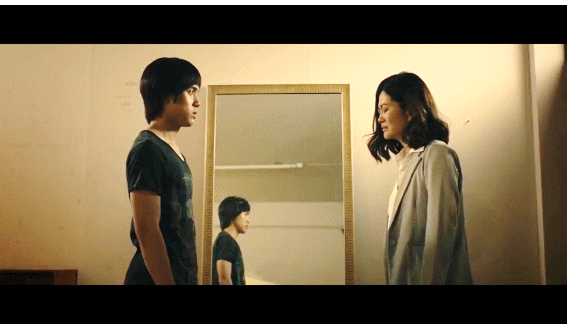
Figure 2 Min’s reflection in the mirror is seen in the background during a conversation with his mother in the bedroom (00:25:38). The mirror motif serves as the visualization of Min’s traumatic past closely connected to the bedroom, and connotes the relationship between self-reflection and empathy.
Source: GHD559 (2018)
Painting, both in the senses of a painted workpiece and the artistic act, is another motif connecting Min to the bedroom. Similarly to Colorful, the painting symbolizes Min’s transformation.9 The creation of this painting begins and completes in the bedroom; its bifurcation also takes place here. The past Min confesses his love to Pie through an array of paintings; one of the paintings shows a drawn figure of Pie standing at a bridge, with her face toward the sun in the background. The present Min’s affection toward Pie is embedded in his unconscious and is externalized through the spirit’s recreation of the same painting (01:57:55). It also plays a crucial role in the revelation of the spirit’s true identity (01:57:59).
At the zenith of his crisis, Min expresses his anger on objects in his bedroom, tearing the paper of the half-finished painting into two pieces (01:34:49). The unfinished painting parallels with Min’s incomplete empathetic self. The act of tearing serves to metaphorically externalize his existential bifurcation. Subsequently, once Min has begun to constitute his new empathetic self, the torn painting is also restored, and the unfinished process of painting is resumed (01:47:46). Near the film’s conclusion, a montage reveals the completed artwork mounted on the wall (02:10:05). This parallel implies Min’s success in ceasing to entirely define himself by his traumatic past. The visible tear line of the painting reinforces the idea of human imperfection, a central theme carried over from the original novel.
The mise en scène of the bedroom is instrumental in visualizing Min’s evolving psychological states. The arrangements of the objects, including the three motifs, evolve alongside the protagonist’s developmental trajectory. Upon Min’s spirit initial arrival, the bedroom is depicted as a dark and empty space. It is revealed that Min himself has removed and burned all of his belongings (00:24:5). This action, along with his attempt to scrapes his face off of family photos, emphasizes his past desire of self-obliteration. The room is gradually populated with belongings as Min slowly regains his memories. The revelation of the truths about his family and Pie causes him to burst out throwing objects around the room, resulting in the disorderliness of the space (01:47:09). The disorganized space functions as a visualization of Min’s chaotic state of mind as he struggles with the unpleasant retrospect.
The orderly vision of the room is depicted when Min’s psyche converses with his reflection, a reconciled persona of the provocative warder (02:02:11). The montage at the film’s conclusion exhibits the finished painting attached to a wall and the funeral portrait carefully placed in a corner of the room, with crumpled pieces of paper and unwashed clothes scattered on the floor (02:09:04). This semi-organized space suggests that, within his subconscious, Min has reached the ideal stage of his existential learning; the lessons he has learned and the problems yet to be solved are finally able to coexist, indicating his newly formed ability to embrace the world through his refreshed moral imagination. It is notable that the portrayal of the dreamy and magical bedroom is depicted only in Min’s psyche’s perception. At the end, Min’s bedroom still shows some items scattered haphazardly around the room. This implies the realistic flaws of the bedroom’s arrangement, which further serves to visually reverberate the theme of human imperfection.
The preceding analysis can be summarized in the following diagram.
This figure illustrates the four stages of Min’s empathetic development: resurrection, reconnecting, chaos, and restoration. It is a journey of transformation from an unempathetic to empathetic self. It should be noted that Min goes through this pattern once in his past life. Before suicide, his previous life followed a conventional path of birth and growth. His self-absorbed worldview brought him into chaos during adolescence, which climaxed in his death. The only testament indicating his optimistic capacity to recognize beauty in life is demonstrated through the painting of Pie.
The narrative of the film commences at Min’s resurrection, where he begins the journey of redemption with his existence being bifurcated. His distinct unempathetic self is represented by the mirror reflection and the funeral portrait. The bedroom appears as a dimly lit, near-empty space, indicating the absence of his memories. During the reconnection stage, Min’s interactions with the motifs visualize his attempt to regain and reorganize pieces of his memories. The re-creation of the painting begins during this phase. The room reflects this stage as it is gradually populated with Min’s belongings. Min is observed as a noticeably more cheerful person.
Min descends into chaos as his lack of empathy prevents him from reconciling with his past and others’ flaws. His destructive psychological state is mirrored by his attempt to eradicate the funeral portrait and the unfinished painting, ultimately leading to the damage of these motifs. The bifurcation of the painting parallels Min’s failure to connect with the nature of human flaws, while the mirror reenacts the trauma of his death. Finally, the restoration phase signifies the re-unification of his identity. As the shattered motifs are repaired, the room alters into a realistic balance of order and disarray—a reflection of the deep-rooted flaws in human existence. Unlike his initial journey which ended in suicide, this reconciliation between Min’s past and present selves marks the success of his empathetic cultivation which allows him to recognize beauty in the world and, ultimately, choose to live.
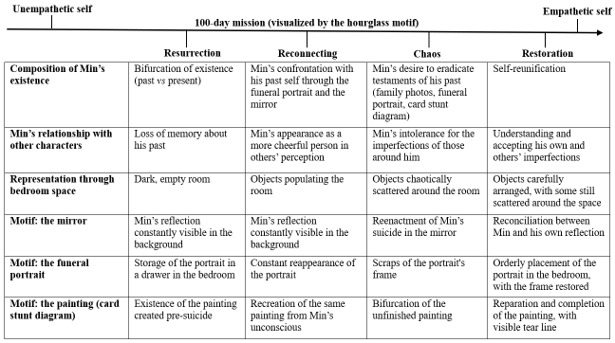
Figure 3 Min’s character development diagram
Source: Authors
The three motifs share mutual reflective quality. The mirror reflects Min’s inner realm, literally providing the bedroom with the mirroring quality. The funeral portrait represents the past he seeks to erase, yet inextricably confronting him as his own reflection. The painting also implies a reflective quality through its symmetry; being torn in two symmetrical, mirroring pieces and reconnected in the end. This aspect connotes the idea of self-reflection, a process essential to the cultivation of human empathetic capacity. Min’s eventual self-reunification implies that reflecting on and accepting all iterations of one’s identity—the intrinsic shift in one’s own perspective—is vital to human existence.
The textual analysis highlights the mechanism of empathetic adaptation—an adaptation with empathy as its core agenda. The underlying message is that the film expands on the theme of empathy preserved from the original novel through both narrative and cinematic features. Various elements intertwine to convey the protagonist’s cultivation of empathy and invite empathy in the audience. Despite being analyzed in separate sections, all elements share overlapping functions and implications both thematically and narratively.
The film intensifies the original text’s exploration into the relationship between time and empathy. Filmic narrative devices are utilized to foreground the temporal dimension of the theme, including the thriller genre and serious narrative tone. The use of visual imagery is added to symbolize the movement of time and urgency of Min’s mission. All of this aligns with the message about the impermanence of life, emphasizing the urgency of fostering empathy that the film implies.
In terms of spatialization, while Dantean space concept may aid in understanding the function of the room, Min’s bedroom cannot be completely defined as a static and undeveloped setting. The role of Dantean space framework herein helps to interpret the use of space in the film and to highlight such evolvement as it shifts from D’Adamo’s original definition.
The film utilizes the protagonist’s bedroom as a visual projection of Min’s evolving emotional states, inviting the audience to experience his reality from within his emotional space. Initially, the room reflects the emptiness and stagnation of a wandering spirit trapped in trauma. As the narrative progresses, the space evolves to mirror Min’s growing empathy, fostering a level of character identification that surpasses the source text. By grounding the audience in this spatialized reality, the film demonstrates how the use of space can profoundly deepen the exploration of empathy, both thematically and in the viewer’s response.
Conclusion and discussion
The textual analysis of Homestay illustrates the relationship between the thriller genre and empathy. Since the film incorporates several episodes of the protagonist’s investigation into his own death, traits of Min’s past are defamiliarized to allow suspenseful viewing experience. The audience identifies with Min through the trope of a murder investigation or survival horror. This aligns with Keen’s remarks that a narrative’s defamiliarized representations can elevate empathetic interpretation (2007, p. xiii). The time-sensitive mission and the presence of the warder amplify the sense thrilling oppression in the narrative. Min’s bleeding from his nose after being assaulted by the warder offers a touch of harrowing violence to the film. This frames Min as a potential victim of an unknown violence. The audience might feel the suspense and urgency of the narrative from the potential that the character is in danger (Bordwell & Thompson, 2013, p. 335).
Echoing the idea that narrative empathy needs rethinking through profound textual analysis of form and genre (Hammond & Kim, 2014, p. 1), this research incorporates the close-reading approach into the case study. As such, further qualitative studies focusing on the interplay of thematic and narrative devices regarding empathy is encouraged, especially among the novel-to-film adaptations in Thai, Asian, and other contexts beyond canonical and Hollywood scopes. Keen’s and D’Adamo’s frameworks might serve as a ground for future research. Suggestions for future research include how the concept of empathetic adaptation applies to other Asian novel-to-film projects, the relationship between space and empathy in other Thai film texts, and how transnational adaptation affects, elevates, or constrains the representation of empathy, which is a new currency of the contemporary world.
Acknowledgements
This research is funded by the Faculty of Humanities, Kasetsart University, under a research program and the post-master’s fellowship scheme. The post-master’s fellowship was initiated in collaboration with the Center for Advanced Studies in the Applied Humanities and Social Sciences, Kasetsart University Institute for Advanced Studies.
Declaration of generative AI in scientific writing
The authors employ a generative AI for proofreading and editing to improve readability of the manuscript. We take full responsibility for the content, arguments, and references.
CRediT author statement
Pratchaya Chaichana: Investigation, Writing–Original Draft, Visualization, Resources. Thongrob Ruenbanthoeng: Supervision, Project administration, Funding acquisition. Natthanai Prasannam: Resources, Conceptualization, Methodology, Writing–Review & Editing.
References
Bordwell, D., & Thompson, K. (2013). Film art: An introduction. New York, USA: McGraw-Hill.
Chalermpanus, N. (2018). Homestay and Cherprang’s next trials, which her male fans should move on from. Retrieved from https://thestandard.co/homestay-movie
Davis, G., Dickinson, K., Patti, L., & Villarejo, A. (2015). Film studies: A global introduction. Oxford, UK: Routledge.
Draw. (2018). Homestay: An eye-catching step of Parkpoom Wongpoom. Starpics, 54(10/893), 3-7.
Dyer, R. (2023). The persistence of textual analysis (pp. 400-411). In Davis, G., & Kooijman, J. (Eds.). The Richard Dyer reader. London, UK: British Film Institute and Bloomsbury.
D’Adamo, A. (2018). Empathetic space on screen: Constructing powerful place and setting. Cham, Switzerland: Palgrave Macmillan.
Hammond, M. M., & Kim, S. J. (2014). Introduction (pp. 1-18). In Hammond, M. M., & Kim, S. J. (Eds.). Rethinking empathy through literature. London, UK: Routledge.
Herrero, M. H., & Sánchez, M. P. J. (2023). Emotion, enjoyment, empathy and identification with characters in cinema. International Journal of Arts and Technology, 14(4), 320-332.
HOMESTAY Photobook. (2018). Bangkok, Thailand: Jamsai Publishing.
Imataka, G., & Shiraishi, H. (2024). Youth suicide in Japan: Exploring the role of subcultures, internet addiction, and societal pressures. Diseases, 13(1), 2.
Jarutsantijit, S., Chummuangpak, M., & Common, T. B. (2020). The analysis of Thai teen films as a genre in Thai films. Walailak Abode of Culture Journal, 20(1), 92-103.
John, E. (2017). Empathy in literature (pp. 306-316). In Maibom, H. (Ed.). The Routledge handbook of philosophy of empathy. London, UK: Routledge.
Kawaguchi, W. (2004). Translator’s preface (n. pgn.). In Mori, E. (4th eds.) (W. Kawaguchi, Trans.). Colorful. Bangkok, Thailand: JBOOKS.
Keen, S. (2007). Empathy and the novel. Oxford, UK: Oxford University Press.
Khaluhin, Z. R., Alhusseini, H. A. M., & Mohammed, I. (2025). A socio-pragmatic study of suicide in Eto Mori’s Colorful. Wasit Journal for Human Sciences, 21(3), 1225-1245.
Kristeva, J. (1982). Power of horrors: An essay on abjection (L. S. Roudiez, Trans.). New York, USA: Columbia University Press.
Lankhuizen, T. (2025). From frames to feelings: Visual form, empathy, and narrative engagement in Hollywood cinema. Amsterdam, the Netherlands: Vrije Universiteit Amsterdam.
Malikul, N. (2018). Homestay: The idealistic women and Min’s meaning of life. Retrieved from https://themomentum.co/homestay-female-character
Matsumoto, R., Motomura, E., Shiroyama, T., & Okada, M. (2023). Impact of the Japanese government’s ‘General Principles of Suicide Prevention Policy’ on youth suicide from 2007 to 2022. BJPsych Open, 10(1), 1-10.
Mori, E. (2021). Colorful (J. Allen, Trans.). Berkeley, USA: Counterpoint.
Patanakunkomat, S. (2018). From Colorful to Homestay: Because human does not have only one shade. Starpics, 54(11/894), 62-64.
Portillo, I. J. (2024). From body to world: empathy and the transformative power of cinematic imagination. Frontiers in Human Neuroscience, 18, 1-4.
Prasannam, N. (2019). The adaptation industry: The arts integration between literature and Thai cinema since 2007 (pp. 13-90). In Prasannam, N. (Ed.). The arts integration industry: Literature, screen culture, and the journey across media. Bangkok, Thailand: Contemporary Art Promotion Fund, Office of Contemporary Art and Culture, Ministry of Culture.
Rotejanaprasert, C., Phoncharoenwirot, C., Thanutchapat, P., Mekchaiporn, O., Chienwichai, P., Detkong, T., & Maude, R. J. (2025). Spatiotemporal epidemiology and hierarchical analysis of suicide mortality and associated risk factors in Thailand using national surveillance data during 1997–2021. Scientific Reports, 15(1).
Stadler, J. (2017). Empathy in film (pp. 317- 326). In Maibom, H. (Ed.). The Routledge handbook of philosophy of empathy. London, UK: Routledge.
Thanomkitti, K. (2021). Opening the wound, questioning life through Homestay. Retrieved from https://adaymagazine.com/homestay
Tran, T., Nguyen, H., & Fisher, J. (2025). Suicidal behaviours among 13- to 15-year-olds in four southeast Asian countries: Trends and contributing factors. Cambridge Prisms: Global Mental Health, 12.
Wongpoom, P. (2018). Homestay [Film]. GDH559. Retrieved from https://www.netflix.com/title/81059564
1 Youth suicide is a well-recognized issue in Japan, addressed through nationwide policy and educational programs since the early 2000s (Matsumoto et al., 2023). The issue is widely explored in Japanese media, including anime, film, and literature (Imataka & Shiraishi, 2024). In contrast, awareness in Thailand was limited during the 2010s. Despite data indicating high suicide rates among Thai youth between 2007 and 2016 (Tran et al., 2025), research, policy initiatives, and awareness campaigns through public media were scarce (Rotejanaprasert et al., 2025).
2 A few scenes in Homestay feature comical acts. However, the sense of humor does not dictate the overall tone of the film. For a deeper exploration of the suicide issues in Colorful, refer to the work by Khaluhin, Alhusseini, and Mohammed (2025).
3 Aspects of bullying and academic underperformance from the original novel have been omitted in the film. The film focuses on employing various other elements to cinematically foreground empathy while preserving the core theme of the original text.
4 Some of such scenes even allow the spectator to witness the co-existence of the past Min, with his old hairstyle and old clothes, and the present Min at the same moment and space.
5 When the filmic text is analyzed and quoted, the timestamp in the film is shown as a citation. The dialogues from the films are translated from the original Thai text.
6 Each time the warder appears in the film, his/her appearance is different from the previous manifestation. The appearances include a male janitor, a nurse, an academic lecturer, or even a young girl. The fluidity of this character’s identity adds more suspenseful mood to the film as a whole.
7 Makoto’s angelic guide Prapura in the original novel is translated into the nerve-provoking warder in the Thai film, emphasizing the film’s significant transformation of narrative tone.
8 The imagery of blood is depicted at several points of the film, including when the doctors first found that Min wakes up from his dead state (00:02:03) and Min’s nosebleed when the deadline is approaching. Blood and bleeding are somewhat related to Min’s formation of his empathetic self. Bleeding signifies that the protagonist is rejecting his old self while increasing evidence are revealed that the wandering spirit and Min are the same person. From Julia Kisteva’s view (1982), Min’s new self can be read as an abject. She explains that human subjectivities are constructed through abjection. They are connected to excretion or bodily waste: blood, vomit, urine, and open wounds, for example. Through the process of abjection, an individual constructs themselves by expelling, spitting out, and abjecting themselves in the same motion that they claim to establish themselves (Kristeva, 1982, pp. 3–4).
9 Makoto as a member of an art club in the novel is transformed into Min’s being a card stunt club member in the Thai adaptation. As a result, the motif of an oil painting in the original novel is translated into diagram for card stunt performance in Thai high school context.