
Asian J. Arts Cult. 2026; 26 (4): 128
Historical Changes and Cultural Expressions of Black Miao Animal Patterns in Qiandongnan, China
Tao Zi* and Gregory Kiyai @ Keai
Visual Arts Program, Faculty of Creative Arts, University of Malaya, Kuala Lumpur 50603, Malaysia
(*Corresponding author’s e-mail: 13296687620@163.com)
Received: 2 January 2026, Revised: 30 March 2026, Accepted: 7 April 2026, Published: 27 April 2026
Abstract
Qiandongnan is home to the world’s largest concentration of Miao people and serves as the primary hub for the preservation and transmission of Black Miao culture. Within Chinese decorative arts, animal embroidery patterns adorning Black Miao costumes embody profound symbolic meanings and substantial cultural significance.Drawing on fieldwork investigations and visual material analysis, this study examines the historical evolution, stylistic characteristics, artistic expressions, symbolic connotations, and contemporary applications of 20 representative animal patterns in modern apparel design. The research identifies the core formal and cultural attributes of these patterns and proposes a “Method Extraction–Application–Validation” framework to guide their modern transformation. The ultimate aim is to advance ethnic cultural inheritance, support cultural preservation, and foster sustainable innovation through design practice.
Keywords: Animal embroidery patterns, Black Miao culture, Contemporary clothing design, Cultural self-confidence, Miao ethnic group
Introduction
This study aims to visually convey the essence of Qiandongnan Black Miao art culture (China) and bring it to life within contemporary art through creative expression. As a distinctive cultural feature, this ethnic group’s culture enriches Chinese traditional aesthetics, while innovative reinterpretations help ensure its ongoing vitality. Drawing on Gombrich’s (1995) insight from The Story of Art, which suggests that art is both history and future, this paper focuses on the traditional costume patterns of the Black Miao, which symbolize the spiritual and cultural identity of their people. Against the backdrop of the rising integration of traditional culture into art and design, scholarly research on the textile heritage of this community remains relatively scarce this research explores the origins of animal patterns with respect to their historical context, style, and cultural significance. It seeks to blend these traditional designs with modern concepts, address issues such as superficial copying—design practices that merely imitate traditional patterns without understanding their underlying cultural and spiritual meanings—and strengthen the visual identity of Miao culture.
To clarify the core terms in the title: “Changes” specifically denotes the historical evolution and formal transformations of animal patterns among the Black Miao people, covering the generational shifts in their visual composition, color application, and symbolic implications. “Expressions” fall into two dimensions: the inherent cultural connotations of the patterns, such as ancestor worship and the pursuit of fertility, as well as their artistic and practical manifestations in contemporary design fields, including fashion and cultural and creative products.
The study was guided by three objectives: 1) to collect traditional and modern animal motifs and analyze their composition, color, and symbolism through fieldwork; 2) to categorize and generalize the attributes of animal patterns in order to identify contemporary trends; and 3) to outline the logic of cultural translation and visual expression.
In order to systematically advance the research, this study constructs a core theoretical framework based on three interdisciplinary theories: Firstly, the study will explore the notion of Cultural Semiotics Theory (Saussure, 1916), which regards Black Miao animal patterns as a symbolic system carrying cultural meanings. The exploration of the correspondence between the signifier (pattern form, colour, composition) and the signified (cultural connotation, ethnic identity, historical memory) facilitates the decoding of the inherent symbolic logic of the patterns. Secondly, the paper expounds upon Cultural Adaptation and Innovation Theory (Sam & Berry, 2016) which provides a theoretical perspective for analysing the contemporary transformation of traditional patterns. The study explores the adaptation of Black Miao animal patterns to contemporary aesthetic preferences and market demands, while maintaining their cultural integrity. It aims to achieve a balance between cultural preservation and innovative development. To frame the analysis of Black Miao animal motifs’ contemporary transformations, this study draws on the Cultural Adaptation and Innovation Theory (Sam & Berry, 2016). Specifically, the theoretical framework is operationalized to examine how traditional symbolic patterns negotiate adaptation to modern aesthetic paradigms and market imperatives within contemporary design practice—exemplified by the ZHUCHONGYUN 2023 Miao-inspired collection—while safeguarding their inherent cultural essence and symbolic integrity. Thirdly, Iconology Theory (Panofsky, 2011) provides a methodological foundation for the visual analysis of patterns. The methodology employed is guided by three levels of analysis: firstly, pre-iconographical description (formal characteristics such as composition and colour); secondly, iconographical analysis (cultural connotation based on historical and cultural background); and thirdly, iconological interpretation (deep spiritual meaning reflecting ethnic values and world outlook).
This paper adopts the following structure: Section 2 provides a systematic review of literature on Miao traditional costume culture. Section 3 details the research materials and elaborates on the qualitative and visual semiotic methodologies employed. Section 4 presents core findings regarding the classification and visual semiotic analysis of Black Miao animal patterns. Section 5 synthesizes key conclusions and delineates the study’s theoretical and practical contributions. Supplementary sections—including a declaration on generative AI usage in scientific writing, and acknowledgments of institutional support and individual research assistance—follow the main body.
Literature review
In recent years, scholarly research on China’s ethnic minority traditional cultures has grown significantly. Foreign studies on Miao traditional costume culture have mainly focused on the humanistic landscape, attire forms, and early migrations of the Qiandongnan Miao. For example, Savina (1824) briefly mentioned Miao costumes while summarizing their language and society in History of the Miao (Hong Kong Nazarene Publishing House), and Torii Ryuzo (2009) systematically documented Miao history in Report on the Investigation of the Miao People (Guizhou University Press). Generally, overseas research emphasizes sociocultural contexts rather than folk art aesthetics, although this focus has deepened with increasing cultural exchanges. Since the late 20th century, domestic research on Qiandongnan Miao costume culture has thrived, covering four main areas: visual inductive studies, such as Yang’s (2007) Study of Miao Studies II (Guizhou Minzu Publishing House) and Yang’s (2004) Collection of Hundred Miao Diagrams (Guizhou People’s Publishing House); archaeological and cultural studies, including Yang Z.W (1998)’s Miao Costume Culture (Guizhou Minzu Publishing House) and Zeng & Zeng’s (2009) Miao Embroidery (Guizhou People’s Publishing House); aesthetic studies, such as Cen’s (2004) Miao (Minzu Publishing House) and Zeng’s (2020) The Source of Miao Embroidery (Guizhou People’s Publishing House); and applied research, where scholars extract traditional elements from Miao culture and integrate them into modern designs, thereby infusing contemporary art with ethnic cultural significance see related works by An Shuangcheng (2024), Luo Xianming (2011), et al.
Scholarship on Miao costume culture has established a substantial empirical groundwork, with key contributions spanning the systematic textual documentation and static morphological classification of traditional motifs (Yang, 2004; Yang Z.W, 1998) as well as preliminary explorations into their modern design applications (An, 2024). Yet two critical lacunae persist in the current literature, hindering a comprehensive understanding of Black Miao animal patterns. First, the majority of existing studies are anchored in historical and archaeological paradigms, devoting insufficient attention to the dynamic evolutionary pathways of these animal motifs within contemporary design contexts. This oversight results in a failure to unpack the dialectical interplay between the formal attributes of traditional patterns and the aesthetic imperatives of modern design practice. Second, few inquiries have embraced an interdisciplinary analytical framework that integrates visual semiotics, cultural adaptation theory, and iconology—creating a problematic disjuncture between the analysis of pattern form and the decoding of its embedded cultural significances.
To redress these research gaps, the present study adopts a mixed-methods approach, combining qualitative fieldwork (including artisan interviews and archival analysis) with quantitative visual coding. It systematically mobilizes the three aforementioned interdisciplinary theories to deliver a holistic interpretation of both the formal characteristics and cultural meanings inherent in Black Miao animal patterns. Beyond this, the research advances a validated “Method Extraction–Application Validation” framework, designed to facilitate the systematic modern transformation of these traditional motifs. This framework constitutes the core innovation that differentiates the current study from prior scholarship; it also addresses the longstanding academic void in the cross-scenario systematic transformation of intangible cultural heritage patterns associated with ethnic minority groups.
Material and methodology
Research methods
Sample selection criteria
To ensure the representativeness and typicality of the research objects, 20 Black Miao animal motifs were selected based on four core criteria. First, cultural representativeness was prioritized, encompassing the most widely utilized and culturally symbolic totemic motifs of the Black Miao—including dragons, phoenixes, fish, chickens, and butterflies—all of which are deeply intertwined with the ethnic group’s ancestor worship and life beliefs. Second, temporal diversity was incorporated by including 10 traditional hand-embroidered motifs (collected through fieldwork and from ethnic museums) alongside 10 modern designed motifs (sourced from brand collections and cultural and creative products), thus reflecting the historical evolution of Black Miao animal patterns. Third, visual diversity was ensured by covering varied layout types (full-page and non-full-page), structural configurations (symmetrical and balanced), and levels of element complexity (high and low), thereby guaranteeing the comprehensiveness of visual analysis. Finally, source authenticity was maintained: all motifs were collected from authoritative sources, with unauthentic secondary processed materials excluded to uphold the credibility of the research.
Visual coding procedure and reliability test
To ensure the objectivity and reliability of the analysis, the visual coding of Black Miao animal motifs was conducted in three standardized stages, guided by Panofsky’s Iconology Theory and Barthes’s Semiotics Theory. First, coding categories were defined across four core dimensions: layout (full-page vs. non-full-page), pattern type (single vs. combined), structure (symmetrical vs. balanced), and element characteristics (fully figurative vs. partially abstract, plus element quantity). Second, visual attributes were operationalized into quantifiable indicators: for instance, element quantity was counted as the number of independent figurative elements within each motif, while layout was determined by the proportion of pattern coverage on the carrier—with coverage of ≥80% defined as full-page. Third, a coding reliability test was implemented: the coding process was executed by two independent two independent coders with expertise in visual design and ethnic studies and inter-coder reliability was assessed using Cohen’s Kappa coefficient. The test yielded a Kappa value of 0.89 (p < 0.001), indicating high levels of coding consistency and confirming the reliability of the coding procedure.
The present research adopts a qualitative methodology to explore the evolution and expression of Black Miao animal motifs in modern costumes from Qiandongnan. Each specific method is grounded in academic theories to ensure scientificity and adaptability. The Field Research Method, founded on Malinowski’s (2011) Ethnographic Fieldwork Theory, involves participatory observation (of embroidery processes and cultural performances) and in-depth interviews with five local elders, master artisans, and community members, conducted over a two-week fieldwork period in Qiandongnan, Guizhou. The present theory places significant emphasis on the concepts of "immersive experience" and "contextual understanding". These concepts are aligned with the living inheritance of Black Miao animal patterns. The integration of this theory into the cultural context is considered to be a prerequisite for the accurate capture of the true origins, evolutionary logic and cultural significance of the Black Miao animal patterns.
The Visual Analysis Method draws on Panofsky’s Iconology Theory and Barthes’s (1977) Semiotics Theory, systematically examining collected images of traditional and modern costumes (from festivals, daily life, exhibitions, and brand series). In this study, Panofsky’s (1939) iconology provides a three-tiered framework for the full visual analysis of Black Miao animal patterns: the pre-iconographical level—an examination of formal visual syntax, including compositional structure, symmetry, color palettes, and spatial layout(applied to analyze layout and form characteristics in Tables 1–5); the iconographical level, which centers on decoding conventional subject matter and culturally inscribed motifs(applied to interpret the symbolic meanings of dragon, fish, chicken, butterfly, and phoenix motifs); and the iconological level, a probing of intrinsic meaning alongside the broader cultural, historical, and ideological contexts that infuse the visual works in question(applied to link pattern forms to Black Miao ethnic identity and cultural memory). In this study, Barthes’s (1977) Semiotics Theory is applied to decode the cultural codes embedded in animal motifs: the analysis encompasses formal rules, such as composition, symmetry, layout, and colour matching, at the pre-iconographical level. Additionally, it employs semiotic analysis to decode cultural codes, including the symbolic meanings of animal images and the transmission of ethnic cultural codes. This approach integrates form and meaning interpretation, facilitating a comprehensive understanding of the visual communication.
The Case Study Method, guided by Yin’s (2017) Case Study Theory, selects typical cases such as traditional Black Miao costumes, modern ethnic-style designs, and the Zhu Chongyun (2023) Miao Series. In this study, Yin’s (2017) multiple-case study logic is applied to compare and contrast traditional and modern pattern expressions, identifying transformation patterns across different design contexts. A comprehensive examination of the application forms, transformation methods, and communication effects of these cases facilitates a synthesis of universal laws and the individual characteristics of the patterns’ contemporary expression. This synthesis provides practical references for design practice. To standardize the analytical workflow and bolster the objectivity and precision of the research, specialized software was used to support data processing and visual analysis: NVivo 14 was employed for thematic coding of interview transcripts, while Adobe Illustrator and Figma facilitated digital annotation, pattern measurement, and comparative analysis of costume images. Furthermore, a rigorous data validation protocol was adopted to ensure the credibility of the research findings: methodological triangulation was implemented through cross-referencing primary interview data, visual analysis outcomes, and relevant secondary literature. Additionally, preliminary research findings were reviewed by three local Miao artisans for member checking, thereby safeguarding the cultural accuracy and contextual authenticity of the final research conclusions.
Animal pattern creation form
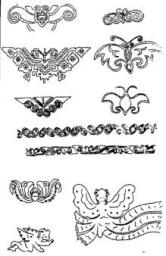
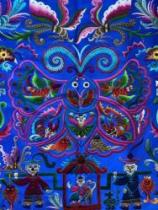
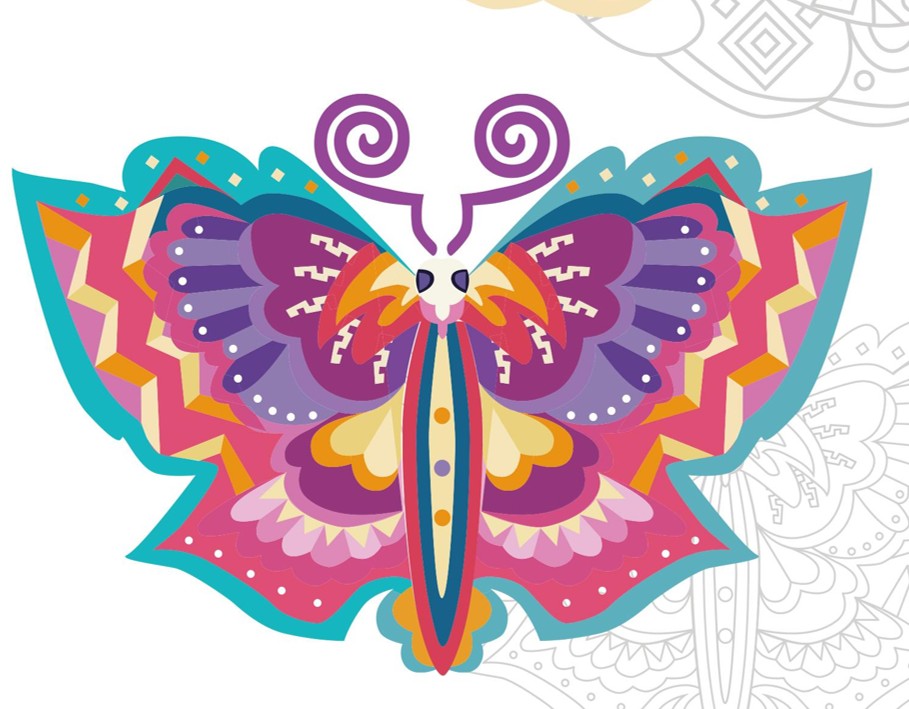
Animal motifs in Black Miao costume art follow four fundamental structural principles. First, symmetrical designs feature main patterns mirrored precisely in position, shape, size, and color. This symmetry is also found in Miao provenance-style patterns, such as the butterfly or maple leaf motifs. For instance, the butterfly motif in Fig. 4 embodies rigorous bilateral symmetry: its wings and antennae are perfectly mirrored to achieve visual equilibrium, reflecting the Black Miao’s cultural emphasis on harmony and order in decorative art. Beyond elevating aesthetic appeal, this symmetrical structure resonates with the ethnic group’s ideals of balance and wholeness—rooted in Black Miao folklore, where butterflies symbolize transformation and vitality.
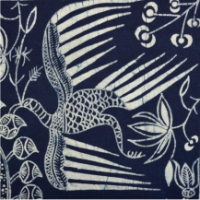
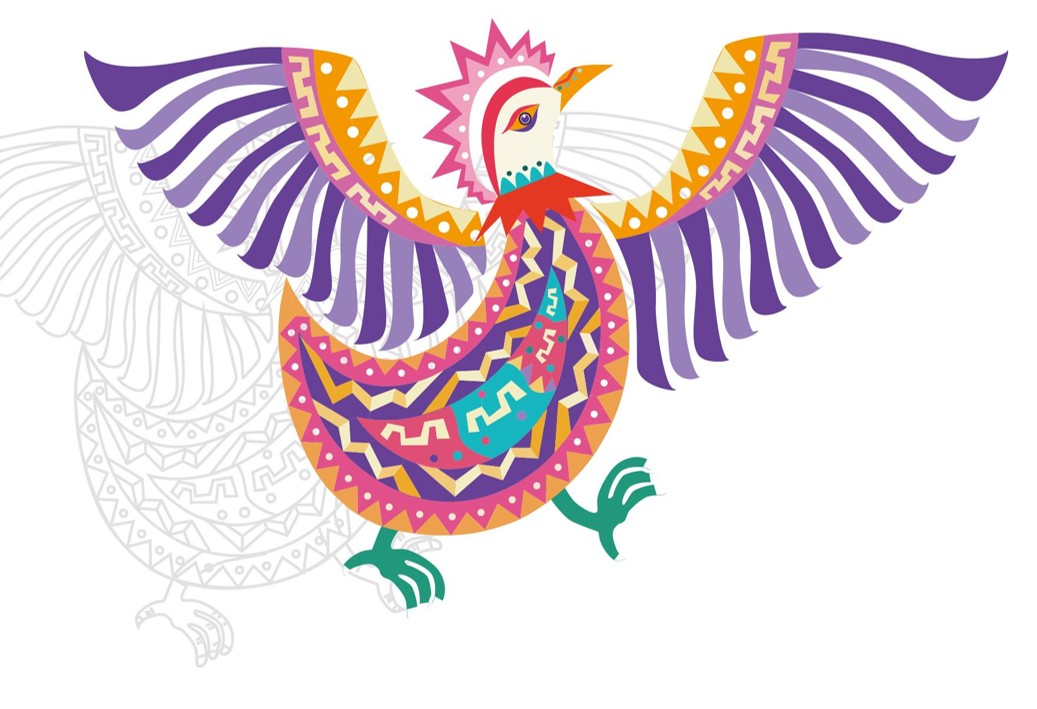
Second, symmetrical designs work well with free-flowing motifs like birds and dragons, for example, a bird with spread wings set against clouds and flowers as a background. Third, regular patterns repeat basic motifs two- or three-dimensionally using geometric shapes, such as the butterfly (Fig. 4) arranged in bipartite or tetrapartite forms. Fourth, inverted patterns use reversed basic motifs, crafted with deep knowledge of artistic principles and best practices. Lastly, free arrangements are less rigid and tend to follow implicit guidelines, such as vine-like structures, that keep compositions organic and natural. These arrangements usually lack focal points and create a harmonious but somewhat scattered effect, as seen in the phoenix pattern in Fig. 5. This phoenix motif employs a flowing, vine-inspired organic layout, wherein its curving plumage and trailing tail weave seamlessly through vine and floral elements. While devoid of a rigid focal point, the composition retains a harmonious, scattered rhythm. Within Black Miao cultural discourse, the phoenix symbolizes prosperity, protection, and spiritual continuity, and this organic arrangement embodies the community’s profound reverence for nature and ancestral wisdom. Collectively, these four structural principles constitute the core aesthetic language of Black Miao animal motifs, synthesizing formal order, cultural symbolism, and natural vitality in balanced integration.
Findings and results of animal patterns
Classification of black miao animal patterns in Qiandongnan
Qiandongnan is the social and cultural center of the Miao people. Miao decorative patterns are rich and diverse, including numerous realistic animal motifs. According to the totemic symbolism and visual characteristics of the Black Miao, animal patterns can be classified into five major categories: the dragon, phoenix, fish, chicken, and butterfly. These are also the most popular and widely used motifs.
The dragon symbolizes power and protection, characterized by coiled and winding lines; the fish represents fertility and reproduction, distinguished by scaled and richly ornamented bodies; the chicken signifies auspiciousness and beauty, featuring stylized feather patterns; the butterfly embodies transformation and rebirth, marked by symmetrical wing patterns; and the phoenix stands for rebirth and brightness, identified by elaborate, flowing plumage. Although these decorative motifs are often simple and traditional, many carry historical stories and legends.
High-resolution versions of all figures are available in the supplementary materials for detailed examination.
Pattern analysis
The study purposefully selected 20 animal patterns as the research object, divided into four groups, as shown in the figure.
Model analysis data figures and tables
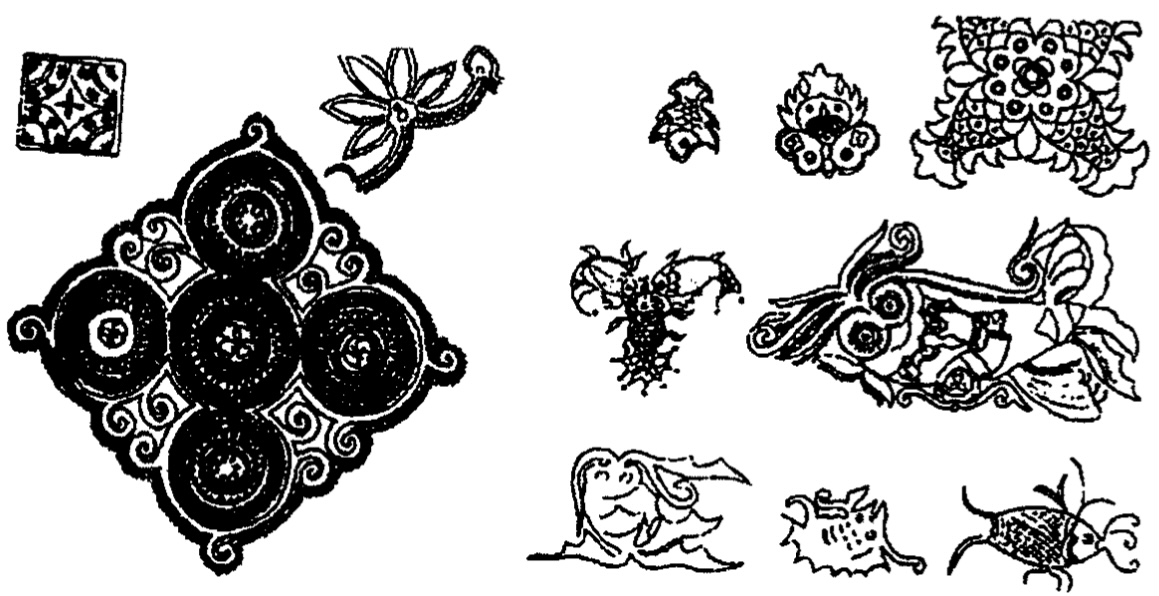
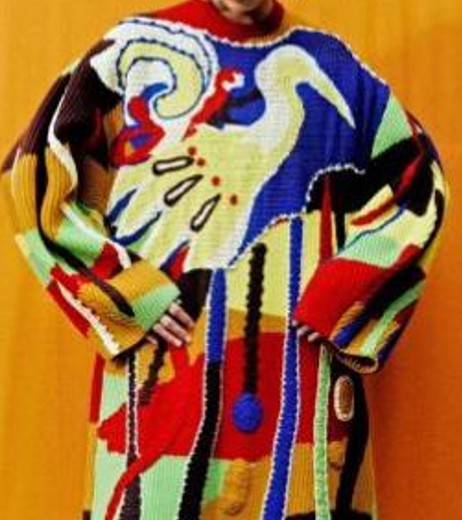
This study adopts visual annotation to dissect the formal structure of Black Miao animal patterns, as shown in Figures 26–29. These figures parse each motif into its constituent elements (e.g., dragon head, butterfly wings, fish scales), documenting their completeness, layout types, and structural balance. Quantitative data derived from this visual analysis are systematically presented in Tables 1–5, which support cross-group comparisons of pattern characteristics across layout, classification, construction, and element complexity.
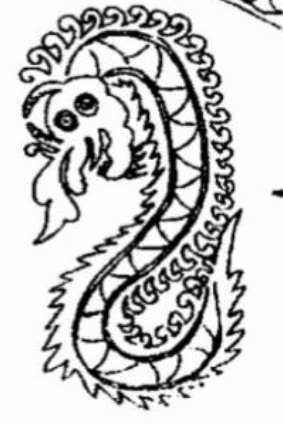
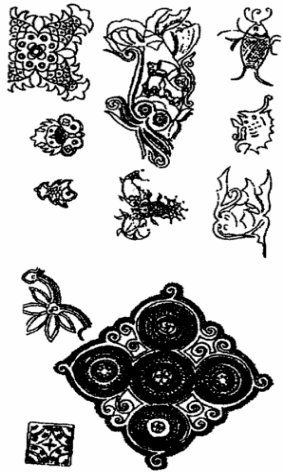
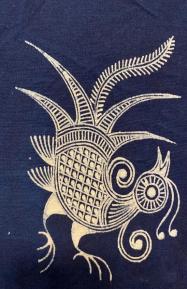
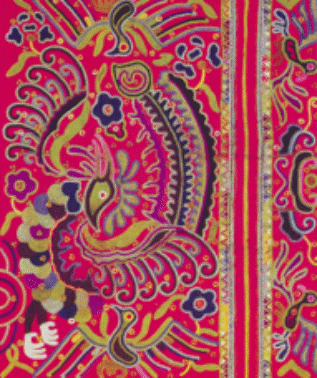
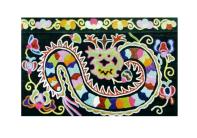
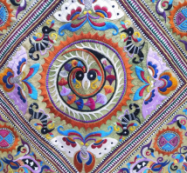
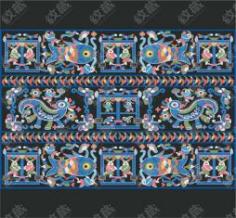
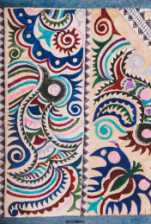
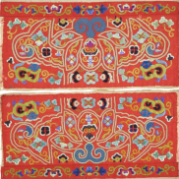
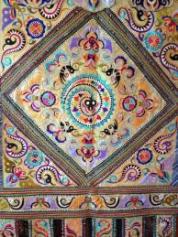
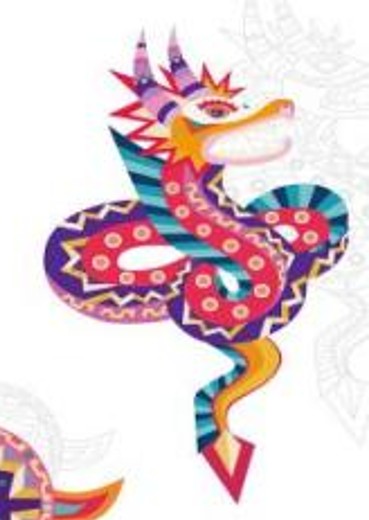
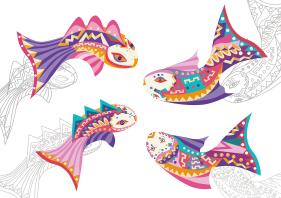
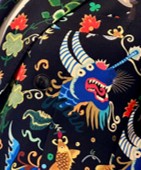
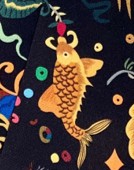
This study begins by categorizing 20 Black Miao animal motifs from Qiandongnan based on composition, layout, element types, number of elements, and design features. Using image recognition and visual coding, each pattern is assigned an ID number and category. For example, Figure 6 represents traditional embroidery; Figure 12 shows festival costumes; Figure 16 depicts contemporary fusion designs; and Figure 22 illustrates modern re-creations. Selected examples from each category are analyzed in terms of visual structure. The patterns are typically composed symmetrically or in balanced arrangements and frequently use full-coverage layouts. They depict animals such as birds, fish, and insects, with motifs including carp, birds, deer, and butterflies. Elements may appear singly or combined with others, such as plants. The analysis covers composition, layout, element type, number, and combinations. For instance, the “dragon” motif in Figure 1 features a balanced composition, full coverage, seven distinct elements, a stable structure, and clear symbolic meaning. The four pattern types are detailed in the accompanying tables and figures, enabling clear distinctions between traditional and contemporary visual expressions.
|
Figure 1 Dragon pattern |
Source: Miao Ethnic Costume Culture (p. 187, 192) |
|
|
Figure 2 Fish pattern |
Source: On-site shooting, Qiandongnan Miao villages, (2024) |
|
|
Figure 3 Chicken pattern Source: On-site shooting, Qiandongnan Miao villages, (2024) |
|
|
Figure 4 Butterfly pattern Source: Miao Ethnic Costume Culture (p. 183) |
|
|
Figure 5 Phoenix |
Source: On-site shooting, Qiandongnan Miao villages (2024) |
|
Figure 6 Dragon Source: Online Museum of Ethnic Costumes (2023) |
|
Figure 7 Fish Source: Online Museum of Ethnic Costumes (2023) |
|
|
Figure 8 Chicken Source: Online Museum of Ethnic Costumes (2023) |
|
Figure 9 Butterfly Source: Online Museum of Ethnic Costumes (2023) |
|
Figure 10 Phoenix Source: Online Museum of Ethnic Costumes (2023) |
|
Figure 11 Dragon Source: Online Museum of Ethnic Costumes (2023) |
|
|
Figure 12 Fish Source: Online Museum of Ethnic Costumes (2023) |
|
Figure 13 Chicken Source: Online Museum of Ethnic Costumes (2023) |
|
|
Figure 14 Butterfly Source: Online Museum of Ethnic Costumes (2023) |
|
Figure 15 Phoenix Source: Online Museum of Ethnic Costumes (2023) |
|
Figure 16 Dragon Source: Patterned book collection (2024) |
|
Figure 17 Fish Source: Patterned book collection (2024) |
|
|
Figure 18 Chicken Source: Patterned book collection (2024) |
|
Figure 19 Butterfly Source: Patterned book collection (2024) |
|
|
Figure 20 Phoenix Source: Patterned book collection (2024) |
|
Figure 21 Dragon Source: Patterned book collection (2024) |
|
Figure 22 Fish Source: ZHUCHONGYUN2023 Miao - High Definition Series II (2024) |
|
Figure 23 Chicken Source: ZHUCHONGYUN2023 Miao - High Definition Series II (2024) |
|
|
Figure 24 Butterfly Source: ZHUCHONGYUN2023 Miao - High Definition Series II (2024) |
|
Figure 25 Phoenix Source: ZHUCHONGYUN2023 Miao - High Definition Series II (2024) |
|
|
Figure 26 Dragon Source: Author’s own (2025) |
|
Figure 27 Chicken Source: Author’s own (2025) |
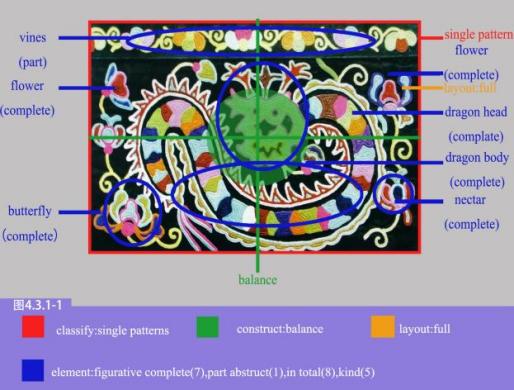
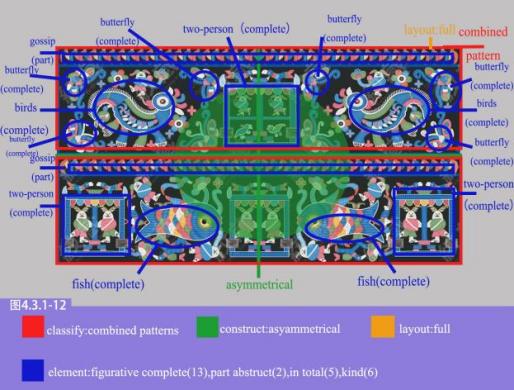
|
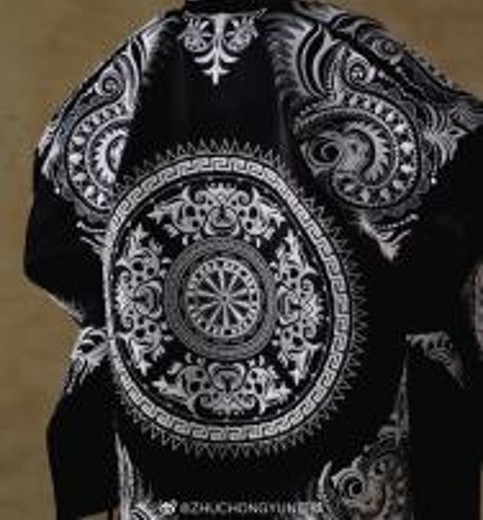
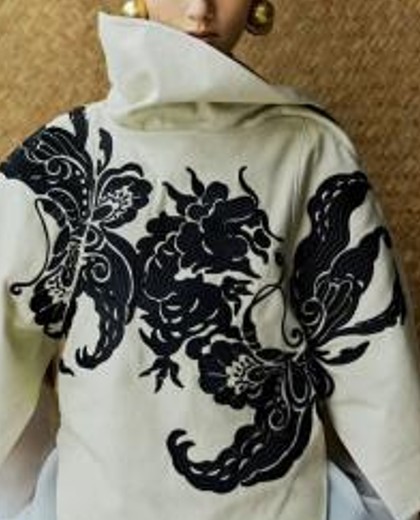
Figure 28 Butterfly Source: Author’s own (2025) |
|
Figure 29 Butterfly Source: Author’s own (2025) |
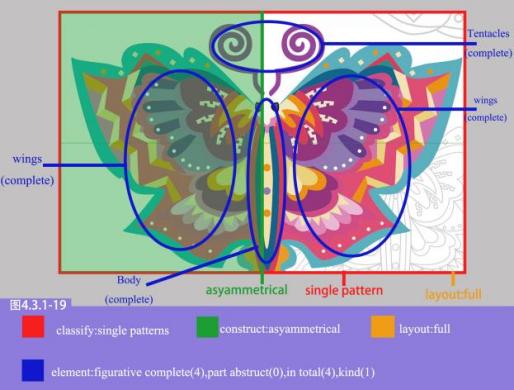
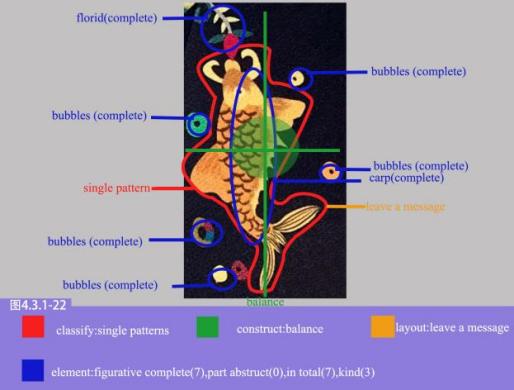
Table 1 Analysis of the first set of data
|
|
|
|
|
|
Element |
|
|
Name |
Number |
Layout |
Classify |
Construct |
Figurative Complete |
Part abstract |
Kind |
In total |
Dragon |
6 |
full |
Single pattern / Combined pattern |
balance |
7(88%) 8(100%) |
1(13%) 0 |
5 4 |
8 8 |
Fish |
7 |
full |
Single pattern/ Combined pattern |
balance Symmetry |
5(88%) 6(100%) |
0 1(14%) |
4 4 |
5 7 |
Chicken |
8 |
not full full |
Single pattern/ Combined pattern |
balance Symmetry |
2(88%) 4(100%) |
0 14(78%) |
1 6 |
2 18 |
Butterfly |
9 |
full |
Combined pattern |
Symmetry |
4(88%) 2(100%) |
20(83%) 11(85%) |
8 9 |
24 13 |
Phoenix |
10 |
full |
Single pattern/ Combined pattern |
balance |
1(88%) 2(100%) |
5(83%) 2(50%) |
3 3 |
6 4 |
Proportion analysis |
full90% not full 10% |
single40% combined60% continuous0 |
balance60% Symmetry 40% spread0 |
60% |
41% |
more then three 70% |
more then three 90% |
|
Form characteristic |
It is almost always full |
To single pattern and combined pattern mainly |
Balance and Symmetry predominant |
Figurative complete element almost more than three. The element always more complex |
||||
Based on the analysis of the 10 lucky patterns in Group 1 (Table 1), the following observations were made: Regarding layout, 90% are full-page layouts, indicating that the compositions are generally complete and balanced, while the remaining 10% are not full-page. In terms of pattern composition, hybrid (combined) patterns make up 60%, outnumbering single patterns at 40%. Structurally, 60% of the layouts are balanced, and 40% are symmetrical, with no continuous or expanded layouts observed. Element-wise, 60% of the patterns feature fully figurative elements, while 40% include abstract elements. Concerning element quantity, 90% of the patterns contain more than three types of elements, reflecting high complexity. Patterns featuring butterflies or chickens tend to be more intricate and symmetrical, whereas those with fish or dragons are more centralized and balanced. In short, Group 1 patterns are characterized mainly by full‑page layouts, a preference for combined structures, largely balanced configurations, a focus on figurative elements, and rich, diverse element combinations that produce visually complex expressions.
This formal preference—marked by dominant full‑page layouts and high element complexity—reflects the Black Miao’s cultural understanding of “wholeness and harmony”: full‑page layouts symbolize the completeness of ethnic life, while multi‑element compositions express reverence for nature’s abundance.
Table 2 Analysis of the second set of data
|
|
|
|
|
|
Element |
|
|
Name |
Number |
Layout |
Classify |
Construct |
Figurative Complete |
Part abstract |
Kind |
In total |
Dragon |
11
|
full |
Combined pattern |
balance |
2(18%)
|
9(82%) |
5 |
11 |
Fish |
12 |
full |
Combined pattern |
Symmetry |
8(28%) |
21(72%) |
7 |
29 |
Chicken |
13 |
full
|
Single pattern |
balance
|
4(67%)
|
2(33%) |
5 |
6 |
Butterfly |
14 |
full |
Combined pattern |
Symmetry |
2(22%) |
7(78%) |
5 |
9 |
Phoenix |
15 |
full |
Combined pattern |
Symmetry |
8(31%) |
12(46%) |
10 |
26 |
Proportion analysis |
full 100% not full 0 |
single20% combined80% continuous0 |
balance40% Symmetry60% Spread0 |
33.2% |
62.2% |
more then three 100% |
more then three 100% |
|
Form characteristic |
It is almost always full |
To combined pattern mainly |
Balance and Symmetry predominant |
Almost more than three The element always more complex |
||||
The analysis of the five auspicious patterns in Table 2 (Group 2) reveals several key characteristics. All designs (100%) utilize full-page layouts, indicating a preference for fully filled compositions. Regarding pattern type, 80% are composite patterns, while 20% are single patterns, reflecting a tendency toward complexity. Structurally, 40% exhibit balanced and symmetrical arrangements, showing greater diversity than Group 1, with no consistent or dispersed layouts observed. Elementally, 33.2% of motifs are fully figurative, whereas 62.2% are partially abstract or abstract, highlighting a strong emphasis on abstraction. Most motifs integrate five or more element types, with specific quantities detailed in the quantitative analysis detailed in Table 2 (e.g., Dragon: 5, Fish: 7, Chicken: 5, Butterfly: 5, Phoenix: 10), confirming high visual complexity.
In summary, Group 2 patterns are distinguished by full‑page layouts, a predominance of composite forms, mixed balanced and symmetrical structures, a dominance of abstract elements, and dense, visually rich complexity.
This strong presence of abstract elements and combined patterns reflects the adaptive evolution of Black Miao motifs in contemporary contexts, balancing the retention of core cultural identity with modern aesthetic expression. Abstract forms embody the simplification of traditional symbolism, whereas composite patterns preserve the depth of cultural meaning.
A detailed examination of animal-motif patterns (Table 3) shows that 90% of layouts are non–full-page, indicating a deliberate use of negative space. Single patterns account for 80%, higher than combined patterns at 20%, suggesting that animal figures are typically represented as individual motifs. In terms of structure, 80% of the patterns are symmetrically balanced, and 20% are asymmetrically balanced. With regard to element style, 57% are fully figurative, and 41% are partially abstract. Although most motifs incorporate no more than three types of figurative elements, notable exceptions occur—such as the Chicken (6 elements) and the Phoenix (10 elements)—which reflect natural variations in design complexity and demonstrate considerable formal diversity. Overall, these patterns are maked by non–full-page layouts, single-pattern compositions, and balanced structures, often combined with unexpected elements to achieve a harmonious balance between complexity and simplicity. Non-full-page layouts and the prevalence of single patterns embody the minimalist aesthetic inherent to Black Miao traditional art, reflecting the ethnic group’s pursuit of simplicity and reverence for natural order. The negative space in non-full-page compositions symbolizes the boundlessness of nature, while single patterns underscore the purity of totemic worship.
Table 3 Analysis of the thrid set of data.
|
|
|
|
|
|
Element |
|
|
Name |
Number |
Layout |
Classify |
Construct |
Figurative Complete |
Part abstract |
Kind |
In total |
Dragon |
16
|
not full |
Single Combined |
balance |
2(67%) 4(50%) |
1(33%) 4(50%) |
2 2 |
3 8 |
Fish |
17 |
not full |
Single |
balance |
2(67%) 2(67%) |
1(33%) 1(33%) |
3 2 |
3 3 |
Chicken |
18 |
not full full |
Single Combined |
balance
|
3(23%) 3(100%) |
10(77%) 0 |
6 1 |
13 3 |
Butterfly |
19 |
not full |
Single |
Symmetry balance |
2(22%) 1(100%) |
7(78%) 0 |
5 1 |
9 1 |
Phoenix |
20 |
not full |
Single |
Symmetry balance |
8(31%) 2(40%) |
12(46%) 3(60%) |
10 2 |
26 5 |
Proportion analysis |
full90% not full0% |
single80% combined20% continuous0 |
balance80% Symmetry 20% spread0 |
57% |
41% |
more then three 30% |
more then three 60% |
|
Form characteristic |
It is almost always not full |
To single pattern mainly |
Balance pattern mainly |
Figurative complete element almost Less than or equal to three The element always more complex |
||||
The analysis of the ten animal-patterned designs in the Table 4 shows that 90% use full-page layouts, 70% are single patterns, and 80% present balanced compositions. In terms of element style, 52.7% are fully figurative and 48.8% are partially abstract, with 60% containing more than three lements. Although most motifs include no more than three figurative elements, certain exceptions—such as the phoenix with six elements—can be observed, indicating natural variation in design complexity. In short, these patterns are largely defined by full-page layouts, single motifs, and balanced structures, integrating both figurative and abstract elements to achieve controlled yet substantial visual complexity.
This combination of full-page layouts and measured element complexity captures the dynamic balance between traditional continuity and modern innovation in Black Miao pattern design: full-page arrangements uphold the group’s cultural emphasis on “completeness,” while measured element use resonates with contemporary minimalist aesthetic trends.
Form-feature analysis (Table 5) demonstrates that all four groups predominantly adopt full-page layouts to convey visual richness, with distinct intergroup variations in pattern classification, structure, and element complexity. Regarding pattern types, Groups 1 and 3 integrate single and combined motifs to achieve expressive diversity, whereas Groups 2 and 4 emphasize combined patterns to strengthen element cohesion. Structurally, Groups 1 and 2 balance symmetrical and balanced arrangements to maintain aesthetic stability, while Groups 3 and 4 prioritize balanced layouts to create dynamic visual effects.
Table 4 Analysis of the fourth set of data
|
|
|
|
|
|
Element |
|
|
Name |
Number |
Layout |
Classify |
Construct |
Figurative Complete |
Part abstract |
Kind |
In total |
Dragon |
21
|
full |
Combined |
Symmetry balance |
3(29%) 2(67%) |
12(87%) 1(33%) |
9 2 |
15 3 |
Fish |
22 |
full |
Combined |
balance |
6(46%) 2(50%) |
7(54%) 2(50%) |
3 3 |
13 4 |
Chicken |
23 |
full
|
Combined Single |
balance
|
2(67%) 8(80%) |
1(33%) 2(20%) |
2 3 |
3 10 |
Butterfly |
24 |
not full fulll |
Single Combined |
balance Symmetry |
2(67%) 3(100%) |
1(33%) 0 |
2 2 |
3 3 |
Phoenix |
25 |
full |
Single Combined |
balance |
3(6%) 2(15%) |
49(94%) 11(84%) |
6 2 |
53 13 |
Proportion analysis |
full90% not full0% |
single70% combined30% continuous0 |
balance80% Symmetry 20% spread0 |
52.70% |
48.80% |
more then three 20% |
more then three 60% |
|
Form characteristic |
It is almost always full |
To combined pattern mainly |
Balance pattern mainly |
Figurative complete element almost less than or equal to three The element always more complex |
||||
Table 5 Formal characteristics analysis
Group |
Layout |
Classify |
Construct |
Element characteristic |
Group1 |
It is almost always full |
To single pattern and combined pattern mainly |
Balance and Symmetry predominant |
Figurative complete element almost more than three The element always more complex |
Group2 |
It is almost always full |
To combined pattern mainly |
Balance and Symmetry predominant |
Figurative complete element almost more than three The element always more complex |
Group3 |
It is almost always full |
To single pattern mainly |
Balance pattern |
Figurative complete element almost less than or equal to three The element always more complex |
Group4 |
It is almost always full |
To combined pattern mainly |
Balance pattern |
Figurative complete element almost less than or equal to three The element always more complex |
Summarize |
It is almost always full |
To combined pattern mainly |
Balance and Symmetry predominant |
Figurative complete element almost less than or equal to three The element always more complex |
In terms of element complexity, Groups 1 and 2 exhibit high complexity, typically integrating five or more complete figurative elements. In contrast, Groups 3 and 4 mostly employ three or fewer such elements, reflecting restrained complexity; exceptions such as the Chicken (6 elements) and Phoenix (10 elements) documented in Table 3 illustrate the natural variation inherent in traditional design practice.
Overall, these motifs predominantly employ full-page layouts, prioritize combined patterns, and utilize balanced or symmetrical structures to enhance visual richness. Together, these trends point to a core tension in Black Miao animal motif design: the minimalist, totem-focused traditions evident in Groups 3 and 4, versus the more complex, abstracted modern expressions seen in Groups 1 and 2. Such intergroup differences in element complexity encapsulate the dual continuity of Black Miao cultural identity. Groups 3 and 4 uphold the ethnic group’s totemic traditions of simplicity and purity, whereas Groups 1 and 2 draw on modern design languages to advance cultural innovation. This duality underscores the dynamic persistence of Black Miao cultural identity, as traditional symbols are reimagined through contemporary visual expression.
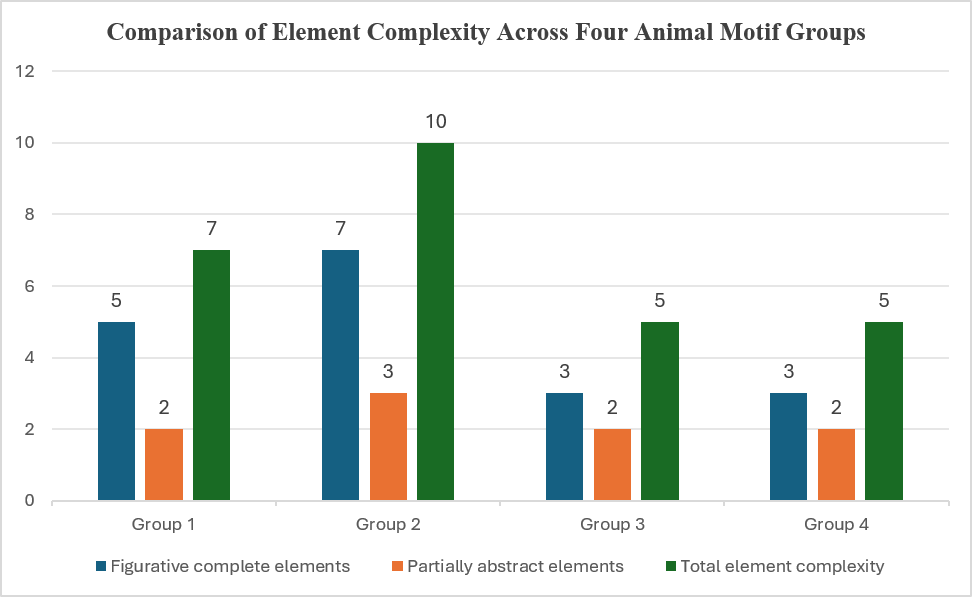
Figure 30 Element complexity comparison across four Black Miao animal motif groups.
Source: Author’s own
Figure 30 summarizes the element complexity across the four groups to clarify the key findings. It shows that Groups 1 and 2 contain more than three complete figurative elements (higher complexity), whereas Groups 3 and 4 use three or fewer (restrained complexity), in line with the detailed data presented in Table 5.
Conclusion
This study investigates 20 animal motifs and synthesizes their design characteristics across three core dimensions: form, structure, and color. In terms of form, animal motifs convey meaning through three primary approaches—meaning association, which transfers cultural connotations via animal symbolism; form abstraction, which distills essential features into decorative patterns; and unit multi-combination, which integrates animals with natural or geometric elements. These approaches take shape in three primary configurations: single-animal modeling, group collocation, and interweaving with other design units.
Quantitative analysis (Tables 1–5, Figure 30) shows that nearly all motifs employ full-page layouts to convey visual richness, with single motifs and combined patterns coexisting; the latter enhance expressiveness through the juxtaposition of diverse elements. Layouts are predominantly balanced or symmetrical, accounting for 60% in Groups 1 and 2 and 80% in Groups 3 and 4, reflecting a consistent emphasis on stability and harmony. With regard to elements, Groups 1 and 2 typically integrate five or more complete figurative motifs, indicating higher complexity, while Groups 3 and 4 mostly use three or fewer design elements, embodying restrained composition. Exceptions to these trends reflect natural variation within traditional design practice. This study advances the scholarship of animal motif research by developing a novel ‘Method Extraction–Application Validation’ framework as its central theoretical contribution.

Figure 31 Method Extraction–Application Validation Framework for the modernization of ethnic intangible cultural heritage patterns.
Source: Author’s own design.
The analytical and application logic of this framework is illustrated in Fig. 31, encompassing three core stages: extracting formal and cultural features from traditional artifacts, validating design principles through quantitative analysis, and applying the derived insights to contemporary design practice. To ensure the framework’s validity, three measurable evaluation criteria are defined: cultural authenticity, design adaptability, and formal innovation. Cultural authenticity emphasizes preserving core cultural symbols and their intrinsic meanings—such as the butterfly as a symbol of transformation and the dragon as a sign of protection—without cultural misrepresentation; design adaptability requires that extracted visual features, including balanced structures and full-page layouts, are compatible with contemporary design contexts, including fashion, cultural and creative goods, and jewelry design; and formal innovation focuses on modernizing traditional forms by streamlining redundant details and adjusting color schemes, rather than through direct replication.
The ZHUCHONGYUN 2023 Miao Series satisfies all three criteria: it preserves core motifs to uphold cultural authenticity, adapts effectively to garment layout constraints to demonstrate design adaptability, and simplifies complex elements while retaining cultural significance to achieve formal innovation—thus confirming the framework’s practical applicability. As this study shows, the proposed framework offers meaningful implications for future research and contributes to the methodological development of the field. It aligns with the work of Zhao & Sun (2020) on the innovative application of traditional Miao batik patterns, further illustrating how traditional visual elements can be recontextualized within modern design practice to bridge cultural inheritance and creative innovation.
Practical implications of the findings include actionable guidelines for contemporary design. Full-page layouts and combined patterns enhance visual richness, while balanced and symmetrical structures ensure aesthetic stability. The complex, multi-element compositions seen in Groups 1 and 2 lend themselves to expressive modern applications, whereas the restrained, simplified forms of Groups 3 and 4 align with minimalist, totem-focused traditions, thereby supporting diverse design needs. A limitation of this study is its focus on 20 animal motifs from Qiandongnan Black Miao communities. Future research should expand the sample size to include other Miao subgroups and regional variations, which would enhance the generalizability of the findings.
In conclusion, this research reveals the dynamic continuity of Black Miao cultural identity through animal motifs. By establishing a validated analytical framework that bridges traditional symbolism and contemporary visual expression, the study offers both theoretical insights and practical design guidance. Beyond the Black Miao of Qiandongnan, the proposed ‘Method Extraction–Application Validation’ framework has broader relevance to the modernization of ethnic cultural heritage across Southeast Asia. Many ethnic groups in the region—such as the Dai in China’s Yunnan, the Miao in northern Thailand, and the Yao in Laos—face similar challenges in preserving traditional decorative patterns while adapting them to contemporary design contexts. This framework can serve as a scalable analytical tool for these communities, facilitating the extraction of core cultural symbols from their traditional art forms and their thoughtful application in modern fashion, cultural and creative goods, and jewelry design—thus supporting the cross-regional inheritance and innovative development of Southeast Asian ethnic intangible cultural heritage.
Acknowledgments
First and foremost, the authors would like to express sincere gratitude to the Visual Arts Program, Faculty of Creative Arts at the University of Malaya for providing academic resources and research support throughout this study. We also extend our thanks to the local cultural institutions and artisans in Qiandongnan for their assistance with fieldwork and the provision of traditional Black Miao pattern materials.
Regarding generative AI tools: This manuscript utilized AI-assisted writing software (e.g., ChatGPT) for language polishing and readability optimization, with full human oversight and final content responsibility retained by the authors. No AI tools were listed as authors or contributors to the core research design.
Declaration of Generative AI in Scientific Writing
During the drafting of this manuscript, generative AI tools were used solely to fine-tune individual sentence structures to enhance the readability of the initial draft.
All content in this manuscript (including the minimal AI-assisted revisions) underwent comprehensive manual review and verification by native English-speaking experts to ensure the final version strictly adheres to research conclusions, academic accuracy, and scholarly standards. The authors bear full responsibility for the entire content.
No generative AI tools are listed as authors or co-authors of this work.
CRediT author statement
Tao Zi: Conceptualization, Methodology, Software, Validation, Formal analysis, Investigation, Data curation, Visualization, Writing – original draft, Writing – review & editing. Gregory Kiyai @ Keai: Writing – review & editing.
References
An, S. (2017). A brief analysis of the connotation and aesthetic implications of Miao silver jewelry decorative elements. Comparative Study of Cultural Innovation, 24,66-67.
Beijing Institute of Fashion Technology Ethnic Costume Museum. (n.d.). Miao ethnic costumes: All styles. Retrieved from http://www.biftmuseum.com/nation/detail/6
Barthes, R. (1977). Elements of semiology (A. Lavers & C. Smith, Trans.) (Original work published 1967). New York, USA: Hill and Wang.
Berry, J. W., & Sam, D. L. (2016). The Cambridge handbook of acculturation psychology (2nd eds.). Cambridge, UK: Cambridge University Press.
Cen, X. W. (2004). Miao. Beijing, China: Minzu Publishing House.
Feng, X. Y., Wang, W. X., Peng, L., Hu, N. F., & Chang, X. L. (2024). Miao Costume Pattern Design Based on Extenics Semantics and Aesthetic Degree Calculation. Wool Textile Journal, 52(3), 88-95.
Gombrich, E. H. (1995). The story of art (16th eds.). London, UK: Phaidon Press.
Han, D., & Cong, L. (2023). Miao traditional patterns: the origins and design transformation. Visual Studies, 38(3-4), 425-432
Luo, X. M. (2011). A brief discussion on the aesthetics of Miao costumes in Xiangxi. Journal of Minzu University of China (Philosophy and Social Sciences Edition), 1(4), 4-9.
Malinowski, B. (2011). Argonauts of the Western Pacific (Reprint ed.) (Original work published 1922). London, UK: Routledge.
Panofsky, E. (2011). Iconology: Studies in the history of art (Reprint ed.) (Original work published 1939). New York, NY: HarperCollins.
Savina, F. M. (1824). History of the Miao. Hong Kong, China: Hong Kong Nazarene Publishing House.
Saussure, F. D. (1916). Course in general linguistics (W. Baskin, Trans.). Lausanne, Switzerland: Payot.
Sun, Y. X. (2017). Guangxuan poetry theory and its direction toward new poetry. Literary Review, 2, 202-210.
Torii, R. (2009). Miao ethnographic survey (Huang, C. G. Trans. & Annot.). Guiyang, China: Guizhou University Press.
Yang, P. D. (2007). Study of Miao studies IV. Guiyang, China: Guizhou Minzu Publishing House.
Yang, T. S., & Pan, S. Z. (2004). Collection of hundred Miao diagrams. Guiyang, China: Guizhou People’s Publishing House.
Yang, Z. W. (1998). Miao clothing culture. Guiyang, China: Guizhou Ethnic Publishing House.
Yin, R. K. (2017). Case study research: Design and methods (6th eds.). Thousand Oaks, CA: Sage Publications.
Zeng, L. (2020). The source of Miao embroidery. Guiyang, Guizhou People’s Publishing House.
Zhou, M., & Wang, C. Q. (2023). Research on the decoration and cultural connotation of Hmong women’s clothing in Huangping, Guizhou. Silk, 60(8), 1-11.
Zeng, X. Y., & Zeng, L. (2009). Miao embroidery. Guiyang, China: Guizhou People’s Publishing House.
Zhao, Y., & Sun, N. (2020). An analysis of the innovation and modern application of traditional batik patterns of the Miao nationality. Journal of Hubei Institute of Fine Arts, 4, 114-119.
Zhuchongyun. (2023). ZhuchongyuN2023 Miao - high definition series II. Retrieved from https://weibo.com/u/5151306916