
Asian J. Arts Cult. 2026; 26 (4): 85
Moral Diplomacy and Religious Soft Power in Contemporary Thailand: The Case of Dhammanava “Wang”
Khoompetch Kongsawat
Graduate School of Global Studies, Sophia University, 7-1 Kioichō, Chiyoda City, Tokyo 102-8554, Japan
(Corresponding author’s e-mail: [email protected])
Received: 16 December 2025, Revised: 26 March 2026, Accepted: 7 April 2026, Published: 29 April 2026
Abstract
This article examines the Dhammanava “Wang,” a palace-sponsored Buddhist initiative that has become a potent expression of Thailand’s contemporary religious soft power. While the Thai government’s 2025 soft power agenda highlights cultural and creative industries, this study argues that the country’s most consequential soft power project is unfolding domestically through a coordinated effort to reposition the new throne as a virtuous sovereign. Drawing on textual materials, domestic tours, media accounts, and the initiative’s extensions to South Asia and Europe, the article reveals how this initiative operates as an intentional regime technology that integrates ritual performance, pedagogical scripting, monastic collaboration, and the circulation of royal texts into a coherent strategy of monarchical legitimation. In comparative perspective, the Thai case challenges outward-oriented models of religious soft power by illustrating an inward, performative modality in which the primary audience is domestic, and the core aim is the ritualized reaffirmation of royal authority.
Keywords: Buddhism, Dhammanava “Wang”, Monarchy, Religious soft power, Thailand
Introduction
Although this framework emphasizes lifestyle and cultural exports, Paetongtarn’s use of soft power has also extended into the religious sphere. In April 2025, during his official visit to Thailand for the BIMSTEC Summit, Indian Prime Minister Narendra Modi was presented with the World Ti-piṭaka: Sajjhaya Phonetic Edition, a monumental rendering of the Buddhist canon in precise Pāli pronunciation, totaling more than nine million syllables. Produced by the World Tipiṭaka Foundation and released in 2016 to commemorate the seventieth anniversary of King Bhumibol Adulyadej’s reign, the edition was described as a “Gift of Peace and Wisdom for All” and has since been presented to leaders in over thirty countries (Modi, 2025; News on Air, 2025). The Thai embassy in New Delhi stressed the gift’s dual significance: a scholarly achievement that preserves the authenticity of Pāli scripture, and a diplomatic gesture aimed at strengthening intercultural ties (Royal Thai Embassy in New Delhi, 2025).
This ceremony was further embedded in Buddhist ritual. Modi was formally received at Wat Pho by Somdet Phra Maha Thirachan, a senior member of the Sangha Supreme Council and abbot of the temple, alongside other high-ranking ecclesiastical figures. Monastic leaders from Thailand and the transnational Buddhist network, including Thai missionary monks from Bodh Gaya and Kushinagar, joined in offering robes and ritual items, framing the handover as both a diplomatic exchange and a sacralized encounter that reinforced shared Buddhist heritage (Phra Ratchapothiwithet Vajramuni, 2025).
At first glance, such moments appear as symbols of shared heritage and cross-cultural respect: two prime ministers joined in reverence over a sacred text, embodying the diplomatic face of ‘religious soft power.’ Yet, this raises a question: Is this symbolic diplomacy truly where Thailand’s most significant religious soft power resides today? This article argues that it is not. While the exchange with India is rich in religious and diplomatic symbolism, the more consequential expression of Thailand’s contemporary religious soft power lies elsewhere—within an emerging domestic initiative, claimed to be royally supported by the Thai monarchy, known as the Dhammanava “Wang.”1
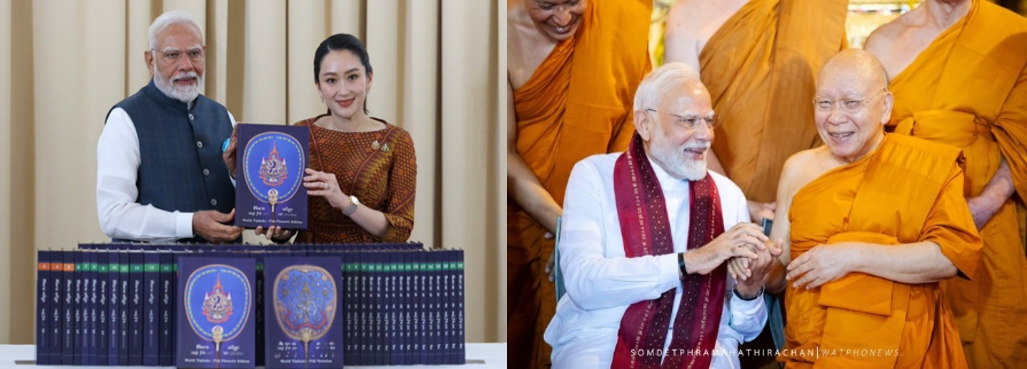
Figure 1 Prime Minister Narendra Modi during the BIMSTEC Summit (3–4 April 2025, Bangkok, Thailand)
Source: Royal Thai Embassy in New Delhi (2025); Phra Ratchapothiwithet Vajramuni (2025)
What began as a modest set of handwritten sermon pages, said by official accounts to be authored by the current monarch himself, has since evolved into a structured program framed as arising from the King’s “steadfast faith in Buddhism” and his desire to share the benefits of dhamma practice with the Thai people. In this official portrayal, the Dhammanava “Wang” is led by monks described as “those who act in response to the King’s intention,” tasked with bringing the path to the cessation of suffering and inner peace to “all groups of the populace” (Dhammanava, 2024b; Prachachart, 2025b). While the program’s roots originated as a domestic initiative, its activities have expanded onto the international stage through both ceremonial and pedagogical events, with notable appearances in Europe and South Asia.
This article argues that the program’s evolution, from a small set of royal sermon sheets into a coordinated platform deployed across Thailand and abroad, positions the Dhammanava “Wang” as one of the most potent instruments of Thailand’s religious soft power today. By examining this initiative through a comparative lens and situating it within broader debates on religious soft power, the article highlights how the monarchy, rather than the state, has emerged as the primary architect of Thailand’s contemporary Buddhist diplomacy.
Religious soft power: From concept into actions
The concept of soft power refers to the capacity of an actor to influence the preferences and behavior of others through attraction rather than coercion or material inducement. It stands in contrast to “hard power,” which relies on military or economic force, and works by shaping agendas so that others desire similar outcomes. Nye (2004) identifies three principal sources: culture, when it is perceived as attractive; political values, when they are consistently upheld; and foreign policy, when it is regarded as legitimate and morally grounded. In an increasingly interconnected and information-rich world, attraction lowers the costs of cooperation and strengthens the durability of influence. Nye also emphasizes that the most effective statecraft often combines coercive and attractive capabilities—a synthesis he terms “smart power.”
Within this broader framework, ‘religious soft power’ has emerged as a distinct field of analysis in which religion functions as the primary source of attraction. Öztürk (2023a) defines it as the use of religious legitimacy, moral authority, and shared belief systems to influence others without resorting to coercion. It draws on resources such as sacred texts and sites, authoritative moral figures, shared religious identity, and historical-religious ties. Its tools range from interfaith dialogue and religious education to pilgrimage sponsorship and humanitarian aid framed in spiritual terms. While often framed as diplomacy or cultural exchange, religious soft power may also operate domestically to consolidate authority by embedding political narratives within moral-spiritual discourse.
Religious soft power is shaped not only by ideas and values but also by the actors who transmit them. Haynes (2012) identifies religious transnational actors, including clerics, missionary networks, and faith-based NGOs, as significant carriers of soft power, capable of influencing across borders through moral authority, shared belief systems, and organizational networks. These actors may work in partnership with states or independently to shape global norms, with their effectiveness depending on credibility, legitimacy, and alignment with the values of target audiences. Jödicke (2018) expands this lens by showing how religion as soft power operates on multiple levels: shaping grassroots identities, legitimizing political authority symbolically, and informing elite diplomacy. Religious heritage and institutions can be mobilized in national branding, presenting religion as integral to a state’s international identity. Nevertheless, this dual domestic–international function is ambivalent: religion may reinforce cultural cohesion and project influence abroad, but it can also generate contestation and does not always align with political interests.
Mandaville and Hoffman (2023) provide a conceptual framework for analyzing how states weave religion into foreign policy, situating religious soft power along a continuum between normative commitments, rooted in moral or cultural values, and instrumental strategies designed to advance political objectives. In practice, these approaches often blend, producing hybrid forms where religious narratives serve both intrinsic and strategic purposes. They also underline the transnational character of religious soft power, identifying diasporas, pilgrimage routes, faith-based education networks, and religiously framed humanitarian aid as key conduits that often operate beyond the state’s direct control. Building on this foundation, Henne and Bettiza (2023) conceptualize religious soft power as both a reservoir of moral authority and a strategic toolkit. Their analysis of U.S. foreign policy shows how religious narratives were mobilized during the Cold War to cast the conflict as a struggle between “the free world” grounded in God and faith vis-à-vis atheistic Communism. This framing extended beyond rhetoric: Washington supported Pakistan, Saudi Arabia, and the Afghan Mujahideen as part of a broader effort to unite Muslims against the Soviet Union, while simultaneously relying on conservative Christian Koreans and U.S. missionaries to bolster pro-American sentiment in South Korea. After 9/11, religious soft power was rearticulated in the “War on Terror,” where discourses of God and faith were juxtaposed with “infidel” extremism, even as secularized appeals to American culture and liberal values grew more prominent. Henne and Bettiza, however, cautioned that over-instrumentalization risks diplomatic backlash, undermining legitimacy.
Authoritarian states also provide instructive examples of how religion is strategically embedded into civilizational projects. Blitt (2023) argues that the credibility of religious soft power hinges on alignment between domestic practice and international projection, a tension particularly visible in Russia and China. In Russia, the Russian Orthodox Church-Moscow Patriarchate (ROC-MP) has acquired privileged legal status under Vladimir Putin and become central to advancing sovereignty, multipolarity, and “traditional values” abroad, a role reinforced by the 2020 constitutional amendments enshrining “faith in God,” family values, and historical truth as foundational principles. The ROC-MP amplifies these narratives internationally, framing Russia as a civilizational bulwark against Western liberal norms, while discarding its professed commitment to noninterference when convenient, as in Montenegro and Syria. These contradictions, Blitt noted, erode Russia’s credibility and weaken its religious soft power. Similarly, Ashiwa and Wank (2023) show how China integrates Buddhist diplomacy into the Belt and Road Initiative, promoting Buddhism as “excellent Chinese culture” linked to the China Dream of civilizational rejuvenation. The Chinese Communist Party mobilizes institutions such as the United Front Work Department and the Buddhist Association of China to disseminate discourses of harmony, happiness, and peace, presenting China as both modern and civilizationally unique. This strategy operates through Chinese Buddhism, Sinicized Buddhism, and Buddhist culture, adapted to different regions—from cultivating Buddhist-majority partners like Cambodia and Myanmar to competing with India, Japan, and Taiwan. Case studies such as the Zhonghua Temple in Lumbini, built to project Chinese influence over Buddhist heritage and counter India’s religious diplomacy, and the South China Sea Buddhist Roundtable, which convenes clerics to echo Beijing’s geopolitical narratives, illustrate how Buddhism can be instrumentalized to legitimize political and economic agendas. Still, Ashiwa and Wank warned that the state-led nationalization of Buddhism carries inherent tensions, as it risks replicating the historical contradictions of imperialist religious diplomacy. Such efforts, while designed to enhance legitimacy and influence, may instead provoke skepticism or resistance from local religious communities and neighboring states.
Hybrid regimes similarly exploit religion to reinforce illiberal governance. Öztürk (2023b) traced Turkey’s trajectory from its early 2000s image as a “model” Muslim-majority democracy, boosted by EU accession talks and a strategic partnership with the Gülen Movement, to its subsequent shift toward nationalist-Islamist rule under the Justice and Development Party (Adalet ve Kalkınma Partisi: AKP). During its first decade, the AKP promoted initiatives such as the “Alliance of Civilizations” and relied on institutions like the Diyanet and Gülen schools to extend influence across Europe, the Balkans, and Africa. However, the rupture of the AKP–Gülen alliance, the mass protests of Gezi in 2013, and the authoritarian consolidation following the failed 2016 coup transformed religion into an apparatus of state control and populist legitimation. Today, Sunni Islam remains central to Turkey’s foreign policy outreach, manifest in mosque construction, diaspora mobilization, and symbolic gestures such as the reconversion of Hagia Sophia. Yet, its credibility as soft power is increasingly undercut by the disjuncture between democratic rhetoric and authoritarian practice. A parallel trajectory is visible in India. Ganguly (2023) contrasted Jawaharlal Nehru’s secularist foreign policy, anchored in panchshila (the five principles of peaceful coexistence, emphasizing mutual respect, non-aggression, non-interference, equality, and peaceful coexistence) and institutions such as the Indian Council for Cultural Relations, with Narendra Modi’s overt embedding of Hindu and Buddhist heritage into statecraft. Unlike earlier governments, even those led by the Bharatiya Janata Party (BJP), Modi has explicitly mobilized religion in diplomacy: International Yoga Day rebrands a Hindu-rooted practice as global wellness, while concepts such as vasudhaiva kutumbakam (“the world is one family”), shakti (strength), and shanti (peace) are invoked as guiding principles. In parallel, Buddhist diplomacy has gained traction via the revival of Nalanda University, the promotion of pilgrimage circuits, and the “Act East” policy toward East and Southeast Asia. Modi has also highlighted Hindu heritage through symbolic gestures such as prayers at Kathmandu’s Pashupatinath temple, while carefully amplifying Buddhism to engage Asian partners and counterbalance China’s religious diplomacy. Nonetheless, as Ganguly noted, the credibility of India’s religious soft power is undercut by the selective exclusion of Islam, domestic illiberalism, and policies such as the Citizenship Amendment Act, which undermine its appeal in Muslim-majority contexts.
In a similar vein, Indonesia has sought to leverage religion within a democratic and pluralist framework. Hoesterey (2023) shows how, since the early 2000s, Indonesia has branded itself as the exemplar of “moderate Islam” (Islam Nusantara), particularly under Foreign Minister Hasan Wirajuda and President Susilo Bambang Yudhoyono. This branding was operationalized through soft-power diplomacy, exemplified by initiatives such as the Bali Democracy Forum, interfaith dialogues, and the promotion of Islam rahmatan lil-alamin (“a blessing for all worlds”). These state efforts were reinforced by the active participation of civil society actors such as Nahdlatul Ulama and Muhammadiyah, which lent authenticity to Indonesia’s claim that Islam, democracy, and pluralism can coexist. The framing resonated strongly with Western governments eager for “good Muslim” allies, but often found little traction in the Middle East, where Indonesian Islam was dismissed as inauthentic. At home, Islam Nusantara itself became a source of theological contestation, criticized by conservative voices as diluting “true” Islam. Jokowi initially showed little interest in leveraging “moderate Islam” but embraced it after the 2016 Jakarta attacks. Ultimately, persistent intolerance toward minorities such as Shi’a and Ahmadiyya continues to erode the credibility of Indonesia’s religious soft power, underscoring the tension between international branding and domestic realities.
Beyond state actors, scholars emphasize the significance of non-state and transnational agents in shaping religious soft power, as well as the blurred boundary between attraction and manipulation in its deployment. While cases such as the United States, China, Turkey, India, and Indonesia highlight how governments embed religion into their foreign policy toolkits, Byrnes (2023) demonstrates how the Holy See mobilizes moral authority, diplomatic networks, and symbolic capital to influence international affairs, operating both through direct diplomacy with over 180 states and indirect influence over a global Catholic community of more than a billion adherents. From John Paul II’s role in the fall of Communism to Francis’s emphasis on migrants, climate change, and the poor, the papacy illustrates how religious soft power can transcend national boundaries and operate through transnational moral communities. Still, Byrnes also stressed that credibility is decisive, and the Catholic Church’s recent sexual abuse scandals have gravely undermined the papacy’s moral authority. Altogether, these perspectives suggest that religious soft power is a multidimensional repertoire shaped by credibility, institutional culture, historical narratives, and the interaction of state and non-state actors. The distinction between attraction and coercion becomes especially salient when juxtaposing religious soft power with the concept of sharp power. Walker (2018) characterizes sharp power as influence strategies, often used by authoritarian regimes, that “pierce, penetrate, or perforate” the political and information environments of target societies. Such efforts rely on censorship, disinformation, and narrative control, often cloaked in the outward forms of soft power such as cultural exchange, education, or religious outreach, but aimed ultimately at constraining pluralism and disciplining public discourse. In this context, religion can serve as a conduit for sharp power when it is mobilized less to foster mutual understanding than to reinforce hierarchical authority and suppress dissent.
In contemporary Thailand, religious soft power operates in ways that diverge from more familiar patterns of religious nationalism, where religion is often mobilized to consolidate “majority” dominance, marginalize “minorities,” or advance regional agendas. While Thailand has its own history of Buddhist nationalism entwined with ethnic and religious boundaries, recent developments suggest a different emphasis: using religion to present the public image of the new reign of Rama X (King Vajiralongkorn) as a devout Buddhist sovereign. Unlike the cases of Turkey, India, or Indonesia, where religion is deployed to advance populist, civilizational, or pluralist projects, Thailand’s approach appears to affirm the position of the monarchy as the nation’s moral and spiritual anchor. Public engagements, symbolic patronage of Buddhist projects, and royal sponsorship of religious initiatives integrate the king’s personal religiosity into a broader legitimacy-building repertoire—one that grounds authority not only in institutional power but also in the ideals of Buddhist kingship. In this sense, Thailand’s religious soft power finds concrete expression in the Dhammanava “Wang” program, which will be examined in the following section.
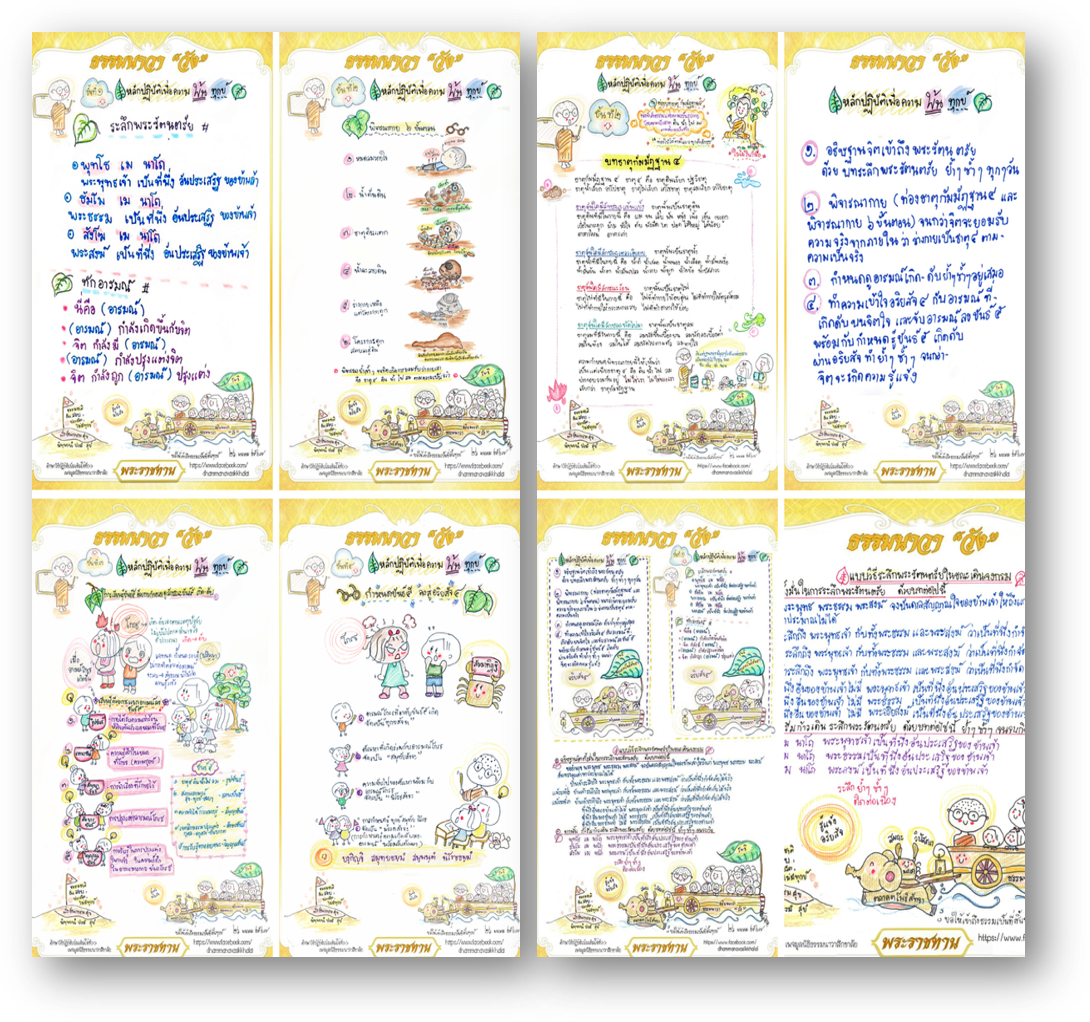
Figure 2 Dhammanava “Wang” Sheets
Source: National Office of Buddhism (2024)
The tide of Dhamma: “Wang” edition
The Dhammanava “Wang” surfaced in the early years of the reign of King Rama X (Vajiralongkorn) as sermons and practical manuals, presented in the form of eight-page handwritten summaries of Buddhist principles attributed to the monarch. Distinctive in both style and presentation, these sheets combined canonical terminology such as Triple Gem2, Four Great Elements3, and Five Aggregates4 with colorful illustrations, simplified explanations, and visual metaphors. Circulated selectively to temples and provincial ecclesiastical offices, they condensed doctrinal concepts such as mindfulness of breathing, body contemplation, and the recognition of impermanence into accessible instructional sequences framed with moral exhortations and imagery drawn from everyday life (Matichon Online, 2024; Thairath Online, 2024).
The mobilization of Buddhist knowledge to reinforce royal authority is not new in the history of Thai kingship. Rather, it reflects a longstanding pattern in which Buddhism has functioned as a central source of political legitimacy (Ishii, 1986; Tambiah, 1976). As Maurizio Peleggi (2002) demonstrates in his study of the modernization project of King Rama V (Chulalongkorn), Buddhist symbolism was also mobilized to position Siam within an increasingly global and colonial order. More recently, Tomas Larsson (2022) highlights the continued institutional entanglement between the state and the Thai monastic order in sustaining this relationship under the current reign.
Against this historical backdrop, the Dhammanava “Wang” can be understood as a reconfiguration of an established tradition rather than a novel departure. This rearticulation is closely tied to the broader context of succession and legitimacy in the early years of King Rama X’s reign (Chachavalpongpun, 2022; Larsson, 2022; Sopranzetti, 2023). Establishing the throne following the long and widely revered reign of King Bhumibol Adulyadej (Rama IX), the new reign entered a political and symbolic landscape marked by heightened expectations and comparison. In such a context, the visible articulation of kingship through moral and religious engagement may be understood as part of a broader effort to reaffirm royal authority and reposition the monarchy within contemporary Thai society.
The official narrative identified the King as the author of these sheets, embedding royal authority into their circulation and positioning the monarchy as an active custodian and interpreter of religious knowledge. In practice, this early phase of distribution functioned not only as a doctrinal primer for monastic and lay practitioners, but also as a contemporary articulation of Buddhist kingship—one that reasserts the monarch’s moral and spiritual authority through instructional and communicative means aligned with modern forms of governance and outreach.
Besides, the structure of these illustrated sheets followed a step-by-step pedagogical sequence that sought to guide practitioners from foundational recollection to more advanced meditative reflection. The sequence opened with a recollection of the Triple Gem, presenting refuge in the Buddha, Dhamma, and Sangha as the necessary point of departure. It, then, moved to body contemplation, including the six-stage analysis of bodily decay and reflection on the Four Elements, illustrated with visual metaphors linking corporeal processes to impermanence. A subsequent stage addressed the regulation of anger, encouraging practitioners to recognize the arising of unwholesome emotions, trace their conditions, and apply corrective strategies. The practice then advanced to contemplation of the Five Aggregates as a framework for conceptualizing personal existence as composite and impermanent. In some iterations, the sequence was extended further to include walking meditation, which framed mindfulness not only as a seated practice but also as a quality integrated into daily movement and ordinary activities.
From these illustrated sheets, they were expanded into four large volumes—Guidelines [แนวทางปฏิบัติ], Principle for Practice for Liberation from Suffering [หลักปฏิบัติเพื่อการพ้นทุกข์], Ariyasajja Bhavana [อริยสัจภาวนา], and Buddhist Principles [หลักการชาวพุทธ]—which were distributed nationwide (Public Relations Department, 2024). Whereas the sheets relied on colorful imagery, simplified explanations, and step-by-step sequences to render Buddhist teachings easily accessible, the volumes shifted toward a more formalized and text-heavy presentation. They incorporated detailed doctrinal expositions, scriptural citations, and extended instructions, transforming what had begun as concise “royal teaching aids” into comprehensive manuals of practice. This contrast highlights a movement away from pedagogical accessibility toward institutional authority: the sheets functioned primarily as symbolic affirmations of royal authorship, while the volumes marked their consolidation into a coordinated educational initiative, now backed not only by Phra Ajahn Ton (Venerable Charuwan-No Bhikkhu) and his networks, but also by governmental and palace structures.
The Guidelines volume articulates the Threefold Training—moral discipline (sīla), meditative concentration (samādhi), and wisdom (paññā)—as mutually reinforcing foundations of Buddhist cultivation. Moral discipline is defined not only as restraint from unwholesome action but also as the active cultivation of wholesome dispositions, which provide the necessary basis for concentration. Concentrative practice is illustrated through techniques such as mindfulness of breathing and contemplation of impermanence, designed to stabilize the mind and prepare it for insight. Wisdom is then positioned as the culminating stage, achieved through experiential recognition of impermanence (anicca), suffering (dukkha), and non-self (anattā), culminating in liberation (nibbāna).
Principle for Practice for Liberation from Suffering reorganizes the teaching around the Four Noble Truths and the Noble Eightfold Path5, presenting each of the eight factors (right view, intention, speech, action, livelihood, effort, mindfulness, and concentration) as a practical roadmap for ethical conduct and spiritual cultivation. The Five Hindrances (sensual desire, ill will, sloth and torpor, restlessness and worry, and doubt) are identified as key impediments, with mindfulness and clear comprehension prescribed as their antidotes. Ariyasajja Bhavana offers the most extensive treatment of the Four Noble Truths, emphasizing not only their doctrinal articulation but also their experiential recognition in everyday life. It highlights subtle forms of suffering—the suffering of change and the pervasive unsatisfactoriness of conditioned existence—and directly links the abandonment of craving (taṇhā) to the disciplined cultivation of the Eightfold Path, particularly through systematic training in the four foundations of mindfulness.
Finally, Buddhist Principles performs the integrative function of the corpus, weaving doctrinal, ethical, and meditative strands into a unified framework. Beginning with the Triple Gem as ultimate refuge, it elaborates on loving-kindness meditation (mettā-bhāvanā) both as a personal discipline and as a socially-oriented ethic, and develops body contemplation through analyses of the Four Elements and a six-stage meditative sequence (Dhammanava, 2024a). Here, moral conduct is framed not only as a foundation for individual practice but as the basis of collective harmony, explicitly aligning virtue with the broader discourse of moral order under royal patronage.
Collectively, these four volumes present the Dhammanava “Wang” curriculum as a graduated path, progressing from basic doctrinal grounding to advanced meditative insight. The program’s expansion from illustrated royal handscript sheets to more comprehensive printed volumes mirrored not only a pedagogical development but also a process of institutionalization. What began as a symbolic gesture of royal teaching was deliberately transformed, through palace patronage, state channels of distribution, and monastic networks, into a nationwide system of Buddhist moral education. In this dual capacity, the corpus functions both as a vehicle for Theravāda soteriology and as a modern instrument for consolidating the monarchy’s moral authority within Thailand’s religious landscape. Nevertheless, while presented as a universal resource for Buddhist cultivation, its circulation simultaneously reinforced a hierarchized relationship between the monarchy, the Sangha, and the laity, embedding religious instruction within structures of royal moral leadership.
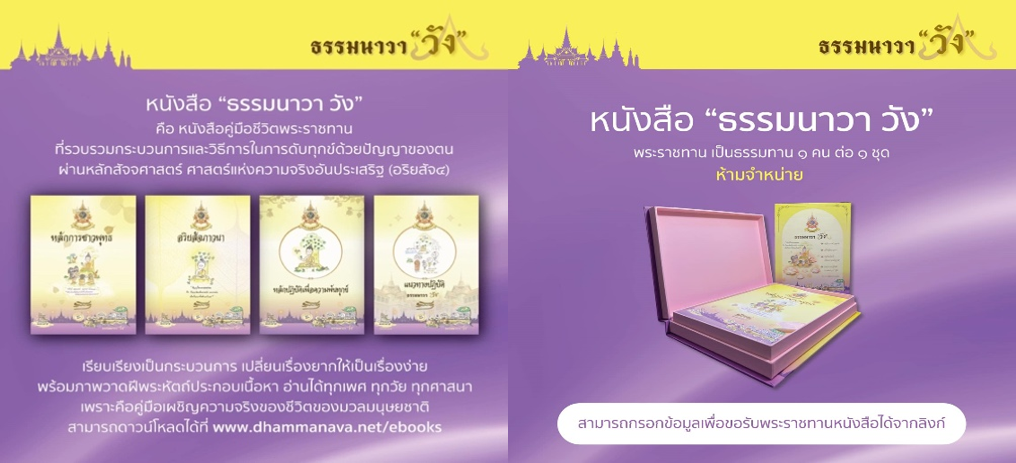
Figure
3
Dhammanava “Wang” volume of 4 books
Source:
Dhammanavaroyalpalace (2024)
Dhammanava “Wang” on tour
Alongside the nationwide circulation of the illustrated sheets and four printed volumes, the doctrinal “Bible” of the Dhammanava “Wang,” the initiative made its move into another branch of dissemination through a series of coordinated public tours. This stage signaled a deliberate shift from textual distribution to embodied instruction, situating the program not only in religious spaces but also within ceremonial and administrative settings, thereby broadening its visibility and reinforcing its institutional character. Conducted in partnership with temples, provincial authorities, and local administrations, the tours sought to operationalize the program’s doctrinal content through structured, participatory events designed to cultivate individual discipline while simultaneously promoting collective moral cohesion.
One of the inaugural tours of the Dhammanava “Wang” program was held in Bangkok on 13 September 2024 at Mahachulalongkornrajavidyalaya University, marking its transition from textual circulation to public instruction with the presence of Privy Councilor Ampon Kittiampon and royal officers. Staged in a hall arranged for ceremonial prominence within the university for monks, saffron-robed participants filled the space, visually underscoring the program’s orientation toward religious audiences. Proceedings opened with a Buddhist ritual and remarks by the Privy Councilor, who noted that King Rama X had tasked him with presiding over the ceremony and emphasized the king’s devotion, expressing his wish for Thai Buddhists to learn the principles he had “graciously bestowed.” This was followed by a video linking Buddhist beliefs with the virtues of the current king, presented as the patron of the program. The lead instructor, Phra Ajahn Ton, then introduced the program’s content and structured method of practice, based on the Dhammanava “Wang” sheets, which sought to present Buddhist principles in an accessible form for practitioners. At its core was the “two pills” framework, a condensed schema from the Tipiṭaka that became emblematic of the tours. The first pill emphasized recollection of the Triple Gem as a protective refuge, while the second urged participants to ‘realize the emotion,’ consciously naming and recognizing ‘dukkha,’ or suffering, as it arises in forms such as pain, stress, or frustration, together with its causes. Phra Ajahn Ton noted that the popularization of this formula originated from a lay practitioner who had promoted it as a way of making Buddhist practice accessible during moments of daily conflict or pressure. Following this, testimonies from both monks and lay practitioners were expressed to demonstrate the method’s efficacy in addressing workplace stress, interpersonal disputes, and household tensions, thereby reinforcing its status as an immediately applicable practice.
Beyond this practical framework, the day alternated between doctrinal exposition and guided practice. Instruction covered the Threefold Training6, complemented by exercises in seated meditation, walking meditation, six-stage body contemplation, and reflection on the Four Elements. Instructors circulated among the assembly to correct postures, encourage steady breathing, and clarify points of doctrine. The event concluded with a group reflection, during which participants shared their intended applications of the teachings in everyday life. This closing practice reinforced the program’s central expectation that attendees would carry the “two pills” into their routines as a living embodiment of the Dhammanava “Wang” approach (dhammanavawang, 2024a; 2024b).
Dhammanava “Wang” (Phāk Prachachon)
After this inaugural session, which was attended primarily by monks, the Dhammanava “Wang” program expanded its reach to lay practitioners, subtitled with “phāk prachachon,” or public, with the first public tour on 2 November 2024. The event unfolded as a carefully staged sequence that blended ritual solemnity with theatrical display. Upon the arrival of Privy Councilor Ampon Kittiampon, homage was paid to a portrait of King Rama X prominently displayed at the front of the stage, followed by musical performances and choreographed sequences that set a ceremonial rhythm of reverence and spectacle. Instruction then proceeded along the framework established in the earlier session, with Phra Ajahn Ton emphasizing recollection of the Triple Gem before introducing the “two pills” as a practical entry point into doctrinal cultivation. Core teachings were delivered by the Dhammanava “Wang” team, most prominently Kru Ngor (Rossukon Kongkate), and presented in accessible language reinforced by guided practices such as breath meditation, walking meditation with verbal prompts, and six-stage contemplation of the body and its elements, designed to translate abstract principles into embodied experience.
Beyond this structured practice, the program emphasized ‘right view’ (sammā-diṭṭhi) as the foundation of Buddhist cultivation, stressing that liberation requires more than rote recitation or ritual observance; it depends on insight into the mind’s automatic patterns (āsava), the arising and cessation of emotions, and the mechanisms of craving (taṇhā). Misinterpretations of these principles, particularly among younger generations turning away from Buddhism, were identified as a cause of declining faith, underscoring the need for clear instruction. Testimonies of practitioners attested to tangible life changes: greater resilience in times of illness, crisis, or interpersonal strain, sustained by reliance on the Triple Gem and mindfulness in daily routines.
The program also cultivated dialogical engagement. Monastic and lay instructors drew on parables, analogies from everyday life, interactive games, and question-and-answer sessions to elicit participants’ reflections on issues such as workplace stress, family conflict, and digital distraction. Experiences shared not only by Thai Buddhists but also by participants from other faith backgrounds, which were used to reinforce its claim to universal applicability. These challenges were paired with countermeasures grounded in mindfulness and ethical restraint, positioning the practice as an ongoing discipline of discernment and emotional regulation rather than ritual alone. Supplemented by music, humor, and occasional appearances by public figures, the event took on a communal and celebratory tone that underscored the compatibility of Dhamma practice with ordinary life. It concluded with collective chanting and group reflection, during which participants articulated strategies for applying the teachings in daily life, affirming the program’s expectation that attendees depart not as passive recipients but as active practitioners carrying the “two pills” as pragmatic resources for stability, compassion, and ethical discernment (dhammanavawang, 2024c).
The second public tour, held on 16 March 2025 in Bangkok, closely followed the structure of the inaugural and first public sessions. Once again presided over by Privy Councilor Ampon Kittiampon, it opened with homage to the monarchy and a video linking Buddhist teachings to the royal virtue of King Rama X, reaffirming the connection between religious cultivation and royal patronage. Phra Ajahn Ton delivered the central lecture, supported by the Dhammanava “Wang” team, most prominently Kru Ngor. While reiterating the “two pills” framework and the established doctrinal sequence, this iteration placed particular emphasis on the Five Hindrances, explained through urban scenarios such as compulsive mobile phone use, workplace procrastination, and professional envy. Each was paired with mindfulness-based countermeasures, illustrating how Buddhist practice could be adapted to the rhythms of contemporary life.
As in the first tour, the program integrated a testimonial component, with both monastic teachers and lay practitioners recounting experiences of applying Buddhist principles to psychological and social challenges. Narratives included recovery from depression, resilience in times of crisis, and reliance on the Triple Gem as a stable refuge in daily life. Teachers underscored that Buddhism should not be reduced to ritual observance but must be grounded in ‘sammā-diṭṭhi,’ or right view, a point reinforced by renewed efforts to correct common misunderstandings, particularly among younger audiences. Interactive exchanges invited participants to share personal struggles, from family conflict to addiction recovery, and elicited guidance on adapting Buddhist methods to wider social contexts, including prisons and rehabilitation programs. References to “scientific” research, such as brainwave studies linked to recollection of the Triple Gem, were occasionally introduced to bolster the program’s psychological credibility. As in previous sessions, the day concluded with chanting and group reflection, reaffirming the expectation that participants carry the “two pills” and associated methods into daily life as pragmatic resources for resilience and ethical discernment (dhammanavawang, 2025a).
The third tour, held on 3 May 2025 in Roi Et Province, marked the program’s first expansion beyond Bangkok and underscored the role of local monastic authority. Phra Ajahn Ton credited Phra Thep Wacharasarn Bundit, a senior monk and Roi Et native, with facilitating the event, which was framed both as a provincial act of merit and as an extension of the monarchy’s “Royal Dhamma Vessel [เรือหลวงแห่งธรรม]” into the region. While the doctrinal framework remained consistent with earlier tours, the Roi Et program placed stronger emphasis on testimonies and practical applications. Monks, facilitators, and lay participants described recovery from depression, panic disorders, and alcohol dependency, as well as improvements in family relationships and renewed engagement with Buddhist practice among youth. These accounts reinforced the program’s claim that recollection of the Triple Gem and recognition of emotions could provide not only psychological relief but also moral guidance in everyday life. Instructors also highlighted the importance of consistency and discipline, stressing that the benefits of Dhammanava “Wang” become most apparent when sustained over time. The event concluded with a communal pledge to carry these practices forward locally, presenting the program as both an instrument of royal religious patronage and a framework for addressing contemporary social and mental health challenges in the province (dhammanavawang, 2025b).
The fourth tour, held on 13 July 2025 in Chiang Mai, retained the established doctrinal framework of earlier sessions, with Phra Ajahn Ton, Kru Ngor, and associated facilitators leading lectures, testimonies, and interactive exercises. Opening under the patronage of Air Vice Marshal Supichai Sunthornbura, deputy secretary general of the Royal Household Bureau, representing the King, the program drew more than 5,000 participants from across six northern provinces. As in previous tours, the instructional sequence combined doctrinal exposition with guided practices and lay testimonies, emphasizing the practical application of recollection and emotional recognition to everyday struggles such as depression, family conflict, and addiction (dhammanavawang, 2025c; Meksuwan, 2025).
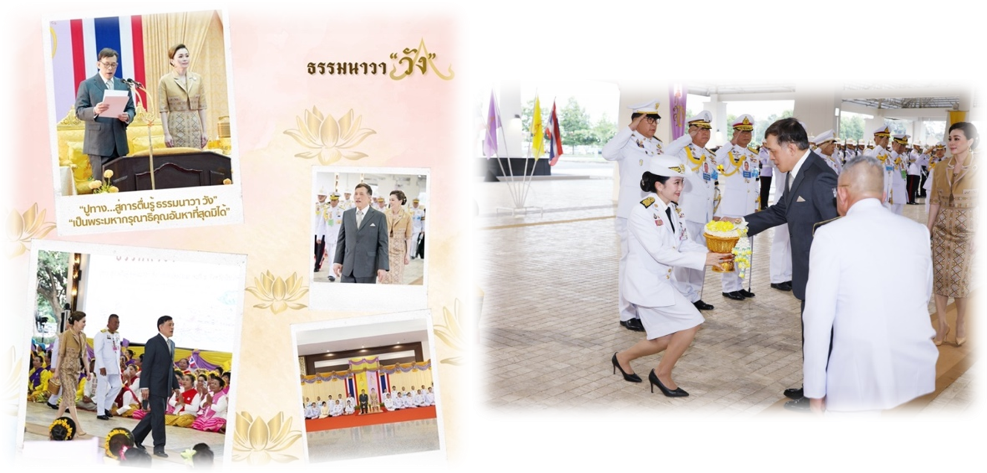
Figure
4
Royal presence at Dhammanava “Wang” in Chiang Mai
Source:
Dhammanavaroyalpalace
(2025b)
What distinguished the Chiang Mai tour was its ceremonial prominence. In the evening, King Rama X and Queen Suthida arrived at 18:41 to preside over the closing segment, elevating the gathering from a regional teaching program into a national religious occasion. Their presence was marked by military honors, provincial officials in attendance, and crowds dressed in yellow, while Lanna dancers performed a collective dancing of “fon leb [ฟ้อนเล็บ]” along the route. At the venue, the King delivered a royal address framing Dhammanava “Wang” within his role as both devout Buddhist (pūththamāmaka) and supreme patron of religion (akkharasasanu- pathambhaka), affirming it as a means of sustaining Buddhism while guiding the faithful toward awakening. Video screenings, musical performances, and mass chanting of phra paritta7 dedicated to the monarchs reinforced the program’s dual function as both religious cultivation and performative reaffirmation of royal custodianship of religion (Prachachart, 2025a).
The fifth tour, scheduled for 9 August 2025 in Nakhon Si Thammarat, marked the program’s first entry into southern Thailand. Although detailed accounts and live videos were not available, the announcement itself highlighted a deliberate strategy of nationwide expansion. From its launch in Bangkok to extensions in the Northeast and North, and now the South, Dhammanava “Wang” has sought to establish a presence across all major regions. This staged dissemination reflects its dual role as both a pedagogical framework for Buddhist practice and a nationwide moral project, embedding royal-authored teachings within Thailand’s religious and cultural fabric.
Across these tours, the program’s pedagogical structure followed a consistent pattern in which doctrinal exposition was paired with guided practices such as mindfulness of breathing, contemplation of the Four Elements, analysis of the Five Aggregates, and walking meditation. The “phāk prachachon” format adopted an accessible instructional register, drawing analogies from household routines, workplace interactions, and market exchanges, while the central theme of “awakening” was articulated both as a meditative realization and as sustained attentiveness to the ethical quality of thought, speech, and action. Emotional discipline, initially directed at anger and ill will, was gradually extended to encompass laziness, distraction, envy, and pride, while group chanting and collective meditation were consistently framed as dual-purpose acts: generating merit and reinforcing social harmony. Each tour also began with a formal acknowledgment of the King’s authorship and patronage, embedding the instruction within a broader narrative of national moral leadership and aligning its pedagogical aims with the symbolic authority of the monarchy. By mid-2025, the program had extended from Bangkok to provincial centers such as Chiang Mai, Roi Et, and Nakhon Si Thammarat, functioning in these contexts alike as vehicles of moral education while simultaneously reaffirming the monarchy’s role as custodian of Thai Buddhism. This dual character, at once devotional practice and staged performance, can be read as a political-theological strategy, reinforcing the monarchy’s authority by projecting royal patronage as inseparable from religious instruction.
Royal vessel of Dhamma to Europe
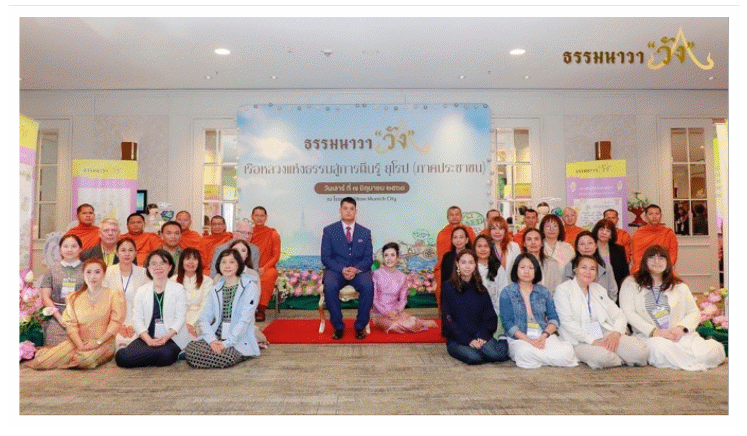
In parallel, a second prong of expansion sought to carry the initiative beyond Thailand’s borders. On 6–7 June 2025, the Dhammanava “Wang” program staged its ‘official’ international appearance at the Hilton Munich City Hotel, under the title “Royal Vessel of Dhamma to Awakening, Europe.” Reportedly, the King appointed Chao Khun Phra Sineenat Pilaskalayanee, the Royal Noble Consort, as his personal representative to preside over the opening ceremony, another move that underscored the royal origins of the program and explicitly tied its authority to the benevolent will of King Rama X—if not also Queen Suthida. Her presence was not ceremonial alone: she delivered opening remarks conveying the monarch’s intent that Dhammanava “Wang” serve as a path of moral cultivation for Thai citizens abroad, while also presenting Thai Buddhism to wider international audiences.
It was reported that the event gathered more than a hundred monks from across Europe and South Asia (including Austria, Sweden, the United Kingdom, Germany, the Netherlands, and India) and almost 150 lay practitioners, among them Thai diaspora families and foreign Buddhists. The diversity of participants highlighted the double aim of the Munich tour: first, to provide spiritual anchorage for expatriate Thais distanced from their homeland, and second, to project royal-endorsed Theravāda Buddhism as a resource adaptable to global contexts.
Doctrinally, the program followed the domestic curriculum of the domestic tours, but with an important pedagogical addition: the introduction of the “seven pills.” These were built directly on the “two pills” that had already been emphasized in earlier tours—namely, recitation of the Triple Gem and recognition of one’s emotions. In Munich, these two were retained as the foundation, but expanded by an additional five steps that drew on Buddhist narratives already present in the four volumes: (3.) contemplation of the Four Elements, (4.) body contemplation, analysis of (5.) the Five Aggregates and (6.) related emotions, and (7.) realization of the Four Noble Truths. The schema thus repackaged familiar teachings into a sequential, seven-stage method, making the practice accessible and portable for lay practitioners while reinforcing continuity with the domestic model.
The event also incorporated a commemorative act, as participants and monks together chanted the ‘phra parittra’ of Buddhist prayers in honor of Queen Suthida’s birthday on 3 June 2025. This linkage to the Queen’s birthday reinforced the program’s framing as not only spiritual training but also as an expression of loyalty and gratitude to the monarchy. Adding to this dynastic dimension, photographs from the event reveal the presence of Prince Dipankorn Rasmijoti8, seated prominently beside Queen Consort Sineenat, who sat on the ground with other participants. His attendance shed light on, unless affirmed, how deeply the program is entangled with the palace and signaled its projection into the next royal generation. In this sense, the Munich tour was not only a religious-educational mission but also a performative act of royal virtue and familial “unity,” embedding the monarchy’s image at the very heart of transnational Buddhist soft power.
Unlike the domestic tours, which can be directly observed through recordings and full documentation, some of the details on the Munich event are accessible only through secondary materials—summaries circulated on Facebook, YouTube uploads, participant testimonies, and coverage in the Royal Affairs News9 (Royal Archives, 2025; Thaitvnews, 2025). The reliance on mediated sources nonetheless underscores the program’s strategic emphasis on visibility, ensuring that the King’s religious patronage would be recognized and reaffirmed in the overseas context.
Dhammanava “Wang” to Buddha Bhumi
In fact, the expansion of Dhammanava “Wang” beyond Thailand was not confined to Europe. It appeared that its first, but semi-official, overseas initiative, Dhammanava “Wang” Phutthaphum in India, unfolded in stages throughout the latter half of 2024 and early 2025 at sacred Buddhist sites such as Bodh Gaya, Rajgir, and Darjeeling. Organized through Thai monastic envoys stationed in India, these activities framed the program simultaneously as a return to the Buddhist heartland and as an extension of the royal virtue of the Thai monarchy into the transnational Buddhist community (Dhammanava Royal Palace Buddha Bhumi, 2024).
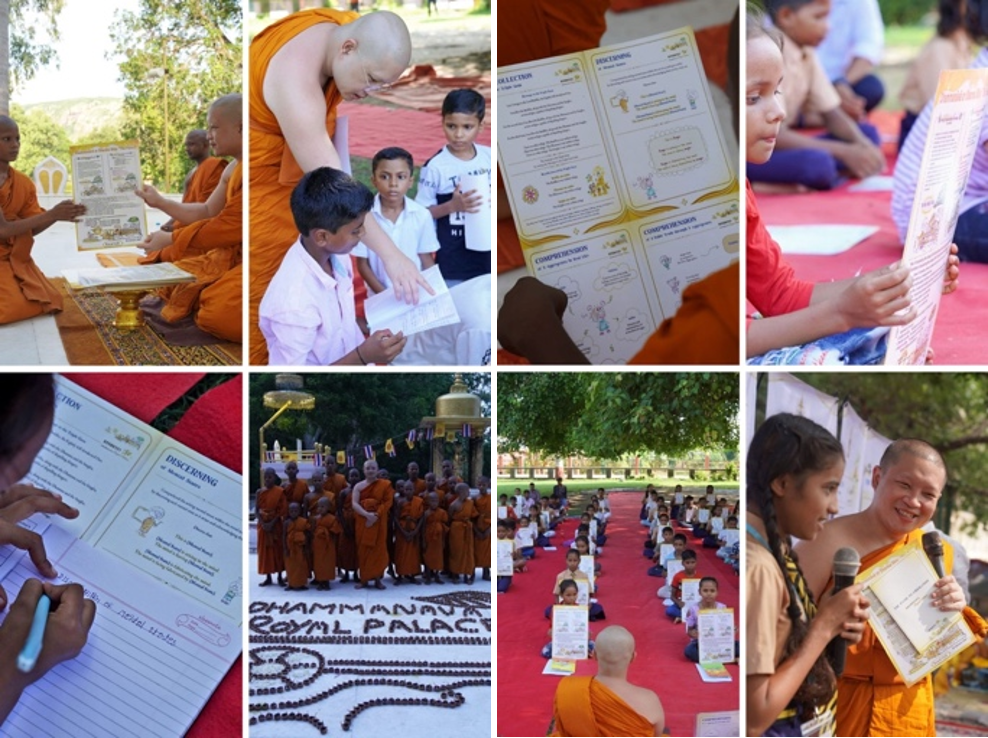
The early phase of this expansion, archived on the Facebook page of Dhammanava Royal Palace Buddha Bhumi between August and December 2024, combined instructional outreach with ceremonial performance in ways that foregrounded both pedagogy and ritual display. Posts from this period depict Thai monks conducting meditation sessions beneath the Bodhi tree, a symbolically charged setting that invoked the Buddha’s enlightenment while providing a natural classroom for young learners. Local Indian schoolchildren, some dressed in uniforms and others as novice monks in saffron robes, sat attentively as the monks distributed brightly illustrated Dhammanava “Wang” sheets, didactic materials that seem to render abstract concepts into simplified diagrams and striking colors. These sessions were interactive: children were encouraged to read passages, respond to questions, and write reflections in their notebooks, while some stepped forward with microphones to present their understanding to peers, transforming the event into a participatory performance of learning. The content focused on foundational Buddhist teachings such as the discernment of mental states, the contemplation of emotions like anger, the analysis of the Five Aggregates, and the Four Elements of existence, all seemed to be reframed in child-accessible English language yet embedded within a larger scriptural tradition (Dhammanava Royal Palace Buddha Bhumi, 2024).
Figure
5
Dhammanava “Wang” to Europe
Source:
Dhammanavaroyalpalace
(2025a)
However, the pedagogical exercises never stood apart from their royal framing. These materials, often labeled as “royal gifts,” were distributed under the arch of royal portraits and inscriptions of Dhammanava “Wang,” ensuring that participants remained conscious of the new reign’s patronage as the ultimate source of merit and authority. The educational impact of such sessions may have been uncertain, given the abstraction of the lessons and the challenges of translation across linguistic and cultural contexts, but the ceremonial-symbolic dimension was undeniable. Whether through the gifting of teaching sheets, the lighting of candles in Dharma-wheel formations, or meditation exercises held under the shadow of the Mahabodhi Temple, each event was carefully staged to convey that acts of merit, education, and devotion were made possible through the royal virtue of the Thai king. In this way, even if learning outcomes were uneven, the program succeeded in embedding royal authority into the sacred landscape of Indian Buddhism and projecting Thailand’s monarch as a beneficent patron of the broader Buddhist world.
Figure
6
Dhammanava “Wang” in India
Source:
Dhammanava
Royal Palace Buddha Bhumi (2024)
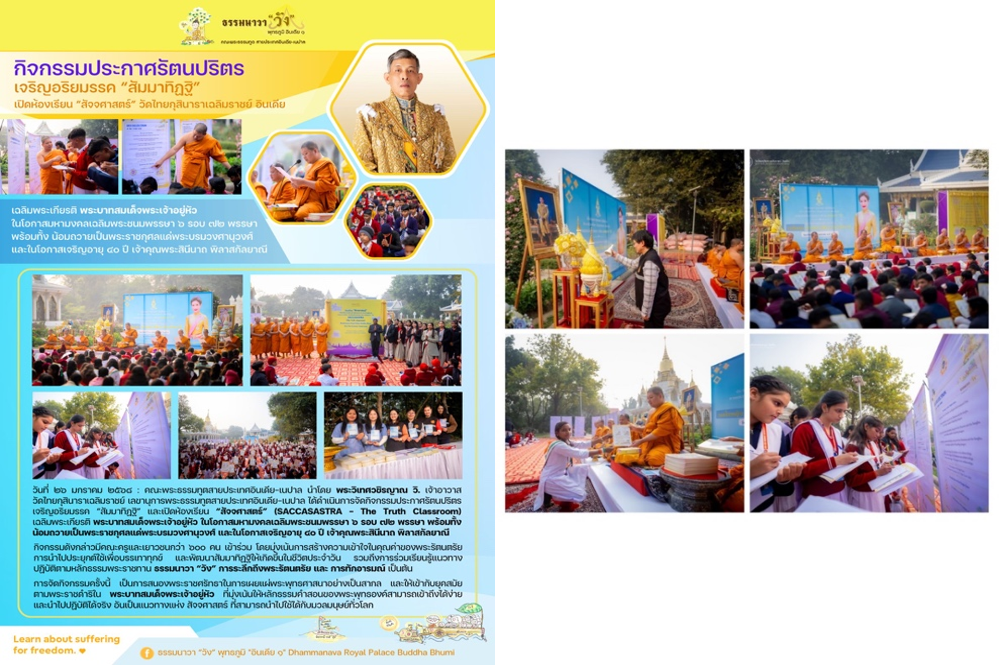
This article further analyzed that the ceremonial climax of the Indian tour unfolded at Kushinagar on January 26, 2025, a date aligned with the birthday of Queen Consort Sineenat. A part of the town was transformed into a stage for Buddhist kingship: processions of saffron-robed Thai monks marched in formation beside officials in pristine white ceremonial uniforms, accompanied by Indian Buddhist communities and large groups of schoolchildren waving royal flags and carrying Dhammanava “Wang” sheets. At the heart of the ritual site, towering portraits of King Vajiralongkorn and Queen Sineenat, draped with marigold garlands and framed with royal insignia, created an unmistakable royal presence. The ceremonies unfolded in carefully orchestrated stages: framed royal texts were formally presented to senior monks; chanting in Pāli and Thai filled the air, echoing across the sacred grounds; and merit-making rituals, including the lighting of candles in formations, almsgiving, and collective bows, bound participants into a shared performance of devotion. The fusion of images of Thai monks intoning scripture, officials in state regalia paying homage, and Indian youths participating under royal symbols produced a tableau where Buddhist piety and monarchical authority were inseparably fused. While the doctrinal lessons contained in the Dhammanava “Wang” sheets may have varied in their pedagogical effect, the ceremonial symbolism was beyond doubt. By staging these rites in a landscape sanctified by the Buddha’s life, the monarchy’s role was elevated from custodian of Thai Buddhism to patron of a transnational Buddhist community. In this way, the Royal Noble Consort’s birthday in 2025 became not only a “royal” commemoration but also a carefully choreographed projection of Thai monarchical authority into the sacred geography of world Buddhism.
The international tours, both in India and later in Europe, take on added significance when read against the domestic activities of the Dhammanava “Wang” program, for they reveal an undercurrent of power play between Queen Suthida and Queen Consort Sineenat. Although rumors circulated that the Dhammanava “Wang” initiative was originally spearheaded by the Royal Noble Consort, as one may be able to tell by looking at sketches on the sheets, the domestic tour suggests that Queen Suthida has later seized symbolic ownership of the program, as evidenced by the prominent placement of her portrait on the cover of one of the instructional books distributed in Chiang Mai. By contrast, during the Kushinagar ceremonies of January 2025, only the portraits of King Vajiralongkorn and Queen Consort Sineenat were displayed, suggesting that Sineenat sought to reassert her connection to the project through an international stage while largely absent from domestic appearances. Her overseas presence is especially notable given her earlier downfall in 2019, when she was stripped of her royal titles, and later reinstated in 2020 (BBC, 2020). The photographs from India, in this sense, do more than document Buddhist pedagogy; they mark Queen Consort Sineenat’s attempt to reclaim visibility and legitimacy by tying her image to the Dhammanava “Wang” at sites sacred to the Buddha’s life, even though she did not attend the ceremony herself. This trajectory continued in Europe, particularly in Germany, where she did appear publicly for the first time in several years, signaling that the program had become not only a vehicle of royal Buddhist outreach but also a contested platform through which rival queens negotiated symbolic authority within the royal domain.
Figure
7
Dhammanava “Wang” in India on 26 January 2025
Source:
Dhammanava
Royal Palace Buddha Bhumi (2024)
2025 Thailand’s religious soft power?
Beyond palace dynamics and intra-royal competition, what renders the Dhammanava “Wang” project analytically significant is the way it illuminates the mechanics of religious soft power in contemporary Thailand. Existing frameworks highlight attraction and legitimacy as the foundations of soft power, with recent scholarship extending this to religion as a resource of moral authority and transnational influence. The Thai case complicates these models. The project is not simply a cultural export or a diplomatic gesture, but a carefully orchestrated collaboration between the palace, selected non-state Buddhist actors such as Phra Ajarn Ton, as well as support from the Thai ecclesia and the Thai state. Through ritual performance, pedagogical staging, and the circulation of symbolic “gifts,” it suggests that the palace mobilizes Buddhism to reframe its current king as a virtuous sovereign. More than a spontaneous expression of faith, the Dhammanava “Wang” initiative represents an intentional regime technology, an effort to embed the reign itself within the idioms of “virtue” and “Buddhist kingship.” In doing so, it highlights a distinctive feature illustrating how religious soft power is not merely a tool for external attraction, but a performative resource for domestic legitimation designed to re-inscribe the monarchy at the moral center of Thai society.
The Dhammanava “Wang” advances understandings of religious soft power in three steps: first, by illustrating how the project mobilizes state and non-state Buddhist actors in a coordinated strategy of ritual and pedagogy; second, by situating the Thai case against comparative models of religious soft power to highlight its inward, performative orientation; and third, by showing how the initiative reconfigures the ownership of religious diplomacy, positioning the monarchy itself, rather than the state, as the primary agent of transnational Buddhist engagement.
In comparative perspective, the Thai case unsettles dominant models of religious soft power. In India and Russia, religious soft power functions through competitive exclusion, mobilizing majoritarian faith against minorities or aligning moral authority with geopolitical blocs. In the United States, ecumenical Christianity provides a universalist idiom for democracy promotion, while in China, state-managed Buddhism is instrumentalized as cultural diplomacy for its political and economic agendas. These examples reflect a common pattern: religious soft power is outward-facing, competitive, and embedded in formal statecraft. By contrast, the Dhammanava “Wang” initiative is neither primarily international nor oppositional. It is directed inward, staging the monarchy and its kingship as one of the prime loci of Buddhism for Thai audiences themselves. In this sense, it reveals that religious soft power need not be evaluated solely in terms of attraction abroad: it can also function as a performative resource for domestic legitimacy. Put differently, contemporary Thailand demonstrates a variant of religious soft power where the central goal is not persuasion of the “other,” but ritualized reaffirmation of authority to the “self.”
Equally significant is how the project reconfigures the ownership of religious diplomacy. In most comparative cases like India, Russia, China, and the United States during the Cold War, religion is strategically embedded within state foreign policy frameworks and channelled through ministries, cultural institutes, or diplomatic missions. This contemporary Thai case departs from this pattern. While requiring support from governmental officers, Dhammanava “Wang” was mainly initiated and orchestrated by the palace in partnership with selected monastic networks and non-state Buddhist teachers. This collaboration mobilized significant resources, careful planning, and the cooperation of royal and governmental officers, yet it was never explicitly framed, nor recognized, as a foreign policy initiative of the Thai state. The program is also more systematic and resource-intensive than previous symbolic efforts, such as the Tipiṭaka exchanges between the two prime ministers, because it fuses ritual, pedagogy, and monarchical patronage into a coherent strategy for projecting royal virtue and Thai Buddhist empowerment. That the palace could orchestrate this independently of Thailand’s diplomatic apparatus highlights the distinctive logic: religious soft power here is not merely a tool of statecraft, but a royal project in which the monarchy itself claims ownership of religious diplomacy, placing the palace as the sovereign center of transnational Buddhist engagement.
Nevertheless, despite this visibility, the project’s depth of influence over the masses remains ambiguous. Much of its resonance derives from ceremonial spectacle, hierarchical mobilization, and the symbolic authority of the monarchy rather than from sustained religious cultivation. Participation by civil servants, religious figures, local officials, or provincial networks may reflect institutional expectations as much as genuine spiritual commitment, especially in a political climate where loyalty to the monarchy is culturally valorized and socially policed. This blurring of voluntary attraction and soft coercion complicates the initiative’s nature to soft power, for influence mediated through obligation risks undermining its credibility and constraining its capacity to generate broad-based appeal. Public reception is similarly fragmented. While many participants appreciate its accessibility, resources, and royal sponsorship, others may view the program as a politically inflected religious performance. Its strong emphasis on royal authorship may reinforce legitimacy among royalist constituencies but limit its resonance among those seeking forms of Buddhist practice independent of monarchical authority. The pedagogical structure of the Dhammanava “Wang” itself introduces additional constraints. Mass gatherings tend to prioritize ritual, narrative, and emotional uplift, but offer limited opportunities for ongoing practice or deeper doctrinal cultivation. Simplified frameworks such as the “two pills” or “seven pills” are memorable yet risk flattening complex Buddhist teachings into digestible slogans, producing symbolic inspiration more than long-term meditative or ethical transformation.
These pedagogical and reception-related limits are compounded by questions of scalability and sustainability. The program’s nationwide tours appear to depend heavily on “palace” resources, state coordination, and the charisma of a small circle of instructors, rendering its momentum contingent on the interests and image of the reigning monarch. Such dependence raises the possibility that its influence may diminish if political conditions shift or if palace priorities change. Its transnational appeal is similarly constrained. While events in India and Europe amplify symbolic visibility, the Thai-centric and royal-centric framing may put a limit on their potential to gain deeper traction abroad, where local Buddhist communities have little incentive to adopt a model closely tied to Thai monarchical authority. As a result, the initiative’s international reach remains largely ceremonial rather than doctrinal, capable of producing momentary recognition but not enduring influence. Altogether, these limitations single out a key paradox within the Dhammanava “Wang.” While the project seeks to shape moral consciousness and project royal virtue, its effectiveness remains uneven, appealing more strongly to some groups than others. Its visibility is unmistakable, yet its reception may vary across social groups, and its influence depends heavily on the stability of the monarchy’s moral authority.
This bypassing of formal diplomatic channels spotlights a broader rationale. Religious soft power here is, and indeed already has been, claimed as a royal prerogative rather than a state instrument. In effect, the monarchy becomes the primary diplomatic actor, positioning the new reign not merely as head of state but as sovereign custodian of transnational Buddhist engagement. This shift highlights a wider theoretical implication: in monarchic-authoritarian settings, religious soft power may operate less as a projection of state identity abroad than as a symbolic reaffirmation of dynastic authority, complicating the line between domestic legitimation and international representation. This suggests a broader refinement where religious soft power should be assessed not only by who it attracts but also by who deploys it, and toward what ends.
The Dhammanava “Wang” project, then, demonstrates that religious soft power is not a monolithic phenomenon, but a repertoire adaptable to distinct political logics. In Thailand, it functions less as an instrument of international persuasion and more as a performative technology of domestic legitimation. The purpose of its carefully staged rituals, symbolic pedagogy, and the distribution of royal texts appears less to deepen doctrinal understanding than to materialize the monarchy as the moral center of Thai Buddhism, projecting the monarch as a sovereign of “virtue” (Kongsawat, 2025). By foregrounding ritual, virtue, and kingship, the Thai case shows how religion can operate as more than cultural capital; it becomes a political technology for sustaining dynastic authority. In this respect, Thailand challenges prevailing models of religious soft power, inviting scholars to reconsider its conceptual boundaries and to account for contexts where ritualized performance, rather than policy-driven persuasion, constitutes the decisive medium of influence. In short, the Thai case demonstrates that religious soft power is not only a tool of international attraction but also a performative technology of domestic legitimation, where ritualized displays of virtue sustain the authority of the throne.
This project, however, must be situated within the broader cautions scholars raise about the fragility of religious soft power. While it projects King Rama X, the palace, and Thailand as embodiments of virtuous sovereignty, and seeks to internationalize Thai Buddhism, its effectiveness ultimately hinges on credibility. Comparative cases have illustrated how gaps between diplomatic branding and domestic practice, or between genuine attraction and strategic manipulation, can quickly erode soft power. The durability and resilience of this project, therefore, rest less on ritual spectacle and image-making than on whether it can convincingly embody the Buddhist values and principles it professes to represent.
Acknowledgements
This research was supported by the 2024 Graduate School of Global Studies (GSGS) Research Grant from Sophia University. The author wishes to express sincere gratitude to Professor NAKANO Koichi for his guidance, the Graduate Program in Global Studies at Sophia University for its academic and financial support, and colleagues and friends throughout the research process for their morale and intellectual engagement.
Declaration of generative AI in scientific writing
The author used AI tools as writing support to assist with improving readability during the preparation of some parts of this text. The author thoroughly reviewed and revised all text and retains full responsibility for the originality, accuracy, and scholarly integrity of the final work.
CRediT author statement
Khoompetch Kongsawat: Conceptualization, Methodology, Writing - Original Draft
References
Ashikawa, Y., & Wank, D. L. (2023). Chinese Buddhism and soft power: Geopolitical strategy and modality of religion (pp. 61-78). In Mandaville, P. (Ed.). The geopolitics of religious soft power: How states use religion in foreign policy. New York: Oxford University Press.
BBC. (2020). Thailand’s king reinstates his consort after her fall from grace. Retrieved from https://www.bbc.com/news/world-asia-53994198
Blitt, R. C. (2023). “Putin-Phonia”: Harnessing Russian orthodoxy to advance russia’s secular foreign policy (pp. 41-60). In Mandaville, P. (Ed.). The geopolitics of religious soft power: How states use religion in foreign policy. New York: Oxford University Press.
Byrnes, T. A. (2023). Soft power of the Catholic papacy (pp. 232-247). In Mandaville, P. (Ed.). The geopolitics of religious soft power: How states use religion in foreign policy. New York: Oxford University Press.
Chachavalpongpun, P. (2022). Kingdom of fear: Royal governance under Thailand’s King Vajiralongkorn. Journal of Current Southeast Asian Affairs, 41(3), 359–377.
Dhammanava Royal Palace Buddha Bhumi. (2024). Kêun sòō tam naā-waā “wang” pút poōm (in diā nèung) [Ascend to the Dharma Ship “Palace” of Buddhahood (India 1)]. Retrieved from https://www.facebook.com/share/v/1CYqY936tE/
Dhammanava. (2024a). Books – Dhammanava. Retrieved from https://dhammanava.net/ebooks/
Dhammanava. (2024b). Tam naā-waā wang – Dhammanava. Retrieved from https://dhammanava.net/%E0%B8%98%E0%B8%A3%E0%B8%A3%E0%B8%A1%E0%B8%99%E0%B8%B2%E0%B8%A7%E0%B8%B2%E0%B8%A7%E0%B8%87/
Dhammanavaroyalpalace. (2024). Năng-sĕu tam naa-waa wang prá râat taan bpen tam taan hâam jam-nàai nèung kon dtòr nèung chút [The book "Dhammanava Wang" is a royal gift of dhamma teachings and is not for sale. One set per person]. Retrieved from https://www.facebook.com/dhammanavaroyalpalace/posts/pfbid02WcxyJyVUsZEKtQUPqXhSryz1tzJG87XQepf1UUkSf7GRQ1EtTQakREmPmNReHFstl
Dhammanavaroyalpalace. (2025a). Prá bàat sŏm dèt prá jâo yòo hŭua song prá gà-rú-naa bpròht glâo bpròht grà-mòm hâi jâo kun prá sì nee-nâat pí-lâat gan-lá-yaa-nee bpen pôo taen prá ong nai pí-tee bpèrt krohng gaan reuua lŭuang hàeng tam sòo gaan dtèun róo yú-ròhp prá tam tôot wan sùk têe hòk mí-tù-naa-yon por sŏr sŏng-pan-hâa-rói-hòk-sìp-bpàet ná rohng raem Hilton Munich City sà-hà pan săa-taa-rá-ná rát yer-rá-má-nee [His Majesty the King graciously appointed Chao Khun Phra Sineenath Pilaskalyani as his representative at the opening ceremony of the "Royal Thai Navy Ship of Dhamma to awakening in Europe" (Buddhist missionary) project on Friday, June 6, 2025, at the Hilton Munich City Hotel, Federal Republic of Germany]. Retreived from https://www.facebook.com/dhammanavaroyalpalace/posts/pfbid02ecTFw6azsgGqPZPCfMjBZFPp9RLBJm9hSUUVGxQA9F7Jw1UDUVedWWZrtM3cvDRFl
Dhammanavaroyalpalace. (2025b). Prá bàat sŏm dèt prá jâo yòo hŭua song mee prá-râat-chá-dam-ràt bpèrt ngaan bpoo taang sòo gaan dtèun róo tam naa-waa wang pâak bprà-chaa chon rûn têe sèe ná sŏon bprà-chum láe sà-daeng sĭn káa naa-naa châat ฯ jang-wàt chiiang-mài mêuua wan têe sìp-săam gà-rá-gà-daa-kom sŏng-pan-hâa-rói-hòk-sìp-bpàet [His Majesty the King delivered a royal address opening the event “Paving the way…towards awakening: Dhammanava Wang” (public version, 4th batch) at the Chiang Mai International Convention and Exhibition Center on July 13, 2025]. Retrieved from https://www.facebook.com/reel/1408210073776830
dhammanavawang. (2024a). Chûūang cháū dtaāwn-têē nèung (13-09-2024) - kroūhng-gaān bpoō taāng sòō tam naā-waā wang kráng têē nèung [Morning session, part 1 (13-09-2024) - Paving the way to Dhammanava “Wang” project batch 1]. Retrieved from https://youtu.be/xl93FoJrQ2g?si=uMaYWH5q0_oNW_S3
dhammanavawang. (2024b). Chûūang bàāi dtaāwn-têē săāwng (13-09-2024) - kroūhng-gaān bpoō taāng sòō tam naā-waā wang kráng têē nèung [Afternoon, part 2 (13-09-2024) - Paving the way to Dhammanava “Wang” project batch 1]. Retrieved from https://youtu.be/MKS6-ZrmMFo?si=928YtRH34VaKFstI
dhammanavawang. (2024c). Kroūhng-gaān “bpoō taāng..sòō gaān dtèūn róō tam naā-waā wang” (pâāk bprà-chaā-chon) [Project “Paving the way...towards awakening, Dhammanava “Wang” (public sector)]. Retrieved from https://www.youtube.com/watch?v=xAe3hIgd-tE
dhammanavawang. (2025a). Kroūhng-gaān “bpoō taāng..sòō gaān dtèūn róō tam naā-waā wang” (pâāk bprà-chaā-chon) rûn têē săāwng [Project “Paving the way...towards awakening, Dhammanawa Wang” (public sector), batch 2]. Retrieved from https://www.youtube.com/watch?v=noO1HgmiHlE
dhammanavawang. (2025b). Kroūhng-gaān “bpoō taāng.sòō gaān dtèūn róō tam naā-waā wang” (pâāk bprà-chaā-chon) rûn têē săām zhang-wàt róī èt [Project “Paving the way...towards Awakening, Dhammanava “Wang” (public sector), batch 3, Roi Et]. Retrieved from https://www.youtube.com/watch?v=BhWUM0X0Zb4
dhammanavawang. (2025c). Tàāi-tâāwt sòt”bpoō taāng...sòō gaān dtèūn róō tam naā-waā wang” (pâāk bprà-chaā-chon rûn têē 4) (chûūang têē 2) [Live broadcast of “Paving the way...to awakening, Dhammanava “Wang” (Public Sector, Batch 4) (Part 2)]. Retrieved from https://www.youtube.com/watch?v=ygQUumF6x54
Ganguly, S. (2023). The Modi government and the uses and limits of India’s religious soft power (pp. 97-112). In Mandaville P. (Ed.). The geopolitics of religious soft power: How states use religion in foreign policy. New York: Oxford University Press.
Haynes, J. (2012). Religious transnational actors and soft power. London & New York: Routledge.
Henne, P. S., & Bettiza, G. (2023). Tragedy or irony: Geopolitical grand narratives, religious outreach, and US soft power (pp. 19-40). In Mandaville P. (Ed.). The geopolitics of religious soft power: How states use religion in foreign policy. New York: Oxford University Press.
Hoesterey, J. B. (2023). Indonesian Islam as model for the world? Diplomacy, soft Power, and the geopolitics of “Moderate Islam” (pp. 169-189). In Mandaville P. (Ed.). The geopolitics of religious soft power: How states use religion in foreign policy. New York: Oxford University Press.
Ishii, Y. (1986). Sangha, state, and society: Thai Buddhism in history. Honolulu, USA: The University of Hawaii Press.
Jödicke, A. (2018). Introduction (pp. 1-18). In Jödicke A. (Ed.). Religion and soft power in the South Caucasus. London & New York: Routledge.
Kongsawat, K. (2025). Reign of virtue: A new phase of Buddhist kingship in contemporary Thailand. Asian Journal of Arts and Culture, 25(2), e285340.
Larsson, T. (2022). Royal succession and the politics of religious purification in contemporary Thailand. Journal of Contemporary Asia, 52(1), 2–22.
Mandaville, P., & Hoffman, J. (2023). Thinking about religion and religious soft Power in international relations and foreign policy analysis (pp. 1-18). In Mandaville P. (Ed.). The geopolitics of religious soft power: How states use religion in foreign policy. New York: Oxford University Press.
Matichon Online. (2024). Nai-lŭūang prá râāt taān pàen tam naā-waā “wang” mâāwp hâi wát sà-tăān sèuk-săā reūan-zham tûūa bprà tâēyt [His Majesty the King has bestowed the Dhammanava “Wang” sheets to temples, educational institutions, and prisons across the country]. Retrieved from https://www.matichon.co.th/politics/news_4581568
Meksuwan, D. (2025). Kroūhng-gaān “bpoō taāng...sòō gaān dtèūn róō tam naā-waā wang (pâāk bprà-chaā-chon) rûn têē 4” zhang-wàt chiāng mài [Project “Paving the way...to awakening, Dhammanava “Wang” (public sector), batch 4,” Chiang Mai]. Radio Chiang Mai. Retrieved from https://radiochiangmai.prd.go.th/th/content/category/detail/id/57/iid/405301
Modi, N. (2025). A very special gesture! I am grateful to Prime Minister Paetongtarn Shinawatra ... Retrieved from https://www.facebook.com/narendramodi/posts/a-very-special-gesture-i-am-grateful-to-prime-minister-paetongtarn-shinawatra-fo/1459108778916683/
National Office of Buddhism. (2024). Tam naa-waa wang [Dhammanava “Wang”]. Retreived from https://www.onab.go.th/th/content/category/detail/id/1544/iid/70248
News on Air. (2025). Thai PM gifted holy scriptures: “World Ti-pitaka: Sajjhaya phonetic edition to PM Modi. Retrieved from https://www.newsonair.gov.in/thai-pm-gifted-holy-scriptures-world-ti-pitaka-sajjhaya-phonetic-edition-to-pm-modi/
Nye, J. S. (2004). Soft power: The means to success in world politics. New York: Public Affairs.
Öztürk, A. E. (2023a). Religious soft power: Definition(s), limits and usage. Religions, 14(2), 135.
Öztürk, A. E. (2023b). Turkey’s ambivalent religious soft power in the illibersal rurn (pp. 79-96). In Mandaville P. (Ed.). The geopolitics of religious soft power: How states use religion in foreign policy. New York: Oxford University Press.
Peleggi, Maurizio. 2002. Lords of things: The fashioning of the Siamese monarchy’s modern image. Honolulu, Hawaii: University of Hawaii Press.
Phra Ratchapothiwithet Vajramuni. (2025). Tam patisăntăān dtâāwn ráp naāi gràt mon dtreē săā taān ná rát in diā ná wát prá chaēy dtùp ná wim lá mang klaā raām grung tâēyp má-hăā-ná-kaāwn [Dhamma greetings to welcome the prime minister of the Republic of India at Wat Phra Chetuphon Vimolmangklaram, Bangkok]. Retrieved from https://www.facebook.com/permalink.php?story_fbid=1242259937903480&id=100063584566546&ref=embed_post
Prachachart. (2025a). Nai-lŭūang prá raā-chí-neē sèt zhà (bpoēy yaān nóī) chiāng mài “bpoō taāng sòō gaān dtèūn róō tam naā-waā wang” [The King and Queen travel to Chiang Mai to “pave the way to enlightenment, Dhammanava Wang”]. Prachachart. Retrieved from https://www.prachachat.net/prachachat-top-story/news-1844807
Prachachart. (2025b). Dtâāi rôm prá baā-rá-meē gà-sàt hàeng tam bpoō taāng sòō gaān dtèūn róō “tam naā-waā wang” [Under the royal patronage of the Dharma King, paving the way to enlightenment at Dhammanava “Wang”]. Prachachat. Retrieved from https://today.line.me/th/v3/article/5ylajgq
Public Relations Department. (2024). Năng-sĕū ì lék traāw ník núllpra râāt taān làk tam naā-waā “wang” làk bpà-dtì-bàt pêūa kwaām pón túk (rôōp bàāep Ebook) [Royal E-Book: Dhammanava “Wang” principles of practice for liberation from suffering (ebook format)]. Retrieved from https://www.prd.go.th/th/content/category/detail/id/31/iid/320666
Royal Archives. (2025). Kàāo nai prá râāt săm-nák aā-tít 8 mí-tù-naā-yon 2568 [Royal affairs news, Sunday 8 June 2025]. Retrieved from https://www.youtube.com/watch?v=hU6M-QoqM9Q
Royal Thai Embassy in New Delhi. (2025). Ambassador-designate presented the World Tipiṭaka Sajjhāya to the Government of India, following the presentation of the Tipiṭaka by H.E. Paetongtarn Shinawatra, Prime Minister of Thailand, to H.E. Narendra Modi, Prime Minister of India, during his official visit to Thailand. Retrieved from https://newdelhi.thaiembassy.org/en/content/ambassador-designate-presented-the-world-tipi%E1%B9%ADaka?cate=614489e4d91c465bc9406c22
Sopranzetti, C. (2023). From love to fear (pp. 205–236). In Chachavalpongpun, P. (Ed.). Rama X: The Thai monarchy under King Vajiralongkorn. New Haven, USA: Monograph 69/Yale Southeast Asia Studies.
Tambiah, S. J. (1976). World conqueror and world renouncer: A study of Buddhism and polity in Thailand against a historical background. New York, USA: Cambridge University Press.
Thairath Online. (2024). “Nai-lŭūang” prá râāt taān pàen tam naā-waā “wang” hâi wát sà-tăān sèuk-săā reūan-zham tûūa bprà tâēyt [His Majesty the King bestowed the Dhammanava “Wang” sheets to temples, educational institutions, and prisons throughout the country.]. Retrieved from https://www.thairath.co.th/news/royal/2786490
Thaitvnews. (2025). Zhâu kun prá sì neē nâāt bpèērt kroūhng-gaān reūa-lŭūang hàeng tam (bpoēy yaān nóī) yeēr-rá-má-neē [Royal Noble Consort Sineenat opened the Royal Ship of Dharma project in Germany]. Retrieved from https://www.youtube.com/watch?v=UpQXuFXOoTY
The Nation. (2025). Soft power is the driver of economic transformation, says Paetongtarn. Retrieved from https://www.nationthailand.com/business/economy/4004665
Walker, C. (2018). What is “Sharp Power”?. Journal of Democracy, 29(3), 9-23
1 Literally translated as the tide of Dhamma (by the) “Palace.”
2 The Triple Gem (Pāli: tiratana; Sanskrit: triratna) designates three central pillars of Buddhism: (1.) the Buddha, honoured both as Siddhattha Gotama, the historical teacher of the 5th–4th century BCE, and as the embodiment of awakened wisdom; (2.) the Dhamma, his teachings that articulate the truths of reality (dhamma) and the path to liberation (nibbāna); and (3.) the Sangha, the community of noble disciples (ariya-sangha) who have reached varying degrees of awakening, along with the wider monastic order entrusted with preserving the teaching. To take refuge in the Triple Gem is to affirm one’s commitment to the Buddhist path and reliance on these three sources of guidance toward liberation.
3 In Buddhist thought, the Four Great Elements (mahābhūta) refer to four fundamental qualities of physical existence: (1.) Earth (paṭhavī-dhātu), representing solidity and structure; (2.) Water (āpo-dhātu), denoting cohesion and fluidity; (3.) Fire (tejo-dhātu), signifying temperature and transformative processes of heat and cold; and (4.) Air (vāyo-dhātu), embodying motion, vibration, and expansion. These are not conceived as permanent substances but as observable properties experienced directly, serving as the basis of material existence together with their derivative forms.
4 The Five Aggregates (pañcakkhandha) outline the components of human experience: (1.) Form or Materiality (rūpa), comprising the physical body and material phenomena derived from the four great elements; (2.) Feeling or Sensation (vedanā), the affective tone of experience—pleasant, unpleasant, or neutral—arising from contact between the six sense bases and their objects; (3.) Perception (saññā), the faculty of recognition and identification that labels sensory and mental impressions; (4.) Volitional Formations or Mental Constructions (saṅkhāra), the conditioning mental factors led by intention (cetanā), encompassing wholesome, unwholesome, and neutral qualities such as diligence, conceit, anger, or mindfulness; and (5.) Consciousness (viññāṇa), the momentary awareness of objects through the six sense bases, conceived as a stream of discrete cognitive events. Together, these aggregates constitute the framework through which existence and personal identity are analysed in Buddhist thought.
5 The Four Noble Truths set out the core framework of Buddhist teaching: (1.) the truth of suffering (dukkha), that all conditioned existence is inherently unsatisfactory; (2.) the truth of origin (samudaya), identifying craving (taṇhā) as the root cause of suffering; (3.) the truth of cessation (nirodha), affirming the possibility of liberation through the end of suffering; and (4.) the truth of the path (magga), the practical way to cessation embodied in the Noble Eightfold Path—right view, right intention, right speech, right action, right livelihood, right effort, right mindfulness, and right concentration.
6 In Theravāda Buddhism, the Threefold Trainings (sikkhā) form a core framework of practice: (1.) moral discipline (sīla), the regulation of conduct through ethical precepts; (2.) concentration (samādhi), the cultivation of meditative stability; and (3.) wisdom (paññā), direct insight into impermanence (anicca), unsatisfactoriness (dukkha), and non-self (anattā), leading ultimately to liberation (nibbāna). These trainings are mutually reinforcing: ethical discipline provides the basis for concentration, while concentration supports the clarity needed for wisdom.
7 Phra parittra, often rendered in English as “protective verses” or “Paritta chanting,” refers to a collection of Buddhist protective chants. Commonly practiced within Theravāda traditions, these recitations are believed to safeguard against harm, confer blessings, and radiate loving-kindness to all beings.
8 Prince Dipangkorn Rasmijoti is the only son of King Vajiralongkorn (Rama X) with his former wife, Srirasmi Suwadee. Although often regarded as heir presumptive, he has not been formally designated Crown Prince; the official title of heir apparent to the Thai throne remains vacant.
9 “Royal Affairs News” is a daily broadcast aired nationwide via the state-controlled Television Pool of Thailand. It covers the activities of the King, Queen, and other members of the royal family, typically featuring ceremonies, public appearances, and royal patronage of projects. More than a news bulletin, it serves as a tool of royal publicity, presenting the monarchy as a source of benevolence and moral leadership. Through its standardized and ceremonial format, it operates both as an official record of royal engagements and as a medium for reinforcing the monarchy’s symbolic authority in Thai public life.