
Asian J. Arts Cult. 2026; 26(4): 147
Peeling Back the Layers of Japanese Propaganda Film: A Multimodal Analysis of Djawa Baharoe Newsreel
Taufik Hidayah
Graduate School of Humanities and Social Sciences, Hiroshima University, Hiroshima 739-0046, Japan
(Corresponding author’s e-mail: hidayahtaufik@hiroshima-u.ac.jp)
Received: 21 January 2026, Revised: 17 April 2026, Accepted: 23 April 2026, Published: 18 May 2026
Abstract
During the Japanese occupation of Indonesia (1942-1945), the newsreel Djawa Baharoe served as a critical instrument in the imperial “thought war” (shisōsen), designed to mobilise the Javanese population for the Greater East Asia Co-Prosperity Sphere. While existing scholarship has extensively documented the political and historical dimensions of Japanese propaganda, the systematic analysis of its cinematic form remains under-researched. This study conceptualizes Djawa Baharoe as a multimodal ideological technology. It posits that the efficacy of the film does not rely only on its explicit political messaging (propaganda), but rather on how it weaponizes the biopolitical aesthetics of colonial cinema. Adopting the framework of Multimodal Film Analysis proposed by Bateman and Schmidt (2012), combined with a close reading of Director Tokichi Ishimoto’s production notes, this research examines the existing newsreels to deconstruct the interplay of narrative voice, auditory landscape, and visual grammar. The analysis reveals how the film orchestrated a multimodal rhetoric: the narrative systematically vilified Western imperialism by co-opting local religious and nationalist sentiments; the soundscape functioned as a boundary mechanism to regulate emotional perception; and the visual composition employed simplified editing techniques and “bandwagoning” imagery to dissolve individual identity into a collective, and utilising leader figure as visual endorsement of the Japanese occupation narrative.
Keywords: Japanese propaganda film, Djawa Baharoe, Multimodal film analysis, Greater east asia co-prosperity sphere
Introduction
“What is the purpose of this Greater East Asia War? It is none other than establishing the co-prosperity sphere. If so, why must this sphere be established? That is why all Asian nations must forbid the violence and oppression of the English and American countries and establish prosperity and safety for all the Asian nations themselves. Thus, only the nation of Nippon can deliver this ideal. [It] will destroy the power of the English and American countries, which are strong and rich, yet very arrogant, from this Asian continent.” (Djawa Baharoe (4))
Delivered in Indonesian by a Japanese student reciting his notes during an Indonesian language class, this statement is a monologue that sums up the ideology of the Greater East Asia Co-Prosperity Sphere and its moral justification in Indonesia. This sequence is but one component of Djawa Baharoe (New Java), a newsreel series produced during the early stages of the Japanese occupation of Indonesia. The film was produced by the Djawa Eiga Kosha (Java Film Corporation), a company established by the Sendenbu (Propaganda Department) in September 1942. Djawa Baharoe was the first newsreel released specifically for the occupied territory. While it is estimated that a total of eight issues were released, only a fraction of these reels survived the war after being seized by returning Dutch authorities (Groenendijk, 1998). Before the above recitation occurs, the sequence titled “Pengadjaran Bahasa Indonesia di nippon (Indonesian Language Teaching in Japan)” in Djawa Baharoe (4) Japanese propaganda newsreel film opens with the melody of “Greensleeves” playing in the background accompanying a medium shot of people walking leisurely as the narrator explains that “after finishing work during the day, [they] want to go study the Indonesian Language.1“ This scene constructs its narrative through a sense of cultural intimacy and togetherness, and endeavours to create a space to understand one another so that the Japanese can “work together” with the Indonesians under the umbrella of the Japanese co-prosperity sphere.
These surviving reels originate from films seized by Dutch authorities upon returning to Indonesia after the war and shipped to the Netherlands. Initially stored at the Rijksinstituut voor Oorlogsdocumentatie (RIOD) in Amsterdam, parts of this collection were later turned over to the Nederlands Filmmuseum (NFM) in Amsterdam and to the Filmarchief van de Rijksvoorlichtingsdienst (now the Netherlands Institute for Sound & Vision) (Groenendijk, 1998). Unlike its counterparts, Berita Film di Djawa (1943) and Nampō Hōdō (1944), which utilised bilingual narration to accommodate Japanese audiences, Djawa Baharoe was intended for a purely Indonesian audience. Its narration is exclusively in the Indonesian language by targeting the local population as its audience and focuses heavily on events within Java.
Existing historical analyses have extensively documented the political and social dimensions of Japanese propaganda in Southeast Asia (Anderson & Richie, 1959; High, 2003; Daniels, 2004; Kushner, 2005; Lebra, 2010). Focusing on Indonesia, Kurasawa (1987) has documented the introduction of Japanese propaganda films as tools for political indoctrination. She highlighted the strict military control over their production and distribution, the organisational production framework, and the propaganda goals and media strategy. Scholars such as Daniels (2004) have further contributed by analysing themes of military action, political mobilisation, and the transfer of Japanese-inspired skills and technology. However, studies often treat films like Djawa Baharoe primarily as historical documents, and the discussion focuses on their content and context. The part that is often being neglected is the systematic analysis of their form as cinematic art. This gap is significant, as Japanese wartime filmmaking understood aesthetics explicitly in functional, propagandistic terms (Nornes, 2003). Therefore, this study posits that the efficacy of Djawa Baharoe’s film form is equally important as its political message and argues that a full understanding of Djawa Baharoe’s propaganda efficacy requires a close examination of its cinematic construction.
To reveal these mechanisms, this research adopts the framework of Multimodal Film Analysis as proposed by Bateman and Schmidt (2012) as its methodology by conducting a sequence-by-sequence examination of the film’s narrative voice, auditory landscape, and visual grammar. By reading these filmic elements alongside the production notes of the film director, Tokichi Ishimoto, this analysis seeks to illuminate the aesthetic choices intended to guide the interpretation of the Indonesian viewer.
The remainder of this paper is organised into four main sections. The following section establishes the theoretical and historical framework, examining the Japanese propaganda and the specific role of film as an ideological weapon within the colonial context. The methodology section then outlines the specific application of Multimodal Film Analysis and the utilization of primary archival sources. The core analysis is subsequently presented in three parts, dissecting the film’s construction through its narrative voice, its auditory landscape of sound and silence, and its visual grammar. Finally, the discussion synthesizes these findings by placing the filmic text in dialogue with Director Ishimoto’s production notes, highlighting the convergence of strategic intent and aesthetic form before offering concluding remarks.
Ideological framework, cultural agents, and the indonesian case of the “Thought War”
The overarching goal of Japanese propaganda during its imperial expansion was a comprehensive “thought war” (shisōsen), a term that encapsulates Japan’s struggle for ideological supremacy against Western democracy and individualism. Kushner’s (2005) work, The Thought War, provides a re-evaluation of this period by challenging the pervasive “failure myth” (p. 17) that has often characterised postwar assessments of Japanese propaganda. Kushner (2005) argues that contrary to claims of its ineffectiveness, Japanese propaganda was a sophisticated and largely successful enterprise that effectively mobilised the domestic population and created a stable social consciousness in support of their Fifteen-Year War2. This study builds upon Kushner’s (2005) assertion that propaganda was a dynamic interaction between official policy and the populace, creating a potent, self-sustaining environment of mobilisation. The Japanese state and military orchestrated the civilian advertisers, intellectuals, and entertainers, who created a reciprocal relationship that grounded the war effort in the fabric of daily life.
This “thought war” was executed through a variety of cultural policies, which, as Goodman (1991) observes, were often devised in an ad hoc manner. It reflects a remarkable lack of preparation for the administrative obligations Japan assumed after its swift military victories in Southeast Asia. A central innovation of this campaign was the recruitment and deployment of bunkajin (“men of culture”)—intellectuals, artists, writers, and filmmakers—tasked with “reeducating” the populations of occupied territories to align them with Japan’s cultural and political orbit. These cultural policies were designed to serve Japan’s primary purpose: securing the natural resources required for its war effort by ensuring the subservience of local populations.
In the specific context of Indonesia, Japan held a distinct advantage in promoting its vision for a Greater East Asia Co-Prosperity Sphere. As Mark (2018) details in his study of the occupation of Java, the Japanese were able to position themselves as liberators from a shared enemy: The Dutch colonial regime. This pre-existing anti-Western sentiment created a fertile ground for propaganda. The Japanese focused their efforts on collaborating with the local elite and, mirroring the broader strategy described by Goodman (1991), mobilised bunkajin to craft and disseminate their message. These “men of culture” were central to constructing a narrative of Asian unity and shared destiny, which is a narrative cinematically embedded in newsreels like Djawa Baharoe, the focus of this study.
Film as an ideological weapon
Within this strategy of total mobilisation, film was perceived as a uniquely powerful weapon to ‘grasp people’s minds’ (minshin ha’aku) (Kurasawa, 1987, p. 59). To achieve this, the Japanese established sophisticated propaganda bureaus, most notably the Sendenbu (Propaganda Department), which managed and coordinated various media, with a special emphasis on those that appealed to auditory and visual senses, such as film, for influencing the largely illiterate rural population. The strategic importance of film is further underscored by the establishment of the “Total War Research Institute” in October 1940, which identified propaganda as a prime necessity. Nieuwenhof (1984) notes that within this framework, the promise of independence was a key, albeit cynical, propaganda message, as official policy often ran counter to stimulating full Indonesian sovereignty. The newsreel, in particular, became a crucial vehicle for this ideological project. The energetic and perilous work of Japanese cameramen, 45 of whom died during the Pacific War (Nieuwenhof, 1984), is a testament to the intensity of this cinematic campaigning.
The camera itself was conceptualised as a critical weapon in this struggle, a literal and metaphorical “photographic gun” (Nornes & Fukushima, 1994, p. 71). This perspective underscores that the analysis of Japanese propaganda film must extend beyond narrative or historical context to prioritise form. The semantic and graphic structure of an image can be more consequential than the explicit ideology it promotes. As argued in The Japan-America Film Wars, propaganda can resemble revolutionary graphics in its visual language, making the forms of expression powerfully influential regardless of their underlying “telos” (Ueno, 1994, p. 72). Film propaganda is thus never aesthetically neutral as its intention is exhibited either overtly or subtly and often framed as “educational.” Nornes & Fukushima (1994) contends that aesthetic choices are always embedded in cultural and political contexts. In Japanese wartime filmmaking, “art” and “aesthetic” were understood primarily in relation to their function for the state, a perspective that contrasts sharply with contemporary Western notions of documentary or fiction film (Nornes, 2003).
Unconscious ideology and biopolitical control of Djawa Baharoe
To fully grasp how the Sendenbu executed its deliberate propaganda on screen, the analysis must extend beyond explicit propagandistic intent and examine the structural mechanics of colonial filmmaking. Building on Barker’s (2017) biographical approach on filmmaker Hinatsu Eitaro/Dr. Huyung. He demonstrates the value of biographical and archival research in understanding the filmmaker as a colonial subject and agent operating within a specific historical and political milieu. This paper adopts the concept of coloniality as a form of the Freudian unconscious to interpret Director Ishimoto’s production notes and aesthetic choices. Drawn from the critical approach of Theorizing Colonial Cinema, this framework bridges the gap between state propaganda and cinematic form. It allows us to view the explicit goals of Japanese mobilization not as isolated political messages, but as directives that relied upon deeply ingrained, unconscious colonial ideologies to function. Kwon et al. (2022) describe the relationship between cinema and colonialism as one that has been “repressed into the depths of disavowal” (p. 2). By reading Ishimoto’s notes through this lens, his cinematic choices emerge as symptoms of a collective, political unconscious. The “unconscious” here—the set of unstated assumptions about power, race, and the cognitive capacity of the audience—served as the biopolitical engine required to make the conscious, deliberate propaganda of the Greater East Asia Co-Prosperity Sphere feel natural and logical to the Indonesian populace.
At its core, Djawa Baharoe operates as a multimodal ideological technology, wielding cinematic form as an instrument of biopolitical control. This approach, aimed at managing and shaping the perceptions of a colonial populace, manifests through a simplified aesthetic designed for what was presumed to be an ‘illiterate’ or ‘primitive’ audience. The very structure of Djawa Baharoe embodies this principle through its use of prolonged takes, an abrupt transition, and a deliberate, slow-paced editing rhythm. Director Ishimoto’s (1943) production notes offer a frank admission of this strategy, stating, “The idea was to make the cuts longer and to include more close-ups (in other words, to make it easier for viewers to understand, and to clarify what was being emphasised) (p. 14).” This aesthetic choice was a method of guiding the viewer’s interpretation and producing a passive, receptive subject. Such strategy, wherein cinematic technique is weaponised to regulate the consciousness of the colonised, is a key focus in the study of colonial film (Rice, 2019). The simplified form was intended to make the constructed reality of the “New Java” feel natural, intuitive, and, most importantly, passively accepted.
One of Djawa Baharoe’s defining characteristics is its method of layering content. In between overt propaganda messages, namely military drills, industrial development, and demonstrations of reverence for the Japanese emperor, the newsreel strategically inserts scenes of sports, traditional festivals, and local cultural life. This study interprets this structural choice as a form of latent propaganda, where entertainment and the reinforcement of cultural norms are leveraged to be as effective as direct, didactic persuasion (Short, 1983). The strategy aims for creating a sense of normalcy and suggest that life and culture continue under the Japanese rule. During the intense circumstances of total war, the distinction between propaganda, information, and entertainment becomes strategically blurred. These seemingly apolitical segments were integral to the overall propaganda effort, and they served to make the overarching political message more palatable by integrating the ideology of the Greater East Asia Co-Prosperity Sphere into the familiar fabric of Indonesian life.
Methodology
This study’s analysis is grounded in a specific corpus of primary sources that provide a view of the film’s production and ideological intent. The main material is the film text itself: the surviving issues 2, 4, 6, and 7 of the newsreel series Djawa Baharoe. Digital access to these newsreels was provided by the Beeld en Geluid (Netherlands Institute for Sound and Vision) through Open Beelden, whose archival catalogue also furnished essential metadata and historical context. Moreover, the film analysis is coupled with a close reading of Director Tokichi Ishimoto’s production notes, the article ‘Jawa eiga seisaku’ from Eiga Junpō, which were consulted in person at the National Diet Library of Japan. However, this study challenges the explicit rationale, utilising the text as a site of analysis. The notes are therefore examined not only for what they reveal about the propagandist’s strategic intent but also for their silences and omissions.
The study’s analytical method adopts the framework of Multimodal Film Analysis as proposed by Bateman and Schmidt (2012). They argue that a film’s meaning is constructed through the systematic and simultaneous deployment of multiple semiotic modes, including moving images, sound (dialogue, music, sound effects), and written text. Their central thesis is that “films are constructed in ways that guide interpretation even prior to handing over the task of understanding to some viewer’s ‘common sense’” (p. 13). Utilising this framework, the analysis breaks down into separate examinations of the film’s narrative voice, auditory landscape, and visual composition to identify the distinct rhetorical patterns within each mode. The goal is to demonstrate how Djawa Baharoe orchestrates these separated elements to make its ideological message feel natural and, in Bateman and Schmidt’s (2012) terms, “non-negotiable” (p. 4).
To drill down into the specifics of these modes, the study employs targeted analytical tools. For the visual track, the research applies concepts from Reading Images by Kress and van Leeuwen (2005). This involves a close examination of the film’s conceptual representation, defined here as the visual articulation of relationships and social hierarchies between people, places, and things. Additionally, the analysis focuses on framing and composition to explore how the placement of elements within a shot assigns them symbolic importance. Complementing this visual deconstruction, the study draws on the work of Chion (1994) and Gorbman (1987) to examine the music and silence as a boundary-marking mechanism that structures the viewer’s emotional perception of time and narrative continuity.
The analysis proceeds from a systematic segmentation of the surviving Djawa Baharoe newsreels into discrete sequences. Each issue contains a different number of sequences: Djawa Baharoe (2) comprises four sequences; Djawa Baharoe (4), four sequences; Djawa Baharoe (6), three sequences; and Djawa Baharoe (7), four sequences. A sequence is defined by the appearance of pre-title cards that mark a transition to a new thematic focus. Data extraction began with a full transcription of the narration, combined with repeated close viewings of all films. The analysis prioritises the identification of recurring patterns across filmic elements, including repeated lexical choices, musical cues, and visual associations. The relative duration of each sequence is also considered as an indicator of rhetorical weight, and all analytical observations are explicitly anchored to the specific sequence in which they occur.
Narration as authoritative voice in Djawa Baharoe
There is one silver lining that scholars (Lasswell, 1927; Hummel & Huntress, 1949; Lee, 1952; Bartlett, 1942) agree on when it comes to defining propaganda: reasoning, and clarity of information; balancing information from conflicting sides are definitely not in the realm of their definition. Propaganda aims for the feeling; it feels the space where facts can still be tweaked. As Stanley (2015) argues in the “classical sense,” propaganda is a mechanism that “bypasses rational deliberation” (p. 12) and manipulates the rational will by using symbols that assembles emotions. Djawa Baharoe is no different. The film identifies existing resentments within the Indonesian people and channels them into a coherent political judgement. This section examines the core narratives in Djawa Baharoe by treating the film’s audio narration as its central and authoritative voice, which instructs the viewers on how to interpret their new political reality. This narrative approach mirrors what Stanley (2015), drawing on Bourdieu and Passeron (1977), describes as a “game of fictitious communication”. In this dynamic, an authority figure’s assertions function as commands that order the audience to add specific claims to their stock of beliefs. A tool for what Hyzen (2021) identifies as the creation and justification of “status functions” within a society. By targeting the formula where values and beliefs equal opinion, propaganda acts as a “tangible expression of ideology” that attempts to codify the loyalties of a target population. In this sense, Djawa Baharoe utilizes propaganda as a method to influence the collective intentionality required to establish new institutional facts, such as the legitimacy of the Japanese military administration, thereby normalizing a new ideological reality through shared agreement. The narrative in Djawa Baharoe consistently performs a set of rhetorical moves aimed at vilifying former Western rulers while praising Japanese power as a providential and modernising force. Moreover, it enlists religion and cultural representation to legitimise the occupation and explicitly presents Japanese assistance as an obligatory “gift.” This structural imposition of indebtedness operates as a distinct exercise in affective governance. As Wu and Chen (2023) establish, such governance relies on the state’s deliberate regulation of citizens’ feelings and psyche, utilizing emotional appeals to pre-dispose a population toward specific conclusions. The Japanese propaganda apparatus deployed what Sorace (2021) identifies as a mechanism of depoliticisation. The narration reframes losses and hardships so that the occupation reads as a restoration rather than a domination, thereby weaponizing the audience’s manufactured gratitude to neutralize potential political resistance.
The foundational narrative very frequently appeared as a systematic vilification of Western imperialism, specifically targeting the Dutch. Japan’s propaganda enjoyed a significant advantage here, as it could tap into genuine anti-colonial sentiment (Mark, 2018). In “Djawa Baharoe (2),” the sequence of “Hari Raya Idul Fitri” (Celebrating Ied) shows a vast field of people praying. The narrator declares,
The step towards harmony under Dai Nippon [Empire of Japan] after Asia was released from the clutches of the West. It is proven that Eid al-Fitr is celebrated by all Muslims3
This narrative aims to showcase the religious harmony under the Japanese, which enabled the release of Indonesians from “cengraman barat” (clutches of the West), and at the same time, it blames the Dutch, who prevented Indonesians from enjoying their freedom of religion. The same formula continues in the “Perajaan Kereta Api” (Celebrating the Anniversary of the railway) sequence. Over footage of a train, the narrator states,
The choice of the word “almahrum” (the late) is a potent rhetorical dismissal to bury the past and relegate the Dutch to a spiteful past. This vilification was then widened to include all Western powers. In the “Poelaoe Aloeten Menjerah” (The Aleutians Surrender) sequence, the narrator describes the enemy not just as Americans, but as “Amerika yang sombong”5 (the arrogant America), attaching a negative moral character to the new common foe. There was a crucial need for the Japanese empire “to show that its empire differed from Western imperialism” (Kushner, 2005, p.9). From almost everything that the Japanese claim to achieve, they take the chance to jab the Dutch or, in the wider context, including the British and the Americans, with “name-calling” (Yourman, 1939). By doing so, the Japanese imply that they are all the same, in structure and mood.
This anti-Western narrative was powerfully amplified by co-opting Indonesian nationalist voices to legitimise Japanese rule. Djawa Baharoe (4) starts with Soekarno’s brief speech6, which delivers this specific line:
Not eight years... not eight months, not eight weeks, but in only eight days, they (the Dutch) had already completely surrendered7
It is the opening for the “Perajaan Pembangunan Asia Timoer Raja” (Celebration of the Development of Greater East Asia) sequence. Repeating the number eight four times highlights the weakness of the Dutch colonisation, and it uses a trusted Indonesian leader to validate the Japanese narrative. This tactic was part of a broader humiliation campaign that, as Benda (1958) notes, was “perhaps the most vivid direct or indirect impression stamped by the Japanese on all layers of the Indonesian population” (p. 560). The same theme is reinforced in the “Tokyo, Iboekota Nippon” (Tokyo, The Capital City of Nippon) sequence, where the narrator boasts,
Since the outbreak of the Great East Asian War, in just half a year, Japan was able to drive out the Americans, English, and Dutch from the Asian continent. Asia for the Asians8
The “Asia for Asian” slogan was an important part of the narrative, which Magpantay (2023) identifies as central to the Co-Prosperity Sphere, geographically and ideologically framing the war as a continental liberation.
This symbolic toppling of Western power is given its most literal representation in Djawa Baharoe (7) at the Kabar Kota (the city news) sequence with the removal of Jan Pieterszoon Coen’s statue in Batavia. The narrator editorialises,
That statue was a source of prosperity for the Dutch—but for the Indonesian people, a symbol of slavery9
It further states:
For millions of Indonesians, life under the Dutch was lived in the clutches of Western Imperialism10
In this act, the narrative voice casts the Japanese administration as a sensitive liberator, physically erasing a monument to Dutch pride and symbolically the Dutch authority itself. The removal of this figure carries a historical weight, as Jan Pieterszoon Coen was remembered for establishing the city of Batavia in 1619 and was responsible for securing the Dutch global monopoly over the clove and nutmeg trade in 1621 by leading a violent offensive on the Banda Islands (van Engelenhoven, 2024). Having established itself as the destroyer of the old oppressive order, the film’s narrative pivots to praising Japanese power as the architect of a new order. All the vilification of the enemy eventually leads to a statement of what Japan has accomplished. In the “Tokyo, Iboe Kota Nippon” sequence, the film shows the Japanese parliament building while the narrator asserts,
Djawa Baharoe builds a sense of admiration and legitimacy here by aligning Japanese power with modernity and governance rather than mere militarism.
A crucial strategy in building this new order was the weaponisation of religion and culture. As Harry J. Benda (1956) argues, the Dutch colonial government viewed political Islam with deep-seated suspicion. Dutch attitudes towards Indonesian Islam were shaped by a contradictory combination of exaggerated fears and hopes, born of a lack of adequate knowledge. Some Dutch hoped to eliminate Islam’s influence through rapid Christianization, erroneously assuming that the syncretic nature of Indonesian Islam would make conversion easier (Benda, 1958). Conversely, the Japanese recognised this tension as an opportunity. Benda (1958) writes that their calculation was “to utilise Islam for its own political ends” (p. 101). Djawa Baharoe achieves this by frequently demonstrating the freedom to practice Islam under the Japanese order. The narration in Djawa Baharoe (2) begins with
Praise be to God, with the blessing of Allah’s power, we, all Muslims, are able to carry out all the commands of our religion. The first step is the step of harmony under the leadership of Greater Japan12
The narrative immediately creates a divine sanction for the Japanese presence. This co-optation reaches its peak when the film shows Muslims praying for a Japanese victory, explicitly stated in Djawa Baharoe (4):
This act works to bind the fate of the Indonesian ummah to the success of the Japanese war machine and fosters a manufactured sense of togetherness.
This inclusive facade extended to cultural representation, but with a clear hierarchy. The film showcases Indonesia’s ethnic diversity in celebrations and presents a vision of multicultural harmony under the Japanese umbrella. However, a clear “othering” occurs when presenting Japanese culture. Local traditions are simply noted, for example, “Panahan, suatu olahraga yang sangat digemari oleh bangsa Indonesia”14 (Archery, a sport that is very much loved by the Indonesian people). Conversely, Japanese practices like Kendo and Sumo are framed as vessels of the superior bushido spirit, described as crucial for both Japanese and Indonesians “untuk membesarkan semangat Bushido”15 (to enlarge the knighood spirit). Japanese culture is to be emulated for its utility in building a disciplined, martial populace; on the other hand, local cultures are thus to be observed.
These strategies were underpinned by a cycle of perpetual obligation, which ultimately imposed a “gift”, always entailed an obligation to reciprocate (Mauss, 1990). The narrative consistently frames Japanese actions, including military protection and cultural tolerance, as benevolent offerings. In the “Pelatihan Militer” sequence, the narrator states,
This frames the stationed military not as an occupation force, but as a protector. The logic of this imposed debt is articulated most clearly in the “Pengadjaran Bahasa Indonesia di Nippon”17 (Indonesian Language Teaching in Japan) sequence. In a scene designed to show Japanese kindness and effort to understand Indonesia, a student reads a passage that concludes:
Thus, only Japan can deliver this ideal. It will destroy the power of England and America...18
Japan positioned itself as the sole entity capable of liberating Asia and bearing the heaviest burden. With this logic, Indonesia bears a perceived, unpayable debt.
When it comes to the updates from the battlefield reporting under the sequence titled “EXTRA” in every Djawa Baharoe, the voice of Djawa Baharoe constructs its reality through strategic omission and reframing. Enemy losses are listed triumphantly, such as “dua kapal perang besar dan tiga kapal cruiser ditenggelamkan” (two large warships and three cruisers sunk). In contrast, Japanese losses are never framed as defeats. In a piece of narrative reframing, the loss of aircraft is presented as a voluntary, heroic sacrifice: “tujuh pesawat udara ditumbukkan kepada sasarannya” (seven aeroplanes crashed into their targets). This language transforms a military loss into an act of supreme devotion, thereby omitting the harsh realities of the war’s progression and the occupation’s brutality from its curated narrative of progress, unity, and sacrifice.
Sounds and silences
While the narrator’s authoritative voice constructed the film’s explicit epistemic reality, words alone were insufficient to guarantee the audience’s ideological compliance. To ensure that its narratives bypassed rational resistance and functioned effectively as affective governance, Djawa Baharoe deployed an auditory landscape to regulate the viewers’ underlying emotional rhythms. This strategic use of music and song to achieve emotional resonance was highly significant in propaganda films across different nations. In the Soviet Union, for example, they served as a powerful mobilising force (Drobashenko and Kenez, 1983). In Nazi Germany, music was a key element for creating emotional effect in newsreels (Welch, 1983); the US used it to promote national unity, morale, and political themes (Cripps, 1983). William Sellers, one of the notable Colonial Film Unit (CFU) producers for the British Empire, deliberately used music in part of his model film show by playing “God Save the King”. It was at the end of the show, having the purpose of enhancing loyalty to the King and the Empire (Rice, 2019). Likewise, the Japanese Broadcasting Corporation (NHK) used martial music in its program planning during the Pacific War to maintain social tranquillity and raise morale (Daniels, 2004). From a theoretical standpoint, music in film often serves to create or dissolve boundaries. As Michel Chion (1994) and Claudia Gorbman (1987) have observed, film music structures the audience’s perception of time, emotion, and narrative continuity.
Within the structure of Djawa Baharoe, music performs a crucial boundary mechanism, segmenting the film into distinct ideological units and setting the emotional mood for each sequence. It serves as a boundary-marker and anticipatory cue, segmenting the newsreel and guiding the audience’s emotional response. This is demonstrated in Djawa Baharoe (2) during the transition from the “Hari Raya Idul Fitri” (Celebration of Eid al-Fitr) sequence to the “Perajaan Kereta Api” (Railway Celebration) segment. The sequence begins with the diegetic, industrial sound of a train engine, but at the exact moment the narrator begins speaking about the Dutch defeat and Japanese reconstruction, a trumpet fanfare enters (2:41). This audio transition demarcates the end of one sequence and begins another, and at the same time aims to set a different tone. The music in the film also functions as an anticipatory cue when its character reveals the importance of a sequence before the visuals fully develop. For instance, the shift to a more grandiose and brass-heavy score at 6:53 in Djawa Baharoe (4) signals the elevated importance of the “Tokyo IBOE KOTA NIPPON” (Tokyo, the Capital City of Nippon) sequence, in which the title and the music are also presented longer compared to the preceding segments on Indonesian cities.
As discussed in the previous chapter, the narrative via voice-over primarily leads the film. When the narrator’s voice pauses, the music assumes the role of advancing the plot through its rhythm and tone. In the “Perajaan Kereta Api” (Railway Celebration) sequence of Djawa Baharoe (2), the music alone leads the visual advancement. The cuts between shots of the train and citizens utilising public transportation are meticulously edited to match the 4/4 beat of the music. This rhythmic editing creates a flow and weaves disparate images into a cohesive narrative of societal harmony. This technique is similarly employed to create specific emotional landscapes. For instance, the idyllic tune “Greensleeves” introduces the “Pengadjaran Bahasa Indonesia” sequence to create a gentle, emotional space of knowing each other, while the upbeat “Calling All Workers” takes over during the Surabaya city sequence to match the visuals of a modern bus system.
Like most propaganda films, Djawa Baharoe has the pervasive appearance of militaristic music (gunka), which infuses even festive scenes with a trope of discipline and power. The lively marching songs that accompany celebrations in Indonesian cities like Bandung and Surabaya in Djawa Baharoe (4) are prime examples. These scenes depict local festivities, yet the consistent auditory framework of the military march sonically aligns the concept of “celebration” with the rhythm and order of the Japanese Empire. In contrast, the film shifts to solemnity when representing the Emperor, such as the use of a Japanese choir during the hospital visit of the Empress in Djawa Baharoe (6). Whether festive or solemn, the music structures the audience’s emotional perception to align with the state’s values.
As much as the film works to “hide” the occupation and manipulate the war as a “Greater Asian” struggle, the film confronts the seriousness of the battlefield head-on in the “EXTRA” sequence. Djawa Baharoe uses horror-stylised music in a minor key while showing the title to create an atmosphere of foreboding. This music frequently and abruptly appears after a previous sequence that is totally unrelated to the military battlefield, adding a surprise moment that underscores the gravity of the war news, as seen in Djawa Baharoe (2) and (7).
In Djawa Baharoe, a song that sounds lyrically very distinct is the “Taboenglah Oeangmoe” (Save Your Money)19 song (7). The song plays for over a minute to promote the postal savings campaign. Unlike the purely instrumental marches found in earlier sequences, this track utilises a specific lyrical structure designed to invite the audience’s behaviour directly.
Taboenglah
Oeangmoe
(Save
Your Money)
Mari
pemuda, mari yang tua (Come,
youth!
Come,
elders!)
Mari
maju dengan gembira (Let
us advance with joy)
Semua
kita amalken (Let
us all put this into practice)
Tetap
tidak boleh mengarung rasa (We
must not waver in our sentiment)
Mari
pemuda, mari yang tua (Come,
youth!
Come,
elders!)
Mari
berhemat, menabung wang (Let
us be frugal, [let
us]
save
money)
Jangan
laku terbuang-buang
(Do
not let behaviour be wasteful)
Ingat
sekarang jaman berjuang (Remember,
now is the era of struggle)
Similar to other propaganda anthems like Mars Romusha20 (Labourer’s March) or Menanam Kapas21 (Planting Cotton), which describe arduous physical labour as joyful acts, this song reframes the hardship of resource extraction as a festive participation by explicitly commanding the audience to “maju dengan gembira” (advance with joy). Kurasawa (1987) identifies this enforced “joy” as a core mechanic of Japanese mobilisation to mask the reality of suffering. A lyrical structure that mirror the propaganda’s goal of total societal mobilization by addressing all demographic groups in parallel both “pemuda” (youth) and “yang tua” (elders) in the same breath, which similarly appears in another Japanese propaganda song, “Asia Sudah Bangun” (Asia Has Woken)22. This lyrical structure, frequently found in occupation-era lyrics, demands that no demographic is left out of the Total War effort. The song’s cheerful melody contrasts with its concluding justification, “ingat sekarang jaman berjuang” (remember, now is the era of struggle).
In the context of Djawa Baharoe, the silence of music is equally as important as its presence, as it enlarges the room for ideology to resonate. The silence primarily coincides with the Empire’s voice. For instance, at the start of Djawa Baharoe (4), during speeches by figures like Soekarno and Japanese generals23, all music ceases. Although Soekarno is visually presented as the indigenous figure, his speech amplifies the Empire’s voice, as discussed previously. In another sequence in Djawa Baharoe (4), the “Pengadjaran Bahasa Indonesia di Nippon” (Teaching Indonesian Language in Japan), there is no music played during a scene of the Japanese student learning the Indonesian language in a class, from the start of the class scene till the end of the film. This pattern of reverence is further established in Djawa Baharoe (6). Unlike most introductory title sequences, where music begins simultaneously with the text, Djawa Baharoe (6) features a pre-title card that appeals to viewers to pay the highest respect for what they are about to see. The narrator states, “Pandanglah gambar ini dengan kehormatan yang sebesar-besarnya”24 (“Look at this picture with the greatest respect”), before introducing the sequence “J.M.M Tenno Heika Mengoendjoengi Oepatjara Mengangkat Pemoeda Sekolah Opsir Angkatan Darat di Tokio”25 (“His Excellency the Tenno Heika Visits the Commencement Ceremony of the Army Officers’ School Youth in Tokyo”). The same pattern occurs with the second sequence, where the same title and voiceover appear before “J.M.M Koogoo Heika Berkenan Menjatakan Moerah Hati Dengan Mengoendjoengi Roemah Sakit Angkatan Darat dan Laoet di Tokio”26 (“Her Excellency Koogoo Heika Deigned to Express Her Generous Kindness by Visiting the Army and Navy Hospital in Tokyo”) sequence starts rolling. During the commemoration of December 8th, as the footage shows people performing a moment of silence and then bowing in unison, the music cuts out entirely27. For over a minute, the film is enveloped in a ritual of silence, broken only by the narrator. A similar use of diegetic sound occurs in the sequences of Kendo Nippon in Djawa Baharoe (2)28 and Sumo in Djawa Baharoe (4)29, where the sound from the actual footage fills the soundscape. One exception to this pattern of imposed silence occurs during the Ied praying sequence in Djawa Baharoe (2)30. It is in these silent moments that the presence of the Empire is felt most strongly through the awe-inspiring command of quiet itself. With less auditory distraction, this technique demands that the viewer’s attention be focused primarily on what is being said.
Visual grammar as ideological framing
The narrative of Djawa Baharoe functions as the authoritative ideological voice and the auditory landscape dictates its emotional rhythm, on the other hand, the film’s visual grammar serves as the crucial evidentiary layer. It provides the tangible “proof” for the narrator’s claims, while the constructed sounds and silences dictate exactly when and how this visual evidence is revealed to the audience. The film builds its visuals through a variety of aspects and is quite deliberate about what it shows and how it shows it. Regarding the “how,” for instance, it’s not just about image composition or the purposeful placement of transitions; the film also uses the narrator’s voice to direct the viewer’s attention to specific details. The word “Lihatlah” (which translates literally as “look!”) appears nine times in Djawa Baharoe, which serves as an invitation to the viewer to look at something specific within a scene, or sometimes appears as a command, to limit focus when many things are happening, or, at times, to present something with a sense of admiration.
Djawa Baharoe featured the leader figure Soekarno, most frequently showing him delivering a speech (Figure 1)31, as noted by Kurasawa (1987). Soekarno also appeared in another sequence, joining a prayer (Figure 2). This visual endorsement was particularly significant, as people seldom had the chance to see their leaders directly. Kurasawa (1987) further noted that the film fostered a sense of familiarity, especially among rural audiences, by allowing them to see their leader for the first time.
In addition to visual endorsement, Djawa Baharoe also featured other leaders like Kesultanan and Pakualaman (ruler of the small adjoining state in Java), who appear before the marching in Djawa Baharoe (4.49). Both leaders’ figures are equally important, specifically in Surakarta and Jogjakarta. Part of the Japanese administrative strategy was to adopt a conventional colonial approach that would utilise existing government structures32 (Mark, 2018).
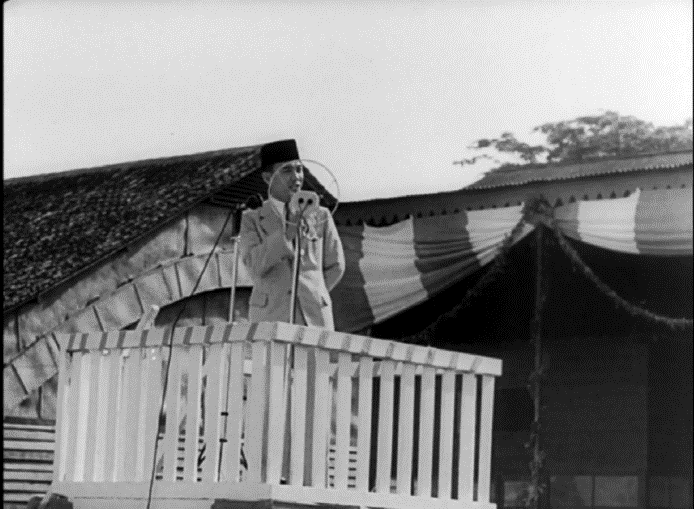
Figure 1 Soekarno’s speech in the opening sequence of Djawa Baharoe (4).
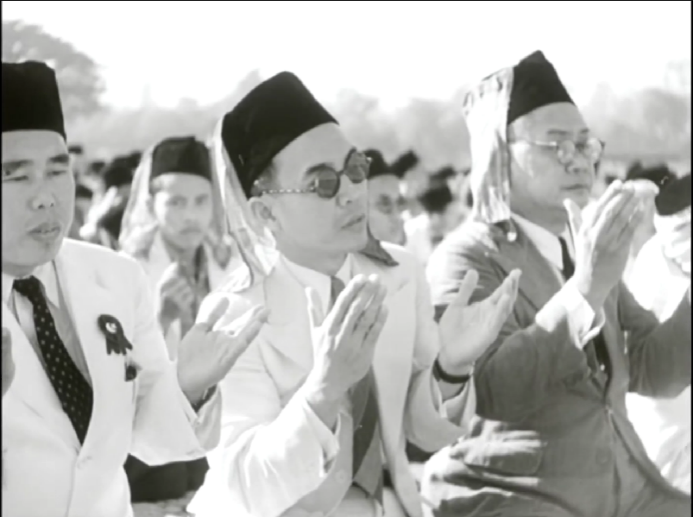
Figure 2 Soekarno appears praying in Djawa Baharoe (2).
Source: Open Beeldeen (https://www.openbeelden.nl/.th) - Beeld & Geluid
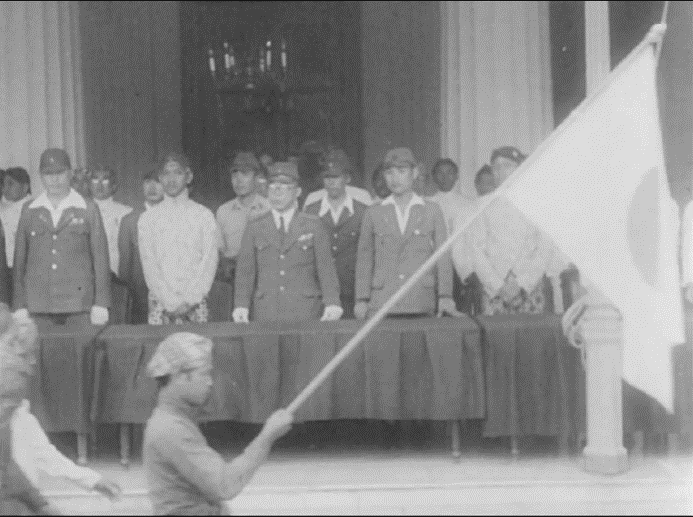
Figure 3 The Javanese leader appears during the march in Djawa Baharoe (4).
Source: Open Beeldeen (https://www.openbeelden.nl/.th) - Beeld & Geluid
The existence of ordinary people on the screen also serves as a visual endorsement. In contrast to the use of leaders’ figures, the ordinary people’s existence counted more in their numbers and the scale of the support, bandwagoning their narrative to the viewers in Djawa Baharoe. The film visually structures this by moving the Long Shot (LS) to Medium Shot (MS) and finally to Close Up (CU), particularly during the marching (Figure 4). The sequence likely begins with an LS to establish the scale and the collective body, resonating with Kress & van Leeuwen’s (2006) argument on “distance” in showing the social relations. At a distance, the crowd is perceived as a single, unified entity rather than as individuals. As the camera gets closer, the Close-Up (personal distance) shot often finds the expression of a person or a smaller group of people (figure 4,d) to humanise them and shift the collective enthusiasm to a personal one. This progression exemplifies Bateman & Schmidt’s (2012) shift from an ideational focus (documenting the event) to an interpersonal one (inviting viewer empathy).
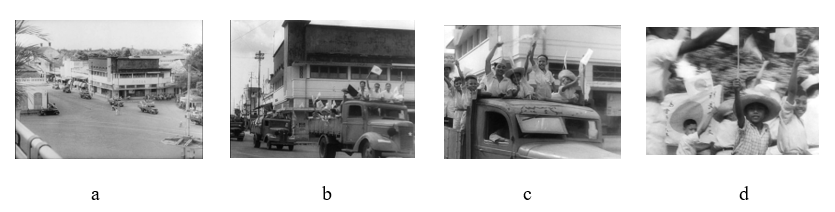
Figure 4 The cinematographic progression from Long Shot (LS) to Close-Up (CU) within the marching sequence of Djawa Baharoe (4).
Source: Open Beeldeen (https://www.openbeelden.nl/.th) - Beeld & Geluid
One of the most distinct presences of the empire in the film maybe the presence of the flag, which increases familiarity with the empire’s presence. Billig (1995) noted the visibility of a flag in different places and occasions in a film as an act of familiarising the flag in everyday life. In most cases, the flags are seen very clearly, either because of their number on one screen or their size. The other reason why flags are so visible in the film is due to their composition within the image, mostly placed in the centre of the image, as the nucleus of the information (Kress & van Leeuwen, 2006), and quite often appear at the beginning of a new cut within a sequence (Figure 5).
Regarding the film’s editing structure, match-on-action appears frequently across Djawa Baharoe. This is evident, for instance, in the seamless transition from the Sumo sequence to the military manoeuvre in Bandung33. As noted earlier, this principle of continuity also extends to sound editing to drive the narrative forward. This match-on-action becomes a shift in modality when it demonstrates more than just the continuity of the film, but also a transformation of conceptual image to naturalistic image, which is very close to a propaganda film concept for blurring a conceptual idea and the reality in their narrative. “Taboenglah Oeangmoe” (Save your money) sequence demonstrates this technique. The scene transforms a hand-drawn cartoon (conceptual) to a real pedicab driver holding a bank book in his hand (realisation) image (Figure 6).34
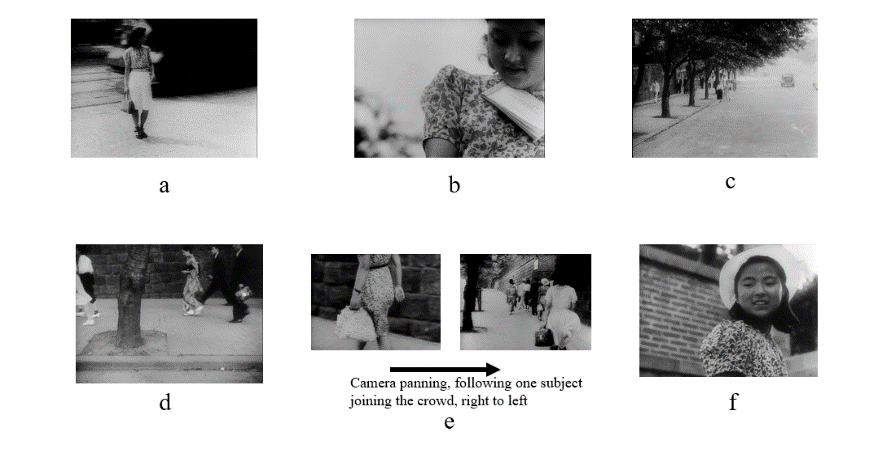
The sequences in Djawa Baharoe tend to change abruptly. In general, the layering of all the sequences in one film can be seen as an act of trying to fit a serious political topic in between enjoyable celebration. Thus, very often each sequence ends abruptly. However, ‘Pengadjaran Bahasa Indonesia di Nippon’ (Indonesian Language Teaching in Japan) sequence breaks this pattern. The film’s depictions of marching crowds or cultural exhibitions utilise a rapid tempo and dynamic cuts to convey energy without demanding deep cognitive processing from the viewer. Another part of the sequence, on the other hand, adopts a deliberately slower pace. Its structural gravity is established through the opening segment, which operates as a descriptive syntagma. Here, the alternation between shots of individual Japanese women (Figure 7, a) and wider shots of the crowd (Figure 7, c) does not advance a specific narrative action and focuses on establishing a spatial and conceptual context. In doing so, it uses a technique of exemplificatory reference named by Bateman and Schmidt (2012, p. 180). The individuals shown represent a larger reality, demonstrating that the Japanese people are collectively mobilising to learn Indonesian.
|
|
|
|

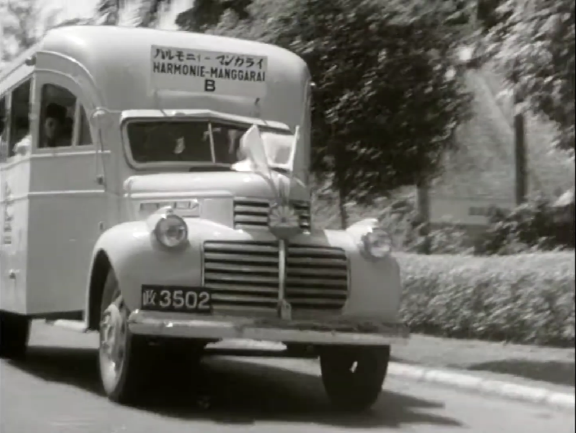
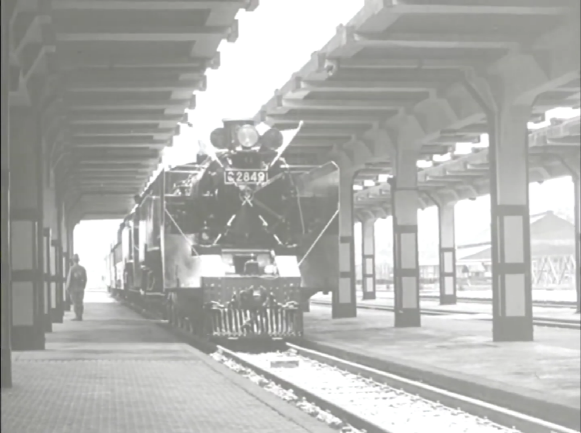
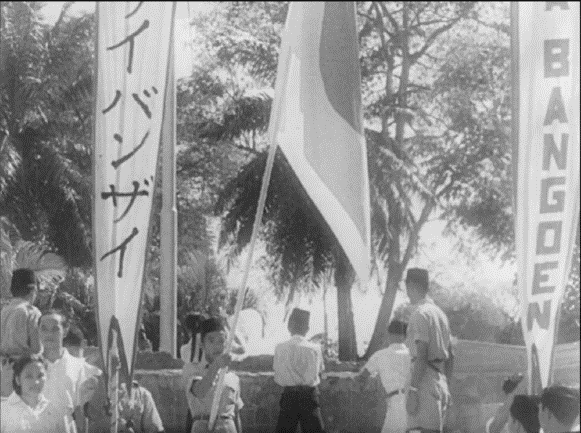
Figure 5 The central visual composition of the flag at the beginning of new cuts across various sequences.
Source: Open Beeldeen (https://www.openbeelden.nl/.th) - Beeld & Geluid
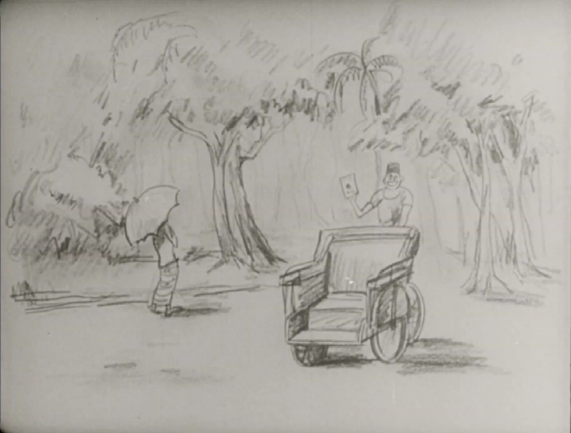
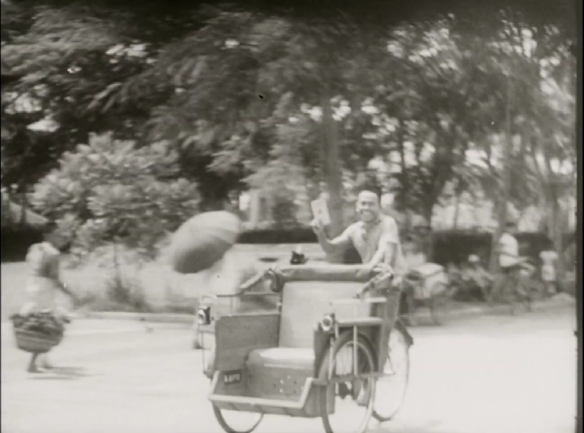
Figure 6 The match-on-action modality shift from a conceptual hand-drawn illustration to a naturalistic live-action shot within the Taboenglah Oeangmoe sequence.
Source: Open Beeldeen (https://www.openbeelden.nl/.th) - Beeld & Geluid
Figure
7
The
descriptive syntagma established through the alternation between
shots of individual subjects and wider crowd shots within the
Pengadjaran
Bahasa Indonesia di Nippon
sequence.
Source:
Open
Beeldeen (https://www.openbeelden.nl/.th)
- Beeld
& Geluid
This initial segment helps to set the scale of the event before transitioning into the first classroom setup at Kōnan School (Figure 8), where the filmic organisation shifts to emphasise discipline and show the learning of the Indonesian language in the classroom atmosphere. The establishing shot of the teacher filmed from outside the window (Figure 8, a) provides a full-scale perspective of the class setup. As the sequence progresses inside, the camera pans across the students (Figure 8, b) to visually connect the individual students to the larger room. In Bateman and Schmidt’s (2012) terms, such a camera movement provides spatial prolongation, which works as extending the viewer’s access to the diegetic space to verify not just the number of students, but also the collective diligence of the Japanese subjects as they engage in dictation.
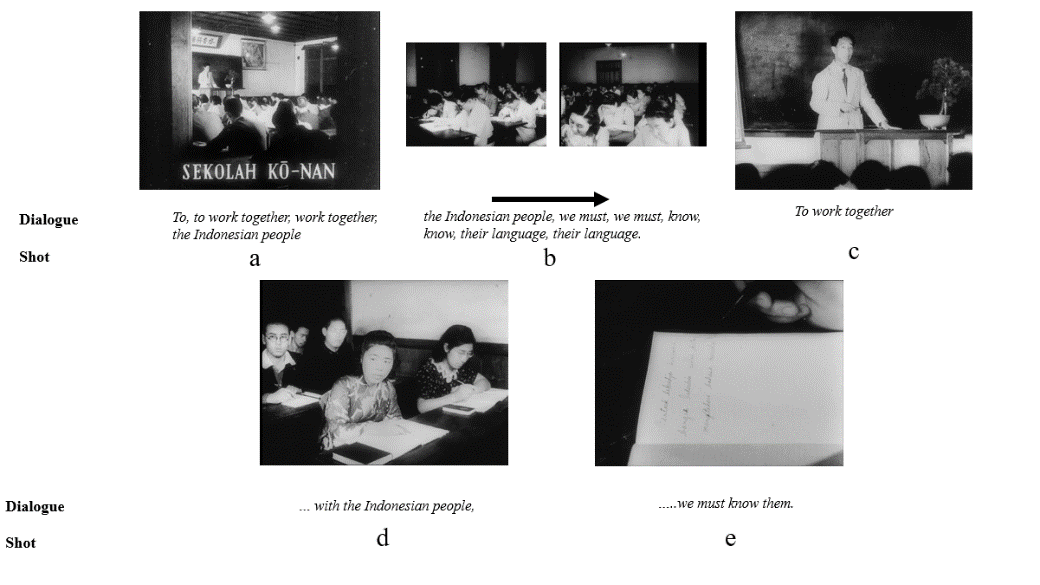
Figure 8 The spatial prolongation established through camera panning across the diegetic space within the Kōnan School classroom sequence.
Source: Open Beeldeen (https://www.openbeelden.nl/.th) - Beeld & Geluid
The sequence then moves into its second classroom setup (Figure 9). The segment portrays the classroom atmosphere where the teacher dictates, and the students write. This final segment represents the sequence’s climax by escalating from travel to class and shifting from passive dictation to active engagement. The segment structures this classroom interaction and engagement of the students visually. It begins with a student reading aloud as the camera pans across the class (Figure 9, a). The narrative then advances through the teacher, who asks a question (Figure 9, b). The film cuts between three different students as they give their answers (Figure 9, c, e). A shot of the teacher turning his head (Figure 9, d) is strategically placed to indicate another student’s location, thereby expanding the sense of scale and engagement within the room. The teacher’s gaze mandates the next shot, in which the segment utilises a hypotactic dependency (where one shot depends on the previous one for meaning) to “stitch” the fragments. In Bateman and Schmidt’s (2012) framework, when a character looks or turns off-screen, it creates a “slot” or “gap” in the discourse structure that the next shot must fill. The teacher’s question—” Why must we learn the Malay language?”—is answered by different students voicing Japanese co-prosperity sphere ideology in Indonesian. This culminates in the film’s final shot: a zoom-out that superimposes text, aligning the chanting voices of the students (Figure 9, g) with the visual of the Japanese co-prosperity sphere ideology written on the blackboard (Figure 9, f).
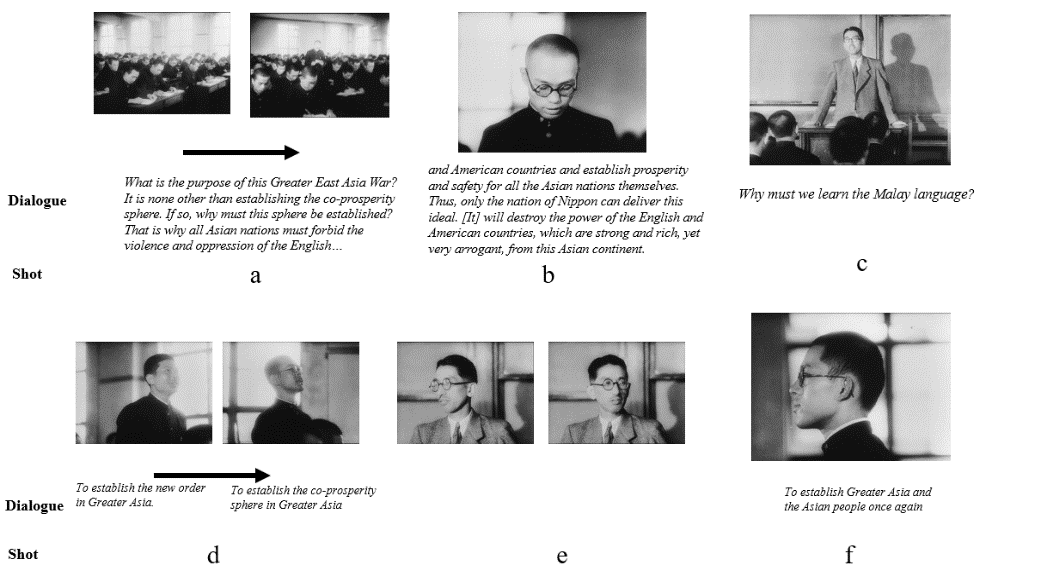
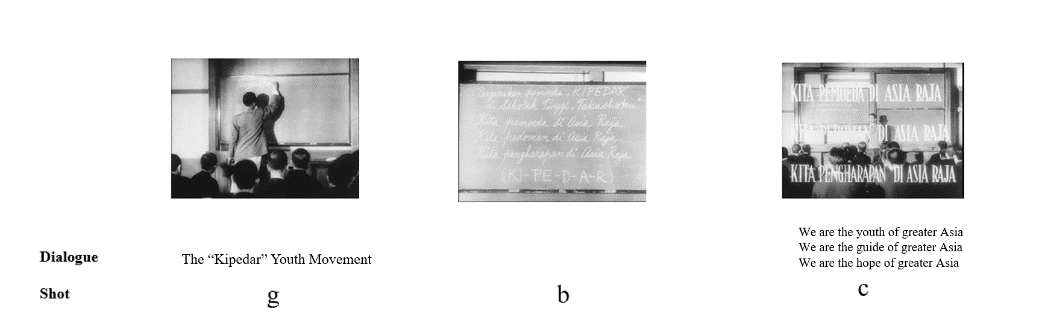
Figure 9 The structural editing pattern of cross-cutting and hypotactic dependency at the end of the classroom sequence.
Source: Open Beeldeen (https://www.openbeelden.nl/.th) - Beeld & Geluid
Discussion: From intent to image
At the time of this film’s release, Japan likely felt a need to intensify hatred toward the Dutch. This vilification, and its extension to Western imperialism as a whole, created a dual imperative: the film had to convince Indonesians that the Japanese presence meant liberation, while simultaneously fostering anxiety about the return of Western colonial powers. Many Indonesians were deeply sceptical of Japan’s occupation and its framing as a liberation from Western imperialism (Pols, 2018). Therefore, Japan urgently needed a set of tools to promote and frame the narrative of its presence in the early days of its occupation of Indonesia.
In What is Japanese Cinema, Yomota (2019) argues that the primary characteristics of Japanese propaganda films targeting colonies and occupied lands (Taiwan, Korea, Manchuria, Shanghai, and briefly, Indonesia and the Philippines) centred on themes of “civilisation” and obedience. A close reading of Djawa Baharoe confirms that the film aligns with this broader narrative of Japan bringing “newness” and modernity to the occupied territories. Furthermore, this analysis demonstrates how Japan tailored its approach to the specific sociopolitical landscape of each occupied area. Using existing religion in the occupied area to support their narrative, like what appears in Djawa Baharoe, is not particularly unique to the case in Indonesia. As noted by Berreman (1944), Japan also sought to use existing religious organisations to further its process of indoctrination and extend Japanese control in the Philippines, Manchuria, and Mengchiang. However, in the case of Djawa Baharoe, Japan’s strategy appears unique compared to other territories as it chose to embrace local political elites, utilising figures like Soekarno as vehicles for its narrative, which was manufactured through his visual endorsement.
Djawa Baharoe appears to employ similar propaganda techniques in almost every element, visually demonstrating “bandwagoning”, using “name-calling” (Yourman, 1939) in its narrative, and constructing a hated enemy. The core narrative frequently vilifies this enemy as the culprit, pointing out all that was broken or failing in Indonesia under Dutch rule. Even compared to other propaganda films, for example, those of Nazi Germany or Britain, which also targeted specific objects of hate and labelled people for their narratives (Fox, 2007; Garden, 2016), Djawa Baharoe shows a different strategy. Where others might visually emphasise the monumental scale and grandeur of assemblies and marches to impress viewers, Djawa Baharoe’s distinct characteristic is its awareness of its audience’s linguistic reality. As director Tokichi Ishimoto notes in his director’s statement:
During the Dutch era, people who frequented the permanent cinemas watched American films with Dutch subtitles, and the natives who went to those cinemas were educated. There are not many people who enjoy Malay. I decided to include an explanation in Malay because I believe that Malay, the language of the common people, is the most popular and widespread, not the high-class variety. (Ishimoto, 1943, p. 13)
Ishimoto’s choices show an explicit strategy to reach broader, non-elite audiences. On the film’s editing strategy, he also said, “In between serious political topics, we also inserted soft topics that children would enjoy…”(p. 14). Although viewers might not have absorbed every political message, some entertaining sequences could linger with them and shape reception.
This news film was a big hit all over the country, and in some places, people gathered in groups and went to the auditorium, where they applauded when the image of their town was shown, and even rang out trumpets and banged on the horns, creating a huge commotion.” (p. 13)
These notes likely functioned as a self-serving achievement report to Imperial headquarters, however, such reactions may have genuinely occurred. The Indonesian populace’s desire for visibility, contrasting sharply with their erasure under Dutch rule, likely fueled this enthusiasm.
It is critical to question whether the Indonesian audience passively absorbed the ideological messaging as Ishimoto implies. Addressing this exact tension, Kurasawa (1987) questions whether Indonesians consumed these propaganda activities solely as entertainment. Citing a 1944 Netherlands East Indies Forces Intelligence Service (NEFIS) interrogation report of a Javanese informant, she highlights the selective engagement of the populace: “When the Japanese broadcast music in Java, many people would listen, but when propaganda commenced, some walked away, saying: ‘Nihon-Bohong’: (Nippon-Lies)” (Kurasawa, 1987, p. 93).
Methodologically, this raises a further question: how much can an analysis of Djawa Baharoe, based solely on the filmic text, reveal without access to the director’s stated intentions? For most other propaganda films, such notes do not exist at all. Can we reveal a film’s ideology just by examining its style? This study borrows from Gabriel’s (1982) perspective in Third Cinema in the Third World, where he argues that “Style is only meaningful in the context of its culture—in how it acts on culture and helps illuminate the ideology within it.” He further contends that “Style is not reserved for a specific ideology. But style can help us ‘squeeze’ out a film’s ideological undercurrent” (p. 41).
Applying this to Djawa Baharoe, Rice’s (2019) assertion that colonial cinema weaponizes cinematic technique to regulate the consciousness of the colonized aligns with the contemporary understanding of propaganda as a tool for normalizing a new ideological reality. As the multimodal analysis of the film and Ishimoto’s production notes reveals, the explicit propaganda message (e.g., “Asia for Asians”) functioned as a surface-level tactic. Meanwhile, the colonial cinema aesthetic (simplified editing, enforced passivity) operated as the structural strategy designed to make the audience receptive to that message. While Ishimoto’s conscious goal was to create effective propaganda for the Sendenbu, the specific cinematic methods he chose were deeply driven by his unconscious colonial ideology regarding the presumed “primitive” nature of the colonized subject.
A close reading of the film elements in Djawa Baharoe reveals that they did not only serve as background support for the propaganda narrative delivered by the narrator. Each film element (narrative, audio, and visual) possesses a distinct strength, which mutually reinforces, making them inseparable for the film’s efficacy. This study shows that the omission is often intentional and designed to create space for another element to enlarge its role. It creates space for another element to amplify its impact. For instance, when the narrator’s voice stops, music takes over to guide the editorial cuts and maintains the narrative’s advancement. Conversely, during the absence of music, a tone of seriousness prevails, and the film is led solely by the narrator’s voice, particularly when the Empire is visually featured. This dynamic interplay demonstrates a cinematic strategy where power is delegated among sight, sound, and speech to sustain the film’s ideological narrative. The patterns this study finds in the film’s narrative, audio, and visual rhetoric suggest that the film was outwardly expressing an ideology intended to promote the Japanese co-prosperity sphere narrative and the more serious and ideologically heavy the sequence is, the slower and more layered the cut.
Asia for Asians slogan was mentioned once in the four remaining Djawa Baharoe newsreels, but other narratives that sounded similar to it, covered in anti-Western narratives, could be found everywhere. As this study has revealed, this narrative is structured to blame the Dutch in the context of Indonesia. Consequently, it is hard not to side with Japan as the benevolent; the accumulation of the repeated messages positioned Japan itself morally higher and most powerful, representing the West as its antithesis. The use of music in Djawa Baharoe (4) during the “Pengadjaran Bahasa Indonesia” (Indonesian Language Teaching) sequence shows us an irony in this narrative. The fact that one of the most important sequences in Djawa Baharoe needed to use the “Greensleeves”, which is a Western piece, to create an idyllic scene, is something of an irony that seems inevitable. Another Western music, Eric Coates’s “Calling All Workers”, also plays during a sequence in Djawa Baharoe (7) when the film visualises the modernisation of public transportation in Surabaya. It tells us that despite its strong anti-Western rhetoric, it is hard for the film to fully omit Western cultural forms and it reveals the blind spot in the propaganda apparatus, which subtly undermine its ideological message purity. Neither the film can omit the othering when seeing itself compared to the occupied territories, although it is obvious that Japan puts itself as the “leader” of Asia. The closest approach to convincing its territory in terms of inviting them to be under the umbrella of its empire is by trying to find a likeness of each other’s values (Mark, 2018).
Although the immediate reception of films like Djawa Baharoe involved subversive negotiation by the audience, but the structural and ideological legacy of the Japanese propaganda apparatus profoundly shaped post-war Indonesian cinema. Through centralized cultural organizations like the Keimin Bunka Shidosho (Central Arts Office), the Japanese administration provided formal instruction in the art and organization of filmmaking to a new generation of indigenous men, most notably Usmar Ismail (Biran, 2009). This tutelage triggered a fundamental paradigm shift. Under Japanese influence, local filmmakers learned to wield cinema as a potent ideological weapon emphasizing ethno-nationalism (Setijadi-Dunn & Barker, 2010) after it had been utilized during the Dutch era mainly for commercial gain. This newly acquired approach fostered a sense of indigenous ownership and an obsession with capturing the “authentic” essence of Indonesianness. As Ismail (1954) later articulated, films produced by the Dutch and ethnic Chinese were dismissed as “soulless” (p. 31). Consequently, the ethno-nationalist framework instilled by wartime propaganda inadvertently laid the groundwork for post-war cinematic exclusion, as ethnic Chinese filmmakers were increasingly marginalized as “foreigners” incapable of understanding true national values (Setijadi-Dunn & Barker, 2010).
Conclusion
By shifting the analytical lens from historical content to cinematic form, this study has illuminated the mechanisms through which Djawa Baharoe functioned as one of the primary examples of the Japanese propaganda film in its occupied area. The newsreel was a multimodal weapon designed to restructure the social consciousness of occupied Indonesia. Through the application of Multimodal Film Analysis, this research demonstrated that the film’s propagandistic power lies in how the viewer was aesthetically coerced into receiving it. The sequence-by-sequence analysis reveals that narration, sound, and visual grammar operated synchronously as this ideological delivery system. Tokichi Ishimoto’s production notes confirm that many of these choices were intentional: longer cuts, close-ups, and the insertion of soft topics were tactical means to simplify interpretation and to make the co-prosperity narrative feel natural and inevitable. Through a close reading of the film, this study also uncovered the inherent contradictions within this apparatus, most notably the paradoxical reliance on Western musical forms to construct an anti-Western narrative.
Acknowledgement
The author sincerely thanks Professor Mari Katayanagi for her constructive comments on the paper, as well as checking the Japanese-English translation of the director’s note, and for her encouragement throughout the writing process. Thanks also go to Carolyn Birdsall, who introduced the author to the Beeld en Geluid digital collection and the opportunity to present part of the findings at the University of Amsterdam; to Ruth Legg for her contribution in helping the author find the film catalogue; and to Bas Agterberg for his generosity in letting the author access the Beeld en Geluid collection during the research stay; and to Pornphan Wajjwalku for her contribution in helping the author access one of the archival collections for the paper.
Special thanks are owed to Pepita Hesselberth, who strengthened the author’s analytical perspective on film analysis, as well as opening more doors to enrich the writing of this paper by hosting the author on his research stay at Leiden University. And finally, to the author’s love, Melanie Münninghoff, for her love and patience on the writing journey.
This research was funded by the Next-Generation Fellowship, Hiroshima University, and forms part of the author’s PhD dissertation.
Declaration of generative AI in scientific writing
The author acknowledges the use of Grammarly AI for grammar correction and readability only. The author maintained full control over the research process and remains fully responsible for the content of this publication.
CRediT author statement
Taufik Hidayah: Conceptualization, Methodology, Formal analysis, Investigation, Resources, Data Curation, Writing - Original Draft, Visualization, Project administration, Funding acquisition.
References
Adams, C. (1965). Sukarno: An autobiography, as told to Cindy Adams. Indianapolis, IN: Bobbs-Merrill.
Anderson, J. L., & Richie, D. (1959). The Japanese film: Art and industry. New York, NY: Grove Press
Barker, T. (2017). Colonial mobility and ambiguity: The life of filmmaker Hinatsu/Huyung. TRANS: Trans-Regional and -National Studies of Southeast Asia, 5(1), 1-19.
Bartlett, F. C. (1942). Political propaganda. Cambridge, Great Britain: Cambridge University Press.
Bateman, J. A., & Schmidt, K. H. (2012). Multimodal film analysis: How films mean. New York, NY: Routledge.
Benda, H. J. (1956). The beginnings of the Japanese occupation of Java. The Far Eastern Quarterly, 15(4), 541-560.
Benda, H. J. (1958). The crescent and the rising sun: Indonesian Islam under the Japanese occupation, 1942-1945. The Hague, Netherlands: W. van Hoeve Ltd.
Benedict, R. (1946). The chrysanthemum and the sword: Patterns of Japanese culture. London, England: Houghton Mifflin.
Berreman, J. V. (1944). The Japanization of Far Eastern Occupied Areas. Pacific Affairs, 17(2), 168-180.
Billig, M. (1995). Banal nationalism. London, England: SAGE Publications.
Biran, M. Y. (2009). Sejarah film 1900–1950: Bikin film di Jawa. Jakarta, Indonesia: Komunitas Bambu.
Bourdieu, P., & Passeron, J.-C. (1977). Reproduction in education, society and culture. London, England: Sage.
Chion, M. (1994). Audio-vision: Sound on screen (C. Gorbman, Ed. & Trans.). New York, NY: Columbia University Press. (Original work published 1990)
Cripps, T. (1983). Racial ambiguities in American propaganda movies (pp. 125-145). In Short, K. R. M. (Ed.). Film and radio propaganda in World War II. Knoxville, United States of America: The University of Tennessee Press.
Daniels, G. (2004). Collected writings of Gordon Daniels. Tokyo, Japan: Japan Library; Edition Synapse.
Djawa Eiga Kosha. (1943). Djawa Baharoe [Motion Picture]. Hilversum, Netherlands: Netherlands Institute for Sound and Vision.
Drobashenko, S., & Kenez, P. (1983). Film propaganda in the Soviet Union, 1941-1945: Two views (pp. 94-124). In K. R. M. Short (Ed.). Film and radio propaganda in World War II. The University of Tennessee Press.
Fox, J. (2007). Film propaganda in Britain and Nazi Germany: World War II cinema. Oxford, UK: Berg.
Gabriel, T. H. (1982). Third cinema in the Third World: The aesthetics of liberation. Michigan, United States: UMI Research Press.
Garden, I. (2016). The Third Reich’s celluloid war: Propaganda in Nazi feature films, documentaries and television. Gloucestershire, United Kingdom: The History Press.
Goodman, G. K. (1991). Japanese cultural policies in Southeast Asia during World War 2. New York, NY: St. Martin’s Press.
Gorbman, C. (1987). Unheard melodies: Narrative film music. Bloomington, IN: BFI Publishing; Indiana University Press.
High, P. B. (2003). The imperial screen: Japanese film culture in the Fifteen Years’ War, 1931-1945. Madison, Wisconsin, United States: The University of Wisconsin Press.
Horton, W. B. (2020). Shifting communication: Language learning during the Japanese occupation of Indonesia. Research Bulletin of the Faculty of Education and Human Studies, Akita University: Humanities and Social Sciences, 75, 11-19.
Hummel, W., & Huntress, K. (1949). The analysis of propaganda. New York, United States: Holt, Rinehart and Winston.
Hyzen, A. (2021). Revisiting the theoretical foundations of propaganda. International Journal of Communication, 15, 3479-3496.
Ismail, U. (1954, September 25). Sari soal dalam film-film Indonesia. Star News, 3(5), 30-31.
Kress, G., & van Leeuwen, T. (2006). Reading images: The grammar of visual design (2nd eds.). London, England: Routledge.
Kurasawa, A. (1987). Propaganda media on Java under the Japanese 1942-1945. Indonesia, 44, 59–116.
Kushner, B. (2005). The thought war: Japanese imperial propaganda. Honolulu, HI: University of Hawai’i Press.
Kwon, N. A., Odagiri, T., & Baek, M. (2022). Theorizing colonial cinema: Reframing production, circulation, and consumption of film in Asia. Bloomington, Indiana, USA: Indiana University Press.
Lasswell, H. D. (1927). The theory of political propaganda. The American Political Science Review, 21(3), 627-631.
Lebra, J. C. (2010). Japanese-trained armies in Southeast Asia. Singapore, Singapore: ISEAS Publishing.
Lee, A. M. (1952). How to understand propaganda. New York, NY: Rinehart & Company.
Magpantay, A. (2023). “Asia for Asians”: Revisiting Pan-Asianism through the propaganda arts of the Greater East Asia Co-Prosperity Sphere. MANUSYA: Journal of Humanities, 26, 1-20.
Mark, E. (2018). Japan’s occupation of Java in the Second World War: A transnational history. London, United Kingdom: Bloomsbury Academic.
Mauss, M. (1990). The gift: The form and reason for exchange in archaic societies (W. D. Halls, Trans.). London, England; New York, NY: Routledge. (Original work published 1950)
Nieuwenhof, F. (1984). Japanese film propaganda in World War II: Indonesia and Australia. Historical Journal of Film, Radio and Television, 4(2), 161-177.
Nornes, A. M. (2003). Japanese documentary film: The Meiji era through Hiroshima. Minneapolis, MN, United States of America: University of Minnesota Press.
Nornes, A. M., & Fukushima, Y. (Eds.). (1994). The Japan/America film wars: WWII propaganda and its cultural contexts. Chur, Switzerland: Harwood Academic Publishers.
Pols, H. (2018). Nurturing Indonesia: Medicine and decolonisation in the Dutch East Indies. Cambridge, United Kingdom: Cambridge University Press.
Rice, T. (2019). Films for the colonies: Cinema and the preservation of the British Empire. Oakland, California: University of California Press.
Setijadi-Dunn, C., & Barker, T. (2010). Imagining “Indonesia”: Ethnic Chinese film producers in pre-independence cinema. Asian Cinema, 21(2), 25-47.
Short, K. R. M. (Ed.). (1983). Film & radio propaganda in World War II. Knoxville, United States of America: University of Tennessee Press.
Sorace, C. (2021). The Chinese Communist Party’s Nervous System: Affective Governance from Mao to Xi. The China Quarterly, 248(S1), 29-51.
Stanley, J. (2015). How propaganda works. Princeton, NJ: Princeton University Press.
Ueno, T. (1994). The Other and the Machine (pp. 63-81). In Nornes, A. M., & Fukushima, Y. (Eds.). The Japan/America film wars: WWII propaganda and its cultural contexts. Chur, Switzerland: Harwood Academic Publishers.
van Engelenhoven, G. (2024). Articulating postcolonial memory through the negotiation of legalities: The case of Jan Pieterszoon Coen’s statue in Hoorn. Law, Culture and the Humanities, 20(2), 273-290.
Welch, D. (1983). Nazi wartime newsreel propaganda (pp. 201–220). In Short, K. R. M. (Ed.). Film and radio propaganda in World War II. Knoxville, United States of America: University of Tennessee Press.
Wu, J., & Chen, H. (2023). Citizens’ strategic responses to affective governance in China. China Information, 37(2), 229-250.
Yomota, I. (2019). What is Japanese cinema?: A history. New York, NY, United States: Columbia University Press.
Yourman, J. (1939). Propaganda techniques within Nazi Germany. The Journal of Educational Sociology, 13(3), 148-163.
1 Djawa Baharoe (4): 9:12
2 The period of Japan's military expansion and conflict spanning from 1931, with the Manchurian Incident, to 1945, with the end of World War II.
3 Djawa Baharoe (2): 0.28
4 Djawa Baharoe (2): 2:35
5 Djawa Baharoe (2): 9:04
6 Soekarno, in SUKARNO: An Autobiography as told to CINDY ADAMS (1965), acknowledges that his orders were to “Attack the Allies, laud the Axis, drum up hatred for our enemies the British, the Americans and the Dutch and enlist support for Dai Nippon” (p.178). He defends this by saying his speeches contained 75 percent “pure nationalism” (p.178) and was prechecked by the Propaganda Department.
7 Djawa Baharoe (4): 1:08
8 Djawa Baharoe (4): 7:22
9 Djawa Baharoe (7): 7:12
10 Djawa Baharoe (7): 7:41
11 Djawa Baharoe (4): 7:40
12 Djawa Baharoe (2): 0:20
13 Djawa Baharoe (4): 5:41
14 Djawa Baharoe (4): 5:23
15 Djawa Baharoe (4): 2:44 and Djawa Baharoe (2): 4:04
16 Djawa Baharoe (7): 1:42
17 As noted by historian like Horton (2020), a small number of Japanese universities and specialized schools in Japan provided Indonesian language instruction before the war, utilizing Japanese linguists and Indonesian instructors. There were also Malay dictionaries and language books published before or in early 1942.He points out that there is little evidence of Indonesian language courses offered for Japanese in Indonesia, suggesting that the drive for Japanese to learn Indonesian or Malay might have been greatest at the outset of the war or before their arrival in Indonesia.
18 Djawa Baharoe (4): 10:51
19 Djawa Baharoe (7): 2:13
20 “Semua bekerja giat gembira...” (Everyone works actively and with joy)
21 “Bekerja dengan hati gembira...” (Work with a joyful heart)
22 “Membela Asia dengan tenaga / Tua dan muda...” (Defending Asia with strength / Old and young)
23 Djawa Baharoe (4): 0:25 - 1:24
24 Djawa Baharoe (6): 0:24
25 Djawa Baharoe (6): 0:31
26 Djawa Baharoe (6): 2:21
27 Djawa Baharoe (6): 5:33
28 Djawa Baharoe (2): 3:48
29 Djawa Baharoe (4): 2:33
30 Djawa Baharoe (2): 0:57
31 He justifies his actions by saying, “Forced labor for freedom. That was the bargain” (Adams, 1965, p.194). He argues that preserving his position and the prospect of future independence outweighed the sacrifice, stating, “If I must sacrifice thousands to save millions, I will. We are in a struggle for survival” (p. 193)
32 Mark (2018) further noted that the two Sultans remained in charge of these districts, as they had been under the Dutch control.
33 Djawa Baharoe (4): 2:59 - 3:00
34 The hand-drawn by Ono Saseo was found in some of the other Japanese propaganda films, for example, “Pembasmian Malaria”.