
Asian J. Arts Cult. 2026; 26(4): 133
Negotiating Sanctity and Heritage: The Heritagization of Buddhist Ritual Music at North Wudang Temple, China
Connie Keh Nie LIM*, Tong WU
Universiti Malaysia Sarawak, 94300 Kota Samarahan, Sarawak, Malaysia
(*Corresponding author’s e-mail: lknconnie@unimas.my)
Received: 6 January 2026, Revised: 17 March 2026, Accepted: 19 March 2026, Published: 20 March 2026
Abstract
This study critically examines the heritagization of Buddhist ritual music at North Wudang Temple, China. It serves as a lens to explore the complex interplay between religious tradition, state cultural governance, and local agency. Framed within critical heritage studies, we conceptualize heritagization as an active, contested, and political process of meaning-making and social negotiation. Through ethnography conducted between 2024 and 2025, the paper traces the transformation of living liturgy into state-managed intangible cultural heritage (ICH). Our analysis reveals a multi-layered process, including three core dimensions: the strategic construction of historical lineage, the tangible reconfiguration of musical texts and practices, and the polyphonic negotiations among monastics, officials, inheritors, and scholars. A key dynamic within this process is the tension between sacred authenticity (rooted in ritual efficacy) and secular heritage value (oriented toward display and management). The study introduces the concept of asymmetric innovation—wherein the capacity to initiate and legitimize changes to the tradition is unevenly distributed among actors, correlating with their institutional power and symbolic capital. We argue that the sustainability of religious ICH hinges not on fossilizing an authentic original, but on consciously negotiating its ongoing adaptation within a structured field of power, where the state holds significant definitional authority. This case contributes to theoretical debates on authenticity and cultural governance by theorizing asymmetric innovation as a key lens for understanding the negotiated co-production of religious heritage in state-led contexts.
Keywords: Heritagization, Intangible cultural heritage, Chinese Buddhist ritual music, Authenticity, Ethnography
Introduction
The safeguarding of intangible cultural heritage (ICH) has become a major global cultural project in response to the rapid social transformations associated with modernization and globalization (UNESCO, 2003). Yet heritage-making is not a neutral process of preservation. Critical heritage studies have demonstrated that heritagization involves complex negotiations over meaning, authority, and cultural value (Smith, 2006). Rather than simply protecting traditions from disappearance, heritage systems actively reshape cultural practices by redefining how they are documented, represented, and transmitted.
Music provides a particularly revealing lens through which to examine these processes. As a living and practice-dependent form of cultural expression, musical traditions are continuously reshaped through performance, transmission, and adaptation (Norton & Matsumoto, 2018). When musical traditions are incorporated into heritage frameworks, however, they often undergo significant transformations. Practices that once functioned within specific social or religious contexts are reinterpreted as cultural objects requiring documentation, safeguarding, and public representation. These transformations raise important questions about how authenticity, authority, and change are negotiated within heritage governance systems.
These dynamics become especially complex when the cultural practice in question is religious ritual music. Religious music is embedded within systems of belief, liturgical function, and spiritual authority. Its value is traditionally grounded in ritual efficacy and doctrinal continuity. Heritage systems, by contrast, evaluate cultural practices according to different criteria, such as historical continuity, artistic form, and public visibility. The incorporation of religious practices into heritage frameworks therefore requires the translation of sacred traditions into secular categories of cultural value. This process often generates tensions between religious practitioners, heritage institutions, scholars, and state authorities regarding how traditions should be represented and transformed.
China provides a particularly rich context for examining these tensions. Since the establishment of the national ICH protection system in the early twenty-first century, numerous religious traditions—including forms of Buddhist ritual music—have been incorporated into heritage governance frameworks. In many cases, practices that were once confined to monastic ritual settings have been reframed as cultural heritage requiring public protection and promotion. Existing scholarship has documented the historical development and artistic characteristics of Buddhist ritual music in China (Tian, 1994; Zhuang, 2014). However, existing scholarship has predominantly focused on descriptive analyses of Buddhist music’s historical origins and artistic forms or on macro-level discussions of its cultural value (Zhuang, 2014). While recent literature reviews have mapped the growing scholarship on Buddhist music heritagization in China (Lim & Wu, 2026), the mechanisms through which different actors negotiate authority over cultural change remain insufficiently theorized. Addressing this gap requires closer attention to the power relations embedded within heritage governance—specifically, how different actors possess unequal authority to initiate, legitimize, and institutionalize innovation within religious traditions.
This study addresses these gaps through an ethnographic investigation of the Buddhist ritual music tradition at North Wudang Temple in Ningxia, China. The temple’s ritual music was inscribed on the Ningxia Provincial Representative List of Intangible Cultural Heritage in 2007 and subsequently included in the National Representative List of Intangible Cultural Heritage in 2008. This recognition resulted from a collaborative nomination process involving the temple’s monastic community, local heritage protection centers, regional cultural authorities, and academic researchers. The case therefore provides a valuable opportunity to examine how religious music is reconfigured through interactions between religious actors and heritage institutions. Drawing on fieldwork conducted between 2024 and 2025, this article examines how the heritagization of Buddhist ritual music reshapes musical practices, historical narratives, and actor relationships at North Wudang Temple. The analysis demonstrates that heritagization does not simply preserve an existing tradition. Rather, it generates new forms of cultural negotiation through which different actors seek to define the meaning, value, and future of the tradition.
A central finding of this study is that the authority to initiate and legitimize changes to the tradition is unevenly distributed among actors within the heritage system. While adaptation is necessary for the continued transmission of musical traditions, different stakeholders possess unequal power to determine which forms of change are recognized as legitimate. Innovations supported by heritage institutions or scholarly authorities are often framed as necessary forms of safeguarding, whereas changes emerging from religious practice may be viewed as deviations from officially documented forms of the tradition.
To conceptualize this dynamic, this article introduces the concept of asymmetric innovation. Asymmetric innovation refers to a condition in which the authority to initiate, legitimize, and institutionalize change within a cultural tradition is unevenly distributed among actors within a heritage governance system. The concept highlights how institutional power, symbolic capital, and policy frameworks shape the conditions under which cultural change becomes acceptable. By foregrounding the politics of innovation within heritage systems, asymmetric innovation provides a new analytical lens for understanding how religious traditions are transformed through heritage governance.
The article proceeds in four sections. The next section reviews relevant literature on heritagization, authenticity debates in musical heritage, and the governance of religion within modern states. The methodology section outlines the ethnographic research design and fieldwork conducted at North Wudang Temple. The results and discussion sections analyze how heritagization reshapes historical narratives, musical practices, and actor relationships within the temple’s ritual music tradition. The article concludes by discussing the broader implications of asymmetric innovation for understanding cultural change within heritage governance systems.
Literature review
The following review synthesizes key theoretical strands essential for analyzing the heritagization of Buddhist ritual music. It moves beyond descriptive cataloging to establish a critical framework centered on four interconnected dialogs: the politics of heritage-making, the paradox of authenticity in musical transmission, the governance of religion in modern states, and the specific dynamics of religious music in transition.
Critical heritage studies and the process of heritagization
The shift from viewing heritage as a passive inheritance to understanding it as an active, present-day social and political process marks the core of critical heritage studies (Smith, 2006). This field critiques the authorized heritage discourse, which is often perpetuated by institutions like UNESCO and nation-states. Such discourse tends to privilege materiality, monumentality, and a static, consensus-driven view of the past. In contrast, a critical lens positions heritagization as a dynamic field of cultural production. It refers to the process by which objects, practices, or sites are institutionalized as heritage, where meanings, values, and power relations are continually negotiated (Bendix et al., 2013). This process is inherently value-laden; it involves selection, canonization, and often the refinement of complex, living traditions to align with administrative norms and cultural value frameworks (Kirshenblatt-Gimblett, 2004). In the Chinese context, the state-led ICH system is a powerful engine of heritagization, aiming to fortify national cultural identity while managing cultural diversity (Zhu & Maags, 2020).
However, this top-down framework intersects with local agencies, creating spaces for negotiation, adaptation, and sometimes, resistance. Research on Chinese ICH has proliferated, yet a significant portion remains policy-oriented or celebratory (Wei, 2018). A critical gap exists in fine-grained ethnographic studies that unpack how heritagization operates at the local level, revealing the micro-dynamics among diverse stakeholders—state authorities, local communities, religious institutions, and cultural practitioners—in shaping the fate of specific traditions. Moreover, within the Chinese context, heritagization must be understood as a key modality of cultural governance (Zhou & Huang, 2024). Through this process, the state seeks to steer cultural development, manage diversity, and incorporate potentially divergent local and religious identities into a broader narrative of national cultural revitalization (Mohyeddin, 2024). This political layer adds a critical dimension to the negotiation process, setting the parameters within which local agency can be exercised (Cerny, 2000). In China, heritage preservation serves as a key model for national cultural governance, adding a dimension of state-religion relations to the analysis of religious music’s heritage status.
Music as heritage: The enduring paradox of authenticity
Critical heritage studies have revealed the power-laden nature of heritagization. As a form of living heritage, music’s core tension centers on the struggle over the right to define authenticity—a central issue in the paradox of authenticity within musical heritage research. The designation of music as ICH brings into sharp focus the tension between preservation and change. UNESCO’s 2003 Convention, while acknowledging the recreated nature of ICH, inadvertently fuels a pervasive quest for authenticity—often imagined as an original, pure, and fixed state (Brown, 2005). Ethnomusicological scholarship has rigorously deconstructed this concept, arguing that musical traditions are inherently fluid, syncretic, and responsive to changing environments (Karvelas, 2020). The work of scholars like Philip Bohlman (1988) and Timothy Rice (2010) emphasizes that musical change is not a sign of degradation but of vitality. Grant (2012) warns that an ideological insistence on a static authenticity can be detrimental to the sustainability of endangered music, stifling the creative adaptation necessary for continued relevance. This generates a central paradox for musical heritage safeguarding: how to balance the documentation and respect for historical practice (often invoked to claim legitimacy) with the need for evolution and reinvention to ensure contemporary transmission (Kong & Song, 2018). The discourse itself, as Owe Ronström (2014) notes, shifts from tradition to heritage, introducing new regimes of value, expert management, and performative expectations. Collectively, this literature compels an investigation into two core questions. First, how are notions of authenticity constructed, contested, and strategically deployed by different stakeholders during heritagization? Second, how do these notions subsequently shape performance practices and transmission pathways? It further suggests that authenticity functions less as a pre-existing quality and more as a discursive resource—one that actors strategically claim and mobilize to assert authority and legitimacy within the heritage field (Bendix, 2009). This body of work is foundational for our analysis, as it allows us to frame the observed adaptations in notation and performance at North Wudang not as mere loss, but as sites where competing authenticity claims—between liturgical fidelity and heritage representativeness—are actively negotiated. It specifically aids in theorizing the subsequent concept of asymmetric innovation.
Religion, secularization, and the state: The governance of sacred culture
The power struggles and authenticity disputes inherent in heritagization are inherently intertwined with the governance logic of modern states toward religion, particularly how secularization reshapes the value attributes of religious practices. Secularization is not merely the decline of religion but often its transformation and relocation into new spheres (Casanova, 2007). The state, as a primary agent of modern secular governance, frequently seeks to rationalize religious expressions and “culture-ize” them—separating their artistic and historical dimensions from their theological cores for purposes of public management and national identity construction (Asad, 2003; Yang, 2012).
However, the relationship between religion and heritage is more complex than a simple process of secularization or desacralization. As Meyer and de Witte (2013) argue, heritage and the sacred are intertwined through a dual movement: the heritagization of the sacred, in which religious traditions are reframed within heritage frameworks, and the sacralization of heritage, whereby heritage itself acquires a form of public sacrality that generates authority and authenticity in the secular sphere. In this sense, heritagization may simultaneously transform and re-energize religious practices rather than merely stripping them of sacred meaning. This dynamic is also temporal. De Jong (2023) emphasizes the “entangled temporalities of the sacred and the secular,” in which religious heritage is framed both as a legacy of the past and as a resource for future cultural renewal. Sacred and secular temporalities therefore coexist and interact in what Chakrabarty (2000) describes as a “time-knot,” producing tensions that shape how religious traditions are preserved, represented, and reinterpreted.In China, this dynamic is particularly pronounced. Religious affairs are regulated by law, and religious culture is often promoted as part of the nation’s intangible cultural heritage—integrating its artistic and historical dimensions into the national heritage framework while respecting its roots in living faith communities (Chau, 2010; Liang, 2017). However, drawing on the insights above, we must recognize that this is not a one-way process of secularization. The heritagization of Buddhist ritual music at North Wudang Temple may simultaneously subject the tradition to secular governance logics and open possibilities for its re-sacralization within new frames of cultural identity.
This scholarly conversation helps frame heritagization as a specific, institutionalized form of secular governance that fosters the sustainable development of religious culture. It raises key questions: How do religious actors navigate their dual subjectivities as faith practitioners and state-recognized “cultural heritage bearers”? How is sacred authority reconfigured when ritual knowledge becomes “ICH” subject to bureaucratic curation? This section provides the crucial theoretical bridge to analyze the “sacred authenticity” dilemma at the heart of our case. The theories of secular governance, particularly Asad’s (2003) conceptualization of how the state shapes and supports the adaptive development of religious practice, directly underpin our analysis of how the ‘sacred authenticity’ of North Wudang’s music is translated into the secular logics of heritage value and institutional management.
Buddhist ritual music in flux: Between liturgical sanctity and cultural secularization
The study of Buddhist ritual music in China has evolved from historical-philological inquiries into ritual texts towards more integrated anthropological and ethnomusicological approaches (Yang, 2003). Foundational research has mapped its doctrinal foundations, liturgical structures, and regional styles (Földváry & Stamler, 2023; Tian, 1994). Recent scholarship increasingly acknowledges its role in constructing cultural and national identity in multi-ethnic regions (Hu & Peng, 2020). However, a review of this literature reveals a significant gap when viewed through the lens of heritagization. While works such as Zhuang’s (2014) review provide valuable summaries of historical and artistic dimensions, and Tian’s (1994) foundational research outlines regional styles, they largely remain within descriptive or celebratory paradigms. Crucially, existing studies have not systematically addressed the triple transformation engendered by heritagization: the reconstitution of musical texts (notation becoming artifact), the recontextualization of performance practices (ritual to stage), and the reshaping of practitioner identities (monk to ICH inheritor).
Moreover, the impact of the asymmetrical power relations among different actors (state, monastery, inheritors) on the direction and legitimacy of musical innovation within the heritage framework remains unexplored. Existing scholarship not only exhibits an analytical divide between studies focusing on the sacred context and those examining secular variants of Buddhist ritual music but also fails to incorporate changes brought by modernization and urbanization into the framework of heritagization as cultural governance (Li & Zhang, 2025). Furthermore, it overlooks the triple transformation of texts-practices-identities triggered by heritagization, as well as the impact of asymmetric power relations among actors on the legitimacy of innovation (Maulidi et al., 2024). Key questions are left unanswered: How do monastic communities navigate their role as both sacred ritual specialists and state-recognized ICH inheritors within a regulatory environment that carefully distinguishes normal religious activities from cultural promotion? How are liturgical components repurposed for stage performances, and with what consequences for their perceived sanctity and efficacy?
This review thus identifies a crucial niche: an investigation that applies the critical frameworks of heritagization, authenticity debates, and the governance of religion specifically to the context of Chinese Buddhist ritual music, tracing the concrete mechanisms and multifaceted consequences of its transformation into protected cultural heritage. This study aims to fill this niche by integrating the aforementioned theoretical strands to analyze the North Wudang case, thereby offering a holistic understanding of the power-laden process through which Buddhist ritual music is reconfigured as heritage.
Recent scholarship has begun to map the emerging field of Buddhist music heritagization in China. A systematic literature review of studies published between 2019 and 2024 identifies key research trends, including the role of cultural policy, the influence of representative inheritors, and the tensions between preservation, modernization, and cultural transmission (Lim & Wu, 2026). However, the review also highlights a significant gap: while existing studies document the institutional and cultural impacts of heritagization, they rarely examine how authority over cultural change is negotiated among different actors within specific heritage contexts. In particular, the uneven distribution of power between state institutions, heritage experts, and religious practitioners remains under-theorized. Building on these insights, the present study advances the concept of asymmetric innovation to explain how the capacity to initiate, legitimize, and institutionalize changes to a religious musical tradition is unevenly distributed within heritage governance systems. By grounding this concept in ethnographic analysis of Buddhist ritual music at North Wudang Temple, the study moves beyond macro-level policy discussions to reveal the micro-politics through which heritage actors negotiate authenticity, authority, and adaptation in practice.
Methodology
This study is grounded in a qualitative research paradigm, employing an ethnographic approach to investigate the complex, process-oriented phenomenon of heritagization. Ethnography is deemed particularly appropriate as it allows for an in-depth, contextual exploration of the social interactions, meanings, and practices that constitute the transformation of Buddhist ritual music into heritage (Emerson et al., 2011). The methodology was designed to capture multiple perspectives from the network of actors involved and to triangulate data across different sources, thereby enhancing the validity and richness of the findings (Denzin, 2017).
Research setting and fieldwork timeline
The primary field site was the North Wudang Temple complex and its surrounding cultural ecosystem in Shizuishan City, Ningxia. Fieldwork was conducted intensively over two phases: a three-month period from June to August 2024, followed by a two-month period from May to June 2025. This longitudinal engagement allowed for observation across different liturgical calendars and festival cycles and facilitated the development of trust with key informants.
Participants and sampling strategy
A purposive snowball sampling strategy was used to identify key stakeholders integral to the music’s transmission and heritagization. In total, 37 formal semi-structured interviews were conducted with individuals from the following groups:
Monastic Community (n=11): Including the abbot, senior monks specializing in ritual music and notation, and junior monks in training.
Designated ICH Inheritors and Practitioners (n=8): Both temple-based and lay practitioners recognized at provincial and municipal levels for their mastery of Baojuan singing or instrumental accompaniment.
Local Government and Cultural Bureau Officials (n=6): Officials responsible for ICH policy implementation, documentation, and promotion at the municipal and district levels.
Scholars and Archivists (n=5): Ethnomusicologists and local historians who have researched or archived materials related to North Wudang music.
Local Community Members (n=7): Elderly residents familiar with temple history and regular attendees of temple fairs.
All participants provided informed oral consent prior to interviews, which lasted between 45 and 120 minutes. Interviews were guided by flexible protocols but focused on themes of personal involvement with the music, perceptions of its value and changes, and experiences with the ICH safeguarding system.
Data collection methods
Data triangulation was achieved through four primary methods:
Participant Observation: Over 120 hours were spent observing activities within the field site. This included daily morning and evening sutra-chanting rituals, three major Puja ceremonies (the Buddha’s Birthday, the Ullambana Festival, and a specific Dharma assembly), two temple fairs where Baojuan was performed publicly, and two ICH demonstration workshops organized by the local cultural bureau. Detailed field notes were taken, focusing on musical performance, ritual structure, participant behavior, and spatial organization.
In-depth Interviews: All formal interviews were audio-recorded with permission, resulting in approximately 55 hours of audio data. Informal conversations were documented in field notes.
Document and Artifact Analysis: Collected materials included: 1) internal temple documents (historical manuscripts, copies of Gongche Pu (a traditional Chinese musical notation system) and Zhazha Zi notation (a unique ancient Chinese percussion notation)); 2) government-produced ICH application dossiers and promotional brochures; 3) public archival records from the Ningxia ICH Protection Center; 4) relevant historical and musicological literature.
Audiovisual Recording: Limited, non-intrusive audio and video recording of public musical performances (with explicit permission) was used for subsequent musical analysis and to document performative details.
Research positionality and ethics
The first author conducted fieldwork as an ethnomusicology researcher. Awareness of our dual role as both observer and potential authenticator whose research might be used by stakeholders was maintained throughout. Building trust with the monastic community required respecting ritual schedules and spaces, while engagement with officials necessitated clarity about the academic nature of the study. Informed consent was obtained for all interviews and recordings, with participants assured of anonymity if desired (though some key figures, like the Abbot, consented to be identified due to their public role). This reflexive stance acknowledges that the researcher is also an actor within the field, influencing and being influenced by the very processes under study.
Results and discussion
The stratification of history and the construction of tradition
The historical narrative surrounding North Wudang Temple’s music is not simply a record of historical facts. Instead, it functions as a strategically constructed narrative that legitimizes the tradition’s contemporary heritage status. This process exemplifies what Hobsbawm and Ranger (2012) term “the invention of tradition,” where selective historical references are imbued with new symbolic meaning to establish continuity with a suitable past. It is also an exercise in the accumulation of symbolic capital (Berends et al., 2023), where a crafted lineage confers cultural legitimacy and value within the national heritage field. The dominant narrative emphasizes a Tang Dynasty origin, a golden age of transmission during the Xixia Kingdom, and a crucial link to the prestigious Buddhist music of Beijing’s Tanzhe Temple via the exiled monk Venerable Chang Rui after 1900. These elements have basis in fragmentary records and oral accounts, but their contemporary repetition and emphasis perform critical work. For one, they establish antiquity—a key criterion in heritage valuation—linking the music to China’s deep imperial past. For another, they assert orthodoxy and prestige by associating a peripheral regional tradition with a central, historically sanctioned monastic lineage (Tanzhe Temple). As one local cultural official noted, “Highlighting the connection to Beijing’s imperial temples is crucial. It proves this isn’t just local folk custom; it has national-level cultural pedigree and historical depth” (Interview, Official A, July 2024).
This constructed lineage directly informs the present-day heritage practice. The figure of Venerable Chang Rui, for instance, is invoked not only as a historical transmitter but as a symbolic anchor for the authentic northern (bei pai) style, which is now carefully demarcated from southern styles and celebrated as a unique local characteristic. Similarly, the account of music spreading during the Xixia period (1038–1227) ties the tradition to a distinct, historically significant regional kingdom, enhancing its cultural uniqueness within the Ningxia Hui Autonomous Region (Guan, 2025). This historical narrative is materially reinforced through archival efforts. The digitization and display of old Gongche Pu manuscripts and photographs of past monk-musicians (see Figure 1) in local heritage exhibitions serve as tangible proof of this deep, unbroken lineage. However, this streamlined narrative inevitably silences other historical complexities—such as periods of decline, the probable loss of repertoires, or the fluid, syncretic interactions with local Taoist and folk practices that may not fit the image of pristine Buddhist orthodoxy. Thus, the history presented is a curated one, actively mobilized to craft a credible and valorized origin story that justifies the music’s protection, funds its revival, and enhances its cultural capital within the national ICH framework (Law, 2024). It transforms a lived, evolving practice into an object with a documented and sanctioned biography, a fundamental first step in its heritagization.
The heritagization of texts, practices, and performances
The institutionalization of North Wudang’s music as ICH has triggered concrete, observable transformations in its material texts, performance contexts, and functional purposes. This section analyzes three core dimensions of this restructuring.
From practical tool to cultural artifact: The case of Zhazha Zi notation
The vertical percussion notation known as Zhazha Zi epitomizes the shift from a living liturgical tool to a curated heritage object. Within the monastic ritual context, its primary function was prescriptive and mnemonic—a practical aid for monks to coordinate complex rhythmic sequences during rituals (Quartier, 2020). Its value was embedded in use. The heritagization process has radically reframed its significance (Nilsson, 2018). Now classified as a rare and endangered element, Zhazha Zi has become an object of archival rescue and scholarly decipherment. As a senior monk lamented, “Very few of us now can read it fluently. We mostly follow the oral teaching and the rhythm we know. The sheets are like ancient books we keep but seldom open” (Interview, Monk C, August 2024). This statement highlights its transition from a functional script to a relic. The local ICH protection center has prioritized documenting Zhazha Zi. It meticulously photographs surviving manuscripts (see Figure 2) and commissions transcriptions into modern staff notation. While this archival act preserves the form, it fundamentally alters Zhazha Zi’s ontology. It becomes a “text” for study and display, with its authenticity measured by age and rarity rather than utility in contemporary practice. Its new role is to testify to the historical depth and sophistication of the tradition, a tangible symbol of its worthiness for safeguarding, even as its practical role in daily ritual life diminishes.
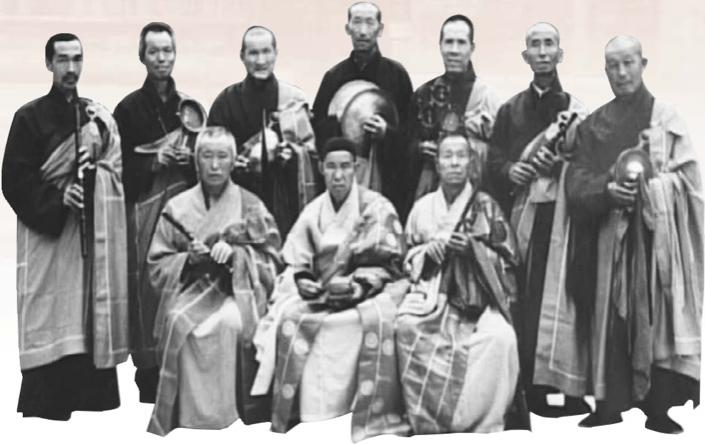
Figure 1 Monk musicians at the North Wudang Temple
Source: Ningxia Intangible Cultural Heritage Protection Center (2017)
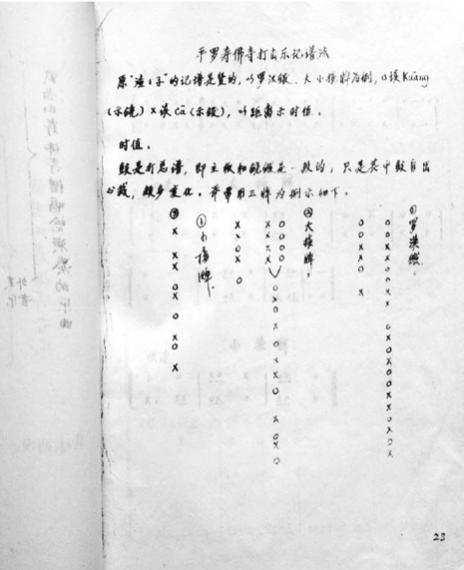
Figure 2 Zhazha Zi notation used in North Wudang Temple Buddhist music
Source: Ningxia Intangible Cultural Heritage Protection Center (2017)
From religious edification to cultural performance: The transformation of baojuan music
Baojuan (traditional Chinese storytelling texts) storytelling historically served a didactic purpose, using narrative singing to propagate Buddhist morals and karma to lay audiences in temple courtyards or village homes (Berezkin, 2011). Its context was communal and its goal, spiritual persuasion. Heritagization has significantly secularized and formalized this practice. Recognized as a distinct ICH sub-item, Baojuan performances have been extracted from their integrated religious-social context and relocated to formal stages at cultural festivals, tourism events, and ICH promotional showcases. The performance frame shifts from a participatory ritualized gathering to a presentational concert for an audience. This shift necessitates adaptations: performances are often shortened, excerpts are selected for their musical appeal, and amplification is used. The trio of Yang Ruqing, Chen Jianping, and Zhang Fengying—recognized as inheritors—now perform less as devout disseminators and more as cultural bearers representing a local art form. As Ms. Yang explained, “We are often asked to perform at government events. We choose the most melodic and lively sections, like ‘Weeping Five Shifts,’ because it suits the stage and the audience may not have the patience for a full scroll” (Interview, Inheritor Yang, June 2022). The Baojuan text themselves (see Figure 3), once working tools, are now treated as precious artifacts, their collation an act of cultural preservation. The primary function thus evolves from religious edification to cultural representation and entertainment, aligning the practice with the logics of the tourism and cultural industries that underpin much local ICH development (Mantra, 2024).
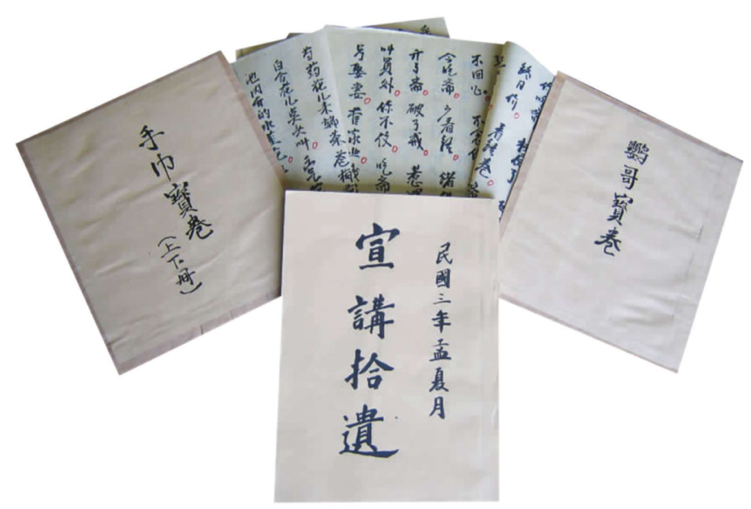
Figure 3 Precious Baojuan materials
Source: Ningxia Intangible Cultural Heritage Protection Center (2017)
From enclosed liturgy to managed spectacle: Ritual music in transition
The core Buddhist ritual music (jingzan), including sutra-chanting (fanbai) and hymn-singing, has experienced a more subtle but significant recontextualization (Liu, 2018). While daily morning and evening ceremonies remain relatively enclosed, the larger-scale Puja rituals have increasingly become sites of managed visibility. With the temple’s status as a heritage site, major ceremonies attract not only devotees but also cultural tourists, photographers, and researchers. The temple administration, in collaboration with local authorities, now proactively organizes these events as platforms for cultural communication and heritage appreciation (Vadhera, 2025). For example, during the observed Ullambana Festival, areas were cordoned for better visitor flow, and explanations of the ritual and music were provided to non-pilgrim visitors on the periphery. The sonic and visual aspects of the ritual—the unison chanting, the choreographed use of instruments like the qing and muyu—are appreciated for their esthetic and atmospheric value as much as for their soteriological meaning (Pu, 2020). This introduces a performative dimension into the heart of the ritual. As the Abbot acknowledged, “We know people come to see and hear the tradition. We must perform the rituals correctly and solemnly, which is also a way to show the dignity of this heritage” (Interview, Abbot Rujing, July 2024). The ritual’s authenticity is now judged by external observers against expectations of solemnity and traditional sound, creating a reflexive pressure on the monastic performers (Abercrombie, 2025). The music’s function as a sacred offering to the Buddha thus coexists, and sometimes uneasily competes with, its newer function as an audible manifestation of ICH for a public audience.
The polyphonic ensemble: Negotiation among actors in the heritagization process
The heritagization of North Wudang’s music is not a unilinear execution of policy but a polyphonic process orchestrated by a network of actors with distinct, sometimes converging, sometimes conflicting, logics. This network forms a de facto ensemble where each group plays a part in co-producing the heritage outcome, negotiating meanings and practices through their interactions.
The monastic community: Gatekeepers and adaptive custodians
For the monastic community, the music is first and foremost sadhana—a form of liturgical practice integral to religious cultivation and ritual efficacy (Beck, 2017). Their primary goal is its preservation for correct ritual function. (Wu et al., 2022) However, heritagization presents both opportunity and dilemma. The abbot and senior monks strategically engage with the ICH system. They aim to secure resources for training, instrument maintenance, and temple restoration, and they recognize that state recognition brings prestige and a degree of protection. As the Abbot stated, “The ICH title helps people understand this is not superstition, but high culture and national tradition. This is important for the temple’s survival in the modern world” (Interview, Abbot Rujing). Yet, they consciously act as gatekeepers, attempting to control the narrative of authenticity. They emphasize the necessity of monastic transmission, the primacy of the northern rhythm (bei pai), and the sacred context, subtly resisting its complete secularization. Their strategy involves compartmentalization: cooperating on the documentation of Zhazha Zi or performing in curated public events, while striving to safeguard the core, daily ritual practice from excessive tourist or research intrusion This protective strategy illustrates how religious institutions selectively engage with heritage governance. Rather than rejecting the heritage framework outright, the monastic community negotiates its terms of participation, allowing certain aspects of the tradition to circulate in public heritage arenas while safeguarding the core ritual domain within the temple.
Local government cultural bureaus: Managers and promoters
Local cultural officials operate under a dual mandate: to implement national ICH policy and to leverage cultural resources for local development (tourism, cultural industries, and regional branding). Their logic is oriented towards management and promotion (of cultural resources). They view North Wudang music as a cultural asset to be inventoried, standardized, and showcased (Xu et al., 2022). Their strategies include funding transmission workshops, producing promotional media, and organizing performance festivals. A key tension in their approach is between preservation and utilization. As one official explained, “Our job is to keep it alive. But ‘alive’ means it must be seen and appreciated by the public, not locked in the temple. Sometimes that means we encourage adaptations for stage performance to attract a wider audience” (Interview, Official B, May 2025). They often prioritize elements with high visual or auditory appeal and tangible outcomes (e.g., digitized scores, performance videos) that align with administrative reporting and evaluation metrics. Their relationship with the monastic community is a pragmatic and mutually beneficial partnership, with occasional differences in priorities regarding resource allocation and development pace, which are addressed through dialogue.
Designated ICH inheritors: Legitimized practitioners and cultural intermediaries
The officially recognized inheritors, particularly the lay Baojuan performers, occupy a unique intermediary position. Their status grants them legitimacy, modest stipends, and a public platform (Ng’weno, 2001). Their personal goal often blends a sense of cultural mission with the pragmatic need for recognition and livelihood. They become crucial nodes in transmission, teaching in state-sponsored workshops (Zhang et al., 2023). However, their practice is most directly shaped by the demands of heritagization. They are the ones who most frequently adapt performances—shortening, selecting excerpts, simplifying accompaniment—to fit non-ritual contexts (Goody, 2010). As Inheritor Chen noted, “We are the face of this heritage for many people. We have to make it engaging, otherwise people will lose interest, and the tradition will die with us” (Interview, Inheritor Chen, June 2025). They navigate between the monastic community’s emphasis on authenticity and the government’s desire for accessible cultural products, effectively becoming cultural translators who reshape the practice for contemporary consumption.
Scholars and researchers: Authenticators and conceptual framers
Academics (ethnomusicologists, historians) act as authenticators and conceptual framers. Their research, cited in ICH application dossiers, provides the scholarly authority that validates the tradition’s historical and artistic value (TK, 2024). Through analysis of notation, musical structure, and historical lineage, they help construct the official narrative of the music’s significance. Their role is pivotal in elevating a local practice to the status of nationally significant heritage (Ubertazzi, 2022). However, their focus on documentation and analysis can also objectify the practice. One scholar admitted, “Our detailed transcription of Zhazha Zi may fossilize a moment in time. The monks’ living practice might evolve away from that precise notation, but our published score becomes the reference authentic version” (Interview, Scholar A, August 2025). Thus, scholars wield significant symbolic power in defining the parameters of authenticity, potentially creating a canonical version against which future practice is judged.
This network operates through continuous negotiation. The state provides the framework and resources, the monks provide the symbolic capital of authenticity, the inheritors provide the performative labor, and the scholars provide legitimizing knowledge(Lu, 2025). Conflicts arise over control (e.g., who decides what constitutes a correct performance for a heritage video), over adaptations (e.g., the appropriateness of adding stage theatrics to Baojuan), and over benefits (e.g., the distribution of project funding). The resultant heritage is a co-production, a negotiated order reflecting the interests and power of this polyphonic ensemble.
Sanctity vs. secularization, authenticity vs. innovation
The empirical findings from North Wudang crystallize fundamental theoretical tensions inherent in the heritagization of religious music, moving the analysis from descriptive case study to conceptual contribution.
The dilemma of sacred authenticity in secular frameworks
The heritagization of Buddhist ritual music should not be understood as a simple relocation of sacred practice into a secular cultural domain. Rather, it produces a hybrid governance space in which multiple regimes of value coexist and interact. Within the monastic community, authenticity is primarily defined through ritual efficacy and doctrinal fidelity. Musical chanting is considered authentic insofar as it fulfills its liturgical function within the soteriological framework of Buddhist practice. By contrast, within the intangible cultural heritage (ICH) regime, authenticity is assessed through different evaluative criteria, including historical continuity, stylistic recognizability, and public representability. These frameworks of evaluation do not operate as mutually exclusive systems. Instead, they intersect within the institutional process of heritagization, producing ongoing negotiations over how ritual music should be performed, represented, and transmitted. In practice, ritual chanting may simultaneously function as a sacred offering within temple liturgy and as a curated cultural display within heritage promotion. The relationship between sacred authenticity and heritage authenticity is therefore not best conceptualised as a binary opposition. Rather, it reflects a layered configuration of authority and meaning in which ritual efficacy, cultural representation, and heritage governance are continuously reconfigured through institutional mediation and actor negotiation.
The core tension lies in the relocation of a sacred liturgy into a secular heritage management system (Hu, 2017). The authenticity of ritual music, from the monastic perspective, is intrinsically linked to its correct performance within a soteriological framework—its efficacy-authenticity (Dachille, 2022). However, the ICH regime, derived from a secular, cultural-value paradigm, promotes a different kind of authenticity based on historical reference (provenance-authenticity), artistic form (style-authenticity), and communal recognition (Lopez-Guzman & Santa-Cruz, 2016). At North Wudang, this plays out as the solemn chant within a Puja versus the staged chant at a cultural festival. The former’s authenticity is performative and internal (achieving ritual goals); the latter’s is representational and external (accurately depicting a tradition for an audience). This divergence creates a paradox. Efforts to safeguard the music—by making it publicly visible and auditable through secular performances—can inadvertently dilute the very sanctity that constitutes its primary value to core bearers (Beaudoin, 2013). The case thus extends Grant’s (2012) argument about musical sustainability, showing that for religious music, the threat may come not only from rigid purity but from the very secular frameworks designed to save it, which prioritize cultural representation over ritual function. Furthermore, this process reveals how the ICH framework, as implemented by state institutions, establishes and privileges a particular set of authenticity criteria (Wang, 2025). These criteria tend to favor what is historically verifiable and publicly consumable. This preference, in turn, encourages constructive alignment among religious practitioners, who voluntarily adapt their practices to align with these publicly recognized standards while preserving core ritual values.
Negotiating the right to change: Innovation within heritage boundaries
The findings also complicate the debate on change and innovation in musical heritage. The adaptation of Baojuan for the stage and the strategic emphasis on certain historical narratives are clear acts of innovation aimed at ensuring relevance and survival (Berezkin, 2019). This aligns with scholars who view change as vital for sustainability (Buriak & Makovoz, 2024; Rice, 2010). However, the North Wudang case reveals that the right to change is not equally distributed among actors. The monastic community’s changes (e.g., subtle adjustments in chanting rhythm) are often framed as internal, organic evolution tied to oral transmission and ritual necessity. In contrast, changes driven by cultural bureaus or performed by inheritors on stage are more visible and subject to scrutiny against a constructed authentic baseline, often defined by scholarly documentation or monastic idealization. Innovation, therefore, is not a free-floating creative process but a negotiated and politically charged practice occurring within a field of power where different actors have unequal authority to define the limits of acceptable adaptation.
We conceptualize this process as asymmetric innovation: within the heritagization field, the authority to initiate, legitimize, and normalize change is unevenly distributed among actors and is closely correlated with their institutional power and symbolic capital. Drawing on Bourdieu’s (1989) theory of cultural fields, heritage-making can be understood as a space of symbolic struggle in which different actors compete to impose the legitimate definition of tradition and its permissible forms of transformation. Within this field, state cultural institutions, scholarly authorities, and officially recognized inheritors typically possess greater discursive and institutional power to define acceptable innovation, while religious practitioners often operate within narrower boundaries of legitimacy.
The concept of asymmetric innovation also contributes to broader debates on cultural governance in heritage systems. Heritage institutions do not merely preserve cultural practices; they also regulate the conditions under which change becomes legitimate. As a result, innovation is not a neutral creative process but a politically structured negotiation shaped by institutional authority, expert knowledge, and cultural policy frameworks. This perspective allows the analytical lens developed in this study to extend beyond the North Wudang case, offering a framework for examining how authority over cultural change is distributed and contested in other contexts of religious and community-based heritage.
Heritagization as a generative force: Beyond preservation
Finally, this study demonstrates that heritagization is not merely a preservative but a generative and governing force. It does not simply freeze a tradition; it actively produces new social formations, cultural meanings, musical practices, and subject positions. The creation of the ICH inheritor role—a state-certified identity that intertwines personal faith, artistic skill, and public duty—is a prime example of how governance shapes subjectivity (Kang et al., 2025). The new performance genre of heritage-stage Baojuan, and the re-signification of Zhazha Zi as an archival treasure, are all products of the heritagization process itself. This supports a critical heritage studies perspective that views heritage as a contemporary cultural process. The North Wudang Temple music that exists today is a governed hybrid: part liturgical practice, part cultural symbol, part tourist attraction, and part academic subject. Its vitality—and its conflicts—stem directly from this hybridity. The challenge for sustainability, therefore, may not be about arresting change to preserve an original essence, but about ethically and transparently managing the terms of this ongoing generation and hybridization in a way that acknowledges the unequal power among stakeholders and seeks to protect the core liturgical agency of the religious community, even as the practice evolves in the public sphere.
This analysis affirms that the heritagization of religious music is a profound site where global discourses of cultural governance, local politics, religious identity, and artistic practice intersect and interact, producing outcomes that are as much about the present and future configurations of state-society-religion relations as they are about the past.
Conclusion
This study has examined the heritagization of Buddhist ritual music at North Wudang Temple through an ethnographic investigation of how religious traditions are reconfigured within state-led heritage governance frameworks. The findings demonstrate that heritagization is not merely a process of cultural preservation. Rather, it constitutes a dynamic field of negotiation in which religious practitioners, heritage officials, scholars, and cultural practitioners interact to redefine the meaning, value, and future of the tradition.
The case of North Wudang Temple illustrates how heritage recognition reshapes both the social organization and the performative contexts of ritual music. Historical narratives are strategically constructed to establish legitimacy within the heritage system, musical texts such as Zhazha Zi notation are transformed from practical ritual tools into archival artifacts, and performance practices like Baojuan singing are recontextualized from religious edification to public cultural representation. These transformations reveal that heritagization is not simply documenting a tradition but actively reorganizing its structures of meaning and authority.
A key tension identified in this study lies in the coexistence of multiple regimes of authenticity. Within the monastic community, authenticity is grounded in ritual efficacy and doctrinal continuity, emphasizing the correct performance of liturgical practice. Within heritage institutions, however, authenticity is often evaluated through criteria such as historical continuity, stylistic recognizability, and public representability. Rather than functioning as mutually exclusive systems, these evaluative frameworks intersect within the heritage process, generating ongoing negotiations over how ritual music should be preserved, performed, and transmitted.
Building on these observations, this article introduces the concept of asymmetric innovation to explain how authority over cultural change operates within heritage governance systems. Asymmetric innovation refers to a condition in which the capacity to initiate, legitimize, and institutionalize changes to a tradition is unevenly distributed among actors. Within the North Wudang case, state cultural institutions, scholarly authorities, and officially recognized inheritors possess greater institutional and symbolic power to define acceptable forms of innovation. Religious practitioners, while remaining the primary custodians of ritual knowledge, often operate within narrower boundaries when their practices intersect with heritage governance frameworks.
The concept of asymmetric innovation highlights the political dimensions of cultural change within heritage systems. Innovation is not simply the result of creative adaptation but is shaped by institutional authority, policy frameworks, and struggles over cultural legitimacy. By foregrounding the unequal distribution of authority over cultural change, this study contributes to broader debates in critical heritage studies concerning how heritage institutions regulate both preservation and transformation.
Beyond the North Wudang case, asymmetric innovation offers a useful analytical framework for examining similar dynamics in other contexts where religious or community traditions are incorporated into heritage governance systems. In such contexts, the recognition of cultural heritage often creates new opportunities for preservation and public visibility while simultaneously restructuring the authority relationships that govern cultural practice.
From a policy perspective, the findings suggest that safeguarding religious intangible cultural heritage requires greater sensitivity to the multiple value systems embedded within cultural traditions. Heritage governance frameworks should recognize the dual character of ritual music as both religious practice and cultural heritage. This may involve creating more participatory mechanisms that allow religious custodians to play a stronger role in defining how traditions are represented and transmitted within heritage systems.
Ultimately, the case of North Wudang Temple demonstrates that the sustainability of religious musical traditions does not depend on preserving a fixed and immutable past. Rather, it depends on the ongoing negotiation of change within complex systems of cultural governance. Understanding how authority over cultural innovation is distributed among actors is therefore crucial for developing more inclusive and sustainable approaches to safeguarding religious heritage.
Declaration of generative AI in scientific writing
Generative AI (ChatGPT-5.3) was used solely for copy-editing and language refinement, including grammar checking and enhancing clarity and readability. No AI tools were used for data analysis, interpretation, or content generation. The authors retain full responsibility for the accuracy, integrity, and originality of the manuscript.
CRediT author statement
Connie Keh Nie Lim: Conceptualization, Methodology, Supervision, Writing – review & editing. Tong Wu: Investigation, Data Curation, Formal analysis, Writing – original draft.
References
Abercrombie, J. (2025). Daoist culture in Wudang Shan: Enchanted heritage, neo-traditionalism, and secular spirituality (Doctoral dissertations). United States: Syracuse University.
Asad, T. (2003). Formations of the secular: Christianity, Islam, modernity. Stanford: Stanford University Press.
Beaudoin, T. (2013). Secular music and sacred theology. Minnesota, USA: Liturgical Press.
Beck, G. (2017). Religious and devotional music: Northern area (pp. 246-258). In Arnold, A. (Ed.). The garland encyclopedia of world music. New York, NY: Routledge.
Bendix, R. (2009). In search of authenticity: The formation of folklore studies. Madison, WI, USA: University of Wisconsin Press.
Bendix, R. F., Eggert, A., & Peselmann, A. (2013). Heritage regimes and the state. Göttingen, Germany: Universitätsverlag Göttingen.
Berends, M., Lamb, S., & Schneider, B. (2023). The sage handbook of sociology of education. Thousand Oaks, CA: SAGE Publications.
Berezkin, R. (2011). Scripture-telling (jiangjing) in the Zhangjiagang area and the history of Chinese storytelling. Asia Major, 24(1), 1-42.
Berezkin, R. (2019). On the evolution of Baojuan performances in Shanghai: A development of traditional literature in the modern City (1875-1915). Fudan Journal of the Humanities and Social Sciences, 12(4), 649-670.
Bohlman, P. V. (1988). The study of folk music in the modern world. Bloomington, Indiana: Indiana University Press.
Brown, M. F. (2005). Heritage trouble: Recent work on the protection of intangible cultural property. International Journal of Cultural Property, 12(1), 40-61.
Buriak, M., & Makovoz, O. (2024). Scaling for sustainability: a change management framework aligned with SDGs. L. & Innovative Soc’y, 1(22), 52-63.
Casanova, J. (2007). Rethinking secularization: A global comparative perspective (pp. 101-120). In Beyer, P., & Beaman, L. G. (Eds.). Religion, globalization, and culture. Leiden, The Netherlands: Brill.
Ningxia Intangible Cultural Heritage Protection Center. (2017). Ningxia intangible cultural heritage projects representative inheritors list. Yin Chuan, China: Ningxia People’s Education Publishing House.
Cerny, P. G. (2000). Political agency in a globalizing world: Toward a structurational approach. European Journal of International Relations, 6(4), 435-463.
Chau, A. Y. (2010). Religion in contemporary China: Revitalization and innovation. Abingdon, UK: Routledge.
Chakrabarty, D. (2000). Provincializing Europe: Postcolonial thought and historical difference. Princeton and Oxford: Princeton University Press.
Coulon, A. (1989). Review of handbook of theory and research for the sociology of education, by Richardson, J. G.] Revue Française de Pédagogie, 88, 111-113.
Dachille, R. E. (2022). Searching for the body: A contemporary perspective on Tibetan Buddhist tantra. New York: Columbia University Press.
Denzin, N. K. (2017). The research act: A theoretical introduction to sociological methods. Abingdon, UK: Routledge.
De Jong, F. (2023). Introduction: Temporalities of renewal in religious heritage (pp. 1-22). In De Jong, F., & Mapril, J. (Eds.). The future of religious heritage: Entangled temporalities of the sacred and the secular, edited by ferdinand de jong and josé mapril. Abingdon, UK: Routledge.
Emerson, R. M., Fretz, R. I., & Shaw, L. L. (2011). Writing ethnographic fieldnotes. Chicago, IL: University of Chicago press.
Fei, D., & Jie, G. (2024). Temple music of the state intangible cultural heritage site northern wudang monastery: A testament to multiethnic musical cultural integration. Chinese Religion, 2, 76-77.
Földváry, M. I., & Stamler, Á. (2023). Regions, history, and identity in medieval liturgics: The outlines of a methodology. Religions, 14(12), 1448.
Goody, J. (2010). Myth, ritual and the oral. Cambridge, UK: Cambridge University Press.
Grant, C. (2012). Analogies and links between cultural and biological diversity. Journal of Cultural Heritage Management and Sustainable Development. 2(2), pp. 153-163.
Guan, Y. (2025). The geographical background of the formation, development and evolution national culture (pp. 183-260). In Guan, Y. (Eds.). Theoretical Study of Ethnogeography. Springer.
Hobsbawm, E., & Ranger, T. (2012). The invention of tradition. Cambridge, UK: Cambridge University press.
Hu, J. (2017). The Historical Evolution of Traditional Chinese Religions and the Construction of Cultural Identity. Journal of the Party School of the CPC Hangzhou Municipal Committee, 04, 82-89.
Hu, X., & Peng, X. (2020). The national identity function of Buddhist music in a multi-ethnic area: The case of Yuanjiang Hani, Yi and Dai autonomous county in Yunnan. People’s Music, 11, 50-53.
Kang, B., Ji, C., Wu, X., & Liu, S. (2025). A study on the legal protection of intellectual property rights for bearers of intangible cultural heritage in sports in China: A central-local coordination perspective. Sports Science, 44(11), 3-14, 31.
Karvelas, B. A. (2020). Listening to landforms: Intersections of ethnomusicology and the environmental humanities (Master’s thesis). Santa Barbara: University of California.
Kirshenblatt-Gimblett, B. (2004). Intangible heritage as metacultural production1. Museum international, 56(1-2), 52-65.
Kong, Q., & Song, J. (2018). On the ecology, inheritance and dissemination of intangible music heritage. Journal of Xinghai Conservatory of Music, 01, 70-81.
Law, H. (2024). The legal recognition of club music as intangible cultural heritage (Doctoral dissertation). Tilburg: Tilburg University
Li, W., & Zhang, Y. (2025). Symbol and narrative in religious music: A Cross-cultural comparative analysis. Cultura: International Journal of Philosophy of Culture and Axiology, 22(3). 163-182.
Liang, Y. (2017). Religious revival in rural China and the fate of ‘religion’in China. Chinese journal of sociology, 3(2), 268-290.
Liu, C. (2018). Reciting, chanting, and singing: The codification of vocal music in Buddhist canon law. Journal of Indian Philosophy, 46(4), 713-752.
Lopez-Guzman, T., & Santa-Cruz, F. G. (2016). International tourism and the UNESCO category of intangible cultural heritage. International Journal of Culture, Tourism and Hospitality Research, 10(3), 310-322.
Lim, C. K. N., & Wu, T. (2026). Heritagization of Buddhist music in China: A systematic literature review. Multidisciplinary Reviews, 9(8), 2026410.
Lu, Y. (2025). A Study on legal issues in the tourism development of China’s intangible cultural heritage. Open Journal of Legal Science, 13, 102.
Mantra, I. B. N. (2024). Cultural and heritage tourism. Jatinangor, Indonesia: Mega Press Nusantara.
Maulidi, A., Girindratama, M. W., Soeherman, B., & Andono, F. A. (2024). Organizational culture, power distance and corruption: The mediating role of religiosity. The Indonesian Accounting Review, 14(2), 203-221.
Meyer, B., & De Witte, M. (2013). Heritage and the sacred: Introduction. Material religion, 9(3), 274-280.
Mohyeddin, Z. (2024). Cultural identity in a globalized world: Navigating tradition and modernity. Frontiers in Humanities and Social Research, 1(3), 106-115.
Ng’weno, B. (2001). Ground rules community inheritance. (pp. 111-137). In Agrawal, A., & Gibson, C. C. (Eds.). Communities and the Environment: Ethnicity, Gender, and the State in Community-Based Conservation. Rutgers University Press.
Nilsson, P. Å. (2018). Impact of cultural heritage on tourists. The heritagization process. Athens Journal of Tourism, 5(1), 35-54.
Norton, B., & Matsumoto, N. (2018). Music as heritage: Historical and ethnographic perspectives. Abingdon, UK: Routledge.
Owe, R. (2014). Traditional music, heritage music. (pp. 43-59). In Bithell, C., & Hill, J. (Eds.). The Oxford Handbook of Music Revival, Oxford, UK: Oxford University Press.
Pu, H. (2020). Buddhist Chanting China Huahua two paths. Journal of Zhejiang Arts Vocational College, 18(04), 53-57.
Quartier, T. (2020). Monastic form-of-life out of place: Ritual practices among Benedictine oblates. Religions, 11(5), 248.
Rice, T. (2010). Disciplining ethnomusicology: A call for a new approach. Ethnomusicology, 54(2), 318-325.
Smith, L. (2006). Uses of heritage. Abingdon, UK: Routledge.
Tian, Q. (1994). Recent trends in Buddhist music research in China. British journal of ethnomusicology, 3(1), 63-72.
TK, G. K. (2024). Valorization of intangible cultural heritage through documentation: an Indian scenario. Library Hi Tech News, 41(8), 10-14.
Ubertazzi, B. (2022). Intellectual property rights and intangible cultural heritage (pp. 119-185). In Ubertazzi, B. (Eds.). Intangible Cultural Heritage, Sustainable Development and Intellectual Property: International and European Perspectives. Cham: Springer International Publishing.
UNESCO. (2003). Convention for the safeguarding of intangible cultural heritage. Retrieved from http://www.unesco.org/culture/ich/index.php?pg=00006
Vadhera, K. (2025). Building heritage tourism through capacity. Delhi, India: Educohack Press.
Wang, J. (2025). Intellectual property protection challenges and countermeasures under the framework of the intangible cultural heritage law. Open Journal of Legal Science, 13, 1301.
Wang, K. (2018). Looking at Beijing’s temples, heritage in a new light. China Daily. Retrieved from https://www.chinadaily.com.cn/a/201801/23/WS5a667611a3106e7dcc135d7b_4.html
Wei, X. (2018). Archiving the Nation: History and current practices of sound archives in China (Doctoral dissertations). Indiana: Indiana University.
Wu, J., Ju, L.-H., Lin, P.-H., & Lyu, Y. (2022). The relationship between form and ritual in cultural sustainability. Sustainability, 14(15), 9157.
Xu, Y., & Tao, Y. (2022). Religion-related intangible cultural heritage safeguarding practices and initiatives of the contemporary Chinese state. Religions, 13(8), 687.
Xu, Y., Tao, Y., & Smith, B. (2022). China’s emerging legislative and policy framework for safeguarding intangible cultural heritage. International Journal of Cultural Policy, 28(5), 566-580.
Yang, M. (2003). Faith, ritual and ritual music - a comparative study of religion, ritual and ritual music ethnography methodology. Ethnic Art,03, 50-57+97.
Yang, X. (2012). Folk Culture in Musical Behavior---The Transmission and Development of Ethnic Music from Music Anthropology. Music Exploration, 02, 59-65.
Zhang, J., Cai, X., & Zhan, Z. (2023). Reflections on establishing a system for cultivating intangible cultural heritage inheritors in the new era: Based on the survey in fujian province. Sustainability, 15(11), 9088.
Zhou, X., & Huang, J. (2024). The heritagization of cultural politics: anthropological research on Chinese cultural heritage. International Journal of Anthropology and Ethnology, 8(1), 12.
Zhu, Y., & Maags, C. (2020). Heritage politics in China: The power of the past. Abingdon, UK: Routledge.
Zhuang, H. (2014). A Review of buddhist music research in china in the past five years. Journal of Weinan Normal College, 29(09), 92-97.