
Asian J. Arts Cult. 2026; 26(4): 165
Creative Breakthroughs in Revitalizing Old Javanese (Kawi) Literature for Younger Generation in Bali
Ida Bagus Arya Lawa Manuaba1 and Kadek Ray Sulyantha2,*
1Program Studi Pendidikan Bahasa Inggris, Fakultas Ilmu Pendidikan, Institut Teknologi dan Pendidikan Markandeya, Bali 80613, Indonesia
2English and Communication Program, Faculty of Liberal Arts; Ubon Ratchathani University,
Ubon Ratchathani 34190, Thailand
(*Corresponding author’s e-mail: [email protected])
Received: 26 May 2025, Revised: 10 February 2026, Accepted: 12 February 2026, Published: 18 February 2026
Abstract
Balinese millennials’ interest in Old Javanese (Kawi) literature faces challenges due to conventional presentation styles within the kakawin tradition. Most kakawin texts are performed through rigid metrical singing practices that emphasize form over meaning. Although kakawin contains significant religious, cultural, philosophical, and ethical content, linguistic complexity and unfamiliarity reduce accessibility for younger audiences. In response, this study develops creative revitalization initiatives, including transforming kakawin into contemporary musical styles, translating popular songs into Old Javanese, and composing original Old Javanese songs. While these approaches have generated positive engagement, they have also prompted debate regarding adherence to tradition. Methodologically, the study employs a research-and-development approach combined with qualitative linguistic analysis. It examines how Old Javanese linguistic elements—lexical choice, phonological adjustment, and semantic reinterpretation—are adapted from classical metrical structures into modern musical expressions. The findings indicate that creative musical mediation and digital dissemination can enhance youth engagement and support the revitalization of Kawi literature and the kakawin tradition.
Keywords: Old Javanese literature, kakawin, Language revitalization, Musical adaptation, Balinese youth
Introduction
The kakawin (Old Javanese epic poetry) tradition is familiar to the Balinese, but not to the younger generation. If all types of Balinese folklore were collected, kakawin would rank as the most widely inherited nonverbal folklore (Putra, 2021). From the widely revered Rāmāyaṇa (“The Journey of Rāma”)1 and the perennially echoed Arjunawiwāha (“The Marriage of Arjuna”)2 in religious rites, to the enthralling long meters of Bharatayuddha (“The War of Bharat”)3, and the metrical intricacies of Bhomāntaka (“The Death of Bhoma”)4, each chapter presenting new challenges that test the endurance of narrators and chanters alike. However, it seems that the inheritance of this nonverbal folklore began to experience problems when Bali entered the modern century and developed into a world tourist destination. Since then, Bali has become one of the earliest gateways through which the world’s trends have spread—music, dance, science, even ways of life.
Passing on the kakawin tradition is not limited to teaching young people how to sing kakawin verses in the traditional way based on the classical Sanskrit poetic rules of wretta-matra5. Teaching young people how to sing is not as challenging as coming up with reasons why they should prefer to eat local fruits over imported foods. So, the inheritance of the kakawin tradition, more deeply, is the inheritance of ethnic mentality and character. This mentality and character are inherited in language (in this case, Old Javanese—also known as Kawi—the language used in all kakawin), and language is expressed metaphorically and aesthetically in the form of literary works (folklore).
Old Javanese was a very popular language in the old archipelago. It is called Kawi ‘the language of literature’ because it was used in the literary scene of the Old Nusantara6 for approximately five centuries. Thus, in accordance with Simpen et al. (2021), the Old Javanese language is a linguistic and literary gem of the classical archipelago, so Kawi language and literature cannot be simply dismissed in discussing the history of the development of Indonesian ancestral literacy.
A major challenge now exists in maintaining young people’s interest in classical literature in the Old Javanese language, especially kakawin. Old Javanese literature is the epitome of Indonesia’s literary civilization in the classical period and reflects the nation’s extraordinary literary wealth and the ability of Indonesian ancestors to compete in literacy on a par with India, China and Arabia. Thousands of famous Old Javanese literary works, such as Rāmāyaṇa, Hariwangsa (“The Lineage of Hari (Viṣṇu)”), Subhadrāwiwāha (“The Marriage of Subhadrā”)7, Arjunawiwāha, Bhomāntaka, Bharatayuddha, to Nāgarakṛtāgama (“The Country with a Holy Tradition (Religion)”)8, Banawa Sekar (“Boat of Flowers”) and Nitiśāstra (“The Science of Moral Values or Ethics”) are texts that perpetuate Nusantara’s great literary wealth. All of these literary works contain strong educational values, ranging from the spirit of national defense, leadership, housekeeping, gender equality, struggle, tolerance, unity, and independence. However, more and more young people are less interested in learning the cultural, educational and moral values contained in these classic literary works.
Young people’s lack of interest in learning kakawin literature can be caused by several factors. A survey we conducted among urban Balinese teenagers aged 14 to 20 in 2015 revealed five main reasons why today’s younger generation tends to have less interest in studying Old Javanese literature. First of all, when this phenomenon is scrutinized more deeply, it can be observed that young people tend to be more interested in contemporary entertainment and arts that suit their times. Stadium-shaking pop music concerts, avant-garde visual art performances, and the latest movies that feast their eyes are more appealing options than sitting next to their grandfather and learning to recite kakawin, then listening to its meaning. Even social media and digital platforms have become a favorite of this generation, providing unlimited entertainment and information within seconds. In this ever-changing world, Old Javanese literary works may feel distant from reality and their modern lives.
Relatedly, some young people, especially in Bali, find understanding Old Javanese literature a huge and confusing challenge. Learning to read, interpret, or sing kakawin can be a demanding task, comparable to the already busy schedules of students and young professionals. The Old Javanese language differs significantly from contemporary everyday language in both structure and vocabulary. It is rich in metaphors, symbolism, and archaic scripts that are largely unfamiliar to younger audiences. This linguistic complexity creates substantial barriers to comprehension, leading many young people to perceive kakawin as inaccessible and only marginally relevant. In contrast, younger generations are accustomed to quick, concise forms of information delivery, whereas engagement with classical literature requires precision, sustained attention, and patience.
In addition to language issues, some young people feel that studying Old Javanese literature is irrelevant to their daily lives. They live in a busy age, faced with daily demands, including formal education, work and social activities. In this context, learning about Old Javanese literature may feel like a waste of time. They may not see how knowledge of these literary works can be of real benefit in addressing the challenges of their modern lives. There is also the view of some respondents that Old Javanese literature tends to be magical and esoteric, so it should only be studied by a certain, exclusive circle. This creates the impression that Old Javanese language and literature are too difficult for them to access. This gap prevents young Balinese from understanding their classical literary heritage. In some cases, it also gives rise to the misconception that knowledge of Old Javanese literature is only relevant for those interested in spiritual or mystical aspects, which of course is not true. Old Javanese literature actually covers a wide range of topics, including history, wisdom, ethics, and even eroticism and epic stories that can provide useful insights into life (Worsley, 2021).
Another strong reason why Old Javanese language and literature is becoming less popular is that it is no longer used in everyday communication. As a result, the vocabulary of the language is practically unknown to young people. The present generation finds greater familiarity with Balinese as the native tongue among some Balinese youth, while Indonesian and English hold more significance in a global context. The reluctance to understand the Old Javanese language directly hinders their access to the values of these literary classics.
Despite this declining familiarity and use, Old Javanese literature constitutes an invaluable repository of knowledge, character formation, philosophy, religion, culture, and life guidance. This classic literature reflects a civilization that existed thousands of years ago, and its local wisdom can serve as an example in people’s daily lives. The moral values, ethics, and life lessons contained in these literary works are very relevant and even needed in the dynamics of contemporary life. As the cultural wealth of the old archipelago, Old Javanese literature and language must be revitalized again to make it attractive to the younger generation (Opoku Mensah & Aboagye Da-Costa, 2022).
Based on the conclusions of the preliminary survey, this article addresses the declining engagement of Balinese millennials with Old Javanese literature by proposing creative strategies for its revitalization. From an applied linguistics perspective, this challenge is understood not merely as a matter of literary appreciation but as an issue of language transmission, cultural mediation, and accessibility. To respond to this, the study argues that creative content grounded in Old Javanese literature should be designed to resonate with young audiences both in Bali and across Indonesia by foregrounding its universal moral, linguistic, educational, and character-building values. Central to this approach is the integration of Old Javanese classical literary forms with contemporary cultural contexts familiar to the current generation. In particular, the musicalization of Old Javanese texts is proposed as a strategic medium through which linguistic and cultural meanings can be recontextualized and communicated in engaging and relevant ways.
This study is situated within the field of applied linguistics and cultural revitalization, particularly focusing on language preservation through digital media practices. Key terms such as revitalization, musicalization, and creative content are used in the sense of linguistic mediation and cultural adaptation. Within this theoretical framework, the Balinese kakawin9 tradition provides a compelling case study of how inherited literary forms confront the pressures of modernization and shifting cultural practices.
The purpose of this study is to contribute to the linguistic and cultural revitalization of Old Javanese by exploring creative strategies that enhance its accessibility and relevance for younger audiences. The study aims to (1) examine the challenges faced by Balinese millennials in engaging with Old Javanese literature, particularly the kakawin tradition; (2) develop and implement creative content in the form of contemporary musical adaptations, translations, and original Old Javanese songs; and (3) analyze the linguistic transformation of Old Javanese elements—lexical, phonological, and semantic—within modern musical contexts. Through these objectives, the study seeks to demonstrate how creative and digital approaches can support sustainable cultural transmission and language revitalization.
This study addresses the question: How can Old Javanese language and literature be revitalized among young Balinese through creative digital media? It also seeks to interpret how linguistic transformation in musical forms promotes sustainable cultural transmission.
Literature review
At least in the early twentieth century, ideas about the importance of local language preservation and revitalization have been put forward. The idea of local language revitalization has been expressed by Fishman (1991) and reinforced by Hornberger (1998) who stated the urgency of revitalizing local languages that are almost extinct as one of the concrete steps of human cultural conservation. Furthermore, Kipp (2009) reviewed many steps of local language revitalization since two decades ago, including indicating the importance of a massive movement and support from the community so that a language can survive.
From the land of China, the preservation and revitalization of local languages with creative content has been carried out by several researchers and practitioners. Xiang Ren and his colleagues in China predict that creatively packaged online literature has the potential to attract more markets than conventional methods (Xiang Ren & Montgomery, 2012). However, they predicted that at the same time, this creative economy would lead to increasingly complex copyright issues. What they said came true when devices and the internet became popular in 2015. A lot of creative content abused intellectual property rights and this became a concern for many countries, including Indonesia.
Continuing what Xiang Ren and Montgomery said, Meighan (2021) concluded that the revitalization of local languages in the current digital era requires a combination of technological mastery from local young people, local content creators, local digital technology developers and local visionaries (including investors) for the sustainability of local literature. The preservation of local language and literature must now penetrate the realm of social media that can be accessed easily and for free, even to the scope of Augmented Reality (AR) and Virtual Reality (VR).
From these studies, it can be concluded that creative content based on information technology can be a medium for inheriting and revitalizing local languages and literature for young people. With the advancement of information technology, young people feel more liberated in expressing themselves, choosing their favorite fields, and developing them according to their interests and talents. Technology allows young people to learn in a more flexible style according to their abilities without feeling burdened to get a certain score or level of proficiency. This is in line with what McMenamin (2022) states that learning esoteric languages in an informal setting (outside of official institutions that have standards of achievement) is a favorable opportunity for young people to learn freely, without pressure and free from fear of mistakes. In other words, the more natural the setting of language inheritance, the more comfortable it is for the younger generation to learn it.
Creative content that revitalizes local languages and literature started to emerge when the social media trend took off. An interesting article from the University of Hawaiʻi at Mānoa on June 6, 2022 reported about a scholarship-winning student who took the initiative to revitalize the almost extinct Latin language in the content of his self-composed songs. The songs were effective in attracting people to want to know more about Latin, while at the same time starting to build a relationship with the language through the lyrics.
In South America, Ferreira and Turin (2021) examined the use of local languages in Brazil in radio broadcasts, podcasts and online radio. With high language diversity, Brazil experiences challenges and obstacles in revitalizing its local languages. The use of technology is an interesting alternative to introduce local languages to young people. Despite these initiatives, there are clashes with government rules and regulations regarding language use. From this research, it can be concluded that the government also has an important role in the success of language revitalization as a country’s intangible property. A similar program was conducted in Nigeria, where agricultural radio broadcasts in local languages were proven to increase ethnic communities’ understanding of agricultural programs and hence productivity (Babatunde Adeyeye et al., 2021). In that case, it was revealed that the use of local languages for content aimed at ethnic communities had a more intense sense of emotional and cultural closeness. Still on the African continent, Beletskiy (2023) studied local language revitalization initiatives by using it in 4G telecommunication campaign advertisements in Tanzania.
Another creative content of local language revitalization is also created in Taiwan in the form of music. Based on her research, Karen Huang (2023) emphasized the important role of popular music in local language revitalization in Taiwan. Local music practitioners try to encourage young people to use Taiwan’s local language through music content. This activity has been proven to increase their confidence to use local languages through popular music and change the stigma of local languages that seem traditional, inferior and not prestigious to become globalized, modern and dignified. Through music, outsiders can also be introduced to the local language, creating a welcoming and supportive language environment.
Meanwhile, in Indonesia, there has yet to be a step as far, strong and unique as that in the preservation and revitalization of Old Javanese language and literature. Research on Old Javanese literature still mostly concerns the fields of philology, hermeneutics, discourse analysis, and linguistics both micro and macro. Textual studies are the dominant type of research on Old Javanese literature from the past two decades. Meanwhile, there has been almost no research or development of creative products that can really reach out to audiences who are unfamiliar with the Old Javanese language. Reflecting on the results of previous research, revitalizing Old Javanese language and literature using creative content is a viable area of research development.
There is one interesting thing related to creative products based on the revitalization of Old Javanese, namely by Permata Dewi (2022) regarding the development of a picture book called pranata mangsa10. In terms of novelty, this product development has a unique value, but in terms of utility or usefulness, this product is still not relevant for the younger generation because most of the young people are less interested in traditional agriculture. This traditional knowledge system needs to be further integrated with other creative content such as comparative astronomy studies or children’s videos on various animals and plants mentioned in pranata mangsa.
The novelty of this research lies in the creation of a creative content product—a breakthrough based on the revitalization of Old Javanese literature. This development serves as a new stepping stone in the study of the archipelago’s classical literature, particularly for ancient languages that are marginalized or facing extinction. Providing products that are accessible to the public free of charge is currently the most practical solution to introduce, maintain, and revitalize Old Javanese literature.
In this regard, the project finds a successful precedent in the Indian classical literary tradition (such as shlokas and mantras), which has been successfully blended with modern musical instruments like the guitar, piano, and full orchestras. While such integration necessitates some deviation from strict metrical rules, the process adheres to a solemn purpose: introducing the tradition to the younger generation. By mirroring this approach, the authors believe that the kakawin tradition—which stems from Indian classical literary roots—can be similarly adapted and sustained through modern musical touches.
Conceptual framework
This creative content development departs from the lack of creative content in Old Javanese. The flow of this creative content development concept can be seen as follows.
Table 1 The flow of the creative content development concept
Problem |
Theoretical basis |
Aim |
Solution/Product |
Contemporary content in Old Javanese is still rare. |
(Hornberger, 1998) and (Fishman, 1991) argue that indigenous languages are as important as the society itself. |
To add up creative content in the Old Javanese language that is fit for the younger generation. |
Composing creative songs in Old Javanese language. |
Young people are less interested in Old Javanese literature. |
(Meighan, 2021) technology is a vital means to pass language and culture to the next generation. |
To cultivate the younger generation’s interest in Old Javanese literature through creative content. |
Combining the compositions with touches from Old Javanese literature. |
Research method
This study employed a research and development (R&D) approach with qualitative and descriptive components, conducted in four main stages: preliminary data collection, design, validation, and publication with feedback observation.
Preliminary data collection and analysis
To identify the specific needs for revitalization, preliminary data were collected through a survey conducted in 2015 involving Balinese youth aged approximately 14–20 years. This survey aimed to identify attitudes, familiarity, and challenges related to Old Javanese language and literature. Data were gathered using questionnaires, informal interviews, and documentation reviews in urban areas of Bali.
Based on this survey data, the following three significant barriers to the sustainability of the kakawin tradition were identified:
Digital Orientation: Most respondents consider the practice of chanting kakawin to be highly difficult and fundamentally at odds with their digitally and technologically oriented lifestyles.
Pedagogical Rigidity: Findings suggest that the older generation struggles to develop innovative ways to sustain the tradition. Their strict adherence to traditional metrical versions often overrides the goal of fostering a sense of belonging or curiosity among the youth.
Lack of Cultural Relevance: Participants often find studying kakawin tedious unless it is a school mandate or competition requirement. This is largely due to a perceived disconnect between kakawin and the modern musical instruments or genres they consume daily.
Design phase
Following the identification of the barriers mentioned above, the design phase was initiated to bridge these gaps through intentional linguistic and musical adaptation. The ultimate goal of this phase was to maintain core cultural elements while stripping away the pedagogical rigidity that previously hindered youth engagement. This phase transformed the preliminary findings into a creative strategy:
Linguistic Adaptation: To counter the perceived difficulty of Old Javanese, selected kakawin texts and modern lyrics were analyzed for phonological, lexical, and semantic features that would facilitate easier “musicalization.”
Musical Modernization: To address the “Lack of Cultural Relevance,” classical metrical structures—such as the guru-laghu—were adapted into contemporary musical forms. By incorporating modern melodies and arrangements, the project provides a familiar auditory context for a technologically oriented generation.
Product Development: This phase focused on creating a sense of belonging through three distinct creative products:
Musicalized kakawin (modernizing tradition).
Old Javanese translations of popular songs (creating familiarity).
Original Old Javanese compositions (fostering new creativity).
To ensure the musicalized products remained accessible while maintaining linguistic integrity, the authors established specific rules for vocabulary and pronunciation. The author acknowledges that the Old Javanese songs composed for this project are not “pure” Old Javanese as defined by authoritative sources, such as Zoetmulder’s dictionary. Some vocabulary used is not present in Old Javanese lexicons. To bridge these gaps, the author borrowed words from languages closely related to Old Javanese, specifically Balinese as well as Middle and Modern Javanese. This process of “filling in the gaps” is common in modern songwriting, similar to how Japanese anime theme songs occasionally blend different languages.
Furthermore, there is an ongoing debate regarding the pronunciation of Old Javanese. While Balinese people generally pronounce the final /a/ vowel as /ĕ/ (as in “bird”), some scholars argue it should remain a constant /a/, similar to modern Indonesian.
In integrating the Old Javanese language into musical discourse, the authors have chosen the latter approach. By maintaining the /a/ pronunciation, the language feels more egalitarian and accessible to Indonesians in general, rather than being restricted to a Balinese linguistic context.
Validation phase
The developed content was validated through consultations with experts, including Old Javanese linguists, cultural practitioners, and musicians. Expert feedback focused on linguistic accuracy, cultural appropriateness, musical quality, and overall feasibility for youth audiences. Revisions were made based on their suggestions to ensure that the content met both academic and cultural standards.
Publication and feedback phase
The finalized creative products were published on the YouTube platform to allow free public access. Audience engagement and feedback were observed through viewer comments, likes, shares, and general reception. This feedback was used as an initial indicator of audience response and the potential effectiveness of digital media in supporting the revitalization of Old Javanese language and literature.
Results and discussion
There are many types of creative content that can be created using Old Javanese language. These can include videos, podcasts, word games and songs. As Old Javanese is not a language that can currently be spoken in active communication, content that involves two-way communication such as podcasts and other interviews is unlikely to be feasible. However, it is possible to create simple conversational content in Old Javanese.
Product development in this development research focuses on the composition of Old Javanese songs which are then made into YouTube content with translations. So, the younger generation can enjoy simple Old Javanese songs and at the same time learn the language, either by singing along or just listening.
Musicalizing the traditional Kakawin singing techniques
The first creative thing we did to create creative content was to take lyrics from some famous kakawin texts. Since kakawin is a type of literary work in the form of traditional (classical) poetry, composing the poem into a song composition is actually no different from making a modern poetry musicalization composition. So, this first technique can be called kakawin musicalization.
Some of the lyrics of kakawin musicalization that we have composed come from several kakawin that are well known by Balinese people, namely Arjuna Wiwāha, Rāmāyaṇa, Nitiśāstra and Banawa Sekar Tanakung (“Boat of Flowers (written by Mpu Tanakung)”). Since each kakawin stanza has a different meter, we made the music composition with the same name as the meter to make it easier to remember.
Kakawin has traditionally been sung in the traditional way by Balinese people in general. However, this traditional way is only sung during religious ceremonies and cultural events such as competitions or other formal occasions. Therefore, kakawin as one of the most numerous Old Javanese literary works has less of a position in the casual sphere. In fact, if kakawin could also be introduced in the casual sphere in a more contemporary style, the cultural values, philosophies and stories in kakawin could be a guide for young people.
Musicalization of kakawin does not aim to change the existing traditional kakawin singing style, but to give it a new twist so that it can be more appreciated by young people. Just as a modern poem can be read and expressed in various ways, Old Javanese traditional poems should also be appreciated and created more widely through the medium of information technology.
In order to musicalize the kakawin, appropriate and catchy tunes had to be created. The selected kakawin stanzas (based on the meter) were set to tones in modern music. These tunes can actually be created freely according to the creativity of the composer. However, in this product, traditional Balinese scales were chosen as an alternative. After the notes were created and arranged, the guitar chords were then created with FL Studio11, the desktop Digital Audio Workstation (DAW). The special plugins used for the guitar arrangement were RealGuitar 5, as well as the default piano plugins for the piano notes. The RealGuitar 5 used is a Virtual Studio Technology (VST) instrument developed by MusicLab. It provides playable and realistic-sounding solo and rhythm guitars, accessible via a Musical Instrument Digital Interface (MIDI) keyboard.
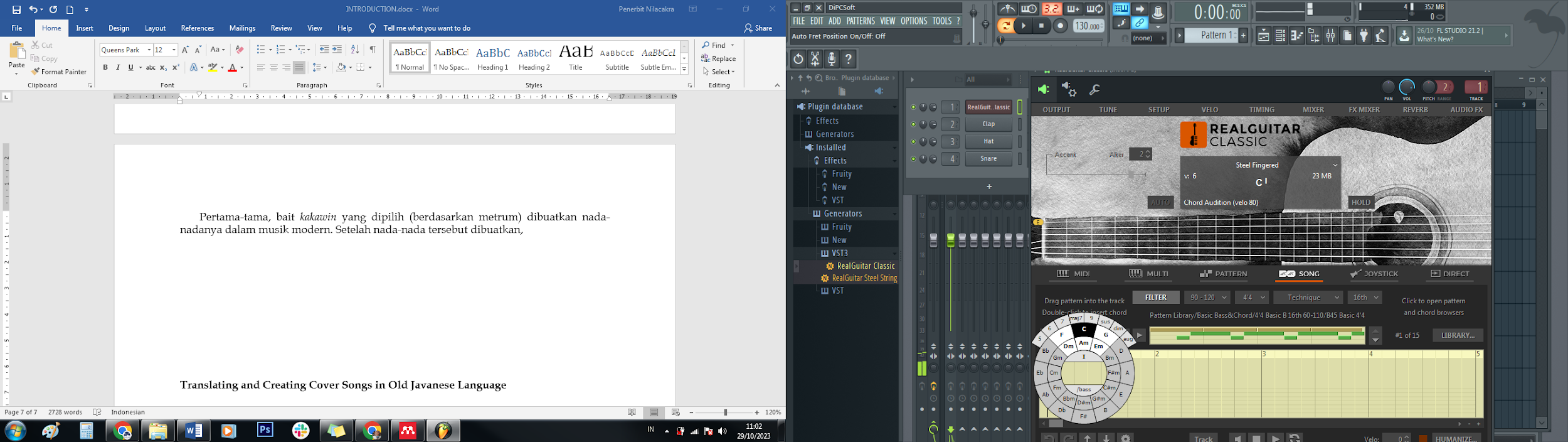
Figure 1 RealGuitar Classic used for the base key of the song
Source: Own photo (2023)
With RealGuitar 5, creating basic guitar chords for kakawin musicalizations does not take much time. Since the songs are still simple, the basic guitar chords needed are not too complicated, only C, D, and G major or C, F, G major (depending on one’s pitch).
One of the kakawin stanzas taken for poetry musicalization comes from Kakawin Arjuna Wiwaha X.1. This stanza is one of the most recognized stanzas by the Balinese people.
om sĕmbah ning anatha tinghalana de tri-loka-śarana
wāhyādhyatmika sĕmbah i nghulun i jöng ta tan hana waneh
sang lwir agni saking tahĕn kadi minyak saking dadhi kita
sang sākṣat mĕtu yan hana wwang amutĕr tutur pinahayu
om—oh Lord; sĕmbah—obeisance; ning—on; anatha—chest; tinghalana—seen; de—by; tri-loka-śarana—the shelter of the three worlds; wāhyādhyatmika—outside and inside; sĕmbah—offer obeisance; i nghulun—I; i—on jöng—feet; ta—you; tan hana—nothing; waneh—else; sang—he who; lwir—as; agni—fire; saking—from; tahĕn—wood; kadi—as; minyak—butter; saking—from; dadhi—curd; kita—you are; sang—who; sākṣat—real; mĕtu—appear; yan—if; hana—there; wwang—someone; amutĕr—constantly; tutur—words; pinahayu—auspicious.
O Lord, the shelter of the three worlds, I offer my obeisance unto your feet both from within (the soul) and out (the body). You are like fire in the wood, as butter in curd. You can be perceived only by those who constantly utter auspicious words (prayers).
The audio-visual recording of this kakawin musicalization can be accessed via the following link: https://youtu.be/OGIn5w-lfEY

Figure 2 Example of a basic guitar string arrangement for a kakawin couplet with the Sardhulawikridhita meter
Source: Own photo (2023)
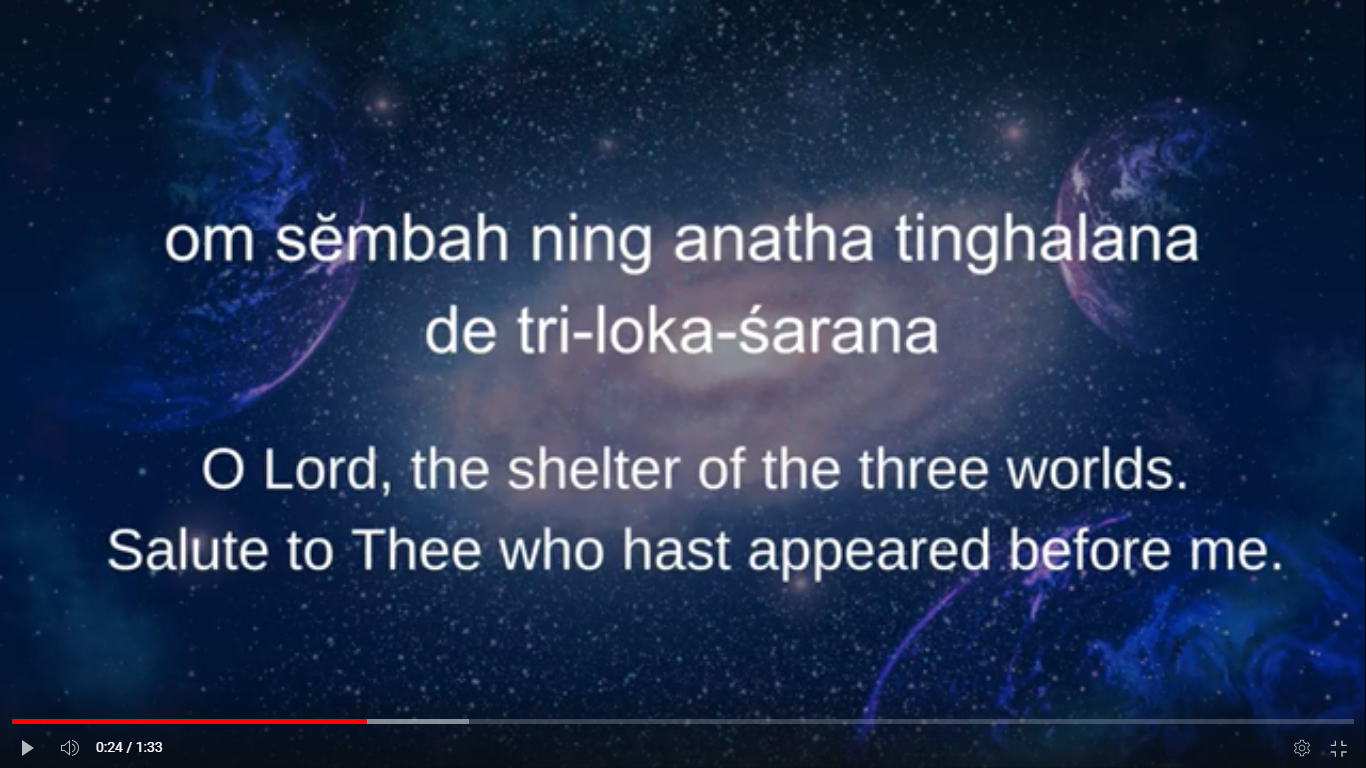
Figure 3 Sample of the completed kakawin musicalization video, taken from Arjuna Wiwaha
Source: Own photo (2023)
The next sample is taken from Banawa Sekar Tanakung I.1 in the “purwaka” or “introduction” section. It is about the śrāddha12 ritual held by the King of Jiwana13 Kingdom for Her late Majesty Dyah Rajapatni Gayatri, the queen consort of Majapahit’s founder and first king Kertarajasa Jayawardhana, and also the mother of Tribhuwana Wijayatunggadewi, the queen regnant of Majapahit. It involves presenting food or caru14 offerings to deceased ancestors or fathers.
The audio-visual recording of this kakawin musicalization can be accessed via the following link: https://youtu.be/pTe0vkw4CZ4
atyantādhikaning sukārya winangun śrī jīwanendrādhipa
tan lyan śraddha bhaṭṭara mokta maluy ing somyālayādhi prabhu
mangke mūrtinira n cinarwan apagĕh ring śweta singhāsana
sākweh ning bala mukhya sang nṛpa kabeh dampaty amuṣpa krama
atyanta—very; adhikaning—excellent; sukārya—feast; winangun—held by; śrī jīwanendra—the king of Jiwana; adhipa—great; tan—not; lyan—else; śraddha—post cremation ritual; bhaṭṭara—lord; mokta—to attain; maluy ing—depart for; somyālaya—the realm of the spirits; adhi-prabhu—the great leader; mangke—now; mūrtiniran—her idol; cinarwan—being offered special offering called caru; apagĕh—firmly placed; ring—on; śweta—white; singhāsana—throne; sākweh ning—all of; bala—groups; mukhya—prominent; sang nṛpa—kings; kabeh—all; dampaty—consorts; amuṣpa krama—perform oblations with flowers.
What an excellent feast held by the king of Jiwana during the sraddha ritual of the late great leader, who has departed for the world of spirits. Her idol is now placed firmly on the white throne and being offered special caru offerings. All prominent kings with their consorts perform oblations with flowers.
Another kakawin musicalization is taken from the Kilayu Manedheng15 meter in Arjuna Wiwaha XXIII.1. It is about Lord Indra, the King of heaven and the King of the demigod. Indra’s majestic mount is the white elephant Airāvata, revered as the king of all elephants. His formidable weapon is known as Vajra (thunderbolt), earning him the epithet Vajra-dhara. He is responsible for wielding thunderbolts and bestowing rainfall. Despite his exalted status, Lord Indra, like other demigods, serves under the authority of Lord Viṣṇu.
The end of the first line is repeated to add an aesthetic feel. The audio-visual recording of this kakawin musicalization can be accessed via the following link: https://youtu.be/I4xIvllfVwM
sang hyang surapati mĕtu sangka ring kuṭa lawan surabala gumuruh
airāwaṇa gajapati rĕngga runggunira ratna kadi gunung apuy
bajrāyudha marĕk i sirâpayung garuḍaroma kadi jaladhara
sākṣād aruṇa ring udayādri wimbaning dhanuhnira makara-kara
sang hyang surapati—Lord Indra; mĕtu—comes out; sangka—suddenly; ring—on; kuṭa—city; lawan—with; surabala—the army of the demigods; gumuruh—tumultously; airāwaṇa—Airawata; gajapati—the king of elephants; rĕngga—decorated; runggunira—its back; ratna—jewel; kadi—as; gunung apuy—volcano; bajrāyudha—the thunderbolt weapon; marĕk—submissive; i sira—to him; apayung—umbrella; garuḍaroma—feathers of Garuda bird; kadi—as; jaladhara—clouds; sākṣād—as; aruṇa—the morning golden sun; ring—on; udayādri—eastern mountain; wimbaning—the resemblance; dhanuhnira—his bow; makara-kara—glares.
Lord Indra and the army of the demigods tumultuously came out of the city. The jewel on the Airawata elephant’s back shone like a volcano. The thunderbolt weapon was ready at his service. Sheltered with an umbrella of Garuda feathers that resembles clouds, Lord Indra held his bow that glared like the golden morning sun on the peak of eastern mountain.
Since the tunes of these kakawin musicalizations are the same based on the meter, in any kakawin where this meter exists, the way of singing the verse will be the same. For example, the Sardhulawikridhita meter can appear in any kakawin. Since the tones are the same, any kakawin stanza that has the Sardhulawikridita meter can be sung with the same musical tone. Of course, in musicalization this is not absolute. Every composer can innovate according to his creative power.
Translating and creating cover songs in Old Javanese language
The cover song trend has also gone viral on social media. Existing songs are modified in different styles to give a different impression and feel. Existing songs can also be translated into the Old Javanese language and become a unique and interesting composition for some young people. The popular songs translated are songs with common themes such as love, friendship, and dreams. However, it is important to acknowledge that this song cover does not cover the whole song because it is related to intellectual property rights. Therefore, the song cover technique must consider the extent to which the intellectual property of the song can be used. This is the main challenge for further development in this research.
Two samples of song lyrics translated into Old Javanese are presented below.
Karena Cinta (“Because of Love”)
This song rose to fame with the rendition by Joy Destiny Tiurma Tobing, widely recognized as Joy Tobing, an Indonesian gospel singer who clinched victory in the inaugural season of Indonesian Idol16 in 2004.
Table 2 Parallel translation table
Source: Indonesian |
Target: Old Javanese |
English translation |
Dan bila ‘ku masih di sini
Tegar sampai hari ini
Bukan karena kuat dan hebatku
Semua karena cinta Semua karena cinta Tak mampu diriku dapat berdiri tegar Terima kasih cinta |
Mwang yaning i ngwang atunggĕng Pagĕh tekeng dina mangke
Taman apan bala mwang ugranku Sarwatra apan ikang smara Yeka apan ikang smara Tan wasa awakku umadĕg apagĕh Tarimāsih smara |
And if I am still here
Firm until today
Not due to my strength and greatness Everything is because of love Everything is because of love I can’t stand strongly
Thank you, love |
The audio-visual recording of the Kawi adaptation of “Karena Cinta” can be accessed via the following link: https://youtu.be/QlfiYCHFdbI
Laskar Pelangi (“Rainbow Troops”)
The song “Laskar Pelangi,” sung by NIDJI, is the original soundtrack of the movie titled “Laskar Pelangi” (2008), based on the best-selling novel of the same name by Andrea Hirata (2005). It tells the story of a group of students from a remote Indonesian island who face various challenges and adversities but remain resilient and hopeful. The word pelangi (“rainbow”) symbolizes the unity and diversity among the students, each with their own unique talents, dreams, and challenges, coming together to pursue education and overcome obstacles. The song captures the spirit of perseverance, friendship, and the pursuit of dreams despite hardships. It celebrates the indomitable human spirit and the power of education to transform lives.
Table 3 Parallel translation table
Source: Indonesian |
Target: Old Javanese |
English translation |
Mimpi adalah kunci Untuk kita menaklukkan dunia Berlarilah tanpa lelah Sampai engkau meraihnya
Laskar Pelangi Tak ‘kan terikat waktu Bebaskan dirimu di angkasa Warnai bintang di jiwa
Menarilah dan terus tertawa Walau dunia tak seindah surga
Bersyukurlah pada Yang Kuasa
Cinta kita di dunia Selamanya. |
harêp yateka kunci an pangguha wijaya ring jagat alayuan tarpa wêkas tatas kita labdhagati
wadwa wangkawa tan lina tinalyan kala luputa harêpta ning gagana warnanên bintang ri angên
Sada mangigêl sada hasita Yadi jagat tan salêwih swarga
Tarima karuna ring Hyang Wisesa Asih i ngwang ring bhumi Nityaśa |
Dream is the key To conquer the world Run tirelessly Until you reach it
Rainbow troops Will not be tied by time Free yourself in the sky Color the stars in the soul
Always dance and laugh Although the world isn’t as beautiful as the heaven Be grateful to the Lord
Our love in the world Forever |
The audio-visual recording of the Kawi adaptation of “Laskar Pelangi” can be accessed via the following link: https://youtu.be/ccOhw6I7A9E
Creating brand-new songs in Old Javanese language
The safest and most innovative way to produce creative content based on the Old Javanese language is to create your own songs. Some of our brand-new Old Javanese songs that have been circulating on YouTube and have been copyrighted include the following:
Kawyamandala Gupta Carana (‘The Secret Poem Formation’)
Table 4 Parallel translation table
Old Javanese |
English translation |
iti ta ngaran kawyamaṇḍala śāntikātmaka ring asing kawya kawya sĕmbah maring sira jiwaning jagat iki kawya rakawi gīta manggala
gurukula singgihing wulat mwang nayakan sirādi pūrwaka ikang wihikan ing wāhya byantara inider bala, bala tan hana kinalung santosa halěp tanu hrědaya winimba wulan pagěhnya kadi rawi gumalang dalu
yan labuh dumatěng yuga sanghara wwang lumaku hayu padanya hala huripnya linaku watěk caṇḍana yadi pinrang sugandha pamalěs nira lamun jayanti tan nindeng patita raras mardawaning tunjung pagěhnya taru handapning dukut lokika ring jong para mahatur singgih |
This is the poem formation Peace of heart in every poem A salute for the soul of the universe This is the all-auspicious song of the poet
There is an ascetic full of secrets His hermitage rests beyond sight His lord is the Oldest One Who knows all within and without Surrounded by unseen armies Garlanded by beautiful serenity His body and heart resemble the moon His determination is like the sun dissipating darkness
If hard times come Good people are treated bad His life is like that of a sandalwood tree Although cut, it replies with fragrance If wins, he doesn’t insult the defeated He is gentle like a lotus flower As tolerant as a tree, as humble as grass The people regard him in all respects |
The audio-visual recording of the original composition “Kāvyamaṇḍala Gupta Caraṇa” (‘The Secret Poem Formation’) can be accessed via the following link:
https://www.youtube.com/watch?v=DzF15CiG3rE
Kalangwan Hudan (‘Song of Rain’)
Table 5 Parallel translation table
Old Javanese |
English translation |
Angar-angar hudan tibanya ring pṛthiwi Anaracap ika saking gaganālaya Garjita, garjita nikang prajā Umendung gaga ring bhawana
Angayon umulur aram angadoh alangkir Rumarab amĕlĕs tumibeng siring sarita Anugraha ring nadi humili Angurip handuru ning wana
Palar warānugraha saking jaladhara Anuwuhy amṛta paripūrṇa Palar dyotanira hyang aditya gumilang Tumurun ring sarwa hṛdaya
Jiwana, jiwana angayu kabeh Sambhrama kojar ring hudan ika Anuwuhy amṛta patanduran Nirantara jala cangkrama |
The rain falls on earth with refreshing mood It drizzles from the sky The people are very happy To plant rice in their fields
Twigs and leaves thrive far and high It drops and goes down the lake The blessings flow in the river Enliven the trees in the forest
Wishing the blessings from the clouds Grow perfect prosperity Wishing the brilliant light of the sun Goes down all hearts
All living beings are fortunate Saying welcome for the rain Grow prosperity for the crops The water circulates incessantly |
The audio-visual recording of the original composition “Kalangwan Hudan” (‘Song of Rain’) can be accessed via the following link: https://www.youtube.com/watch?v=WNplOeEG7kk
Narasimha Murti (“The Narasimha Form”)
This song serves as a prayer to Lord Nṛsiṁhadeva, the divine incarnation of the Lord in the form of a half-man and half-lion. Lord Nṛsiṁhadeva, whose visage resembles that of a lion (siṁha), manifested to vanquish the formidable atheist Hiraṇyakaśipu by piercing his abdomen with His nails and protect His steadfast devotee, Prahlada Maharaja, the son of the demon Hiraṇyakaśipu himself. He is venerated by those seeking both material and spiritual shelter and safeguarding from the Lord. He is also known as Narahari, In Sanskrit, nara signifies “man,” while hari, apart from being one of the names of Lord Viṣṇu, also denotes “lion.” Therefore, Narahari represents Lord Nṛsiṁhadeva.
Table 6 Parallel translation table
Old Javanese |
English translation |
naramūrti singhamūrti angabhayaning bhuwana wajranakha surawatsala manggalaning prahlāda sumirat kanaka wimbanta wigraha pangalahnya asura nayaka kinalang dahana saking prabhu sira raktañjali jaya śrī narahari
Reff. yūkta tibanta bhakta watsala jayaning tri bhuwana saha namaskara tanu saha jiwana tumalawungan ring ānantapura
narahari, narakesari tumurun mālap swarupa sruti wandana, muni pawana ksamakana kunang papa somyaning kamala, ugraning wajraka kewala katon de sadhu jana aparan samartha stutin wwang tinuccha yogya murtintāpageh rikang wulat
|
Half man, half lion the vanquisher of the world’s fear Thunderbolt-like claws, protector of the pious Prahlada’s dearmost Lord Your body shines like gold The defeat of the demon chief Fire emanates from your head My obeisance, Lord Narahari17
Indeed, your presence saves the faithful ones The victory of the three worlds All obeisances of the body and soul Roaring in the eternal realm
Half man, half lion Descends in real form Praised by the holy books, saviour of the ascetics Please forgive my sins The softness of lotus, the hardness of lightning Only seen by saintly people Is prayer from this low person like me worth it? I hope that your form is always within my sight |
The audio-visual documentation of the original composition “Narasimha Murti” (‘The Narasimha Form’) can be accessed via the following link: https://www.youtube.com/watch?v=iie-L3v6Jao
Sumanasa Jayāntaka (“Flowers of Victorious Death”)
Table 7 Parallel translation table
Old Javanese |
English translation |
Iti sumanasa angatĕr kośa ri hawan jayāntaka
Riris atangis kula-wandhu-śara ri harĕp nalakuṇḍa Yogya yowana kumara wrĕddha Pati haneng maharĕp sira Paguhana sumanasa ri hati Sumanasa ring Giridhari
Sandeha makadadyan hala Hala mapan sang ing wirodha Wiroda mangguh angalung ring hṛdaya Hṛdaya wighna sireng pangayu |
These are flowers to accompany the body to the auspicious death The family and relatives weep in front of the cremation pit Whether you are teen, child or old Death is in front of you Fix the flowers in your heart Flowers of remembrance of Lord Giridhari18
Confusion creates misfortune Misfortune happens because you are envious Envy encircles your heart It hinders your heart to attain auspiciousness |
The audio-visual recording of the original composition “Sumanasa Jayāntaka” (‘Flowers of Victorious Death’) can be accessed via the following link: https://www.youtube.com/watch?v=SZ3UHJ-xOiM
Purna Sasi (“Perfect Moon”)
This song serves as a prayer dedicated to the Moon, one of the planets of the heavenly kingdom, and its divine deity. In Vedic scriptures, each celestial body, including the Moon, is associated with a presiding deity. Soma, also known as Candra, presides over the Moon, the source of food grains which provides sustenance, vitality, and longevity to celestial beings. Additionally, Soma governs plant life and is considered the progenitor of all living creatures.
Table 8 Parallel translation table
Old Javanese |
English translation |
Angajöng śaśi Wilis jĕnar dyotanta amĕtu Anuwuhakĕn warānugraha Añjīrṇani sira jīrnoddhara
Pratiteng sarwa maprāṇa Prasanna sinom wadana Apan dyotanta paripūrṇa nirmala
Kahisan prāṇa Hita ning rāt tumĕmu rahayu Prasasta sira somarāja Sĕmbah ni nghulun yadu-jiwana Reff: Pratiteng sarwa maprāṇa Niramaya nirantara Apan dyotanta sākṣat mĕtu Anuwuhakĕn warānugraha Añjīrṇani sira jīrnoddhara
Pratiteng sarwa maprāṇa Niramaya nirantara Apan dyotanta sākṣat mĕtu Prasasta sira somarāja Sĕmbah ni nghulun yadu-jiwana |
Longing for the moon Your light appears green and yellow It grows blessings Refreshing, o one who rejuvenates
Known by all living entities Young and smiling faces Since your light is perfect and spotless
Flooded by life energy The world’s prosperity and peace Praising you, the moon-king My obeisance to you, soul of the moon
Known by all living entities Incessantly without breaks Because your light has really appeared It grows blessings Refreshing, o one who rejuvenates
Known by all living entities Incessantly without breaks Because your light has really appeared Praising you, o Somaraja My obeisance to you, soul of the moon |
The audio-visual recording of the original composition “Purna Sasi” (‘Perfect Moon’) can be accessed via the following link: https://www.youtube.com/watch?v=2R2YQXs-PcU
Audience feedback and online reception
Overall, the YouTube comments across the analyzed videos reveal a strong positive reception toward the musicalization of Old Javanese literature among diverse audiences, including younger viewers. The comments demonstrate high levels of emotional engagement, cultural pride, and curiosity, with many viewers expressing admiration for the beauty of the language and its musical adaptation. Importantly, audience responses indicate that creative musical formats help reduce perceived linguistic distance, making Old Javanese more accessible and enjoyable despite its limited use in everyday communication. Many commenters also display linguistic awareness by comparing Old Javanese with Balinese, Sundanese, Ngapak, and other regional languages, as well as by asking questions about vocabulary, pronunciation, scripts, and grammar. Requests for translations, subtitles, scripts, learning resources, and downloadable audio further reflect a desire for deeper engagement beyond passive listening. While a small number of comments express confusion or unfamiliarity, these reactions underscore the educational potential of creative digital media as a bridge between classical literature and contemporary audiences. Collectively, the comments suggest that musicalization and digital dissemination function as effective strategies for revitalizing interest in Old Javanese language and literature among younger generations.
Many viewers describe strong emotional reactions—such as nostalgia, calmness, admiration, and even tears—suggesting that musical adaptation enables affective access to a language otherwise perceived as distant or difficult. Recurrent expressions such as indah (beautiful), adem (calming), nostalgic, and masterpiece highlight music’s role as an emotional bridge to classical literature.
“Lagunya enak-enak, ga nyangka bahasa Kawi seindah ini” (“The songs are so pleasant; I didn’t expect Kawi to be this beautiful”). — @imhuman_6224
Renewed cultural pride and identity awareness
Numerous comments express pride in ancestral heritage and regret over linguistic disconnection. This indicates that the content triggers cultural reflection and identity reawakening, aligning with revitalization goals. Viewers frequently frame Kawi as a shared cultural root connecting Balinese, Javanese, Sundanese, and other Austronesian languages.
“Bahasa kawi aku bangga mempelajari akar budaya nusantara.” (“The Kawi language makes me proud to learn the roots of Nusantara culture.”) — @nilaland5435
A significant number of comments ask about vocabulary meanings, pronunciation, grammar, scripts (especially Kawi script), and historical linguistic relationships. Requests for translations, subtitles, dictionaries, playlists, MP3 files, and learning guidance suggest that creative exposure generates motivation for deeper linguistic learning, transforming passive listeners into active learners.
“Mau nanya arti kosakata mwang, wwang infonya ya kang arya.” (“I want to ask the meaning of the vocabulary mwang and wwang. Please share the information, Kang Arya.”) — @feriyantozatar6745
While a small number of comments question deviations from traditional forms (e.g., musical style or genre), the dominant response supports innovation. Many viewers explicitly encourage further experimentation, large-scale dissemination, and digital expansion, indicating that creative mediation is widely perceived as complementary rather than detrimental to tradition.
“Ini bisa jadi genre lagu etnik baru” (“This could become a new ethnic music genre”). — @wayancandrabayunatawikrama2972
Requests to share content, use it in classrooms, add it to Wikipedia, or disseminate it via blogs demonstrate that YouTube functions not merely as an entertainment platform but as a participatory digital archive and learning space. The comments show how digital media facilitate intergenerational and intercultural transmission of endangered literary traditions.
“Izin ya buat ngajarin siswa siswiku” (“Permission to use this to teach my students.”) — @nimascout.3656
Evidence of youth engagement is visible in comments where users explicitly state their year of birth or identify themselves as students and young learners, confirming that younger audiences are actively engaging with Kawi through music. At the same time, older viewers frequently express long-term attachment, nostalgia, and repeated listening habits, indicating sustained interest across generations. This intergenerational response demonstrates that musicalization not only attracts new, younger audiences but also re-engages older listeners, resulting in broad demographic resonance.
“Saya kelahiran 2001 tapi saya sangat tertarik dgn lagu2 semacam ini” (“I was born in 2001, but I am very interested in songs like this”) — @alpa18
Taken together, the comment data strongly support the study’s argument that musicalization and creative digital content function as effective strategies for revitalizing Kawi language and literature. Audience responses demonstrate increased accessibility, emotional connection, linguistic curiosity, and cultural awareness—key indicators of successful language and cultural revitalization in contemporary contexts.
Critical responses and tensions in audience reception
Although the overall reception of the musicalized Kawi content is strongly positive, the comment data also reveal several forms of constructive criticism and tension, which are significant for understanding the challenges of revitalization.
Concerns over linguistic accessibility and comprehension
A recurring critical theme involves difficulty in understanding the lyrics. Some viewers explicitly state that they do not understand the language at all or feel alienated despite being Javanese or Balinese. Requests for Indonesian translations, subtitles, explanations of meaning, and clarification of vocabulary indicate that while musicalization attracts attention, linguistic opacity remains a barrier for deeper comprehension. This criticism highlights the need to complement creative content with pedagogical support.
“Mohon untuk terjemahan bahasa Indonesia nya” (“Please provide an Indonesian translation.”) — @aan8911
Debates on linguistic authenticity and language identification
Several comments question whether the language used is truly Kawi, Balinese, or influenced by Sundanese or other regional languages. Viewers debate phonological features (such as final -a versus -o), lexical similarities, and historical development. While sometimes framed humorously, these comments reflect concerns about linguistic accuracy and authenticity, especially among audiences with prior linguistic awareness. Such debates reveal heightened metalinguistic engagement rather than outright rejection.
“Kok liriknya kayak sunda” (“Why do the lyrics sound like Sundanese?”) — @yudimartin3876
Tension between innovation and tradition
A smaller number of comments express discomfort with deviations from traditional forms, such as the use of modern musical styles or non-traditional genres. Questions like “Why not use Javanese langgam19?” or remarks about stylistic choices suggest an underlying tension between preservation and innovation. However, these criticisms are typically framed as suggestions rather than rejection, indicating negotiation rather than resistance.
“Kok ga pake langgam jawa” (“Why doesn’t it use Javanese langgam?”) — @kensapolybuzz
Unfamiliarity and cultural distance
Some commenters express sadness or regret about their inability to understand their ancestral language, framing Kawi as distant or lost. While critical in tone, these reactions underscore the depth of language shift rather than opposition to revitalization efforts. In fact, such comments often coexist with appreciation for the creative attempt to reconnect audiences with their heritage.
“Mengaku orang Jawa, tapi tidak tahu sejarah nenek moyangnya.” (“Claiming to be Javanese, but not knowing the history of our ancestors.”) — @yansugiarto8995
Current challenges and opportunities
The barriers identified in the preliminary survey point to a broader systemic crisis in the development of Old Javanese song products. While the data highlights the youth’s struggle with digital orientation and lack of relevance, these issues are compounded by a deeper cultural gap. This gap is most evident in the tension surrounding Old Javanese literary principles, such as the guru-laghu20 rule. The older generation’s protective stance over these strict metrical structures—while well-intentioned—often limits the innovation necessary to bridge the generational divide. Bringing together the appreciation of both groups is essential for successful heritage preservation.
Furthermore, the transition from a traditional art form to a creative product introduces modern complexities, such as copyright issues for translated lyrics and the ethics of folkloric modification. However, these obstacles should be viewed as opportunities for further research. By understanding these constraints, we can find a “path toward integration”—much like the Indian classical tradition has done—to ensure that kakawin evolves through modern musical touches rather than becoming a static artifact.
Recommendations
The revitalization strategies explored in this study have potential applications beyond the Old Javanese language and kakawin tradition. Similar approaches—particularly musicalization, creative translation, and digital dissemination—can be adapted to support other endangered languages and scripts facing declining intergenerational transmission. By transforming classical or traditional texts into contemporary artistic formats, language revitalization specialists and content creators can enhance accessibility and relevance for younger audiences. Integrating digital platforms such as social media and streaming services further enables wider exposure and community participation. For languages with complex scripts or archaic linguistic structures, creative mediation through music, storytelling, or multimedia can reduce cognitive barriers while preserving core linguistic features. Future initiatives should consider interdisciplinary collaboration among linguists, artists, educators, and digital creators to ensure both linguistic accuracy and cultural sustainability.
These revitalization strategies may also be applied to other endangered languages and scripts, such as Sanskrit, Pali, the Javanese script (Aksara Jawa), the Balinese script (Aksara Bali), Cham, Mayan languages (e.g., Yucatec Maya), Quechua, Māori, Ainu, and Manchu, where classical forms remain culturally significant but face declining engagement among younger generations.
Conclusion
The three unique ways to revitalize the Old Javanese language as described above are a preliminary step. Song composition in the Old Javanese language, whether in the form of musicalization from kakawin texts, making song covers and even creating their own song lyrics can at least be a creative and innovative alternative to reintroduce Old Javanese language and literature among young people. With the challenges and obstacles that come with it, there will be other opportunities for the development of this research, especially related to the attitudes of policy makers, scholars and the community regarding this innovation.
Acknowledgments
This research received no external funding and did not benefit from institutional or personal support. The manuscript was translated from Indonesian into English with assistance from DeepL Translator. All translations were thoroughly reviewed and verified by the authors, who are English language teachers, to ensure linguistic accuracy and clarity. Generative AI tools were additionally employed to refine the English expression and improve the overall flow of the manuscript. Any AI-assisted output was carefully evaluated and revised by the authors to ensure coherence and uphold academic integrity.
Declaration of generative AI in scientific writing
Statement: During the preparation of this manuscript, the authors used ChatGPT and Gemini to assist with critical analysis, idea development, and linguistic refinement. All outputs were subsequently reviewed, revised, and approved by the authors, who assume full responsibility for the content of this publication.
CRediT author statement
Ida Bagus Arya Lawa Manuaba: Conceptualization, Methodology (lead), Resources, Software, Investigation (lead), Formal Analysis (lead), Writing - Original Draft Preparation (lead), Writing - Reviewing and Editing (supporting), Visualization, Data Curation. Kadek Ray Sulyantha: Methodology (supporting), Investigation (supporting), Formal Analysis (supporting), Writing - Reviewing and Editing (lead).
References
Adeyeye, B., Amodu, L., Odiboh, O., Oyesomi, K., Adesina, E., & Yartey, D. (2021). Agricultural radio programmes in indigenous languages and agricultural productivity in North-Central Nigeria. Sustainability, 13(7), 3929.
Beletskiy, S. (2023). Using indigenous language in telecom advertisements: Communicative effects of Cigogo in TTCL 4G launch campaign in Tanzania. Language in Africa, 4(1), 86-102.
Evers, H.-D. (2016). Nusantara: History of a concept. Journal of the Malaysian Branch of the Royal Asiatic Society, 89(1), 3-14.
Ferreira, N. O., & Turin, M. (2021). Rádios indígenas: Brazil’s indigenous language broadcasting landscape. Journal of Radio & Audio Media, 30(1), 51-75.
Fishman, J. A. (1991). Reversing language shift: Theoretical and empirical foundations of assistance to threatened languages. Clevedon, UK: Multilingual Matters.
Hornberger, N. H. (1998). Language policy, language education, language rights: Indigenous, immigrant, and international perspectives. Language in Society, 27(4), 439-458.
Huang, K. (2023). “We are indigenous people, not primitive people”: The role of popular music in indigenous language revitalization in Taiwan. Current Issues in Language Planning, 24(4), 440-459.
Iskandar, J., & Iskandar, B. S. (2022). The sundanese traditional ecological calendar and socio-cultural changes: Case study from Rancakalong of West Java, Indonesia (pp. 79-103). In Franco, F. M., Knudsen, M., & Hassan, N. H. (Eds.). Case Studies in Biocultural Diversity from Southeast Asia. Singapore: Springer.
Karjanto, N. (2022). Revisiting indigenous wisdom of Javanese Pranata Mangsa. Sustainability, 14(15), 9632.
Kern, H. (1905). Eenige plaatsen uit de Nāgarakṛtāgama betreffende Hayam Wuruk. Bijdragen tot de Taal-, Land- En Volkenkunde van Nederlandsch-Indië, 58(1/2), 357-363.
Kipp, D. (2009). Encouragement, guidance and lessons learned: 21 years in the trenches of indigenous language revitalization (pp. 1-10). In Reyhner, J., & Lockard, L. (Eds.). Indigenous language revitalization: Encouragement, guidance & lessons learned. Flagstaff, USA: Northern Arizona University.
McMenamin, C. (2022). Greek Club: Resurrecting dead languages in secondary schools. Journal of Classics Teaching, 23, 121-123.
Meij, D. (2011). Kakawin Sutasoma and Kakawin Nāgara Krtāgama. Bijdragen tot de Taal-, Land- en Volkenkunde / Journal of the Humanities and Social Sciences of Southeast Asia, 167, 322-332.
Meighan, P. J. (2021). Decolonizing the digital landscape: The role of technology in indigenous language revitalization. AlterNative, 17(3), 397-405.
Mensah, E. O., & Da-Costa, C. A. (2022). Decolonization of indigenous language media practice in Ghana: Myth or reality? Arụmarụka: Journal of Conversational Thinking, 2(1), 98-126.
NIDJI. (2008). Laskar Pelangi [Song]. On Laskar Pelangi [OST]. PT. Musica Studio’s. Retrieved from https://www.youtube.com/watch?v=fO1iJqBdXrc
Permata Dewi, F. (2022). Illustrated books as information media for Pranata Mangsa (Old Javanese astrology). The 5th International Conference on Business Economics, Social Sciences & Humanities, 1(1), 434-443.
Prabhupada, A. C. B. S. (2001a). Srimad Bhagavatam, Third Canto: The status quo. Los Angeles, USA: The Bhaktivedanta Book Trust International.
Prabhupada, A. C. B. S. (2001b). Srimad Bhagavatam, Fourth Canto: The creation of the fourth order. Los Angeles, USA: The Bhaktivedanta Book Trust International.
Prabhupada, A. C. B. S. (2001c). Srimad Bhagavatam, Fifth Canto: The science of God. Los Angeles, USA: The Bhaktivedanta Book Trust International.
Prabhupada, A. C. B. S. (2001d). Srimad Bhagavatam, Eighth Canto: Withdrawal of the cosmic creation. Los Angeles, USA: The Bhaktivedanta Book Trust International.
Prabhupada, A. C. B. S. (2001e). Srimad Bhagavatam, Ninth Canto: Liberation. Los Angeles, USA: The Bhaktivedanta Book Trust International.
Robson, S. O. (1972). The Kawi classics in Bali. Bijdragen tot de Taal-, Land- En Volkenkunde, 128(2/3), 308-329.
Senarai Istilah Jawa. (n.d.). Pranata Mangsa. Leiden, Netherlands: Balai Bahasa Provinsi Jawa Tengah.
Simpen, I. W., Sudewa, I. K., & Yasa, P. E. G. (2021). Balinese and Old Javanese literature as a source in creating the calligraphy of Balinese script. International Journal of Social Science and Human Research, 4(9), 2530-2536.
Teeuw, A., Galestin, T. P., Robson, S. O., Worsley, P. J., & Zoetmulder, P. J. (1969). Introduction (pp. 3-157). In Teeuw, A. (Ed.). Śiwarātrikalpa of MPU Tanakuṅ. The Hague, Netherlands: Martinus Nijhoff.
Tobing, J. D. T. (2004). Karena Cinta [Song]. On Terima Kasih. Sony BMG Music Entertainment Indonesia. Retrieved from https://www.youtube.com/watch?v=3DJbHVAFLbU
University of Hawaiʻi News. (2022). Classics scholarship winner plans to set ‘dead’ language to music. Retrieved from https://www.hawaii.edu/news/2022/06/06/classics-scholarship-winner-sets-dead-language-to-music/
Worsley, P. J. (2021). Some thoughts about genre in Old Javanese literature. Jumantara: Jurnal Manuskrip Nusantara, 12(2), 243-262.
Xiang, R., & Montgomery, L. (2012). Chinese online literature: Creative consumers and evolving business models. Arts Marketing: An International Journal, 2(2), 1-19.
Zoetmulder, P. J., & Robson, S. O. (1982). Old Javanese-English dictionary. Leiden, Netherlands: KITLV.
1Lord Rāmacandra, the Supreme Personality of Godhead who appeared on this earth as the son of Daśaratha during Tretā-yuga, was the King of Ayodhyā. He fought with Rāvaṇa to release her wife Sītā and finally killed him.
2 Arjuna was the third son of Pāṇḍu and Kuntī, begotten by Indra. He is famous as Kṛṣṇa’s dear friend, and he heard the Bhagavad-gita from Him.
3 The war between the Pandavas and the Kauravas, both of whom were descendants of Bharata.
4 The word bhoma is derived from the Sanskrit word bhaumá, signifying “Son of the Earth.” Bhaumasura, alternatively identified as Narakasura, was actually the son of the earth personified, Dharitri, also recognized as Bhūmi or Pṛthvī. However, his transformation into a demon (asura) occurred due to his association with Bāṇa, another demon. He met his demise at the hands of Kṛṣṇa due to his abduction of sixteen thousand princesses from various royal palaces.
5 The term wretta refers to the principle governing syllable count, whereas matra denotes the pattern principle distinguishing between long and short syllables.
6 The term nusantara originates from the combination of two Sanskrit words: nusa, which denotes “island,” and antara, which signifies “in between” or “including” (referring to the maritime fringes). This notion found its place within Old Javanese literature over time. Nusantara, as defined in dictionaries, refers to “Indonesia.”
7 Subhadrā was the very dear daughter of Vasudeva from his first wife Rohini and the dear sister of Kṛṣṇa and Baladeva. She was married to her cousin Arjuna.
8 It refers to Majapahit Kingdom
9 The term kakawin is an Old Javanese transposition of the Sanskrit kāvya. It denotes a distinct form of poetry or poem composed in a specific meter.
10 The term pranata signifies “arrangement,” while mangsa denotes “seasons.” Together, they refer to the arrangement of seasons. It is a Javanese traditional ecological calendar system associated with the early days of farming and fishing.
11 FL Studio (known as FruityLoops before 2003) is the desktop Digital Audio Workstation (DAW) that music-makers across the world use to turn ideas into reality.
12 The śrāddha ceremony is a ceremony in honour and for the benefit of dead relatives. Traditionally, it is the responsibility of a son—particularly the eldest—to conduct the ritual following the death of a parent or ancestor, with the aim of facilitating their spiritual elevation and well-being in the afterlife.
13 Jiwana is the Sanskrit name for Kahuripan or Kuripan (a shortened form of Kahuripan, a word based on hurip, “life”). It is a kingdom located in the Brantas delta (between Surabaya and Pasuruhan) and is also called Janggala.
14 an oblation boiled with milk and butter for presentation to the gods or manes
15 Kilayu Manedheng is a kakawin meter used in Arjuna Wiwaha and many other Old Javanese verses. It means “the blooming withered one,” representing Cananga flower (Cananga odorota) that produces more fragrant aroma as it withers.
16 Indonesian Idol, a reality TV singing contest conceptualized by Simon Fuller, garnered immense popularity, becoming one of the most popular shows in the annals of Indonesian television history.
17 In Sanskrit, nara signifies “man,” while hari, apart from being one of the names of Lord Viṣṇu, also denotes “lion.” Therefore, Narahari represents Lord Nṛsiṁhadeva.
18 The word giri signifies “hill,” while dhārī denotes “one who holds up.” Lord Krishna is also known as Giridhārī or Girivara-dhārī after He exhibited one of His transcendental pastimes of lifting Govardhana Hill with the little finger of His left hand to protect the inhabitants of Vraja from the terrible rainfall caused by Lord Indra.
19 traditional Javanese musical style or melodic framework
20 In Sanskrit, the term guru translates to “heavy,” indicating long syllables, while laghu translates to “light,” indicating short syllables. This distinction pertains to the length of each syllable in singing which is one of the two fundamental aspects of singing method, alongside pitch.