
Trends
Sci.
2026;
23(10):
13418
High-Capacity Removal of Lead and Cadmium Using FGD Gypsum-Derived Hydroxyapatite: Kinetic and Equilibrium Adsorption Studies
Sukrit Sarati1,2, Uraiwan Intatha1,2, Sitthi Duangphet1,2,
Nattakan Soykeabkaew1,2 and Nattaya Tawichai1,2,*
1School of Science, Mae Fah Luang University, Chiang Rai 57100, Thailand
2Center of Innovative Materials for Sustainability, Mae Fah Luang University, Chiang Rai 57100, Thailand
(*Corresponding author’s e-mail: [email protected])
Received: 21 January 2026, Revised: 9 March 2026, Accepted: 20 March 2026, Published: 30 April 2026
Abstract
Power plant FGD gypsum was successfully valorized into high-purity hydroxyapatite (FGD-HAP) via a hydrothermal route at 150 °C. Structural and textural analyses confirmed the formation of well-crystallized hexagonal hydroxyapatite with a phase purity of 93.9% and a mesoporous morphology favorable for adsorption processes. Batch adsorption experiments demonstrated exceptional removal efficiencies toward Pb²⁺ and Cd²⁺ ions, achieving maximum adsorption capacities of 312.5 and 57.47 mg/g, respectively. Kinetic data were best described by the pseudo-second-order model, while equilibrium data fitted well with the Langmuir isotherm, indicating monolayer adsorption. Mechanistic analysis based on the Dubinin-Radushkevich model revealed that Pb²⁺ removal was dominated by ion exchange and surface chemical interactions, whereas Cd²⁺ adsorption was governed primarily by physical adsorption. These findings highlight FGD gypsum as a sustainable and highly effective precursor for advanced adsorbents, offering a promising circular-economy solution for heavy-metal remediation in water treatment applications.
Keywords: Hydroxyapatite, Flue gas desulfurization gypsum, FGD, Adsorption, Heavy metals, Hydrothermal
Introduction
Heavy metals, particularly cadmium (Cd²⁺) and lead (Pb²⁺), are among the most hazardous contaminants in industrial wastewater due to their toxicity, non-biodegradability, and ability to accumulate in living organisms [1]. Excessive intake of Cd²⁺ may cause renal dysfunction, skeletal disorders, and cancer, while Pb²⁺ exposure adversely affects the nervous and cardiovascular systems [2]. According to the U.S. EPA and the World Health Organization, the permissible limits of Cd²⁺ and Pb²⁺ in water are extremely low, reflecting the urgent need for effective removal before discharge into the environment [3]. Various physical and chemical technologies, such as coagulation, ion exchange, membrane separation, and photocatalysis, have been used for removing heavy metals, yet many remain costly or inefficient at low metal concentrations [4,5]. Adsorption has emerged as a more practical and economical option due to its high efficiency, simplicity, and minimal sludge production [6].
Hydroxyapatite (HAP, Ca₁₀(PO₄)₆(OH)₂) has gained significant attention as an adsorbent because of its high affinity for metal ions, low solubility, and stability under a wide range of environmental conditions. Numerous studies have reported excellent adsorption of Pb²⁺, Cd²⁺, Cu²⁺, Ni²⁺, and other metal ions using synthetic HAP and HAP-based composites [7-9]. However, conventional HAP synthesis often relies on expensive calcium precursors, such as calcium nitrate or calcium chloride, thereby increasing overall production costs [10]. This has encouraged researchers to explore low-cost alternative calcium sources, particularly industrial by-products.
Flue gas desulfurization (FGD) gypsum, a by-product obtained from coal-fired power plants during SO₂ removal, is primarily composed of CaSO4·2H₂O and is generated in massive quantities in Thailand, for example, the Mae Moh power plant produces an oversupply of FGD gypsum annually, much of which is disposed of in landfills, causing land occupation, dust emissions, and secondary environmental issues. Converting FGD gypsum into valuable products offers both environmental and economic opportunities within the circular economy framework. Recent studies have demonstrated that FGD gypsum can serve as an ideal calcium source for synthesizing hydroxyapatite through wet chemical or hydrothermal routes, and FGD-derived HAP has shown promising adsorption performance for Pb²⁺, Cd²⁺, and Cu²⁺ [1,6,11]. Nevertheless, further studies are needed to optimize synthesis conditions and evaluate adsorption mechanisms in depth.
Despite the growing number of studies reporting the conversion of FGD gypsum into hydroxyapatite, several critical aspects remain insufficiently explored. In particular, systematic correlations among phase purity, surface characteristics, and metal-specific adsorption mechanisms remain limited. Moreover, comparative investigations that clearly distinguish the adsorption behaviors of Pb²⁺ and Cd²⁺ on FGD-derived hydroxyapatite under identical experimental conditions remain scarce. Addressing these gaps is essential for advancing the practical application of FGD-HAP in real wastewater treatment systems.
Therefore, this research focuses on synthesizing hydroxyapatite from FGD gypsum via a hydrothermal process and evaluating its performance in adsorbing Cd²⁺ and Pb²⁺. The synthesized FGD-HAP was characterized using XRD, FTIR, FESEM, and BET analyses to confirm its structural and textural properties. The adsorption behavior was assessed through batch experiments, and Cd²⁺ and Pb²⁺ concentrations were quantified using ICP-MS/MS. This work aims to establish FGD gypsum as a sustainable precursor for the production of high-performance adsorbents, supporting both industrial waste valorization and environmental remediation.
Materials and methods
Materials
The FGD gypsum was supplied by the Mae Mao power plant in Lampang Province, Thailand. Absolute Ethanol 99%, Pb(NO3)2, Cd(NO3)2.4H2O, (NH4)2HPO4, NH3·H2O, purchased from Thailand Chemical Reagent Company, are all analytical grade. Simulated stock wastewaters with 1,000 mg/L were prepared by respectively dissolving appropriate amounts of Pb(NO3)2 and Cd(NO3)2 in deionized (DI) Water. The desired concentrations in experiments were prepared by diluting stock wastewaters.
Preparation of FGD powder
The FGD gypsum from the Mae Moh power plant in Lampang Province, Thailand, was subjected to ball milling in deionized (DI) water for 24 h. After milling, the material was dried in an oven at 60 °C for 2 h. The dried gypsum was then sieved using a 45 μm mesh to obtain FGD powder of particle size ≤ 45 μm, which was subsequently used in the synthesis of FGD-HAP. The elemental composition of the sieved FGD powder was analyzed by Micro X-ray fluorescence (Micro XRF) (Bruker/M4 Tornado, Germany).
FGD-HAP synthesis by the Hydrothermal method
The synthesis of FGD-HAP was carried out via a hydrothermal method. Initially, FGD gypsum and (NH₄)₂HPO₄ were mixed in 50 mL of deionized (DI) water at room temperature, maintaining a calcium-to-phosphorus (C/P) molar ratio of 1.67. The pH of the resulting suspension was adjusted to 10 - 11 by the gradual addition of NH₃·H₂O, and the mixture was vigorously stirred for 30 min to ensure homogeneity. After stirring, the mixture was transferred into a Teflon-lined stainless-steel autoclave and subjected to hydrothermal treatment in an oven at 150 °C for 24 h. Upon completion, the autoclave was allowed to cool to room temperature. The solid product obtained was then washed sequentially with 50 mL of DI water twice and 50 mL of ethanol once to remove impurities, and then dried at 80 °C for 12 h. The dried sample was subsequently ground and sieved through a 45 µm mesh to obtain a fine FGD-HAP powder.
Characterization
The chemical composition of FGD gypsum was determined through quantitative analysis of X-ray fluorescence (XRF). A representative sample was analyzed using a Bruker/M4 Tornado in Germany to identify major and minor elements. The crystalline phases of the synthesized FGD-HAP were analyzed using X-ray diffraction (XRD) with a PANalytical/Empyrean diffractometer (Netherlands) equipped with a Cu-Kα radiation source. The samples were prepared as fine powders and scanned over a typical 2θ range of 10° - 60° to identify the crystalline phases present. The obtained diffraction patterns were compared with standard reference databases to confirm the formation of hydroxyapatite and to detect any secondary phases originating from FGD gypsum. In addition, the Rietveld refinement method in HighScore was employed to assess phase purity.
Fourier Transform Infrared Spectroscopy (Raman Spectrometer) (FTIR) was conducted to investigate the functional groups and bonding characteristics of both the raw FGD gypsum and the synthesized FGD-HAP. The analysis was performed using a Thermo Scientific/Nicolet iS50 instrument over the spectral range of 4,000 - 400 cm⁻¹.
The surface area and pore characteristics of the synthesized FGD-HAP were analyzed using the Brunauer-Emmett-Teller (BET) method with a Quantachrome® ASiQwin™ instrument. Prior to analysis, the samples were degassed at 120 °C for 12 h to remove moisture and adsorbed impurities.
Field Emission Scanning Electron Microscope (FESEM) analysis was performed to investigate the surface morphology, composition, and microstructure of the synthesized FGD-HAP. A TESCAN/MIRA instrument was used, and images were captured at a magnification of 150,000x.
Batch adsorption experiments
The adsorption experiments for Pb²⁺ and Cd²⁺ were carried out using the batch method. The conical flasks containing 0.05 g FGD-HAP and 50 mL of the heavy metal solution at the desired concentration were placed in an Incubator Shaker (Shellab/SI4-2) at 200 rpm and a constant room temperature (25°C). The initial concentrations of the Pb²⁺ solutions were prepared at 30, 40, 50, 100, 200, 300, 400, and 500 mg/L, whereas the Cd²⁺ solutions were prepared at 30, 40, and 50 mg/L at pH 5.5 ± 0.1 to prevent metal precipitation while ensuring optimal adsorption. Contact times of 1, 2 and 3 h were employed to investigate the influence of adsorption time on the removal efficiency of both metal ions. After adsorption, the mixtures were filtered through a membrane filter (Whatman Grade 4, 20 - 25 µm), and the filtrates were analyzed for residual metal (Pb²⁺ and Cd²⁺) concentration by Inductively Coupled Plasma Triple-quadrupole Mass Spectrometer (ICP-MS/MS) (Agilent Technologies/8900 Triple Quadrupole ICP-MS). All adsorption experiments were performed in triplicate. The amounts of lead and cadmium adsorbed, and the removal percentages of lead and cadmium were calculated using Eqs. (1) and (2), respectively.
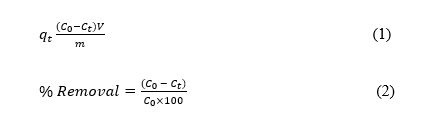
where qt (mg/g) are the adsorption capacities at time t, C0 and Ct (mg/L) are the single-metal concentrations in the initial solution and at time t, respectively; V (L) is the volume of solution, and m (g) is the weight of the sample added to the solution. Adsorption kinetics of Pb²⁺ and Cd²⁺ were both studied in the range of 1 - 3 h. Adsorption isotherms were investigated over the ranges of 30 - 500 mg/L for Pb²⁺ and 30 - 50 mg/L for Cd²⁺.
Results and discussion
The physical and chemical characterization of the precursor material (FGD gypsum) and the final product (FGD-HAP) was conducted to validate the synthesis process and identify the key properties of the adsorbent. The quantitative chemical composition of the major elements present in FGD gypsum was determined by X-ray fluorescence (XRF) analysis, as shown in Table 1.
Table 1 Chemical composition of FGD gypsum by XRF.

The XRF analysis revealed that the FGD gypsum consisted predominantly of calcium (54.07 wt%) and sulfur (43.85 wt%), which is consistent with the typical composition of synthetic gypsum produced from flue gas desulfurization processes. The high calcium and sulfur contents indicate that the material is primarily composed of calcium sulfate (CaSO₄·2H₂O), confirming its suitability as a precursor for the synthesis of calcium-rich materials, such as hydroxyapatite (HAP). Minor elements, including Si, Mg, Al, Fe, Cr, Sr, and Mn, were present in small quantities (< 1 wt%), suggesting that the FGD gypsum contains trace impurities commonly derived from coal combustion residues or additives used in desulfurization units. These impurities are unlikely to significantly affect the HAP synthesis but may influence certain material properties such as crystallinity, nucleation behavior, or colour. The exceptionally high calcium content, relative to other elements, supports its use in HAP synthesis with a controlled Ca/P ratio of 1.67, ensuring that sufficient Ca²⁺ ions are available for the formation of stoichiometric hydroxyapatite. Overall, the chemical profile confirms that this FGD gypsum is a chemically suitable and resource-efficient waste material for conversion into value-added calcium phosphate products.
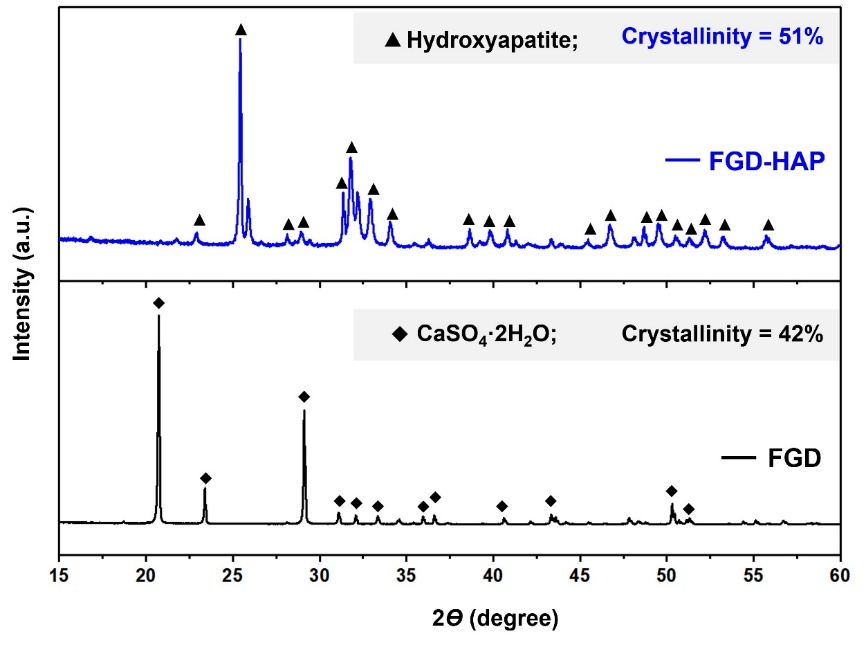
Figure 1 Diffraction profiles comparing FGD gypsum precursor in dihydrate (CaSO₄·2H₂O) with the synthesized FGD-HAP matched hydroxyapatite reference confirm the successful conversion from FGD gypsum to hydroxyapatite.
The wide-angle XRD pattern of FGD-HAP in Figure 1 shows the crystalline phases present in the materials and confirms whether the precursor successfully transformed into the desired FGD-HAP structure during synthesis. Fourteen characteristic hydroxyapatite peaks were observed at 2θ = 10.833°, 25.868°, 28.924°, 31.765°, 32.184°, 32.900°, 34.053°, 39.795°, 46.689°, 48.076°, 49.472°, 50.478°, 52.071°, and 53.186°. These diffraction peaks match well with PDF No. 96-900-2217, confirming that the FGD-HAP possesses a hexagonal P6₃/m crystal structure with lattice constants a = b = 9.423 Å and c = 6.883 Å. The crystallite size, calculated using the Scherrer equation, was 61 nm. Furthermore, the phase purity of the synthesized hydroxyapatite was determined by Rietveld refinement in HighScore software. The high phase purity (93.9%) obtained from Rietveld refinement indicates that the hydrothermal conversion of FGD gypsum effectively suppressed the formation of secondary calcium phosphate phases. This high crystallinity is expected to enhance ion-exchange efficiency by providing well-defined Ca²⁺ lattice sites, which is particularly advantageous for Pb²⁺ removal.
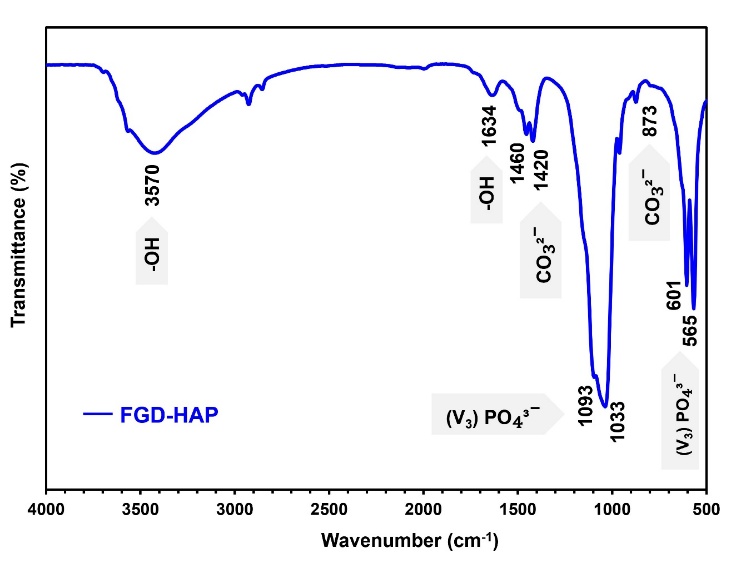
Figure 2 FTIR spectrum of the synthesized FGD-HAP. Characteristic absorption bands confirm the successful hydrothermal conversion of FGD gypsum into hydroxyapatite.
FTIR spectra of FGD-HAP are presented in Figure 2. The absorption bands at 1,093, 1,033, 962, 601, and 565 cm⁻¹ correspond to the vibrational modes of phosphate (PO₄³⁻) groups [12,13]. The peaks at 3,570 and 634 cm⁻¹ are indicative of hydroxyl (OH⁻) groups [14], supporting the role of surface hydroxyls in metal-ion adsorption through surface complexation. A bimodal band at 1,460 and 1,420 cm⁻¹, together with a single peak at 873 cm⁻¹, is assigned to carbonate (CO₃²⁻) groups, indicating partial substitution of phosphate by carbonate during air exposure of FGD-HAP [15,16]. In addition, 2 weak, broad bands at 3,450 and 1,637 cm⁻¹ are attributed to adsorbed water molecules on the sample surface. These spectral features indicated the chemical change from FGD gypsum to fully developed hydroxyapatite.
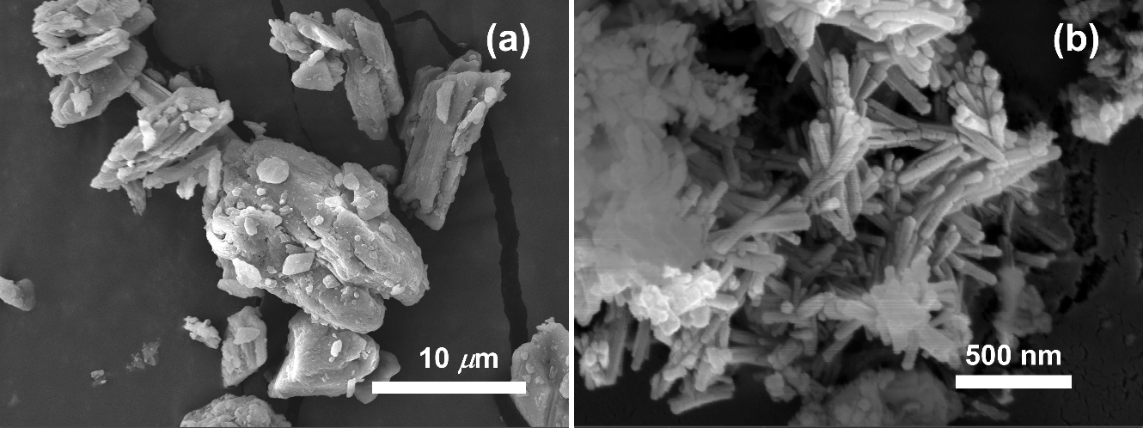
Figure 3 SEM micrographs illustrating the morphological evolution from (a) raw FGD gypsum to (b) synthesized FGD-HAP.
To observe particle morphology, surface texture, and structural changes, providing visual evidence of how the material evolved from the precursor to the final FGD-HAP product. Figure 3 shows the SEM images of raw FGD and FGD-HAP powders. The raw FGD particles appear as relatively large platy and tabular morphology, which is the typical crystal habit of gypsum. The FGD-HAP particles, with diameters ranging from 15 - 25 nm and lengths of 100 - 250 nm, exhibit a uniform rod-like morphology. Most particles tend to aggregate, likely due to the fusion or partial melting of their surfaces, which promotes particle - particle attachment. The transition from the massive, blocky gypsum into the fine, elongated nanostructures indicates that the calcium source was effectively utilized to build the HAP lattice. The interlaced nanorods create a highly porous network, as they vastly increase the available surface area.
Table 2 BET properties of FGD-HAP.

The textural properties of FGD-HAP are presented in Table 2. As shown, the FGD-HAP exhibits a mesoporous structure, with a specific surface area within the typical range reported for hydroxyapatite and a large pore volume. These features are highly beneficial for enhancing ion-exchange capacity and diffusion, ultimately improving the material's adsorption performance [20].
Sorption kinetics
Sorption kinetics were investigated to determine the rate of metal uptake and identify the mechanism controlling adsorption. The experimental data were fitted to kinetic models to determine the rates of interaction between Pb²⁺ and Cd²⁺ and the adsorbent surface.
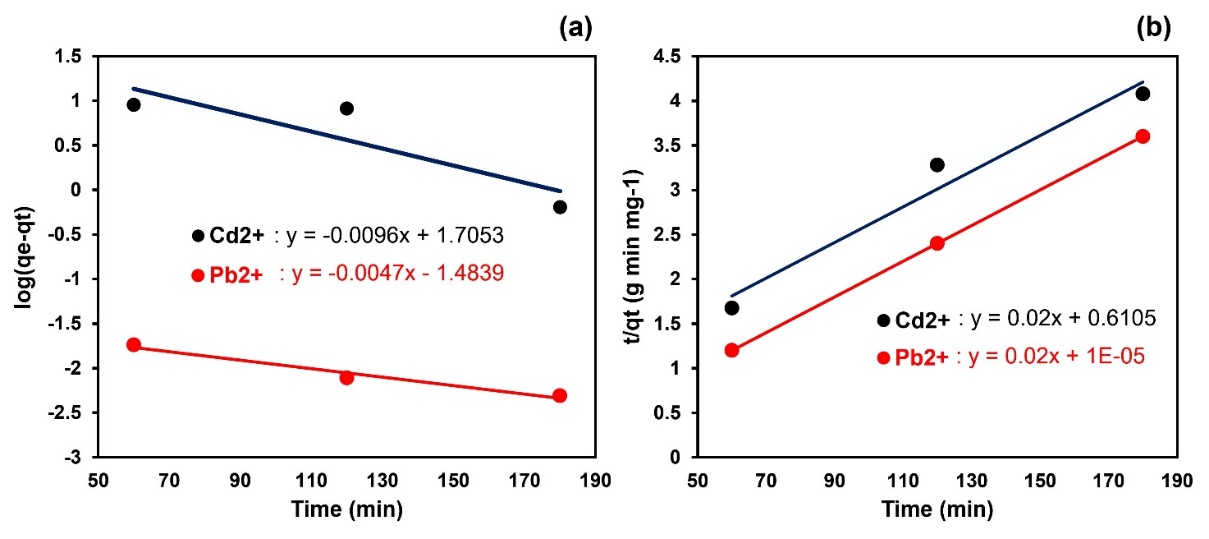
Figure 4 Adsorption kinetics of Pb²⁺ and Cd²⁺ onto synthesized FGD-HAP: (a) pseudo-first order kinetic plots, (b) pseudo-second order kinetic plots.
Sorption kinetics reveal rapid initial uptake of both Pb²⁺ and Cd²⁺ within the first 60 min, driven by abundant active sites on the FGD-HAP surface, followed by gradual saturation and equilibrium at 180 min (Figure 4). Experimental capacities reached ~195.5 mg/g for Pb²⁺ and ~44.2 mg/g for Cd²⁺. To gain deeper insights into the controlling mechanisms of the adsorption process, including mass transfer and chemical reaction effects, the pseudo-first-order and pseudo-second-order kinetic models [21,22] were applied to analyze the experimental data. The linearized forms of these models are expressed as follows:
Pseudo-first-order model
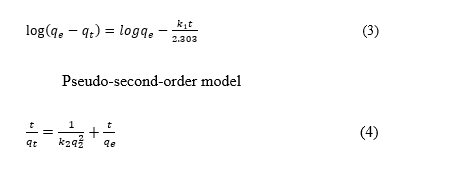
where qe and qt represent the adsorption capacities (mg/g) at equilibrium and at time t (min), respectively; k1 (min⁻¹) and k2 (g/(mg·min)) are the rate constants for the pseudo-first-order and pseudo-second-order models. Additionally, when t→0t to 0t→0, the initial adsorption rate h (mg/(g·min)) can be defined as:

Figure
4(a)
presents linearized pseudo-first-order plots of log(qe−qt)
versus t,
which assumes adsorption control by physisorption or film diffusion.
These show moderate linearity for Pb²⁺ (R² = 0.996) but poor fit
for Cd²⁺ (R² = 0.777), with calculated
 values (203.56 mg/g for Pb²⁺ and 50.73 mg/g for Cd²⁺)
deviating from experimental data. In
contrast, Figure
4(b)
shows pseudo-second-order plots of t/qt
versus t,
suggesting chemisorption via valence electron sharing as the
rate-limiting step. Both metals yield excellent linearity (Pb²⁺
R² = 1.000; Cd²⁺ R² = 0.964), with calculated qe
(200
mg/g for Pb²⁺ and 50.00 mg/g for Cd²⁺)
closely matching measurements. The higher rate constant K2
for Pb²⁺ (19.23×10⁻³
g/mg·min)
versus Cd²⁺ (6.55×10⁻⁴ g/mg·min) reflecting stronger
chemical affinity and faster surface reaction. These
findings indicate that the adsorption behaviours of Pb²⁺ and Cd²⁺
are best described by the pseudo-second-order kinetic model,
suggesting that the rate-limiting step in the adsorption process is
chemical adsorption.
values (203.56 mg/g for Pb²⁺ and 50.73 mg/g for Cd²⁺)
deviating from experimental data. In
contrast, Figure
4(b)
shows pseudo-second-order plots of t/qt
versus t,
suggesting chemisorption via valence electron sharing as the
rate-limiting step. Both metals yield excellent linearity (Pb²⁺
R² = 1.000; Cd²⁺ R² = 0.964), with calculated qe
(200
mg/g for Pb²⁺ and 50.00 mg/g for Cd²⁺)
closely matching measurements. The higher rate constant K2
for Pb²⁺ (19.23×10⁻³
g/mg·min)
versus Cd²⁺ (6.55×10⁻⁴ g/mg·min) reflecting stronger
chemical affinity and faster surface reaction. These
findings indicate that the adsorption behaviours of Pb²⁺ and Cd²⁺
are best described by the pseudo-second-order kinetic model,
suggesting that the rate-limiting step in the adsorption process is
chemical adsorption.
Table 3 Pseudo-first order and pseudo-second order kinetic parameters for the adsorption of Pb²⁺ and Cd²⁺ on FGD-HAP.

Sorption isotherm
Sorption isotherms were analyzed to characterize the adsorbent's equilibrium behavior and adsorption capacity at various initial metal concentrations. The isotherm models provide insight into the interactions between Pb²⁺/Cd²⁺ ions and the adsorbent surface.
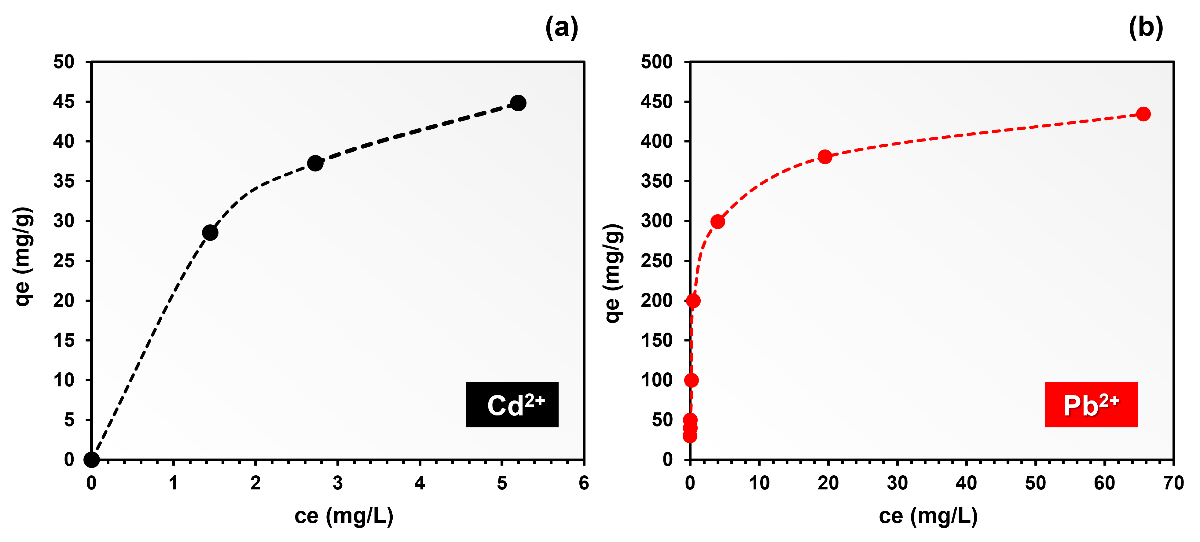
Figure 5 Adsorption isotherms of (a) Cd²⁺ and (b) Pb²⁺ onto FGD-HAP at room temperature showing the relationship between the equilibrium adsorption capacity (qₑ) and the equilibrium concentration (Cₑ).
Adsorption equilibrium data, expressed as the mass of adsorbate adsorbed per unit weight of adsorbent (qe) versus the equilibrium concentration of the adsorbate in solution (Ce), are commonly represented by adsorption isotherms. These isotherms are essential for practical adsorbent design and for predicting the maximum adsorption capacity. In this study, the adsorption isotherms of Pb²⁺ and Cd²⁺ on FGD-HAP are presented in Figure 5. It can be observed that the adsorption capacities of both metals initially increased with equilibrium concentration and subsequently reached saturation. The uptake of Pb²⁺ was consistently higher than that of Cd²⁺, indicating a stronger interaction between FGD-HAP and Pb²⁺ compared to Cd²⁺. To better understand the adsorption behaviours, the Langmuir and the Freundlich models were applied to fit the experimental equilibrium data.
Langmuir
isotherm
The Langmuir model [23]
assumes adsorption occurs on a homogeneous surface with no
interaction between adsorbed species. The Langmuir equation is
expressed as:

where Ce is the equilibrium concentration of Pb²⁺ or Cd²⁺ (mg/L), qe is the amount adsorbed at equilibrium (mg/g), qmax is the maximum adsorption capacity (mg/g), and b is the Langmuir constant related to the affinity of binding sites and adsorption energy (L/g).
Freundlich isotherm
The Freundlich model [24] is commonly used to describe adsorption on heterogeneous surfaces. The Freundlich equation is expressed as:

where KF is the Freundlich constant representing the adsorption capacity (mg/g(1/mg1/n)), and n is the Freundlich exponent indicating the favourability of the adsorption process. In this study, the n values for Pb²⁺ and Cd²⁺ were 2.85 and 2.845, respectively, indicating favourable adsorption and high affinity between FGD-HAP and the metal ions. The R2 values show that the Langmuir model better describes the adsorption of both Pb²⁺ and Cd²⁺ (Table 4). With R² ≥ 0.985, the Langmuir isotherm fits best, suggesting monolayer coverage on uniform sites, with maximum adsorption capacities (qmax) of 312.5 mg/g for Pb²⁺ and 53.19 mg/g for Cd²⁺.
Dubinin-Radushkevich (D-R) isotherm
To further evaluate the adsorption mechanism and to distinguish between physisorption and chemisorption, the Dubinin-Radushkevich (D-R) model [25] was applied. The linear form of the D-R model is expressed as:

where qm is the theoretical saturation adsorption capacity (mg/g), is a constant related to the mean free energy of adsorption (mol²/J²), and is the Polanyi potential, calculated as:

where R is the universal gas constant (8.3145 J/mol·K), and T is the absolute temperature (K). The mean free energy E of adsorption per mole of sorbate can be calculated by:

The E value can predict the type of adsorption: if E < 8 kJ/mol, the adsorption is physical; 8 - 16 kJ/mol indicates ion exchange; and E > 16 kJ/mol suggests chemisorption stronger than ion exchange [26]. In this study, the E values of Pb²⁺ and Cd²⁺ were 10 and 1.29 kJ/mol, respectively, indicating that the main adsorption mechanism of Pb²⁺ is ion exchange, whereas that of Cd²⁺ is predominantly physical adsorption. The metal ions were likely adsorbed via the exchange of Ca²⁺ in FGD-HAP with Pb²⁺, while Cd²⁺ was adsorbed mainly on the surface of the adsorbent from the wastewater. In addition, some chemical reactions may occur on the surface of FGD-HAP for Pb²⁺ removal.
Table 4 Langmuir, Freundlich, and Dubinin-Radushkevich parameters for the adsorption of Pb2+ and Cd2+ onto FGD-HAP.

Removal efficiency
This section is intended to evaluate the adsorption performance of the synthesized adsorbent by analysing its removal efficiency for both lead and cadmium under varying initial concentrations. The assessment of removal efficiency is crucial as it provides valuable insights into the material’s capacity and effectiveness in lowering metal ion concentrations, as well as the impact of pollutant loading on the overall adsorption dynamics. The removal efficiencies of Cd²⁺ and Pb²⁺ on FGD-HAP at different initial concentrations and contact times are shown in Figure 6. The adsorption of Cd²⁺ is strongly dependent on both contact time and initial concentration. As shown in Figure 6(a), the removal percentage of Cd²⁺ increased with contact time across all concentrations tested. At 60 min, the removal efficiencies were 82.5%, 75.6%, and 71.6% for initial concentrations of 30, 40, and 50 mg/L, respectively. After 120 min, the efficiencies increased to 84.5%, 78.3%, and 73.2%, and further reached 91.7%, 91.7%, and 88.3% at 180 min. These results indicate that longer contact times enhance Cd²⁺ adsorption by allowing more time for ions to diffuse and interact with active sites on the FGD-HAP surface. Furthermore, lower initial concentrations yielded higher removal percentages, likely due to greater availability of adsorption sites per ion. In contrast, Pb²⁺ exhibited nearly complete removal under all tested conditions, as shown in Figure 6(b).
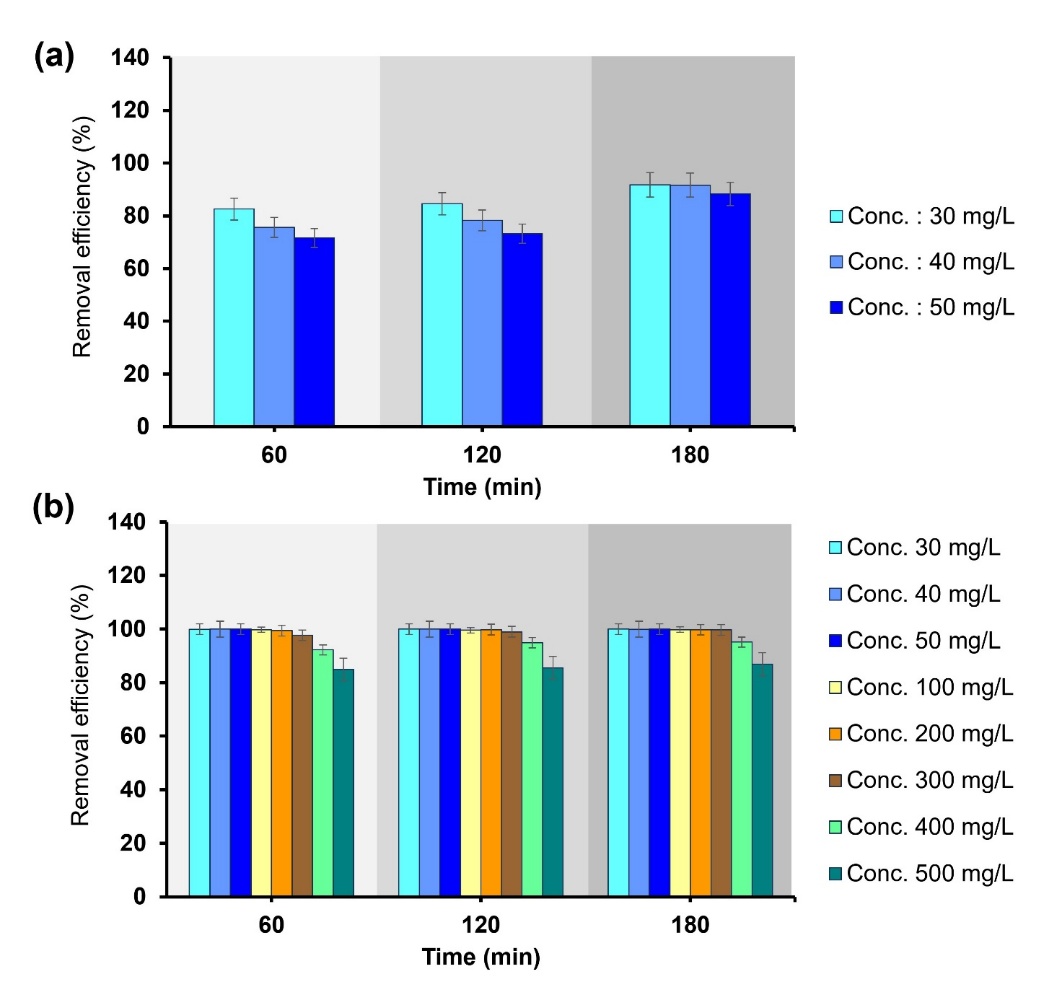
Figure 6 Removal efficiency of (a) Cd2+, and (b) Pb2+ onto FGD-HAP as a function of initial concentration and contact time.
The removal efficiency of Pb by the adsorbent was evaluated at initial concentrations of 30, 40, 50, 100, 200, 300, 400, and 500 mg/L, with contact times of 60, 120, and 180 min. The results show that the adsorbent exhibited very high Pb removal efficiency, especially at low to moderate initial concentrations. For initial concentrations of 30 - 100 mg/L, the removal efficiency remained remarkably high, ranging from 99% to 100% across all contact times. This indicates that the adsorbent achieved near-complete Pb removal within the first 60 min, with no significant change throughout the adsorption period. At higher initial concentrations of 200 and 300 mg/L, the Pb removal efficiency remained high (97% - 99%) and increased slightly with longer contact time from 60 to 180 min, suggesting that sufficient adsorption sites were still available. However, when the initial concentration increased to 400 mg/L, the removal efficiency decreased slightly to approximately 92% - 95%, implying that the adsorbent was approaching saturation under higher pollutant loading. At the highest concentration of 500 mg/L, the removal efficiency showed the most notable reduction, with values between 85% and 87%. Although still considered effective, the adsorption performance was clearly affected by the limited availability of adsorption sites at elevated Pb concentrations.
Table 5 presents a comparison of the maximum adsorption capacities (qmax) of Pb²⁺ and Cd²⁺ across various adsorbents. FGD-HAP exhibits an exceptionally high adsorption capacity for Pb²⁺, whereas its qmax for Cd²⁺ is comparable to those of other adsorbents. These results indicate that FGD-HAP is a highly effective adsorbent for removing both metal ions, with particularly outstanding performance for Pb²⁺. Therefore, hydroxyapatite synthesized from FGD waste is a promising and efficient material for removing Pb²⁺ and Cd²⁺ from aqueous solutions.
Table 5 Comparison of maximum adsorption capacity (qmax) for Pb²⁺ and Cd²⁺ with various adsorbents.

Conclusions
Power plant FGD gypsum was successfully valorized into high-purity (93.9%), well-crystallized hexagonal hydroxyapatite (FGD-HAP) via a hydrothermal route at 150 °C. The synthesized material exhibited a mesoporous morphology and exceptional removal efficiencies, with maximum adsorption capacities of 312.5 mg/g for Pb²⁺ and 57.47 mg/g for Cd²⁺. The kinetic data for both ions were described by the pseudo-second-order model (R² > 0.96), signifying rate control by chemical interactions. Equilibrium data conformed to the Langmuir isotherm (R² ≥ 0.985), while the Dubinin-Radushkevich model provided mechanistic clarity, whereas Pb²⁺ adsorption (E = 10 kJ/mol) proceeds primarily via ion exchange coupled with surface chemical reactions, and Cd²⁺ uptake (E = 1.29 kJ/mol) is dominated by physisorption. Overall, hydroxyapatite produced from FGD waste has proven to be a very effective and promising adsorbent for removing Pb²⁺ and Cd²⁺ from water. Its high specific surface area, beneficial pore features, and excellent phase purity support the idea that FGD-HAP is a sustainable and efficient solution for heavy metal cleanup. Future research should explore how well FGD-HAP adsorbs other heavy metal ions not tested here. Testing its effectiveness with a wider variety of contaminants will help identify which metals it can most effectively remove and the best practical uses for this material in real-world cleanup efforts.
Acknowledgements
This research project was supported by Mae Fah Luang University, Thailand (Fundamental Fund: Fiscal year 2023 by Thailand Science Research and Innovation (TSRI), and National Science Research and Innovation Fund (NSRF).
Declaration of generative AI in scientific writing
The authors acknowledge the use of generative AI tools (e.g., Gemini and ChatGPT by OpenAI) in the preparation of this manuscript, specifically for language editing and grammar correction. No content generation or data interpretation was performed by AI. The authors take full responsibility for the content and conclusions of this work.
CRediT author statement
Sukrit Sarati: Conceptualization, Methodology, Software, Formal analysis, Investigation, Resources, Data Curation, Writing - Original Draft, Visualization. Uraiwan Intatha: Validation, Writing - Review & Editing, Supervision. Sitthi Duangphet: Validation, Writing - Review & Editing, Supervision. Nattakan Soykeabkaew: Validation, Writing - Review & Editing, Supervision. Nattaya Tawichai: Conceptualization, Validation, Resources, Writing - Review & Editing, Supervision, Project administration, Funding acquisition.
References
[1] Y Liu, Y Yan, B Seshadri, F Qi, Y Xu, N Bolan, F Zheng, X Sun, W Han and L Wang. Immobilization of lead and copper in aqueous solution and soil using hydroxyapatite derived from flue gas desulphurization gypsum. Journal of Geochemical Exploration 2018; 184(B), 239-246.
[2] GK Kinuthia, V Ngure, D Beti, R Lugalia, A Wangila and L Kamau. Levels of heavy metals in wastewater and soil samples from open drainage channels in Nairobi, Kenya: Community health implication. Scientific Reports 2020; 10(1), 8434.
[3] World Health Organization. A global overview of national regulations and standards for drinking-water quality 2018. World Health Organization, Geneva, Switzerland, 2018.
[4] T Kikuchi and S Tanaka. Biological removal and recovery of toxic heavy metals in water environment. Critical Reviews in Environmental Science and Technology 2012; 42(10), 1007-1057.
[5] Z Elouear, J Bouzid, N Boujelben, M Feki, F Jamoussi and A Montiel. Heavy metal removal from aqueous solutions by activated phosphate rock. Journal of Hazardous Materials 2008; 156(1), 412-420.
[6] Y Yan, X Dong, X Sun, X Sun, J Li, J Shen, W Han, X Liu and L Wang. Conversion of waste FGD gypsum into hydroxyapatite for removal of Pb2+ and Cd2+ from wastewater. Journal of Colloid and Interface Science 2014; 429, 68-76.
[7] A Corami, S Mignardi and V Ferrini. Cadmium removal from single- and multi-metal (Cd+Pb+Zn+Cu) solutions by sorption on hydroxyapatite. Journal of Colloid and Interface Science 2008; 317, 402-408.
[8] E Mavropoulos, AM Rossi, AM Costa, CAC Perez, JC Moreira and M Saldanha. Studies on the mechanisms of lead immobilization by hydroxyapatite. Environmental Science & Technology 2002; 36(7), 1625-1629.
[9] M Aliabadi, M Irani, J Ismaeili and S Najafzadeh. Design and evaluation of chitosan/hydroxyapatite composite nanofiber membrane for the removal of heavy metal ions from aqueous solution. Journal of the Taiwan Institute of Chemical Engineers 2014; 45(2), 518-526.
[10] NM Pu'ad, RA Haq, HM Noh, HZ Abdullah, MI Idris and TC Lee. Synthesis method of hydroxyapatite: A review. Materials Today: Proceedings 2020; 29, 233-239.
[11] S Kiziltas Demir and N Tugrul. Zinc and cadmium adsorption from wastewater using hydroxyapatite synthesized from flue gas desulfurization waste. Water Science and Technology 2021; 84(5), 1280-1292.
[12] H Zhang, M Liu, H Fan and X Zhang. An efficient method to synthesize carbonated nano hydroxyapatite assisted by poly (ethylene glycol). Materials Letters 2012; 75, 26-28.
[13] J Di Chen, YJ Wang, K Wei, SH Zhang and XT Shi. Self-organization of hydroxyapatite nanorods through oriented attachment. Biomaterials 2007; 28(14), 2275-2280.
[14] S Kongsri, K Janpradit, K Buapa, S Techawongstien and S Chanthai. Nanocrystalline hydroxyapatite from fish scale waste: Preparation, characterization and application for selenium adsorption in aqueous solution. Chemical Engineering Journal 2013; 215, 522-532.
[15] DP Minh, ND Tran, A Nzihou and P Sharrock. Calcium phosphate-based materials starting from calcium carbonate and orthophosphoric acid for the removal of lead (II) from an aqueous solution. Chemical Engineering Journal 2014; 243, 280-288.
[16] J Hu, J Russell, B Ben-Nissan and R Vago. Production and analysis of hydroxyapatite from Australian corals via hydrothermal process. Journal of Materials Science Letters 2001; 20(1), 85-87.
[17] A Fadli, SR Yenti, AP Wisrayetti, J Hasibuan, VG Herjan, A Isnani and R Restyanda. Optimisation of the hydroxyapatite surface area prepared using a porogen rubber suspension. Ceramics-Silikaty 2023; 67(3), 371-378.
[18] SG Mtavangu, W Mahene, RL Machunda, B van der Bruggen and KN Njau. Cockle (Anadara granosa) shells-based hydroxyapatite and its potential for defluoridation of drinking water. Results in Engineering 2022; 13, 100379.
[19] H Ma, A Khalaf, R Chen, Z Wang, Y Li and F Xu. Evaluation of flue gas desulfurization gypsum as a low-cost precipitant for phosphorus removal from anaerobic digestion effluent filtrate. IOP Conference Series: Earth and Environmental Science 2023; 1135(1), 012011.
[20] F Zhang, Z Zhao, R Tan, W Xu, G Jiang and W Song. Efficient and selective immobilization of Pb2+ in highly acidic wastewater using strontium hydroxyapatite nanorods. Chemical Engineering Journal 2012; 203, 110-114.
[21] L Ding, C Wu, H Deng and X Zhang. Adsorptive characteristics of phosphate from aqueous solutions by MIEX resin. Journal of Colloid and Interface Science 2012; 376(1), 224-232.
[22] YS Ho and G McKay. Pseudo-second order model for sorption processes. Process Biochemistry 1999; 34(5), 451-465.
[23] I Langmuir. The adsorption of gases on plane surface of glass, mica and platimnum. Journal of the American Chemical Society 1918; 40(9), 1361-1403.
[24] H Freundlich. Über die adsorption in lösungen. Zeitschrift für Physikalische Chemie 1907; 57(1), 385-470.
[25] MM Dubinin. The potential theory of adsorption of gases and vapors for adsorbents with energetically nonuniform surfaces. Chemical Reviews 1960; 60(2), 235-241.
[26] H Demiral, I Demiral, F Tumsek and B Karabacakoglu. Adsorption of chromium (VI) from aqueous solution by activated carbon derived from olive bagasse and applicability of different adsorption models. Chemical Engineering Journal 2008; 144(2), 188-196.
[27] W Ahmed, S Mehmood, A Núñez-Delgado, S Ali, M Qaswar, A Shakoor, M Mahmood and DY Chen. Enhanced adsorption of aqueous Pb(II) by modified biochar produced through pyrolysis of watermelon seeds. Science of the Total Environment 2021; 784, 147136.
[28] MR Lasheen, NS Ammar and HS Ibrahim. Adsorption/desorption of Cd(II), Cu(II) and Pb(II) using chemically modified orange peel: Equilibrium and kinetic studies. Solid State Sciences 2012; 14(2), 202-210.
[29] L Sun, J Wu, J Wang, M Xu, W Zhou, Y Du, Y Li and H Li. Fabricating hydroxyapatite functionalized biochar composite using steel slag and Hami melon peel for Pb(II) and Cd(II) removal. Colloids and Surfaces A: Physicochemical and Engineering Aspects 2023; 666, 131310.
[30] R Foroutan, SJ Peighambardoust, SS Hosseini, A Akbari and B Ramavandi. Hydroxyapatite biomaterial production from chicken (femur and beak) and fishbone waste through a chemical less method for Cd2+ removal from shipbuilding wastewater. Journal of Hazardous Materials 2021; 413, 125428.
[31] C Phaenark, T Jantrasakul, P Paejaroen, S Chunchob and W Sawangproh. Sugarcane bagasse and corn stalk biomass as a potential sorbent for the removal of Pb(II) and Cd(II) from Aqueous Solutions. Trends in Sciences 2023; 20(2), 6221.
[32] PL Hariani, A Rachmat, M Said and S Salni. Modification of fishbone-based hydroxyapatite with MnFe2O4 for efficient adsorption of Cd(II) and Ni(II) from aqueous solution. Indonesian Journal of Chemistry 2021; 21, 1471.