
Trends
Sci.
2026;
23(10):
13030
Evaluation of Antioxidant and Antihyperglycemic Activities in Kombucha Made from Black Turmeric (Curcuma aeruginosa Roxb.) Rhizome Extract
Uswatun Hasanah1, Lelly Aulia Damarhati2, Sulistiyani2,3,
Sera Budi Verinda4 and Syaefudin Suminto2,3,*
1Division of Food Science and Technology, Faculty of Engineering and Technology, IPB University,
Bogor 16680, Indonesia
2Department of Biochemistry, IPB University, Bogor 16680, Indonesia
3Tropical Biopharmaca Research Center, IPB University, Bogor 16128, Indonesia
4Faculty of Medicine, IPB University, Bogor 16680, Indonesia
(*Corresponding author’s e-mail: [email protected])
Received: 14 December 2025, Revised: 4 March 2026, Accepted: 11 March 2026, Published: 5 May 2026
Abstract
Kombucha, a fermented beverage, has gained increasing attention because of its health benefits, particularly when it is combined with medicinal plants. One such plant with promising properties is black turmeric rhizome (Curcuma aeruginosa Roxb.), which is known for its various pharmacological effects. This study aimed to determine the total phenolic, flavonoid, and curcuminoid contents of kombucha produced from black turmeric rhizome and evaluate its in vitro antioxidant and antihyperglycemic activities. After kombucha fermentation at 25 - 30 °C for 10 days, the extract of black turmeric rhizome resulted in 85.538 mg GAE/L of phenolic content and 20.063 mg QE/L of flavonoid content, which was significantly higher (p < 0.05) than that of the unfermented black turmeric. UFLC spectrophotometry analysis showed an increase in curcumin (61.307 ppm), whereas bisdemethoxycurcumin and demethoxycurcumin contents were lower after kombucha fermentation of black turmeric rhizome. The IC50 values for DPPH antioxidant activity was 34.46 ± 0.34 µg/mL (using ascorbic acid as control) and for α-glucosidase inhibition was 9.41 ± 0.76 µg/mL (using acarbose as a control). Significant increases (p < 0.05) were observed in the antioxidant capacities of kombucha fermentation compared to that of unfermented black turmeric rhizome (ABTS: 167%, FRAP: 742%, and CUPRAC: 93%). The elevated total phenolic, flavonoid, and curcumin contents of kombucha were significantly correlated (p < 0.01) with the increase in antioxidant activity and capacity after the fermentation of black turmeric. These findings suggest that kombucha fermentation enhances the potential of black turmeric as a functional food in vitro. Further research should be conducted to optimize its efficacy, such as in vivo or bioavailability studies.
Keywords: Antihyperglycemic, Antioxidant, Curcuma aeruginosa, Curcuminoid, Kombucha
Introduction
The fermented beverage, kombucha, is primarily produced from black tea (Camellia sinensis) supplemented with sucrose. Kombucha made from oolong tea, green tea, as well as addition of other infused material can also be found [1]. A symbiotic culture of bacteria and yeast (SCOBY) is used for fermentation. The core drivers of kombucha fermentation are acetic acid bacteria (AAB) (Komagateibacter, Acetobacter,
and Gluconobacter) and yeasts (Zygosaccharomyces sp., Saccharomyces sp., and Brettanomyces sp.), whereas lactic acid bacteria (LAB) (Lactobacillus and Leuconostoc) have been isolated from the beverage [2]. Kombucha fermentation is generally conducted at room temperature (22 - 30 °C) for 7 - 21 days [3].
In 2016 - 2025, publications related to kombucha mostly reported about its antioxidant activities, followed by antimicrobial, anticancer, and anti-inflammatory activities. Overall, most studies on the role of kombucha in health were in vitro or animal-based [4]. An antioxidant activity assay using the DPPH method showed that black tea kombucha resulted in the highest inhibition, followed by green, white, and oolong tea kombucha [5]. Black tea kombucha and green tea kombucha exhibited higher antioxidant activity than tea that was not fermented [6]. The increase in antioxidant capacity is potentially due to the biotransformation of epigallocatechin-3-gallate (EGCG) into epicatechin gallate (ECG) and epicatechin (EC), as well as other complex polyphenols into simpler molecules through the enzymatic activity of microbes in SCOBY under acidic conditions [7,8].
In addition to its antioxidant effects, kombucha exhibits various bioactivities, including antidiabetic and antiobesity effects. Green and black tea kombucha administered to Wistar rats fed a high-fat high-fructose diet resulted in decreased systemic inflammation, total adipose tissue, and blood triglyceride levels, as well as observed modulation of adipogenesis and β-oxidation-related genes [9]. In vivo studies in diabetic rats showed a reduction in blood glucose levels, free radicals, and transaminases after daily administration of kombucha, encouraging kombucha potency for diabetes and hypercholesterolemia treatment [10]. The hypothetical mechanisms of hypoglycemic effects involve gut microbiota regulation to reduce dysbiosis, oxidative stress reduction, and enzymatic inhibition, such as the reduction of α-amylase activity [10]. A human in vivo study (four-week clinical trial of kombucha supplementation) in healthy individuals fed a low-fiber Western diet resulted in a detectable enrichment of ellagic acid bacteria, suggesting a potential interaction between polyphenol-rich kombucha consumption and the gut microbiota [11]. Dietary intervention in three studies using kombucha prepared from black or green tea resulted a shifting in the microbial composition and improvements in gastrointestinal symptoms [12]. The phenolic compounds and organic acids in kombucha may influence multiple molecular pathways across human organs owing to their antioxidant activities [12].
With ongoing research, interest in kombucha has expanded to explore alternative substrates beyond tea, such as plant leaves, fruit and juice, and herbaceous plants [8]. The exploration of kombucha from medicinal plants is growing because medicinal plants are believed to possess health effects based on empirical data. Studies on kombucha from Javanese turmeric (Curcuma xanthorriza) reported an increase in antioxidant activity by DPPH, as well as induced apoptosis in >22% of T47D cell population and lowered IC50 of cytotoxicity value in T47D cells, indicating its anti-cancer potential [13,14]. Both turmeric-based kombucha and turmeric-infused kombucha contain more chemical compounds [13,15], which is promising for their higher bioactivity. Turmeric kombucha has been reported to modulate the immune response and alter the gut microbiota composition in mice with lipopolysaccharide-induced sepsis [16]. Another study reported that kombucha from turmeric (Curcuma domestica Val.) administered to Wistar rats with a high-fat high-carbohydrate diet for 28 days, significantly improved the Lee index obese model [17], suggesting the potential of turmeric kombucha as an anti-obesity agent.
Other turmeric species, such as black turmeric or temu ireng (Curcuma aeruginosa Roxb.) is an underutilized Indonesian herb [18]. Black turmeric has a long history in Indonesian traditional medicine and is known to contain bioactive compounds such as saponins, flavonoids, polyphenols, triterpenoids, and curcumin. Other compounds, such as monoterpenes, monoterpenoids, terpenes, alkanes, sesquiterpenes, sesquiterpenoids, and ketones, have also been identified in black turmeric [18]. Its extract exhibited α-glucosidase inhibitory activity, which was attributed to the bioactivity of several compounds, including curcumin, demethoxycurcumin, and xanthorrhizol [19].
The potency of black turmeric in kombucha fermentation has not been extensively explored. The curcuminoid content of black turmeric and its correlation with the potential bioactivities of kombucha also require further investigation. Nonetheless, more in-depth studies are required to assess the total phenolic, total flavonoid, and curcuminoid contents of kombucha prepared from black turmeric, as well as its antioxidant and antihyperglycemic properties for functional foods with therapeutic benefits. This study aimed to determine the total phenolic and flavonoid contents, as well as the curcuminoid content of kombucha prepared from black turmeric rhizomes and evaluate its potential as an antioxidant and antihyperglycemic agent in vitro.
Materials and methods
Materials
Curcuma aeruginosa Roxb. rhizome powder was sourced from an e-commerce company in Bekasi, West Java, Indonesia. Kombucha starter culture was obtained from a supplier in Bogor, West Java, Indonesia, and sucrose was purchased from a local supermarket.
Moisture content analysis
By strictly adhering to the AOAC standards [20], the triplicate gravimetric method was used to assess the moisture content. Initially, an empty dish was weighed after drying in an oven at 105 ℃ for 15 min and then cooled in a desiccator for another 15 min. Next, 2.0 g of 60-mesh black turmeric rhizome powder was added to the pre-weighed dish, which was then dried at 105 ℃ for 4 h and cooled in a desiccator for 30 min before weighing. Two drying cycles were performed to obtain a constant weight of the sample. The moisture content was calculated using the following formula.

where A = weight of the empty dish (g), B = weight of the test sample (g), C = weight of the dish containing the sample after drying (g).
Extraction and fermentation of kombucha
Black turmeric rhizome powder was extracted in duplicate using an infusion method [13]. The process began by weighing 1.0 g of rhizome powder and boiling it in 250 mL of H2O at 90 °C for 15 min. The extract was then cooled and filtered through filter paper. The first filtrate (230 mL) was used for non-fermentation treatment and adjusted to reach a final volume of 250 mL with the addition of water. The second filtrate (235 mL) was prepared for fermentation by adding water to a final volume of 250 mL. Subsequently, 10% (w/v) sucrose, SCOBY culture sheet, and 10% (v/v) starter liquid were added to the mixture. Kombucha was fermented in a container covered with gauze at 25 - 30 °C for 10 days. After fermentation, the SCOBY culture was removed, and the kombucha filtrate was filtered to remove the residual culture and then subjected to further analysis. Fermentation was conducted in duplicate. In addition, freeze-dried filtrates of non-fermentation treatment (0.1 g of dry powder) and fermentation treatment (12.8 g of dry powder) were prepared for the analysis of total phenolic and flavonoid contents.
Acidity (pH) and Total Titratable Acidity (TTA) analyses
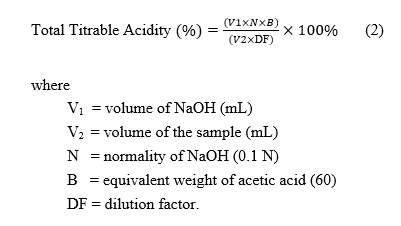
The pH and total titratable acidity (TTA) of the kombucha were analyzed in triplicate [21]. The pH of the kombucha was measured using a calibrated pH meter. For TTA determination, a titrimetric method was used, in which 5 mL of each fermented and unfermented sample was diluted with distilled water to a total volume of 50 mL and homogenized. Subsequently, 10 mL of the sample was pipetted into an Erlenmeyer flask, followed by the addition of 2 - 3 drops of a 1% phenolphthalein indicator. The titration endpoint was reached by slowly adding a 0.1 N NaOH solution until a stable pink color appeared. The total titratable acidity was calculated using the following formula.
Total Phenolic Content (TPC) analysis
To measure TPC, 20 µL of fermented and unfermented black turmeric (4,000 μg/mL) was added to 100 µL of 10% Folin-Ciocalteu reagent. After homogenization and incubation for 5 min at room temperature, 80 µL of 10% Na₂CO₃ solution was added, and the mixture was left to stand for 30 min. The absorbance of the samples was measured using a spectrophotometer at 750 nm. The TPC was calculated based on the gallic acid standard equivalents. TPC analysis was conducted on the filtrates and freeze-dried samples.
Total flavonoid content (TFC) analysis
For the determination of total phenolic content, fermented and unfermented black turmeric (4,000 μg/mL) were prepared as follows: 2 mL of the filtrate was mixed with 2 mL of MeOH and 1 mL of DMSO to achieve a final ratio of MeOH:H2O (2:2:1 v/v). To measure the total flavonoid content, 20 µL of the sample was combined with 20 µL of AlCl₃, 20 µL of 1 M potassium acetate, and 180 µL of MeOH:H2O (2:2:1 v/v). The samples were then incubated for 30 min at room temperature. Absorbance was measured at 430 nm using a spectrophotometer. The total flavonoid content was expressed as quercetin equivalents. TFC analysis was conducted on the filtrates and freeze-dried samples.
Curcuminoid content analysis
The curcuminoid content in unfermented and fermented black turmeric was analyzed using Ultra-Fast Performance Liquid Chromatography (UFLC Shimadzu, Japan). The sample was diluted to 80 μg and filtered using a 0.45 μm microfilter (CHROMAFIL Nylon, Macherey-Nagel, Germany), and 20 μL was injected into the UFLC system. Separation was performed using a Shimadzu VP-ODS C-18 column (250×4.6 mm) with an isocratic mobile phase of 2% glacial acetic acid (A) and acetonitrile (B), with 65% of phase B for 15 min. The flow rate was set at 0.8 mL/min, with a column temperature of 40 °C. Curcuminoid standards were prepared at a concentration of 100 μg/mL and treated using the same procedure. Curcumin, bisdemethoxycurcumin, and demethoxycurcumin were detected at wavelengths of 190 - 800 nm using a diode array detector. The curcuminoid content was determined based on the calibration curve of each compound, with the coefficient of determination (R2), limit of detection (LoD), and limit of quantification (LoQ) as follows: R2 = 0.9963, LoD = 13.37 ppm, and LoQ = 44.55 ppm for curcumin; R2 = 0.9932, LoD = 18.10 ppm, and LoQ = 60.32 ppm for bisdemethoxycurcumin; and R2 = 0.9946, LoD = 16.05 ppm, and LoQ = 53.50 ppm for demethoxycurcumin.
Determination of antioxidant activity (IC50) and antioxidant capacities
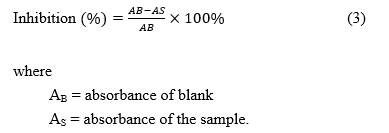
Antioxidant activity and capacity measurements were performed on unfermented and fermented black turmeric using ascorbic acid as a standard reference compound. To evaluate the antioxidant activity using the DPPH method, the samples were diluted with distilled water to obtain concentrations of 12.5, 25, 50, 100, 200, 400, and 800 μL/mL. Following the procedure outlined by Rale et al. [22], 100 μL of each sample was mixed with 100 μL of DPPH (2,2-diphenyl-1-picrylhydrazyl) reagent. After incubation at room temperature in the dark for 30 min, the absorbance of each sample was measured using a nanospectrophotometer (BMG Labtech, Germany) at 523 nm. The absorbance values were used to calculate the percentage of inhibition and derive the regression equation, which was subsequently used to determine the IC50 value. The percentage inhibition was calculated, and the IC50 value was determined. The percentage of inhibition was calculated using the following formula.
The samples were diluted to 1,500 µL/mL for antioxidant capacity evaluation using the ABTS, FRAP, and CUPRAC methods. The determination of inhibition by the ABTS and FRAP methods was conducted by pipetting 20 µL of each sample and adding 180 µL of ABTS or FRAP reagent. The samples were then incubated for 6 min in the dark at room temperature (18 - 20 °C). Prior to the measurements, the samples were homogenized for 15 s. The absorbance of each sample was measured at 734 or 593 nm for the ABTS or FRAP method, respectively. Antioxidant capacity was measured using the CUPRAC method by pipetting 50 µL of the sample into a 96-well microplate and adding 50 µL of CuCl2.6H2O 10–2 M, 50 µL of neocuproine 7.5×10⁻³ M, and 50 µL of ammonium acetate buffer pH 7. The samples were then incubated for 30 min in the dark at room temperature (18 - 20 °C). The absorbance of the samples was measured at 450 nm. Each experiment was conducted in triplicate. The antioxidant capacity was calculated from the absorbance values of the samples using the following formula.

where a and b are the coefficients of the standard curve equation (y = ax + b).
The antioxidant capacity was determined based on the standard curve, with the linear equation and coefficient of determination (R2) as follows: ABTS: y = 0.0063x + 0.0008, R2 = 0.9967; FRAP: y = 0.0147x + 0.0444, R2 = 0.9931; CUPRAC: y = 0.0007x + 0.0646, R2 = 0.9941.
Determination of α-glucosidase inhibitory activity
Unfermented and fermented black turmeric were dissolved in distilled water to obtain concentrations of 12.5, 25, 125, 250, and 1,000 μL/mL. Each concentration was added to a 96-wells microplate containing phosphate buffer and p-NPG substrate, followed by the addition of 25 μL of the enzyme solution (containing 0.32 U/mL enzyme), as specified in Table 1.
After incubation for 30 min at 37 °C, 100 μL of 0.2 M Na₂CO₃ was added to each well. Absorbance was measured at 410 nm using a spectrophotometer [23]. Each concentration was tested in triplicate. Acarbose was used as a positive control for standard inhibitors. The enzymatic reaction was indicated by the formation of yellow products. Inhibitory activity was calculated using the following equation.
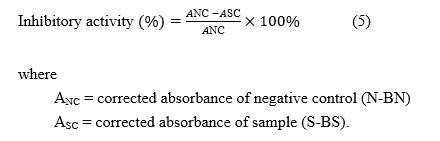
Table 1 Composition of the reagent solutions for α-glucosidase inhibitory activity assay.
|
Volume of reagent (in µL) |
|||
Type of reagent |
BN |
N |
BS |
S |
Phosphate buffer 0.1 M, pH 7 |
75 |
50 |
50 |
50 |
p-NPG |
25 |
25 |
25 |
25 |
Sample |
- |
- |
10 |
10 |
H2O |
10 |
10 |
- |
- |
Enzyme |
- |
25 |
- |
25 |
Incubation for 30 min at 37 °C |
|
|
|
|
Na2CO3 0.2 M |
100 |
100 |
100 |
100 |
Total |
210 |
210 |
210 |
210 |
Note: BN = Negative control blank (system without enzyme and extract); N = Negative control (mixture with enzyme, without extract); BS = Sample blank (mixture without enzyme, with extract); S = Sample (mixture with both enzyme and extract).
Data analysis
The mean values of the measurements, calculations, and statistical analyses were conducted using Microsoft ® Excel ® for Microsoft 365 MSO (Version 2512) and IBM SPSS Statistics 27. A paired t-test at a 95% significance level was used to compare the analytical results between the unfermented and fermented black turmeric rhizomes. Correlation analysis was conducted between total phenolic content, total flavonoid content, and curcumin content and the IC50 of DPPH antioxidant activity and antioxidant capacities (ABTS, FRAP, and CUPRAC) at a 99% significance level.
Results and discussion
Moisture content and yield of extract
The average moisture content of black turmeric rhizome simplicia was 9.10 ± 0.12% (w/w), meeting the standard of <10% for good quality of the simplicia [24]. This low moisture level inhibits microbial growth and prevents the degradation of active compounds by microbial enzymes. Moisture content is also a correction factor for determining the extract yield. The yield from the unfermented black turmeric aqueous extract was 15.36% (w/w), which aligns with the Indonesian Pharmacopoeia standard of ≥13.9% [24].
pH and Total Titratable Acidity (TTA) of kombucha
The most important parameter for the microbiological safety of kombucha is pH, which must be in the range of 2.5 - 4.2 [3]. The 10-days fermentation of kombucha made from black turmeric significantly lowered pH (p < 0.05) (Figure 1(a)).
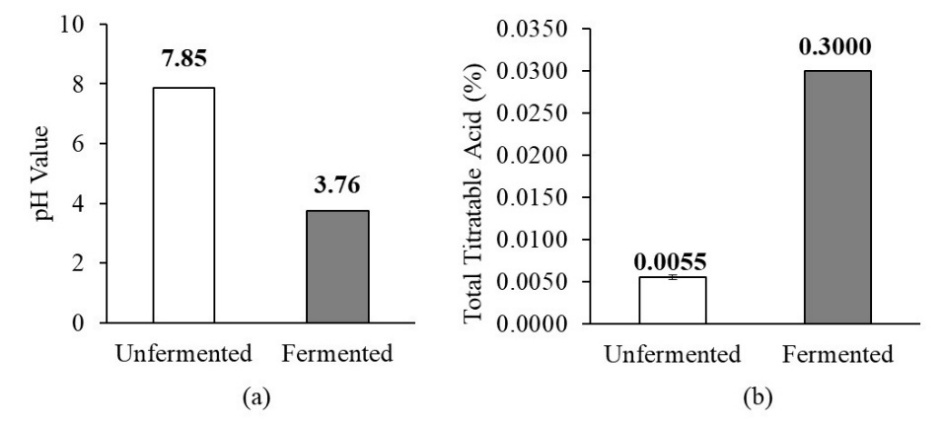
Figure 1 (a) pH values, and (b) total titratable acidity of unfermented and fermented black turmeric. Values are presented as mean ± standard deviation.
A significant increase in total acidity was observed during fermentation (p < 0.05) (Figure 1(b)). The total acidity was assessed as the total titratable acidity (TTA), which captures both the dissociated and undissociated acids. An increase was also reported in turmeric kombucha, where the TTA of the unfermented one was not detected, and that of the fermented one was 0.21% [13]. A study on the microbial identification of Indonesian SCOBY using Next-Generation Sequencing reported that the most abundant bacteria were Komagataeibacter, a known genus of AAB. AAB in SCOBY are more dominant than LAB [27]. During kombucha fermentation, the growth of acetic acid and lactic acid bacteria increases the organic acid content, which lowers the pH and increases the TTA.
Total phenolic and flavonoid contents (TPC and TFC)
As shown in Figure 2(a), kombucha fermentation increased the TPC of black turmeric, which was significantly higher (p < 0.05) than that of unfermented black turmeric. The increase in phenolic content due to kombucha fermentation is closely associated with the enzymatic activity of yeast and bacteria in the SCOBY. Enzymes in SCOBY, such as phenol oxidase from LAB, convert complex phenolic compounds into simple free phenolic compounds. Moreover, LAB have been reported to exhibit β-glucosidase activity, which hydrolyzes phenolics and flavonoids by cleaving sugar groups, thereby generating active aglycones [28]. A similar increase in TPC due to fermentation has been observed in kombucha prepared from turmeric rhizome extract [13,14].
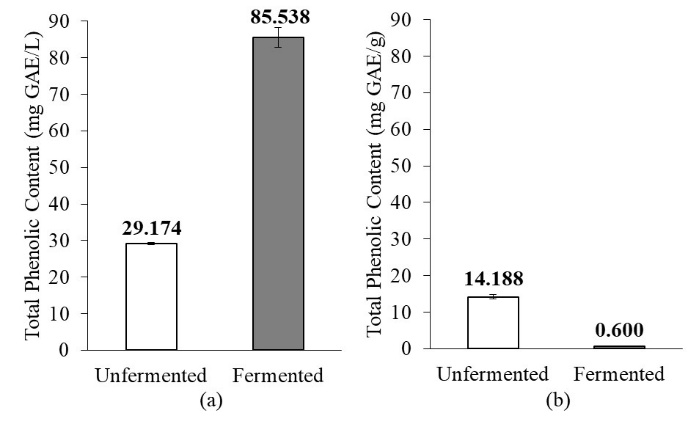
Figure 2 Total phenolic content of black turmeric rhizome extract and black turmeric kombucha. (a) Liquid and (b) Freeze-dried. Values are presented as mean ± standard deviation.
Our study (Figure 3(a)) indicates that fermentation can significantly enhance TFC (p < 0.05). A positive impact of fermentation on flavonoid content has also been reported in kombucha from Telang flower tea, which increased from 0.045% to 0.072% [27]. The increase in flavonoid levels is likely attributable to biotransformation processes mediated by microbial enzymes in kombucha, which can enhance the biological activity of flavonoids [8].
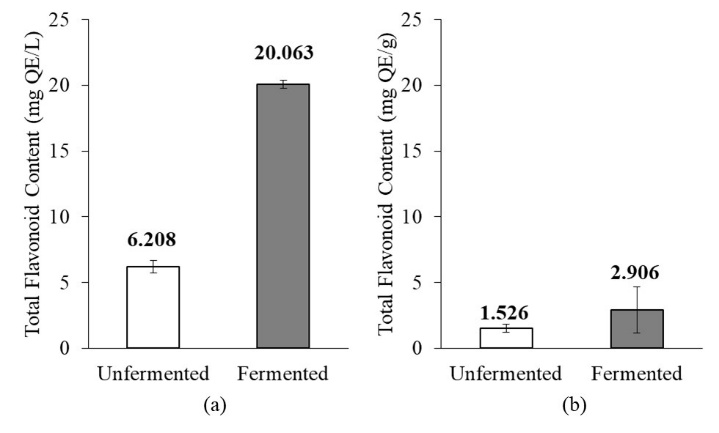
Figure 3 Total flavonoid content of black turmeric rhizome extract and black turmeric kombucha. (a) Liquid and (b) Freeze-dried. Values are presented as mean ± standard deviation.
Figures 2(b) - 3(b) show that freeze-drying treatment decreased the TPC and TFC of both unfermented and fermented black turmeric. This reduction suggests the degradation or loss of certain phenolic compounds due to freeze-drying, which allegedly resulted from the rapid pressure changes involved in the process [29]. Degraded phenolic compounds may be the polar compounds that dissolve in the water. However, there was no control for phenolic or flavonoid compounds used in the freeze-drying process, which is a limitation of this study.
Due to the low TPC and TFC of freeze-dried samples, further analysis of curcuminoid content, antioxidant activity and capacities, and α-glucosidase inhibitory activity was only conducted in liquid samples.
Curcuminoid content
Fermentation using medicinal plants as a medium has been shown to be an effective method for increasing the diversity, abundance, and novelty of active compounds [30,31]. Although curcuminoids are specific to Curcuma sp., previous research has identified that the curcuminoid content in 20 accessions of Indonesian black turmeric was relatively low, only 0.01% - 2% [32]. In our study, curcuminoid content analysis showed that curcumin increased after kombucha fermentation (61.307 ppm) compared to unfermented black turmeric (52.184 ppm). Our results were higher than the curcumin content in kombucha fermentation of turmeric, which was 0.73 ± 0.04 mg/L [17]. Conversely, the bisdemethoxycurcumin and demethoxycurcumin contents in kombucha prepared from black turmeric (3.823 and 14.869 ppm, respectively) were lower than those in the unfermented black turmeric (8.685 and 19.131 ppm, respectively).
In our study, kombucha fermentation of black turmeric increased curcumin content, while bisdemethoxycurcumin and demethoxycurcumin content decreased. The changes in curcuminoid content resulting from turmeric (Curcuma longa L.) fermentation were summarized by Salve et al. [33]. Fermentation of turmeric by Lactobacillus plantarum, L. fermentum, and L. johnsonii increases curcumin, bisdemethoxycurcumin, and demethoxycurcumin content, whereas fermentation by Saccharomyces cerevisiae increases curcumin content [33]. Metagenomic analysis of SCOBY and kombucha identified Lactobacillus sp. and S. cerevisiae [34]. Those two studies hypothetically explained the increase in curcumin content in black turmeric kombucha due to the activity of bacteria and yeast in this study. In contrast, another study reported that kombucha fermentation of Curcuma longa resulted in a significant decrease in curcumin, bisdemethoxycurcumin, and demethoxycurcumin [13]. Conjugated curcuminoids, such as curcumin monoacetate, curcumin monoglucoside, and curcumin glucuronide, were detected in Javanese turmeric kombucha, whereas these compounds were not detected in the unfermented one [13]. The microorganisms in SCOBY may metabolize curcuminoids and cause a decrease in curcuminoid content [35]. In this study, the decrease in bisdemethoxycurcumin and demethoxycurcumin content in black turmeric kombucha might be because of the biotransformation by yeast and bacteria; however, further study is needed to prove this hypothesis.
Antioxidant activity and capacities
Antioxidant activity was measured using the DPPH method, and the results were expressed as IC50 values. Lower IC50 values indicate stronger antioxidant activity. As shown in Table 2, the IC50 of black turmeric after fermentation significantly decreased (p < 0.05), indicating enhanced antioxidant activity. The IC50 of ascorbic acid was used as a benchmark and was not potentially equivalent to that of the samples. These findings demonstrate that kombucha fermentation effectively boosts antioxidant activity. Other studies on the fermentation of Javanese turmeric using kombucha also reported a lower IC50 than that without fermentation [13,14].
Table 2 Antioxidant activity of fermented and unfermented black turmeric.
Sample |
IC50 (μg/mL) |
Unfermented black turmeric |
34.46 ± 0.34 |
Fermented black turmeric |
5.98 ± 0.22 |
Ascorbic acid |
13.91 ± 1.50 |
The antioxidant capacities of unfermented and fermented black turmeric at a concentration of 76.8 µg/mL, determined using the ABTS, FRAP, and CUPRAC methods, are shown in Figure 4. Kombucha fermentation of black turmeric rhizome extract significantly increased antioxidant capacities evaluated by all three methods (p < 0.05). Kombucha from black tea with table sugar showed a significant increase in antioxidant capacity by ABTS from days 7 to 14 of fermentation, while the antioxidant capacity of FRAP was higher on day 7 than on day 14 of fermentation [6]. In our study, the increase in antioxidant activity and capacity after fermentation of black turmeric extract was significantly correlated (p < 0.01) with the elevated total phenolic and flavonoid content of kombucha. This correlation is in line with a previous finding that the total phenolic and flavonoid contents of black and green tea kombucha fermented for 7 days were correlated with DPPH and FRAP activities [6]. Different antioxidant mechanisms, such as the scavenging activity of hydrophilic and lipophilic antioxidant compounds in ABTS and CUPRAC compared to only hydrophilic antioxidant compounds in FRAP [36], might affect the quantification of activities.
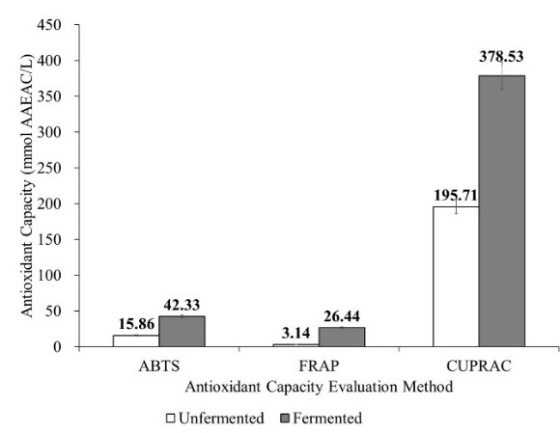
Figure 4 Antioxidant capacities of black turmeric rhizome extract and black turmeric kombucha evaluated by ABTS, FRAP, and CUPRAC methods.
Several phenolic and flavonoid compounds play critical roles in antioxidant activity. This role is largely attributed to the presence of functional hydroxyl groups in the phenolics of black turmeric kombucha, which can donate electrons or hydrogen atoms to neutralize free radicals and produce more stable compounds. Curcumin is also known to exhibit antioxidant activity [37]. The observed increase in curcumin content in black turmeric kombucha, which was significantly correlated (p < 0.01), may be contributed to the increase in antioxidant activity and capacity. In a previous study, kombucha prepared from a combination of black tea and black turmeric demonstrated antioxidant potential with an IC50 value of 13.17 ppm [38]. This difference in potency may be attributed to the different base ingredients used in each type of kombucha. When two types of herbs, each containing unique bioactive compounds, are combined, the interactions between these compounds may produce a synergistic effect, enhancing their overall bioactivity [15]. Increasing the turmeric concentration in kombucha results in higher antioxidant activity [38].
α-Glucosidase inhibitory activity
The initial screening for α-glucosidase inhibition was performed using two sample concentrations. As shown in Table 3, kombucha prepared from black turmeric exhibited higher α-glucosidase inhibitory activity than unfermented black turmeric (Table 4). The IC50 for unfermented black turmeric could not be calculated because its maximum tested concentration (51.20 μg/mL) achieved only 33.81% inhibition, falling short of the 50% threshold required for IC50 determination. The IC50 value of the positive control, acarbose, was 0.09 ± 0.01 μg/mL.
Table 3 Preliminary screening of α-glucosidase inhibitory activity of fermented and unfermented black turmeric.
Sample |
Concentration (μg/mL) |
α-Glucosidase inhibitory activity (%) |
Negative control (-) |
0 |
0.00 |
Unfermented black turmeric |
1.28 |
8.54 ± 3.72 |
12.80 |
19.38 ± 1.81 |
|
Fermented black turmeric |
1.28 |
12.60 ± 3.20 |
12.80 |
47.67 ± 3.52 |
Table 4 IC50 of the α-glucosidase inhibitory activity of fermented and unfermented black turmeric.
Sample |
IC50 (μg/mL) |
Unfermented black turmeric |
N/A |
Fermented black turmeric |
9.41 ± 0.76 |
Acarbose |
0.09 ± 0.01 |
The results of this study indicated that the bioactive components of non-fermented black turmeric showed weaker inhibition of α-glucosidase. This might be attributed to the low concentration or efficacy of the active compounds in the extracts. Furthermore, the tested extract remained in the form of a crude solution, suggesting that it may contain additional components without any inhibitory effect on α-glucosidase. Fermentation enhanced α-glucosidase inhibitory activity, as evidenced by the lower IC50 value of the fermented extract. In this study, undiluted black turmeric kombucha exhibited the maximum inhibition of α-glucosidase (84.76%), although this value was still lower than that of undiluted sea grape (Caulerpa racemosa) kombucha filtrate, which showed 90.42% inhibition [39].
The increase in the total phenolic, total flavonoid, and curcumin content of black turmeric kombucha was hypothetically contributed to the increase in α-glucosidase inhibitory activity. Correlation analysis could not be performed because the IC50 of unfermented black turmeric could not be calculated. A review reported that curcumin may reduce fasting blood glucose levels, improve insulin sensitivity, and regulate lipid profiles in humans and animals with diabetes [37]. Fermentation of turmeric effectively improved insulin sensitivity and reduced blood glucose levels in diabetic rats compared to non-fermented turmeric [33]. Another study on the bioactive compound analysis of kombucha from black tea and black turmeric using LC-HRMS identified sesquiterpenoids as the most abundant components [38], which may exert potential antidiabetic effects that were not analyzed in this study.
The in vitro results of TPC, TFC, curcumin content, antioxidant activity and capacities, as well as the in vitro α-glucosidase inhibition, suggest the potency of black turmeric kombucha as a functional food. However, the present study has several limitations, such as the fermentation conditions and curcuminoid content analysis. Kombucha fermentation in this study was only conducted under one condition, at 25 - 30 °C for 10 days. Hence, the results of this study can be further explored by optimizing fermentation conditions, such as temperature and incubation duration. Curcuminoid content analysis, which showed a decrease in bisdemethoxycurcumin and demethoxycurcumin content after fermentation, can be confirmed with more specific analysis, such as LC-MS/MS, for more information on the results of compound biotransformation.
Conclusions
Curcuma aeruginosa rhizome extract fermented by SCOBY into kombucha showed significantly higher total phenolic, flavonoid, and curcumin contents than the unfermented extract. This increase was correlated with improved antioxidant activity as well as the antioxidant capacities by ABTS, FRAP, and CUPRAC. This increase was also in line with the increase in the in vitro α-glucosidase inhibitory activity of black turmeric kombucha. After fermentation, the bisdemethoxycurcumin and demethoxycurcumin contents decreased, but the possibility of biotransformation needs to be confirmed. These results indicate that kombucha fermentation enhances the antioxidant and in vitro antihyperglycemic effects of black turmeric. Further in vivo validation is required to ascertain the potential of black turmeric kombucha as a functional food.
Acknowledgements
This research was financially supported by The Ministry of Higher Education, Science and Technology, Republic of Indonesia for research funding through the Penelitian Fundamental Reguler (PFR) 2025 scheme under contract 006/C3/DT.05.00/PL/2025.
Declaration of Generative AI in Scientific Writing
The authors acknowledge the use of generative AI tools (Paperpal) for language editing and grammatical refinement during the preparation of this manuscript. AI tools were not used for content generation, data analysis, or interpretation. The authors take full responsibility for the integrity and conclusions of this study.
CRediT Author Statement
Uswatun Hasanah: Formal Analysis; Visualization; Writing – Original draft preparation; Writing - Reviewing and Editing. Lelly Aulia Damarhati: Investigation; Formal Analysis; Methodology; Visualization. Sulistiyani: Data curation; Supervision. Sera Budi Verinda: Data curation; Supervision. Syaefudin Suminto: Conceptualization; Methodology; Writing - Original draft preparation, Writing - Reviewing and Editing; Supervision.
References
[1] DFM Farid, S Abdullah and MFA Bakar. Review of the benefits of kombucha tea: Chemical components and pharmacological activities. Food Research 2024; 8(S5), 70-83.
[2] LM Nyhan, KM Lynch, AW Sahin and EK Arendt. Advances in kombucha tea Fermentation: A review. Applied Microbiology 2022; 2(1), 73-103.
[3] JFD Miranda, LF Ruiz, CB Silva, TM Uekane, KA Silva, AGM Gonzalez, FF Fernandes and AR Lima. Kombucha: A review of substrates, regulations, composition, and biological properties. Journal of Food Science 2022; 87(2), 503-527.
[4] B Bastian, N Nurhidayanti and J Trianes. The role of kombucha in health: Bibliometrics analysis. Jurnal Riset Kesehatan Poltekkes Depkes Bandung 2025; 17(2), 718-730.
[5] N Martihandini and I Rochimat. Characteristics of four variants of kombucha tea as candidate of functional health drink. Jurnal Mandala Pharmacon Indonesia 2024; 10(1), 227-237.
[6] YL Lau and PL Tang. Exploring the effects of fermentation time and the addition of paraprobiotic strain K-1 on the physicochemical, chemical, and antioxidant properties of black and green tea kombuchas sweetened with different sugars. International Journal of Gastronomy and Food Science 2025; 40, 101152.
[7] R Jayabalan, P Subathradevi, S Marimuthu, M Sathishkumar and K Swaminathan. Changes in free-radical scavenging ability of kombucha tea during fermentation. Food Chemistry 2008; 109(1), 227-234.
[8] J Su, Q Tan, Q Tang, Z Tong and M Yang. Research progress on alternative kombucha substrate transformation and the resulting active components. Frontiers in Microbiology 2023; 14, 1254014.
[9] RR Cardoso, LPD Moreira, MAC Costa, RCL Toledo, M Grancieri, TPD Nascimento, MSL Ferreira, SLPD Matta, MR Eller, HSD Martino and FARD Barros. Kombuchas from green and black teas reduce oxidative stress, liver steatosis and inflammation, and improve glucose metabolism in Wistar rats fed a high-fat high-fructose diet. Food & Function 2021; 12(21), 10813-10827.
[10] AB Barroso Filho, LA Barros, KR Ribeiro, CA Silva and BD Koike. Efficiency of daily kombucha consumption in reducing glycemic levels and hypercholesterolemia. Brazilian Journal of Health Review 2024; 7(2), e68785.
[11] G Ecklu-Mensah, R Miller, MG Maseng, V Hawes, D Hinz, C Kim and JA Gilbert. Modulating the human gut microbiome and health markers through kombucha consumption: A controlled clinical study. Scientific Reports 2024; 14(1), 31647.
[12] GM Fraiz, DB Bonifácio, RSD Paulo, CM Teixeira, HSD Martino, FARD Barros, FI Milagro and J Bressan. Benefits of kombucha consumption: A systematic review of clinical trials focused on microbiota and metabolic health. Fermentation 2025; 11(6), 353.
[13] E Zubaidah, EC Dea and H Sujuti. Physicochemical and microbiological characteristics of kombucha based on various concentration of Javanese turmeric (Curcuma xanthorrhiza). Biocatalysis and Agricultural Biotechnology 2022; 44, 102467.
[14] E Zubaidah, Y Hasfiani and H Sujuti. Physicochemical properties and anti-cancer activity of Javanese turmeric kombucha (Curcuma xanthorrhiza) against T47D cell line. Trends in Sciences 2025; 22(9), 10417.
[15] MI Khazi, F Liaqat, X Liu, Y Yan and D Zhu. Fermentation, functional analysis, and biological activities of turmeric kombucha. Journal of the Science of Food and Agriculture 2024; 104(2), 759-768.
[16] J Su, Q Tan, S Wu, F Zhou, C Xu, H Zhao, C Lin, X Deng, L Xie, X Lin, H Ye and M Yang. Administration of turmeric kombucha ameliorates lipopolysaccharide-induced sepsis by attenuating inflammation and modulating gut microbiota. Frontiers in Microbiology 2024; 15, 1452190.
[17] Z Nisa, S Jusuf and R Yudhani. Curcumin compounds and total microorganisms in turmeric kombucha as a potential therapy in rats obesity model. Indonesian Journal of Nutrition and Dietetics 2025; 13(2), 114-124.
[18] F Tunnisa, DN Faridah, A Afriyanti, D Rosalina, MA Syabana, N Darmawan and ND Yuliana. Antioxidant and antidiabetic compounds identification in several Indonesian underutilized Zingiberaceae spices using SPME-GC/MS-based volatilomics and in silico methods. Food Chemistry: X 2022; 14, 100285.
[19] T Awin, A Mediani, Maulidiani, SW Leong, SMM Faudzi, K Shaari and F Abas. Phytochemical and bioactivity alterations of Curcuma species harvested at different growth stages by NMR-based metabolomics. Journal of Food Composition and Analysis 2019; 77, 66-76.
[20] Association of Official Agricultural Chemists. Official method of analysis of the association of official analytical of chemist. 18th ed. The Association of Official Agricultural Chemists, Inc., Maryland, 2005.
[21] Association of Official Agricultural Chemists. Official method of analysis by the association of official analytical of chemist. 17th ed. The Association of Official Agricultural Chemists, Inc., Maryland, 2000.
[22] SD Rale, Hasim and S Falah. Antioxidant activity, inhibition α-glucosidase of ethanol extract of Strychnos nitida G. Don and identification of active compounds. Current Biochemistry 2018; 5(3), 11-20.
[23] S Sancheti, S Sandesh and SY Seo. Chaenomeles sinensis: A potent α-and β-glucosidase inhibitors. American Journal of Pharmacology and Toxicology 2009; 4(1), 8-11.
[24] Indonesian Ministry of Health. Farmakope Indonesia Edisi II. Indonesian Ministry of Health, Jakarta, Indonesian, 2017.
[25] Food and Drug Administration, Available at: http://www.fda.gov/Food/GuidanceRegulation/RetailFoodProtection/FoodCode/UCM2019396.htm, accessed January 2026.
[26] T Aung and J Eun. Impact of time and temperature on the physicochemical, microbiological, and nutraceutical properties of laver kombucha (Porphyra dentata) during fermentation. LWT 2022; 154, 112643.
[27] R Kushargina, R Rimbawan, M Dewi and E Damayanthi. Metagenomic analysis, safety aspects, and antioxidant potential of kombucha beverage produced from telang flower (Clitoria ternatea L.) tea. Food Bioscience 2024; 59, 104013.
[28] ED Wijayanti, NC Setiawan and JP Cristi. Effect of lactic acid fermentation on total phenolic content and antioxidant activity of fig fruit juice (Ficus carica). Advances in Health Sciences Research 2017; 2, 282-289.
[29] S Tan, J Tang, W Shi, Z Wang, Y Xiang, T Deng, X Gao, W Li and S Shi. Effects of three drying methods on polyphenol composition and antioxidant activities of Litchi chinensis Sonn. Food Science and Biotechnology 2020; 29, 351-358.
[30] K Dogan and F Tornuk. Improvement of bioavailability of bioactive compounds of medicinal herbs by drying and fermentation with Lactobacillus plantarum. Functional Foods in Health and Disease 2019; 9(12), 735-748.
[31] N Liu, M Song, N Wang, Y Wang, R Wang, X An and J Qi. The effects of solid-state fermentation on the content, composition and in vitro antioxidant activity of flavonoids from dandelion. PLoS One 2020; 15(9), e0239076.
[32] W Nurcholis, N Khumaida, M Syukur and M Bintang. Variability of curcuminoid content and lack of correlation with cytotoxicity in ethanolic extracts from 20 accessions of Curcuma aeruginosa RoxB. Asian Pacific Journal of Tropical Disease 2016; 6(11), 887-891.
[33] RV Salve, R Chavan, P Pawase, N Kelapure, R Jaju, H Wadatkar and M Kadam. The impact of the fermentation process on bioactive compounds in turmeric: A review. Journal of Food Chemistry and Nanotechnology 2023; 9(S1), S367-S374.
[34] FAO Duarte, KK Ramos, C Gini, RM Morasi, NCC Silva and P Efraim. Microbiological characterization of kombucha and biocellulose film produced with black tea and cocoa bean shell infusion. Food Research International 2024; 190, 114568.
[35] S Hu, W Ma, L Fu, X He, G Wang, J Fu and M Yang. Biochemical component changes of Curcuma longa - Black tea triggered by kombucha fermentation using metabolomics analysis. LWT 2025; 219, 117553.
[36] IG Munteanu and C Apetrei. Analytical methods used in determining antioxidant activity: A review. International Journal of Molecular Sciences 2021; 22, 3380.
[37] O Bozkurt, B Kocaadam-Bozkurt and H Yildiran. Effects of curcumin, a bioactive component of turmeric, on type 2 diabetes mellitus and its complications: An updated review. Food & Function 2022; 13(23), 11999-12010.
[38] FK Hartati, D Kurnia, W Nafisah and IB Haryanto. Potential anticancer agents of Curcuma aeruginosa-based kombucha: In vitro and in silico study. Food Chemistry Advances 2024; 4, 100606.
[39] HK Permatasari, F Nurkolis, PS Augusta, N Mayulu, M Kuswari, NA Taslim, DS Wewengkang, SC Batubara and WB Gunawan. Kombucha tea from seagrapes (Caulerpa racemosa) potential as a functional anti-ageing food: In vitro and in vivo study. Heliyon 2021; 7(9), e07944.