
Trends
Sci.
2026; 23(11): 13527
Comparative Analysis of Bioactive Compounds and Antioxidant Stability in Khao-Mao Rice Varieties from Ubon Ratchathani: Impact of In Vitro Gastrointestinal Digestion
Jirawan Oonmetta-Aree1, Kakanang Posridee2, Anant Oonsivilai3,
Jittra Singthong4 and Ratchadaporn Oonsivilai2,5,*
1Food Science and Technology Program, Faculty of Science and Technology, Nakhon Ratchasima Rajabhat University,
Nakhon Ratchasima 30000, Thailand
2School of Food Technology, Institute of Agricultural Technology, Suranaree University of Technology,
Nakhon Ratchasima 30000, Thailand
3School of Electrical Engineering, Institute of Engineering, Suranaree University of Technology,
Nakhon Ratchasima 30000, Thailand
4Department of Agro-Industry, Faculty of Agriculture, Ubon Ratchathani University,
Ubon Ratchathani 34190, Thailand
5Health and Wellness Research Group, Suranaree University of Technology, Nakhon Ratchasima 30000, Thailand
(*Corresponding author’s e-mail: [email protected])
Received: 1 February 2026, Revised: 16 March 2026, Accepted: 26 March 2026, Published: 30 May 2026
Abstract
This study explores the nutritional potential and bioactive compounds of Khao-Mao, a celebrated local product (OTOP) from Ubon Ratchathani, Thailand, by analyzing 9 varieties of young rice sourced from Phibun Mangsahan and Trakanpuetpon. Interestingly, our results show that a rice variety’s “ranking” as a top antioxidant depends entirely on the type of test used. While the pigmented Kam variety was the clear winner in terms of total phenolics and standard radical scavenging (DPPH, ABTS, and FRAP), it was the Dor He and E-Tei varieties that performed best when specifically challenged with hydroxyl and superoxide ions. We also observed that the PM-sourced Kam was richer in anthocyanins than the TP version, while the non-pigmented types maintained steady chlorophyll levels. To evaluate the bio accessibility and stability of these compounds, a simulated in vitro gastrointestinal digestion model was applied. The results indicated that while phenolic recovery was relatively low, varieties such as RD6, E-Tei, and Kam maintained measurable concentrations ranging from 4.56% to 6.65%. Despite this reduction in total phenolics, these varieties retained substantial antioxidant potential, with reducing power percentages recorded at 78.78%, 92.43%, and 71.85%, respectively, following intestinal simulation. These results demonstrate that while gastrointestinal digestion significantly alters phenolic structures, Khao-Mao maintains high antioxidant efficacy through the resilience of its secondary metabolites and synergistic contributions from non-phenolic constituents. Consequently, this young rice serves as a robust source of bio accessible antioxidants, retaining functional potency despite physiological transformation. Furthermore, the IC50 values for ABTS radical scavenging activity increased to 84.21% (RD6), 80.95% (E-Tei), and 82.97% (Kam), suggesting that while the antioxidant capacity remains significant, the concentration required for 50% inhibition rises following digestive transformation. In conclusion, this study identifies Kam (from Phibun Mangsahan) and E-Tei as the most promising candidates for high-value food development, even for different physiological targets. While the pigmented Kam variety is superior for general radical scavenging and anthocyanin delivery, E-Tei demonstrates exceptional resilience during digestion, maintaining the highest reducing power (92.43%) and the most favorable post-digestion IC50 value.
Keywords: Khao-Mao, Bioactive compounds, Antioxidant activity, Digestive stability, Total phenolics
Introduction
Glutinous rice (Oryza sativa L. var. glutinosa) serves as the primary dietary staple and the most consumed cereal grain in Northeast Thailand (Isan). Beyond its role as a fundamental caloric source, it is a crucial raw material for traditional processed products, most notably “Khao Mao” (Young Flattened Rice). Recognized as an ancient Thai delicacy and a prominent specialty under the One Tambon One Product (OTOP) scheme in Ubon Ratchathani Province—particularly in the Phibun Mangsahan and Trakan Phuet Phon districts—Khao Mao represents a significant cultural and economic asset. The production of Khao Mao involves an artisanal sequence of toasting, pounding, and winnowing immature glutinous rice harvested during the late-milky to soft-dough stages, typically within 14 days after pollination [1]. This specific maturity window is critical, as the grains retain a unique profile of bioactive compounds that are significantly diminished in fully matured or polished white rice. The resulting emerald-green grains are characterized by a distinct nutty flavor, tender texture, and a unique aromatic profile. Historically consumed as a nutrient-dense snack, it also serves as a functional base for traditional desserts such as Khao Mao Thod (deep-fried stuffed rice) and Khao Mao Khluk (mixed with shredded coconut).
Recently, Khao Mao has garnered scientific interest as a potential “functional food” due to its concentrated nutritional and phytochemical density. Preliminary screenings indicate that Khao Mao is an antioxidant-rich food containing phenolic compounds, anthocyanins, and flavonoids. Young Flattened Rice (Khao Mao) from 6 varieties (Laos Wan, RD6, Ai Lueng, San Pa Tong, Yee Pun, Hom Nang Nuan) shows significant antioxidant activity and varied phytochemical content, particularly phenolic compounds, with Ai Lueng having the highest at dry weight (DW). The study highlights that San Pa Tong provides the highest protein (6.11%), while Hom Nang Nuan exhibits the lowest IC50 (1.18 mg/mL), indicating potent antioxidant capacity. Specific varieties, such as Hom Nang Nuan, exhibit low values, indicating potent antioxidant capacity [2]. Comparative studies on dough-stage grains (e.g., Khao Dawk Mali 105 and Kor
Khor 6) revealed high-oryzanol levels despite lower total phenolic content (TPC) in green varieties; however, red and black dough grains generally exhibit superior nutritional value, TPC, total anthocyanin content (TAC), and antioxidant activities compared to their green counterparts [3]. The health-promoting efficacy of these constituents is strictly governed by their bioaccessibility—the fraction of compounds released from the food matrix during digestion and made available for intestinal absorption. Recent in vitro digestibility studies demonstrated that parboiled immature rice starch (PIRS) exhibits a significantly lower hydrolysis rate compared to conventional starch sources. This digestive resistance is attributed to several synergistic factors: the formation of a compact physical barrier during parboiling, the presence of intact outer layers (pericarp and aleurone), and the high protein content characteristic of immature grains, which collectively interfere with amylolytic enzyme penetration. Consequently, PIRS has been shown to modulate glucose and lipid metabolisms in in vivo models, effectively reducing insulin resistance and improving lipid profiles in high-fat diet-induced obese subjects [4]. While the structural benefits of Khao Mao are well-documented, the stability and biotransformation of its antioxidant profiles during sequential digestion phases remain under-explored. Investigating the digestive fate and the recovery of bioactive compounds of Therefore, evaluating the antioxidant properties and digestive activities of Khao Mao—specifically those sourced from Phibun Mangsahan and Trakan Phuet Phon districts across 5 and 6 distinct varieties, respectively—is imperative for validating its status as a functional food. Such insights are essential for the strategic development of value-added agricultural products aimed at improving metabolic health.
While previous studies have characterized the raw nutritional profiles of mature rice, there is a significant knowledge gap regarding the “digestive resilience” of bioactive compounds in young flattened rice (Khao-Mao). Specifically, the literature often assumes that high total phenolic content in raw grain directly correlates to high bioaccessibility. This research challenges that assumption by demonstrating that varieties with lower initial phenolics (like E-Tei) can actually exhibit superior stability and antioxidant potency post-digestion compared to pigmented varieties (like Kam). There is also a lack of comparative data on how distinct chemical scavenging pathways (Standard Radicals vs. Reactive Oxygen Species) vary across indigenous young rice cultivars under physiological conditions.
Comparing samples from Phibun Mangsahan (PM) and Trakanpuetpon (TP) is essential because, even within the same province, subtle differences in soil and microclimate, often called the “terroir effect”, can significantly shift a variety’s healthy compounds, as seen with the higher anthocyanin levels in PM-sourced Kam. Beyond the environment, these districts often follow their own localized traditional methods for parboiling and roasting Khao-Mao; comparing them allows us to pinpoint which local “best practices” actually produce a more bio accessible and nutritious product. Ultimately, identifying these geographical “hotspots” is key to standardizing the OTOP program, as it helps brand specific districts as specialized producers of either high-pigment or high-stability rice, giving the local economy a clear competitive edge in the functional food market.
The primary objective of this study is to evaluate the varietal and geographical influence on the antioxidant stability and in vitro bio accessibility of Khao-Mao (young, flattened rice) from Ubon Ratchathani, Thailand. The scope encompasses 9 distinct rice cultivars sourced from 2 geographically specific districts (Phibun Mangsahan and Trakanpuetpon), providing a comparative assessment of their chemical profiles, including total phenolics, anthocyanins, and chlorophylls, against their functional performance across multiple radical scavenging pathways (DPPH, ABTS, FRAP, OH•, and O₂•). By integrating a simulated gastrointestinal digestion model, this research aims to identify “resilient” cultivars by distinguishing between varieties with high initial antioxidant concentrations, such as Kam, and those like E-Tei that maintain superior bioactivity post-digestion. Furthermore, the study seeks to validate assay-specific rankings, demonstrating how the choice of antioxidant evaluation method significantly alters the perceived health value of local rice varieties. Ultimately, these outcomes will establish scientific benchmarks for the OTOP program, providing a robust framework to standardize and brand specific districts as regional “hotspots” for high-performance functional food ingredients.
Materials and methods
Thailand’s Phibun Mangsahan (PM) and Trakanpuetpon (TP) provided samples of young glutinous rice used in their famous khao-mao dishes. A prominent traditional rice product in Thailand is Khao Mao, derived from immature, flattened glutinous rice. The term literally translates to ‘immature rice’ (Khao: rice; Mao: immature), specifically referring to grains harvested between 13 and 19 days after anthesis (DAA), though this window varies by cultivar. The production involves an initial several-hour soak followed by a 25-minute steaming period in a traditional bamboo vessel (Huat). Subsequently, the grains undergo a 1.3-hour roasting process in a large wok under constant agitation. Once cooled, the parboiled grains are subjected to mechanical or manual pounding. The final stage involves iterative cycles of sieving and winnowing to isolate the flattened kernels from residual husks and bran, ensuring a high-purity final product [5]. Four different types, including Kam, RD6, Jasmine, and Dor He, were obtained from PM, and 5 different types, including Kam, RD6, Lee Nok, Dor Hom, and E-Tei, were obtained from TP in Ubon Ratchathani, Thailand (Figures 1 and 2). After collecting the Khao-Mao samples, they were placed in laminated foil packets, sealed, and stored at 4 degrees Celsius until they were analyzed. Analytical-grade chemicals were employed for all studies, including those that determined the chemical makeup and bioactive components of Khao-Mao sample extracts.
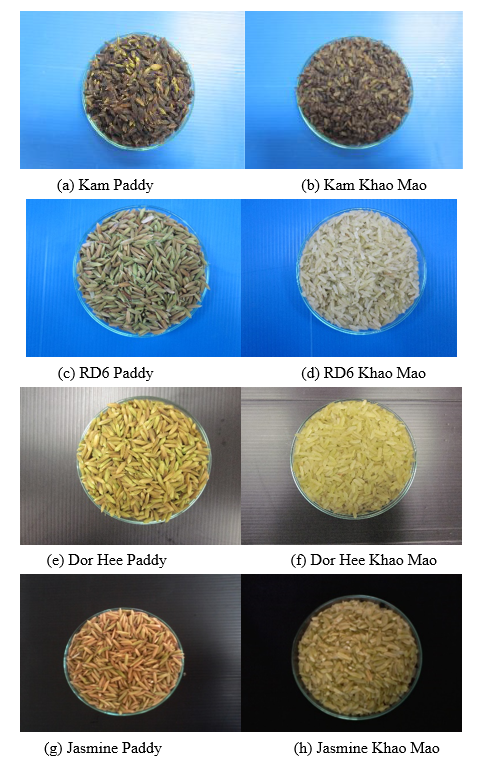
Figure 1 Varieties of rice grain and young rice (Khao-Mao) from Piboonmangsahan district, Ubonratchathani province: (a) Kam Paddy (b) Kam Khao Mao (c) RD6 Paddy (d) RD6 Khao Mao (e) Dor Hee Paddy (f) Doe Hee Khao Mao (g) Jasmine Paddy, and (h) Jasmine Khao Mao.
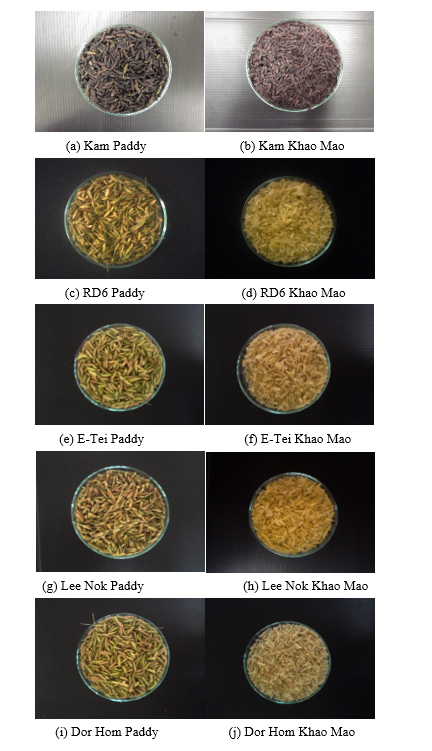
Figure 2 Varieties of rice grain and young rice (Khao-Mao) from Trakanpuetpon district, Ubonratchathani province: (a) Kam Paady (b) Kam Khao Mao (c) RD6 Paddy (d) RD6 Khao Mao (e) E-Tei Paddy (f) E-Tei Khao Mao (g) Lee Nok Paddy (h) Lee Nok Khao Mao (i) Dor Hom Paddy, and (j) Dor Hom Khao Mao.
Total phenolic content (TPC)
Total soluble phenolic constituents of the ethanol Kho Mao extracts were determined employing the method of [6] using the Folin-Ciocalteu reagent with gallic acid as standard. About 5.0 g of Khoa Mao powder was extracted with 50 mL portions of 70% ethanol by shaking for 15 min at a temperature of 37 °C, and then centrifuged at 2,800 rpm (Thermo Scientific, Braunschweig, Germany) for 15 min; then, they were filtered and the volumes were adjusted to 50 mL with the same solvent. Two milliliters of each extract were then transferred to test tubes. Solvent removal was achieved via rotary evaporation for ethanol extract. All samples were stored at −20 °C until needed.
Twenty microliters of freshly prepared Khoa Mao extract were added into a 1.5 mL cuvette, to which 1.58 mL of double distilled water and 100 µL Folin-Ciocalteu reagent was added. The sample was thoroughly mixed and incubated for 5 min at room temperature. Following incuba-tion 300 µl of the Na2CO3 (2 %w/v) solution was added and the mixture was allowed to stand at room temperature for 2 h. Absorbance was measured at 765 nm. Results were expressed as gallic acid equivalents.
Total chlorophyll contents
Chlorophyll content was determined following the spectrophotometric methods adapted from [7]. Pigments were extracted from the samples using a stabilized organic solvent—typically 80% aqueous acetone—through thorough homogenization to ensure complete extraction from the matrix. The resulting extract was centrifuged to obtain a clear supernatant, and its absorbance was subsequently measured at 645 and 663 nm using a UV-Vis spectrophotometer. Concentrations of chlorophyll a, b, and total chlorophyll were quantified using standard extinction coefficients and expressed as mg per gram of sample weight, ensuring a comprehensive profile of the primary photosynthetic pigments alongside other functional phytochemicals.
Total anthocyanin contents (TAC)
The procedure for measuring total anthocyanins was adapted from [8] with some minor changes. TAC in khao mao were determined using the spectrophotometric method previously described (4). The supernatant of the crude extracts was poured into a 50 mL volumetric flask and made up to volume with acidified methanol. Absorbance was measured on a UV-vis spectrophotometer (Varian Inc., Palo Alto, CA) at 535 nm. The TAC (in micrograms per gram) was calculated as follows:

Antioxidant activity
To measure antioxidant power, we used the DPPH, FRAP, and ABTS assays [9-11]. The antioxidants ascorbic acid, Trolox, and BHT served as a reference point. The IC50 was determined based on the expected data. The ability to scavenge superoxide and hydroxyl radicals was calculated using a method described in [12].
2, 2-diphenyl-1-picrylhydrazyl (DPPH) radical scavenging activity
Khao-Mao, BHT, and ascorbic acid were tested for their hydrogen-donating or radical-scavenging abilities against DPPH free radicals using a DU 800 Spectrophotometer (Beckman Coulter, CA) in accordance with the method described in [9]. The DPPH solution in methanol was diluted to 0.1 mM for a quick preparation. The DPPH in methanol had a constant starting absorbance of 515 nm over the course of the experiment. One hundred µL of a diluted extract (0.01 - 0.15 mg GAE/mL) was combined with one and a 500 µL of DPPH solution in methanol. After 15 min, the difference in absorbance at 515 nm was calculated. Percentage scavenging was determined by comparing the sample’s absorption to that of a control DPPH solution without the extracts. As a positive control, we employed a MeOH solution of BHT, ascorbic acid, and Trolox. Using nonlinear regression in Sigma Plot 9.1, we determined the extracts’ IC50 at a 15-minute scavenging value (Systat Software Inc, Illinois). The percentage of DPPH free radical inhibition was determined. The IC50 value was determined by plotting the percentage of inhibition versus the concentration of the extract. Triplicate tests were performed. According to the procedure outlined in [9], the synthetic antioxidant BHT and ascorbic acid were included in our studies as positive controls.
Ferric-reducing antioxidant power (FRAP) assay
The procedure described in [9] was used. The FRAP reagent was made by mixing 10 mmol TPTZ solution in 40 mmol HCl, 20 mmol ferrous chloride solution, and acetate buffer (pH 3.6) in a ratio of 10:1:1 (v/v). Each day’s supply of FRAP reagent was made from scratch and heated in a water bath to 37 degrees Celsius before usage. In order to use the FRAP reagent, 50 one of the extract was mixed with 1.5 mL of the reagent. After 4 min, the absorbance at 593 nm of the reaction mixture was measured. Results were reported as micromole equivalents of ferric per gram of dry plant material, with the standard curve having been generated using a ferric sulphate solution (100 - 2,000 mmol). We took 3 independent readings of each parameter to determine an average.
Scavenging activity of ABTS radical cation
The ability of extracts to scavenge ABTS-labeled radicals was measured in accordance with [13]. Five milliliters of a 14 millimolar ABTS solution and 5 milliliters of a 4.9 millimolar potassium persulfate (K2S2O8) solution were mixed and left to stand at room temperature in the dark for 12 - 16 h to generate the ABTS +cation radical. The solution was diluted with ethanol before use until the absorbance at 734 nm read 0.700 ± 0.020. Following the addition of 100 µL of the crude extracts, standards, or blank to a 2 mL test tube, 1,900 one of ABTS + solution was added, and the mixture was incubated for 6 min at room temperature while being thoroughly mixed. A reading of 734 nm was taken for absorbance. The scavenging capacity of ABTS for free radicals was quantified using the IC50 (mg/mL) as an indicator of antiradical activity.
Digestive stability of Khao-Mao
In vitro simulated digestion models
Khao-Mao digestion was simulated in accordance with [14]. Approximately 1 g of Khao-Mao sample was homogenized with 20 mL of 120 mM NaCl in a 50 mL polypropylene tube, and the pH was adjusted to 3.00 with 1 M HCl. 2 mL of Pepsin (40 mg/mL in 100 mM HCl) added. The volume was then adjusted to 40 mL with 120 mM NaCl, and the remaining tube was blanked with nitrogen gas, sealed with parafilm, and incubated for 1 h in a 37 °C water bath with 95 rpm shaking. The digesta (12 mL) was transferred to a 15 mL test tube and centrifuged at 8,000 rpm for 90 min (Hettich, universal 16R, USA) to separate the aqueous and remaining particle fractions. Using an 18 gauge needle attached to a 10 mL syringe, the aqueous fraction was extracted from the centrifuge tube and passed through a filter with 0.22 one pores. Either aqueous fraction was placed on ice for cellular uptake studies or it was filled with nitrogen gas and held at −80°C until triterpenoids from aqueous fraction were quantified.
At the conclusion of the gastric phase, the pH of the small intestine was raised to 6.00.1 with 1 M NaHCO3 to initiate the small intestinal phase. The reaction tube received 2 mL each of crude bile extract (40 in 10 mg/mL) in 100 mM NaHCO3 and Lipase (5 mg/mL in 100 mM NaHCO3). Using 1 mM NaHCO3, the sample’s pH was adjusted to 6.50.1. The tube was then sealed with parafilm and tightly capped with nitrogen gas before being placed in a shaking water bath for 2 h at 37 °C and 95 rpm. Following the conclusion of the stomach and small intestine phases, the digesta was covered with nitrogen and stored at −80 degrees Celsius.
Digestive stability
Digestive stability was described by [15]. Digesta was thawed at room temperature for 10 min. Aliquot was transferred to 50 mL tube and 10 mL of 90% ethanol solution were added. The mixture solution was sonicated for 10 min then vortexed for 2 min. The mixture solution was centrifuged at 3,500 rpm for 15 min. The supernatant was collected in a 50 mL round bottom flask. Extraction was repeated 3 times and supernatant was combined, dried by evaporator (Buchi Rotavapor®R-210) at a temperature of 45°C and resolubilized with methanol.

Statistical analysis
The reported data were expressed as means ± SE. Using one-way analysis of variance, the data were evaluated for difference between means (ANOVA). Duncan’s multiple-range test was employed to determine statistical significance (p < 0.05) after the fact. All statistical analyses were conducted using version 13.0 of SPSS for Windows (SPSS Inc. USA).
Results and discussion
Total phenolic contents
The total phenolic content of 9 varieties of Khao-Moa was investigated by the Folin-Ciocalteu reagent method as indicated in Table 1. Gallic acid was utilized as a standard. The results demonstrated that the total phenolic contents of all Khao-Mao from young rice varieties were at the level from 3,238.23 to 2,097.09 mg GAE/100 g RM. In addition, Kam (PM) and Kam (TP) contained the highest total phenolic content at 3,238.23 mg GAE/100 g RM and 2,982.98 mg GAE/100 g RM, respectively. The second order of total phenolic content was RD6 (TP) at 2,622.62 mg GAE/100 g RM. In addition, the Khao-Mao made from the color young rice variety showed higher total phenolic contents than Khao-Mao from the non-color young rice variety. Furthermore, Khao-Mao from the color young rice variety was composed of active compound from the flavonoid group, especially anthocyanins. Variations in rice varieties and agricultural environments may account for the observed range in the total phenolic levels.
When the total phenolic content among Khao-Mao from non-color young rice varieties was compared, it was found that there was a factor from the area of crop production which affected the total phenolic contents in Khao-Mao. The explanation might be from young rice genetics or environment factors such as production, postharvest time, and processing which all affected the total phenolic content in Khao-Mao. A study of the nutritional value of local rice in Gudchum district [16] in Yasothorn province found that sticky rice and color rice are sources of polyphenol values from 441.80 to 104.60 mg GAE/100 g. In addition, when the total phenolic content in Khao-Mao was compared with the black rice species of Heuginjubyeo and Heugkwangbyeo from Korea, the results indicated that the total phenolic content of Khao-Mao was higher when the total phenolic of the black rice species Heuginjubyeo and Heugkwangbyeo was from 1,330 to 1,820 mg GAE/100 g on a dry weight basis [17].
Table 1 Total phenolic content of Khao-Mao from young rice varieties of Phibun Mangsahan and Trakan Phuet Phon District, Ubon Ratchathani Province, Thailand.
| Khao-Mao from young rice varieties | Total phenolic content (mg GAE/100g RM) |
|---|---|
| Phibun Mangsahan | |
| Kam PM | 3,238.23 ± 0.65a |
| RD6 PM | 2,097.09 ± 0.2d |
| Jasmine PM | 2,267.26 ± 0.69c |
| Dor-He PM | 2,342.34 ± 0.2bc |
| RD6 (market) | 2,307.3 ± 0.51c |
| Trakan Phuet Phon | |
| Kam TP | 2,982.98 ± 0.41a |
| RD6 TP | 2,622.62 ± 0.66b |
| Dor Hom TP | 2,347.34 ± 0.75bc |
| Lee Nok TP | 2,392.39 ± 0.20bc |
| E-Tei TP | 2,407.4 ± 0.66bc |
| RD6 (market) | 2,532.53 ± 0.11b |
a, b, c, d Values with different letters in the same column are significant different (p ≤ 0.5).
Mean ±SD, each value in the table is the mean of 5 replicates.
In general, phenolic compounds are secondary metabolites which are produced for plant growth and reproduction. The benzene ring structure of 1 group with hydroxyl is generally connected with sugar molecules in the form of glycosidic composites which are normally found in vacuole cells. Rice bran contains phenolic substances such as ferulic acid, p-coumaric acid. and synaptic acid. In addition the phenolic compounds which are found in rice form a group of these compounds containing guaiacol, phenol, p-cresol, 4-vinylguaiacol and 4-vinylphenol [18-20].
Antioxidant activities
An investigation of antioxidant activities of Khao-Mao from varieties of young rice in 2 locations was conducted by DPPH, ABTS and a FRAP assay as presented in Table 2, the results of which showed that Khao-Mao from color young rice showed higher antioxidant activities than Khao-Mao from non-color young rice. Furthermore, a DPPH assay showed that Kam (TP) had the lowest IC50 at 0.33 ± 0.02 mg/mL when compared with commercial BHT at IC50 0.34 ± 0.04 mg/mL. The results of an ABTS assay of both Kam (PM) and Kam (TP) showed the lowest IC50 at 0.30 ± 0.17 and 0.30 ± 0.18 mg/mL, respectively, when compared with Trolox at IC50 0.05 ± 0.08 mg/mL. Finally, it was found that in a FRAP assay, the Dor-Hom (TP) had the highest ferric reducing capability at 4.64 ± 0.09 mmol FeSO4/g which was quite different from the previous research carried out by [21] which reported on the antioxidant capacity of rice varieties from Thailand by a FRAP assay which showed values from 3.65 ± 0.03 to 8.08 ± 0.23 mmol Fe(II)/100 g.
Table 2 Total phenolic content of Khao-Moa from young rice varieties from Phibun Mangsahan and Trakan Phuet Phon District, Ubon Ratchathani Province, Thailand.
| Khao-Mao from young rice varieties | DPPH | ABTS | FRAP |
|---|---|---|---|
| IC50 (mg/mL) | IC50 (mg/mL) | (mmol Fe2+/g dry weight plant material) | |
| Phibun Mangsahan (PM) | 0.35 ± 0.02b | 0.30 ± 0.17c | 1.27 ± 0.01a |
| Kam PM | 1.51 ± 0.04de | 0.69 ± 0.13de | 1.54 ± 0.05b |
| RD6 PM | 1.81 ± 0.00de | 0.79 ± 0.11ef | 1.49 ± 0.01b |
| Jasmine PM | 1.03 ± 0.07de | 0.60 ± 0.14de | 3.27 ± 0.03d |
| Dor He PM | 1.00 ± 0.07c | 0.59 ± 0.15de | 3.69 ± 0.03d |
| RD6 (market) | |||
| Trakan Phuet Phon | 0.33 ± 0.02b | 0.30 ± 0.18c | 0.85 ± 0.01a |
| Kam TP | 1.69 ± 0.04de | 0.50 ± 0.13d | 1.77 ± 0.01bc |
| RD6 TP | 1.02 ± 0.07cd | 0.56 ± 0.12de | 3.38 ± 0.05d |
| Lee Nok TP | 1.95 ± 0.00de | 1.07 ± 0.01f | 1.50 ± 0.01b |
| E-Tei TP | 2.36 ± 0.01e | 0.85 ± 0.10ef | 4.63 ± 0.09e |
| Dor-Hom TP | 1.17 ± 0.06cd | 0.49 ± 0.141d | 3.68 ± 0.03d |
| RD6 (market) | 0.34 ± 0.04b | 0.085 ± 0.07b | 2.37 ± 0.01c |
| BHT | 0.05 ± 0.00a | - | - |
| Ascorbic acid | - | 0.048 ± 0.08a | - |
| Trolox |
a, b, c, d, e, f Values with different letters in the same column are significantly different (p < 0.5).
Mean ± SD, each value in the table is the mean of 5 replicates.
In addition, the hydroxyl antioxidant activity of Khao-Mao was investigated. Hydroxyl groups consist of free radicals which are important in biotechnology due to a hydroxyl group being strongly oxidized and highly sensitive to reactions with other compounds. These a free radical is a dangerous compound to biomolecules higher than other free radicals. The results from this study show that Khao-Mao has the ability to inhibit superoxide radicals from 19.11 ± 7.26 to 96.40 ± 3.75 percent while the third high rank of hydroxyl scavenging of Khao-Mao were E-Tei (TP), Lee Nok (TP), and Dor Hom (TP) while Dor Hom (PM) could at least inhibit the superoxide radical at 19.11 ± 7.26 percent as shown in Table 3. The percentage of inhibition in the data shows the ability of Khao- Mao’s to scavenge hydroxyl radicals as represented in Table 3. It was determined that when comparing Dor Hom (PM) to Khao-Mao and other young rice types, Dor Hom (PM) had the highest hydroxyl radical scavenging capacity.
Table 3 Inhibition percentage by hydroxyl and superoxide radical scavenging activity of Khao-Mao from Phibun Mangsahan and Trakan Phuet Phon District, Ubon Ratchathani Province, Thailand.
| Khao-Mao from young rice varieties | % Inhibition by Hydroxyl radical (OH•) scavenging capacity | % Inhibition by Superoxide radical (O2−) scavenging activity |
|---|---|---|
| Phibun Mangsahan | ||
| Kam PM | 88.18 ± 0.42c | 59.28 ± 2.49c |
| RD6 PM | 92.24 ± 1.01b | 61.50 ± 2.67c |
| Jasmine PM | 55.35 ± 0.81f | 51.80 ± 8.99c |
| Dor-He PM | 94.38 ± 0.27a | 19.11 ± 7.26e |
| RD6 (market) | 92.46 ± 0.34b | - |
| Trakan Phuet Phon | ||
| Kam TP | 89.47 ± 0.27c | 36.01 ± 5.05d |
| RD6 TP | 91.49 ± 0.52 b | 72.85 ± 4.10b |
| Dor Hom TP | 88.61 ± 0.70c | 74.52 ± 2.09b |
| Lee Nok TP | 81.11 ± 0.49d | 75.35 ± 8.32b |
| E-Tei TP | 78.36 ± 0.62e | 96.40 ± 3.75a |
| RD6 (market) | 86.69 ± 0.33c | - |
a, b, c, d, e, f Values with different letters in the same column are significantly different (p < 0.5).
Mean ± SD, each value in the table is the mean of 5 replicates.
Budsat and Sirimornpan [22] reported that antioxidant components and the growing site, including variations in phenolic acid concentration, contribute to the statistically significant (p > 0.05) differences between Thai rice fractions and their antioxidant capabilities. Although Kam variety demonstrated the highest antioxidant potential, it is important to consider agricultural trade-offs. Generally, pigmented rice varieties like Kam have a lower yield per rai compared to commercial cultivars like RD6 [23]. However, the premium market positioning of Kam as a ‘functional food’ or ‘superfood’ allows for a higher price point (approx. 20% - 30% higher than standard white glutinous rice). Therefore, despite a potentially lower biomass yield, the economic yield per rai for farmers producing Kam for the niche health market may remain competitive against high-yield varieties like RD6.
The superior performance of pigmented Kam rice in DPPH and ABTS assays, reaching potency levels comparable to the synthetic antioxidant BHT, is driven by its high concentration of anthocyanins (primarily cyanidin-3-glucoside). These assays rely on Single Electron Transfer (SET) and Hydrogen Atom Transfer (HAT) mechanisms. Anthocyanins are particularly effective here because their C-ring structure allows for the delocalization of unpaired electrons across the conjugated double-bond system, stabilizing the resulting phenoxyl radical [24].
Conversely, the shift in ranking observed in the hydroxyl and superoxide scavenging assays, where non-pigmented varieties like E-Tei and Dor Hom outperformed Kam, suggest a transition in chemical behavior. While anthocyanins are excellent general radical scavengers, the specific quenching of hydroxyl radicals is often more dependent on the presence of phenolic acids (such as p-coumaric or ferulic acid) and chlorophylls.
The divergent antioxidant profiles observed across the studied varieties are inherently linked to the specific chemical functionalities of their constituent pigments and phenolics. In non-pigmented varieties such as Lee Nok, the relatively high chlorophyll content suggests a “preventative” antioxidant mechanism, wherein these pigments intercept high-energy reactive oxygen species (ROS) to preemptively inhibit the initiation of lipid peroxidation. Conversely, the superior performance of the E-Tei and Dor Hom varieties against hydroxyl radicals may be attributed to their specific phenolic acid profiles. Unlike larger anthocyanin structures, these smaller phenolic molecules, often characterized by 3-methoxy and 4-hydroxyl substitutions on the benzene ring, possess greater molecular mobility and specific structural orientations that facilitate the rapid neutralization of highly aggressive and non-selective ROS. This suggests that while pigmented varieties excel in general radical scavenging, the unique structure-activity relationships of the metabolites in non-pigmented young rice provide a critical specialized defense against potent physiological oxidants [25].
The FRAP assay measures reducing power (the ability to reduce Fe3+to Fe2+) rather than radical scavenging. The high FRAP values in Dor Hom (TP) compared to the pigmented Kam suggest that the reducing capacity in young rice is not solely dictated by anthocyanin content. Instead, it likely results from a synergistic effect between vitamin C, tocopherols, and specific flavonoids that are more prevalent in certain non-pigmented varieties during the “milky” or “young” stage of grain development [25].
Total chlorophylls and anthocyanin
The results of the total chlorophylls and anthocyanins of Khao-Mao from various varieties of young rice in 2 locations are shown in Table 4. The total chlorophyll contents of Khao-Mao from non-color young rice range from 0.026 to 0.052 mg/mL. Moreover, the total anthocyanins of Kam (PM) showed the highest amount at 10.52 ± 0.11 mg/100 g. The total chlorophylls of RD6, Jasmine, and Dor-He from PM and RD6, Lee Nok, and Dor Hom from TP were between 0.026 - 0.029 mg/mL with no statistically significant differences (p > 0.05). Furthermore, E-Tei (TP) showed higher total chlorophylls than other varieties of Khao-Mao The reason might be because of the young age of the rice used to produce Khao-Mao.
Table 4 Total chlorophyll and anthocyanin of Khao-Mao from Phibun Mangsahan and Trakan Phuet Phon District, Ubon Ratchathani Province, Thailand.
| Khao-Mao from young rice varieties | Total chlorophyll (mg/mL) | Total anthocyanin (mg/100g) |
|---|---|---|
| Phibun Mangsahan | ||
| Kam PM | - | 10.52 ± 0.11 |
| RD6 PM | 0.028 ± 0.001b | - |
| Jasmine PM | 0.027 ± 0.001b | - |
| Dor-He PM | 0.029 ± 0.001b | - |
| RD6 (market) | 0.027 ± 0.001b | - |
| Trakan Phuet Phon | ||
| Kam TP | - | 5.36 ± 0.11 |
| RD6 TP | 0.026 ± 0.001b | - |
| Dor Hom TP | 0.029 ± 0.001b | - |
| Lee Nok TP | 0.052 ± 0.001a | - |
| E-Tei TP | 0.028 ± 0.001b | - |
| RD6 (market) | 0.027 ± 0.002b | - |
a, b Values with different letters in the same colum are significant different (p < 0.5).
Mean ± SD, each value in the table is the mean of 5 replicates.
From the results in Table 4, Kam (PM) showed higher anthocyanin content (10.52 mg/100 g) than Kam (TP) (5.36 mg/100 g). The reason might be because of the variety of young rice and Khao-Mao processing. Previous research reported that chemical compounds of the anthocyanin group extracted from leaves and seeds of the sticky rice variety of Kam Doi Saket and BGMSN 11 were cyaniding-3-o-glucoside, peonidin-3- o-glucoside and cyaniding-3-o-rutinoside. In addition, the content of cyaniding-3-o-glucoside and peonidin-3- o-glucoside was found mostly in leaves from the duration of milk grain to dough grain until maturation, except for the cyaniding-3-o-rutinoside which was found to have a longer duration in the maturation stage [26].
Digestive stability
Stability of total phenolic contents, total chlorophylls, and total anthocyanins
In Table 5 the results indicate a comparison between the total phenolic contents, total chlorophylls, and total anthocyanins before and after being passed through an in vitro simulated digestion model. The total phenolic contents and total chlorophyll contents in all Khao-Mao varieties from both locations were radically reduced after being passed through a simulated digestion model of the stomach which was significant (p < 0.05). Moreover, the total anthocyanin contents in Kam (PM) and Kam (TP) were radically reduced after being passed through a simulated digestion model of the stomach and were significant (p < 0.05). These results imply that most phenolic acids and flavonoids have low stability under simulated digestion conditions.
Previous studies on the bioavailability of phenolic compounds and anthocyanins in Thai rice bran extracts showed a reduction in antioxidant activity and a loss of both components following simulated digestion. Some phenolic chemicals may be broken down in the digestive process, which may account for these findings. To simulate the stochastic circumstances of the stomach, researchers have used a series of incubations with pepsin at pH 1.2 - 2.0 [27]. This method, however, may result in a significant loss of phenolic compounds throughout the recovery process. Degradation of phenolic compounds may be triggered by the shift from the stomach’s acidic circumstances to the intestine’s mildly alkaline environment, which contains bile acids and pancreatin [28,29]. With the help of an in vitro gastrointestinal digestion model, Quan et al. [30] looked at how the phenolic content and antioxidant activity of 5 different fruit juices changed during digestion. When comparing the acidic gastric fluid to the more alkaline intestinal environment, they observed that several phenolic chemicals were dramatically lost during intestinal digestion.
In addition, Ma et al. [23] suggested that the pH of the digestive buffers, rather than the digestive enzymes themselves, was responsible for the observed shift in phenolic content and antioxidant activity in bamboo leaf soups on digestion. It is possible that phenolics are primarily depleted in the small intestine, where the pH is the highest.
Stability of antioxidant activity
In Table 6 the results show a comparison between the antioxidant activities before and after being passed through an in vitro simulated digestion model. The antioxidant activities were tested by DPPH, ABTS, and FRAP assay.
From a comparison between the antioxidant activities of Kam (TP) and Kam (PM) by DPPH assay, it was found that Kam (TP) and Kam (PM) had the lowest IC50 at 0.33 ± 0.02 and 0.35 ± 0.02 mg/mL, respectively. In addition, when assessed with BHT and ascorbic acid, the results s Kam (TP) showed a value of IC50 which was close to IC50 of BHT.
Interestingly, the antioxidant activity of Khao-Mao samples, as measured by the DPPH assay, completely disappeared during the gastric phase of the in vitro digestion model. This was unexpected, as it directly contradicts previous findings [31]. It suggests that the antioxidant compounds in Khao-Mao may be far more sensitive to stomach conditions than previously research which observed a significant reduction (50%) in DPPH scavenging activity after intestinal digestion of blueberry polyphenol. Seraglio et al. [32] also reported that honeydew honey samples were shown to have considerably lower DPPH levels (p > 0.05) after stomach digestion was completed, when compared to the values of the undigested blends. In all cases, the DPPH readings dropped significantly (p > 0.05) following the duodenal step compared to the stomach digestion. Meanwhile, when comparing the DPPH readings before and after duodenal digestion, a significant (p > 0.05) decrease was confirmed.
With regard to the ABTS assay, before being passed through the gastric phase of an in vitro simulated digestion model, Kam (TP) and Kam (PM) showed the highest antioxidant activity with IC50 of 0.301 ± 0.181 and 0.295 ± 0.172 mg/mL, respectively. Furthermore, these varieties had the highest digestion stability with the lowest IC50 of 0.051 ± 0.008 and 0.055 ± 0.003 mg/mL after being passed through the gastric phase of an in vitro simulated digestion model.
For reducing power by FRAP assay, before passed through the gastric phase of in vitro simulated digestion model, Dor-Hom (TP) showed the highest reducing power at 4.632 ± 0.085 mmol Fe2+/g RM before being passed through in vitro a simulated digestion model which rapidly reduced to 1.332 ± 0.016 Fe2+/g RM after simulated digestion model. Kam (PM) and Kam (TP) showed the highest digestion stability with reducing power at 2.068 ± 0.021 and 1.567 ± 0.006 mmol Fe2+/g RM. Similarly [27,33] clearly observed the loss of FRAP value in all rice bran extract after digestion. Seraglio et al. [32] further stated that there was no statistically significant (p > 0.05) difference between the FRAP levels before and after stomach digestion of any of the honeydew honey samples. Antioxidant capacity was found to be considerably (p < 0.05) lower in all samples following duodenal digestion compared to both the gastric FRAP values and the baseline FRAP values.
From all the results of antioxidant activity and reducing power before and after an in vitro simulated digestion model of the stomach, t Khao-Mao from Kam (TP) and Kam (PM) showed the highest antioxidant activities which might be due to the stability of anthocyanin which normally stabilize at pH less than 5, thus with pH around 2, anthocyanin should be in the form of flavylium cation (red). When pH increases or when it is in base condition, anthocyanin levels decrease and all are reduced at pH higher than 4.5. Thus, after being passed through a simulated digestion model of the intestine, there was no anthocyanin left in the samples due to the base condition of the intestine [34].
Thus, it was found that as the high total anthocyanin, the opportunity that showing high antioxidant activities. In addition, the flavonoid group is a compound in the phenolic sub-group which shows good antioxidant activity due to its chemical structure which could give electrons or hydrogen to free radicals making the free radical more stable and reducing the oxidation reaction [35].
The radical reduction in phenolic recovery during simulated digestion is primarily driven by the synergistic effects of severe pH fluctuations and enzymatic interactions. The transition from a highly acidic gastric environment to the mildly alkaline conditions of the small intestine imposes a chemical “shock” that triggers the irreversible structural degradation of flavonoids and the rapid transformation of stable anthocyanin flavylium cations into unstable chalcones or carbinol pseudobases. Furthermore, while enzymatic hydrolysis by pepsin and pancreatin facilitates the release of phenolics from the Khao-Mao matrix, subsequent complexation with these proteins likely sequesters the compounds, rendering them analytically unrecoverable and significantly reducing their overall bio accessibility.
The observed discrepancy between the radical scavenging assays highlights a complex interplay between the structural transformation of Khao-Mao antioxidants and assay-specific sensitivities during gastrointestinal transit. While the anomalous loss of DPPH activity in the gastric phase suggests either a high sensitivity to pepsin-acid mediated degradation or the sequestration of hydrophobic antioxidants into a non-reactive phase, the sustained ABTS and FRAP values in the Kam (TP) and Kam (PM) varieties point toward a “metabolic activation” or structural shift. This transition likely involves the hydrolysis of complex polyphenols into smaller, more hydrophilic metabolites that, despite a reduction in total concentration, retain high structural efficiency for electron and hydrogen donation. Consequently, the resilience of these pigmented varieties underscores that functional efficacy is maintained through stable, low-molecular-weight derivatives that are better characterized by aqueous-phase assays than by traditional DPPH protocols.
From a nutritional perspective, the marked reduction in total phenolic content (TPC) highlights a significant bio accessibility bottleneck, where the apparent “loss” of compounds likely reflects their transformation into metabolites unrecognizable by standard colorimetric assays rather than total degradation. Despite these challenges to systemic absorption, the Khao-Mao matrix—particularly in the resilient Kam (TP) and Kam (PM) varieties—may still offer critical local antioxidant protection by neutralizing pro-oxidants directly within the gastrointestinal bolus. However, the extreme sensitivity of these phytonutrients to digestive pH shifts underscores a fundamental limitation in their functional efficacy; thus, if Khao-Mao is to be leveraged as a therapeutic functional food, targeted delivery strategies such as microencapsulation may be necessary to bypass gastric degradation and ensure the delivery of intact, bioactive compounds to the intestinal absorption sites.
While commercial cultivars like RD6 provide higher biomass, the Kam variety’s superior bioactive density results in a higher “functional yield”. This concentration reduces processing overhead and supports premium “superfood” positioning, effectively offsetting lower agricultural output to maximize economic returns per rai for OTOP producers.
Table 5 Digestive Stability of Khao-Mao of Khao-Mao from Phibun Mangsahan and Trakan Phuet Phon District, Ubon Ratchathani Province, Thailand.
| Khao-Mao from young rice varieties | Total phenolic (mg GAE / 100 g dry raw material) |
Total chlorophyll (mg/mL) |
Total anthocyanin (mg/100 g dry raw material) |
|||
|---|---|---|---|---|---|---|
| Before stomach digestion | After stomach digestion | Before stomach digestion | After stomach digestion | Before stomach digestion | After stomach digestion | |
| Phibun Mangsahan | ||||||
| Kam PM | 3,238.23 ± 0.65a | 210.76 ± 0.20a | - | - | 10.52 ± 0.11 | 6.79 ± 0.11 |
| RD6 PM | 2,097.09 ± 0.2d | 135.41 ± 0.12e | 0.028 ± 0.001b | 0.0146 ± 0.001bc | - | - |
| Jasmine PM | 2,267.26 ± 0.69c | 160.41 ± 0.15c | 0.027 ± 0.001b | 0.0144 ± 0.001bc | - | - |
| Dor-He PM | 2,342.34 ± 0.2bc | 149.65 ± 0.14d | 0.029 ± 0.001b | 0.0140 ± 0.001bc | - | - |
| RD6 (market) | 2,307.3 ± 0.51c | 146.87 ± 0.14d | 0.027 ± 0.001b | 0.0186 ± 0.001b | - | - |
| Trakan Phuet Phon | ||||||
| Kam TP | 2,982.98 ± 0.41a | 211.80 ± 0.20a | - | - | 5.36 ± 0.11 | 1.08 ± 0.11 |
| RD6 TP | 2,622.62 ± 0.66b | 158.33 ± 0.15c | 0.026 ± 0.001b | 0.0167 ± 0.001b | - | - |
| Dor Hom TP | 2,347.34 ± 0.75bc | 177.77 ± 0.16b | 0.029 ± 0.001b | 0.0154 ± 0.001bc | - | - |
| Lee Nok TP | 2,392.39 ± 0.20bc | 196.52 ± 0.18ab | 0.052 ± 0.001a | 0.0411 ± 0.001a | - | - |
| E-Tei TP | 2,407.4 ± 0.66bc | 195.83 ± 0.18ab | 0.028 ± 0.001b | 0.0177 ± 0.002b | - | - |
| RD6 (market) | 2,532.53 ± 0.11b | 168.40 ± 0.16bc | 0.027 ± 0.002b | 0.0151 ± 0.001bc | - | - |
a, b, c, d, e Values with different letters in the same column are significantly different (p < 0.5).
Mean ±SD, each value in the table is the mean of 5 replicates.
Table 6 Antioxidant activities of Khao-Mao from Phibun Mangsahan and Trakan Phuet Phon District, Ubon Ratchathani Province, Thailand.
| Khao-Mao from young rice varieties | IC50 (mg / mL) | Total Antioxidant activity (mmol Fe2+/g dry raw material) | ||||
|---|---|---|---|---|---|---|
| DPPH | ABTS | |||||
| Before stomach digestion | After stomach digestion | Before stomach digestion | After stomach digestion | Before stomach digestion | Before stomach digestion | |
| Phibun Mangsahan | ||||||
| Kam PM | 0.35 ± 0.02b | ND | 0.295 ± 0.172c | 0.055 ± 0.0026c | 1.272 ± 0.006a | 2.068 ± 0.021d |
| RD6 PM | 1.51 ± 0.04de | ND | 0.694 ± 0.125de | 0.12 ± 0.023de | 1.544 ± 0.048b | 0.960 ± 0.007a |
| Jasmine PM | 1.81 ± 0.00de | ND | 0.79 ± 0.109ef | 0.169 ± 0.004ef | 1.485 ± 0.006b | 1.162 ± 0.009 b |
| Dor-He PM | 1.03 ± 0.07cd | ND | 0.598 ± 0.143de | 0.169 ± 0.006ef | 3.269 ± 0.025d | 0.928 ± 0.007a |
| RD6 (market) | 1.00 ± 0.07c | ND | 0.594 ± 0.154de | 0.098 ± 0.002de | 3.691 ± 0.026d | 1.208 ± 0.011b |
| Trakan Phuet Phon | ||||||
| Kam TP | 0.33 ± 0.02b | ND | 0.301 ± 0.181c | 0.051 ± 0.008c | 0.852 ± 0.014a | 1.567 ± 0.006c |
| RD6 TP | 1.69 ± 0.04de | ND | 0.502 ± 0.127d | 0.078 ± 0.001d | 1.774 ± 0.009bc | 1.539 ± 0.010c |
| Dor Hom TP | 1.02 ± 0.07cd | ND | 0.564 ± 0.119de | 0.123 ± 0.001de | 3.382 ± 0.053d | 1.332 ± 0.016 bc |
| Lee Nok TP | 1.95 ± 0.00de | ND | 1.071 ± 0.007f | 0.197 ± 0.028ef | 1.495 ± 0.008b | 1.204 ± 0.028b |
| E-Tei TP | 2.36 ± 0.01e | ND | 0.850 ± 0.101ef | 0.259 ± 0.000f | 4.632 ± 0.085e | 0.942 ± 0.033a |
| RD6 (market) | 0.33 ± 0.02b | ND | 0.487 ± 0.141d | 0.092 ± 0.003de | 3.676 ± 0.034d | 1.256 ± 0.005b |
| BHT | 0.338 ± 0.039b | 0.0854 ± 0.073b | 2.369 ± 0.0141c,e | |||
| Ascorbic acid | 0.045 ± 0.003a | - | - | |||
| Trolox | - | 0.048 ± 0.078a | - | |||
a, b, c, d, e, f Values with different letters in the same column are significantly different (p < 0.5).
Mean ± SD, each value in the table is the mean of 5 r.
Conclusions
Ultimately, this study highlights Kam (PM) and Kam (TP) as the standout varieties due to their remarkable digestion stability and antioxidant potency. The high concentration of anthocyanins and phenolics in these Kam varieties directly correlates with their superior antioxidant stability throughout the digestive process, positioning these pigmented rices as premier candidates for the development of high-value functional foods and nutraceuticals. While other varieties showed promise such as Lee Nok’s high chlorophyll content or E-Tei’s initial reducing power, they simply couldn’t match the resilience of the Kam varieties. Even after the harsh conditions of the gastric phase, the anthocyanin-rich Kam rice-maintained activity levels comparable to the synthetic antioxidant BHT, proving that these traditional grains offer a robust, natural source of health-promoting compounds that survive the journey through the body.
However, it is important to note that these findings are based on in vitro simulations using a limited number of harvest batches, which may not fully capture the biological complexity of human metabolism or seasonal crop variations. Moving forward, the next logical step will be to conduct sensory evaluation and shelf-life studies to ensure that the functional benefits of these Kam varieties translate into a stable and palatable consumer product.
Acknowledgements
This research work was supported by Suranaree University of Technology (SUT), Nakhon Ratchasima, Thailand and by Thailand Science Research and Innovation (TSRI), and National Science, Research and Innovation Fund (NSRF), Thailand. In addition, the authors would like to thank Ubon Ratchathani University, Thailand and Postharvest Technology Innovation Center, Science, Research and Innovation Promotion and Utilization Division, Office of the Ministry of Higher Education, Science, Research and Innovation Thailand for facility support.
Declaration of Generative AI in Scientific Writing
The authors acknowledge the use of generative AI tools (e.g., QuillBot and ChatGPT by OpenAI) in the preparation of this manuscript, specifically for language editing and grammar correction. No content generation or data interpretation was performed by AI. The authors take full responsibility for the content and conclusions of this work.
CRediT Author Statement
Jirawan Oonmetta-aree: Conceptualization, Methodology, Investigation, Validation, Writing -review and editing. Kakanang Posridee: Methodology, Data curation, Formal analysis, Writing -original draft. Anant Oonsivilai: Supervision, Writing-review editing. Jittra Singthong: Conceptualization, Methodology, Investigation, Validation, Writing-review and editing. Ratchadaporn Oonsivilai: Conceptualization, Methodology, Investigation, Validation, Visualization, Resources, Funding acquisition, and Writing-review and editing.
References
[1] S Jiamyangyuen, N Nuengchamnong and P Ngamdee. Bioactivity and chemical components of Thai rice in five stages of grain development. Journal of Cereal Science 2017; 74, 136-144.
[2] S Preecharram, S Posoongnoen, T Thummawongsa, T Sripakdee, S Tawil, N Poomsuk and J Jandaruang. Proximate composition and antioxidant activity of Young Flattened Rice (Khao-Mao). Trends in Sciences 2023; 20(4), 6575.
[3] J Teravecharoenchai, P Chalermchaiwat and R Thuwapanichayanan. Principal component analysis application on nutritional, bioactive compound and antioxidant activities of pigmented dough grain. Chiang Mai University Journal of Natural Sciences 2021; 20(2), e2021036.
[4] J Oonmetta-aree, W Phanurak, V Tanamool, R Oonsivilai, J Singthong and C Sukwan. Effects of parboiled immature Rice Starch (Oryza sativa L.) on glucose and lipid metabolisms in high fat Diet-induced obese mice. Tropical Journal of Natural Product Research 2025; 9(9), 4130-4136.
[5] E Onsaard. 2011, Study of physico- chemical properties of Khao-Mao. Complete Research Report. Ubon Ratchathani University, Warin Chamrap, Ubon Ratchathani.
[6] S Moeurng, K Posridee, A Kamkaew, S Thaiudom, A Oonsivilai and R Oonsivilai. Identification of pheophytin a and hydroxy pheophytin a from rang chuet (Thunbergia laurifolia Linn.) as potent NQO-1 inducers in liver cells. Foods 2024; 13(10), 1443.
[7] H Ramesh and P Devasenapathy. Physiological response of cowpea in a rainfed alfisol ecosystem to the impulse of soil moisture conservation practices. General and Applied Plant Physiology 2006; 32(3-4), 181-190.
[8] ESM Abdel-Aal, JC Young and I Rabalski. Anthocyanin composition in black, blue, pink, purple and red cereal grains. Journal of Agricultural and Food Chemistry 2006; 54, 4696-4704.
[9] P Prasongdee, K Posridee, A Oonsivilai and R Oonsivilai. A culinary and medicinal gem: Exploring the phytochemical and functional properties of thai basil. Foods 2024; 13(4), 632.
[10] N Chaicharoenaudomrung, K Posridee, A Oonsivilai and R Oonsivilai. Golden barrel cactus: Unveiling its potential as a functional food and nutraceutical source. Foods 2024; 13(7), 1137.
[11] K Posridee, A Oonsivilai and R Oonsivilai. Acute and sub-chronic toxicity study of Rang Chuet (Thunbergia laurifolia Lindl.) extracts and its antioxidant activities. Toxicology Reports 2022; 9, 2000-2017.
[12] N Singh and PS Rajini. Free radical scavenging activity of an aqueous extract of potato peel. Food Chemistry 2004; 85, 611-616.
[13] R KsouriI, WM Ksouri, I Jallali, A Debez, C Magne, I Hiroko and C Abdelly. Medicinal halophytes: Potent source of health promoting biomolecules with medical, nutraceutical and food applications. Critical Reviews in Biotechnology 2012; 32(4), 289-326.
[14] MG Ferruzzi, ML Failla and SJ Schwartz. Sodium copper chlorophyllin: In vitro digestion stability and accumulation by Caco-2 human intestine and accumulation. Food Chemistry 2002; 50, 2173-2179.
[15] MG Ferruzzi, ML Failla and SJ Schwartz. Assessment of degradation and intestinal cell uptake of carotenoids and chlorophylls derivatives from Spinach Puree using an in vitro digestion and Caco-2 human intestinal cells. Journal of Agricultural and Food Chemistry 2001; 49, 2082-2089.
[16] Study on nutritional value of Land-Race Rice in Land Reform Area of Ampur Kudchum Yasothon Province, Available at: https://www.tei.or.th/file/events/191209-SY-saft_244.pdf, accessed January 2010.
[17] S Kong and J Lee. Antioxidants in milling fractions of black rice cultivars. Food Chemistry 2010; 120(1), 278-281.
[18] W Varanyanond, P Tungtrakul, V Surojanametakul, L Watanasiritham and W Luxiang. Effects of water soaking on -aminobutyric acid (GABA) in germ of different Thai rice varieties. Witthayasan Kasetsat 2005; 39, 411-415.
[19] N Kamatsuzaki, K Tsukahara, H Toyoshima, T Suzuki, N Shimizu and T Kimura. Effect of soaking and gaseous treatment on GABA content in germinated brown rice. Journal of Food Engineering 2005; 78(2), 556-560.
[20] C Juliano, M Cossu, MC Alamanni and L Piu. Antioxidant activity of gamma-oryzanol: Mechanism of action and its effect on oxidative stability of pharmaceutical oils. International Journal of Pharmaceutics 2005; 299, 146-154.
[21] R Sompong, S Siebenhandl-Ehn, G Linsberger-Martin and E Berghofer. Physicochemical and antioxidative properties of red and black rice varieties from Thailand, China and Sri Lanka. Food Chemistry 2011; 124, 132-140.
[22] S Butsat and S Siriamornpun. Antioxidant capacities and phenolic compounds of the husk, bran and endosperm of Thai Rice. Food Chemistry 2010; 119, 606-613.
[23] Office of Agricultural Economics. Sathiti Kan Kaset khong Prathet Thai pi 2567. Office of Agricultural Economics, Bangkok, Thailand, 2025.
[24] Y Ma, Y Yang, J Gao, J Feng, Y Shang and Z Wei. Phenolics and antoxidant activity of bamboo leaves soup as affected by in vitro digestion. Food and Chemical Toxicology 2020; 135, 110941.
[25] P Sirichat, W Srichamnong, P Pitchakarn and S Nanyakkara. Phytochemicals and antioxidant activities of Thai Rice (Oryza sativa L.) at different stages of grain development. Journal of Food and Nutrition Research 2020; 8(1), 1-14.
[26] S Wongpornchai. Analysis of flavonoids in Thai pigmented Rice. Thailand Science Research and Innovation, Bangkok, Thailand, 2005.
[27] M Peanparkdee, J Patrawart and S Iwanmoto. Physicochemical stability and in vitro bioaccessibility of phenolic compounds and anthocyanins from Thai rice bran extracts. Food Chemistry 2020; 329, 127-157.
[28] J Bouayed, L Hoffmann, and T Bohn. Total phenolics, flavonoids, anthocyanins and antioxidant activity following simulated gastro-intestinal digestion and dialysis of apple varieties: Bioaccessibility and potential uptake. Food Chemistry 2011; 128(1), 14-21.
[29] KDPP Gunathilake, KKDS Ranaweera and HPV Rupasinghe. Change of phenolics, carotenoids, and antioxidant capacity following simulated gastrointestinal digestion and dialysis of selected edible green leaves. Food Chemistry 2018; 245, 371-379.
[30] W Quan, Y Tao, M Lu, B Yuan, J Chen, J, M Zeng, F Quin, F Guo and Z He. Stability of the phenolic compounds and antioxidant capacity of five fruits (apple, orange, grape, pomelo and kiwi) juices during in vitro-simulated gastrointestinal digestion. International Journal of Food Science 2018; 53(5), 1131-1139.
[31] J Correa-Betanzo, E Allen-Vercoe, J McDonald, K Schroeter, M Corredig and G Paliyath. Stability and biological activity of wild blueberry (Vaccinium angustifolium) polyphenols during simulated in vitro gastrointestinal digestion. Food Chemistry 2014; 165, 522-531.
[32] SKT Seraglio, AC Valese, H Daguer, G Bergamo, MS Azevedo, P Nehring, LV Gonzaga, R Fett and ACO Costa. Effect of in vitro gastrointestinal digestion on the bioaccessibility of phenolic compounds, minerals, and antioxidant capacity of Mimosa scabrella Bentham honeydew honeys. International Food Research Journal 2017; 99, 670-678.
[33] D Sun, S Huang, S Cai, J Cao and P Han. Digestion property and synergistic effect on biological activity of purple rice (Oryza sativa L.) anthocyanins subjected to a simulated gastrointestinal digestion in vitro. International Food Research Journal 2015; 78, 114-123.
[34] L Cabrita, T Fossen and M Oyvind. Andersen color and stability of the six common anthocyanidin 3-glucosides in aqueous solution. Food Chemistry 2000; 68, 101-107.
[35] NC Cook and S Samman. Flavanoids-chemistry, metabolism, cardioprotective effects, and dietary resourses. Journal of Nutritional Biochemistry 1996; 7(2), 66-76.