
Trends
Sci.
2026;
23(11):
13685
Value Addition of Low-Grade Dragon Fruit (Hylocereus undatus)
as a Functional Noodle Ingredient: In Vitro Enzyme Inhibition and
In Vivo Glycaemic Response
Thanabodee Klinla-or1, Manatchaya Chaisitthanont1, Wisanraya Ruenlert1,
Pornlada Yutharaksanukul1, Stanley Blewusi1, Tanat Uan-On1,
Surasawadee Somnuk2 and Bandhita Wanikorn1,*
1Department of Biotechnology, Faculty of Agro-Industry, Kasetsart University, Bangkok 10900, Thailand
2Department of Sport Science and Health, Faculty of Sport Science at Kamphaeng Saen, Kasetsart University,
Nakhon Pathom 73140, Thailand
(*Corresponding author’s e-mail: fagibtw@ku.ac.th)
Received: 24 February 2026, Revised: 20 April 2026, Accepted: 1 May 2026, Published: 10 June 2026
Abstract
This study evaluated pulp:peel powder ratios from low-grade dragon fruit for antioxidant activity, carbohydrate-digesting enzyme inhibition, sensory performance in fresh noodles, and in vivo glycaemic response. Five pulp:peel formulations were evaluated, including pulp only (1:0), peel only (0:1), and mixed blends (1:1, 1:2, and 2:1). Total phenolic content ranged from 3.00 to 77.92 mg GAE/g dry extract. The peel-only sample (0:1) exhibited the strongest antioxidant activity, whereas the 2:1 blend showed the highest α-amylase and α-glucosidase inhibition, at 54.38 ± 3.54% and 69.67 ± 0.17%, respectively. Sensory evaluation using a 9-point hedonic scale (n = 50) showed that control noodles scored 6.48, whereas noodles containing 30% dragon fruit powder at a 2:1 pulp:peel ratio scored 6.65. In 11 healthy participants, glycaemic responses of dragon fruit noodles, control noodles, and a glucose solution were measured at 0, 15, 30, 60, 90, and 120 min. Both noodle products produced lower postprandial glucose responses than the glucose solution (p < 0.05), but glycaemic index (GI) remained high and did not differ meaningfully between dragon fruit noodles (GI 84) and control noodles (GI 81). Dragon fruit fortification increased phenolic content and antioxidant capacity, but it did not lower the glycaemic index compared to the control. These findings support the use of low-grade dragon fruit as a value-added ingredient for antioxidant-enriched noodles.
Keywords: Dragon fruit, Antioxidant activity, Antihyperglycemic activity, Glycaemic index, Functional noodles
Introduction
Dragon fruit (Hylocereus spp.) is a tropical fruit cultivated widely across Asia, Latin America, and other subtropical regions. It is valued for its vivid colour, unique sensory attributes, and established health-promoting properties [1]. Despite its increasing popularity, a significant proportion of harvested dragon fruit is classified as low-grade during postharvest grading due to visual imperfections such as irregular size, shape, or surface blemishes. These low-grade fruits are often discarded or underutilized despite still containing valuable dietary fibre, micronutrients, and bioactive compounds such as phenolics and antioxidants [2].
There is growing interest in the valorisation of such surplus produce to support sustainable food systems and reduce postharvest losses. Low-grade dragon fruit holds great promise as a functional food ingredient due to its nutritional profile and the presence of natural pigments that can serve as clean-label colorants [3]. Repurposing this by-product aligns with circular economy principles and offers opportunities to develop health-oriented, value-added food products [4].
The global prevalence of metabolic disorders, particularly type 2 diabetes, has highlighted the urgent need for dietary strategies that support glycaemic control and metabolic health [5]. Functional foods incorporating natural sources of antioxidants, fibre, and phytochemicals are increasingly recognized for their role in modulating glucose metabolism. In this context, Hylocereus undatus (white-fleshed dragon fruit) represents a promising candidate for inclusion in functional formulations for diabetes prevention and management [6].
Dragon fruit pulp is relatively rich in simple sugars, which can contribute to a higher glycaemic response if incorporated at high levels in starchy foods. However, both pulp and peel also provide dietary fibre, phenolic acids, flavonoids, and betalains that may modulate carbohydrate digestion and glucose uptake [7]. These bioactive compounds can inhibit α-amylase and α-glucosidase, delay starch hydrolysis, and improve postprandial glycaemic regulation in cell and animal models, and in some cases in human studies. Additionally, soluble fibre increases digesta viscosity and slows gastric emptying, while insoluble fibre alters starch gelatinization and enzyme accessibility. When such structural and biochemical effects are combined within a food matrix, the net impact on glycaemic index depends on the balance between added sugars and functional constituents. Evaluating both in vitro enzyme inhibition and in vivo glycaemic responses of dragon fruit-fortified noodles is therefore essential to determine whether the phenolic and fibre components can counteract the sugar content of the pulp at realistic substitution levels [8].
The global noodle market continues to expand, driven by demand for convenient and affordable meal options. Recent shifts in consumer preferences toward healthier alternatives have fuelled innovation in the development of noodles enriched with plant-based and functional ingredients [8]. However, conventional instant noodles are typically high in sodium, trans fats, and glycaemic load, while lacking dietary fibre and protein. These characteristics are associated with the increased risk of obesity, cardiovascular diseases, and poor glycaemic control, posing particular challenges for individuals with or at risk of diabetes [9].
To address these concerns, reformulating noodle products to enhance their nutritional quality has become a critical area of functional food innovation. However, studies that integrate pulp:peel ratio evaluation, in vitro enzyme inhibition, consumer acceptance, and in vivo glycaemic testing in a noodle structure remain limited. We hypothesized that increasing the proportion of peel would enhance phenolic content and antioxidant capacity, whereas an selected pulp:peel blend incorporated into noodles could improve functional attributes and potentially moderate postprandial glycaemic response relative to control noodles. This study therefore aimed to evaluate pulp:peel powder ratios from low-grade dragon fruit for antioxidant capacity and carbohydrate-digesting enzyme inhibition, and to assess the physicochemical properties, sensory acceptability, and in vivo glycaemic response of dragon fruit-fortified fresh noodles.
Materials and methods
Chemicals, reagents and plant materials
Standard reagents such as Trolox, alpha-amylase (2 U/mg protein), alpha-glucosidase (14 U/mg protein), acarbose, and a glucose (GO) assay kit were purchased from Sigma-Aldrich (St. Louis, MO, USA). Pepsin, pancreatin, amyloglucosidase enzymes, and other chemicals were purchased from Bang Trading 1992 Co., Ltd. (Bangkok, Thailand), BNK Bioscience Co., Ltd. (Nonthaburi, Thailand), and A&A Reagent Ltd. (Songkhla, Thailand).
Low-grade, white-fleshed dragon fruit (Hylocereus undatus) was purchased from a local market in Bangkok, Thailand, and transported to the Biotechnology Laboratory, Kasetsart University. Fruits (<200 g) with uneven skin coloration and visible blemishes were selected as low-grade samples. Fruits showing mold growth, soft rot, leakage, or off odours were excluded. Selected fruits were washed under running water, sanitized in chlorinated water (100ppm free chlorine) for 2 to 5 min, and rinsed with potable water before peeling to ensure consumer safety.
Preparation of pulp and peel powder from low-grade dragon fruit
The peel was washed and surface defects were trimmed using a sterile knife. Green thorns were removed before cutting. Only the outer peel tissue (0.2 cm) of low-grade dragon fruit was cut into pieces with an average size of 3cm ×3 cm, frozen on a stainless-steel plate at ‒20 °C for 24 h and then freeze-dried (Model Kryo. 'D.FZ, ITC Group, Bangkok, Thailand) at ‒40 °C under a 0.25 mTorr vacuum for 24 h. The dried samples were ground and sieved through 60 mesh. Pulp and peel powders were prepared at ratios of 0:1, 1:0, 1:1, 1:2, and 2:1 to represent peel-only, pulp-only, balanced, peel-rich, and pulp-rich formulations. The extraction method was modified from Jansuna et al. [10] and Tze et al. [11]. One gram of each powder blend was extracted with 50 mL of water using an ultrasonic bath for 5 min, followed by centrifugation at 10,000×g for 10 min. The supernatant was collected and stored at ‒20 °C until analysis.
Phytochemical and functional analyses of low-grade dragon fruit extract
Total phenolic content
The total phenolic content (TPC) was determined using the Folin-Ciocalteu method [12]. In brief, 20 µL of sample was mixed with 100 µL of 10% (w/v) Folin-Ciocalteu reagent and allowed to react for 7 min. Then, 80 µL of Na2CO3 (7.5%) was added, and the mixture was incubated in the dark at room temperature (25 °C) for 60 min. The absorbance was measured at 760 nm using a microplate reader, with results expressed as mg/g of gallic acid equivalent (mg GAE/g) of dry extract.
Total anthocyanin content
The total anthocyanin content (TAC) was determined using the pH-differential method following [13]. The sample was diluted with KCl buffer (pH 1.0) and CH3COONa buffer (pH 4.5) in a ratio of 1:100. The mixtures were left at room temperature for 30 min. The absorbances were measured using a UV-visible spectrophotometer at wavelengths of 520 and 700 nm, with results expressed as mg cyanidin-3-glucoside equivalents (mg C3G/L extract).
Determination of antioxidant activity
Antioxidant assays for the raw fruit extracts were modified from [14] using Trolox (0.36 - 1.8 mg/mL) as the standard, with a microplate reader serving as the detector. Briefly, 1 µL of the extract was combined with 100 µL of a 0.4 mM methanolic solution containing DPPH radicals. The mixture was then incubated in the dark at room temperature for 30 min. The absorbance was measured at 517 nm. The DPPH radical scavenging activity was calculated using Eq. (1).

where At is the absorbance of the test well and Ac is the absorbance of the untreated well (control). For the raw fruit extracts analysed in Section 3.1.2, antioxidant capacity was expressed as IC₅₀, defined as the extract concentration required to inhibit 50% of DPPH radicals. IC₅₀ (mg mL⁻¹) was calculated by plotting % inhibition versus extract concentration (mg mL⁻¹) and fitting a four-parameter logistic model, or by linear interpolation around 50% when appropriate. Antioxidant activity of noodle structure extracts was determined separately in Section 2.8.2 using the same principle.
Determination of antihyperglycemic activity
α-amylase inhibition assay
The alpha-amylase inhibitory activity was assessed by incubating different concentrations of the extracts with the alpha-amylase enzyme and starch solution [15]. Fifty microliters of phosphate buffer (100 mM, pH 6.8) were mixed with 20 µL of the sample in a 96-well plate containing 10 µL of alpha-amylase (2 U/mL) and incubated at 37 °C for 20 min. Following this, 10 µL of 1% starch solution was added, and the mixture was incubated for an additional 30 min. Then, 100 µL of dinitrosalicylic acid (DNS) was added, and the solution was boiled at 95 °C for 15 min, tubes were cooled to room temperature, diluted with distilled water and absorbance was measured at 540nm. Acarbose (2-10 µg/mL) was used as a positive control, and the alpha-amylase inhibitory potential was calculated using Eq. (2).
α-glucosidase inhibition assay
The alpha-glucosidase inhibitory activity of the sample was evaluated using a modified method [15]. A mixture of 50 µL of phosphate buffer (100 mM, pH 6.8), 10 µL of alpha-glucosidase (1 U/mL), and 20 µL of the sample or positive control (acarbose) was incubated at 37 °C for 15 min. Then, 20 µL of 5 mM substrate (4-nitrophenyl β-D-glucopyranoside) was added and incubated for 20 min. Acarbose, a clinically used α-glucosidase/α-amylase inhibitor, was used as a positive control to benchmark inhibitory potency. The reaction was terminated by adding 50 µL of 0.1 M sodium carbonate. The release of p-nitrophenol, indicating enzyme activity, was measured at 405 nm, and the alpha-glucosidase inhibitory activity was calculated using Eq. (2).

where At is the absorbance of the test well and Ac is the absorbance of the untreated well (control). The control well contained enzyme, substrate and buffer without sample (100% activity). The blank contained reagents without enzyme to correct background.”
Development of functional noodles from low-grade dragon fruit
Preparation of dragon fruit noodle samples
Functional noodles were developed by modifying a standard egg noodle formulation to incorporate low-grade dragon fruit pulp and peel powders [16] The control followed a commonly used egg noodle formulation reported by Ho and Latif, which served as a baseline wheat-egg composition for comparison. Two formulation stages were conducted. First, the substitution level of dragon fruit powder was evaluated based on sensory acceptance using a 1:1 pulp:peel powder blend at 10% (DF10), 20% (DF20), and 30% (DF30) of the total flour weight (Table 1). Second, pulp:peel ratio was evaluated at a fixed 30% substitution level using three formulations: 1:1 (DF1), 1:2 (DF2), and 2:1 (DF3) (Table 2). DF30 in Table 1 and DF1 in Table 2 are compositionally identical and were used in different formulation stages. The substitution level was defined on an as-is weight basis as the mass of dragon fruit powder divided by the total mass of Flour A plus dragon fruit powder. Because the powders were freeze-dried and had low residual moisture, differences in water content between Flour A and dragon fruit powder were expected to have only a minor effect on dough hydration. The resulting noodle formulations were then subjected to colour, texture, morphology, sensory, nutritional, microbiological, antioxidant, total phenolic, and glycaemic analyses as described below.
Table 1 Substitution levels of dragon fruit powder in dragon fruit noodles, including the control formulation.
| Ingredient | Formula | |||
|---|---|---|---|---|
| DF10 | DF20 | DF30 | Control | |
| Flour A (g) | 90 | 80 | 70 | 100 |
| DF powder (g) | 10 | 20 | 30 | - |
| Egg (g) | 60 | 60 | 60 | 60 |
| Salt (g) | 0.375 | 0.375 | 0.375 | 0.375 |
Formulations for substitution-level screening using a 1:1 (pulp: eel) dragon fruit powder blend. DF10, DF20, and DF30 represent 10%, 20%, and 30% replacement of Flour A on a w/w basis, whereas Control contains 100% Flour A and 0% dragon fruit powder.
Table 2 Formulation of dragon fruit noodles with different pulp-to-peel ratios.
| Ingredient | Formula | |||
|---|---|---|---|---|
| Control | DF1 | DF2 | DF3 | |
| Flour A (g) | 100 | 70 | 70 | 70 |
| DF powder (pulp:peel) (g:g) | - | 15:15 (1:1) | 10:20 (1:2) | 20:10 (2:1) |
| Egg | 60 | 60 | 60 | 60 |
| Salt (g) | 0.375 | 0.375 | 0.375 | 0.375 |
Formulations for pulp:peel ratio evaluation at a fixed 30% substitution level (DF1 = 1:1, DF2 = 1:2, DF3 = 2:1 pulp:peel). Control contains 0% dragon fruit powder.”
DF1 corresponds to a 30 % substitution using a 1:1 pulp:peel powder, which is compositionally equivalent to DF30 in Table 1 but used here for ratio optimization together with DF2 and DF3. For noodle preparation, Flour A, dragon fruit powder, and salt were first mixed in a mixer (5.5Q bowl lift stand mixer, KitchenAid, USA). Beaten egg was then added and mixing continued until a cohesive dough formed. The dough was kneaded for about 10 min until smooth and elastic and then rested for 20 min at room temperature. After resting, the dough was sheeted using a KitchenAid pasta roller and cutter attachment set to a uniform thickness and cut into noodle strands. Before physical, functional, and sensory analyses, the noodles were cooked by boiling in distilled water for 1 min, then drained and cooled to room temperature. The cooked noodles were used immediately for all subsequent evaluations.
Comparative analysis of physical properties in noodles fortified with varying ratios of low-grade dragon fruit
Colour analysis
Noodle colours were analysed using an Ultrascan PRO Spectrophotometer (Hunter Lab, VA, USA) in transmittance mode with a medium measurement channel. All measurements were performed in triplicate to assess colour parameters including lightness (L*), red-green value (a*), and blue-yellow value (b*) according to the CIE Lab scale [17].
Texture analysis
Noodle texture was analysed using a TA - XT Plus Texture Analyzer, Stable Micro Systems, Godalming, UK). The compression force was measured using an A/LKB probe with a pre-test speed of 0.50 mm/sec, a target mode set to distance, a test speed of 0.20 mm/sec, and a post-test speed of 10.00 mm/sec. The probe travelled 5.50 mm, with the trigger type set to Auto (Force) [18]. Hardness was expressed as compression force in kilograms-force (kgf) as recorded by the texture analyser.
Morphology
Noodle surface morphology was examined using a scanning electron microscope (SEM; Hitachi SU3500, Tokyo, Japan) [19]. Dried noodle strands were fractured manually, mounted on aluminium stubs with double-sided carbon tape, and sputter-coated with a thin layer of gold (≈10 nm) using a sputter coater. Samples were observed under high vacuum at an accelerating voltage of 10 - 15 kV at magnifications of 50x and 500x.
Sensory evaluation
All the participants provided written informed consent before the tasting session. They were instructed to cleanse their palates with water before testing and each session lasted 30 min. The study protocol was approved by the Kasetsart University Research Ethics Committee (COA67/047). A sensory evaluation was conducted with 50 participants to assess consumer acceptance of dragon fruit noodles. The participants were university staff aged between 18 and 60 who had no allergies to wheat or egg products. A 9-point hedonic scale and a Just-About-Right (JAR) scale were used to evaluate appearance, texture, flavour, and overall acceptability. On the 9-point hedonic scale, 1 corresponded to ‘dislike extremely’ and 9 corresponded to ‘like extremely’. Mean scores ≥ 6 were considered acceptable for consumer use, and the formulation with the highest overall acceptability score was selected for further evaluation. The Just-About-Right (JAR) scale used five response categories (too weak, slightly weak, just-about-right, slightly strong, too strong) to assess perceived intensity of colour, odour, flavour, and taste. JAR responses were used to identify whether fortification with dragon fruit powder led to under- or over-intensification of key sensory attributes compared with a target ‘just-right’ profile.
Nutritional and microbial safety analyses
Nutritional composition analysis
The nutritional composition of the functional dragon fruit noodles was determined following standard procedures recommended by the Association of Official Analytical Chemists (AOAC) [20]. All the analyses were performed in triplicate, with results expressed per 100 g fresh weight. Moisture content was measured by oven drying at 105 ± 2 °C until a constant weight was reached (AOAC 925.10), while ash content was determined via dry ashing in a muffle furnace at 550 °C (AOAC 923.03). Crude protein was quantified using the Kjeldahl method with a nitrogen conversion factor of 6.25 (AOAC 2001.11), and crude fat was extracted by the Soxhlet method using petroleum ether (AOAC 920.39). Crude fibre was analysed using acid-alkaline digestion (AOAC 962.09), and total carbohydrates were calculated by difference. The energy value was estimated using Atwater conversion factors (4 kcal/g for protein and carbohydrate, 9 kcal/g for fat. Cholesterol content was determined using an enzymatic colorimetric or gas chromatography method. Dietary fibre and sugars were analysed based on AOAC 985.29 and AOAC 923.09, respectively. Sodium content was assessed using flame photometry or atomic absorption spectrophotometry (AAS), while micronutrients including calcium and iron were measured by AAS (AOAC 984.27). Vitamin A (RE), vitamin B1, and B2 were quantified using high-performance liquid chromatography (HPLC) or spectrophotometric methods (AOAC 942.23, 970.65, and 944.13, respectively).
Microbiological analysis
Microbiological analyses were conducted to evaluate the hygienic quality and safety of the functional dragon fruit noodles. All the tests were performed in triplicate using standard culture-based methods according to guidelines provided by the International Commission on Microbiological Specifications for Foods (ICMSF), U.S. FDA Bacteriological Analytical Manual (BAM), and relevant AOAC methods [20]. The microbiological parameters assessed included Aerobic Plate Count (CFU/g), Escherichia coli (MPN/g), Bacillus cereus (CFU/g), Clostridium spp. (per 0.1 g), Clostridium botulinum (per g), Salmonella spp. (per 25 g), Staphylococcus aureus (CFU/g), and Coliforms (MPN/g). These indicators were selected to cover both the general microbial load and the presence of specific pathogenic or hygiene-indicator organisms that are commonly used to assess the microbiological safety of ready-to-eat or minimally processed food products.
Assessment of the functional properties of dragon fruit noodles
Total phenolic content
The total phenolic content (TPC) of functional dragon fruit noodles before and after boiling was determined by the Folin-Ciocalteu method by a spectrophotometric microplate method (section 2.3.2.).
Antioxidant activity
The antioxidant activity of functional dragon fruit noodles before and after boiling was determined using the DPPH method (section 2.3.3.).
Determination of glycaemic index (in-vivo method)
The study protocol for the in vivo glycaemic index (GI) trial was approved by the Kasetsart University Research Ethics Committee (COA67/047), and written informed consent was obtained from all participants. This in-vivo GI study was conducted according to the guidelines by [21], which suggested a minimum sample size of 6 participants per study for evaluating glycaemic index of a single food item. Apparently healthy participants (n = 11) were recruited and screened before being admitted to the procedure. The participants met the following criteria: 18 to 45 years with a Body Mass Index (BMI) between 18.5 and 22.9 kg/m2 who had not taken any alcohol or drugs that affected blood sugar levels within 24 h before the test, with no diabetes, cardiovascular disease, neurological disease, or any surgery. Participants with an allergy to food containing eggs and wheat flour and those who were pregnant or breastfeeding were excluded.
Fifty grams of available carbohydrate was used for testing the reference food item (glucose) and the dragon fruit noodle product. Blood glucose levels were measured in all the participants after fasting for 10 to 12 h. Fingerstick blood samples were collected before sample consumption to establish a baseline. Glycaemic responses of each participant were obtained from capillary blood and used to calculate the incremental area under the glucose response curve (IAUC), with the GI obtained by calculating the percentage area under the curve of the reference item (glucose) compared with the dragon fruit noodle product Eq. (3).
 (3)
where AUCt is the area under the curve of the test product and AUCc is the area under the curve of glucose.
Statistical analysis
All statistical analyses were performed using IBM SPSS Statistics for Windows, Version 23. Data are expressed as mean ± standard deviation (SD) unless otherwise stated, and differences were considered significant at p < 0.05. One-way ANOVA was used for most comparisons. For in vivo experiments, either an independent t-test or an appropriate non-parametric test was applied, depending on data distribution. Postprandial blood glucose responses were analysed by repeated-measures ANOVA to assess changes over time and between groups. Data normality was assessed prior to analysis. Depending on data distribution, parametric or non-parametric tests were applied as appropriate. For antioxidant activity and total phenolic content, the effects of formulation (pulp:peel ratio) and thermal treatment (before vs after boiling) were evaluated by two-way ANOVA, followed by Tukey’s post hoc test when main effects or interactions were significant. Within each formulation, differences between uncooked and cooked noodles at p < 0.05 are indicated in the tables.
Results and discussion
Analysis of low-grade dragon fruit extract
Determination of the total phenolic and anthocyanin contents in dragon fruit (Hylocereus spp.) peel and pulp mixtures
The total phenolic content (TPC) and total anthocyanin content (TAC) of dragon fruit samples with varying pulp:peel ratios are presented in Table 3. TAC was determined by the pH-differential method and is expressed as total monomeric anthocyanins in cyanidin-3-glucoside equivalents (mg C3G/L extract).
The peel-only sample (0:1) exhibited the highest TPC (77.92 ± 4.33 mg GAE/g), followed by the 1:2 blend (40.59 ± 2.84 mg GAE/g), whereas the pulp-only sample (1:0) showed the lowest value (3.00 ± 0.78 mg GAE/g). The peel-only sample also showed the highest cyanidin-3-O-glucoside and pelargonidin-3-O-glucoside contents, whereas the 2:1 pulp-rich blend showed the lowest anthocyanin values. Increasing the proportion of peel significantly enhanced both phenolic and anthocyanin contents (p < 0.05), consistent with the protective role of fruit peel as a reservoir of phenolics and pigments [22-24]. The 1:2 pulp:peel mixture retained relatively high phenolic and pigment-related values, suggesting that peel-rich blends may provide a practical balance between functional enhancement and formulation feasibility.
Although a simple weighted-average would be expected for mixtures, the pH-differential method can be influenced by matrix-dependent extraction efficiency and co-extracted compounds that affect absorbance at 520 nm. Mixing pulp and peel powders may also alter solvent accessibility and pigment stability during extraction, resulting in lower apparent TAC than the calculated average.
Table 3 Total phenolic content (TPC) and total anthocyanin content (TAC) of dragon fruit pulp, peel, and pulp:peel mixtures at different ratios.
| Sample | Ratio (pulp:peel) |
Total phenolic content (mg GAE/g) | Total anthocyanin content | |
|---|---|---|---|---|
| Cyanidin-3-O-glucoside (mg/L) | Pelar gonidin-3-O-glucoside (mg/L) | |||
| Dragon fruit | 0:1 | 77.92 ± 4.33a | 26.48 ± 11.71a | 16.42 ± 5.95a |
| 1:0 | 3.00 ± 0.78d | 11.07 ± 1.06b | 7.08 ± 2.01b | |
| 1:1 | 32.01 ± 5.39c | 7.48 ± 2.36d | 4.88 ± 1.20c | |
| 1:2 | 40.59 ± 2.84b | 9.09 ± 0.32c | 6.86 ± 1.88b | |
| 2:1 | 28.26 ± 4.04c | 3.90 ± 0.49e | 2.65 ± 0.69d | |
Note: Different letters (a-e) denote significant differences within each column at p < 0.05. All values are presented as mean ± standard deviation (SD).
Evaluation of antioxidant activity
The antioxidant capacity of dragon fruit samples, expressed as IC50 values from the DPPH radical scavenging assay, varied significantly with different pulp-to-peel ratios (Table 4). The peel-only sample (0:1) exhibited the strongest antioxidant activity, with the lowest IC50 value of 0.13 ± 0.05 mg/mL, significantly more effective than the pulp-only sample (1:0), which showed an IC50 of 0.26 ± 0.12 mg/mL. These results indicated that the peel contained higher concentrations of antioxidant compounds compared to the pulp. This observation aligned with previous studies reporting that dragon fruit peel is a rich source of bioactive compounds, especially phenolic acids, flavonoids, and betalains such as betacyanins, which possess strong free radical scavenging capacity [25]. Trolox, a standard antioxidant used as a positive control, has an IC50 of 1.09 ± 0.36 mg/mL but all dragon fruit samples demonstrated superior antioxidant potential in this assay, particularly the peel-rich formulations. Trolox IC50 can appear higher when sample concentration is expressed on an extract mass basis and the standard is prepared under different reference conditions. Therefore, Trolox was used as a benchmark control rather than to imply superior activity in all cases The incorporation of peel at different proportions enhanced the antioxidant activity relative to the pulp alone, suggesting a synergistic effect of the combined phytochemicals from both tissue types. These findings supported the potential use of dragon fruit peel as a valuable natural antioxidant source in functional food development.
Assessment of antihyperglycemic activity
The inhibition of α-amylase and α-glucosidase represents a non-insulin-dependent mechanism for managing postprandial hyperglycaemia. As shown in Table 4, the 2:1 pulp:peel ratio exhibited the highest inhibitory activity, with 54.38 ± 3.54% α-amylase inhibition and 69.67 ± 0.17% α-glucosidase inhibition, approaching the activity of acarbose. The peel-only sample (0:1) also showed strong α-glucosidase inhibition (65.11 ± 1.12%), highlighting the contribution of peel-derived phenolics and pigments to enzyme suppression [26]. By contrast, α-amylase inhibition was higher in pulp-rich formulations than in peel-rich mixtures. This difference may reflect network effects, soluble fibre composition, and differences in extractable compounds between pulp and peel rather than phenolic concentration alone [27,28]. These results suggest that combining pulp and peel can provide complementary inhibitory effects and support selection of the 2:1 blend for product development.
Although the peel alone exhibited the highest phenolic content and antioxidant activity, we did not pursue peel-only fortification in noodle formulations for two reasons. First, using both pulp and peel valorises the entire low-grade fruit and avoids generating a secondary by-product stream, which is consistent with circular economy principles. Second, sensory evaluation of test mixtures indicated that peel-only formulations produced an excessively bitter and astringent taste and a very dark colour that were unlikely to be acceptable to consumers. Pulp-rich mixtures, particularly the 2:1 pulp:peel ratio, provided a compromise between functional properties and palatability, combining peel-derived phenolics and betalains with pulp-derived flavour and colour.
Table 4 Antioxidant activity and enzyme inhibition of dragon fruit.
| Sample | Ratio (pulp:peel) |
DPPH assay IC50 value (mg/mL) | Enzyme inhibition | |
|---|---|---|---|---|
| α-amylase (% inhibition) |
α-glucosidase (% inhibition) |
|||
| Dragon fruit | 0:1 | 0.13 ± 0.05b | 52.64 ± 0.98c | 65.11 ± 1.12c |
| 1:0 | 0.26 ±0.12ab | 59.53 ± 1.15b | 56.89 ± 1.09f | |
| 1:1 | 0.29 ± 0.05a | 40.33 ± 3.89d | 60.00 ± 0.44e | |
| 1:2 | 0.27 ± 0.07ab | 23.50 ± 2.91e | 63.94 ± 0.63d | |
| 2:1 | 0.21 ± 0.05ab | 54.38 ± 3.54c | 69.67 ± 0.17b | |
| Trolox | - | 1.09 ± 0.36c | ||
| Acarbose | - | 70.76 ± 0.83a | 73.55 ± 1.20a | |
Note: Different letters (a-f) denote significant differences within each column at p < 0.05. All values are presented as mean ± standard deviation (SD).
Assessment of functional properties in noodles fortified with low-grade dragon fruit
Impact of boiling on the total phenolic content of noodles fortified with low-grade dragon fruit
Figure 1 shows noodles fortified with low-grade dragon fruit powder before and after boiling. The TPC of dragon fruit-incorporated noodles before and after boiling is presented in Table 5. Before boiling, TPC ranged from 28.75 to 40.59 mg GAE/g, with the highest content observed in noodles formulated with a 2:1 pulp:peel ratio, followed by the 1:1 and 1:2 ratios. Although peel powder showed higher TPC than pulp in the raw extracts (Table 3), TPC measured in noodles reflects retention and extractability within the dough matrix and during boiling. Pulp-rich formulations may have retained soluble phenolics more effectively or reduced leaching, resulting in higher measured TPC in noodle extracts. After boiling, TPC decreased in all formulations (19.25 to 31.87 mg GAE/g), with the 2:1 pulp:peel ratio remaining highest. The decline after boiling is consistent with thermal degradation and leaching of water-soluble phenolics into the cooking medium [29-31].
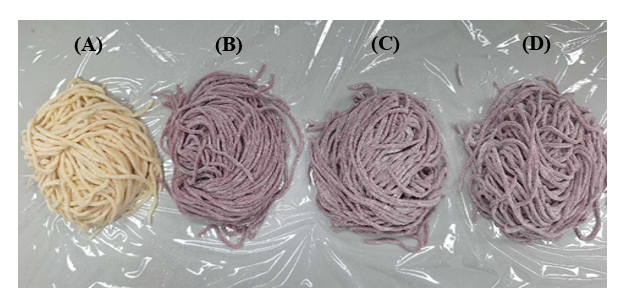
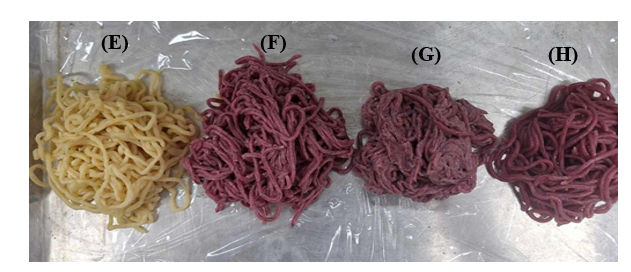
Figure 1 Noodles with low-grade dragon fruit powder before boiling (A - D) and after boiling (E - H). From left to right in each panel: (A and E) control (no dragon fruit), (B and F) DF1 (1:1 pulp:peel, 30 % substitution), (C and G) DF2 (1:2, 30 % substitution), and (D and H) DF3 (2:1, 30 % substitution).
Table 5 Total phenolic content (TPC, mg GAE/g) of noodle extracts before and after boiling for dragon fruit formulations at 30% substitution.
| Sample | Ratio (pulp:peel) |
Total phenolic content (mg GAE/g) | |
|---|---|---|---|
| Before boiling | After boiling | ||
| Dragon fruit noodle | 1:1 | 30.77 ± 5.01b | 25.35 ± 4.04c |
| 1:2 | 28.75 ± 3.16bc | 19.25 ± 3.72c | |
| 2:1 | 40.59 ± 2.83a | 31.87 ± 4.04b | |
Note: Different letters (a-c) denote significant differences within each column at p < 0.05. All values are presented as mean ± standard deviation (SD).
Changes in antioxidant activity of dragon fruit-fortified noodles before and after boiling
The antioxidant activity of the dragon fruit-incorporated noodles was evaluated before and after boiling, with result shown in (Table 6). Before boiling, the IC₅₀ values of the dragon fruit-fortified noodles ranged from 0.26 to 0.33 mg/mL, with the 2:1 pulp:peel ratio showing the strongest antioxidant activity (lowest IC₅₀). Boiling caused no increase in IC50 for the 2:1 formulation; instead, IC50 decreased from 0.33 ± 0.05 to 0.27 ± 0.05 mg/mL (Table 6), indicating a modest improvement in DPPH scavenging capacity. Two-way ANOVA confirmed that thermal treatment significantly affected IC₅₀ for the 2:1 formulation (p < 0.05), but not for the other ratios, indicating that most antioxidant capacity was retained during short-time cooking. This trend suggested that a higher proportion of pulp, containing abundant polyphenols, flavonoids, and water-soluble antioxidants such as ascorbic acid and betacyanins, contributed to enhanced radical-scavenging activity [32]. The synergistic effect between pulp-derived antioxidants and peel-derived phenolics explained the high bioactivity observed in the blended formulations. Boiling did not uniformly reduce antioxidant activity across formulations. IC50 remained unchanged for the 1:1 formulation but decreased for the 1:2 and 2:1 formulations (Table 6), indicating that boiling did not uniformly reduce antioxidant activity [31]. However, the overall antioxidant capacity remained high post-boiling, supporting the potential of low-grade dragon fruit as a functional ingredient after cooking. IC50 values from noodle extracts are not directly comparable to raw pulp/peel extracts because the noodle matrix dilutes the bioactive and alters extractability. Comparisons in this section are therefore made within Table 6 (between formulations and boiling states).
Table 6 DPPH IC50 (mg/mL) of cooked and uncooked dragon fruit noodle extracts prepared at 30% substitution and different pulp:peel ratios.
| Sample | Ratio (pulp:peel) |
IC50 (mg/mL) | |
|---|---|---|---|
| Before boiling | After boiling | ||
| Dragon fruit noodle | 1:1 | 0.26 ± 0.05a | 0.26 ±0.07a |
| 1:2 | 0.29 ± 0.12a | 0.22 ± 0.05a | |
| 2:1 | 0.33 ± 0.05a | 0.27 ± 0.05b | |
| Trolox (Standard) | - | 1.09 ± 0.36b | |
Note: Different letters (a-b) denote significant differences within each column at p < 0.05. All values are presented as mean ± standard deviation (SD).
Physical properties of dragon fruit noodles before and after boiling
Colour analysis
The colour parameters (L*, a*, b*) of dragon fruit noodles at different pulp:peel ratios before and after boiling are presented in Table 7. The control noodles exhibited the highest lightness (L*) values before and after boiling. By contrast, all dragon fruit-fortified noodles showed significantly lower L* values, indicating a darker appearance because of pigments from dragon fruit peel and pulp. Redness (a*) was markedly higher in fortified noodles than in the control before boiling, but decreased after boiling in all formulations, consistent with partial degradation of heat-sensitive red pigments such as betacyanins [33]. Changes in b* varied with formulation, indicating that pigment retention depended on the balance between pulp and peel and on the stability of pigments within the noodle structure during cooking. These results show that dragon fruit inclusion imparted a distinct red-purple colour, whereas boiling reduced pigment intensity and increased lightness.
Table 7 Colour profile and the texture analysis of dragon fruit noodles before and after boiling.
| Sample | Colour value | Hardness (kg) | |||
|---|---|---|---|---|---|
| L* | a* | b* | |||
| Control | Before | 67.85 ± 1.27b | 7.7 ± 0.19c | 23.72 ± 0.98a | 15.24 ± 0.45a |
| After | 72.96 ± 0.15a | 4.79 ± 0.09d | 28.44 ± 0.31b | 14.45 ± 0.02d | |
| DF1 (1:1) | Before | 45.73 ± 0.84ef | 22.54 ± 0.48b | 2.06 ± 0.08d | 8.914 ± 0.14b |
| After | 46.26 ± 1.10de | 16.07 ± 0.53a | 2.39 ± 0.15f | 14.55 ± 0.02cd | |
| DF2 (1:2) | Before | 43.54 ± 1.63f | 17.13 ± 1.12b | 17.13 ± 1.12c | 14.84 ± 0.14bc |
| After | 44.78 ± 0.86ef | 16.86 ± 0.55b | 18.39 ± 0.15d | 14.98 ± 0.54ab | |
| DF3 (2:1) | Before | 46.61 ± 1.52d | 17.11 ± 0.77b | 0.70 ± 0.23cd | 8.314 ± 0.13bc |
| After | 51.39 ± 3.18c | 15.41 ± 2.32b | 1.11 ± 0.55e | 14.47 ± 0.13d | |
Note: Different letters (a-f) denote significant differences within each column at p < 0.05. All values are presented as mean ± standard deviation (SD). DF = dragon fruit; DF1 = noodles with 30% substitution of Flour A by a 1:1 pulp:peel powder; DF2 = noodles with 30% substitution by a 1:2 pulp:peel powder; DF3 = noodles with 30% substitution by a 2:1 pulp:peel powder.
Morphology and texture analysis
The scanning electron microscope (SEM Hitachi, SU3500) analysis at magnifications of 50x and 500x revealed surface differences among the control, DF1, DF2, and DF3 formulations, attributed to the amount of dragon fruit flesh powder incorporated. Dragon fruit powder contributed fibre to the noodle structure, which was reflected in the altered surface structure observed in the SEM micrographs (Figures 2 and 3). SEM micrographs were obtained to examine whether dragon fruit powder visibly altered the protein-starch network in the noodle matrix. In both uncooked and cooked states, the control noodles showed a relatively compact, continuous surface, while dragon fruit-fortified noodles exhibited a rougher surface with small voids and embedded fibre particles. These features are consistent with incorporation of fruit fibre into the gluten-starch network and help explain the modest reduction in hardness observed for fortified noodles. At the same time, the absence of extensive granule rupture or fragmentation indicates that the limited cooking time and gluten matrix maintained overall structural integrity, which agrees with the small magnitude of texture changes measured instrumentally.
The hardness of all dragon fruit noodle formulations was lower than that of the control before cooking (15.24 ± 0.45 kg), indicating that the incorporation of dragon fruit powder reduced noodle firmness (Table 7). This effect is consistent with the high fibre content of dragon fruit pulp and peel, which competes with gluten for water and disrupts the continuity of the protein-starch structure. After boiling, hardness decreased in the control and most formulations. DF2 showed a small increase, indicating formulation-specific changes in hydration and matrix consolidation (Table 7). Among the fortified noodles, the 1:2 pulp:peel ratio retained the highest hardness after cooking (14.98 ± 0.54 kg), suggesting that peel-rich formulations produce a more cohesive structure, possibly because insoluble peel fibre reinforces the hydrated structure. These observations align with the SEM images, where dragon fruit-fortified noodles exhibited a more open, less compact surface structure than the control, yet starch granules remained embedded in a continuous protein-starch network. Phenolic compounds from dragon fruit may also interact with gluten proteins and amylose chains via hydrogen bonding, limiting amylose retrogradation and contributing to a softer, less brittle noodle structure.
The reduction in hardness in dragon fruit-fortified noodles is consistent with fibre-rich ingredients disrupting gluten continuity, increasing competition for water, and reducing starch-protein interactions, as reported for other vegetable-enriched noodles [34]. Phenolic compounds may also interact with proteins through hydrogen bonding and contribute to a softer structure [35]. Although rheological measurements were not performed, the texture profile data and SEM observations are consistent with these mechanisms.
After boiling (Figure 3), starch granules appeared more embedded in a continuous protein starch product, with smoother surfaces and fewer sharply defined granule edges compared with the uncooked samples (Figure 2). The absence of pronounced granule rupture reflects the short cooking time (1 min) and the constraining effect of the wheat gluten network, which limit excessive swelling and leaching of starch during boiling. Similar subtle microstructural changes have been reported for quickly cooked noodles where gelatinization proceeds mainly within a compact protein structure.
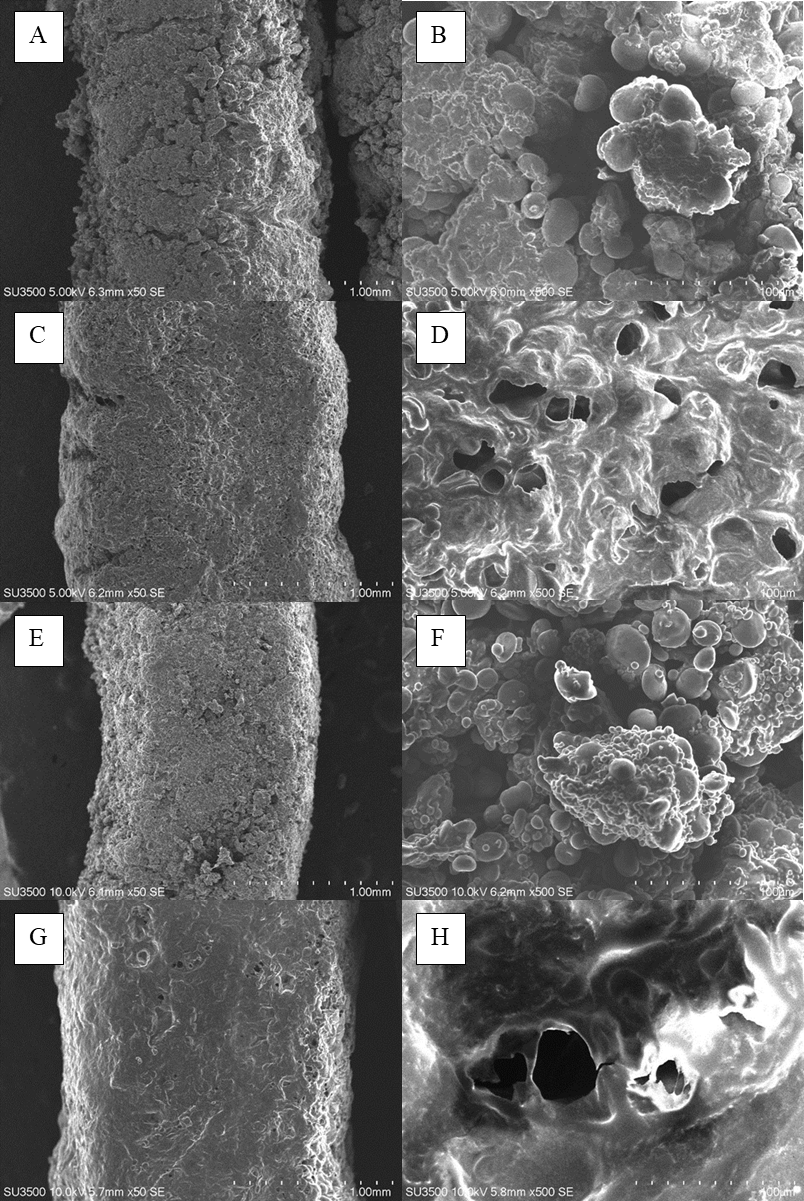
Figure 2 SEM images of noodles before boiling: the control noodles (A at 50×, B at 500×), DF1 noodles (C at 50×, D at 500×), DF2 noodles (E at 50×, F at 500×), DF3 noodles (G at 50×, H at 500×).
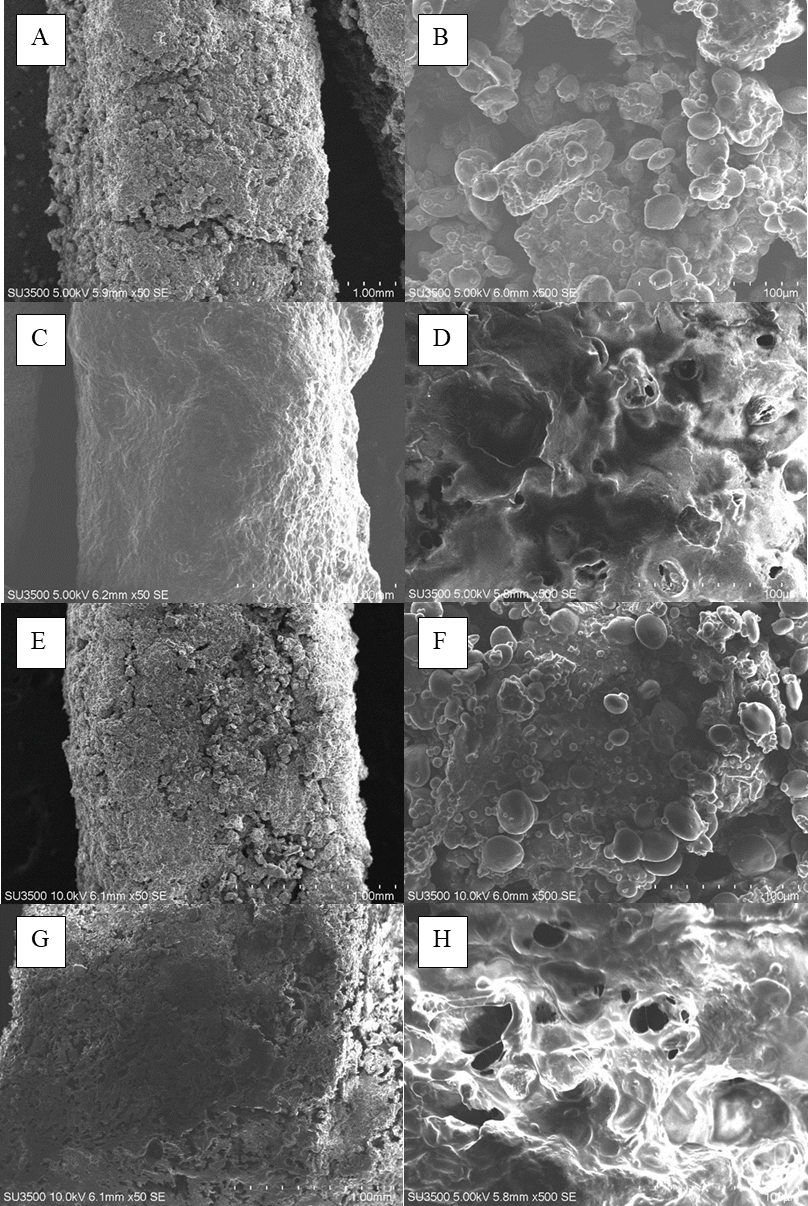
Figure 3 SEM images of noodles after boiling: the control noodles (A at 50×, B at 500×), DF1 noodles (C at 50×, D at 500×), DF2 noodles (E at 50×, F at 500×), DF3 noodles (G at 50×, H at 500×).
Sensory analysis
In the first sensory test, mean overall acceptability scores for dragon fruit noodles with different pulp:peel ratios ranged from 5.06 to 5.65 on the 9-point hedonic scale, whereas the control noodle scored 6.48 (Figure 4). Among the fortified samples, DF3 (2:1) gave the highest appearance and colour scores, because the higher pulp proportion produced a more acceptable purple hue while avoiding the darker tone and stronger peel-derived flavour associated with peel-rich formulations. The slightly lower flavour and texture scores of DF1 and DF2 may be related to higher peel content, which can intensify astringency and modify the fibre-gluten-starch network, thus affecting bite and mouthfeel. In the second stage, increasing the substitution level of the 2:1 pulp:peel formulation from 10% to 30% increased overall acceptability from 5.48 to 6.65 (Figure 5), indicating that this ratio provided a favourable balance between colour appeal, flavour acceptability, and structural quality.
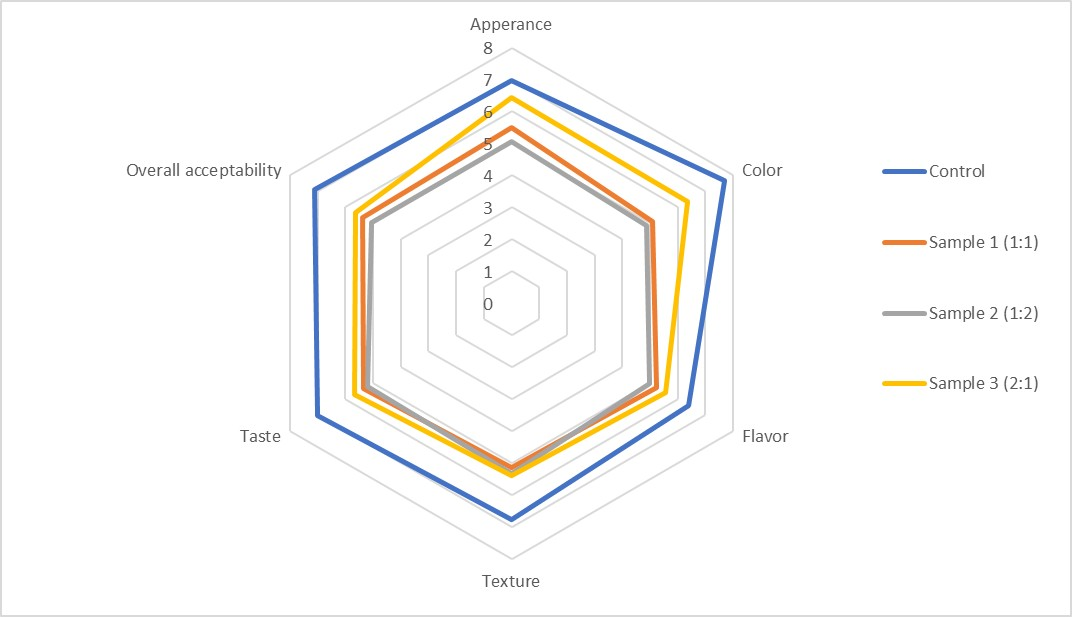
Figure 4 Sensory scores of noodles prepared with different pulp:peel ratios at a fixed 30% substitution level. Panel attributes include appearance, colour, flavour, texture, and overall acceptability, evaluated using a 9-point hedonic scale where 1 = dislike extremely and 9 = like extremely. Control = noodles without dragon fruit powder; DF1 = 1:1 pulp:peel; DF2 = 1:2 pulp:peel; DF3 = 2:1 pulp:peel. Values are mean scores from 50 panellists.
Sensory evaluation was conducted in two stages. In the first stage, three pulp:peel ratios (DF1, DF2, DF3 corresponding to 1:1, 1:2, and 2:1 at 30 % substitution) were compared with the control (Figure 4). Based on the highest overall acceptability, DF3 (2:1) was selected. In the second stage, this 2:1 pulp:peel ratio was kept constant while the total substitution level was varied to 10 % (DFP10), 20 % (DFP20), and 30 % (DFP30) of Flour A (Figure 5).
Based on the first sensory screening, the 2:1 pulp:peel ratio (DF3) was selected for further evaluation. At this fixed ratio, increasing dragon fruit powder substitution from 10% to 30% improved overall acceptability, with DFP30 showing the highest score. This formulation was therefore selected for further satisfaction and product suitability assessment (Tables 8 and 9).
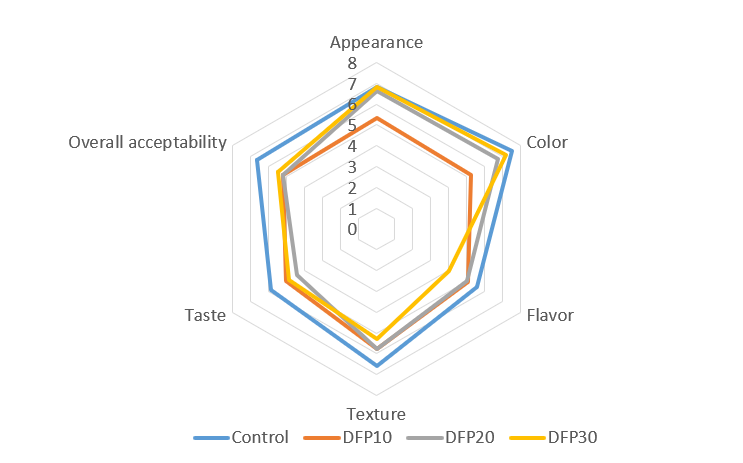
Figure 5 Sensory scores of noodles prepared with different levels of dragon fruit powder at a fixed 2:1 pulp:peel ratio. DFP10, DFP20, and DFP30 represent 10%, 20%, and 30% substitution of Flour A by dragon fruit powder, respectively. Attributes were evaluated using a 9-point hedonic scale where 1 = dislike extremely and 9 = like extremely. Values are mean scores from 50 panellists.
Table 8 The number and percentage of testers who accepted each attribute of the functional dragon fruit-based noodle product.
| Attribute | Number and percentage of testers accepting each product feature | Average | Result | ||||
|---|---|---|---|---|---|---|---|
| 1 | 2 | 3 | 4 | 5 | |||
| Overall satisfaction | 0 | 4 | 24 | 18 | 2 | 3.38 ± 0.70 | Satisfied |
| Percentage (%) | 0 | 8 | 48 | 36 | 4 | ||
| Appearance | 2 | 2 | 12 | 26 | 5 | 3.66 ± 0.89 | Satisfied to very satisfied |
| Percentage (%) | 4 | 4 | 24 | 52 | 10 | ||
Table 9 Just-about-right (JAR) scale percentages of dragon fruit noodles.
| Attribute | n (%) | Net Effect | Average | Result | ||||
|---|---|---|---|---|---|---|---|---|
| Direction of fit of product samples | ||||||||
| Too soft | Slightly soft | Just right | Slightly strong | Too strong | ||||
| Colour | 0 | 3 | 39 | 6 | 0 | 3.06 ± 0.42 | Just right | |
| Percentage (%) | 0 | 6 | 78 | 12 | 0 | 6 | ||
| Odour | 6 | 5 | 31 | 5 | 1 | 2.84 ± 0.89 | Just right | |
| Percentage (%) | 12 | 10 | 62 | 10 | 2 | 10 | ||
| Flavour | 0 | 21 | 27 | 0 | 0 | 2.58 ± 0.50 | Slightly soft to just right | |
| Percentage (%) | 0 | 42 | 54 | 0 | 0 | 42 | ||
| Taste | 0 | 17 | 30 | 1 | 0 | 2.66 ± 0.52 | Slightly soft to just right | |
| Percentage (%) | 0 | 34 | 60 | 2 | 0 | 32 | ||
Nutritional and microbial safety of dragon fruit noodles
Nutritional composition
The nutritional composition of the dragon fruit noodle (DFP30; 2:1 pulp:peel at 30% substitution) is shown in Table 10. The dietary fibre content of DFP30 remained low because of the refined wheat flour base. However, iron content was higher in DFP30 (3.63 mg/100 g; 25% RDI) than in the control, indicating mineral enrichment through dragon fruit fortification [36].
The dragon fruit noodles had high iron content at up to 3.63 mg per 100 g or 25% of the recommended daily intake. Iron plays an essential role in haemoglobin synthesis and oxygen transport, and iron deficiency remains a widespread nutritional concern, particularly among women of reproductive age and adolescents [37]. Enhancing iron intake through fortified or functional foods may help to reduce the prevalence of anaemia and improve overall vitality and cognitive function [38].
The product contained significant levels of phenolic compounds derived from dragon fruit. As shown in (Table 5), the highest TPC was observed in the sample with a 2:1 pulp-to-peel ratio, at 40.59 ± 2.83 mg GAE/g before boiling and 31.87 ± 4.04 mg GAE/g after boiling. Phenolic compounds are well known for their antioxidant and anti-inflammatory properties, which reduce oxidative stress and prevent chronic diseases [39].
The antioxidant activity was evaluated via the DPPH radical scavenging assay (Table 6), with IC50 values ranging from 0.26 to 0.33 mg/mL, significantly lower than the Trolox control (1.09 mg/mL), indicating high antioxidant potential. Such bioactivity is relevant to glycaemic control because dietary phenolics have been reported to inhibit α-amylase and α-glucosidase, delay carbohydrate digestion, and improve insulin sensitivity [40]. However, under the present formulation, these in vitro mechanisms did not translate into a measurable reduction in in vivo glycaemic index. DFP30 showed a lower energy value than the control on a per 100 g basis (Table 10). The results indicate that the dragon fruit noodles can be considered an antioxidant-enriched functional food with improved phenolic content and iron contribution, although an in vivo antihyperglycemic benefit was not demonstrated under the present formulation.
Table 10 Nutritional compositions of dragon fruit noodles (per 100 g).
| Item | Per 100g | %RDI (Recommended daily intake) |
|---|---|---|
| Total energy (kcal) | 144.10 | - |
| Energy from fat (kcal) | 18.90 | - |
| Total fat (g) | 2.10 | 3% |
| Saturated fat (g) | 0.66 | 3% |
| Cholesterol (mg) | 42.00 | 13% |
| Protein (g) (%N×6.25) | 5.42 | - |
| Carbohydrate (g) | 25.88 | 9% |
| Dietary fibre (g) | 0.13 | 0 |
| Sugar (g) | 3.28 | - |
| Sodium (mg) | 21.91 | 1% |
| Vitamin A (µg RE) | 41.39 | 6% |
| Vitamin B1 (mg) | 0.07 | 4% |
| Vitamin B2 (mg) | 0.03 | <2% |
| Calcium (mg) | 53.86 | 6% |
| Iron (mg) | 3.63 | 25% |
| Ash (g) | 0.70 | - |
| Moisture (g) | 65.90 | - |
Microbiological analysis
The functional dragon fruit noodles were subjected to microbiological analysis in accordance with Thai Food and Drug Administration criteria (Table 11). Microbial counts were within acceptable limits, indicating acceptable hygienic quality under the conditions tested. The absence or very low levels of key indicator organisms, including coliforms, Escherichia coli, Staphylococcus aureus, and Salmonella spp., suggests that the combined effects of raw-material selection, washing and sanitization, thermal processing, and hygienic post-cooking handling were sufficient to limit microbial contamination at the time of analysis. Fresh noodles are generally microbiologically vulnerable because of their high moisture content and near-neutral matrix, which can support rapid microbial growth if sanitation and handling are inadequate. In the present study, the low aerobic plate count and the non-detection of major pathogens indicate that process hygiene was effective and that the product met relevant safety expectations for freshly prepared noodles. These findings should nevertheless be interpreted as reflecting microbiological status at the time of analysis rather than demonstrating intrinsic antimicrobial activity or extended shelf life [41].
Table 11 Pathogenic microorganism counts in dragon fruit noodles.
| Microorganism | Detected level |
|---|---|
| Aerobic plate count (CFU/g) | < 10.0 |
| Escherichia coli (MPN/g) | < 3.0 |
| Bacillus cereus (CFU/g) | < 10.0 |
| Clostridium spp. (per 0.1 g) | Not detected |
| Clostridium botulinum (per g) | Negative |
| Salmonella spp. (per 25 g) | Not detected |
| Staphylococcus aureus (CFU/g) | Not detected |
| Coliforms (MPN/g) | < 3.0 |
Determination of glycaemic index (in vivo method)
Baseline characteristics of the participants
The study involved 11 participants, comprising 8 males and 3 females with average age 26.73 ± 3.13 years. The average body weight for males was 72.59 ± 7.53 kg, with females 49.97 ± 3.50 kg. The mean Body Mass Index (BMI) was 24.10 ± 1.90 kg/m² for males and 19.67 ± 0.94 kg/m² for females, indicating that the participants had normal body weight and were not overweight. Normal body weight was defined as BMI 18.5 - 24.9 kg/m². The blood pressure and heart rate values were within healthy ranges.
Blood glucose levels of the participants were measured at 0, 15, 30, 60, 90, and 120 min after consuming the control noodles, dragon fruit noodles, and a 50 g glucose solution. The results indicated that blood glucose levels rose sharply after 15 min following glucose solution consumption and remained elevated until 60 min. By contrast, consuming both the dragon fruit noodles and the control noodles led to a significant increase in blood glucose levels after 15 min, with elevated levels sustained for up to 30 min.
At 30, 60, and 90 min, the changes in blood glucose levels following consumption of dragon fruit noodles and the control noodles were significantly lower than observed after glucose solution consumption (p < 0.05). The highest blood glucose response was 142.72 ± 18.71 mg/dL for the dragon fruit noodles and 136.36 ± 16.75 mg/dL for the control noodles. Blood glucose levels returned to the baseline after 90 min in both the glucose solution group and the noodle group.
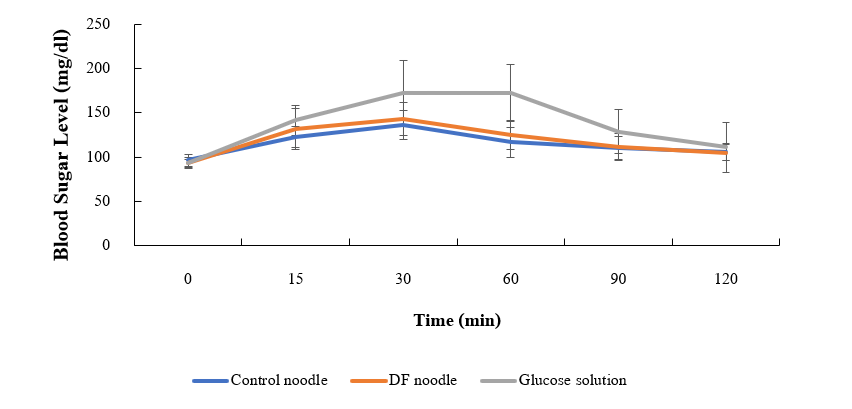
Figure 6 Postprandial blood glucose responses after consumption of glucose solution, control noodles, and dragon fruit noodles. Capillary blood glucose was measured at 0, 15, 30, 60, 90, and 120 min after ingestion of portions containing 50 g available carbohydrate. Control = noodles without dragon fruit powder; dragon fruit noodles = formulation containing 30% substitution at a 2:1 pulp:peel ratio. Values are mean ± SD for 11 healthy participants.
The Area Under the Concentration-Time Curve (AUC) was measured for dragon fruit noodles, the control noodles, and the glucose solution, with results (Figure 6). The consumption of dragon fruit noodles resulted in a blood glucose response comparable to the control noodles, with no significant differences observed between the two. However, the AUC values for both noodle types were significantly lower than the glucose solution, suggesting the presence of nutrients in the noodles that moderated the rise in blood glucose levels.
The glycaemic index (GI) of the dragon fruit noodles was 84, compared with 81 for the control noodles, and both values fall within the high-GI category. The absence of a GI-lowering effect despite the presence of phenolics and fibre suggests that the wheat starch matrix remained the dominant determinant of postprandial glucose response. At 30% substitution, the amount of dragon fruit-derived fibre and phenolics was likely insufficient to substantially reduce starch digestibility within the noodle matrix. In addition, processing steps such as dough sheeting and boiling can increase starch gelatinization and accessibility to digestive enzymes, which may offset any inhibitory effect from fruit-derived bioactive compounds. The food matrix is therefore important: in vitro enzyme inhibition by extracts does not necessarily translate directly into reduced in vivo glycaemic response once the compounds are embedded in a starch-rich, processed noodle structure.
The small difference between GI 84 and GI 81 indicates that the added pulp sugars and the dominant refined wheat starch fraction outweighed any moderating effect of phenolics and fibre under the present formulation. Although the noodles incorporated bioactive compounds, the present formulation did not attenuate glycaemic impact relative to the control. These findings indicated that both types of noodles showed potential to rapidly increase blood glucose levels. The high GI values suggested that individuals with blood glucose regulation issues should exercise caution when consuming these products. The glycaemic index (GI) is a measure of how carbohydrate-containing foods affect blood glucose levels. Foods with a higher GI cause a more rapid increase in blood glucose after consumption. Low-GI foods (≤55), such as fruits and milk, tend to increase blood glucose gradually, while high-GI foods (≥70), such as rice and bread, lead to a rapid rise in blood glucose levels [42].
A rapid increase in blood glucose can contribute to insulin resistance, a major risk factor for type 2 diabetes mellitus (T2DM). Studies have shown that low-GI foods can improve blood glucose control and reduce the risk of developing T2DM [43]. Several factors influence the GI value of foods, including carbohydrate structure. Amylose, a linear starch, is digested more slowly than amylopectin, which has a branched structure, resulting in a slower rise in blood glucose [44]. Other factors include dietary fibre content, food processing, and additional components such as fats and proteins, which slow the digestion and absorption of carbohydrates [45].
In this study, the dragon fruit noodles had a high GI value of 84, which was attributed primarily to the refined wheat flour base, whose starch is dominated by amylopectin relative to amylose. Processing and cooking also increase starch digestibility and can contribute to a rapid postprandial glucose response. The formulation contained dragon fruit powder, but the substitution level and resulting phenolic and fibre contents were insufficient to offset the glycaemic effect of the wheat starch.
Dragon fruit powder contributed phenolic compounds and some fibre, but their physiological effect must be interpreted within the context of the whole food matrix rather than the extract alone. The in vitro α-amylase and α-glucosidase inhibition observed for the extracts indicates bioactive potential, but this potential was not sufficient to lower GI in the final noodle product. This result may reflect limited bioactive concentration at the chosen substitution level, binding or reduced accessibility of phenolics within the matrix, and the overwhelming contribution of rapidly digestible wheat starch after cooking.[46].
From a glycaemic perspective, the dragon fruit noodles did not outperform the control. Both products fell in the high-GI category, and the dragon fruit noodles showed a slightly higher GI than the control. This pattern is consistent with the additional simple sugars contributed by the pulp and indicates that, at the current substitution level, the in vitro α-amylase and α-glucosidase inhibition did not translate into a measurable reduction in in vivo glycaemic response. Therefore, the present formulation is better described as an antioxidant-enriched noodle than as an antihyperglycemic product. Further reformulation would be required to achieve a lower GI.
Conclusions
Low-grade dragon fruit, especially the peel fraction, was rich in phenolics and anthocyanin-type pigments and showed strong antioxidant activity in vitro. Among the tested formulations, a 2:1 pulp:peel blend provided the best balance of enzyme inhibition and sensory acceptance when incorporated into fresh noodles at 30% substitution. Dragon fruit fortification increased phenolic content and maintained substantial antioxidant activity after boiling. However, the in vivo glycaemic index remained high and was not reduced relative to the control noodle. Therefore, under the present formulation, the product should be regarded as an antioxidant-enriched, value-added noodle rather than an antihyperglycemic noodle. Future work should focus on reformulation strategies that further reduce starch digestibility while preserving sensory quality.
Acknowledgments
The authors would like to thank the Department of Biotechnology, Faculty of Agro-Industry, Kasetsart University, Bangkok 10900, Thailand for the use of laboratory facilities and research equipment. We also thank the Specialized Research Unit of Functional Foods and Human Health, Kasetsart University for logistical support. This research was funded by Kasetsart University, Thailand through the Graduate School Fellowship Program.
CRediT author statement
Thanabodee Klinla-or: Writing – original draft, Visualization, Methodology, Investigation, Formal analysis, Data curation. Manatchaya Chaisitthanont: Methodology, Formal analysis, Data curation. Wisanraya Ruenlert: Methodology, Formal analysis, Data curation. Pornlada Yutharaksanukul: Writing – review & editing. Stanley Blewusi: Writing – review & editing. Tanat Uan-On: Writing – review & editing. Surasawadee Somnuk: Writing – review & editing, Validation. Bandhita Wanikorn: Writing – review & editing, Supervision, Resources, Project Administration, Funding acquisition, Conceptualization.
Declaration of competing interest
The authors declare that they have no known competing financial interests or personal relationships that could have appeared to influence the work reported in this paper.
References
[1] SY Chen, CY Xu, MS Mazhar and M Naiker. Nutritional value and therapeutic benefits of dragon fruit: A comprehensive review with implications for establishing australian industry standards. Molecules 2024; 29(23), 5676.
[2] A Yasmin, MJ Sumi, K Akter, RHM Rabbi, HS Almoallim, MJ Ansari, A Hossain and S Imran. Comparative analysis of nutrient composition and antioxidant activity in three dragon fruit cultivars. PeerJ 2024; 12, 17719.
[3] HE Khoo, A Azlan, ST Tang and SM Lim. Anthocyanidins and anthocyanins: Colored pigments as food, pharmaceutical ingredients, and the potential health benefits. Food & Nutrition Research 2017; 61, 1361779.
[4] P Putson, B Wanikorn and S Sae‐tan. Effects of age and food processing of sapodilla leaves for botanical beverage application. Food Science and Technology 2022; 42, 55022.
[5] B Saibandith, JPE Spencer, IR Rowland and DM Commane. Olive polyphenols and the metabolic syndrome. Molecules 2017; 22(7), 1082.
[6] I Tarte, A Singh, AH Dar, A Sharma, A Altaf and P Sharma. Unfolding the potential of dragon fruit (Hylocereus spp.) for value addition: A review. eFood 2023; 4(2), 76.
[7] K Shah, J Chen, J Chen and Y Qin. Pitaya nutrition, biology, and biotechnology: A review. International Journal of Molecular Sciences 2023; 24(18), 13986.
[8] C Cui, Y Wang, J Ying, W Zhou, D Li and LJ Wang. Low glycemic index noodle and pasta: Cereal type, ingredient, and processing. Food Chemistry 2024; 431, 137188.
[9] IS Huh, H Kim, HK Jo, CS Lim, JS Kim and SJ Kim. Instant noodle consumption is associated with cardiometabolic risk factors among college students in Seoul. Nutrition Research and Practice 2017; 11(3), 232-239.
[10] S Jansuna, L Charoensup, Y Jirakiattikul and B Harakotr. Effects of drying temperatures and times on antioxidant contents and their activities of Centella asiatica (L.) Urb. Leaves. Thai Science and Technology Journal 2020; 28(12), 2261-2272.
[11] NL Tze, CP Han, YA Yusof, CN Ling, RA Talib, FS Taip and MG Aziz. Physicochemical and nutritional properties of spray-dried pitaya fruit powder as natural colorant. Food Science and Biotechnology 2012; 21(3), 675-682.
[12] Z Wang, CJ Barrow, FR Dunshea and HAR Suleria. A comparative investigation on phenolic composition, characterization and antioxidant potentials of five different australian grown pear varieties. Antioxidants 2021; 10(2), 151.
[13] S Fakngoen and S Meerod. Extraction and separation of anthocyanins from Carissa carandas L. In: The Vth Kamphaeng Phet Rajabhat University National Conference, Kamphaeng Phet, Thailand. 2017, p. 1005.
[14] W Brand-Williams, ME Cuvelier and C Berset. Use of a free radical method to evaluate antioxidant activity. LWT - Food Science and Technology 1995; 28(1), 25-30.
[15] NGER Etsassala, JA Badmus, JL Marnewick, EI Iwuoha, F Nchu and AA Hussein. Alpha-glucosidase and alpha-amylase inhibitory activities, molecular docking, and antioxidant capacities of Salvia aurita constituents. Antioxidants 2020; 9(11), 1149.
[16] LH Ho and NW binti Abdul Latif. Nutritional composition, physical properties, and sensory evaluation of cookies prepared from wheat flour and pitaya (Hylocereus undatus) peel flour blends. Cogent Food & Agriculture 2016; 2(1), 1136369.
[17] SL Chia and GH Chong. Effect of drum drying on physico-chemical characteristics of dragon fruit peel (Hylocereus polyrhizus). International Journal of Food Engineering 2015. https://doi.org/10.1515/ijfe-2014-0198
[18] K Rugkitsiri. 2006, Quality and shelf life extension of Thai fresh noodles (Bamee). Master Thesis. University of Kasetsart, Bangkok, Thailand.
[19] Z Guo, L Wang, R Cao and J Qiu. Effect of frozen treatment on the sensory and functional quality of extruded fresh noodles made from whole tartary buckwheat. Foods 2022; 11(24), 3989.
[20] GW Latimer. Official Methods of Analysis of AOAC INTERNATIONAL. 22nd ed Oxford University Press, England, 2023.
[21] World Health Organization. Food consumption and exposure assessment of chemicals: Report of a FAO/WHO consultation, Geneva, Switzerland, 10-14 February 1997.
[22] R Nurliyana, IS Zahir, KM Suleiman, AM Rehan and KR Kamarudin. Antioxidant study of pulps and peels of dragon fruits: A comparative study. International Food Research Journal 2010; 17, 367-375.
[23] J Choo, RY Koh and APK Ling. Medicinal properties of pitaya: A review. Spatula DD 2016; 5(4), 1.
[24] C Saenjum, T Pattananandecha and K Nakagawa. Antioxidative and anti-inflammatory phytochemicals and related stable paramagnetic species in different parts of dragon fruit. Molecules 2021; 26(12), 3565.
[25] H Kim, HK Choi, JY Moon, YS Kim, A Mosaddik and SK Cho. Comparative antioxidant and antiproliferative activities of red and white pitayas and their correlation with flavonoid and polyphenol content. Journal of Food Science 2010; 76(1), 38-45.
[26] T Abu, AJ Adedayo, WS Luma and OO Ogbole. Potential antidiabetic effects by alpha-amylase inhibition and free radical scavenging activity of extracts from five medicinal plants used in Nigeria. Discover Plants 2025; 2, 50.
[27] WA Tamagno, AP Vanin, NT Sutorillo, D Bilibio, RA Dada, LM Colla, DC Zamberlan, RR Kaizer and LJG Barcellos. Fruit extract of red pitaya (Hylocereus undatus) prevents and reverses stress-induced impairments in the cholinergic and antioxidant systems of Caenorhabditis elegans. Journal of Food Biochemistry 2021; 46(4), 13981.
[28] TTH Luu, TL Le, N Huynh and P Quintela-Alonso. Dragon fruit: A review of health benefits and nutrients and its sustainable development under climate changes in Vietnam. Czech Journal of Food Sciences 2021; 39(2), 71-94.
[29] VS Coelho, DG de Moura, LL Aguiar, LV Ribeiro, VDM Silva, VT da Veiga Correia, AC Melo, MR Silva, ACCF Ferreira de Paula, RLB de Araújo and JOF Melo. The profile of phenolic compounds identified in pitaya fruits, health effects, and food applications: An integrative review. Plants 2024; 13(21), 3020.
[30] B Navajas-Porras, S Pérez-Burillo, ÁJ Valverde-Moya, D Hinojosa-Nogueira, S Pastoriza and JÁ Rufián-Henares. Effect of cooking methods on the antioxidant capacity of plant foods submitted to in vitro digestion-fermentation. Antioxidants 2020; 9(12), 1312.
[31] C Miglio, E Chiavaro, A Visconti, V Fogliano and N Pellegrini. Effects of different cooking methods on nutritional and physicochemical characteristics of selected vegetables. Journal of Agricultural and Food Chemistry 2008; 56(1), 139-147.
[32] GC Tenore, E Novellino and A Basile. Nutraceutical potential and antioxidant benefits of red pitaya (Hylocereus polyrhizus) extracts. Journal of Functional Foods 2012; 4(1), 129-136.
[33] W Tang, W Li, Y Yang, X Lin, L Wang, C Li and R Yang. Phenolic compounds profile and antioxidant capacity of pitahaya fruit peel from two red-skinned species (Hylocereus polyrhizus and Hylocereus undatus). Foods 2021; 10(6), 1183.
[34] F Zhu, YZ Cai and H Corke. Evaluation of Asian salted noodles in the presence of Amaranthus betacyanin pigments. Food Chemistry 2010; 118(3), 663-669.
[35] I Arcan and A Yemenicioğlu. Incorporating phenolic compounds opens a new perspective to use zein films as flexible bioactive packaging materials. Food Research International 2011; 44(2), 550-556.
[36] C Codex Alimentarius. Guidelines on Nutrition Labelling (CXG 2-1985). FAO/WHO Codex Alimentarius, Rome, 2023.
[37] WHO, Available at: https://www.who.int/data/gho/data/themes/topics/anaemia_in_women_and_children, accessed 2025.
[38] MB Zimmermann and RF Hurrell. Nutritional iron deficiency. Lancet 2007; 370(9586), 511-520.
[39] J Dai and RJ Mumper. Plant phenolics: Extraction, analysis and their antioxidant and anticancer properties. Molecules 2010; 15(10), 7313-7352.
[40] K Hanhineva, R Törrönen, I Bondia-Pons, J Pekkinen, M Kolehmainen, H Mykkänen and K Poutanen. Impact of dietary polyphenols on carbohydrate metabolism. International Journal of Molecular Sciences 2010; 11(4), 1365-1402.
[41] B Ray and A Bhunia. Fundamental food microbiology. 5ed. CRC press, United Kingdom, 2025.
[42] FS Atkinson, JC Brand-Miller, K Foster-Powell, AE Buyken and J Goletzke. International tables of glycemic index and glycemic load values 2021: A systematic review. American Journal of Clinical Nutrition 2021; 114(5), 1625-1632.
[43] DJ Jenkins, TM Wolever, RH Taylor, H Barker, H Fielden, JM Baldwin, AC Bowling, HC Newman, AL Jenkins and DV Goff. Glycemic index of foods: A physiological basis for carbohydrate exchange. American Journal of Clinical Nutrition 1981; 34(3), 362-366.
[44] Kavita Dipnaik and P Kokare. Ratio of amylose and amylopectin as indicators of glycaemic index and in vitro enzymatic hydrolysis of starches of long, medium and short grain rice. International Journal of Research in Medical Sciences 2017; 5(10), 4502-4505.
[45] FX Pi-Sunyer. Glycemic index and disease. American Journal of Clinical Nutrition 2002; 76(1), 290-298.
[46] P Wongvasu. The possible uses of polyphenols-rich diets in postprandial glycemic control. Journal of Food Technology Siam University 2020; 15(1), 1-14.