
Trends
Sci.
2026;
23(11): 14922
Corrosion Behaviour of Aluminium Metal Matrix Composites (AMMCs) in Marine/Seawater Environments: A Review
Peter P. Ikubanni1, Akinkunmi O. Mosadomi2, Olorunsogo B. Ogundipe3,
Adekunle A. Adeleke4,*, Makanjuola Oki5, Moses O. Fajobi6, Ibrahim M. B. Omiogbemi4,
D. S. Ebenezer Jacob Dhas7, Stephen Sunday Emmanuel 8 and Jamiu K. Odusote9
1Mechatronics Engineering Programme, Bowen University, Iwo, Nigeria
2Department of Mechanical Engineering, Landmark University, Omu-Aran, Nigeria
3Department of Mechanical Engineering, Redeemer’s University, Ede, Nigeria
4Department of Mechanical Engineering, Nile University of Nigeria, Abuja, Nigeria
5Department of Mechanical Engineering, Wigwe University, Port-Harcourt, Nigeria
6Ladoke Akintola University of Technology, Open and Distance Learning Centre, Ogbomoso, Nigeria
7Mechanical Engineering Division, Karunya Institute of Technology and Sciences, Coimbatore, India
8Department of Industrial Chemistry, Faculty of Physical Sciences, University of Ilorin, Ilorin, Nigeria
9Department of Materials and Metallurgical Engineering, University of Ilorin, Ilorin, Nigeria
(*Corresponding author’s e-mail: [email protected])
Received: 9 July 2026, Revised: 30 July 2026, Accepted: 9 August 2026, Published: 15 August 2026
Abstract
Aluminium Metal Matrix Composites (AMMCs) are becoming popular materials for marine, aerospace, and offshore structures. This is because they are known to be strong for their weight, have better tribological performance, and are thermally stable. Despite these properties, corrosion problems still hinder their long-term effectiveness in marine environments. This review describes the corrosion of AMMCs in seawater, under exposure to salt spray, and during various electrochemical tests. Also, the review examines how different types of ceramic reinforcements (SiC, Al2O3, B4C), their volume fraction, the ways and manner of production, and the properties of the interfaces between the matrix and the reinforcement affect corrosion mechanisms. Galvanic interactions, microstructural heterogeneities, and how defects in the manufacturing process can speed up degradation are given close review. This also discusses the limitations of current testing methods.
Keywords: Electrochemical behaviour, Salt-spray testing, Sea water exposure, Aluminium matrix composites, Ceramic reinforcement, Marine environment
Introduction
Aluminium Matrix Composites (AMMCs) have gained a lot of attention in research circles in the last few decades because they are stronger, lighter, more stable at high temperatures, and more resistant to wear than other materials [1-5]. The addition of ceramic reinforcements, such as silicon carbide (SiC) [6-9], boron carbide (B4C) [10,11], titanium carbide (TiC) [12,13], titanium diboride (TiB2) [14,15], carbon nanotubes (CNTs) [16-18], boron nitride (BN) [19,20],
and zirconium diboride (ZrB2) [21], is mostly what gives these materials their better properties.
Aside from ceramic reinforcements being utilized in AMMCs production, the derivatives of industrial wastes and agro-residues in the form of ash particles have been utilized. Some of the industrial and agricultural wastes derivatives that have been used are rice husk ash (RHA), bean pod ash (BPA), palm kernel shell ash (PKSA), corncob ash (CCA), breadfruit seed hull ash (BSHA), bamboo leaf ash (BLA), fly ash (FA), red mud (RM), sugarcane bagasse ash (SBA), quarry dust (QD), millscale, and so on [22-31]. The materials are used monolithically or in combination with other reinforcement particles in the development of AMMCs. These reinforcements make the materials harder, stiffer, and better at wear resistance. Hence, AMMCs are massively utilized in various industries, such as automotive, aerospace/aircraft, defense, marine, electronics, sports, and many others [32-37]. However, AMMCs cannot reach their full potential in marine and offshore environments because they corrode when they are in harsh conditions. Hence, this calls for great attention towards this phenomenon.
Corrosion is a gradual electrochemical and/or chemical disintegration of materials, and has been fingered to have detrimental challenges on engineering materials. Corrosion has negative effects on society, through expensive degradation of materials, which may potentially result in catastrophic failure with massive negative environmental impact. It is a natural phenomenon that results in the gradual and continuous disintegration of materials via chemical and/or electrochemical interactions with their environments [38-41]. The introduction of reinforcement particles in the metal matrix could alter the chemical compositions of the base alloy, which alters the corrosion behaviour of the developed composites [30,42]. Corrosion may occur due to the electrochemical, chemical, or physical interactions of the reinforcement particles and the galvanic interactions between the matrix and the reinforcement [42]. Therefore, accurate understandings of the corrosion behaviour of AMMCs in harsh environments require in-depth examination using appropriate equipment and standards. Corrosion has an influence on AMMCs in many ways, depending on its nature and the prevalent environmental conditions. Hence, it is crucial to investigate the corrosion resistance of Al-based MMCs in harsh media, such as salt water, alkaline, and acidic environments [43]. It is commonly accepted that AMMCs are less corrosion resistant compared to their unreinforced counterpart. This is due to modifications in their properties caused by the development of reactive phases, crevices at the matrix-reinforcement interface, internal stress, fabrication defects, microstructural differences, and galvanic effects [44,45]. However, other schools of thought noted that the addition of reinforcement particles in AMMCs production increased corrosion resistance of the materials [44,46,47]. In the same vein, these authors have shown in several other studies that the time of exposure of AMMCs to corrosive environments determines whether reinforcements, especially SiC, improve corrosion resistance over the unreinforced counterparts. For instantaneous corrosion rate measurements using electrochemical techniques, the Al6063-SiC composite had lower corrosion resistance, which was reversed with longer exposure times. This reversal may not be unconnected with intensified, accumulated galvanic corrosion episodes on several fronts adjacent to reinforcements within the composite material.
Marine environments are some of the most unfriendly places for metals to thrive because they are constantly exposed to salt spray, chloride-rich seawater, changing temperatures, oxygen-rich air, and microbial activity [48,49]. Corrosion has been a big problem for structures like naval ships, offshore platforms, subsea pipelines, and wind turbines. In these situations, not only electrochemical corrosion but also microbiologically influenced corrosion (MIC) is a big problem. This is especially certain for sulphate-reducing bacteria (SRB), which are found in all marine environments and cause about 20% - 40 % of all corrosion damage [50,51]. For AMMCs, the corrosion behaviour is more complicated because the reinforcement particles may act as cathodic sites with respect to the aluminium matrix. This galvanic coupling, along with differences in the microstructure and defects arising during production, can significantly influence its corrosion resistance. The type, size, shape, volume fraction, and distribution of ceramic reinforcements, as well as the quality of the interfacial bonding and the methods used to produce them, such as stir casting and powder metallurgy, are very important for determining how well they resist corrosion [52,53]. For instance, the influence of the size and volume fraction of SiC reinforcement used in the production of AMMCs was investigated on the corrosion behaviour of the developed composites by Zakaria [42]. The AMMCs reinforced with SiC particles showed better corrosion resistance in 3.5% NaCl environment compared to the unreinforced Al matrix. Also, the corrosion rate was reduced with reduction in particle size and with increase in SiC volume fraction.
Metal-based infrastructures, such as AMMCs, have big problems when used offshore for oil and gas extraction, underwater cabling, and wind turbines. Salt spray and mechanical erosion are always present in submerged and tidal zones, and maintenance is very difficult and expensive because access is limited [54]. When chloride ions and carbonation get into reinforced concrete, which is thought to be more resistant, it breaks down the embedded steel, which causes structural failures [55,56]. Hence, it is very important to understand and improve how well metallic materials resist corrosion in marine environments in order to make engineering systems last longer. More research is being carried out on how corrosion manifests on regular aluminium alloys, but there have been limited in-depth studies on AMMCs used in real marine environments. Such studies may have thrown more light on long-term effects of high reinforcement volume fractions, the role of interfacial microchemistry, microbial interactions, and how to improve on protection strategies specific to each situation, with the use of coatings, inhibitors, and smart monitoring techniques [57].
In AMMCs development, high mechanical properties are given priority compared to the corrosion resistance of the produced composite. A balance between mechanical properties and corrosion behaviour must be ascertained for the produced composites to achieve applicability in the desired areas. The corrosion resistance of the produced composites must be sufficient in assembly and service conditions [58]. Some properties of AMMCs can be predicted via the rule of mixture; however, corrosion behaviour prediction of AMMCs using the rule of mixture is not achievable. The expected corrosion behaviour may yield different results due to the constituents of the composites. As observed by different studies, the presence of galvanic couples, interfacial phase, and microstructural imperfections are some of the factors that affect the corrosion behaviour of AMMCs [59-63]. Hence, during the development of AMMCs using any available method of production, careful planning and understanding of the corrosion behaviour of the composites must be ensured. With these in place, the corrosion performance and mechanisms, as well as the science behind the rise and fall of corrosion resistance, would be fully established.
Hence, this study is required to evaluate various studies on the corrosion behaviour of AMMCs in marine environments through corrosion studies. The effects of various production techniques, corrosion tests, reinforcement particles and sizes, and reinforcement volume ratios on the corrosion behaviour of the AMMCs are examined. The results via the microstructural examination of the AMMCs are analyzed to establish the corrosion mechanisms.
Research methodology
To provide a comprehensive, systematic, and critical evaluation of the corrosion mechanisms and performance of Aluminium Metal Matrix Composites (AMMCs) in marine environments, a systematic review protocol was employed. This research methodology outlines the literature identification, selection criteria, data extraction, and thematic classification procedures. The protocol was organized around some research questions and focused on the fundamentals of corrosion mechanisms of AMMCs, testing methods of AMMCs in marine environments, the impact of reinforcement types, size, and processing techniques on the corrosion behaviour of AMMCs in marine environments, and the strategies involved in improving AMMCs against corrosion in marine environments
The literature search was conducted on Web of Science, Scopus, and Google Scholar. The literature search targeted peer-reviewed journal articles, conference proceedings, and technical reports published between 2015 and 2025. The databases were selected because they cover a wide range of peer-reviewed publications in engineering, aluminium metal matrix composites, advanced engineering materials, corrosion, reinforcement, seawater, and NaCl solution. Their structured indexing also supports a transparent and reproducible search process.
The search strings combined AMMCs-related terms, corrosion-related terms, seawater-related terms, and reinforcement-related terms. Boolean operators (AND, OR) were utilized to connect synonyms and the search terms across key domain blocks. Searches were performed in all databases, with minor syntax adjustments according to database requirements. Language, publication period, and document type filters were applied. Duplicated articles were removed after initial merging of the different query families from the databases. Further reference checking was conducted on the selected review papers and the relevant studies to identify additional eligible articles.
Inclusion and exclusion criteria
The inclusion and exclusion criteria were defined to ensure data quality, relevance, and consistency. Table 1 presents the inclusion and exclusion criteria used in the study. Only studies meeting inclusion criteria were retained for full-text assessment and quality evaluation.
Table 1 Inclusion and exclusion criteria used in the study.
| Parameter | Inclusion criteria | Exclusion criteria |
|---|---|---|
| Language | Full-text articles published in English. | Non-English publications. |
| Material Focus | Pure Aluminium or Al-alloy matrices reinforced with micro/nano ceramic, carbon, or hybrid particles. | Unreinforced alloys, non-aluminum MMCs, or polymer/ceramic matrix composites. |
| Corrosion Environment | Studies evaluating corrosion in simulated marine media ( ), natural seawater, or salt spray testing. | Non-marine corrosive media (e.g., acidic  , alkaline  without marine context). |
| Data Requirements | Quantitative corrosion metrics ( ,  , polarization resistance  , weight loss rate) and/or qualitative surface analysis (SEM, XRD, EDS). | Studies focusing solely on mechanical or wear properties without corrosion evaluation. |
| Publication Type | Peer-reviewed original research articles, high-impact review papers, and technical standards (ASTM). | Non-peer-reviewed preprints, editorials, extended abstracts, or patents. |
Data extraction and categorization
Articles meeting the eligibility criteria were analyzed, and relevant qualitative and quantitative data were extracted into a structured database. The gathered literature was categorized according to 4 critical processing and environmental dimensions:
1.
Processing & Manufacturing Routes: Liquid state processing (stir
casting, squeeze casting,
 reaction) vs. Solid state processing (powder metallurgy, friction
stir processing).
2. Post-Processing & Thermomechanical Treatments: Comparison between as-cast, forged, and heat-treated composite states.
3. Reinforcement Characteristics: Type (Sic, Al2O3, B4C, TiC, TiB2, ZrB2), size scale (micro vs. nano), volume fraction (wt.% or vol%), and dispersion state (agglomerated vs. homogeneous).
4. Corrosion Evaluation Methods: (i) Electro-chemical Techniques: Potentiodynamic Polarization (Tafel extrapolations) and Electrochemical Impedance Spectroscopy (EIS). (ii) Static & Accelerated Exposure: Immersion tests, weight loss measurement, and Salt Spray Testing. (iii) Microstructural Characterization: Scanning Electron Microscopy (SEM), Energy Dispersive X-ray Spectroscopy (EDS), and X-ray Diffraction (XRD) of corroded surface morphology and passive oxide layers.
Extracted
data were critically evaluated to establish
structure-property-environment correlations. Specifically, the
mechanisms governing passive film formation ( ),
micro-galvanic cell formation between matrix and ceramic phase, pit
initiation at interfacial defects, and physical barrier effects were
synthesized to explain variations in
,
,
and overall weight loss across different AMMC systems. The various
electrochemical tests and their outcomes were synthesized and
discussed. Furthermore, the influence of the reinforcement types
(monolithic or hybrid form) and processing techniques on the
corrosion resistance of the AMMCs in seawater was critically
discussed. Some strategies for improving the corrosion resistance of
AMMCs in marine environments were itemized and discussed.
Fundamentals of Corrosion Mechanisms in AMMCs
There are complex processes that control how AMMCs corrode in marine environments. These processes involve both the metallic matrix and the reinforcement phases. AMMCs have different types of localized and galvanic corrosion because the reinforcements are not evenly spread out [64]. This is different from monolithic aluminium alloys, which mostly experience uniform or pitting corrosion. Corrosion is an electrochemical process involving anodic (oxidation) and cathodic (reduction) reactions. It involves the dissolution of metal or substrate into a corrosive environment. This reaction is termed the anodic reaction. A cathodic reaction occurs when the electrons from the anodic reaction are consumed for the corrosion to proceed. Corrosion mechanism of AMMCs in 3.5% NaCl solution (simulated seawater) involves several developments, including galvanic corrosion, pitting corrosion, and interfacial corrosion [37,65,66].
In the corrosion behaviour of AMMCs, galvanic corrosion poses key challenge amongst other corrosion types. This occurs when an active metal, including aluminium, is galvanically coupled to a noble conductor. Moderately inert materials, such as particles of SiC, TiB2, B4C, graphite, and so on, are usually noble, serving as passive cathodes for reducing proton and oxygen. Hence, when a metal is galvanically coupled to a moderately inert material with adequate conductivity, such metal corrodes at an accelerated rate [37,67,68]. The galvanic couple’s strength majorly depends on the type of reinforcement particles and their thermal conductivities [67].
Meanwhile, pitting corrosion is a localized form of corrosion, whose occurrence is attributed to a damaged or broken protective oxide layer on the surface of the aluminium. Hence, pitting corrosion is initiated because the chloride in the NaCl solution can easily penetrate to the substrate through imperfections in the oxide layer [63,69]. Corrosion occurring at the interface between the matrix alloy and reinforcement particulates is termed interfacial corrosion. This interface can be susceptible to corrosion owing to the disparities in electrochemical properties between the 2 materials [58,70]. These corrosion mechanisms are governed by some factors. Some of the factors influencing electrochemical corrosion of MMCs are displayed in Figure 1 and are further explicated below.
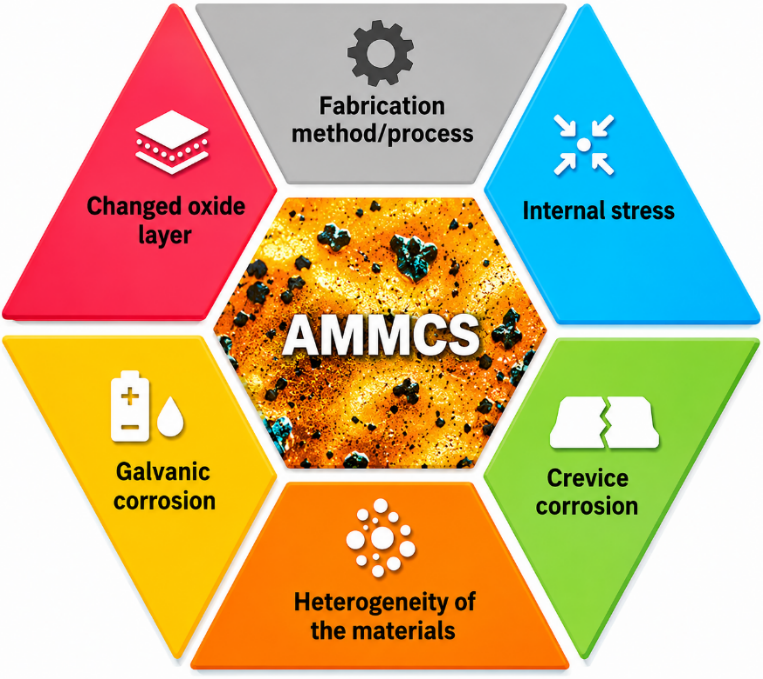
Figure 1 Factors influencing electrochemical corrosion of MMCs.
Interactions between the matrix and the reinforcement
The differences in electrochemical potential between aluminium and ceramic reinforcements are what cause galvanic corrosion in AMMCs. Most ceramics, like SiC, Al2O3, B4C, and TiB2, do not conduct electricity. However, small amounts of conductivity or defects caused by the manufacturing process, such as porosity, microcracks, and interfacial voids, can create galvanic pathways that speed up the dissolution of the matrix around reinforcement particles [71,72]. This effect gets worse in places with a lot of chloride, such as seawater, because Cl⁻ ions are very conductive and attack aggressively.
Defects in the interface and the microstructure
The integrity of the interface between the matrix and the reinforcement has a big effect on how corrosion happens. When processing, if the surface has poor wettability, it can leave gaps at the interface that can start pitting corrosion [73]. Microstructural heterogeneity, such as uneven reinforcement dispersion, grain boundary segregation, and thermal residual stresses, can also cause micro-galvanic cells that speed up localized corrosion in AMMCs [74].
Passive film breakdown
The passive oxide film, Al2O3, on aluminium is what makes it resistant to corrosion. Adding ceramic reinforcements could interfere with the formation of passive films or cause gaps in the film at the interface between the matrix and the reinforcement. Chloride ions in the ocean can easily penetrate through these weak spots, where pitting corrosion initiates [75,76]. Once pitting starts, it propagates quickly because it is autocatalytic, and involves 4 stages of initiation, propagation, termination, and re-initiation. Thus, the spread of pitting corrosion is determined by the number of flaws in the oxide layer of the composites, which are expected to be as many as the number of reinforcements that intercept the surface of the oxide.
The effects of the marine environment synergy
Marine environments have several factors that collectively exacerbate AMMC corrosion: high salinity, wetting and drying cycles, temperature fluctuations, and biofouling [77,78]. Tests with salt spray and immersion show that changing conditions speed up the cycles of passive film rupture and re-passivation. Biofilms can also change the local pH and oxygen levels, making protective films even less stable [51].
Influence of reinforcement characteristics
Corrosion resistance is greatly affected by the type, size, and volume fraction of the reinforcements. Smaller particle sizes can make load transfer and mechanical strength better, but they can also make the interfacial area more vulnerable to attack [79]. Higher reinforcement volume fractions also improve mechanical properties, but they tend to make galvanic coupling and interfacial defects worse, which speeds up corrosion in harsh marine environments [80].
Typical chemical reactions of the corrosion behaviour of AMMCs reinforced with SiC and Al2O3 particles in 3.5% NaCl environment are displayed from Eqs (1) - (3). The corrosion reactions are:
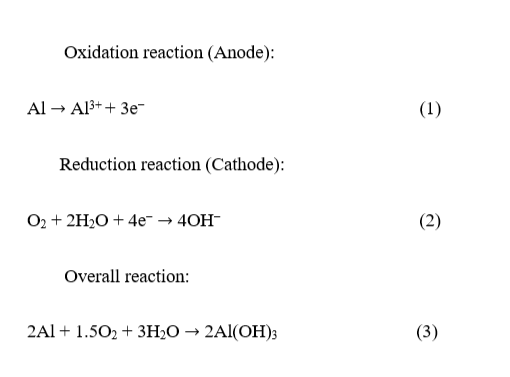
The presence of chloride ions can result in the formation of aluminium chloride complexes (Equation 4), which can lead to the chemical degradation of the alloy matrix (Al) and the reinforcing particulates.
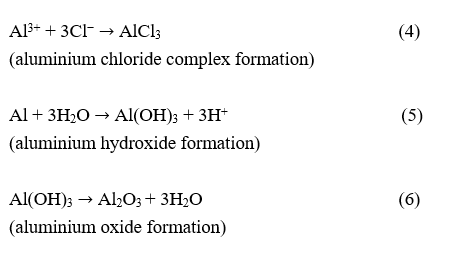
This implies that the corrosion process is first initiated by the chloride ions. These ions penetrate the oxide layer to initiate pitting corrosion. The corrosion is propagated via the Al matrix by forming Al3+ ions and Al(OH)3 (Eq. (5)). The activation of aluminium oxide provides some protection against further corrosion of the composites (Eq. (6)). The SiC particulates can serve to inhibit and aggravate corrosion based on the dominating factor, while the effectiveness of the Al2O3 particles to serve as protection against corrosion is dependent on the distribution of the reinforcement and its interface with the Al matrix.
As earlier explained, a diagrammatic display of the corrosion process of AMMCs in a simulated seawater environment is displayed in Figure 2. The surface of the Al matrix is protected against corrosion damage via the oxide layer formation. However, the inclusion and existence of reinforcements in the Al matrix undermine the protective nature of the oxide layer on the surface of the matrix. This is because the reinforcement initiates discontinuity regions, that is, flaws in the oxide, leading to corrosion (Figure 2(a)). With this, galvanic cells are formed and reduction in oxygen due to the wide variation between the electrode potentials of the matrix and reinforcement. Pitting corrosion begins in the micro-voids due to the accumulation of chloride ions, while oxide film reformation is prevented due to the reduction in the concentration of oxygen at the cavities. An anodic reaction is developed due to the damage caused by the chloride ions to the oxide film (Figures 2(b) - 2(d)), leading to Al matrix dissolution. As a result, there is separation of the reinforcement particulates from the structure, leading to wide depressions on the surface of the material, often mistaken for corrosion pits. Although most often, narrow pits occur within such depressions where particulates have been completely removed due to galvanic corrosion activities. As this phenomenon continues, new surfaces corrode with enlarged corrosion pits [58]. Table 2 shows the various corrosion mechanisms and their respective interaction in a marine environment.
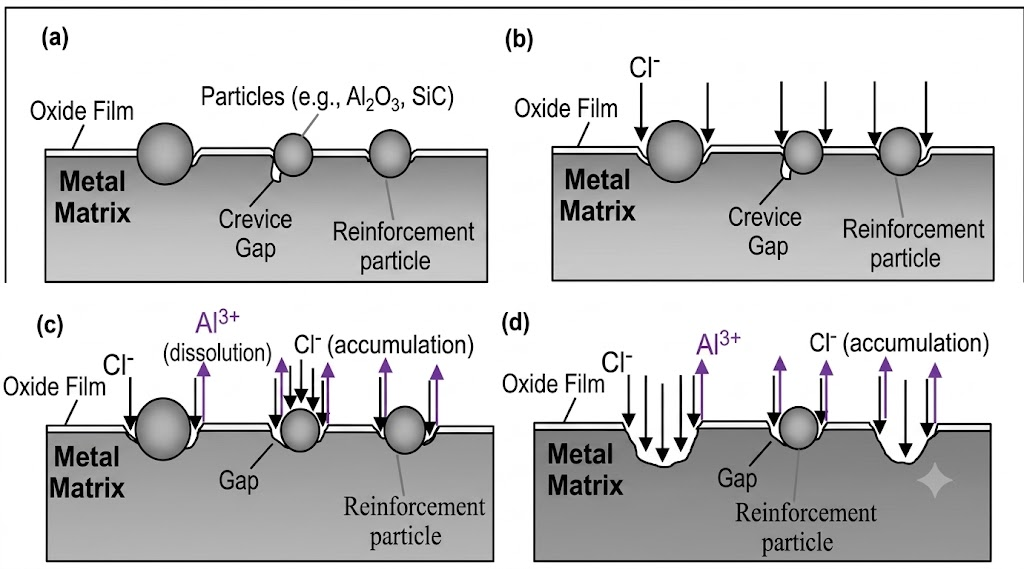
Figure 2 Diagrammatic display of AMMCs corrosion mechanism in a simulated seawater environment [58].
Table 2 Corrosion mechanisms and their interactions in a marine environment.
| Corrosion mechanism | Interactions | Reference | |
|---|---|---|---|
| a. | Passive film stability and formation (Pitting Corrosion) | Aluminium naturally forms a passive oxide film (Al2O3) that protects it from corrosion. But when Cl− ions are present in seawater, the film can break down in certain places, causing pitting. Reinforcements such as SiC, Al2O3, and TiB2 can alter surface energy and nucleation sites for oxide growth, thereby making passive films less stable. | [81] |
| b. | Interactions between galvanic cells (Galvanic corrosion) | Localised galvanic cells may form if the reinforcement particles have different electrochemical potentials than the aluminium matrix. SiC is mostly inert, but conductive reinforcements like TiC, TiB2, and ZrB2 can make galvanic corrosion worse if they are not well mixed or bonded. | [82] |
| c. | Interface degradation (Interfacial corrosion) | The connection between ceramic particles and aluminium is often the weakest part. Interfacial debonding, microcracks, or the formation of unwanted phases (Al4C3 with SiC reinforcement) can make it easier for chlorides to get in, which speeds up localized attack. | [83] |
| d. | Porosity and its defects (Crevice corrosion) | Porosity caused by processing makes it easy for electrolytes to get in, which leads to crevice and pitting corrosion. Powder metallurgy or squeeze casting can lead to dense composites produced that have much less porosity and better corrosion resistance. | [84] |
| e. | Pitting propagation and chloride attack | Pitting corrosion usually starts at small flaws, intermetallic particles, or at the interface between the matrix and the reinforcement, where chloride ions break down the protective oxide. Once pits form, they propagate on their own because the acid levels and oxygen levels inside the pit cavity drop. | [85] |
Testing methods for AMMCs in marine environments
To determine how AMMCs corrode in marine conditions, a variety of strong testing methods have been deployed (Figure 3). These tests simulate different types of marine exposure, from being completely submerged in seawater to using accelerated salt spray chambers and controlled electrochemical techniques. Each method gives different information about how corrosion starts and how much worse it could get. These are further explicated in this sub-section, while their advantages and disadvantages are highlighted in Figure 3 [94,102,103].
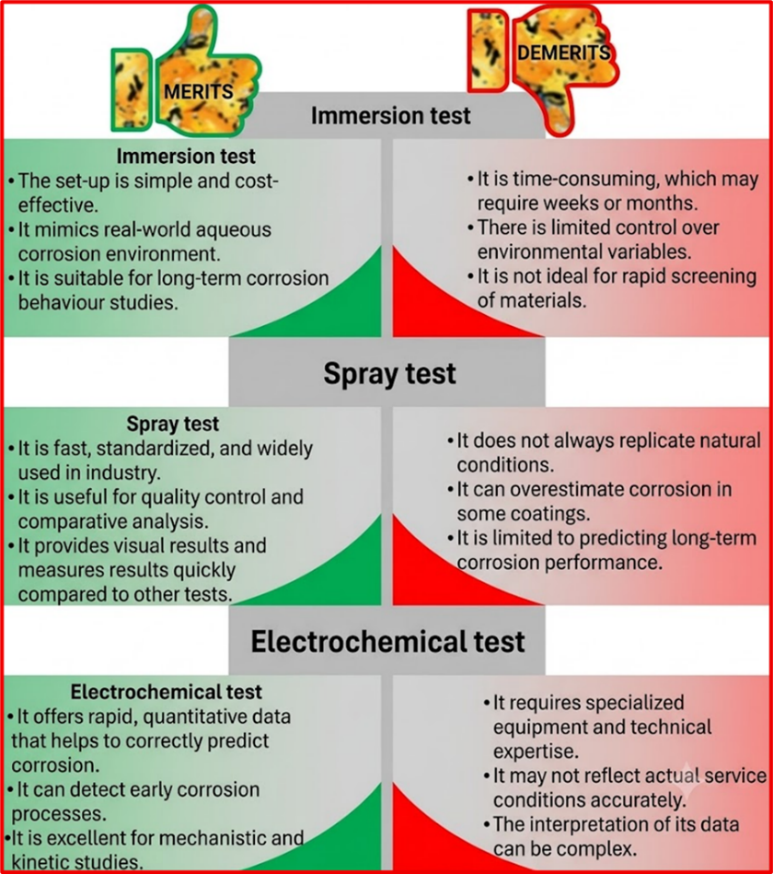
Testing by immersion in seawater (NaCl)
Seawater immersion tests simulate the conditions that AMMC components would face in real time when they are exposed to seawater regularly or for a period of time. Natural or synthetic seawater solutions that meet the ASTM D1141-98 standard are used. Samples are then submerged for long periods of time, usually from weeks to months, and their weight loss, surface morphology, and pit depth are noted and observed regularly [86].
Weight loss is evaluated through sample weighing before and after immersion in the corrosive medium for a particular period. The difference in weight before and after immersion gives the weight loss (Eq. (7)). Percentage weight loss is also estimated using Eq. (8). The surface morphology is examined via scanning electron microscopy with an attachment of energy dispersive spectroscopy (SEM-EDS), Transmission electron microscopy (TEM), Energy Backscattered dispersion (EBSD), and an optical microscope. Long-term immersion of composites in synthetic seawater gives realistic corrosion rates and can be observed through localized attack, intergranular corrosion, and film breakdown over time. Long-term immersion shows how passive film breaks down, how pitting starts, and how marine microorganisms (biofouling) speed up corrosion [87]. A SiC-reinforced Al 6061 composite [88] that was immersed for 60 days showed more localized corrosion because of galvanic interactions and interfacial voids [89].
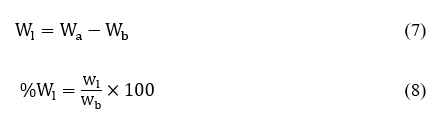
where
 ,
 ,
and
 are
weight loss, weight of sample after immersion, and weight of sample
before immersion, respectively.
Testing with salt spray (fog testing)
Salt spray testing (ASTM B117) is a widely used method for quickly testing how well metallic materials can resist corrosion in a very controlled setting. This method involves putting samples in a fine mist of a 5 wt.% NaCl solution at a set temperature and humidity. This test does not exactly simulate natural marine exposure, but it speeds up chloride attack and passive film breakdown. This makes it possible to quickly compare different AMMC formulations [90,91]. When salt spray is used in controlled fog and temperature conditions, it speeds up corrosion. This provides data on the rate of surface aging, the onset of pitting, and the breakdown of oxides. The results of salt spray tests on Al-SiC and Al–Al2O3 composites show that higher amounts of reinforcement often lead to faster pit initiation because of localized stress concentration and microstructural heterogeneity. However, they have better mechanical strength [89].
Electrochemical
testing
Marine environments have some of the worst natural corrosion systems because of the combined effects of chloride ions, dissolved oxygen, changing temperatures, and biofouling. In order to understand how aluminium matrix composites (AMMCs) corrode, a lot of electrochemical testing that simulates real-life marine conditions, such as in seawater and being exposed to salt spray, is being carried out. Electrochemical tests not only show how corrosion happens over time, but they also show what the main processes are that cause materials to break down. Electrochemical methods give an instant reaction of how corrosion happens. The potentiodynamic polarization tests are the main method that gives information about the corrosion potential (Ecorr), the corrosion current density (Icorr), and the passivation characteristics [40,92]. AMMCs usually have a higher Icorr than monolithic aluminium because of galvanic interactions at the interfaces between the matrix and the reinforcement [93]. When Ecorr moves towards more negative values, it usually means that the passive film is becoming unstable.
Electrochemical Impedance Spectroscopy (EIS) is another method that looks at how resistant the composite is to charge transfer and mass transport during corrosion reactions. Its data are interpreted based on the Electrochemical Equivalent Circuits (EECs), which consist of passive elements, such as inductors, capacitors, and resistors. Aside from double-layer capacitance and geometric capacitors, the reactance source at the interface is not passive. However, it occurs as a result of the chemical reactions, leading to a phase shift and appearing as capacitance and inductance. The reactance is a negative pseudo-capacitance, appearing as an inductance. It parades a frequency dependence that differs from inactive inductor. To correctly interpret EIS data, with the recognition of the impact of electrochemical reactions in the determination of the corroding surface’s reactance, Reaction Mechanism Analysis (RMA) is utilized [94]. In electrochemical systems, the response of impedance is an indication of a frequent reactivity distribution, classically modeled in analogous electrical circuits by means of a constant-phase element (CPE). EIS is commonly measured at one or 2 representative frequencies rather than scanning a broad range of frequencies, shortening test period with the attainment of automated measurement. Hence, the entire electrochemical process is dependent on the probing frequency of the corrosion system. For the detection and analysis of corrosion, EIS should be measured in the whole frequency range, leading to the determination of the corrosion mechanism. A higher impedance modulus at low frequency means that the material is less likely to corrode. AMMCs with finer, well-dispersed reinforcements usually have higher impedance. On the other hand, poor bonding between the 2 materials or clustering lowers impedance, making the material more likely to corrode [95,96]. It has been shown that the interface, which may be very reactive at the frequency, can cause the impedance to drastically underestimate the true polarization resistance, leading to a greatly overstated corrosion rate [94,97]. Cyclic polarization is also a good way to test how likely metallic material is to pit and how well it can re-passivate. However, the pitting potential (Epit) and protection potential (Eprot), help to compare different reinforcement systems when they are under attack by chloride [80,98].
After the electrochemical tests, post-test analyses are being done to get data for surface characterization. These analyses are very important for understanding how corrosion works. The analyses could be done with a Scanning Electron Microscopy (SEM), which looks at the shape of pits, how they degrade over time and how particles interact with the matrix; an Energy-Dispersive X-ray Spectroscopy (EDS), which examines the elemental composition of corroded sites; and an X-ray Diffraction (XRD), which identifies corrosion products like Al(OH)3 and boehmite phases; and an atomic force microscopy (AFM), which analyzes the topography of the surface at the nanoscale [91].
More reinforcements may make the mechanical properties better, but too much volume fraction can create networks that initiate corrosion in the composites, which makes the composite less protective in marine environments [93]. Table 3 shows the various electrochemical tests conducted and their respective test outcomes. The corrosion rate obtained from the electrochemical tests commonly receives validation through comparison with the corrosion rate obtained from the weight loss (immersion test) method. However, the electrochemical tests produce a differential corrosion rate convertible into weight loss via the application of Faraday’s law. This phenomenon was further explicated by Xia et al. [94], discussing the relationship between the electrochemical tests and weight loss methods.
Table 3 Various electrochemical tests and their outcomes.
|
Electrochemical tests |
Test outcome |
Reference |
a. |
Potentiodynamic Polarization (PDP) |
PDP testing reviews both the anodic and cathodic reactions that control how corrosion happens. To measure corrosion resistance, important values, such as corrosion current density (Icorr), corrosion potential (Ecorr), passivation range, and pitting potential (Epit), are to be considered. Lower Icorr and higher Epit values usually show their superiority in better resistance to corrosion. |
[99] |
b. |
Electrochemical Impedance Spectroscopy (EIS) |
EIS gives us a lot of information about how charge moves, how stable passive films are, and how reactions happen at the interface. Passive films on the surface of a composite that have higher charge transfer resistance (Rct) and lower capacitance values are better at protection against corrosion. |
[100] |
c. |
Open Circuit Potential (OCP) |
OCP monitoring over time shows that the composite can keep passivation stable in harsh chloride environments. A higher and more stable OCP means that corrosion is less likely to happen in marine environments. |
[101] |
Influence of reinforcement types on corrosion behaviour in marine environments
Addition of ceramic reinforcements to AMMCs makes them stronger, more resistant to wear, and better able to handle high temperatures. However, these reinforcements also have complicated and sometimes conflicting effects on how corrosion occurs, especially in harsh marine environments where chloride ions are the main cause of corrosion initiation and propagation, as well as their spread via penetration of the oxide layer at flaws. Several researchers have utilized various reinforcements in AMMCs production, and the effects of using these reinforcements on the corrosion behaviour of the developed composites in a salt environment have been investigated. Some of the monolithic reinforcement particles used and their effects on the corrosion behaviour of the composites in a NaCl environment are discussed.
AMMCs
with silicon carbide (SiC) reinforcement
Silicon carbide (SiC) is one of the most studied reinforcements for Al-MMCs because it is very hard, stable at high temperatures, and can hold a lot of weight. However, its effect on how materials corrode is complicated. SiC particles often act as cathodic sites in relation to the aluminium matrix. This creates localized galvanic cells that speed up pitting corrosion in marine environments with a lot of chloride [89]. The interfacial mismatch and possible presence of intermetallic phases (Al4C3) that form during fabrication can make corrosion worse by provision of crevices for chlorides and moisture to concentrate [104]. However, controlled fabrication that reduces interfacial reaction products and achieves uniform SiC dispersion has improved corrosion performance by making passive films more stable and reducing microstructural heterogeneities [105]. Potentiodynamic polarization and EIS studies showed that SiC in lower volume fractions (5 - 10 wt.%) leads to moderate corrosion rates while keeping mechanical benefits [106].
Sarapure et al. [47] explored the corrosion behaviour of AMCs produced using Al6061 alloy and SiC particulates. The developed composites were produced via the stir casting route. The experimental design was done using the Taguchi technique. The test variables are SiC (0, 2 and 4 wt.%), normality of NaCl solution (1%, 1.5% and 2%), and corrosion exposure duration (40, 60 and 80 days). The weight loss (immersion) method was utilized in the corrosion experimentation. The study revealed that the reinforced composites show greater corrosion resistance compared to the unreinforced sample in the corrosion media. The study also revealed that the corrosion rate reduces with the SiC content and increases with the number of days. Hence, the lowest corrosion rate is linked to the highest composition and the lowest number of days. The SEM micrograph of the unreinforced sample showed severe pitting compared to the reinforced composites. The phenomenon of greater corrosion resistance of the composites was attributed to the discontinuity of the matrix materials in the composites. The study of Aravindan and Balamurugan [107] also revealed the corrosion behaviour of AMMCs developed using Al6063 alloy and SiC (0 to 15 wt.%) as reinforcement. The stir casting production technique was used to produce the composites, while the immersion method was employed for the corrosion studies for more than 40 days in a 5% NaCl solution at room temperature. The results showed that the increment of SiC content in the composite decreases the corrosion rates. A similar observation was reported by Zakaria [42], where the lower corrosion resistance of reinforced AMMCs in 3.5% NaCl was linked to increased SiC volume fraction in the developed composite. Also, the study discovered that lower SiC particle size enhanced the corrosion resistance of the composites. Figure 4 displays the various effects of SiC sizes and volume fractions in 3.5% NaCl solution for the 120 immersion hours.
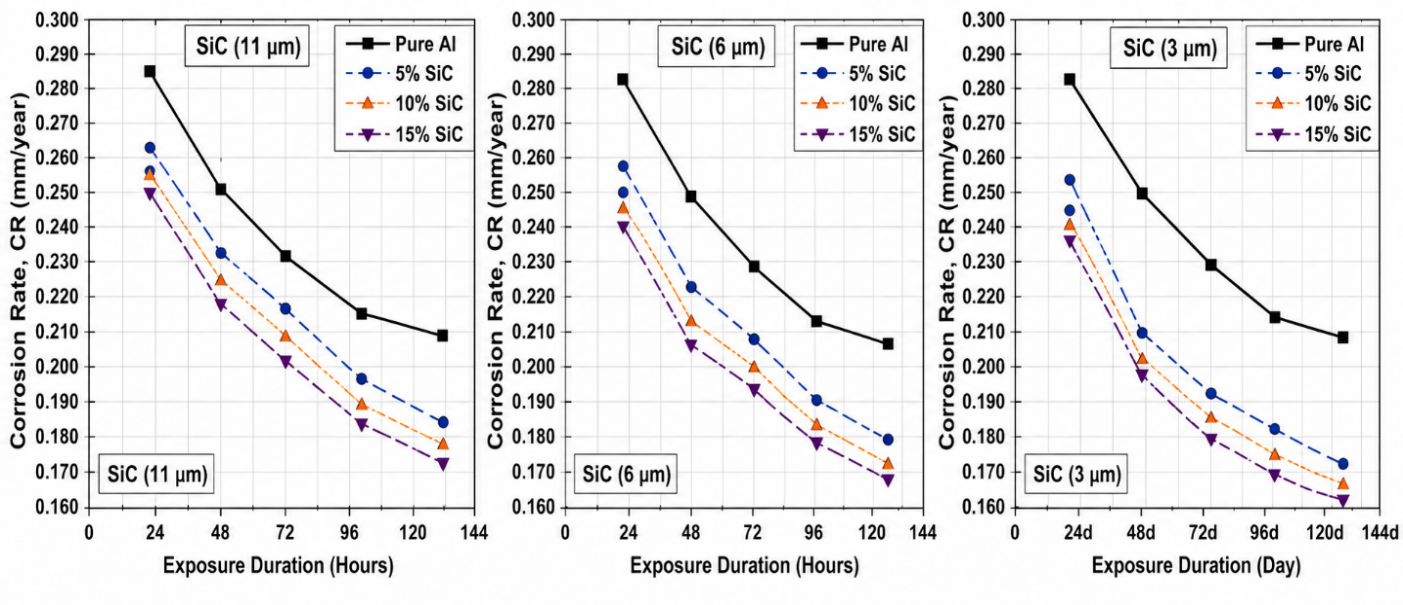
Figure 4 Corrosion rate vs. exposure time (hours) in 3.5% NaCl solution at different SiC particle sizes and volume fractions [42].
The study revealed that the Al-SiC interaction results in intermetallic phases, which have beneficial effects on the corrosion resistance of the composites. This may be owing to the interruption of the matrix channels’ continuity with the pressure-infiltrated composites. Further examination of the surfaces of the unreinforced alloy and reinforced composites was done. For instance, severe damages in the form of large pits were observed on the surface of the unreinforced alloy. This revealed that the material was susceptible to pitting corrosion in the NaCl solution. Nonetheless, the surface of the reinforced composites (typically, Al/15% SiC (3 µm)) revealed less degradation, as revealed in Figure 5. Severe degradation was observed along the grain boundaries of the unreinforced alloy matrix, which provides preferential corrosion initiation sites owing to surface discontinuity as a result of the structural changes.
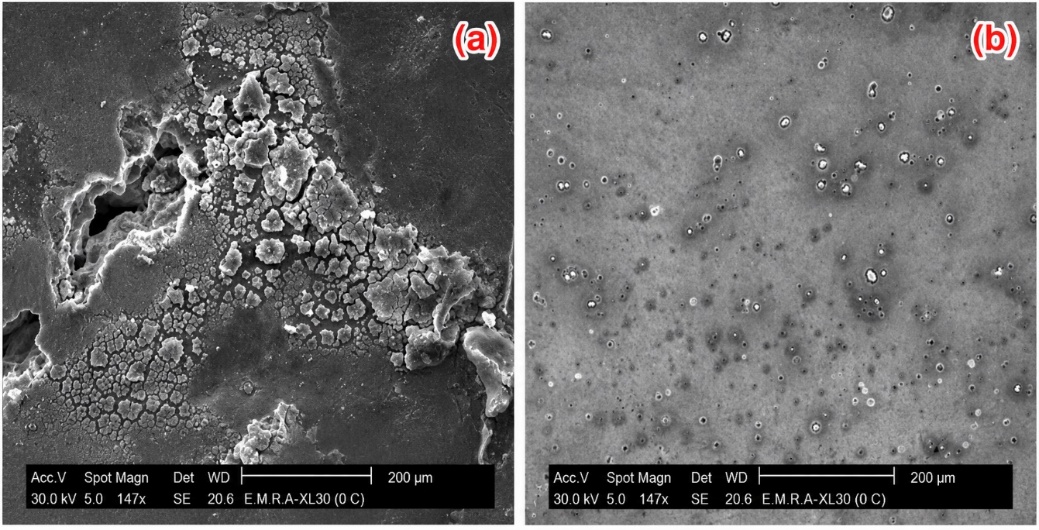
Figure 5 Microstructure of (a) unreinforced Al matrix, and (b) reinforced composite (Al/15% SiC (3 µm)) after corrosion experimentation in 3.5% NaCl for 96 h at room temperature [42].
The corrosion behaviour of Al/SiC composite in 3.5% NaCl solution was determined by Kollabathini et al. [108]. The surface of the SiC was modified through electroless plating via the deposition of nickel phosphorus (Ni-P). The plated SiC particles, at different weight percentages (5% to 15%), were employed in the fabrication process of the composite via the powder metallurgy (PM) route. The potentiodynamic polarization method was employed for the corrosion experiment in 3.5% NaCl solution at room temperature. The study revealed that the plated SiC reinforced composites exhibited greater corrosion resistance to pitting compared to the Al-SiC composites without plating and the unreinforced alloy. The study attributed the improved corrosion resistance of the plated SiC reinforced composites to a strong interfacial bond, grain refinement, differences in the coefficient of thermal expansion, Ni3Al formation, and lowered potential difference. The corrosion resistance of the Al/SiC composites without SiC plating showed enhancement compared to the unreinforced alloy. This indicates that the SiC inclusion, whether plated or not, improved the corrosion resistance of the composites. The reinforcement of AA2024 matrix alloy with 20% SiC particles for the development of composites. The corrosion behaviour of the composite was compared with the pure AA2024 alloy. There was corrosion resistance, which was facilitated through the cathodic nature of the SiC particles. Generally, SiC particles are inert and will not react with the surrounding medium. Meanwhile, Al matrix is more reactive, especially with the existence of chloride ions (Cl−) from the NaCl solution. The oxidation of Al matrix during corrosion at the anode site leads to electron release. However, the cathodic reaction of the SiC particles leads to electron consumption, in which there is oxygen or water reduction. Hence, the structural integrity of the material is preserved with the protective aluminium oxide layer formation and pitting corrosion reduction [109]. Furthermore, the lower corrosion current density (0.000904 µA/cm2) of the Al-SiC composites compared to unreinforced aluminium alloy (0.00349 µA/cm2) is an indication of enhanced corrosion resistance of the Al-SiC composites in the NaCl solution. Hence, reduced corrosion current density is a pointer to enhanced corrosion resistance.
In the composites developed by Du et al. [110], the corrosion rate varied with the inclusion of Al particles. Also, the corrosion rate of the composites gradually decreased with the rise in corrosion test period in the 3.5% NaCl environment at room temperature. Al/SiC composites with 10 wt.% reinforcement volume percentage displayed the best characteristics, such as the lowest porosity, the largest density, and the highest corrosion resistance. This is because in oxidizing media, Al oxidizes relatively quickly, causing the formation of Al2O3 on the surface of the substrate. The presence of an oxide layer enhances the corrosion resistance of the composite. With reinforcement above 10 wt.%, many corrosion pits and reaction intermediates appeared because there was a corrosion transition from interface to pitting corrosion. There was extreme corrosion with substantial surface cracks when the reinforcement particles at 5% Al were introduced into the composites. Oxide layer depletion results from the pitting of Al in 3.5% NaCl solution because the existence of corrosive chloride ions in the salt environment reduced the oxide layer stability. The Al dissolution was accelerated when the aluminium oxide layer was broken by the corrosive chloride ion on the surface of the substrate. Figure 6 illustrates the extent of corrosion severity on each composite produced.
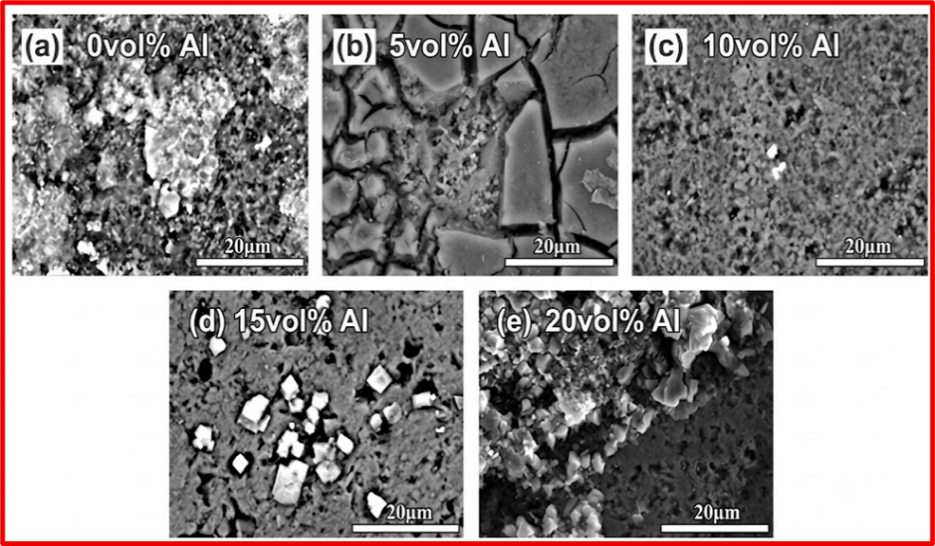
Figure 6 SEM micrograph of Al/SiC composites with various Al particles after 120 h corrosion time [110].
Alumina (Al₂O₃) reinforced AMMCs
Al2O3 is chemically inert, electrically insulating, and very stable in chloride environments. This makes it a better reinforcement against corrosion than SiC [111]. Its low electrical conductivity makes it less likely to interact with the aluminium matrix, which lowers the chance of the development of pitting corrosion. The effectiveness of Al2O3, however, depends a lot on how the particles are spread out, their quantity, and how they are processed. Agglomeration or gaps at the interface between the matrix and the particles can allow localized attacks to occur [112]. Researchers have found that AMMCs made with Al2O3 reinforcement and stir casting followed by hot extrusion corrode much less than those made without reinforcement [71]. Also, Al2O3 composites do better than other materials in salt spray and immersion tests, especially for aerospace and naval parts that are constantly exposed to water [113].
Al2O3 particles were used as reinforcement in developing AMMCs with Al7075 matrix alloy. The weight percentages of the Al2O3 in the matrix alloy were 10 and 15 wt.%. The composites were produced using the stir casting route. The corrosion behaviour of the developed composites was compared with a control sample (unreinforced Al7075 alloy) in a seawater environment using the Tafel polarization technique. It was established that the corrosion resistance of the reinforced composites decreased with the addition of more reinforcement. Severely corroded regions were observed on the Al alloy compared to the reinforced composites in the seawater environment. The study showed that pitting corrosion and intergranular corrosion phenomena were observed [114]. However, a study by Alaneme and Bodunrin [115] showed a very low corrosion rate for both the unreinforced alloy and the Al2O3 reinforced composites in the as-cast condition. This implies that there is a stable formation of inert protection on the surface of the unreinforced alloy and the composites. This makes them highly resistant to attack when immersed in a 3.5 wt.% NaCl environment. Naturally, aluminium and its composites react with oxygen to form a thin, protective oxide film (Al2O3) on their surface. In a 3.5 wt.% NaCl solution, which simulates standard seawater, chlorine ions (Cl-) are aggressive at penetrating and pitting metal surfaces. Due to the protective layer on these substrates remaining intact and inert, the chlorine ions cannot break through to attack the metal beneath. Owing to the protective barrier remaining intact, the rate of corrosion stays low, while corrosion resistance stays high. Hence, the developed composites were proposed to be suitable for engineering applications in marine environments.
Boron carbide (B₄C) reinforced AMMCs
Boron carbide has a low density and can absorb a lot of neutrons, but it also has some problems with corrosion. B4C is more chemically active than Al2O3 and SiC, which can sometimes cause interfacial degradation, especially when not processed correctly [116]. B4C reinforced AMMCs usually have moderate resistance to corrosion in marine environments. Previous studies have found that the best volume fractions (< 10 wt.%) lower galvanic activity and keep corrosion rates at acceptable levels [104]. Nevertheless, excess B4C in the mix can cause microcracks during production, which makes the material more prone to pitting and crevice corrosion. For instance, Han and Chen [63] investigated the corrosion behaviour of Al-B4C MMCs in an aggressive environment (3.5% NaCl solution). The potentiodynamic polarization (PDP) and electrochemical impedance spectroscopy (EIS) were employed for the experiments. It was revealed that the corrosion resistance of the composites decreased significantly with increased B4C contents from 0 to 30 volume percentage. Based on the mixed potential theory, a noble direction shifting of the composite’s potential is envisaged with increased B4C content. However, the discontinuity of the protective films of the surface oxide rises with the addition of the B4C content. It is important to state that at higher reinforcement concentrations, ceramic particles (such as B4C) tend to cluster or agglomerate during production. This leads to localized defects, such as micro-porosity, voids, or micro-cracks at the matrix-particle interfaces. Passive oxide films cannot bridge across these microscopic physical gaps, resulting in structural discontinuities in the protective layer. Hence, the composite with the highest content of B4C reinforcement particles showed more vulnerability to chloride ions by producing less noble potential. Further analysis revealed that the composites are more easily provoked with pitting compared to the matrix alloy. The pit formation at the interfaces of the composites could be due to some reasons, such as: (1) existing defects at the matrix-reinforcement interfaces for chloride ion easy penetration and attack the Al matrix; (2) chloride ions could preferentially attack the protective layer at the matrix-reinforcement interfaces; and (3) the galvanic coupling phenomenon between the matrix alloy and reinforcement particles. This suggests that pits are formed around the reinforcement particles as the Al matrix at the interface dissolves. Hence, more aggressive local chemical medium is attained compared to the bulk solution, leading to more severely corroded matrix. A typical morphology of the corroded surfaces of the matrix alloy and some of the composites are displayed in Figure 7.
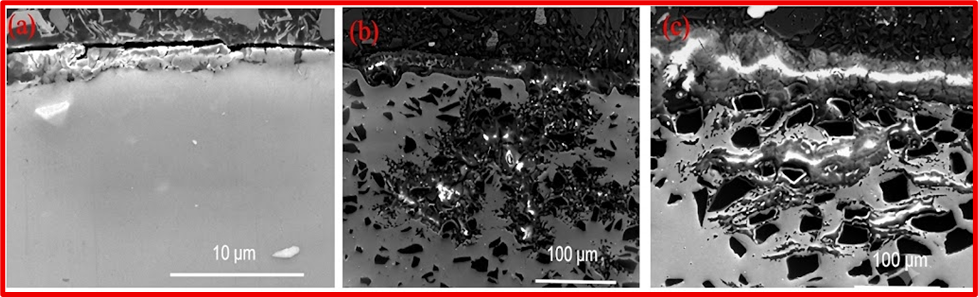
Figure 7 SEM micrographs of samples after immersion in 3.5% NaCl solution for 10 days (a) Matrix alloy (AA1100), (b) 16% B4C reinforced AA1100, and (c) 30% B4C reinforced AA1100 [63].
Titanium carbide (TiC) Reinforced AMMCs
TiC particles are chemically stable and work well with aluminium, achieving strong bonds at the interface, which limits void formation. In addition, its electrochemical potential is close to that of aluminium, limiting galvanic coupling effects [117]. Several electrochemical studies have shown that TiC reinforcement makes Al-based composites less likely to corrode in seawater than SiC or B4C reinforcements. This is because TiC can stabilize the passive aluminium oxide film and stop localized attacks [118]. TiC-reinforced AMMCs also stay stable longer in salt spray environments, as long as they are made in a way that does not cause intermetallic formation or improper wetting [119].
The corrosion behaviour experiment was carried out by Sivananth et al. [120] on AMMCs developed using TiC (3, 7 and 10 wt.%) as reinforcement in an Al-Si matrix alloy. The electrochemical testing method was utilized for the corrosion experiment. The study revealed that higher corrosion resistance is achieved with lower corrosion current (Icorr). An increase in corrosion rate was observed with TiC addition. For instance, the corrosion rate and Icoor values of the unreinforced Al-Si alloy were 1.1 mm/yr and 100 µA/cm2, respectively, while the values of the TiC-reinforced composite at 10 wt.% addition gave 1.7 mm/yr and 158 µA/cm2, respectively. Furthermore, the micrograph of the Al-Si/10% TiC composite revealed marginally more corroded areas compared to the unreinforced Al-Si alloy (Figure 8). This could be due to the transfer of electrons from the anodic aluminium to the cathodic TiC particles, which could cause preferential dissolution of the aluminium matrix as a result of the TiC reinforcement. The matrix-particle interfacial defects, such as micro-voids or micro-porosity, could act as localized sites for aggressive ions like Cl-. These aggressive ions break down the passive oxide layer and initiate pit formation more rapidly than the unreinforced alloy’s surface. It was opined that the rise in corrosion rate of the reinforced composite could be due to the existence of intermetallic Ti2AlC during the period of the composite development. The Ti2AlC present on the surface is linked to the larger corrosion spot on the composite samples.
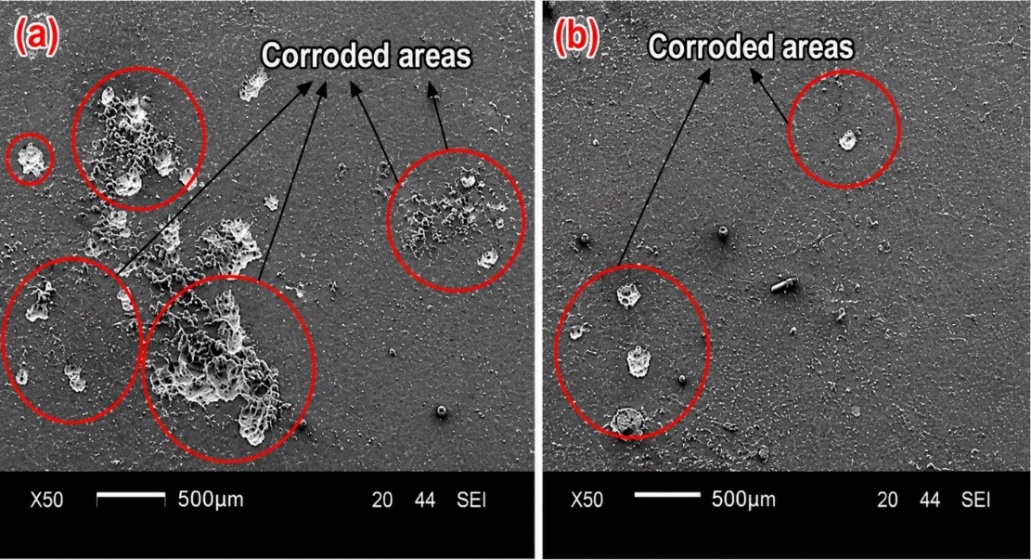
Figure 8 Micrographs of corroded areas on (a) Al-Si/10% TiC composite, (b) Al-Si matrix alloy [120].
Ananda-Murthy and Singh [121] investigated the corrosion behaviour of Al-TiC composites in NaCl medium. The aluminium alloy used was Al6061, and the reinforcement particulate was TiC (0, 2, 4 and 6 wt.%). The electrochemical testing route was employed in the study to determine the corrosion potential (Ecorr) and Icorr from the Tafel plots. The electrochemical impedance spectroscopy (EIS) studies were used for the Nyquist and Bode plots, while the micrographs of the corroded surface were examined. The corrosion resistance of the reinforced composites increased compared to the unreinforced alloy, as revealed by the Tafel polarization studies. This observation was attributed to the excellent bonding strength and integrity of the reinforcement particulates with the matrix alloy, as well as the possible matrix-reinforcement electrochemical decoupling. TiC possesses a very strong interfacial bond, which could yield more conductive intermetallic phases, such as Al4C3 and Al3Ti. The increased corrosion susceptibility of the samples (reinforced composites and unreinforced alloy) at higher concentrations of the aggressive chloride ions could be linked to the oxide film breakdown on the Al matrix. This occurs because of the increased chloride ion adsorption on the Al surface or its oxide layer. However, the values of Icorr and corrosion rate decreased with increased TiC content as well as with increased concentration of NaCl. Hence, the composites reinforced with TiC particles possess better corrosion resistance compared to the unreinforced matrix alloy. This implies that the spread of pitting corrosion on the reinforced composites is retarded compared to the matrix alloy. The retardation of the pitting corrosion in the reinforced sample may be attributed to the interfacial reactions that produce stable conductive intermetallic phases as well as the strong bonding obtained. This ensures that the aggressive micro-galvanic cell driving the corrosion is minimized, lowering the corrosion current density (Icorr) and retarding pit expansion. A strong interfacial integrity acts as a physical barrier, blocking aggressive chloride ions from infiltrating beneath the surface, and keeping the pits localized from rapid spreading. The higher repassivation potential exhibited by the TiC reinforced composites is linked to the decrease in the pit kinetics by the oxides of metals. A more negative corrosion potential is inevitable with increased Cl- ion concentration, which makes aluminium more sensitive to pitting corrosion. The SEM micrographs showed a reduction of damaged surfaces as the TiC content increased in the matrix alloy (Figure 9). Hence, TiC was proven to enhance the corrosion resistance of the AMMCs.
Using friction stir casting (FSP), AMMCs were produced using Al7075-T651 as matrix alloy and TiC (2, 4 and 6 wt.%) as reinforcement. The corrosion experiment was done via polarization techniques with Tafel extrapolation. The results showed that the Icorr value reduces with increased TiC reinforcement contents in the NaCl environment, resulting in reduced corrosion rates of the composites. It was further explained that the aggressiveness of the NaCl environment is raised by its molarity; hence, the rate of reaction becomes faster for the formation of the passive layer [122]. This leads to loss of their reflective surfaces with pitting damage.
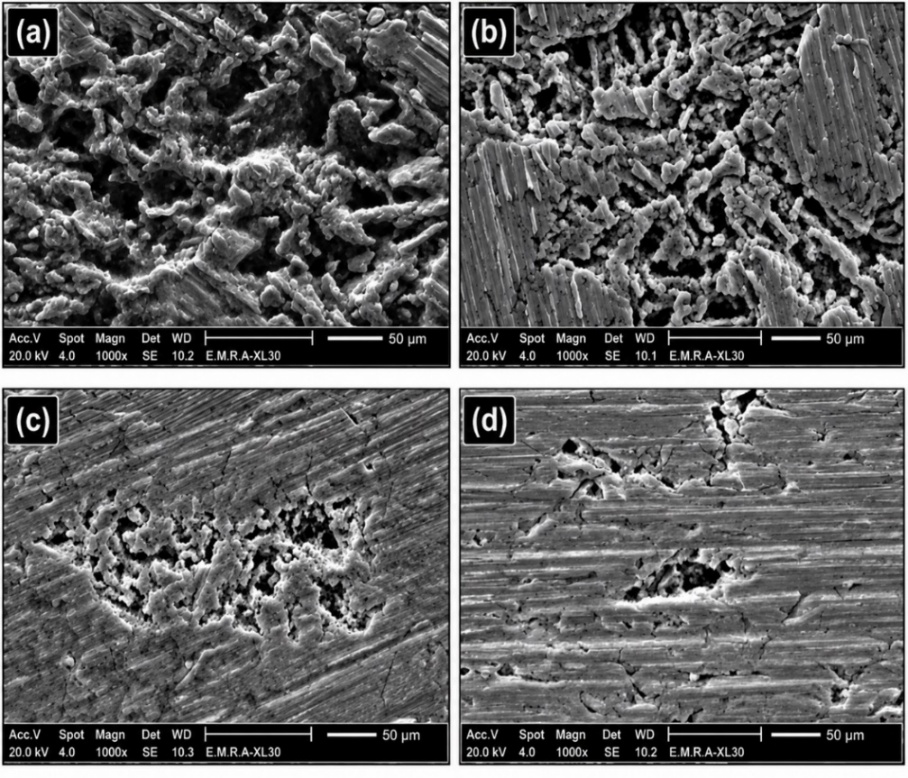
Figure 9 SEM images of corroded samples of (a) Al6061 matrix alloy, (b) 2% TiC reinforced Al6061, (c) 4% TiC reinforced Al6061, and (d) 6% TiC reinforced Al6061 [121].
Titanium diboride (TiB₂) reinforced AMMCs
When it comes to corrosion-resistant marine applications, TiB2 is one of the best ceramic reinforcements. It has a low density, high stability, and non-conductive interfacial properties that help reduce galvanic corrosion [123]. Under electrochemical testing conditions, TiB2 particles make it easier for stable and protective aluminium oxide layers to form. This is because TiB2 particles refine the aluminium grains and create clean, chemically inert interfaces that allow a dense, self-healing Al2O3 film to form without chemical or structural discontinuities. Furthermore, the addition of TiB2 could cause a noble (positive) shift in the corrosion potential (Ecorr) in an electrochemical test. This shift indicates enhanced thermodynamic stability, making the aluminium surface remain in its passive region where passivation oxide forms and self-heals without active dissolution transition. Research has shown that TiB2-reinforced Al 6061 composites have much lower corrosion current densities (Icorr) in both natural seawater and synthetic 3.5% NaCl solutions [124]. TiB2 also works better than SiC or B4C, even at higher volume fractions (up to 15 wt.%).
A study by Kumar et al. [125] considered the corrosion characteristics of both cast and forged Al6061 matrix composites with TiB2 particles as reinforcement. An in-situ synthesis of the composites was done using potassium hexafluorotitanate salt (K2TiF6) and potassium tetrafluoroborate (KBF4) halide salts via the stir processing method. The corrosion test procedure adopted in a 5% NaCl test solution was the salt spray test. It was reported that there was a marginally lower weight loss of the composites compared with alloys in cast and forged conditions. The resistance to corrosion of the in-situ MMCs increased with TiB2 addition in the cast and forged samples. The forged samples showed better corrosion resistance compared to the cast samples. This could be attributed to the reduction of micro-porosities and other defects in the forged samples compared to the cast samples. The first 36 h of the salt spray test revealed oxide layer formation to protect against further corrosion attack. However, after the 36th h, the weight loss rate decreased, which was attributable to the formation of an oxide layer. The distribution and TiB2 content in the cast and forged composites greatly affect the thickness and oxide layer continuity. Forging ensures the reinforcing particles are distributed uniformly and closes internal micro-pores, which gives the oxide film a clean, solid foundation to grow thicker and remain continuous compared to casting. Therefore, the oxidation rate of the cast samples was higher compared to the forged samples. The composites reinforced with TiB2 particles to a larger extent were more protected than the unreinforced samples because of the improved quality afforded by TiB2 on the passive oxide layer.
The development of A356/TiB2 composites via the stir casting route was achieved by Senthil Kumar et al. [126]. An electrochemical corrosion performance investigation was carried out on the samples developed. The study revealed that as the TiB2 content increases, the corrosion rate decreases. The corrosion resistance of the composites was increased by the TiB2 content, with the provision of grain boundary isolation. Furthermore, high-density nucleation zones are developed for the passive film by the particles of the reinforcement. This could result in the rise of the density of the passive zones with reduced corrosion rate. A thin protective oxide layer is formed on the surface of the aluminium to protect it against corrosion due to the Al-oxygen reaction.
Zirconium diboride (ZrB₂) reinforced AMMCs
ZrB2 particles are still fairly new to AMMC research, but they show potential traits for corrosion resistance because they are very stable thermodynamically and can form strong bonds with the matrix [127]. ZrB2 sparingly reacts with chloride solutions, hence retarded localised corrosion on the composite. Potentiodynamic and salt spray tests show that ZrB2 has low rate of pit initiation and relatively stable passivation oxide layer even when the reinforcement content is high (up to 20 wt.%), making it a promising material for use in extreme marine conditions [128]. Morampudi et al. [129] investigated the corrosion properties of Al6061/nano-ZrB2 metal matrix composites produced through the powder metallurgy route. The volume fraction of the reinforcement was between 0% and 2% by 0.5% steps. PDP technique was employed for evaluating the corrosion behaviour of the samples in a 3.5% NaCl solution. The analysis showed improvement in the corrosion resistance of the Al6061/ZrB2 composites with the addition of the volume fractions of the reinforcement, compared to the pure Al6061. The highest reinforced AMMCs exhibited significantly higher corrosion resistance. This could be attributed to the nano-sized particles refining the grain structure and enabling a rapidly self-healing passive oxide film. Also, a fine-grained matrix composite provides a high density of active atomic sites and rapid diffusion paths for aluminium. This allows a dense, continuous, and protective Al2O3 passive layer to form more rapidly in the 3.5% NaCl electrolyte compared to unreinforced aluminium. The cathodic and anodic reactions that control the corrosion rate have an impact. The intermetallic phases and amorphous nature of reinforced composites are the contributing factors to the reduced corrosion rates. Dinesh Kumar et al. [130] examined the corrosion behaviour of stir-cast AA7178/ZrB2 composites in a 3.5% NaCl environment. The composites’ corrosion resistance improved with the addition of the ZrB2 particles in the AA7178 alloy. The degradation rate of the composites is reduced with the increasing amount of ZrB2 content. The EIS analysis confirmed the result of the Tafel polarization plot. It was deduced that the resistance of the charge transfer produces a defensive layer on the surface of the substrate. Hence, the capacitance double-layer value is simultaneously decreased. More cracks and pits were detected on the pure alloy compared to the reinforced composites, as shown in Figure 10. This further elaborates on the effect of the reinforcement particles in inhibiting corrosion of the substrates.
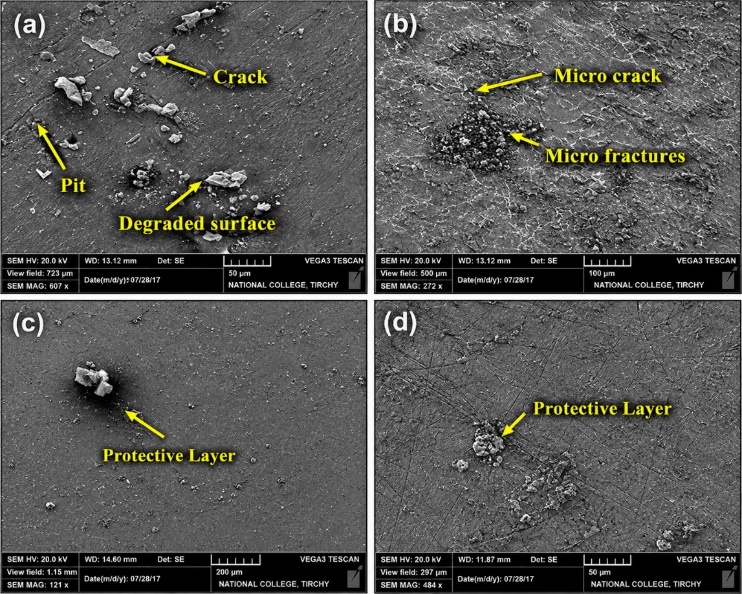
Figure 10 SEM images of ZrB2 reinforced composites immersed in 3.5% NaCl solution: (a) AA7178, (b) AA7178/5%ZrB2, (c) AA7178/10%ZrB2, and (d) AA7178/15%ZrB2 [130].
Hybrid or multiple reinforced AMMCs/other monolithic reinforced AMMCs
Many studies considered the corrosion behaviour of hybrid or multiple reinforced composites in NaCl environment. This sub-section reviews and highlights the findings of some of these studies. Alaneme et al. [131] investigated the corrosion behaviour of composites developed using Al-Mg-Si alloy matrix and hybrid reinforcement particles of rice husk ash (RHA) and SiC. The PDP technique was utilized for corrosion experimentation in a 3.5% NaCl solution. It was reported that the corrosion behaviour of the composites was inconsistent for the different volume fractions of the reinforcement. However, there was heightened corrosion resistance for most of the composites with the hybrid reinforcements. Preferential dissolution of the more anodic alloy matrix surrounding the Al-Mg-Si matrix/RHA/SiC particle interface was found to be the main corrosion mechanism. The existence of either physical or chemical heterogeneities, which may include defects, grain boundaries, reinforcement/matrix interface, inclusions, mechanically damaged areas, or dislocations, is the major cause for the localized corrosion that is mainly observed in MMCs. Karabacak et al. [132] examined the electrochemical corrosion behaviour of Al2024/B4C-SiC hybrid composites. The study documented that the inclusion of the hybrid reinforcing particles of SiC and B4C led to corrosion rate reduction of the Al2024 alloy. It was established that the ceramic particles of SiC and B4C serve as an inert physical barrier, resulting in enhanced corrosion performance. The SiC and B4C act as inert physical barriers because they do not chemically dissolve, reduce the active metallic surface area, and hinder corrosion pit growth through the metal matrix. They possess high chemical stability and do not dissolve in corrosive media. The corrosion behaviour of Al7075/B4C/Al2O3 hybrid composites in 3.5% NaCl environment was investigated by Sambathkumar et al. [133] via the potentiodynamic polarization technique. The introduction of reinforcement particulates is an interruption to the continuity of the aluminium matrix, which could interrupt the protective surface oxide film, for more corrosion damage. A significant improvement in the Al7075 hybrid reinforced composites’ corrosion resistance was possible because of the increased reinforcement volume fraction. Hence, the composite samples possess better corrosion resistance compared to pure Al7075.
Ikubanni et al. [24] studied the electrochemical corrosion behaviour of composites produced using Al6063 matrix, while PKSA and SiC particles were used as the reinforcement. The corrosive environment used was a 3.5% NaCl solution. General (galvanic) corrosion and pitting corrosion were observed as the corrosion mechanisms of the composite samples. The reinforcements’ presence in the alloy matrix served as active sites for corrosion initiation. The level of corrosion resistance was established by the thin oxide film layer that developed on the sample. The behaviours of the samples in the 3.5% NaCl solution specified their vulnerability to corrosion attacks, where the chloride ions attack the reinforcement-matrix interface. Furthermore, the Tafel polarization curves and Bode plots shown in Figure 11 revealed the electrochemical corrosion behaviour of the samples. This further revealed that the corrosion resistance of the samples is dependent on the thin oxide film formed on the surface of the substrates. Loto and Babalola [134] studied the corrosion behaviour of AA 1070/Al2O3 (5 and 10 wt.%) composites developed via stir casting. The consequence of the particle size of the reinforcement on the corrosion behaviour was also investigated in different corrosive environments. The addition of the reinforcement at 5 wt.% and 150 nm particle size accelerates the corrosion rate. This occurrence was linked to the surface’s heterogeneous properties and an insufficient alumina layer on the surface. Also, an improved corrosion performance was reported for the 10 wt.% Al2O3 content. The enhancement of the corrosion behaviour is associated with protective oxide layer formation, providing surface passivity.
Narayanan et al. [135] investigated the corrosion characteristics of AMMCs reinforced with graphene oxide (GO) using the pitting corrosion methods. The ultrasonic stir casting method was used to develop the Al/GO composites. The influence of the volume fraction of the nano GO on corrosion behaviour of LM 24 aluminium alloy composites was critically analyzed. It was reported that the addition of the nanoparticles of GO in the matrix lowered the corrosion rate. From the polarization curve, the current density and corrosion potential behaved in a reciprocal way as the GO addition increased in the Al alloy. Also, the availability of the nano GO particles in the matrix alloy with a prolonged contact period under the immersion condition caused corrosion initiation with surface deterioration of the samples. The corroded surfaces of Al/GO composites are displayed in Figure 12.
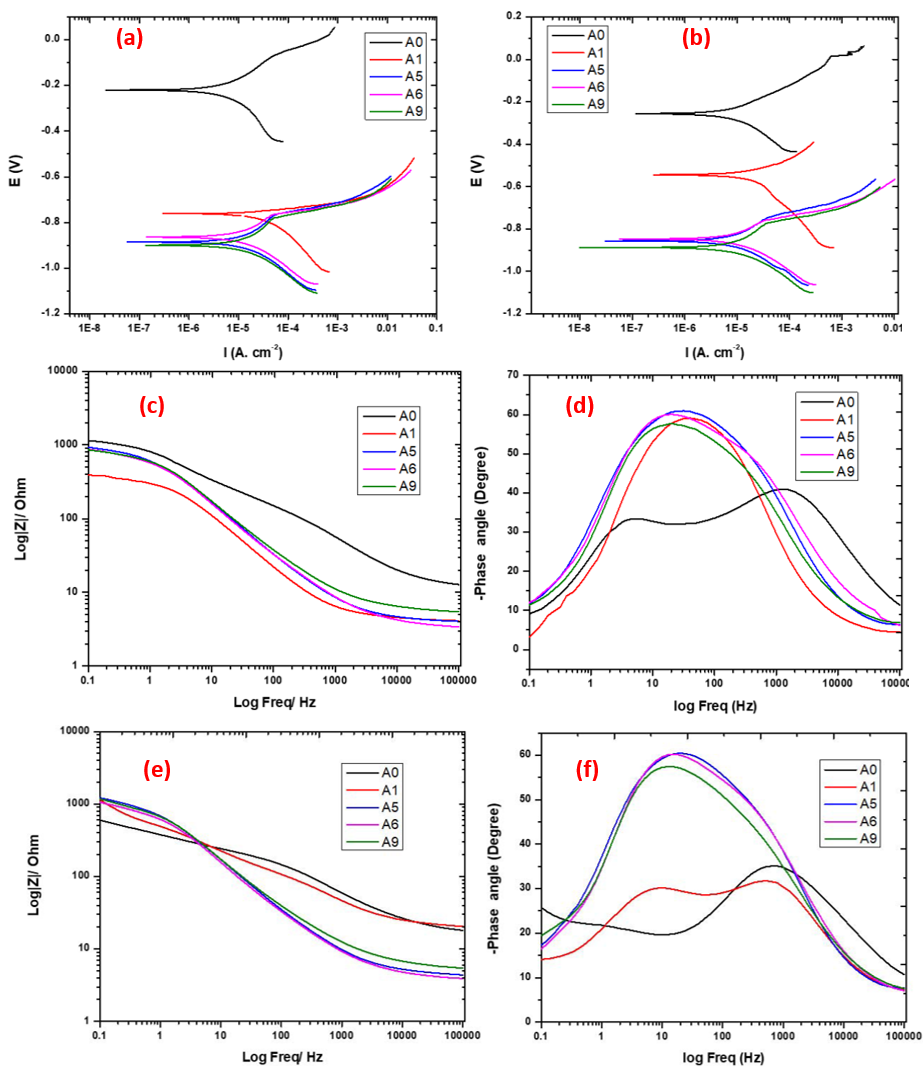
Figure 11 Polarization curves for composites in 3.5% wt. NaCl solution at (a) 24 h and (b) 72 h; Bode profiles (c,e) and Bode phase profiles (d,f) of samples in 3.5% NaCl for 24 h and 72 h, respectively [24].
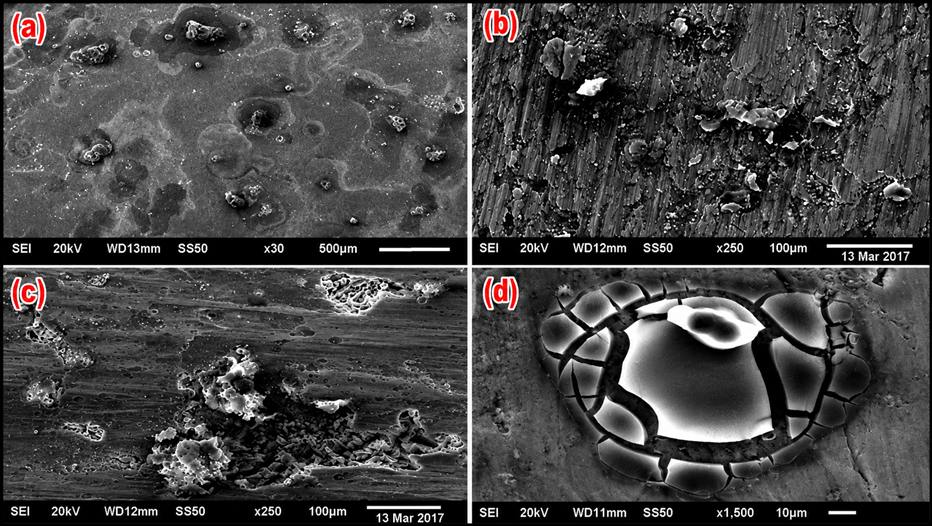
Figure 12 Micrographs of the corroded surfaces of the Al/GO composites [135].
A 2-stage stir casting process was used to produce AMMCs with Al7075 serving as the matrix and garnet particles (0, 5, 10 and 15 wt.%) as the reinforcement by Sambathkumar et al. [133]. The potentiodynamic method was used to determine the corrosion rate of the samples in 3.5% NaCl solution. From the study, it was deduced that the Icorr values decreased with an increase in the volume percentage of garnet particles. Hence, the corrosion rate decreases with an increase in the volume percentage of garnet particles. The bonding between the Al7075 matrix and the garnet reinforcement resulted in a reduction in the corrosion rate. The corrosion rate is reduced due to the distribution and presence of garnet particles in the Al/garnet composite. The corrosion behaviour of AA6061-ilmenite (FeTiO3) composites was investigated by Morampudi et al. [136]. The weight percentages of the FeTiO3 particles were 5%, 10%, and 15% in the metal matrix using the stir casting route. The potentiodynamic polarization test results revealed an improvement in corrosion resistance with an increase in the FeTiO3 particles. The improvement is attributed to the existence of TiO2 in the FeTiO3 particles that were used as reinforcement in the development of the composite. The composite with 10% FeTiO3 showed better corrosion resistance. This was confirmed from the micrographs, which show a relatively lower number of pits for the 10% reinforcement compared to other samples.
Siddesh Kumar [4] investigated the corrosion behaviour of hybrid reinforced AMMCs joined through friction stir welding. The hybrid reinforcement particles used are SiC and E-glass fiber, which are introduced at various weight percentages into the Al6061 alloy. The composites were initially produced using the stir casting route before being joined via friction stir welding. The processed samples were subjected to NaCl solution using the Tafel polarization technique. The corrosion rate of the welded zone and base metal was studied. The results revealed that the heat-affected zone of the welded part has a relatively higher tendency to corrode. The exposure to the corrosive environment results in intergranular attack around the heat-affected zone. The corrosion rate of the samples is dependent on the feed rate, rotational speed, current, and voltage. Hence, the corrosion rate of the base aluminium plate is high compared to that of the hybrid reinforced AMMCs. In a study conducted by Ashrafi et al. [137], the corrosion behaviour of a novel hybrid composite Al/Fe3O4/SiC) produced via powder metallurgy method was investigated. The influence of the hybrid reinforcement particles of SiC and Fe3O4 on the corrosion characteristics of the composites in a simulated seawater environment was examined. The composites produced were Al-15Fe3O4, Al-30Fe3O4, Al-15Fe3O4-30SiC, and Al-30Fe3O4-20SiC. Figure 13(a) reveals the Tafel polarization plots for the various composites developed in the simulated seawater environment. Corrosion protection’s efficiency is obtained through Icorr, while the tendency for substrate corrosion is determined through the Ecorr. The Icorr values of the respective composites were 6.157×10⁻⁴, 7.342×10⁻⁵, 5.591×10⁻⁵ and 1.018×10⁻⁶ A. Hence, the corrosion protection efficiency increases from 88.07 to 99.83%. Also, the corrosion rate of the composites reduces significantly from Al-15Fe3O4 (8.4×10⁻⁴ mm/yr) to Al-30Fe3O4-20SiC (0.01×10⁻⁴ mm/yr). It was reported that the SiC particle played a major physical barrier role, where its particles serve as a strong barrier to the formation of corrosion pits. Also, the observation showcased Fe3O4 particles to have higher corrosion resistance compared to the aluminium matrix. The presence of intermetallic phases of Al3Fe and Al5Fe2 was opined to have served as cathodes for the metal matrix, which enhanced pitting corrosion resistance in the chloride ion environment. Hence, the combined effects of the hybrid reinforcement particles enhance the corrosion resistance of the matrix alloy and increase the corrosion protection efficiency.
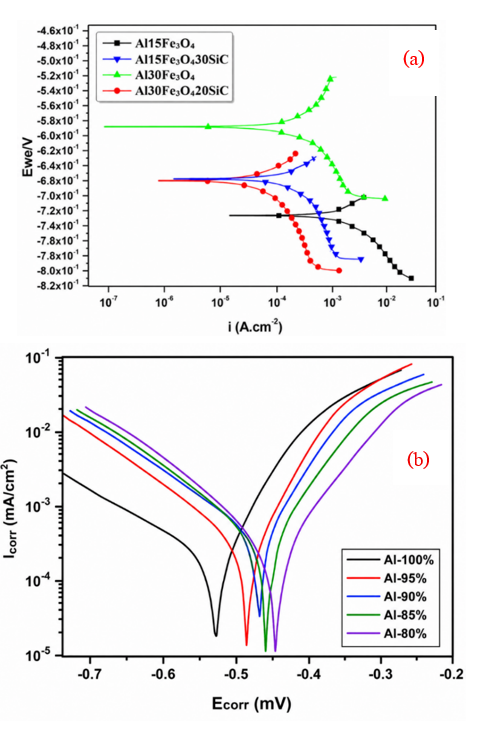
Figure 13 Tafel polarization plots of composites in (a) simulated seawater environment [137] (b) 3.5% NaCl environment [138].
The electrochemical corrosion behaviour of hybrid composites produced using Al6063 matrix and reinforcement particles of Si3N4 and Cu(NO3)2 was investigated by Sureshkumar et al. [139]. The stir casting route was employed for the production of the composites, while the developed composites were subjected to a NaCl environment for the corrosion test. The addition of reinforcement content reduced the current density, which improved the corrosion behaviour by forming a surface protective layer on the substrate due to the non-corrosive reinforcement particles. It was reported that the critical passivation current was decreased by the particles of copper nitrate, making the surface of the composite passive. The copper layer inhibits the dissolved corrosion products from diffusing, contributing to the formation of a protective layer. Also, the corrosion behaviour of the composites processed using single-pass ECAP was investigated. It was revealed that the corrosion resistance of the ECAPed samples was lower compared to the as-cast samples in NaCl environment. The initiation of the corrosion begins on the surface defects, including grain boundary dislocations, while the passive oxide layer is less susceptible to corrosion. It was reported that more grain boundaries and nucleation sites were present on the ECAPed composite due to crystallographic defects. Hence, finer grains are achieved with the ECAPed composites, unlike the as-cast composites. Therefore, the reduction of corrosion resistance of the ECAPed composites was linked to the strain-induced grain reinforcement leading to crystallographic defects.
Gangadharappa et al. [140] investigated the corrosion behaviour of Al6061 hybrid composites reinforced with red mud (3%, 6%, 9%, and 12%) and E-glass fiber (2%). The electrochemical PDP test was utilized for the corrosion test in a 3.5% NaCl corrosive environment. With comparison to the unreinforced alloy (Al6061), the ratings of the hybrid reinforced corrosion resistance were higher. The micrograph of the corroded surfaces revealed Al(OH)3 protective layer formation, covering the hybrid composites’ surface. Typically, the surface of the hybrid composite (Al6061/12% red mud/2% E-glass fiber) was wholly shielded with a protective layer. This buttresses the low corrosion rate of the hybrid composites and the high corrosion rate of the unreinforced alloy. This led to the formation of fewer corrosion pits on the hybrid composites compared to the Al6061 alloy. Through weight loss and electrochemical methods, the corrosion behaviour of Al7075/SiC/Al2O3 hybrid reinforced composites was studied by Karthikraja et al. [138]. The reinforcement particles were added in ratio of 1:1 to the matrix at 2.5, 5, 7.5, and 10 wt.%. The composites were fabricated using the squeeze casting technique, while the corrosion test was carried out in a 3.5% NaCl solution. Through the weight loss method, the corrosion rate (0.09997 mmpy) of the hybrid composite (Al7075/10%SiC/10%Al2O3) was lower compared to the Al7075 matrix alloy (3.4481 mmpy) and other composites. This showed that the corrosion rate reduced with increasing reinforcement particles. The Tafel polarization method confirmed the observation derived from the weight loss method. A corrosion rate of 0.630 mmpy was obtained for the Al7075/10%SiC/10%Al2O3 hybrid composite, and the value was less compared to the unreinforced alloy because the corrosion current and corrosion potential reduce as the reinforcement content increases (Figure 13(b)). From the EIS study, where Nyquist and Bode plots were analyzed, the approaches revealed an increase in polarization resistance of the hybrid composites compared to the unreinforced alloy (Figure 14). This phenomenon is attributed to the capacitive property reduction and polarization resistance increase of the composites. The microstructural examination of the composites revealed good interfacial and intermetallic bonds, reducing the corrosion rate.
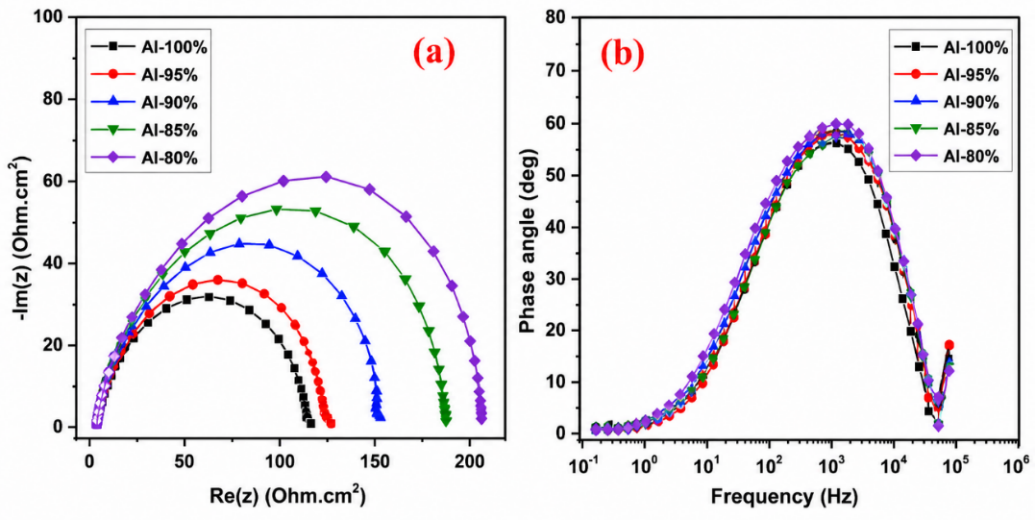
Figure 14 Electrochemical impedance spectroscopy of the Al7075 and its hybrid composites (a) Nyquist plot, (b) Bode plot [138].
Corrosion rate and corrosion resistance of the hybrid reinforcement of SiC and rice husk ash (RHA) respectively decrease and increase with the addition of the reinforcement in the hybrid reinforcement in the matrix alloy in the study of Haridass et al. [141]. This implies that there is a synergetic effect of the RHA and SiC particles in reducing the corrosion rate of the composites. The corrosion behaviour of the utilization of red mud for the development of Al6061 composites in a seawater environment revealed a reduction in the corrosion rate [142]. Swamy et al. [30] investigated the corrosion behaviour of Al7005/Fly ash (TA)/glass fibre (GF) composites. The gravimetric, electrochemical, and EIS techniques revealed corresponding results. The highest corrosion resistance was obtained with the composite reinforced with 6% FA (0.34 mpy), while other composites possess corrosion resistance of 3.25 mpy (Al7075), 2.41 mpy (Al7075 + 5% GF), and 0.76 mpy (Al7075 + 5% GF + 6% FA). It was reported that the FA particles were inert, serving as a physical barrier to the corrosive solution. However, the GF suffers from fibre degradation and disruption of the glass network’s continuity owing to fibre leaching. Hence, the corrosion rate of the samples increased. More corrosion fits, flakes, and micro-cracks are evident on the as-cast composites compared to the extruded composites, leading to an increased corrosion rate. A similar result was reported in the study of Ikumapayi and Akinlabi [143], where the corrosion behaviour of the composites produced from wood fly ash nanoparticles (WFA-NPs) and coal fly ash nanoparticles (CFA-NPs) as reinforcement in AA7075-T651 was investigated. The corrosion resistance of the composites was better compared to the unreinforced alloy. However, a significant corrosion protection ability was recorded for the WFA-NPs composites compared to the CFA-NPs composites. The highest percentage corrosion inhibition efficiency of the WFA-NPs composite was 97.61%, while CFA-NPs had 63.9%. This shows that industrial wastes, such as red mud, fly ash, glass fibre, and so on, could hinder corrosion when used as matrix alloy enhancement.
Oke et al. [123] reported that Cu particles in hybrid reinforced AMMCs (Al/Al2O3/Cu composites) decrease the corrosion resistance of the composites in NaCl solution due to the galvanic effects between the phases of the Al and Cu. A fairly high corrosion rate was obtained for the Cu-reinforced composites. Suthar and Patel [144] investigated the corrosion resistance of a novel hybrid reinforced AMMCs. The reinforcement particles are magnesium, graphite, boron carbide, and titanium. The presence of the reinforcement particles in the composites reduced the passive oxide layer formation. The presence of carbon in AMMCs with boron carbide and graphite displayed the best corrosion rate, while high magnesium content revealed better insusceptibility against corrosion. The pitting corrosion mechanism was found profound in all the composite samples, while general corrosion was observed in pure aluminium. With proper dispersion of the B4C/BN (boron nitride) reinforcement particles in Al7075 matrix composites produced using the stirring-squeeze cast method, the corrosion behaviour of the composites was examined. The volume weight of the B4C reinforcement varied from 3% to 9% in 3% steps, while that of BN was constant at 3%. Higher corrosion resistance of the composites was reported with a protective layer formation on the surface of the substrate, hindering the corrosion of the composites compared to the unreinforced alloy. The application of the hybrid reinforcements for composite production made the composites potent for utilization in the automobile and marine fields [20].
Summaries of the findings of some studies on the corrosion behaviour of MMCs in corrosive environments are displayed in Table 4. The metal matrix, reinforcement particles, corrosion tests, electrodes, and the concentration of the corrosive media are presented.
Table 4 Corrosion behaviour of MMCs in corrosive media.
Influence of processing techniques on corrosion behaviour
The methods by which aluminium matrix composites (AMMCs) are made have a big effect on their microstructural integrity, interfacial bonding, defect distribution, and most importantly, their corrosion behaviour, especially in harsh marine environments. Also, when the same types and amounts of reinforcement are used, the way the composite is processed can make a big difference in how well it resists corrosion. This is because of differences in porosity, particle dispersion, oxide formation, and residual stresses [58,108,130,138,180]. Some of the MMCs' fabrication methods are discussed below in line with their effects on the corrosion behaviour of the reinforced composites.
Stir casting
Stir casting is the most common method to produce AMMCs because it is cheap and easy to carry out. However, this method of processing in a liquid state often has problems with properties such as porosity, particle clustering, and uneven distribution of reinforcements, which can make corrosion resistance worse [126,181,182]. Porosity and trapped gases can start localized corrosion, especially in marine environments with a lot of chloride [77,130]. Researchers have found that adjusting the stirring speed, time, and temperature can greatly improve how well particles wet and spread, which lowers the number of micro voids that are likely to enhance corrosion [58]. Hot isostatic pressing (HIP) and extrusion are 2 post-processing treatments that lower porosity even more and make the material more resistant to corrosion [183]. Salt spray tests have shown that properly optimized stir-cast AMMCs reinforced with SiC and Al2O3 are better at resisting corrosion than as-cast aluminium alloys because their passive film is more stable [71]. The corrosion behaviour of properly optimized stir-cast fabricated AMMCs would yield improved corrosion resistance and low corrosion rate. This is because the reinforcement particles in the matrix alloy will be homogenously distributed. Hence, intermetallic phases that prevents corrosion growth are developed when the composites are subjected to seawater environment [30,47, 123,132,184].
Powder metallurgy (PM)
Powder metallurgy enables good manufacturing processes that are almost the right shape and gives better control over the microstructure, especially when it comes to getting particles to spread out evenly. Compared to stir casting, powder metallurgy greatly lowers porosity and defects at the interface, which makes the material more resistant to corrosion [73,108,132]. When processing SiC reinforced composites, the lack of molten metal reduces the amount of Al4C3 and other intermetallic compounds that are not wanted [89]. The intermetallic Al4C3 is unwanted in AMMCs because it reduces the strength of the composites, and when hydrolyzed in water, the corrosion performance of the composites is negatively affected [58]. In electrochemical tests, powder metallurgy-processed AMMCs always have lower corrosion current densities (Icorr) and higher polarization resistance (Rp). This means that they are more stable when they are passivated in seawater [185]. However, if the sintering conditions are not just right, the material may not fully densify and may still have some porosities, which could make it less resistant to marine corrosion. Hence, optimized sintering conditions are required to achieve stable composites in corrosive environments.
Squeeze casting
Squeeze casting uses external pressure during solidification to get the best of both casting and forging. This makes the composites very dense and free of defects [186,187]. It also reduces porosity and makes the matrix-reinforcement bond stronger. AMMCs made by squeeze casting are generally better at resisting corrosion in marine environments than those made by stir casting. This is because squeeze casting improves interfacial cohesion and reduces micro voids, due to the further re-melting of the composite [59]. Previous studies of salt spray and immersion have shown that squeeze-cast composites, especially those with TiB2 and Al2O3 added, keep their stable passive films for a long time even in harsh chloride environments [188]. Also, composites produced using squeeze casting in the study of Karthikraja et al. [138] produced good interfacial and intermetallic bonding, which helps to lower the corrosion rate of the composite in NaCl environment. The squeeze casting method is a viable method and widely accepted for the production of AMMCs with good structure to withstand disintegration in a corrosive environment if properly done, and the processing parameters are optimized.
Friction Stir Processing (FSP)
FSP is a solid-state processing method that can improve microstructures and the homogenizing distribution of reinforcement without melting the matrix. In this method, both the properties and microstructure of the metal alloy are improved, slowing down material dilution [34,189]. This method gets rid of a lot of defects that happen during casting [1,31,190], which greatly improves corrosion resistance [67,191]. Research shows that FSP-treated Al-SiC and Al-Al2O3 composites are better at resisting pitting and passivation in artificial seawater because they have smaller grains, better particle dispersion, and less porosity [192]. The thermomechanical action during FSP also fills in cracks and other problems that were already there, making the material even more resistant to marine corrosion. Kumar et al. [122] produced AMMCs using FSP at a travel speed of 30 mm/min and rotational speed of 1200 rpm. The corrosion behaviour revealed that the FSP technique was viable to produce AMMCs that are capable to reducing corrosion pits due to strong intergranular phases developed. In a double pass-FSP fabricated MMCs, the corrosion rate was reported to be higher that of the single pass-FSP composites. This occurrence was attributed to the significant grain refinement of the double pass-FSP composites compared to the single-pass-FSP composites. The grain size reduction led to increased density of the grain boundaries, resulting in a higher corrosion rate [193].
Additive Manufacturing (AM)
According to ASTM F42, the recognized AM techniques for composite development are powder bed fusion, directed energy deposition, binder jetting, material extrusion, selective laser melting, sheet lamination, vat photopolymerization, or stereolithography. A comprehensive discussion on each technique can be found in the review article of Nartu and Agrawal [194]. However, elective laser melting (SLM) and direct energy deposition (DED) are 2 additive manufacturing techniques that are still new for AMMCs. They offer new ways to precisely shape composite microstructures [3,195]. Addictive manufacturing enables controlled reinforcement in specific areas and layer-by-layer fabrication. This reduces large defects and makes it possible to create complex shapes that are perfect for marine use. AM could cause some varying part properties, leading to substantial inconsistencies in corrosion results [196]. Corrosion control in AM alloys needs a suitable understanding of the process and the microstructural growth. Hence, for excellent corrosion behaviour of the AM developed materials, the processing conditions is critical and should be optimized. Recent research shows that Al-SiC composites made with additive manufacturing are more resistant to corrosion in a 3.5% NaCl solution than those made with conventional casting [109, 110, 196). This is because they have fine microstructures and low porosity levels [194]. Residual stresses and thermal cycling during addictive metallurgy processes, on the other hand, may create new types of microstructural heterogeneities that could affect corrosion performance over time if not handled correctly. More studies are required to be carried out on the corrosion behaviour of AMMCs fabricated via the additive manufacturing route for the composite to receive widespread application [196,197].
Comparative analysis of AMMC performance in marine and non-marine conditions
The corrosion of AMMCs depends a lot on the environment. Marine conditions are harsh, which means that AMMCs are exposed to complex corrosion mechanisms that do not usually happen in non-marine environments like atmospheric air, freshwater, or industrial atmospheres. Table 5 shows the characteristics of marine and non-marine environments.
Table 5 Distinct characteristics of marine and non-marine corrosive environments [198].
Factor |
Marine environment |
Non-marine environment |
pH stability |
Neutral to marginally acidic |
Variable (Pollutants from factories and acidic rain) |
Oxygen availability |
Completely aerated, changes with depth |
Often lower in small spaces |
Mechanical agitation |
Biofouling, currents, waves |
Absent or minimal |
Microbial influence |
Substantial (Microbial Induced Corrosion - MIC) |
Usually minimal or absent |
Temperature range |
Unpredictable, often warm or humid |
More controlled, frequently dry |
Dominant electrolyte |
Brine (Cl⁻ concentration; 3.5 wt.%) |
Acidic rain, water vapour, SO2, freshwater, and CO2. |
Aluminium metal matrix composites (AMMCs) corrode very differently in marine and non-marine environments because the chemicals, moisture, and ions are all different. In places that are not marine, a stable and continuous aluminium oxide (Al2O3) passive film usually forms on the surface of AMMCs. This film stops general corrosion [199]. In marine environments, however, this passive layer is very easily compromised by chloride ions. These ions aggressively pass through flaws in the film and cause localised corrosion, like pitting, and may reside at crevices to cause major damage [77]. Reinforcements that do not react with chemicals, such as SiC and Al2O3, do not offer much protection against this breakdown. Moreover, in marine environments, pitting corrosion is the most common corrosion phenomenon for materials to fail. Al-SiC composites start to pit a lot earlier in seawater than they do in air [199]. Also, marine electrolytes have higher conductivity, which makes galvanic interactions stronger. Reinforcements like TiC, ZrB2, and TiB2 have different electrochemical potentials than the aluminium matrix. They act as local cathodes and speed up the dissolution of the matrix [200]. However, microstructural flaws such as porosity, second-phase precipitates, and weak interfacial bonding are important in both environments, but they are worse in marine environments because they act as nucleation points for localized corrosion [201]. The combination of mechanical loading and corrosion in marine environments makes corrosion-fatigue interactions more likely, which speeds up the spread of cracks [202]. In considering marine-specific threats such as biofouling and microbial-induced corrosion (MIC), especially from sulphate-reducing bacteria, these make the metallic surface even less stable, which aids corrosion to happen faster than it does in non-marine environments [203]. Table 6 shows a trend between a marine-related condition and a non-marine-related condition.
Table 6 Performance trends with specific reinforcements [204,205].
Reinforcement |
Marine condition |
Non-marine condition |
ZrB2 |
Good effectiveness, but weak against bad dispersion |
Exceptional resistance to corrosion when well dispersed |
SiC |
Resistance to wear but at interfaces susceptible to localized corrosion |
High corrosion resistance; minimal attack; resistant to wear |
TiC |
Localized galvanic coupling detected; requires improved interface |
High resistance to corrosion with proper interface structure |
Al2O3 |
Stable oxide interface; can be destroyed by chloride if not well bonded |
Great barrier effect and high stability in different weather conditions |
TiB2 |
Receptive to galvanic effects in marine medium |
Steady in dehydrated, low conductivity conditions |
B4C |
Superior pitting resistance |
Strong corrosion resistance; stable |
Strategies
for improving marine corrosion resistance of AMMCs
Improving
reinforcement
The corrosion behaviour of AMMCs in marine conditions is greatly affected by the shape, size, and distribution of ceramic reinforcement particles. Fine particles (<5 µm) make it easier for mechanical loads to move and lower localized stresses. However, too much fineness can cause agglomeration, which makes micro-galvanic cells and pitting more likely to occur [206]. A uniform distribution of particles makes it harder for electrolytes to get stuck, which lowers the number of places that are likely to corrode [207]. It has also been helpful to change the surface of reinforcement particles. Phosphate coatings and silane coupling agents are examples of treatments that improve interfacial bonding, lower galvanic mismatch, and stop corrosion. Alumina-coated SiC particles made the pitting density much lower in salt spray conditions [208].
Matrix alloy and composition control
Adding copper (Cu), zinc (Zn), and magnesium (Mg) to the aluminium matrix can greatly improve its resistance to corrosion. These elements make the passive Al2O3 film more stable and change the matrix's electrochemical potential, making it less likely to pit [123]. Grain refinement, which can be performed by quick solidification or by other thermo-mechanical treatments, is also considered because it helps create a uniform passive film and lowers the chance of localized corrosion attack [209].
Processing
techniques
The way AMMCs are processed also has a big effect on their microstructure and, as a result, their ability to resist corrosion. Powder metallurgy aids control of the distribution of particles very precisely and greatly reduces porosity, which is very important for stopping crevice corrosion in marine environments [77]. Another means to improve corrosion resistance is via friction stir processing (FSP), which improves surface bonding, refines grains, and makes the microstructure more uniform [210]. Squeeze casting also lowers internal porosity and improves the distribution of reinforcements, which makes the material more durable in salt spray and seawater immersion environments [58].
Surface treatments after processing
Surface treatment methods can greatly improve the corrosion resistance of AMMCs [211,212]. Anodization creates a thick oxide film that protects against chloride ion attack. Anodized Al-SiC composites have shown up to 80% lower corrosion current densities than samples that were not treated [213]. Micro-Arc Oxidation (MAO) makes thick, ceramic-rich oxide layers that stay stable even when they are in seawater for a long time. This makes pits start less often and go deeper [214]. However, hybrid sol-gel coatings, epoxy sealants, and self-healing polymeric coatings protect in more than one way by stopping microcracks and electrolyte penetration [215].
Protection of the cathode
The use of sacrificial anodes or impressed current cathodic protection lowers the force that makes anodic dissolution happen. Cathodic protection is often used in aluminium alloys, but it has also been successfully adapted for complicated AMMC structures that are in contact with seawater [216,217].
Other strategies
Researchers are looking into new and promising methods to make composites more resistant to corrosion in marine environments. Adding graphene oxide or graphene nanoplatelets to AMMCs makes them stronger and stops chloride ions from spreading, which reduces corrosion and pit growth [80]. Smart coatings that have corrosion inhibitors or pH-sensitive release mechanisms only let agents out where corrosion starts [218], hence, do not reduce corrosion but indicate the commencement of corrosion activities. Nanostructured composites, which have both a matrix and reinforcement phase that are nano-engineered, also improve the stability of passive films and lower micro-galvanic activity. This opens up new possibilities for designing AMMCs that can be resistant to corrosion [219,220].
Future research and knowledge gaps
There is an increasing amount of research on how Aluminium Metal Matrix Composites corrode, but there are still significant gaps that keep them from being used widely in various marine environments. There has not been much available long-term field data that show how processes really work, in terms of UV exposure and microbial activity. This makes it difficult to confirm the results of salt spray or electrochemical tests in laboratories. Also, not having standardized testing protocols makes it even harder to compare data from different studies. It is, however, unclear how micro-galvanic corrosion works, especially in AMMCs with hybrid or multiscale reinforcements like TiB2-SiC or graphene-SiC. To identify nanoscale interfacial reactions, the use of advanced methods like scanning Kelvin probe force microscopy and localized electrochemical mapping are necessary tools to be deployed. The conjoint effects of cyclic mechanical loading and corrosion working simultaneously are also not well understood, especially in offshore and naval structures. The same goes for the effects of layered surface treatments such as anodization, MAO, and organic coatings on long-term marine durability.
The areas of predictive design and sustainable fabrication that are still growing are just as important. There have not been many studies that employed machine learning and computer models to predict how fast composites will corrode or find the best way to reinforce them. A close review of the recyclability and environmental effects of AMMCs, especially those made with secondary raw materials. There are some promising new ideas in multiscale reinforcements and smart coatings, but research needs to be carried out on how stable they are at the interface and how well they hold up long-term in the ocean.
With all these mentioned areas of research gaps for future engagement, this study proposes that the following should be studied for AMMCs to fully enjoy acceptability in marine areas.
A study on the role of microorganisms in promoting and inhibiting corrosion, while the underlying mechanisms of biomineralization and microbially influenced corrosion are explored on AMMCs.
More studies on the use of biomineralization-based corrosion protection on the surface of the AMMCs should be explored. Also, the potential for scalable and sustainable applications should be investigated.
More intense and extensive research on novel smart coatings and surface treatments should be performed through designing corrosion-resistant AMMCs, applying novel green corrosion inhibitors, and applying anticorrosive coatings and surface modification, which would enhance corrosion protection of AMMCs in marine environments.
Development of predictive models on the effects of deep-sea environments, such as low-pressure and high-pressure conditions, should be explored.
Conclusions
Aluminium Metal Matrix Composites (AMMCs) have been known for their high strength, resistance to wear, and properties that can be changed. However, they are still very vulnerable to corrosion in harsh marine environments, which has been a big problem over time. This review has shown how ceramic reinforcements, fabrication methods, and other factors affect the way materials corrode. The corrosion complexities in these materials from previous studies have been highlighted to include reinforcement type effects, corrosion mechanisms, and environmental factors. The study also emphasized further studies for the development of effective approaches for the corrosion mitigation of AMMCs. Some major areas for further studies are: The need for standardized testing, long-term field data, a better understanding of how corrosion and fatigue operate together, development of novel corrosion-resistant materials, advanced coatings and surface treatments, and sustainable corrosion inhibition approaches. To create durable and reliable corrosion-resistant AMMCs that can withstand the harsh conditions of naval, offshore, and coastal infrastructure, the need for the use of more hybrid reinforcements, advanced coatings, environmentally friendly processing methods, and data-driven predictive models cannot be overstated. Conclusively, the full potential of these materials can be unlocked with a proper scientific understanding of the corrosion mechanisms in the marine environments. Additionally, effective mitigation strategies will be developed, driving innovation across various industries.
CRediT Author Statement
The authors confirm contribution to the paper as follows: Study conception and design: Peter P. Ikubanni, Akinkunmi O. Mosadomi, Makanjuola Oki; data collection: Peter P. Ikubanni, Olorunsogo B. Ogundipe; analysis and interpretation of results: Peter P. Ikubanni, Adekunle A. Adeleke, Makanjuola Oki, Moses O. Fajobi, Ibrahim M.B. Omiogbemi, D.S. Ebenezer Jacob Dhas, Stephen Sunday Emmanuel; draft manuscript preparation: Peter P. Ikubanni, Akinkunmi O. Mosadomi, Olorunsogo B. Ogundipe. All authors commented on the manuscript. All authors read and approved the final manuscript.
References
[1] H Zhang, B Zhang, Q Gao, J Song and G Han. A review on microstructures and properties of graphene-reinforced aluminum matrix composites fabricated by friction stir processing. Journal of Manufacturing Processes 2021; 68(PB), 126-135.
[2] R Chandel, N Sharma and SA Bansal. A review on recent developments of aluminum-based hybrid composites for automotive applications. Emerging Materials Research 2021; 4, 1243-1257.
[3] A Mussatto, IU Ahad, RT Mousavian, Y Delaure and D Brabazon. Advanced production routes for metal matrix composites. Engineering Reports 2021; 3(5), e12330.
[4] NMS Kumar. Effect on wear property of aluminium metal matrix composite reinforced with different solid lubricants: A review. International Journal of System Assurance Engineering and Management 2023; 14(S4), 909-917.
[5] SN Tekale and DR Dolas. Study of fabrication methods and various reinforcements with aluminium for automotive application - A review. Materials Today: Proceedings 2022; 62, 2768-2773.
[6] M SenthilKumar, RV Mangalaraja, R Senthil Kumar and L Natrayan. Processing and characterization of AA2024/Al2O3/SiC reinforced hybrid composites using squeeze casting technique. Iranian Journal of Materials Science and Engineering 2019; 16(2), 55-67.
[7] RK Arya, R Kumar, A Telang and AS Yadav. Effect of microstructure on mechanical behaviors of Al6061 metal matrix composite reinforced with silicon nitride (Si3N4) and silicon carbide (SiC) micro particles. Silicon 2023; 15, 5911-5923.
[8] G Kumaresan and BA Kumar. Investigations on mechanical and wear properties of Al matrix composites reinforced with hybrid SiC and Al2O3 micro-particles. International Journal of Metalcasting 2023; 17, 980-987.
[9] M Vishnoi, S Srivastava, S Rai and N Verma. Experimental investigations of AA6061/Al2O3/WC/SiC hybrid metal matrix composite fabricated by 2 step stir casting. Advances in Materials and Processing Technologies 2024; 10(3), 2374-2396.
[10] AA Emiru, DK Sinha, A Kumar and A Yadav. Fabrication and characterization of hybrid aluminium (Al6061) metal matrix composite reinforced with SiC, B4C and MoS2 via stir casting. International Journal of Metalcasting 2023; 17, 801-812.
[11] T Senthilnathan and K Balachandar. Mechanical and microstructure evaluation of novel hybrid TiB2/B4C aluminium metal matrix composite. Materials Research Express 2023; 10, 066509.
[12] M Hadian, H Shahrajabian and M Rafiei. Mechanical properties and microstructure of Al/(TiC+TiB2) composite fabricated by spark plasma sintering. Ceramics International 2019; 45(9), 12088-12092.
[13] PV Reddy, PR Prasad, DM Krishnudu and EV Goud. An investigation on mechanical and wear characteristics of Al 6063/TiC metal matrix composites using RSM. Journal of Bio-and Tribo-Corrosion 2019; 5, 1-10.
[14] M Chinababu, E Bhaskar Rao and K Sivaprasad. Fabrication, microstructure, and mechanical properties of Al-based metal matrix-TiB2-HEA hybrid composite. Journal of Alloys and Compounds 2023; 947, 169700.
[15] GM Kumar. Characterization of Al6063/TiB2/Gr hybrid composite fabricated by stir casting process. Metal Powder Report 2021; 76, S30-S38.
[16] C Parswajinan, BV Ramnath, S Abishek, B Niharishsagar and G Sridhar. Hardness and impact behaviour of aluminium metal matrix composite. IOP Conference Series: Materials Science and Engineering 2018; 390, 012075.
[17] SMTI Nayim, MZ Hasan, PP Seth, P Gupta, S Thakur, D Kumar and A Jamwal. Effect of CNT and TiC hybrid reinforcement on the micro-mechano-tribo behaviour of aluminium matrix composites. Materials Today: Proceedings 2020; 21, 1421-1424.
[18] EI Awode, S Amankwah, NI Mbada and IMB Omiogbemi. Simulating lightning effects on carbon fiber composite shielded with carbon nanotube sheets using numerical methods. Heliyon 2024; 10(8), e29762.
[19] S Chand and P Chandrasekhar. Influence of B4C/BN on solid particle erosion of Al6061 metal matrix hybrid composites fabricated through powder metallurgy. Ceramics International 2020; 46(11), 17621-17630.
[20] N Ramadoss, K Pazhanivel, A Ganeshkumar and M Arivanandhan. Microstructural, mechanical and corrosion behaviour of B4C/BN-reinforced Al7075 matrix hybrid composites. International Journal of Metalcasting 2023; 17, 499-514.
[21] J Fayomi, API Popoola, OP Oladijo, OM Popoola and OSI Fayomi. Experimental study of ZrB2-Si3N4 on the microstructure, mechanical and electrical properties of high grade AA8011 metal matrix composites. Journal of Alloys and Compounds 2019; 790, 610-615.
[22] KK Alaneme, JO Ekperusi and SR Oke. Corrosion behaviour of thermal cycled aluminium hybrid composites reinforced with rice husk ash and silicon carbide. Journal of King Saud University - Engineering Sciences 2018; 30(4), 378-385.
[23] CU Atuanya, AOA Ibhadode and IM Dagwa. Effects of breadfruit seed hull ash on the microstructures and properties of Al-Si-Fe alloy/breadfruit seed hull ash particulate composites. Results in Physics 2012; 2, 142-149.
[24] PP Ikubanni, M Oki, AA Adeleke, OS Adesina, PO Omoniyi and ET Akinlabi. Electrochemical studies of the corrosion behavior of Al/SiC/PKSA hybrid composites in 3.5% NaCl solution. Journal of Composites Science 2022; 6(10), 286.
[25] EWA Fanani, E Surojo, AR Prabowo and HI Akbar. Recent progress in hybrid aluminum composite: Manufacturing and application. Metals 2021; 11(12), 1919.
[26] VS Aigbodion. Bean pod ash nanoparticles a promising reinforcement for aluminium matrix biocomposites. Journal of Materials Research and Technology 2019; 8(6), 6011-6020.
[27] VS Aigbodion and IC Ezema. Multifunctional A356 alloy/PKSAnp composites: Microstructure and mechanical properties. Defense Technology 2020; 16(3), 731-736.
[28] KK Alaneme, CA Oganbule and A Adewale. Circumferential notch test based fracture toughness investigation of Al-Mg-Si alloy composites reinforced with alumina and quarry dust. Journal of Chemical Technology and Metallurgy 2020; 55(2), 469-478.
[29] US Ikele, KK Alaneme and A Oyetunji. Mechanical behaviour of stir cast aluminum matrix composites reinforced with silicon carbide and palm kernel shell ash. Manufacturing Review 2022; 9, 1-13.
[30] PK Swamy, S Mylaraiah, MPG Chandrashekarappa, A Lakshmikanthan, DY Pimenov, K Giasin and M Krishna. Corrosion behaviour of high-strength Al 7005 alloy and its composites reinforced with industrial waste-based fly ash and glass fibre: Comparison of stir cast and extrusion conditions. Materials 2021; 14(14), 3929.
[31] J Fayomi, API Popoola, OP Oladijo, OM Popoola and OSI Fayomi. Experimental study of ZrB2-Si3N4 on the microstructure, mechanical and electrical properties of high grade AA8011 metal matrix composites. Journal of Alloys and Compounds 2019; 790, 610-615.
[32] MK Sahu and RK Sahu. Fabrication of aluminum matrix composites by stir casting technique and stirring process parameters optimization. In: TR Vijayaram (Ed.). Advanced casting technologies. IntechOpen, London, 2018, p. 111-126.
[33] H Singh and H Bhowmick. Lubricated tribology of lightweight MMCs: Recent and future perspectives of AMMCs. In: S Anil Bansal, V Khanna and P Gupta (Eds.). Metal matrix composites. CRC Press, Boca Raton, 2022, p. 233-274.
[34] J Lade, KA Mohammed, D Singh, RP Verma, P Math, M Saraswat and LR Gupta. A critical review of fabrication routes and their effects on mechanical properties of AMMCs. Materials Today: Proceedings 2023. https://doi.org/10.1016/j.matpr.2023.03.041
[35] AA Adeleke, PP Ikubanni, JK Odusote, BB Olujimi and JA Okolie. Influence of sawdust ash on the microstructural and physicomechanical properties of stir-cast Al6063/SDA matrix composite. The International Journal of Advanced Manufacturing Technology 2023; 127(5-6), 2523-2536.
[36] IMB Omiogbemi, EI Awode, MH Muhammad, A Adesanmi and IM Dagwa. Smart composite materials for aerospace applications. In: S Kunar, P Charkha, S Jaju and H Tiwari (Eds.). Smart composite materials for aerospace applications. Wiley, New Jersey, 2025.
[37] PP Ikubanni, AA Adeleke, M Oki and H Singh. Sustainable hybrid metal matrix composites production and characterization. In: SRK Sandhu, S Singh, R Kumar and JP Davim (Eds.). Sustainable manufacturing: An emergence in industry 4.0. Taylor & Francis, Oxfordshire, 2024.
[38] RT Loto and P Babalola. Corrosion polarization behavior and microstructural analysis of AA1070 aluminium silicon carbide matrix composites in acid chloride concentrations. Cogent Engineering 2017; 4(1), 1422229.
[39] PP Ikubanni, AA Adeleke, JK Odusote, TB Asafa, SK Kolawole, VO Ogbesanya and JA Okolie. Inhibition potential of silver-gold nanoparticles on mild steel in 3.5% NaCl solution. Engineering and Applied Science Research 2023; 50(5), 413-419.
[40] IMB Omiogbemi, DS Yawas, A Das, MO Afolayan, ET Dauda, R Kumar, SR Gorja and SG Chowdhury. Mechanical properties and corrosion behaviour of duplex stainless steel weldment using novel electrodes. Scientific Reports 2022; 12(1), 22405.
[41] DT Oloruntoba, OS Adesina, OO Sanyaolu, PP Ikubanni, BO Iwarere and AA Adediran. Development of aluminium base anode for cathodic protection of steel. Chemistry Africa 2024; 7(7), 4075-4088.
[42] HM Zakaria. Microstructural and corrosion behavior of Al/SiC metal matrix composites. Ain Shams Engineering Journal 2014; 5, 831-838.
[43] M Sambathkumar, KSK Sasikumar, R Gukendran, K Dineshkumar, K Ponappa and S Harichandran. Investigation of mechanical and corrosion properties of Al 7075/Redmud metal matrix composite. Revista de Metalurgia 2021; 57(1), e188.
[44] YL Cheng, ZH Chen, HL Wu and HM Wang. The corrosion behaviour of the aluminium alloy 7075/SiCp metal matrix composite prepared by spray deposition. Materials and Corrosion 2007; 58(4), 280-284.
[45] J Hemanth and MR Divya. Fabrication and corrosion behaviour of aluminium alloy (LM-13) reinforced with nano-ZrO2 particulate chilled nano metal matrix composites (CNMMCs) for aerospace applications. Journal of Minerals and Materials Characterization and Engineering 2018; 6, 136-150.
[46] J Abuthakir, R Subramanian, M Kavitha, G Venkatesh, KK Kumar and P Manikandan. Corrosion studies of Alx-Ni in-situ intermetallics reinforced Al metal matrix composites. Materials Today: Proceedings 2020; 28, 1158-1163.
[47] S Sarapure, BP Shivakumar and MB Hanamantraygouda. Investigation of corrosion behavior of SiC-reinforced Al 6061/SiC metal matrix composites using Taguchi Technique. Journal of Bio-and Tribo-Corrosion 2020; 6, 31.
[48] R Mishra, E Singh, A Kumar, AK Singh, S Madhav, SK Shukla and S Kumar. Metal pollution in marine environment: Sources and impact assessment. In: SK Shukla, S Kumar, S Madhav and PK Mishra (Eds.). Metals in water: Global sources, significance, and treatment. Elsevier, Netherlands, 2022, p. 175-193.
[49] Y Wu, W Zhao and L Wang. State of the art and current trends on the metal corrosion and protection strategies in deep sea. Journal of Materials Science & Technology 2025; 215, 192-213.
[50] M Yazdi, F Khan, R Abbassi, N Quddus and HC Lopez. A review of risk-based decision-making models for microbiologically influenced corrosion (MIC) in offshore pipelines. Reliability Engineering & System Safety 2022; 223, 108474.
[51] J Telegdi, A Shaban and L Trif. Review on the microbiologically influenced corrosion and the function of biofilms. International Journal of Corrosion and Scale Inhibition 2020; 9(1), 1-33.
[52] Z Hu, H Yin, M Li, J Li and H Zhu. Research and developments of ceramic-reinforced steel matrix composites - A comprehensive review. The International Journal of Advanced Manufacturing Technology 2024; 131(1), 125-149.
[53] Y Karabulut and R Unal. Additive manufacturing of ceramic particle-reinforced aluminum-based metal matrix composites: A review. Journal of Materials Science 2022; 57(41), 19212-19242.
[54] S Focardi and M Pepi. Coastal monitoring and coastal erosion: Engineering interventions for coastal protection and considerations on the Mediterranean Sea, Available at https://doi.org/10.20944/preprints202310.1233.v1, accessed June 2026.
[55] AFA Fuhaid and A Niaz. Carbonation and corrosion problems in reinforced concrete structures. Buildings 2022; 12(5), 586.
[56] B Cherry and W Green. Corrosion and protection of reinforced concrete. 1st ed. CRC Press, London, 2021.
[57] L Yadav, A Sihmar, S Kumar, H Dhaiya and R Vishwakarma. Review of nano based smart coatings for corrosion mitigation: Mechanisms, performance, and future prospects. Environmental Science and Pollution Research 2025; 32, 17032-17058.
[58] F Aydin. A review of recent developments in the corrosion performance of aluminium matrix composites. Journal of Alloys and Compounds 2023; 949, 169508.
[59] J Bienias, M Walczak, B Surowska and J Sobczak. Microstructure and corrosion behaviour of aluminum fly ash composites. Journal of Optoelectronics and Advanced Materials 2003; 5(2), 493-502.
[60] WX Wang, Y Takao, T Matsubara, C Uchimura, S Baba and M Higashijima. Development of galvanic corrosion-resistant CFML based on composite coating. Journal of the Society of Materials Science 2007; 56(5), 420-425.
[61] B Bobić, S Mitrović, M Babić and I Bobić. Corrosion of metal-matrix composites with aluminium alloy substrate. Tribology in Industry 2010; 32(1), 3-11.
[62] PP Ikubanni, M Oki, AA Adeleke, AS Onaolapo and P Paramasivam. Electrochemical investigation of the corrosion susceptibility of hybrid reinforced Al6063 with SiC and PKSA in 1.0 M sulfuric acid environment. Engineering Reports 2024; 6(3), e12733.
[63] YM Han and XG Chen. Electrochemical behavior of Al-B4C metal matrix composites in NaCl solution. Materials 2015; 8(9), 6455-6470.
[64] N Murugan, KS Jayakumar, RA Raj and DA Prabu. Enhanced mechanical and tribological properties of ultrasonically assisted stir-cast AA7075 metal matrix composites in challenging corrosive environments. Materials Research Express 2024; 11(8), 086502.
[65] R Escalera-Lozano, CA Gutiérrez, MA Pech-Canul and MI Pech-Canul. Corrosion characteristics of hybrid Al/SiCp/MgAl2O4 composites fabricated with fly ash and recycled aluminum. Materials Characterization 2007; 58, 953-960.
[66] A Parveen, NR Chauhan and M Suhaib. Fabrication and corrosion behaviour of aluminium metal matrix composites - A review. IOP Conference Series: Materials Science and Engineering 2020; 923, 012056.
[67] M Almomani, AM Hassan, T Qasim and A Ghaithan. Effect of process parameters on corrosion rate of friction stir welded aluminium SiC-Gr hybrid composites. Corrosion Engineering, Science and Technology 2013; 48(5), 346-353.
[68] SK Mohammad. Corrosion behaviour of Al-12Si-1Mg automotive alloy in acidic, alkaline and salt media containing Zr traces. Journal of Chemical Technology and Metallurgy 2019; 54(2), 423-430.
[69] D Nayak, S Rao, SL Gaonkar and PP Kumari. Hybrid metal matrix composite: A comprehensive review on its fabrication, corrosion behaviour and inhibition. Discover Applied Sciences 2025; 7, 791.
[70] B Wielage, A Dorner, C Shurer and JH Kim. Corrosion protection of carbon fibre reinforced aluminium composite by diamondlike carbon coatings. Materials Science and Technology 2000; 16(3), 344-348.
[71] A Kumar, VP Singh, RC Singh, R Chaudhary, D Kumar and AHI Mourad. A review of aluminum metal matrix composites: Fabrication route, reinforcements, microstructural, mechanical, and corrosion properties. Journal of Materials Science 2024; 59(7), 2644-2711.
[72] S Harkiah, N Rauf and D Tahir. Review of ceramic materials and recent development of preparation methods. Gravitasi 2022; 21(2), 49-60.
[73] X Xiang. Powder metallurgy composites. In: K Xu (Ed.). The ECPH Encyclopedia of mining and metallurgy. Springer Nature, Singapore, 2024, p. 1639-1640.
[74] R Parvizi. 2022, Electrochemical and interfacial characterisation of localised corrosion at heterogeneous structures in AA2024. Ph. D. Dissertation. Deakin University, Australia, 2022.
[75] RE Melchers, R Jeffrey, IA Chaves and RB Petersen. Predicting corrosion for life estimation of ocean and coastal steel infrastructure. Materials and Corrosion 2025; 76(6), 776-789.
[76] J Korzekwa. Modification of the structure and properties of oxide layers on aluminium alloys: A review. Reviews on Advanced Materials Science 2023; 62(1), 20230108.
[77] SL Lawal, SA Afolalu, TC Jen and ET Akinlabi. Corrosion control and its application in marine environment - A review. Solid State Phenomena 2024; 355, 61-73.
[78] Y Gau, Y Zhou, W Wang, L Tian, J Zhao and J Sun. Synergistic damage mechanisms of high-temperature metal corrosion in marine environments: A review. Progress in Organic Coatings 2024; 197, 108765.
[79] K Rahmani, GH Majzoobi, H Bakhtiari and A Sadooghi. On the effect of compaction velocity, size, and content of reinforcing particles on corrosion resistance of Mg-B4C composites. Materials Chemistry and Physics 2021; 271, 124946.
[80] T Liu, W Lyu, Z Li, S Wang, X Wang, J Jiang and X Jiang. Recent progress on corrosion mechanisms of graphene-reinforced metal matrix composites. Nanotechnology Reviews 2023; 12(1), 20220566.
[81] S Yan, GL Song, Z Li, H Wang, D Zheng, F Cao and L Zhou. A state-of-the-art review on passivation and biofouling of Ti and its alloys in marine environments. Journal of Materials Science & Technology 2018; 34(3), 421-435.
[82] AM Bell, MVD Au, J Regnery, M Schmid, B Meermann, G Reifferscheid and S Buchinger. Does galvanic cathodic protection by aluminum anodes impact marine organisms? Environmental Sciences Europe 2020; 32, 117.
[83] SM Hussnain, SZH Shah, PSM Megat-Yusoff and MZ Hussain. Degradation and mechanical performance of fibre-reinforced polymer composites under marine environments: A review of recent advancements. Polymer Degradation and Stability 2023; 215, 110452.
[84] Y Cao, J Bao, P Zhang, Y Sun and Y Cui. A state-of-the-art review on the durability of seawater coral aggregate concrete exposed to marine environment. Journal of Building Engineering 2022; 60, 105199.
[85] M Zhang, S Sun, K Liu, T Li and H Yang. Research on the critical chloride content of reinforcement corrosion in marine concrete - A review. Journal of Building Engineering 2023; 79, 107838.
[86] N Devi, A Wagner, J Lopez, A Guerini, D Zampini and AFR Loria. Mechanistic insights into electrodeposition in seawater at variable electrochemical potentials. Advanced Sustainable Systems 2024; 8(4), 2300446.
[87] PV Krupakara and HR Ravikumar. Corrosion characterization of aluminium 6061/red mud metal matrix composites in sea water. International Journal of Advanced Research in Chemical Science 2015; 2(6), 52-55.
[88] JK Odusote, AA Adeleke, SA Muraina, PP Ikubanni and IMB Omiogbemi. Magnesium inclusion effect on Al-Zn-Cu alloys: A study on microstructure and mechanical properties. Materials Today: Proceedings 2021; 46(12), 5914-5921.
[89] Y Wang and T Monetta. Systematic study of preparation technology, microstructure characteristics and mechanical behaviors for SiC particle-reinforced metal matrix composites. Journal of Materials Research and Technology 2023; 25, 7470-7497.
[90] K Kauranen. Corrosion protection improvement validation with the use of salt spray testing. Available at: https://urn.fi/URN:NBN:fi:amk-2024060420991, accessed June 2024.
[91] SK Dhawan, H Bhandari, G Ruhi, BMS Bisht and P Sambyal. Corrosion preventive materials and corrosion testing. 1st ed. CRC Press, Boca Raton, 2020.
[92] IMB Omiogbemi, DS Yawas, A Das, MO Afolayan, ET Dauda, R Kumar and SG Chowdhury. Effect of electrode configuration on the mechanical‑corrosion characteristics of welded AISI 2205 steel structure. MRS Advances 2023; 8, 499-507.
[93] S Papavinasam. Electrochemical polarization techniques for corrosion monitoring. In: L Yang (Ed.). Techniques for corrosion monitoring. Woodhead Publishing, Cambridge, England, 2008, p. 49-85.
[94] DH Xia, CM Deng, D Macdonald, S Jamali, D Mills, JL Luo, MG Strebl, M Amiri, W Jin, S Song and W Hu. Electrochemical measurements used for assessment of corrosion and protection of metallic materials in the field: A critical review. Journal of Materials Science & Technology 2022; 112, 151-183.
[95] N Ikani, JH Pu and K Cooke. Analytical modelling and electrochemical impedance spectroscopy (EIS) to evaluate influence of corrosion product on solution resistance. Powder Technology 2024; 433, 119252.
[96] HH Hernández, AMR Reynoso, JCT González, COG Morán, JGM Hernández, AM Ruiz, JM Hernández and RO Cruz. Electrochemical impedance spectroscopy (EIS): A review study of basic aspects of the corrosion mechanism applied to steels. In: M El-Azazy, M Min and P Annus (Eds.). Electrochemical impedance spectroscopy. IntechOpen, London, 2020.
[97] S Martinez, I Šoić and V Špada. Unified equivalent circuit of dielectric permittivity and porous coating formalisms for EIS probing of thick industrial grade coatings. Progress in Organic Coatings 2021; 153, 106155.
[98] Y De-Abreu, A Ferrer, G Rana and S Kung. Cyclic polarization and electrochemical impedance techniques to rapidly screen and assess pitting tendencies of corrosion inhibitor actives in carbon steel. In: Proceedings of the AMPP Annual Conference, Denver. 2023.
[99] R Aslam. Potentiodynamic polarization methods for corrosion measurement. In: J Aslam, C Verma and CM Hussain (Eds.). Electrochemical and analytical techniques for sustainable corrosion monitoring. Elsevier, Netherlands, 2023, p. 25-37.
[100] HS Magar, RY Hassan and A Mulchandani. Electrochemical impedance spectroscopy (EIS): Principles, construction, and biosensing applications. Sensors 2021; 21(19), 6578.
[101] M Stefanoni, U Angst and B Elsener. Local electrochemistry of reinforcement steel - Distribution of open circuit and pitting potentials on steels with different surface condition. Corrosion Science 2015; 98, 610-618.
[102] J Chen, J Liu, H Wang, B Li, Q Hu, T Shao, R Yang, B Wang, Q Wan, Z Li, Y Lei, G Zhang and B Yang. Experimental study on neutral salt spray accelerated corrosion of metal protective coatings for power-transmission and transformation equipment. Coatings 2023; 13(3), 480.
[103] SK Sheetal, T Sanjeeve, AK Singh, M Singh, B Pani and VS Saji. A review of electrochemical techniques for corrosion monitoring - Fundamentals and research updates. Critical Reviews in Analytical Chemistry 2025; 55(1), 161-186.
[104] AI Ikeuba, CN Njoku, OO Ekerenam, DI Njoku, II Udoh, EF Daniel, PC Uzoma, IN Etim and BO Okonkwo. A review of the electrochemical and galvanic corrosion behavior of important intermetallic compounds in the context of aluminum alloys. RSC Advances 2024; 14(43), 31921-31953.
[105] D Wang, J Huang, C Tan, W Ma, Y Zou and Y Yang. Mechanical and corrosion properties of additively manufactured SiC-reinforced stainless steel. Materials Science and Engineering: A 2022; 841, 143018.
[106] MM Sadawy, SM Fayed, M Tayea and IG El-Batanony. Microstructure, corrosion and electrochemical properties of Cu/SiC composites in 3.5 wt.% NaCl solution. Metals and Materials International 2024; 30(3), 568-584.
[107] MK Aravindan and K Balamurugan. Tribological and corrosion behaviour of Al 6063/SiC metal matrix composites. International Journal of Advanced Engineering Technology 2016; 7, 2-7.
[108] SSC Kollabathini, SP Dora and S Chintada. Corrosion behaviour of advanced composites containing surface modified SiC as reinforcement. Journal of Alloys and Compounds 2025; 1010, 177423.
[109] W Aperador, J Aperador and G Orozco-Hernández. Comparative analysis of the corrosion and mechanical behavior of an Al-SiC composite and AA 2024 alloy fabricated by powder metallurgy for aeronautical applications. Metals 2024; 14(12), 1462.
[110] Y Du, M Sun, N Sun, D Ma, B Pan, Z Wang, Q Li and C Wu. Effect of Al content on chemical corrosion resistance of Al/SiC composites. Ceramics International 2023; 49(22), 36928-36934.
[111] SM Mahdi and L Ghalib. Corrosion behavior of Al/SiC composite prepared by powder metallurgy in chloride environments. Journal of Bio-and Tribo-Corrosion 2022; 8, 64.
[112] KR Ramkumar, I Dinaharan, N Murugan and HS Kim. Development of aluminum matrix composites through accumulative roll bonding: A review. Journal of Materials Science 2024; 59(20), 8606-8649.
[113] MK Aravindan, E Vinothkumar and M Prahadeeswaran. Investigation on corrosion behaviour of metal oxide nanoparticle-reinforced magnesium composites by salt spray and immersion corrosion test methods. Advances in Materials and Processing Technologies 2024; 11(4), 1958-1982.
[114] VV Shanbhag, NN Yalamoori, S Karthikeyan, R Ramanujam and K Venkatesan. Fabrication, surface morphology and corrosion investigation of Al 7075-Al₂O₃ matrix composite in sea water and industrial environment. Procedia Engineering 2014; 97, 607-613.
[115] KK Alaneme and MO Bodunrin. Corrosion behavior of alumina reinforced aluminium (6063) metal matrix composites. Journal of Minerals and Materials Characterization and Engineering 2011; 10(12), 1153-1165.
[116] Y Gaylan, B Avar, M Panigrahi, B Aygün and A Karabulut. Effect of the B₄C content on microstructure, microhardness, corrosion, and neutron shielding properties of Al–B₄C composites. Ceramics International 2023; 49, 5479-5488.
[117] SK Prasad, S Dayanand, M Rajesh, M Nagaral, V Auradi and R Selvaraj. Preparation and mechanical characterization of TiC particle-reinforced Al7075 alloy composites. Advances in Materials Science and Engineering 2022; 2022, 7105189.
[118] AV Polunin, AO Cheretaeva, ED Borgardt, IA Rastegaev, MM Krishtal, AV Katsman and IS Yasnikov. Improvement of oxide layers formed by plasma electrolytic oxidation on cast AlSi alloy by incorporating TiC nanoparticles. Surface and Coatings Technology 2021; 423, 127603.
[119] J Li, X Wang, M Cheng and X Ma. Progress in the preparation method and mechanical properties of TiC particle-reinforced steel matrix composites. Materials Today Communications 2025; 42, 111311.
[120] V Sivananth, P Karuppusamy and K Lingadurai. Wear and corrosion behaviour of titanium carbide reinforced metal matrix composites for automobile brake disc application. International Journal of Materials Engineering Innovation 2019; 10(3), 246-267.
[121] HC Ananda-Murthy and SK Singh. Influence of TiC particulate reinforcement on the corrosion behaviour of Al 6061 metal matrix composites. Advanced Materials Letters 2015; 6(7), 633-640.
[122] S Kumar, A Kumar and C Vanitha. Corrosion behaviour of Al 7075/TiC composites processed through friction stir processing. Materials Today: Proceedings 2019; 15, 21-29.
[123] SR Oke, N Maledi, IA Okanlawon, TR Bishi and OE Falodun. Tensile and corrosion properties of copper and alumina hybrid reinforcement on aluminum matrix composite. Journal of Composite Materials 2025; 59(13), 1595-1607.
[124] QD Wu, XM Meng, JJ Guan, Q Liu, P Liang and Y Wang. Investigation on the microstructure and electrochemical corrosion properties of TiB₂ reinforced aluminum matrix composites. International Journal of Electrochemical Science 2022; 17(6), 220640.
[125] GSP Kumar, R Keshavamurthy, P Kumari and C Dubey. Corrosion behaviour of TiB₂ reinforced aluminium based in situ metal matrix composites. Perspectives in Sciences 2016; 8, 172-175.
[126] A Kumar, RC Singh and R Chaudhary. Recent progress in production of metal matrix composites by stir casting process: An overview. Materials Today: Proceedings 2020; 21, 1453-1457.
[127] ZY Zhang, G Chen, SL Zhang, YT Zhao, R Yang and MP Liu. Enhanced strength and ductility in ZrB₂/2024Al nanocomposite with a quasi-network architecture. Journal of Alloys and Compound 2019; 778, 833-838.
[128] IG Akande, OSI Fayomi, OO Oluwole and OO Ajide. Development of Zn–ZrB₂ nanocomposite coatings for wear, corrosion resistance and microstructure enhancement of carbon steel in saline environment. Chemical Papers 2022; 76(9), 5839-5852.
[129] P Morampudi, VSNV Ramana, K Bhavani, C Kishore and KSR Vikas. Wear and corrosion behavior of AA6061 metal matrix composites with ilmenite as reinforcement. Materials Today: Proceedings 2022; 52(P3), 1515-1520.
[130] S Dinesh Kumar, M Ravichandran, A Jeevika, B Stalin, C Kailasanathan and A Karthick. Effect of ZrB₂ on microstructural, mechanical and corrosion behaviour of aluminium (AA7178) alloy matrix composite prepared by the stir casting route. Ceramics International 2021; 47(9), 12951-12962.
[131] KK Alaneme, TM Adewale and PA Olubambi. Corrosion and wear behaviour of Al–Mg–Si alloy matrix hybrid composites reinforced with rice husk ash and silicon carbide. Journal of Materials Research and Technology 2014; 3(1), 9-16.
[132] AH Karabacak, A Çanakçı, F Erdemir, S Özkaya and M Çelebi. Corrosion and mechanical properties of novel AA2024 matrix hybrid nanocomposites reinforced with B₄C and SiC particles. Silicon 2022; 14, 8567-8579.
[133] M Sambathkumar, R Gukendran and M Vijayanand. Investigation of corrosion behaviour of Al 7075/B₄C/Al₂O₃ hybrid metal matrix composite. Materials Today: Proceedings 2022; 50, 1606-1610.
[134] RT Loto and P Babalola. Evaluation of the influence of alumina nano-particle size and weight composition on the corrosion resistance of monolithic AA1070 aluminium. Materials Today: Proceedings 2022; 65, 2138-2143.
[135] S Narayanan, GG Sozhamannan, K Hemalatha and VSK Venkatachalapathy. Study on pitting corrosion behaviour of graphene oxide reinforced metal matrix composites. Materials Today: Proceedings 2021; 39, 160-164.
[136] P Morampudi, VSNV Ramana, C Prasad, KS Vikas and Rahul. Physical, mechanical and corrosion properties of Al6061/ZrB₂ metal matrix nano composites via powder metallurgy process. Materials Today: Proceedings 2022; 59, 1708-1713.
[137] N Ashrafi, MAA Hanim, M Sarraf, S Sulaiman and TS Hong. Microstructural, tribology and corrosion properties of optimized Fe₃O₄-SiC reinforced aluminum matrix hybrid nano filler composite fabricated through powder metallurgy method. Materials 2020; 13(18), 4090.
[138] M Karthikraja, K Ramanathan, KT Loganathan and S Selvaraj. Corrosion behaviour of SiC and Al₂O₃ reinforced Al 7075 hybrid aluminium matrix composites by weight loss and electrochemical methods. Journal of Indian Chemical Society 2024; 100(5), 101002.
[139] P Sureshkumar, T Jagadeesha, L Natrayan, M Ravichandran, D Veeman and SM Muthu. Electrochemical corrosion and tribological behaviour of AA6063/Si₃N₄/Cu(NO₃)₂ composite processed using single-pass ECAPA route with 120° die angle. Journal of Materials Research and Technology 2022; 16, 715-733.
[140] M Gangadharappa, HN Reddappa, R Shobha, KVS Murthy, NC Reddy, ER Babu and R Suresh. Corrosion behavior of Al6061 hybrid composites reinforced with red mud particles and E-glass fiber. Materials Today: Proceedings 2021; 46, 6068-6074.
[141] R Haridass, N Vishnu, A Abinesh, K Manoj and A Nandhakumar. Determination of corrosion behaviour of Al6061-SiC-RHA metal matrix composites. International Journal of Applied Mathematics 2018; 118(20), 907-915.
[142] PV Krupakara and HR Ravikumar. Corrosion characterization of aluminium 6061 / red mud metal matrix composites in sea water. International Journal of Advanced Research in Chemical Science 2015; 2(6), 52-55.
[143] OM Ikumapayi and ET Akinlabi. A comparative assessment of tensile strength and corrosion protection in friction stir processed AA7075-T651 matrix composites using fly ashes nanoparticles as reinforcement inhibitors in 3.5% NaCl. International Journal of Mechanical and Production Engineering Research and Development 2019; 9(3), 839-854.
[144] J Suthar and K Patel. Corrosion behaviour of Mg, graphite-, B₄C and Ti-reinforced hybrid aluminium composites. Journal of the Institution of Engineers (India): Series C 2022; 103(4), 689-704.
[145] M Kciuk, A Kurc and J Szewczenko. Structure and corrosion resistance of aluminium AlMg2.5; AlMg5Mn and AlZn5Mg1 alloys. Journal of Achievements in Materials and Manufacturing Engineering 2010; 41(1-2), 74-81.
[146] IK Choi, SH Cho, SJ Kim, YS Jo and SH Kim. Improved corrosion resistance of 5XXX aluminum alloy by homogenization heat treatment. Coatings 2018; 8(1), 39.
[147] Z He, Y Zeng, M Zhou, Y Min, X Shen and Q Xu. Superhydrophobic films with enhanced corrosion resistance and self-cleaning performance on an Al alloy. Langmuir 2021; 37(1), 524-541.
[148] U Sajjad, A Abbas, A Sadeghianjahromi, N Abbas, JS Liaw and CC Wang. Enhancing corrosion resistance of Al 5050 alloy based on surface roughness and its fabrication methods; An experimental investigation. Journal of Materials Research and Technology 2021; 11, 1859-1867.
[149] Z Shao, I Muto and Y Sugawara. Elucidation of the initiation of pitting corrosion and the growth of filiform corrosion of AZ91D in aqueous NaCl electrolyte. Electrochemical Soc. Meeting Abstracts 2020; MA2020-02(68), 3561.
[150] B Dikici and C Tekmen. A comparative study: The combined effect of the cold working and age hardening processes on pitting behaviour of Al/SiC metal matrix composites under saline environment. Journal of Composite Materials 2016; 50, 471-480.
[151] J Tanaka, T Tamura and T Narita. Microstructure of Zn and Zn-Al coating and its corrosion resistance in NaCl solution. Journal of the Surface Finishing Society of Japan 2000; 51, 1224-1228.
[152] B Dikici, M Gavgali and C Tekmen. Corrosion behavior of an artificially aged (T6) Al–Si–Mg-based metal matrix composite. Journal of Composite Materials 2006; 40, 1259-1269.
[153] H Yang, Y Wang, X Wang, P Pan and D Jia. The effects of corrosive media on fatigue performance of structural aluminum alloys. Metals 2016; 6, 160.
[154] D Ramesh, R Swamy and T Chandrashekar. Corrosion behaviour of Al6061-frit particulate metal matrix composites in sodium chloride solution. Journal of Minerals and Materials Characterization Engineering 2013; 1, 15-19.
[155] S Kandasamy, P Rathinasamy, N Nagarajan, K Arumugam, R Rathanasamy and G Kaliyannan. Corrosion behavioral studies on AA7075 surface hybrid composites tailored through friction stir processing. Anti-Corrosion Methods and Materials 2020; 67, 345-355.
[156] M Slemnik. Comparative evaluation of corrosion resistance of AISI 316L and Ti6Al4V dental materials under simulated inflammatory conditions. Materials 2025; 18(10), 2243.
[157] S Rajkumar, M Loganathan and R Venkatesh. Optimization of NaCl based spray corrosion test process parameters of heat treated hybrid metal matrix composites. Bulletin of the Chemical Society of Ethiopia 2022; 36(4), 903-914.
[158] B Stalin, M Ravichandran, S Arivukkarasan and V Mohanavel. Weight loss corrosion studies of Aluminium-LM4 reinforced with Alumina Silicate (Al₂O₃SiO₂) particulates composites in sodium chloride (NaCl) solution. International Journal of Mechanical and Production Engineering Research and Development 2018; 8, 329-336.
[159] A Chandrashekar and B Reddappa. Mechanical, structural and corrosion behaviour of AlMg4.5/nano Al₂O₃ metal matrix composites. Materials Today: Proceedings 2017; 5, 2811-2817.
[160] CD Naiju and J Thangaraj. Investigation of wear and corrosion behavior of aluminum metal matrix composites for automotive applications. SAE Technical Paper Series 2020. https://doi.org/10.4271/2020-28-0461
[161] Z Shamsu, NK Othman, MS Md Jamil, H Yazid and MS Alias. Effect of nano composite boron carbide on the mechanical and corrosion behaviour of aluminium matrix composite. Jurnal Kejuruteraan 2024; 36(6), 2603-2614.
[162] CI Pruncu, A Vladescu, NRJ Hynes and R Sankaranarayanan. Surface investigation of Physella acuta snail shell particle reinforced aluminium matrix composites. Coatings 2022; 12(6), 794.
[163] A Szewczyk-Nykiel. The influence of carbide reinforcement on the properties of sintered aluminium alloy matrix composites. Technical Transactions 2023; 120(1), e2023005.
[164] RT Loto and P Babalola. Analysis of SiC grain size variation and NaCl concentration on the corrosion susceptibility of AA1070 aluminium matrix composites. Cogent Engineering 2018; 5, 1473002.
[165] AC Igwe and NH Ononiwu. A study on the corrosion behaviour of aluminium reinforced with rice husk in NaCl and H₂SO₄. International Journal of Advanced Manufacturing and Technology 2025; 137, 3013-3023.
[166] J Idris, Z Awaludin and GD Eyu. Study on corrosion resistance of recycled aluminium matrix composite, Available at:https://www.researchgate.net/publication/236118642_Study_on_Corrosion_Resistance_of_Recycled_Aluminium_Matrix_Composite, accessed June 2026.
[167] Z Samsu, NK Othman, MSM Jamil, H Yazid and MS Alias. Corrosion behaviour of aluminium matrix composite reinforced with boron carbide in 3.5% NaCl. International Journal of Nanoelectronics Materials 2023; 16, 451-461.
[168] S Yahya, AA Rahim, AM Shah and R Adnan. Inhibitive behaviour of corrosion of aluminium alloy in NaCl by mangrove tannin. Sains Malaysiana 2011; 40, 953-957.
[169] A Chandrashekar and HN Reddappa. Mechanical, structural and corrosion behaviour of AlMg4.5/Nano Al₂O₃ metal matrix composites. Materials Today: Proceedings 2018; 5, 2811-2817.
[170] NVR Maganti and RR Potturi. Investigation on mechanical and machinability properties of aluminium metal matrix composite reinforced with titanium oxide (TiO₂) and graphite (Gr) particles. Trends in Sciences 2023; 20(11), 5682.
[171] MS Kumar, N Sathisha and TR Rajesh. Corrosion study on chill casting effect on aluminium A356 reinforced with Hematite metal matrix composites. Materials Today: Proceedings 2022; 56, 1226-1233.
[172] CM Rao, KG D Prasad, KV Subbaiah and A Ravindra. Analysis of corrosion polarization behaviour in GNP/TiB₂ reinforced hybrid Al–Mg-Si-MMNCs for marine environments. Journal of the Institution of Engineers (India): Series D 2024; 106, 1557-1566.
[173] SD Kumar, M Ravichandran, A Jeevika, B Stalin, C Kailasanathan and A Karthick. Effect of ZrB₂ on microstructural, mechanical and corrosion behaviour of aluminium (AA7178) alloy matrix composite prepared by the stir casting route. Ceramics International 2021; 47, 12951-12962.
[174] J Gayathri and R Elansezhian. Synthesis of novel aluminium metal matrix composite using industrial metallic waste: Impact on wear and corrosion behaviour. AIP Conference Proceedings 2019; 2162, 020026.
[175] R Verma, PV Kumar, KA Meghashree and P Puneeth. Study of corrosion rate on graphene and S-glass reinforced Al-6061 metal matrix composites. International Journal of Engineering Sciences & Research Technology 2020; 7, 433-441.
[176] G Sundar and NRJ Hynes. Reinforcement in aluminium metal matrix composites. AIP Conference Proceedings 2019; 2142(1), 070006.
[177] EK Manoharan and S Malairajan. Studies on the corrosion resistance of Al7075/SiC metal matrix composites in an alkaline environment. International Research Journal of Pharmaceutical and Applied Sciences 2020; 10, 43-47.
[178] VV Popov, A Pismenny, N Larianovsky, A Lapteva and D Safranchik. Corrosion resistance of Al–CNT metal matrix composites. Materials 2021; 14, 3530.
[179] NM Dawood. Erosion-corrosion behavior of Al-20%Ni-Al₂O₃ metal matrix composites by stir casting. Materials Science Forum 2020; 1002, 161-174.
[180] A Albiter, A Contreras, M Salazar and JG Gonzalez-Rodriguez. Corrosion behaviour of aluminium metal matrix composites reinforced with TiC processed by pressureless melt infiltration. Journal of Applied Electrochemistry 2006; 36, 303-308.
[181] P Ikubanni, M Oki and A Adeleke. A review of ceramic/bio-based hybrid reinforced aluminium matrix composites. Cogent Engineering 2020; 7(1), 1727167.
[182] B Singh, I Kumar, KK Saxena, KA Mohammed, MI Khan, SB Moussa and SS Abdullaev. A future prospects and current scenario of aluminium metal matrix composites characteristics. Alexandria Engineering Journal 2023; 76, 1-17.
[183] J Ge, S Pillay and H Ning. Post-process treatments for additive-manufactured metallic structures: A comprehensive review. Journal of Materials Engineering and Performance 2023; 32, 7073-7122.
[184] S Roseline and V Paramasivam. Corrosion behaviour of heat-treated Aluminium Metal Matrix composites reinforced with Fused Zirconia Alumina 40. Journal of Alloys and Compound 2019; 799, 205-215.
[185] MAF Romzi, J Alias and MIM Ramli. Recent progress on the corrosion characterization of magnesium (Mg) prepared by powder metallurgy technique. IOP Conference Series: Materials Science and Engineering 2021; 1068, 012004.
[186] AA Adediran, AB Ogunkola, FO Edoziuno, OS Adesina, MS Kumar and OC Okechukwu. Squeeze casting process: Trends and opportunities. In: TR Vijayaram (Ed.). Casting processes. IntechOpen, London, 2022.
[187] L Tharanikumar, B Mohan and G Anbuchezhiyan. Synthesization and characterization of silicon carbide and boron nitride-reinforced Al–Zn–Mg alloy hybrid nanocomposites using squeeze casting method. International Journal of Metalcasting 2024; 18, 997-1011.
[188] F Aydin, Y Sun and ME Turan. Influence of TiC content on mechanical, wear and corrosion properties of hot-pressed AZ91/TiC composites. Journal of Composite Materials 2020; 54(2), 141-152.
[189] PP Ikubanni, AO Mosadomi, AA Adeleke, OO Agboola, SA Ajayi, OS Adesina and OT Faloye. Tensile and fracture behaviour of aluminium MMCs with ceramic particles - A review. Canadian Metallurgical Quarterly 2025; 65(2), 1226-1255.
[190] ET Akinlabi, RS Fono-Tamo and J Tien-chien. Microstructural and dry sliding friction studies of aluminum matrix composites reinforced PKS ash developed via friction stir processing. In: C Chesonis (Ed.). The minerals, metals & materials series (light metal). Springer Nature, Singapore, 2019, p. 401-406.
[191] K Zass, S Mabuwa and V Msomi. A review on reinforced particles used on the production of FSP composites. Materials Today: Proceedings 2022; 56, 2392-2397.
[192] SS Das, AR Raja, H Nautiyal, RKS Gautam, P Jha, J Sharma and S Singh. A review on aluminum matrix composites synthesized by FSP. Macromolecular Symposia 2023; 407, 2200119.
[193] A Maqbool, NF Lone, T Ahmad, NZ Khan and AN Siddiquee. Effect of hybrid reinforcement and number of passes on microstructure, mechanical and corrosion behavior of WE43 Mg alloy-based metal matrix composite. Journal of Manufacturing Processes 2023; 89, 170-181.
[194] MSK Nartu and P Agrawal. Additive manufacturing of metal matrix composites. Materials & Design 2025; 252, 113609.
[195] M Dadkhah, MH Mosallanejad, L Iuliano and A Saboori. A comprehensive overview on the latest progress in the additive manufacturing of metal matrix composites: Potential, challenges, and feasible solutions. Acta Metallurgica Sinica (English Letters) 2021; 34, 1173-1200.
[196] HM Khan, G Özer, MS Yilmaz and E Koc. Corrosion of additively manufactured metallic components: A review. Arabian Journal for Science and Engineering 2022; 47, 5465-5490.
[197] G Özer and MS Yilmaz. Corrosion behaviour of additive manufactured metals. In: T Pei, A Bernard, D Gu, C Klahn, M Monzón, M Petersen and T Sun (Eds.). Springer handbook of additive manufacturing. 1st ed. Springer Nature, Switzerland, 2023, p. 751-776.
[198] JM Morel, J Creus, L Gaillet, V Chatel and JY Astic. Evaluation of the durability of weathering steel - Effects of environmental changes on corrosion behavior of low alloyed steels. ce/papers - Proceedings in Civil Engineering 2021; 4(2-4), 1644-1649.
[199] Z Fang, J Cao and Y Guan. Corrosion control technologies for aluminum alloy vessel. Springer, Singapore, 2020.
[200] SK Padamata, K Singh, GM Haarberg and G Saevarsdottir. Wettable TiB₂ cathode for aluminum electrolysis: A review. Journal of Sustainable Metallurgy 2022; 8, 613-624.
[201] DA Shifler. Localized corrosion. In: DA Shifler (Ed.). LaQue’s handbook of marine corrosion. Elsevier, Amsterdam, Netherlands, 2022, p. 63-121.
[202] Z Hu, L Hua, W Liu, X Wang and L Wu. Fatigue life assessment of marine structures accounting for multiple pit corrosion interactions: Coupling effects and crack initiation detection. Ocean Engineering 2025; 333, 121581.
[203] AK Lahiri. Material selection and performance in oil and gas industry. In: AK Lahiri (Ed.). Applied metallurgy and corrosion control: A handbook for the petrochemical industry. Springer, Singapore, 2017, p. 269-347.
[204] PK Krishnan. Fabrication and application of aluminum metal matrix composites. In: R Thanigaivelan, N Rajan and TG Arul (Eds.). Advanced manufacturing techniques for engineering and engineered materials. IGI Global Scientific Publishing, Pennsylvania, 2022, p. 133-151.
[205] O Muribwathoho, V Msomi and S Mabuwa. Metal matrix composite developed with marine grades: A review. Materials Science Forum 2023; 1085, 77-89.
[206] M Harilal, RP George, SK Albert and J Philip. A new ternary composite steel rebar coating for enhanced corrosion resistance in chloride environment. Construction and Building Materials 2022; 320, 126307.
[207] KK Maniam and S Paul. Corrosion performance of electrodeposited zinc and zinc-alloy coatings in marine environment. Corrosion and Materials Degradation 2021; 2(2), 163-189.
[208] J Wang, M Wu, X Miao, D Bian, Y Wang and Y Zhao. Chemically bonded phosphate ceramic coatings with self-healing capability for corrosion resistance. Surface and Coatings Technology 2023; 473, 129987.
[209] HM Ahmed, HA Ahmed, M Hefni and EB Moustafa. Effect of grain refinement on the dynamic, mechanical properties, and corrosion behaviour of Al–Mg alloy. Metals 2021; 11(11), 1825.
[210] N Merah, MA Azeem, HM Abubaker, F Al-Badour, J Albinmousa and AA Sorour. Friction stir processing influence on microstructure, mechanical, and corrosion behavior of steels: A review. Materials 2021; 14(17), 5023.
[211] J Yue and Y Cao. Corrosion prevention by applied coatings on aluminum alloys in corrosive environments. International Journal of Electrochemical Science 2015; 10(7), 5222-5237.
[212] PP Ikubanni, M Oki, AA Adeleke, TA Orhadahwe, AS Adeiza, JA Okolie, PO Omoniyi and TC Jen. Application of conversion coatings on aluminium matrix composites for corrosion protection. Portugaliae Electrochimica Acta 2025; 43(3), 165-176.
[213] M Ebadi, M Alishavandi and MH Paydar. Anodizing behavior and electrochemical evaluation of accumulative roll bonded Al and Al–SiC composite. Surface and Coatings Technology 2021; 408, 126776.
[214] S Carter, R Clough, A Fisher, B Gibson, B Russell and J Waack. Atomic spectrometry update: Review of advances in the analysis of metals, chemicals and materials. Journal of Analytical Atomic Spectrometry 2019; 34(11), 2159-2216.
[215] RB Figueira. Hybrid sol–gel coatings for corrosion mitigation: A critical review. Polymers 2020; 12(3), 689.
[216] N Martin and A Mohamed. Sacrificial anodes and environmental effects. In: K Muduli, SK Rout, S Sarangi, SMN Islam and A Mohamed (Eds.). Evolutionary manufacturing, design and operational practices for resource and environmental sustainability. Elsevier, Amsterdam, Netherlands, 2024, p. 81-106.
[217] A Mohamed and N Martin. Impressed current cathodic protection and environmental impacts. In: Proceedings of the International Conference on Industrial Engineering and Operations Management, Manila, Philippines. 2023.
[218] S Sanyal, S Park, R Chelliah, SJ Yeon, K Barathikannan, S Vijayalakshmi and DH Oh. Emerging trends in smart self-healing coatings: A focus on micro/nanocontainer technologies for enhanced corrosion protection. Coatings 2024; 14(3), 324.
[219] A Dai and Y He. Investigation of water-based drilling fluid properties modified by nano ZnO-polyacrylamide composite. Matéria 2025; 30, e20240835.
[220] AM Alkalbani and GT Chala. A comprehensive review of nanotechnology applications in oil and gas well drilling operations. Energies 2024; 17(4), 798.