
Trends
Sci.
2026;
23(9):
13176
Comparative Study of the Nutritional Composition and Bioactive Characteristics of Low-Grade Fresh Cacao Fruit (Theobroma cacao L.) and Its Anatomical Parts
Montita Kamwisaet1, Jarurat Panyo1,2, Hideki Kishimura3,
Kanokphorn Sangkharak4 and Sappasith Klomklao1,2,*
1Faculty of Agro and Bio Industry, Thaksin University, Phatthalung Campus, Phatthalung 93210, Thailand
2High-Value Bioproduct Innovation Research Center, Faculty of Agro and Bio Industry, Thaksin University, Phatthalung Campus, Phatthalung 93210, Thailand
3Laboratory of Marine Chemical Resource Development, Faculty of Fisheries Sciences, Hokkaido University, Hokkaido 041-8611, Japan
4Faculty of Agricultural Technology, Phuket Rajabhat University, Phuket 83000, Thailand
(*Corresponding author’s e-mail: [email protected])
Received: 27 December 2025, Revised: 2 February 2026, Accepted: 15 February 2026, Published: 5 April 2026
Abstract
Large quantities of low-grade fresh cacao fruits (Theobroma cacao L.; pod weight < 250 g) are generated as by-products during cocoa processing and remain largely underutilized, despite their potential as sources of nutrients and bioactive compounds. To address this gap, this study aimed to provide the first comprehensive comparative evaluation of the proximate composition and biological activities of distinct anatomical parts of low-grade cacao fruits, including cocoa beans, pulp, pod husk, and whole fruit. Proximate composition was determined using standard analytical methods, while ethanolic extracts of each fruit part were evaluated for total phenolic content (TPC), total flavonoid content (TFC), antioxidant capacity (DPPH, ABTS, FRAP, and metal chelating assays), as well as hypoglycemic, tyrosinase inhibitory, and antimicrobial activities. The proximate composition varied significantly among the different parts, with carbohydrates (67.12% - 90.03%) being predominant, while fat (1.38% - 20.08%), ash (3.44% - 11.40%), and protein (4.64% - 8.89%) were present in lower and variable proportions. Significant differences in biological activities were observed among fruit parts (p < 0.05). Pod husk showed the highest TPC, ABTS radical scavenging activity, FRAP, metal chelating capacity, and tyrosinase inhibition, whereas cocoa beans had the greatest TFC and DPPH radical scavenging activity (p < 0.05). Pulp and pod husk exhibited strong α-amylase and α-glucosidase inhibitory effects, respectively. Pod husk extract showed the most pronounced tyrosinase inhibitory effect (IC₅₀ = 2.83 mg/mL) and the highest antimicrobial activity against Staphylococcus aureus and Staphylococcus epidermidis. These results highlight the nutritional and functional potential of low-grade cacao fruits, particularly the pod husk, as a valuable source of natural antioxidants and bioactive compounds that may be exploited in the development of functional foods, food-related products, and cosmetic formulations. However, as all biological activities were assessed exclusively under in vitro conditions, further in vivo investigations are necessary to verify their physiological efficacy, bioavailability, and safety. Overall, this study supports the sustainable valorization of cocoa by-products for potential applications in food, nutraceutical, cosmetic, and pharmaceutical sectors.
Keywords: Low-grade cacao fruit, Proximate composition, Phenolic compounds, Antioxidant activity, Enzyme inhibitory activity, Valorization
Introduction
Cacao (Theobroma cacao L.) is among the most economically valuable tropical crops and serves as the principal ingredient for chocolate and confectionery industries. In recent years, cacao cultivation has expanded beyond its traditional regions into Southeast Asia, particularly Thailand, where it is emerging as a high-potential crop with both economic and industrial importance. Cacao and its processed derivatives, including cocoa powder, butter, and liquor, are recognized not only for their commercial significance but also for their nutritional and functional properties [1]. Cocoa-derived foods are abundant in phenolic compounds, especially flavanols and procyanidins, which contribute to their antioxidant potential and related health-promoting effects. Multiple epidemiological and clinical investigations have demonstrated that regular intake of cocoa-containing foods may help lower cardiovascular risk, improve vascular function, and enhance plasma antioxidant capacity [2]. These findings have increased global scientific and commercial interest in cacao as a functional food resource and a natural reservoir of bioactive compounds. The quality and chemical composition of cacao fruits are influenced by multiple factors, including genetic background, cultivation practices, maturity stage at harvest, climatic conditions, and geographical origin [3]. In addition, environmental factors such as temperature, rainfall, and soil characteristics, together with postharvest handling, can markedly affect nutrient composition and the accumulation of bioactive compounds in cacao fruits [4]. Variations in these factors may result in heterogeneity in fruit size, composition, and functional properties, leading to the classification of certain fruits as low-grade despite their potential nutritional value.
The rapid growth of cacao cultivation and processing in Thailand and other tropical regions has led to the generation of substantial quantities of agricultural residues. Among these, low-grade cacao fruits, defined as pods weighing less than 250 g, constitute a considerable yet underutilized portion of the total harvest. These fruits, which represent approximately one fifth of the production volume, are commonly excluded from industrial processing due to their small size and limited market value [5]. Consequently, they are often discarded, leading to resource inefficiency, economic loss, and environmental concerns. Developing sustainable strategies for their recovery and utilization is therefore essential, aligning with the growing emphasis on waste minimization and circular bioeconomy practices in Thailand’s agricultural sector.
In recent years, plant-derived by-products have gained increasing attention as promising sources of nutrients and phytochemicals for use in functional foods, nutraceuticals, cosmetics, and pharmaceuticals [6]. Among the various classes of bioactive compounds, phenolics are especially important owing to their wide structural diversity and significant biological functions. Structurally characterized by aromatic rings bearing hydroxyl groups, phenolics play essential roles in plant defense and confer health benefits to humans through antioxidant, anti-inflammatory, and enzyme-inhibitory effects [7]. Recent nutrition and food science studies have highlighted the importance of incorporating phenolic-rich plant materials into food systems to support metabolic health and reduce the risk of chronic diseases [8]. More than 8,000 phenolic compounds have been identified in plants, many of which are associated with reduced risk of chronic diseases such as cardiovascular disorders, diabetes, cancer, and neurodegenerative conditions [9]. Previous research on cacao by-products has mainly focused on conventional materials such as shells and pod husks, which are known to be rich in polyphenols, flavonoids, and phenolic acids that display antioxidant, antimicrobial, and anti-inflammatory effects [10]. These components have been explored for various applications, including enzyme production, animal feed, and organic fertilizers, while microbial fermentation has been shown to enhance their nutritional and functional properties [8]. However, most existing studies have examined dried or processed cacao by-products, with limited attention given to low-grade fresh cacao fruits and the comparative evaluation of their individual anatomical parts. Moreover, information on cacao fruits cultivated under tropical Southeast Asian conditions, particularly in Thailand, remains scarce. The main research question of the present study is whether low-grade fresh cacao fruits and their distinct anatomical parts retain sufficient nutritional value and bioactive potential to justify their valorization as functional ingredients. The novelty of this study lies in its comprehensive comparative approach, which simultaneously evaluates the proximate composition and multiple biological activities of cocoa beans, pulp, pod husk, and whole fruit derived from low-grade cacao fruits. The investigation evaluates their proximate composition, antioxidant capacity, hypoglycemic potential, tyrosinase inhibition, and antimicrobial activities. The strength of this research is its integrated evaluation of nutritional composition and functional bioactivities across different fruit parts, providing a scientific basis for targeted utilization. The results are anticipated to contribute valuable insights into the valorization of low-grade cacao fruits as sustainable sources of natural bioactive compounds. This research supports the development of new value-added products and aligns with Thailand’s goals for sustainable agricultural resource utilization and the advancement of its food and bioproduct industries.
Materials and methods
Chemicals
Tyrosinase from mushroom (≥ 1,000 U/mg), α-amylase from Aspergillus oryzae (≥ 30 U/mg), α-glucosidase from Saccharomyces cerevisiae (≥ 10 U/mg), gallic acid, catechin, Trolox, acarbose, p-nitrophenyl-α-D-glucopyranoside, 2,2-diphenyl-1-picrylhydrazyl (DPPH), 2,2-azino-bis(3-ethylbenzo thiazoline-6-sulphonic acid) diammonium salt (ABTS), 2,4,6-Tris(2-pyridyl)-s-triazine (TPTZ), and 3-(2-pyridyl)-5-6-diphenyl-1,2,4-triazine-4’,4’’-disulphonic acid sodium salt (ferrozine) were procured from Sigma Chemical Co. (St. Louis, MO, USA). Sodium carbonate, sodium nitrite, aluminum chloride, potassium persulfate, ferrous chloride, and Folin-Ciocalteu’s phenol reagent (all analytical grade) were obtained from Merck (Darmstadt, Germany). 3,5-Dinitrosalicylic acid and L-DOPA (analytical grade) were procured from Loba Chemie (Mumbai, India). Cation-adjusted Mueller-Hinton broth (CAMHB) was obtained from Difco™, BD Diagnostics (USA), and Tryptic Soy Agar (TSA) was obtained from Oxoid™, Thermo Fisher Scientific (UK). All chemicals and reagents used were of analytical grade or higher purity.
Preparation of low-grade fresh cacao fruit
Low-grade fresh cacao (Theobroma cacao L.) fruits (Figure 1), defined as pods weighing less than 250 g, were obtained from Cocoa Ton Nga Chang Community Enterprise, Songkhla Province, Thailand, in May 2025. These fruits, constituting approximately 20% - 25% of the total harvest per batch, were processed within one year of harvesting. After washing, the low-grade fresh cacao fruits were sorted into 4 anatomical parts: Cocoa beans, pulp, pod husk, and whole fruit, and used for further study.
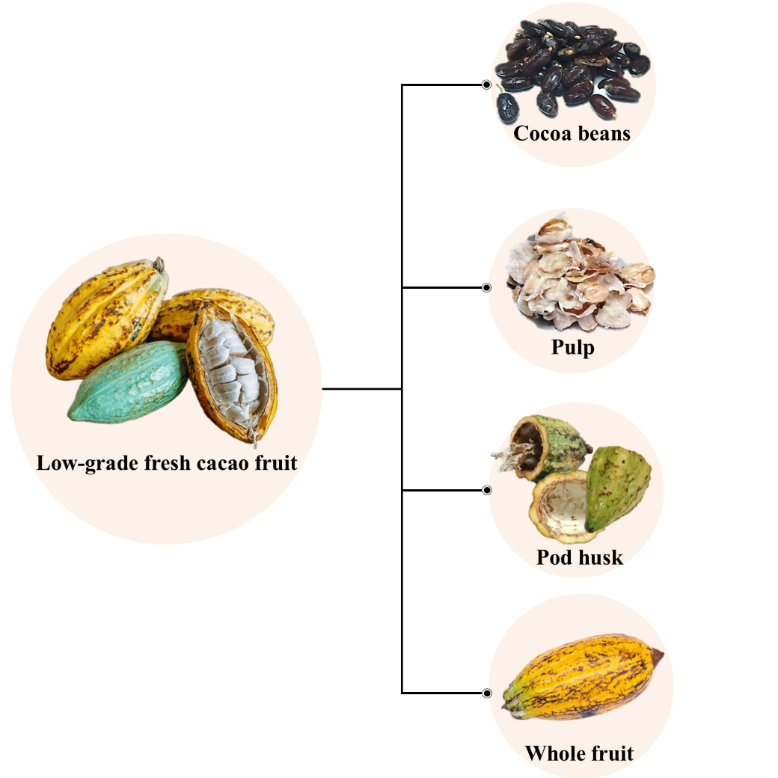
Figure 1 Physical characteristics of the different anatomical parts of low-grade fresh cacao fruit.
Analysis of proximate composition
The moisture, protein, lipid, ash, and carbohydrate contents of the different cacao fruit parts were assessed in accordance with the standard protocols established by the Association of Official Analytical Chemists (AOAC) [11].
Extraction of low-grade fresh cacao fruit
Cocoa beans, pulp, pod husk, and whole fruit of low-grade fresh cacao fruit were sliced and dried, then ground into fine powder following the procedures outlined by Thuanthong et al. [12], with their extracts prepared following the procedures established of Thuanthong et al. [13]. Ethanolic extracts were prepared using 80% ethanol as the solvent. Powdered cacao fruit samples from different anatomical parts (beans, pulp, pod husk, and whole fruit) were combined with the solvent at a solid-to-solvent ratio of 1:15 (w/v) and extracted in a shaking water bath for 60 min. The mixtures underwent centrifugation at 5,000 × g for 30 min at 25 °C (RC-5B Plus, Beckman, Fullerton, CA, USA). The resulting liquid was further filtered using Whatman No. 1 filter paper. Concentrated filtrates were freeze-dried after passing through a rotary evaporator operating at 40 °C (Eyela, Tokyo, Japan). Until further investigation, the extracts were stored in a desiccator at room temperature (28 - 30 °C).
Assessment of total phenolic and flavonoid contents
Folin-Ciocalteu's reagent was used in accordance with Wonghirundecha et al. [14] to determine total phenolic content (TPC), which was expressed as mg gallic acid equivalents (GAE)/g dry extract. Gallic acid was selected as the reference standard due to its widespread use and suitability for estimating total phenolic compounds in plant-based matrices. The total flavonoid content (TFC) was determined using the aluminum chloride colorimetric method [12] and expressed as mg catechin equivalents (CE)/g dry extract. Catechin was used as the standard because it represents a major flavonoid subclass commonly found in cacao-related products [2]. It should be noted that colorimetric assays provide an overall estimation of phenolic and flavonoid contents but may lack specificity toward individual compounds; therefore, results should be interpreted as relative indicators rather than absolute dietary intake values.
Assessment of antioxidant activity
Several different assays, including the DPPH radical scavenging activity, the ABTS radical scavenging activity, the ferric reducing antioxidant power (FRAP), and the ferrous ion chelating activity, were employed to evaluate the antioxidant properties of extracts obtained from different anatomical parts of low-grade fresh cacao fruits. These assays were performed following the methods described by Klomklao and Benjakul [15], with essential experimental conditions summarized below.
For the DPPH radical scavenging assay, 1.50 mL of sample solution was mixed with 1.50 mL of 0.15 mM DPPH prepared in 95% (v/v) ethanol. The mixture was vortexed vigorously and incubated at room temperature in the dark for 30 min. The absorbance of the resulting solution was measured at 517 nm using a UV-visible spectrophotometer (UV-1800, Shimadzu, Japan).
For the ABTS radical scavenging assay, ABTS•⁺ radicals were generated by reacting 7.40 mM ABTS solution with 2.60 mM potassium persulfate solution at a 1:1 (v/v) ratio and allowing the mixture to stand for 12 h at room temperature in the dark. The resulting radical solution was diluted with methanol to obtain an absorbance of 1.10 ± 0.02 at 734 nm. A volume of 150 µL of sample was mixed with 2,850 µL of the ABTS working solution and incubated at room temperature for 2 h in the dark, after which absorbance was measured at 734 nm. Fresh ABTS working solution was prepared for each assay.
For the FRAP assay, stock solutions consisted of 300 mM acetate buffer (pH 3.6), 10 mM TPTZ solution in 40 mM HCl, and 20 mM FeCl₃·6H₂O solution. The FRAP working reagent was freshly prepared by mixing 25 mL acetate buffer, 2.50 mL TPTZ solution, and 2.50 mL FeCl₃·6H₂O solution, followed by incubation at 37 °C for 30 min. A volume of 150 µL of sample was mixed with 2,850 µL of FRAP reagent and incubated for 30 min in the dark. The formation of the ferrous-TPTZ complex was monitored by measuring absorbance at 593 nm.
For Fe²⁺ chelating activity, 4.70 mL of diluted sample solution was mixed with 0.10 mL of 2 mM FeCl₂ and 0.20 mL of 5 mM ferrozine. The reaction mixture was allowed to stand at room temperature for 20 min, and absorbance was measured at 562 nm.
Results for DPPH, ABTS, and FRAP assays were expressed as µmol Trolox equivalents (TE)/g dry extract, while metal chelating activity was expressed as mmol EDTA equivalents (EE)/g dry extract.
Determination of in vitro hypoglycemic activity
The in vitro hypoglycemic activity was assessed by assessing the impacts of low-grade fresh cacao fruit extracts on the inhibition of α-amylase and α-glucosidase enzymes. This was done in accordance with the procedures provided by Boue et al. [16]. The test of α-glucosidase was performed by combining 50 μL of sample buffer or positive control (500 μg/mL acarbose) with 100 μL of α-glucosidase solution (1 U/mL in 0.10 M sodium phosphate buffer, pH 6.90) on a 96-well plate. The mixture was then incubated for a duration of 10 min while the conditions were maintained. As a result, a solution of p-nitrophenyl-α-D-glucopyranoside, with a concentration of 5 mM and a volume of 50 μl, was introduced onto the plate, and the temperature was maintained at 25 °C. At a wavelength of 405 nm, the absorbance was measured both 5 min before and after the incubation.
For the α-amylase assay, 500 μL of sample, buffer, or positive control (acarbose) was mixed with 0.50 mL of α-amylase solution (13 U/mL in 0.02 M sodium phosphate buffer, pH 6.90) and incubated at room temperature for 10 min. Then, 500 μL of soluble starch solution was added, and the mixture was incubated for another 10 min at ambient temperature. Subsequently, dinitrosalicylic acid reagent (1,000 μL) was mixed, and the mixture was heated in a 100 °C water bath for 5 min. After cooling, the solution was diluted with 10 mL of distilled water, and the absorbance was determined at 540 nm. Enzyme inhibitory activity was calculated using the following equation:

Assessment of anti-tyrosinase activity
The tyrosinase inhibitory activity of low-grade fresh cacao fruit extracts was assessed using mushroom tyrosinase and L-DOPA as the substrate, following the method of Thuanthong et al. [13]. In a 96-well plate, 20 μL of sample solutions (0.001 - 10 mg/mL) prepared in 10% DMSO were combined with 40 μL of 0.1 M phosphate buffer (pH 6.80) and 20 μL of tyrosinase solution (46 U/mL in phosphate buffer). The mixture was incubated at room temperature for 10 min, after which 20 μL of 2.50 mM L-DOPA in phosphate buffer was added. Following an additional 10-min incubation at ambient temperature, the absorbance was measured at 475 nm. Vitamin C and kojic acid (0.001 - 10 mg/mL) were used as positive controls. Tyrosinase inhibition was calculated using the same equation described previously, and the IC₅₀ value was determined as the concentration of extract required to achieve 50% inhibition.
Bacterial strains, growth conditions, and preparation of cell suspension
Staphylococcus aureus DMST 4745 and Staphylococcus epidermidis DMST 5868 were sourced from the Department of Medical Science, Ministry of Public Health, Thailand. Each strain was cultured individually in Tryptic Soy Broth (TSB; Difco, Le Port de Claix, France) and incubated for approximately 18 h until reaching an optical density at 600 nm of about 0.80. Cultures were then mixed with 15% (v/v) glycerol and preserved at −80 °C for long-term storage. Prior to experimentation, the bacteria were streaked on Tryptic Soy Agar (TSA; Difco, Le Port de Claix, France) and incubated at 37 °C for 24 h. Fresh colonies were subsequently transferred to TSB and incubated at 37 °C for 4 h, after which the cultures were adjusted by serial dilution to obtain a final concentration of 10⁶ CFU/ml.
Assessment of minimum inhibitory concentration (MIC) and minimum bactericidal concentration (MBC)
The MIC and MBC of the low-grade fresh cacao fruit extracts against Staphylococcus aureus and Staphylococcus epidermidis were assessed following the protocol outlined by the Clinical and Laboratory Standards Institute [17]. Bacterial cultures grown for 4 h were serially diluted to achieve a final inoculum of 10⁶ CFU/mL. A volume of 100 µL of each extract concentration (0.31 - 10 mg/mL) was dispensed into wells of a sterile, flat-bottom 96-well microtiter plate. After that, 100 µL of the bacterial cells were added to each well in triplicate. Plates were incubated at 37 °C for 24 h. Control wells containing extract without bacterial inoculum served as positive controls, whereas wells containing bacteria without extract served as negative controls. The MIC was determined as the lowest extract concentration that completely inhibited visible microbial growth. From wells exhibiting no apparent turbidity, 10 µL aliquots were spot-inoculated onto TSA plates and incubated at 37 °C for 24 h. The MBC was determined as the lowest concentration at which no bacterial colonies were recovered on TSA following incubation.
Statistical analysis
All experiments followed a completely randomized design. Data were subjected to one-way analysis of variance (ANOVA), and differences among treatment means were evaluated using Duncan’s multiple range test as described by Steel et al. [18]. Statistical analyses were conducted using SPSS software version 24.0 (SPSS Inc., Chicago, IL, USA). Results are expressed as mean ± standard deviation.
Results and discussion
Chemical composition of different parts of low-grade fresh cacao fruit
Table 1 summarizes the proximate composition of cocoa beans, pulp, pod husk, and whole fruit obtained from low-grade fresh cacao. Significant compositional differences were observed across the fractions (p < 0.05). Moisture content ranged from 38.78 ± 0.10% to 84.55 ± 0.35%, which reflects the differing structural and physiological characteristics of each tissue. On a dry-weight basis, carbohydrates were the predominant macronutrient (67.12% - 90.03%), whereas protein, fat, and ash contents were comparatively lower, ranging from 4.64% - 8.89%, 1.38% - 20.08%, and 3.44% -11.40%, respectively.
The pulp contained the highest carbohydrate level (90.03 ± 1.52 %), followed by the whole fruit (85.06 ± 3.40%) and pod husk (81.46 ± 2.26%). Cocoa beans exhibited the lowest carbohydrate content (67.12 ± 0.16%) (p < 0.05). The elevated carbohydrate content of pulp aligns with earlier reports describing its abundance of soluble sugars, organic acids, and pectin [19]. Conversely, the pod husk is enriched in structural polysaccharides—cellulose, hemicellulose, lignin, and pectic substances—resulting in a lower proportion of digestible carbohydrates [20].
Cocoa beans displayed the highest fat concentration (20.08 ± 0.20%) (p < 0.05), attributable to the presence of cocoa butter. In contrast, the pulp, pod husk, and whole fruit contained only trace fat levels (1.38% - 2.51%). Cocoa butter is known to contain substantial amounts of palmitic, stearic, and oleic acids [21], and its triacylglycerol composition is typically dominated by 1-palmitoyl-2-oleoyl3-stearin (POS) (39.00% - 49.00%), 2-oleoyl distearin (SOS) (21.00% -43.00%) and 2-oleoyl dipalmitin (POP) (6.90% - 17.00%) [22]. The comparatively lower fat content in these low-grade cocoa beans contrasts with the higher lipid levels (42.50%) typically reported for premium-grade beans [23]. Variations in fat composition have been linked to genetic background, growing conditions, maturity stage, and post-harvest handling [22].
Protein content also varied among the fractions, with cocoa beans presenting the highest value (8.89 ± 0.12% dry basis) (p < 0.05), followed by the whole fruit (8.10 ± 0.56%), pulp (5.16 ± 0.38%), and pod husk (4.64 ± 0.47%). The protein matrix of cocoa beans comprises primarily albumins and vicilin-like globulins, along with minor storage and metabolic proteins [24]. Lower protein levels in pulp and pod husk are consistent with their limited metabolic activity and higher structural carbohydrate content. Protein variability among cacao fractions is influenced by genotype, environmental stress factors, and fruit developmental stage [25]. Overall, the nutrient levels measured in low-grade cacao fractions were generally lower than values typically reported for high-quality cocoa [23]. This discrepancy likely reflects differences in cultivar characteristics, ripeness at harvest, environmental conditions, and post-harvest processing. Despite their lower nutrient density, all fractions—particularly the pulp and pod husk—retain substantial amounts of carbohydrates, dietary fiber–associated polysaccharides, and other potentially functional components. These compositional attributes highlight the potential of low-grade cacao biomass as a valuable raw material for developing functional food ingredients, nutraceutical formulations, and bioprocessing applications, supporting broader efforts in cacao by-product valorization.
Table 1 Chemical compositions of different parts of low-grade fresh cacao fruit.
Compositions (g/100 g) |
Cocoa beans |
Pulp |
Pod husk |
Whole fruit |
Moisture |
38.78 ± 0.10a |
78.42 ± 0.33c |
84.55 ± 0.35d |
65.86 ± 1.16b |
Protein |
5.44 ± 0.08d (8.89 ± 0.12c) |
1.12 ± 0.08b (5.16 ± 0.38a) |
0.72 ± 0.07a (4.64 ± 0.47a) |
2.77 ± 0.19c (8.10 ± 0.56b) |
Fat |
12.29 ± 0.17c (20.08 ± 0.20c) |
0.30 ± 0.03a (1.38 ± 0.09a) |
0.39 ± 0.14a (2.51 ± 0.93b) |
0.62 ± 0.01b (1.82 ± 0.02ab) |
Ash |
2.40 ± 0.04d (3.92 ± 0.06b) |
0.74 ± 0.02a (3.44 ± 0.59a) |
1.76 ± 0.02c (11.40 ± 0.16d) |
1.71 ± 0.01b (5.02 ± 0.03c) |
Carbohydrate |
41.09 ± 0.10d (67.12 ± 0.16a) |
19.43 ± 0.33b (90.03 ± 1.52c) |
12.59 ± 0.35a (81.46 ± 2.26b) |
29.04 ± 1.16c (85.06 ± 3.40b) |
Data are expressed as the mean ± standard deviation (n = 3).
Superscript lowercase letters within the same row denote statistically significant differences at p < 0.05.
*Dry weight basis is denoted in parentheses.
Total phenolic content (TPC), total flavonoid content (TFC), and antioxidant activities of extracts from different parts of low-grade fresh cacao fruit
The TPC, TFC, and antioxidant activities of extracts obtained from the various anatomical parts of low-grade fresh cacao fruit are summarized in Table 2. Considerable variation was observed among the different fruit fractions. The TPC of the extracts ranged from 37.33 ± 0.13 to 382.03 ± 1.44 mg GAE/g dry extract, whereas the TFC varied between 26.58 ± 0.00 and 136.38 ± 0.03 mg CE/g dry extract. Among all anatomical parts examined, the pod husk extract contained the greatest phenolic concentration (382.03 ± 1.44 mg GAE/g dry extract), followed by cocoa beans (354.55 ± 19.23 mg GAE/g dry extract) and the whole fruit extract (353.18 ± 5.80 mg GAE/g dry extract). In contrast, the pulp extract exhibited the lowest TPC (37.33 ± 0.13 mg GAE/g dry extract) (p < 0.05). The high phenolic content detected in the pod husk can be attributed to its structural and protective biological role, as phenolic compounds are involved in plant defense mechanisms against oxidative stress, microbial invasion, and environmental damage [10]. These findings are consistent with those reported by Martínez et al. [26], who demonstrated that extracts from pod husks of standard-grade cacao fruit had higher phenolic contents compared to cocoa bean shells and mucilage. Their study also showed that solvent type significantly influenced extraction efficiency, with methanol-acetone mixtures yielding higher TPC (352.67 - 365.33 mg/100 g sample) compared to ethanol extractions (206.67 - 227.00 mg/100 g sample). The elevated phenolic content observed in the present study suggests that low-grade cacao by-products still retain substantial amounts of bioactive compounds with strong antioxidant potential, supporting their possible utilization as value-added functional ingredients. In contrast to TPC, TFC was highest in cocoa beans (136.38 ± 0.03 mg CE/g dry extract), followed by the pod husk (131.50 ± 0.00 mg CE/g dry extract). This predominance of flavonoids in cocoa beans is nutritionally significant, as flavonoids—particularly flavan-3-ols—are widely recognized for their antioxidant, cardioprotective, anti-inflammatory, and metabolic health-promoting properties [8]. Previous studies have reported that flavonoids constitute approximately 12.00% - 18.00% of cocoa nib dry weight [27]. Flavan-3-ols such as catechin and epicatechin, especially epicatechin, are major contributors to cocoa’s antioxidant capacity and are closely associated with improved endothelial function and reduced oxidative stress [28]. Variations in flavonoid content reported across studies are largely influenced by genotype, degree of fermentation, drying conditions, and post-harvest handling, all of which affect polyphenol stability and extractability [29].
The antioxidant potential assessed by DPPH, ABTS, FRAP, and metal chelating assays also revealed clear differences among extracts. The cocoa bean extract displayed the highest DPPH radical scavenging activity (77.72 ± 0.44 mM Trolox/g dry extract), followed by pod husk (76.30 ± 0.02 mM Trolox/g dry extract), whole fruit (75.30 ± 0.20 mM Trolox/g dry extract), and pulp (41.28 ± 0.03 mM Trolox/g dry extract). The strong DPPH scavenging activity of cocoa bean extracts is consistent with their high flavonoid concentration, particularly monomeric flavan-3-ols, which are effective hydrogen-donating antioxidants [27,28]. Conversely, the pod husk extract demonstrated the strongest antioxidant activity in the ABTS (4.82 ± 0.04 mM Trolox/g dry extract), FRAP (3.86 ± 0.01 mM Trolox/g dry extract), and metal chelating (25.14 ± 0.77 mM EDTA/g dry extract) assays, closely mirroring its superior TPC value. These assays emphasize different antioxidant mechanisms, including electron donation, reducing power, and transition metal ion chelation, indicating that pod husk phenolics contribute to a broader spectrum of antioxidant actions. This confirms that phenolic compounds are the primary contributors to the overall antioxidant capacity of cacao fruit extracts. Similar findings have been reported by Irondi et al. [5], who observed that standard-grade cocoa bean powder exhibited stronger DPPH radical scavenging activity than cocoa pod husk extract, whereas no significant differences were observed in ABTS scavenging activity between the 2 materials. Their study identified phenolic acids (gallic, chlorogenic, and caffeic acids) and flavonoids (quercitrin, quercetin, and apigenin) in both extracts, supporting the present results. These compositional similarities explain the comparable antioxidant performance observed across multiple assay systems and reinforce the relationship between chemical composition and bioactive functionality. Overall, the results demonstrate that both pod husk and cocoa beans from low-grade cacao fruit are rich in polyphenols and flavonoids, endowing them with significant antioxidant potential. Their exploitation could support the valorization of cacao by-products in the development of natural antioxidant ingredients for functional foods, nutraceuticals, and cosmetic applications.
Table 2 Total phenolic content (TPC), total flavonoid content (TFC) and antioxidant activities of the extracts from various parts of low-grade fresh cacao fruit.
Sample |
TPC (mg GAE/g dry extract) |
TFC (mg CE/g dry extract) |
DPPH dry extract) |
ABTS (mmol TE/g dry extract) |
FRAP (mmol TE/g dry extract) |
Metal chelating (mmol EE/g dry extract) |
Cocoa beans |
354.55 ± 19.23b |
77.72 ± 0.44d |
4.65 ± 0.13b |
3.64 ± 0.00b |
14.77 ± 0.08a |
|
Pulp |
37.33 ± 0.13a |
26.58 ± 0.00a |
41.28 ± 0.03a |
2.69 ± 0.04a |
0.27 ± 0.00a |
11.72 ± 1.17a |
Pod husk |
382.03 ± 1.44c |
131.50 ± 0.00c |
76.30 ± 0.02c |
4.82 ± 0.04c |
3.86 ± 0.01c |
25.14 ± 0.77b |
353.18 ± 5.80b |
94.18 ± 1.24b |
75.30 ± 0.20b |
4.60 ± 0.04b |
3.71 ± 0.05b |
Data are expressed as the mean ± standard deviation (n = 3).
Superscript lowercase letters within the same column denote statistically significant differences at p < 0.05
In vitro hypoglycemic activity of extracts from different parts of low-grade fresh cacao fruit
The in vitro hypoglycemic activities of extracts derived from various parts of low-grade fresh cacao fruit are summarized in Figure 2. Significant differences in α-amylase and α-glucosidase inhibitory activities were found among the extracts (p < 0.05). For α-amylase inhibition, the pulp extract exhibited the strongest inhibitory activity (71.77 ± 3.23%), followed by extracts from the whole fruit (63.83 ± 5.69%), cocoa beans (45.36 ± 14.77%), and pod husk (42.18 ± 3.64%). Interestingly, all extracts demonstrated higher inhibitory effects than the standard antidiabetic drug acarbose (16.49 ± 0.28%) (p < 0.05), suggesting that even low-grade cacao residues may contain potent bioactive compounds capable of modulating carbohydrate-digesting enzymes. Conversely, α-glucosidase inhibition was most pronounced in the pod husk extract (82.90% ± 2.33), which was not significantly different from that of the whole fruit extract (80.86 ± 1.50%). The cocoa bean and pulp extracts displayed moderate to low inhibitory activities (43.69 ± 2.85% and 16.77 ± 1.29%, respectively) (p < 0.05). Notably, the α-glucosidase inhibitory potential of the pod husk extract was statistically comparable to that of acarbose, indicating its promising potential as a natural alternative for managing postprandial hyperglycemia. The inhibitory actions against α-amylase and α-glucosidase are closely associated with the phenolic and flavonoid content of cacao extracts. Phenolics can bind to enzymes through hydrogen bonding, hydrophobic interactions, or covalent modification, thereby hindering substrate access and reducing catalytic efficiency [30]. In addition, the antidiabetic potential of plant-derived materials has been attributed to a wide range of secondary metabolites, including phenolic acids, glycosides, saponins, stilbenes, and tannins. The effectiveness of these bioactive constituents may be influenced by plant growth conditions, postharvest handling, drying and storage methods, and extraction and purification processes [31]. Consistent with the present findings, previous in vivo studies have demonstrated the antihyperglycemic effects of cacao polyphenols. Tomaru et al. [33] reported that cacao liquor proanthocyanidins reduced glucose and fructosamine levels in diabetic mice, while Grassi et al. [34] demonstrated enhanced insulin sensitivity in hypertensive adults consuming flavonol-rich dark chocolate. These findings suggest that polyphenol-rich extracts from low-grade cacao—particularly from pod husk and pulp—may serve as natural α-glucosidase inhibitors, potentially useful for the management of type 2 diabetes. Future research should include bioavailability, mechanistic, and in vivo assessments to validate these promising activities.
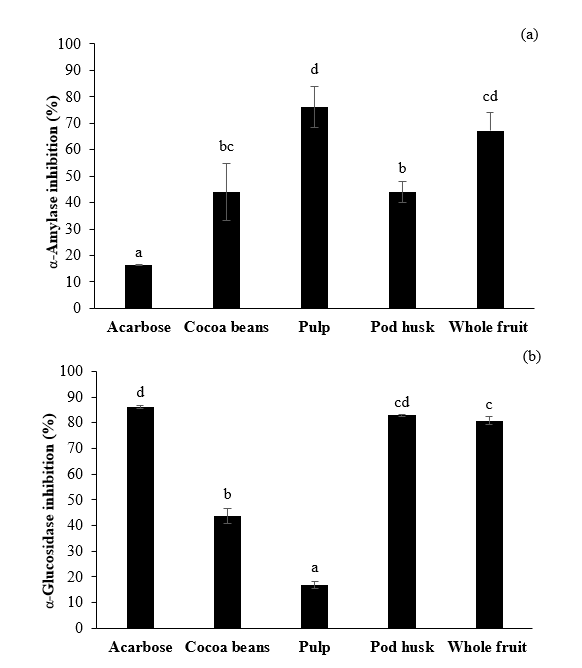
Figure 2 In vitro hypoglycemic activities of extracts obtained from various parts of low-grade fresh cacao fruit. Error bars represent standard deviation (n = 3). Bars bearing different lowercase letters indicate statistically significant differences among samples (p < 0.05).
Tyrosinase inhibitory activity of extracts from different parts of low-grade fresh cacao fruit
Tyrosinase plays a central role in melanin biosynthesis, catalyzing the conversion of L-tyrosine to L-3,4-dihydroxyphenylalanine (L-DOPA) and subsequently facilitating the oxidation of L-DOPA to DOPA-quinone [34]. These steps constitute the rate-limiting reactions of melanogenesis, the biological pathway responsible for pigmentation in skin, hair, and eyes [35]. Dysregulation or overactivation of tyrosinase leads to excessive melanin accumulation, resulting in hyperpigmentation disorders such as melasma, age spots, and post-inflammatory hyperpigmentation. Consequently, tyrosinase inhibitors are therefore of considerable interest in cosmetic and pharmaceutical research for their potential skin-whitening and anti-hyperpigmentation applications.
The tyrosinase inhibitory activities of extracts obtained from different parts of low-grade fresh cacao fruit are summarized in Table 3. Kojic acid and ascorbic acid, used as positive controls, exhibited IC₅₀ values of 0.14 ± 0.00 and 0.22 ± 0.00 mg/mL, respectively. Among the cacao-derived extracts, the pod husk demonstrated the most pronounced inhibitory activity (IC₅₀ = 2.83 ± 0.23 mg/mL), followed by extracts from the whole fruit (3.94 ± 0.19 mg/mL), cocoa beans (4.62 ± 0.06 mg/mL), and pulp (6.24 ± 0.17 mg/mL) (p < 0.05). Although all extracts exhibited lower inhibitory potency than the pure reference compounds, their activity is notable considering that the extracts represent complex mixtures of phytochemicals rather than isolated bioactive molecules. Such crude extracts often exert biological effects through synergistic interactions among multiple constituents, which may contribute to broader functional benefits beyond single-target inhibition. The superior tyrosinase inhibitory effect observed in the pod husk extract is likely associated with its elevated TPC, as supported by the strong positive relationship between TPC and antioxidant capacity observed in this investigation. Phenolic compounds are known to modulate tyrosinase activity by reducing oxidative intermediates and disrupting melanin synthesis pathways. Anatachodwanit et al. [36] reported that standard-grade cacao pod husk extracted with 80% ethanol acidified solvent exhibited tyrosinase inhibitory activity (IC₅₀ = 9.51 ± 0.01 mg/mL), which is notably weaker than the activity observed in the present study, suggesting that low-grade cacao pod husk remains a potent and underutilized source of bioactive compounds. Polyphenolic constituents such as stilbenoids, flavonols, flavanols, and phenolic acids have been previously identified as major contributors to tyrosinase inhibition in cacao pod extracts [37]. These compounds can act through several mechanisms, including chelation of the copper ions at the enzyme’s active site and interference with the oxidation of L-DOPA during melanin synthesis [38]. The lower inhibitory potency of the cacao extracts relative to kojic and ascorbic acids can be explained by their crude nature; pure reference compounds typically exhibit higher activity due to their defined molecular structures and direct interactions with enzyme active sites. Nonetheless, the results indicate that the pod husk and other cacao by-products from low-grade fruits are promising sources of natural tyrosinase inhibitors. These findings highlight the potential application of cacao waste materials in developing natural cosmetic formulations aimed at reducing hyperpigmentation or oxidative skin damage.
Based on its strongest biological performance—notably in TPC, ABTS, FRAP, metal chelating, α-glucosidase, and tyrosinase inhibition assays—the pod husk was selected for subsequent investigations.
Table 3 Tyrosinase inhibitory activity of the extracts from various parts of low-grade fresh cacao fruit in comparison with ascorbic acid and Kojic acid.
Sample |
IC50 (mg extract/mL) |
Ascorbic acid |
0.14 ± 0.00a |
Kojic acid |
0.23 ± 0.00a |
Cocoa beans |
4.62 ± 0.06d |
Pulp |
6.24 ± 0.17e |
Pod husk |
2.83 ± 0.23b |
Whole fruit |
3.94 ± 0.19c |
Data are expressed as the mean ± standard deviation (n = 3).
Superscript lowercase letters within the same column denote statistically significant differences at p < 0.05.
IC50 = the sample concentration providing 50% of tyrosinase inhibition activity
Antimicrobial activities of extracts from different parts of low-grade fresh cacao fruit
Considering the growing interest in natural antimicrobial agents for cosmetic, topical, and food-related applications, extracts from various parts of low-grade fresh cacao fruit were examined for their inhibitory effects against 2 clinically relevant skin-associated bacteria, Staphylococcus aureus and Staphylococcus epidermidis [39]. These microorganisms were selected not only due to their involvement in common skin disorders but also because they are frequently implicated in cosmetic and food product contamination, thereby providing relevance to both dermatological and food safety contexts. The MICs of the different cacao extracts are presented in Table 4. Significant variation among cacao fractions was observed (p < 0.05). The pod husk extract exhibited the strongest inhibitory effect against both S. aureus and S. epidermidis, exhibiting the lowest MIC value of 1.25 mg/mL (p < 0.05). Cocoa bean and whole-fruit extracts showed similar MICs of 2.50 mg/mL for both organisms (p > 0.05). In contrast, the pulp extract exhibited no detectable inhibitory activity against either S. aureus or S. epidermidis. According to Akbary [40], MIC values < 0.50 mg/mL indicate strong inhibition, 0.60 - 1.50 mg/mL indicate moderate inhibition, and > 1.60 mg/mL indicate low inhibition. Following this classification, the pod husk extract demonstrated moderate antimicrobial activity, whereas the cocoa bean and whole-fruit extracts displayed low inhibitory effects, indicating that antimicrobial potency varies markedly among different cacao fruit fractions. This variation highlights the influence of anatomical origin on antimicrobial efficacy. These differences suggest that antimicrobial activity is closely associated with the distribution and concentration of bioactive phytochemicals among cacao fruit fractions, particularly phenolic compounds and flavonoids, which are widely recognized for their antimicrobial properties [41]. Phenolics can interact with microbial cell membranes, alter membrane permeability, and inhibit essential enzymatic systems, thereby suppressing bacterial growth [41]. The MBCs are also shown in Table 4. Pod husk extract displayed an MBC of 2.50 mg/mL for both bacterial species, whereas cocoa bean and whole-fruit extracts had MBCs of 5.00 mg/mL (p > 0.05). The pulp extract again exhibited no bactericidal activity against either S. aureus or S. epidermidis. To differentiate bacteriostatic from bactericidal effects, the MBC/MIC ratio was calculated according to Cowan [43], where a ratio ≤ 2.00 indicates bactericidal activity. Pod husk, cocoa bean, and whole-fruit extracts all exhibited MBC/MIC ratios of 2.00, confirming their bactericidal effects against both bacterial strains.
Among the tested fractions, the pod husk extract consistently demonstrated the strongest antibacterial activity. This enhanced efficacy is likely attributable to its elevated levels of total phenolics, flavonoids, tannins, and alkaloids, which have been reported to disrupt bacterial cell wall synthesis, compromise membrane integrity, chelate essential metal ions, and interfere with intracellular metabolic pathways [43]. Such multifunctional mechanisms are typical of plant-derived antimicrobials and are particularly advantageous in reducing the risk of microbial resistance. Comparable findings have been reported in other plant-based by-products. For instance, Palamae et al. [44] demonstrated that Bambara groundnut seed coat extracts inhibited the growth of Shewanella putrefaciens and S. algae in a dose-dependent manner, primarily through cytoplasmic membrane disruption leading to leakage of intracellular constituents and bacterial cell lysis. Similarly, D’Arcangelo et al. [45] reported that pomegranate (Punica granatum L.) peel extracts obtained using dimethyl ether solvents exhibited strong antimicrobial activity (MICs ranging from 1.00 to 128.00 mg/mL), with catechin, quercetin, vanillic acid, and gallic acid identified as the main active compounds. These compounds are also commonly detected in cacao by-products, further supporting the antimicrobial mode of action proposed for cacao pod husk extracts in the present study. Overall, these findings indicate that cacao pod husk, typically regarded as a low-value processing residue, possesses significant antimicrobial potential, particularly against bacteria associated with skin infections such as acne and folliculitis, as well as microorganisms relevant to cosmetic and food product contamination. This highlights its potential as a sustainable source of natural antimicrobial agents for cosmetic, food preservation, and functional ingredient applications.
Nevertheless, when considering practical applications, these findings should be interpreted within the broader context of nutrition and food science. Although the present study demonstrates strong antioxidant, hypoglycemic, tyrosinase inhibitory, and antimicrobial activities of extracts from different parts of low-grade fresh cacao fruit, all results were obtained from in vitro assays. Such assays provide valuable mechanistic insight but do not fully reflect the complexity of real food systems or human dietary exposure. Factors such as food matrix interactions, processing conditions, stability during storage, bioaccessibility during gastrointestinal digestion, and inter-individual variability in food intake may substantially influence the biological effectiveness of cacao-derived bioactive compounds. Moreover, the concentrations required to elicit biological effects in vitro may not be readily achievable through normal dietary consumption. Therefore, caution is warranted when extrapolating these findings to nutritional or functional food applications. Future research should incorporate simulated gastrointestinal digestion, in vivo validation, dose–response analysis, and evaluation within realistic food matrices to facilitate the translation of these bioactivities into safe, effective, and consumer-acceptable food and nutraceutical products.
Table 4 Minimum inhibitory concentration (MIC) and minimum bactericidal concentration (MBC) of the extracts from various parts of low-grade fresh cacao fruit against Staphylococcus aureus and Staphylococcus epidermidis.
Sample |
MIC (mg/mL) |
MBC (mg/mL) |
||
S. aureus |
S. epidermidis |
S. aureus |
S. epidermidis |
|
Cocoa beans |
2.50 ± 0.00b |
2.50 ± 0.00b |
5.00 ± 0.00b |
5.00 ± 0.00b |
Pulp |
NA |
NA |
NA |
NA |
Pod husk |
1.25 ± 0.00a |
1.25 ± 0.00a |
2.50 ± 0.00a |
2.50 ± 0.00a |
Whole fruit |
2.50 ± 0.00b |
2.50 ± 0.00b |
5.00 ± 0.00b |
5.00 ± 0.00b |
Data are expressed as the mean ± standard deviation (n = 3).
Superscript lowercase letters within the same column denote statistically significant differences at p < 0.05.
NA = No activity.
Conclusions
Low-grade fresh cacao fruit exhibits substantial nutritional and bioactive potential despite its limited commercial utilization, addressing the central objective of this study to evaluate its compositional and functional value across different anatomical parts. The results demonstrated pronounced heterogeneity among fruit components, with the pod husk consistently emerging as the most bioactive fraction, characterized by the highest phenolic content, strong antioxidant capacity, marked α-glucosidase inhibition, notable tyrosinase inhibitory activity, and effective antibacterial action against S. aureus and S. epidermidis. Cacao beans contributed significant macronutrients, particularly protein and lipid fractions rich in flavonoids, supporting their role as both nutritional and functional ingredients, while the pulp exhibited distinct α-amylase inhibitory activity, indicating its potential relevance for glycemic modulation. Collectively, these findings synthesize key evidence that low-grade cacao fruits, especially the pod husk, represent an underexploited biomass with multifunctional bioactivities, thereby directly answering the research questions regarding their nutritional quality and biological functionality. From a practical perspective, the results suggest promising implications for nutrition practice through the development of natural antioxidant and enzyme-modulating ingredients, as well as for food product development, where cacao by-products may be incorporated into functional foods, nutraceuticals, or cosmetic formulations to enhance value and sustainability. At the policy level, this work supports strategies aimed at reducing agricultural waste and promoting circular bioeconomy frameworks, particularly within cacao-producing regions such as Thailand. Despite these insights, significant research gaps remain, as the present study was limited to in vitro assessments. Future investigations should focus on the identification and purification of key bioactive compounds, validation of their efficacy and safety through in vivo and clinical studies, and evaluation of technological performance during food formulation and processing. Addressing these gaps will be essential to translate the biofunctional potential of low-grade cacao fruits into practical applications and to fully realize their role in sustainable food and bioproduct systems.
Acknowledgements
The authors sincerely acknowledge financial support from the Thaksin University Research Fund and the National Higher Education, Research, and Innovation Policy Council, provided through a research project grant awarded for the 2026 fiscal year.
Declaration of generative AI in scientific writing
During the preparation of this work the authors used ChatGPT in order to improve the readability and language of the manuscript. After using this tool, the authors reviewed and edited the content as needed and take full responsibility for the content of the publication.
CRediT author statement
Montita Kamwisaet: Investigation, Data curation, Writing-original draft. Jarurat Panyo: Supervision. Hideki Kishimura: Methodology. Kanokphorn Sangkharak: Methodology. Sappasith Klomklao: Conceptualization, Validation, Methodology, Writing-review & editing.
References
[1] JE Kongor, M Owusu and C Oduro-Yeboah. Cocoa production in the 2020s: Challenges and solutions. CABI Agriculture and Bioscience 2024; 5(1), 102.
[2] MÁ Martín and S Ramos. Impact of cocoa flavanols on human health. Food and Chemical Toxicology 2021; 151, 112121.
[3] ABT Sari, Y Andriana, MF Abdurrahman, D Kurnianto, AR Sefrienda, F Setiyoningrum, D Wibowo and TN Minh. Differentiation of Indonesian specialty cocoa (Theobroma cacao) varieties and origins using phenolic contents, antioxidant activities, and spectrometric fingerprints for traceability. Food Bioscience 2024; 62, 105434.
[4] AE Irondi, AD Olawuyi, BS Lawal, AA Boligon, F Olasupo and SI Olalekan. Comparative inhibitory effects of cocoa bean and cocoa pod husk extracts on enzymes associated with hyperuricemia and hypertension in vitro. International Food Research Journal 2019; 26(2), 557-564.
[5] TN Nan, P Tiyayon, T Weeplian, P Tomjai, P Baiya, S Thongpan, A Feepakpro, W Nortao, T Kakham, A Phanphuet, A Chuamor and S Sangsuk. Development of a fresh cacao grading system using participatory mechanisms in nan province. Area Based Development Research Journal 2023; 15(3), 188-189.
[6] S Estarriaga-Navarro, T Valls, D Plano, C Sanmartín and N Goicoechea. Potential application of plant by-products in biomedicine: From current knowledge to future opportunities. Antioxidants 2025; 14(8), 942.
[7] MM Rahman, MS Rahaman, MR Islam, F Rahman, FM Mithi, T Alqahtani, AA Almikhlafi, SQ Alghamdi, AS Alruwaili, MS Hossain, M Ahmed, R Das, TB Emran and MS Uddin. Role of phenolic compounds in human disease: Current knowledge and future prospects. Molecular 2021; 27(1), 233.
[8] E Alvarez-Yanamango, D Obregon and A Ibañez. A comprehensive review of the development of green extraction methods and encapsulation of theobromine from cocoa bean shells for nutraceutical applications. Food Engineering Reviews 2025; 17(4), 1083-1104.
[9] DFF Araújo, DDP Farias, IA Neri-Numa and GM Pastore. Polyphenols and their applications: An approach in food chemistry and innovation potential. Food Chemistry 2021; 338, 127535.
[10] E Jurado-Beizaga, E Alvarez-Yanamango, O Herrera-Calderon and A Ibañez. Optimisation of the microwave-assisted extraction process of bioactive compounds with antioxidant activity from cocoa pod husk (Theobroma cacao L.). Sustainable Food Technology 2026. https://doi.org/10.1039/D5FB00924C
[11] GW Latimer and Association of Official Analytical Chemists International. Official methods of analysis of AOAC International. 21st ed. AOAC International Gaithersburg, Maryland, United States, 2019.
[12] A Thuanthong, J Patchimpet, W Visessanguan, J Panyo, S Benjakul, Y Zhang and S Klomklao. Antioxidant properties of sacha inchi (Plukenetia volubilis) shell extracts as affected by solvents used for prior decolorization. ASEAN Journal of Scientific and Technological Reports 2021; 24(3), 1-8.
[13] A Thuanthong, S Klomklao, J Panyo and Y Zhang. In-vitro screenings for biological and antioxidant activities of aqueous extract from sacha inchi (Plukenetia volubilis L.) husks. Trends in Sciences 2023; 20(11), 6815-6815.
[14] S Wonghirundecha, S Benjakul and P Sumpavapol. Total phenolic content, antioxidant and antimicrobial activities of stink bean (Parkia speciosa Hassk.) pod extracts. Songklanakarin Journal of Science & Technology 2014; 36(3), 302
[15] S Klomklao and S Benjakul. Protein hydrolysates prepared from the viscera of skipjack tuna (Katsuwonus pelmamis): Antioxidative activity and functional properties. Turkish Journal of Fisheries and Aquatic Sciences 2018; 18(1), 69-79.
[16] SM Boue, KW Daigle, MH Chen, H Cao and ML Heiman. Antidiabetic potential of purple and red rice (Oryza sativa L.) bran extracts. Journal of Agricultural and Food Chemistry 2016; 64(26), 5345-5353.
[17] Clinical and Laboratory Standards Institute. Methods for dilution antimicrobial susceptibility tests for bacteria that grow aerobically; approved standard in Clinical and Laboratory Standards Institute Document M07-A8. Clinical and Laboratory Standards Institute, Pennsylvania, United States, 2009.
[18] RGD Steel, JH Torrie and DA Dickey. Principles and procedures of statistics: A biometrical approach. McGraw-Hill, New York, 1997.
[19] R Indiarto, Z Raihani, M Dewi and A Zsahra. A review of innovation in cocoa bean processing by-products. International Journal 2021; 9, 1162-1169.
[20] BM Yapo, V Besson, BB Koubala and KL Koffi. Adding value to cacao pod husks as a potential antioxidant-dietary fiber source. American Journal of Food and Nutrition 2013; 1(3), 38-46.
[21] M Grassia, G Salvatori, M Roberti, D Planeta and L Cinquanta. Polyphenols, methylxanthines, fatty acids and minerals in cocoa beans and cocoa products. Journal of Food Measurement and Characterization 2019; 13(3), 1721-1728.
[22] D Sirbu, A Grimbs, M Corno, MS Ullrich and N Kuhnert. Variation of triacylglycerol profiles in unfermented and dried fermented cocoa beans of different origins. Food Research International 2018; 111, 361-370.
[23] JA Ariza-Ortega, EA García and CT Rodríguez-Meléndez. Proximal chemical evaluation, antioxidant content and fatty acids in fermented and dried cocoa beans, roasted cocoa beans and cocoa pulp bar (Theobroma cacao L. Criollo cultivar). Revista Chilena de Nutrición 2021; 48(4), 500-506.
[24] N Kumari, A Grimbs, RN D’Souza, SK Verma, M Corno, N Kuhnert and MS Ullrich. Origin and varietal based proteomic and peptidomic fingerprinting of Theobroma cacao in non-fermented and fermented cocoa beans. Food Research International 2018; 111, 137-147.
[25] E Scollo, DC Neville, MJ Oruna-Concha, M Trotin and R Cramer. UHPLC-MS/MS analysis of cocoa bean proteomes from four different genotypes. Food Chemistry 2020; 303, 125244.
[26] R Martínez, P Torres, MA Meneses, JG Figueroa, JA Pérez-Álvarez and M Viuda-Martos. Chemical, technological and in vitro antioxidant properties of cocoa (Theobroma cacao L.) co-products. Food Research International 2012; 49(1), 39-45.
[27] RM Lamuela-Raventós, AI Romero-Pérez, C Andrés-Lacueva and A Tornero. Health effects of cocoa flavonoids. Food Science and Technology International 2005; 11(3), 159-176.
[28] J Wollgast and E Anklam. Review on polyphenols in Theobroma cacao: Changes in composition during the manufacture of chocolate and methodology for identification and quantification. Food Research International 2000; 33, 423-447.
[29] SOSB Rocha, MPSP Vilhena, JNS de Souza, CR Balcázar-Zumaeta, EM Castro-Alayo, AJ Pajuelo-Muñoz, BSFD Silva, MJD Trindade, GCA Chagas-Junior and NR Ferreira. Can different fermentation boxes improve the nutritional composition and the antioxidant activity of fermented and dried floodplain cocoa beans in the Brazilian amazon? Foods 2025; 14(8), 1391
[30] N Deng, B Zheng, T Li and RH Liu. Assessment of the phenolic profiles, hypoglycemic activity, and molecular mechanism of different highland barley (Hordeum vulgare L.) varieties. International Journal of Molecular Sciences 2020; 21(4), 1175.
[31] S Sukhikh, O Babich, A Prosekov, O Kalashnikova, S Noskova, A Bakhtiyarova, O Krol, E Tsvetkova and S Ivanova. Antidiabetic properties of plant secondary metabolites. Metabolites 2023; 13, 513.
[32] M Tomaru, H Takano, N Osakabe, A Yasuda, KI Inoue, R Yanagisawa, T Ohwatari and H Uematsu. Dietary supplementation with cacao liquor proanthocyanidins prevents elevation of blood glucose levels in diabetic obese mice. Nutrition 2007; 23(4), 351-355.
[33] D Grassi, C Lippi, S Necozione, G Desideri and C Ferri. Short-term administration of dark chocolate is followed by a significant increase in insulin sensitivity and a decrease in blood pressure in healthy persons. The American Journal of Clinical Nutrition 2005; 81(3), 611-614.
[34] PA Riley. The great DOPA mystery: The source and significance of DOPA in phase I melanogenesis. Cellular and Molecular Biology 1999; 45(7), 951-960.
[35] L Nieuweboer‐Krobotova. Hyperpigmentation: Types, diagnostics and targeted treatment options. Journal of the European Academy of Dermatology and Venereology 2013; 27, 2-4.
[36] A Anatachodwanit, S Chanpirom, T Tree-Udom, S Kitthaweesinpoon, S Jiamphun, O Aryuwat, C Tantapakul, M P Vinardell and T Sripisut. Upcycled cocoa pod husk: A sustainable source of phenol and polyphenol ingredients for skin hydration. Whitening, and Anti-Aging Life 2025; 15(7), 1126.
[37] AA Karim, A Azlan, A Ismail, P Hashim, SS Abd Gani, BH Zainudin and NA Abdullah. Phenolic composition, antioxidant, anti-wrinkles and tyrosinase inhibitory activities of cocoa pod extract. BMC Complementary and Alternative Medicine 2014; 14(1), 381.
[38] L Sun, Y Guo, Y Zhang and Y Zhuang. Antioxidant and anti-tyrosinase activities of phenolic extracts from rape bee pollen and inhibitory melanogenesis by cAMP/MITF/TYR pathway in B16 mouse melanoma cells. Frontiers in Pharmacology 2017; 8, 104.
[39] K Kulik-Siarek, M Klimek-Szczykutowicz, E Błońska-Sikora, E Zarembska and MWrzosek. Exploring the antimicrobial potential of natural substances and their applications in cosmetic formulations. Cosmetics 2024; 12(1), 1.
[40] P Akbary. In vitro inhibitory activity of the leaf methanol extract of green tea (Camellia sinensis) against Lactococcus garvieae and Aeromonas hydrophila isolated of rainbow trout (Oncorhynchus mykiss). Advances in Microbiology 2014; 4(12), 829.
[41] A Díaz-González, MYP Luna, ER Morales, S Saldaña-Trinidad, LR Blanco, SDL Cruz-Arreola, BY Pérez-Sariñana and JB Robles-Ocampo. Assessment of the pretreatments and bioconversion of lignocellulosic biomass recovered from the husk of the cocoa pod. Energies 2022; 15(10), 3544.
[42] MM Cowan. Plant products as antimicrobial agents. Clinical microbiology reviews 1999; 12(4), 564-582.
[43] E Abdollahzadeh, M Rezaei and H Hosseini. Antibacterial activity of plant essential oils and extracts: The role of thyme essential oil, nisin, and their combination to control Listeria monocytogenes inoculated in minced fish meat. Food Control 2014; 35(1), 177-183.
[44] S Palamae, W Suyapoh, O Boonrat, B Zhang, M Amin, J Buatong and S Benjakul. Activity of Bambara groundnut seed coat extract against Shewanella species: Efficacy and mechanisms of action. Foods 2024; 13(21), 3516.
[45] S D’Arcangelo, PD Fermo, F Diban, V Ferrone, S D’Ercole, MD Giulio and SD Lodovico. Staphylococcus aureus/Staphylococcus epidermidis from skin microbiota are balanced by Pomegranate peel extract: An eco-sustainable approach. Plos One 2024; 19(8), e0308211.