
Trends
Sci.
2026; 23(9): 13129
SiO2 Based Composites For Lithium Ion Battery Anodes: A Review
Yayuk Astuti1,*, Yurike Candra Sefia1 and Iis Nurhasanah2
1Chemistry Department, Faculty of Sciences and Mathematics, Universitas Diponegoro, Central Java 50275, Indonesia
2Physics Department, Faculty of Science and Mathematics, Universitas Diponegoro, Central Java 50275, Indonesia
(*Corresponding author’s e-mail: [email protected])
Received: 23 December 2025, Revised: 8 March 2026, Accepted: 15 March 2026, Published: 25 April 2026
Abstract
The application of SiO2 as a lithium-ion battery anode material has attracted attention due to its higher theoretical capacity compared to commercial carbon, low discharge potential, and abundance in nature. However, SiO2 has limitations that restrict its widespread use as an anode due to its low electrical conductivity and volume expansion during cycling. Modifying the properties of SiO₂ using other materials as composites is an effective strategy to overcome these limitations. In this review, the progress and role of SiO2-based composites in improving electrochemical performance will be discussed. First, we briefly discuss the development and sources of SiO2 material as a lithium-ion battery anode. In addition, the mechanism of lithium storage and the challenges faced in the application of SiO2 anodes are discussed by reviewing solutions to overcome them, including modifications to the nano and porous structure of SiO2. Furthermore, the review focuses on the application and development of SiO2-based composites in improving the electrochemical performance of lithium-ion batteries to provide an overview of the challenges and prospects for the development of SiO2 anodes in lithium-ion batteries.
Keywords: Lithium-Ion battery, SiO2 materials, SiO2 anode, SiO2/C composite, SiO2/metal composite
Introduction
As time goes by, the use of lithium-ion batteries in electronic devices and electric vehicles is becoming increasingly necessary [1]. Figure 1 illustrates the current upward trend in cumulative demand for lithium-ion batteries. Lithium-based batteries have the advantage of being able to produce large amounts of energy, high efficiency, and a relatively long life cycle. Compared to sodium and zinc ion batteries, lithium ion batteries produce more energy density (150 - 350 W/kg) which allows for longer operating times or smaller battery packs for the same capacity for applications in electric vehicles and portables although safety and cost
issues in lithium ion battery production are still being developed [2]. The performance of lithium-ion batteries is largely determined by the characteristics of their electrodes [3]. The energy capacity stored in a lithium battery system depends on the number of ions that can be stored in the electrode material structure during the charging and discharging processes. Graphite is commonly used as the anode material in commercial lithium-ion batteries because it has a long life cycle and low cost. However, graphite has a specific capacity of 372 mAh/g, which makes it unable to meet the requirements for high-energy-density battery anode materials [4].

Figure 1 The growing demand for lithium-ion batteries [5].
Si material is a candidate for lithium-ion battery anode alternatives due to its low lithium potential and high theoretical specific capacity (3,587 mAh/g vs Li15Si4) [6]. However, large volume expansion (>300%), mechanical pulverization, the presence of an unstable solid electrolyte interface (SEI) layer during the charge-discharge process, and electrode peeling from the current collector hinder its practical application. Recently, silica (SiO₂) has been proposed as an alternative material for lithium-ion battery anodes due to its high theoretical capacity (1,965 mAh/g), lower volume expansion (100%) compared to Si, and low discharge potential (0.2 V vs. Li+/Li) [7]. SiO2 is also one of the most abundant materials in nature, inexpensive, and has low toxicity. In addition, this material can be synthesized more easily than Si. To date, various silica materials have also shown good electrochemical performance as anodes for lithium-ion batteries. However, poor electrical conductivity due to the strong Si-O bonds in SiO2 and low initial coulombic efficiency (ICE ~40%) pose challenges for the application of SiO2 as a battery anode [8]. Currently, various strategies are being employed by researchers to improve the electrochemical performance of SiO₂ anodes, focusing on structural modification, particle and pore size control, SiO₂ composition optimization, and improvements in synthesis methods to achieve higher performance and good cycling stability. SiO₂-based composite materials are widely investigated as an effective approach to enhancing the electrochemical performance of SiO₂ anodes. The incorporation of carbon materials to form composites not only improves the electrical conductivity of SiO₂ anodes but also serves as a buffer to accommodate volume expansion during the charge/discharge process. In addition, the incorporation of metallic materials to enhance mechanical integrity and cycle life has been applied in several studies. Efforts to improve Li-ion transport and to form a stable solid electrolyte interphase (SEI) have also been pursued through the fabrication of SiO₂ composites with 2-dimensional materials such as MXene [9].
This review focuses on analyzing the role of various SiO2-based composites in improving the electrochemical performance of SiO2 anode materials. SiO2 composites will be grouped into SiO2/C composites and SiO2/metal composites. This review also explains the mechanism of lithium ion storage and the challenges faced in the application of SiO2 materials as lithium-ion battery anodes.
Silica material
Silicon dioxide (SiO2) is one source of Si, which is the second most abundant element in the Earth’s crust after oxygen, as shown in Figure 2(a). It is naturally found in quartz sand, various types of rock, sand, and soil [10]. SiO2 is a quasi-metallic oxide that exists in the form of a silicate polymer with interconnected tetrahedral SiO4 units. In its general structure, Si atoms are bonded to 4 oxygen atoms, and each oxygen atom is bonded to 2 Si atoms, so that the silica surface consists of silanol and siloxane groups. SiO2 exists in several forms, each with its own structural, chemical, and physical characteristics. Silica can be found in amorphous forms, as shown in Figure 2(b), gels, and crystals [11,12].
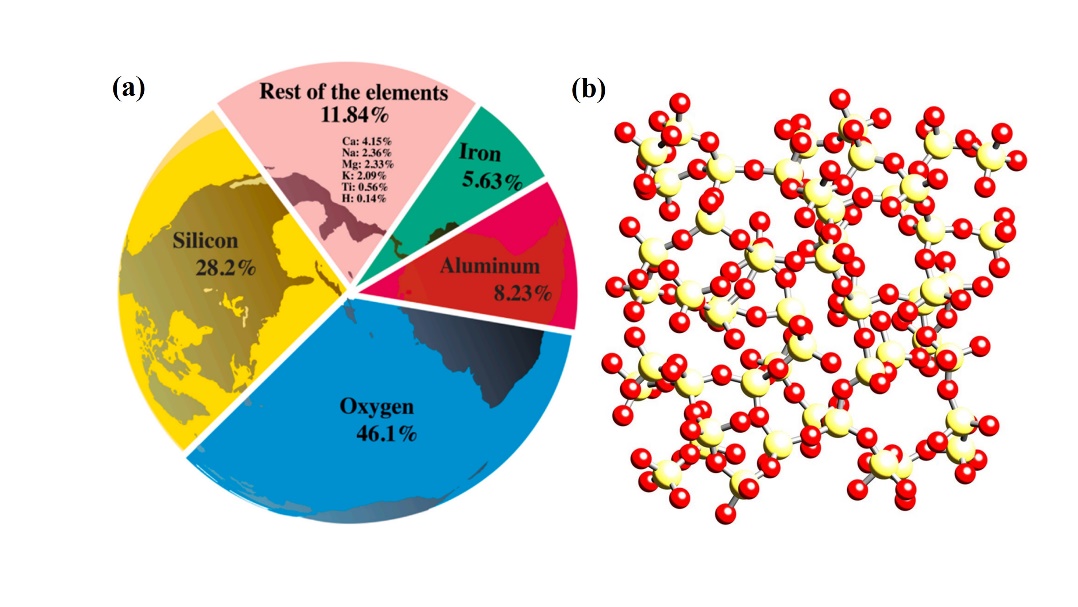
Figure 2 (a) Abundance of various materials in the Earth’s crust [10] and Chemical structure of amorphous silica [13].
The chemical structure and physical properties of silica make it applicable in various industries. Some of the physical properties of silica include a high melting point of around 1,700 °C, non-conductivity and diamagnetism, and maximum density at high temperatures [14]. Silica is widely used in biomedicine [15], oil water separation [16], water pollutans adsorption [17], catalyst [18] and sensor [19].
Several studies have been conducted, such as modification of nano structure and porosity [20], Composition, particle size, use of amorphous phase, and synthesis methods of SiO₂ to improve the electrochemical properties of SiO₂. Based on its superior electrochemical properties, thermal stability, and mechanical structure, silica can provide high theoretical capacity as a battery anode. Researchers have significantly used silica material in its application as a battery anode due to its high lithium storage capacity.
Silicon-based materials such as pure silicon (Si), silicon monoxide (SiO), and silicon dioxide (SiO2) are promising candidates for lithium-ion battery anodes [21]. However, Si anodes have a high volume expansion of (>300%) during the alloying/dealloying process and can even peel off from the current collector [22]. In recent years, silica has become increasingly popular as an alternative to Si anodes due to its excellent properties, such as high lithium storage capacity (1,950 mAh/g), lower volume expansion (100%), low release potential (0.2 V vs Li+/Li), abundant availability, and low cost as an anode material for lithium-ion batteries [23]. Gao et al. [24] stated that commercial SiO2 with a diameter of 7 nm can react with Li in the range of 0.0 to 1.0 V (vs. Li+/Li) and produce a reversible capacity of 400 mAh/g. However, silica has low initial coulombic efficiency and poor electrical conductivity, which limits its application as a battery anode. Several studies have modified the properties of silica to overcome these weaknesses, such as SiO2 nanomaterials and SiO2-based composites. Wang et al. [25] synthesized mesoporous silica nanoparticles using a sol-gel/emulsion approach and produced a stable specific capacity of 1,060 mAh/g at a current density of 100 mA/g after 90 cycles [25].
Sources of SiO2 materials
SiO2 for lithium-ion battery anodes can be obtained from biomass, quartz, chemical precursors, and industrial waste. The selection of precursors is important in determining the structure and performance of SiO2 anodes [26]. The effects of precursors used on morphology, porosity, and the formation of active silicon species during synthesis will impact battery performance. A large surface area will provide ample storage space for lithium ions, potentially increasing anode capacity. High porosity can improve ion transport for good rate capability [27]. Therefore, optimizing the selection of precursors in material synthesis can significantly improve battery performance.
One of the most widely used methods in silica synthesis is the sol-gel method using Tetraethyl Orthosilicate (TEOS) as a precursor. TEOS is one of the chemical precursors used in the synthesis of SiO2 nanoparticles. The use of TEOS as a silica precursor offers advantages such as the ability to produce nanoparticle structures that can contribute to increased anode storage capacity. In addition, silica produced from TEOS exhibits good thermal stability [28,29]. For example Cao et al. [30] synthesized amorphous SiO2/C composites using TEOS precursors and resin, while Tu et al. [31] also synthesized SiO2 nanospheres using the sol-gel method and TEOS precursors, producing good electrochemical performance.
Biomass is one source of silica for battery anodes due to its abundance and availability. For example, Askaruly et al. [4] synthesized SiO2/C composites from rice husks. Rice husks are a type of agricultural waste from rice production that is not fully utilized, while annual rice husk production reaches 100 million tons [32]. Most of the rice husk content, such as cellulose, lignin, and inorganic silicon compounds, allows this material to be used as a source of carbon and silica for anode materials [33]. Rice husks through processes like hydrothermal carbonization, chemical activation, or magnesiothermic reduction to create porous carbon fibers, activated carbon or silicon nanoparticles that have high capacity and good cycle stability. In addition to rice husks, Su et al. [34] used corn leaves to synthesize amorphous Si/SiOx as a lithium-ion battery anode, and Xu et al. [35] synthesized SiO2/C nanocomposites from bamboo leaves and produced good anode performance. Utilizing biomass as a source of lithium-ion battery anode material offers a sustainable and cost-effective alternative to commercial materials, making it an attractive option for large-scale applications [36].
Recently, by-products or waste from industry have been widely used as a source of SiO2. Zhang et al. [37] synthesized SiO2/graphite composites from sewage sludge, Jumari et al. [38] synthesized SiO2/C composites from fly ash combustion, Prasath et al. [39] used laboratory glassware waste for the synthesis of nanostructured SiO2, and Widiyandari et al. [40] used geothermal waste as a source of silica in the synthesis of SiO2/Mg. The use of industrial waste as a source of silica can overcome environmental problems and has the potential to reduce the cost of lithium-ion battery production. Various sources of SiO2 for lithium-ion battery anode applications are shown in Table 1.
Table 1 Source of SiO2 for lithium-ion battery anodes.
Source |
Product |
Method |
Initial Discharge Capacity (mAh/g) |
Initial CE (%) |
Reversible capacity (mAh/g) |
Cycle |
Ref. |
|
Biomass |
Rice Husk |
SiO2/C |
Carbonization |
922 |
45 |
450 |
50 |
[4] |
|
Corn Leaves |
Si/SiOx |
Aluminothermic reduction |
2,100 |
- |
2,100 |
300 |
[34] |
|
Bamboo leaves |
SiO2/C |
Thermal Decomposition |
586.2 |
- |
294.7 |
190 |
[35] |
|
Diatom microalgae |
SiO2/C |
Thermal Decomposition |
~465 - 700 |
~40 |
661 |
100 |
[41] |
Quartz |
|
SiO2 |
Ball milling |
~928 |
37 |
~800 |
200 |
[23] |
Precursor |
TEOS |
SiO2/C |
Pyrolysis |
3,288 |
38 |
1,024 |
100 |
[30] |
Industrial Waste |
Sewage Sludge |
SiO2/graphite |
Ball milling |
711 |
66 |
433 |
100 |
[37] |
|
Geothermal Sludge |
SiO2/Mg |
Metallothermal |
761.16 |
- |
- |
- |
[40] |
|
Glass Waste |
SiO2 |
- |
270 |
53 |
144 |
50 |
[39] |
|
fly ash combustion |
SiO2/C |
Sol-gel, Ball milling |
586 |
76 |
586 |
20 |
[38] |
SiO2-based anodes and their importance in LIBs
Over the past few years, numerous studies have explored SiO2-based materials as alternative anodes for lithium-ion batteries. SiO2-based materials are considered alternative anodes due to their abundance in nature, low release potential, lower volume expansion compared to silicon anodes, and environmental friendliness. Therefore, the lithium storage mechanism, factors affecting electrochemical performance, and challenges associated with SiO2 anodes will be discussed in this section.
The storage mechanism of lithium
The electrochemical mechanism of silica has been widely discussed due to its potential application as a lithium-ion battery anode material. SiO2 anodes have a high lithium storage capacity of around 1,950 mAh/g. However, SiO2 anodes have low initial coulombic efficiency (ICE) due to volume expansion during charge-discharge cycles [23]. Therefore, it is necessary to re-examine the lithiation mechanism that occurs in the SiO2 anode. Initially, researchers believed that SiO2 was an inert phase during the lithiation process because the strong Si-O bond could not be broken by Li insertion, thus maintaining a stable structure [42]. However, recent research claims that SiO2 can be reduced by Li thermodynamically [43,44].
Several studies have been conducted to determine the mechanism of lithiation on SiO2 anodes. Zhang et al. [45] observed the lithiation process of SiO2-coated SiC nanowires using Transmission Electron Microscopy (TEM) and theoretical studies. This research also systematically investigated electronic conduction, ionic transport, structural evolution, and lithiation patterns of SiO2. SAED patterns showed that crystalline Li2O formed during initial lithiation. Further reduction reactions will produce a mixture of Li-Si-O with Li₄SiO₄ and Li₂O crystals inside. Ostadhossein et al. [46] used ReaxFF Reactive Force Field Modeling to analyze the structural properties during Li⁺ discharge on SiO₂. Structural evolution analysis shows that the lithiation reaction on the SiO2 anode consists of 2 steps: Partial reduction of silica with Li+ through the conversion of SiO2 to Si and Li2Si2O5, and reduction of Si reacting with Li+ through a reversible reaction. Similar research using ab initio molecular dynamics shows that the mechanism and structural evolution occur, where Si-O bonds break and Li-O bonds form [47].
Wang et al. [8] synthesized a graphene-wrapped SiO2 nanotube network (SiO2-NT/G network) and obtained good cycling performance. The first cycle of the cyclic curve of SiO2-NT/G shows a cathodic peak at 0.6 V, indicating the formation of a solid electrolyte interface (SEI), and a peak below 0.3 V associated with the formation of Li2O and Si and the formation of Li-Si alloys. Tu et al. [31] analyzed the lithium storage performance of SiO2 nanospheres supported by XPS data. The XPS pattern in Figure 3(a) shows that the peak at around 102.3 eV remains relatively unchanged after charging to 2.5 V, indicating that the formation of Li4SiO4 is irreversible. Furthermore, Figure 3(a) also shows that Li is present in the form of Li₂O. This indicates that both Li₂O and Li₄SiO₄ are formed simultaneously in the electrochemical reaction between SiO₂ and Li ions. The CV curve shows an anode peak around 1.2 V that appears in every cycle. The Li-Si alloy/dealloy reaction only appears at potentials below 1.0 V, which indicates that it is most likely caused by the partial reversibility of Si to SiO2. The electrochemical reactions that may occur during the lithiation process on the silica anode are described as follows:
S iO2
+ 4Li+
+ 4e−
2Li2O
+ Si
iO2
+ 4Li+
+ 4e−
2Li2O
+ Si
2
SiO2
+ 4Li+
+ 4e−
Li4SiO4
+ Si
5 SiO2
+ 4Li+
+ 4e−
2Li2Si2O5
+ Si
SiO2
+ 4Li+
+ 4e−
2Li2Si2O5
+ Si
S
i
+ xLi+
+ xe−
LixSi
During the lithiation and delithiation processes, the structure of the SiO2 anode undergoes significant changes related to the electrochemical reaction between SiO2 and Li ions. The reaction mechanism at the SiO2 anode during the lithiation/delithiation process is closely related to battery capacity. Jiang et al. [48] describe in detail the relationship between the reaction mechanism that occurs at the SiO2/C anode and the increase in battery capacity. Figure 3(b) shows the CV curve of the SiO2/C anode. During the lithiation process, Li+ diffuses into SiO2, causing the formation of Li2Si2O5, Li4SiO4, Li2O, and LixSi. The products resulting from the reaction between Li+ and SiO2 are divided into 2 categories, namely Li-poor phase and Li-rich phase. In the CV curve, there is a reduction peak around 0.82 V after 2 scan cycles, indicating a reaction that produces Li silicate and proceeds slowly. Cycling performance shows 2 stages of the process, namely a decrease in capacity at the beginning of the cycle and a stage of capacity increase, as shown in Figure 3(c). The decrease in battery capacity at the beginning occurs due to the contribution of SEI formation and the reaction between Li+ and SiO2, which produces Li silicate. The conversion between the Li-poor phase and the Li-rich phase, accompanied by the formation of Si, will result in an increase in capacity because Si contributes to the reversible capacity of the battery.
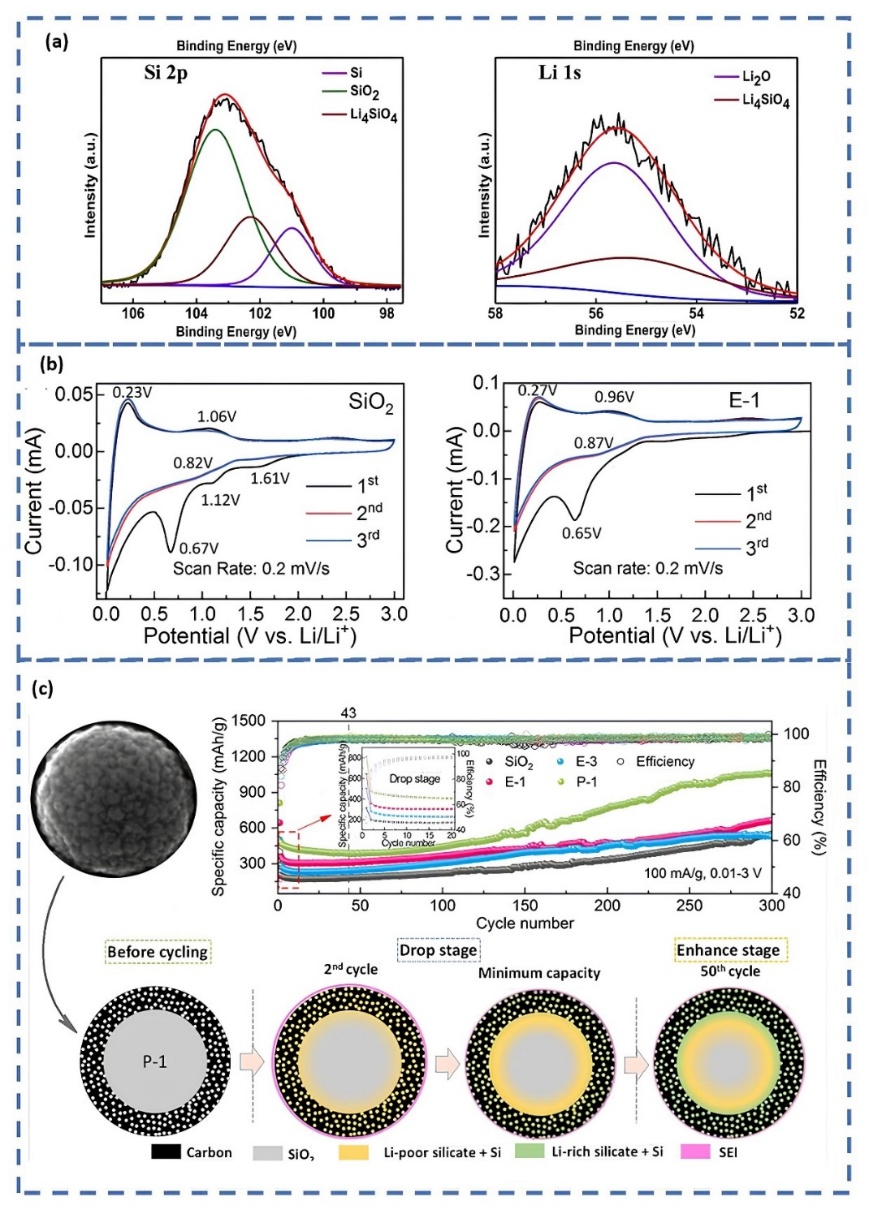
Figure 3 (a) XPS spectra of Si 2p and Li 1s SiO2 anodes after charging to 2.5 V [31], (b) Cyclic voltammogram of SiO2 nanospheres in the first 3 cycles, (c) Cycling performance and schematic diagram of the reaction process between Li+ and SiO2 in different cycling states [48].
Challenges in SiO2-based anode
Over the past few years, silica has been extensively researched as an alternative candidate for lithium-ion battery anodes because it has a high theoretical capacity (1,965 mAh/g) and lower volume expansion compared to silicon anodes. SiO2 also has a scale and crystallinity that affect its electrochemical activity [1]. In addition, SiO2 is one of the most abundant materials in nature and is more cost-effective than metal-based materials [29]. Gao et al. [24] reported that commercial SiO2 nanoparticles can react with Li to produce a reversible capacity of 400 mAh/g.
However, one of the drawbacks of silica that poses a challenge in its application as an anode material is its poor electrical conductivity and low initial coulombic efficiency due to volume expansion that has the potential to damage the SiO2 structure during long cycles [49] as depicted in Figure 4. During the chemical reaction process, SiO2 will be converted into Si and irreversible phases Li4SiO4 and Li2O will form during the initial discharge process, causing large amounts of lithium consumption and resulting in low ICE values. ICE measures the ratio of discharge capacity to charge capacity in a battery’s first cycle, and it directly ties to irreversible capacity loss that reduces the effective battery capacity. Lower ICE means more lithium is consumed in side reactions like SEI formation on the anode, leaving less active lithium available for reversible capacity in full cells. In contrast, a high ICE value keeps more lithium available for charge-discharge cycles, thereby maximizing the battery capacity and energy density [50,51]. After a long cycling process, the silica anode undergoes damage and particle destruction between the active material and the current collector, causing slow diffusion of lithium ions into the active material [52]. The formation of the solid electrolyte interphase (SEI) and electrode destruction continuously consume electrolyte and lithium ions, causing a decrease in energy density. Xia et al. [53] synthesized SiO2/C composites as battery anodes and showed a low ICE value of 59%. Research conducted by Wu et al. [54] in synthesizing Silica@Zn nanoparticles also produced a low ICE value of 45%. This shows that the low ICE value in SiO2 anodes remains a challenge that has not been adequately addressed. Various strategies have been employed to overcome this problem, such as pre-lithiation, a method of introducing excess lithium ions into the active material before cycling so that it can refill the irreversible lithium vacancies during cycling [55].
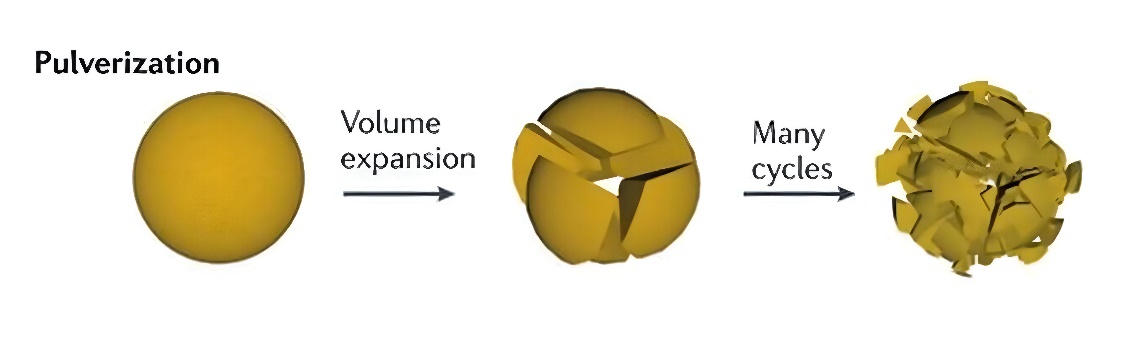
Figure 4 Schematic diagram of the degradation mechanism in Si-based materials due to volume expansion [56].
The SiO2 anode also has poor electrical conductivity (>10−1 Sm−1), which results in low electron transport at the electrode and disrupts battery performance [57]. The low electrical conductivity of the anode material affects the battery’s performance rate because charge distribution occurs slowly [58]. Strong covalent bonds in SiO2 form a lattice with localized electrons. In addition, the absence of delocalized electrons in its structure results in a lack of mobile ions to facilitate charge transfer [59].
Structural modification to improving SiO2 Performance
Several approaches have been taken to address volume expansion, electrochemical properties, inconsistent kinetic reactions, and low conductivity in improving the performance of SiO2-based anode materials for lithium-ion batteries. The structure of the anode material greatly affects the electrochemical performance of the battery. Modifying the structure of the material to a nano scale and making it porous is one strategy that is still being developed today.
Porous SiO2 anode
The pore structure of SiO2 anode material is one of the factors that can change its electrochemical performance. The pore structure in SiO2 facilitates electrolyte diffusion and lithium ion transport in the anode material. Porous particles can reduce the diffusion path of lithium ions to improve electrochemical performance, such as rate performance and cycleability, due to their large surface area. In addition, the porous structure also acts as a buffer to prevent volume expansion of silica during the lithiation and delithiation of Li ions and provides ample storage space for Li+ to increase the contact area between the electrode and electrolyte, thereby improving the reversible capacity of the battery [60,61]. For example, Li et al. [62] synthesized SiO2/C nanocomposites with dual porosity and produced uniform pore distribution, large pore volume, and high surface area. Evaluation of the composite as an anode for lithium-ion batteries showed a reversible capacity of 635.7 mAh/g at 100 mA/g after 200 cycles and good rate capability. The improvement in battery performance was partly due to the dual-porosity structure, which increased the contact area and facilitated Li+ diffusion at the interface between the electrolyte and the active material. Yan et al. [29] also synthesized hollow porous SiO₂ nanocube anodes that yielded a reversible capacity of 919 mAh/g after 30 cycles. The porous structure of the anode accelerates Li⁺ transport, contributing to the formation of Li₂O and Si. In addition, the porosity of the anode material also influences SEI formation. Controlled and stable diffusion of Li ions within the anode can improve battery performance efficiency by facilitating the formation of a stable SEI layer during cycling [63]. The SEI layer is able to block interactions between electrons and the electrolyte, thereby preventing further decomposition reactions. Anode porosity significantly affects SEI growth, often leading to the formation of more complex and dynamic layers. Higher porosity can promote initial SEI reactions with the liquid electrolyte, resulting in composite structures with lower resistance. However, excessive porosity can also hinder this process by trapping the electrolyte and promoting uneven SEI growth [64].
Suh et al. [65] synthesized SiO2/C composites using SBA-15, which has high porosity, as a template and pore-forming agent. The composite structure formation process in Figure 5(a) shows that PTFE as a pore-forming agent will disappear during the carbonization process. The composite has a large surface area, indicating that the pore structure in the composite has been successfully formed, which will be beneficial for Li ion diffusion. Figure 5(b) shows many micro-sized pores formed in the composite. The pore structure in the material can shorten the Li ion diffusion path, resulting in lower resistance. In addition, the composite also shows good cycling performance of 294 mAh/g after 300 cycles. Huang et al. [66] also successfully prepared a porous SiO2/C composite with a honeycomb structure that showed a reversible capacity of 1,109 mAh/g during 100 cycles and good rate capability.
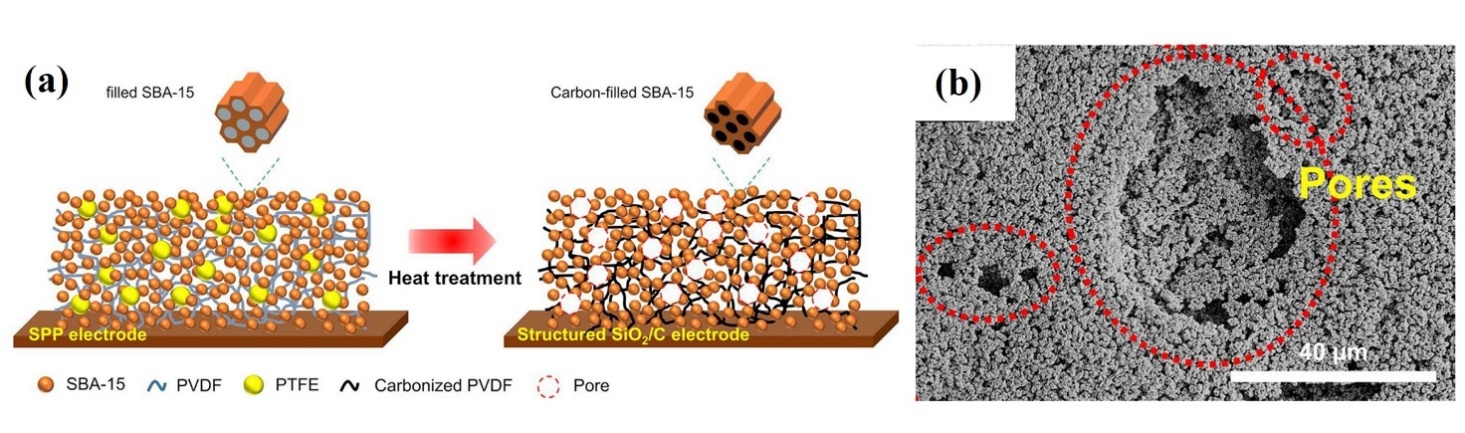
Figure 5 (a) Illustration of the formation of the SiO2/C electrode structure, (b) SEM image of the SiO2/C electrode (Reproduced with permission from Ref [65], Copyright 2022, Springer Nature Link).
Nanostructured SiO2 anode
The electrochemical performance of SiO2 anodes can also be improved by reducing the particle size to the nanoscale. Nanoparticles are materials that have a one-dimensional shape and a size of less than 100 nm. Small particle size can increase the contact area between the electrolyte and the electrode and reduce the transfer distance of lithium ions and electrons [67]. In addition, nanomaterials have low volumetric energy density and their structure can overcome excessive volume expansion and withstand stress during the charge-discharge process [68]. In general, particle size plays an important role in the electrochemical performance of lithium-ion batteries. Several studies have investigated the effect of SiO2 particle size on battery performance. Gao et al. [24] in a previous study mentioned that commercial SiO2 with a particle size of 7 nm can react with lithium ions at 0.0 to 1.0 V (versus Li+/Li) and produce a reversible capacity of 400 mAh/g. In a study related to SiO2-based nanoparticle composites as lithium-ion battery anodes, Yao et al. [69] synthesized SiO2/C nanoparticle composites with an average particle size of 20 nm. The SiO2/C composites showed a reversible capacity of 500 mAh/g after 50 cycles.
Tu et al. [31] also successfully synthesized SiO2 nanospheres using the sol-gel method, which has good size uniformity. The SiO₂ anode exhibited a reversible capacity of 876 mAh/g at 1C for 500 cycles. The application of SiO₂ nanoparticles as battery anodes has also been studied by Lan et al. [70] who synthesized SiO₂ nanoparticles anchored on hollow porous carbon shells (HCP/SiO₂/C) through a carbonization process. The nano-scale SiO2 particles are well distributed within the carbon layer, as shown in Figure 6. The composite has a low charge transfer resistance, indicating fast electron transfer kinetics. In addition, the semicircle formed after 500 cycles is also smaller than that of commercial SiO2 anodes. This indicates that the nanoparticle structure of the composite contributes to the diffusion and transfer rate of lithium ions. The anode surface shows small cracks after 500 cycles, and the SiO2 nanoparticle structure remains intact. This indicates the stability of the composite.
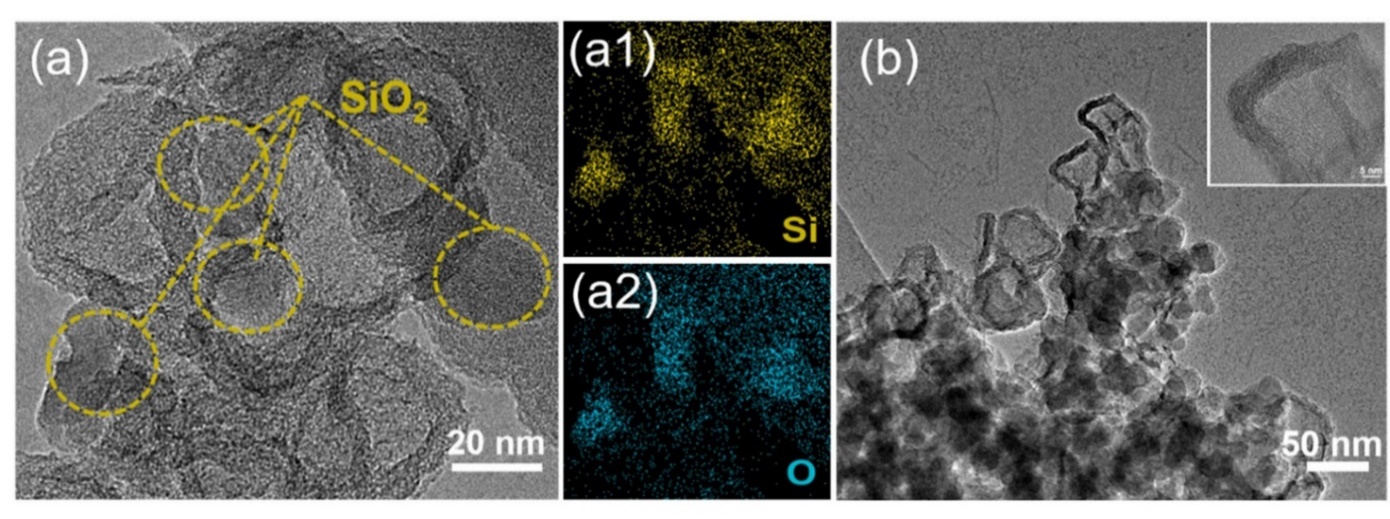
Figure 6 (a) and (b) TEM image of HPC@SiO2/C; (a1,a2) elemental EDS image of HPC@SiO2/C [70].
Silica-based composite for anodes
Various strategies have been employed to modify the electrochemical performance of lithium-ion battery anodes, such as the creation of composite materials, coatings, and modifications to nano-structures and porosity. SiO2-based composite materials are currently being extensively researched as an effective means of improving the electrochemical performance of SiO2-based anodes. Therefore, the strategies employed to overcome the challenges of SiO2 anodes, particularly modification as composite materials, will be discussed in this section.
SiO2/C composite
In general, modifying the properties of SiO2 using carbon materials as composites is an effective strategy for reducing volume expansion during the lithiation/delithiation process and improving the electrical conductivity of SiO2. Various carbon materials such as activated carbon, graphene, and carbon nanomaterials have been used to improve and enhance the performance of SiO2 anodes. The carbon layer formed on the composite will form a protective shell that can reduce volume changes [71]. In addition, this layer can reduce the resistance between SiO2 particles and the current collector. Carbon material has excellent electrical conductivity, which can improve charge transport and reduce internal resistance during the charge/discharge process [72].
SiO2/C composites generally produce good electrochemical performance, as reported by Yao et al. [69], who synthesized carbon-coated SiO2 nanoparticles through wet chemical reactions and heat treatment, producing a reversible capacity of 500 mAh/g over 50 cycles. The electrochemical impedance spectra (EIS) results show that carbon coating has a positive effect in reducing the interfacial resistance between the active material and the current collector. According to Lv et al. [1], who synthesized amorphous SiO2/C composites through a sol-gel process combined with mechanical milling and heat treatment, the carbon coating not only affects the electrical conductivity of silica but also accommodates the volume expansion that occurs during the charge-discharge process. The carbon layer on the SiO2 surface can prevent particle aggregation and, together with the porosity of SiO2, can support volume changes during the lithiation/delithiation process, thereby increasing cycle stability. Buga et al. [73] in their study on the synthesis of carbon-coated SiO2 composites using the carbonization method produced good electrochemical performance. The composite showed a reversible capacity of 714.3 mAh/g with a CE of 98.9% during 200 cycles. These results are attributed to the carbon layer acting as a matrix that protects the material structure and keeps it stable. The electrochemical performance of SiO2/C-based composite anodes over the past few years is shown in Table 2.
Table 2 Electrochemical performance of various SiO2/C-based composite anodes.
Anode sample |
Method |
Battery configuration |
Electrochemical performance |
Ref |
|||||
Current density A/g |
Initial discharge capacity (mAh/g) |
Initial CE (%) |
Reversibel capacity (mAh/g) |
CE (%) |
Cycle |
||||
SiO2/C |
Carbonization |
Half cell |
0.1 |
922.1 |
- |
714.3 |
98.9 |
200 |
[73] |
C/SiO2 |
Carbonization |
Half cell |
0.1 |
2,281.69 |
- |
832.19 |
72.2 |
300 |
[74] |
SiO2/C |
Hydrothermal, Carbonization |
Half cell |
0.1 |
1,462 |
59 |
888 |
- |
100 |
[53] |
SiO2/C |
Hydrothermal, Carbonization |
Half cell |
0.1 |
780 |
50 |
350 |
~100 |
500 |
[75] |
SiO2/C |
Calcination |
Half cell |
1 |
1,385 |
~40% |
534 |
~90 |
1,000 |
[76] |
Porous C/SiO2 |
Carbonization |
Half cell |
0.1 |
- |
- |
1,105 |
99 |
360 |
[33] |
3 Dimensional SiO2-C |
Carbonization |
Half cell |
- |
~1,000 |
- |
294 |
- |
300 |
[65] |
Porous Silica-carbon membrane |
solid state photo-polymerization |
Half cell |
0.1 |
719 |
79.94 |
693 |
99 |
100 |
[77] |
HPC@SiO2/C |
Polymerization |
Half cell |
0.1 |
1,321 |
46 |
804 |
98 |
500 |
[70] |
SiO2@C@graphene |
Hydrothermal |
Half cell |
0.05 |
713.3 |
36.1 |
250 |
- |
200 |
[78] |
SiO2/C/CNT |
Chemical vapor deposition |
Half cell |
1 |
1,267.2 |
65.2 |
315.7 |
- |
1,000 |
[8] |
Carbon-SiO2@SiO2@CNT |
Carbonization |
Half cell |
0.1 |
~1,400 |
- |
644 |
- |
200 |
[79] |
Mesoporous SiO2-CNFs |
Vapor deposition |
Half cell |
- |
2,420 |
- |
2,420 |
86.4 |
30 |
[80] |
FS-SiO2/C-CNFMs |
Electrospinning |
Half cell |
0.1 |
1,800 |
~50 |
754 |
100 |
200 |
[81] |
Free-standing SiO2/carbon nanofibers |
Electrospinning |
Half cell |
0.5 |
- |
- |
405 |
~100 |
1,000 |
[82] |
Silica@carbon nanofibers |
Electrospinning |
Half cell |
0.1 |
~1,100 |
52.21 |
440 |
89 |
200 |
|
Biomass and organic materials are commonly used as carbon sources in SiO2/C composites because they are efficient, environmentally friendly, and abundant. Rice husks have been widely used as a biomass source in the synthesis of SiO2/C composites. Most of the rice husk content consists of lignin, organic cellulose, hemicellulose, and inorganic silicon compounds, making it a source of carbon and silica for battery anode synthesis. Silica naturally exists in the form of nanoparticles that are evenly deposited on the cell walls of rice husks as amorphous silica polymers [84]. The C/SiO2 composite obtained through the heating process of rice husks produced an initial discharge capacity of 325 mAh/g, which increased to 485 mAh/g after 84 cycles [85]. Cui et al. [33] have successfully synthesized SiO2/C composites through a carbonization process as shown in Figure 7(b). The resulting SiO2/C composites exhibit good cycle performance and rate capability as seen in Figure 7(a). The porous structure and large surface area of the composites provide more sites for Li ion storage and shorten the Li+ diffusion path. In addition, the carbon layer provides good electrical conductivity to SiO2 and can withstand volume changes. Recent research conducted by Butcha et al. [75] utilized straw as a source of SiO2/C composite with hydrothermal treatment. The composite showed good electrochemical performance with a reversible capacity of 350 mAh/g after 500 cycles. The temperature used in the carbonization process also effect the electrochemical performance of the composite. Chu et al. [86] synthesized SiO2/C nanocomposites from rice husk through carbonization at various temperatures. The SiO2/C produced by carbonization at 900 oC showed the highest capacity (a discharge capacity of 932.41 mAh/g with an initial coulombic efficiency of 61.93%) and good stability (650 mAh/g after 150 cycles).
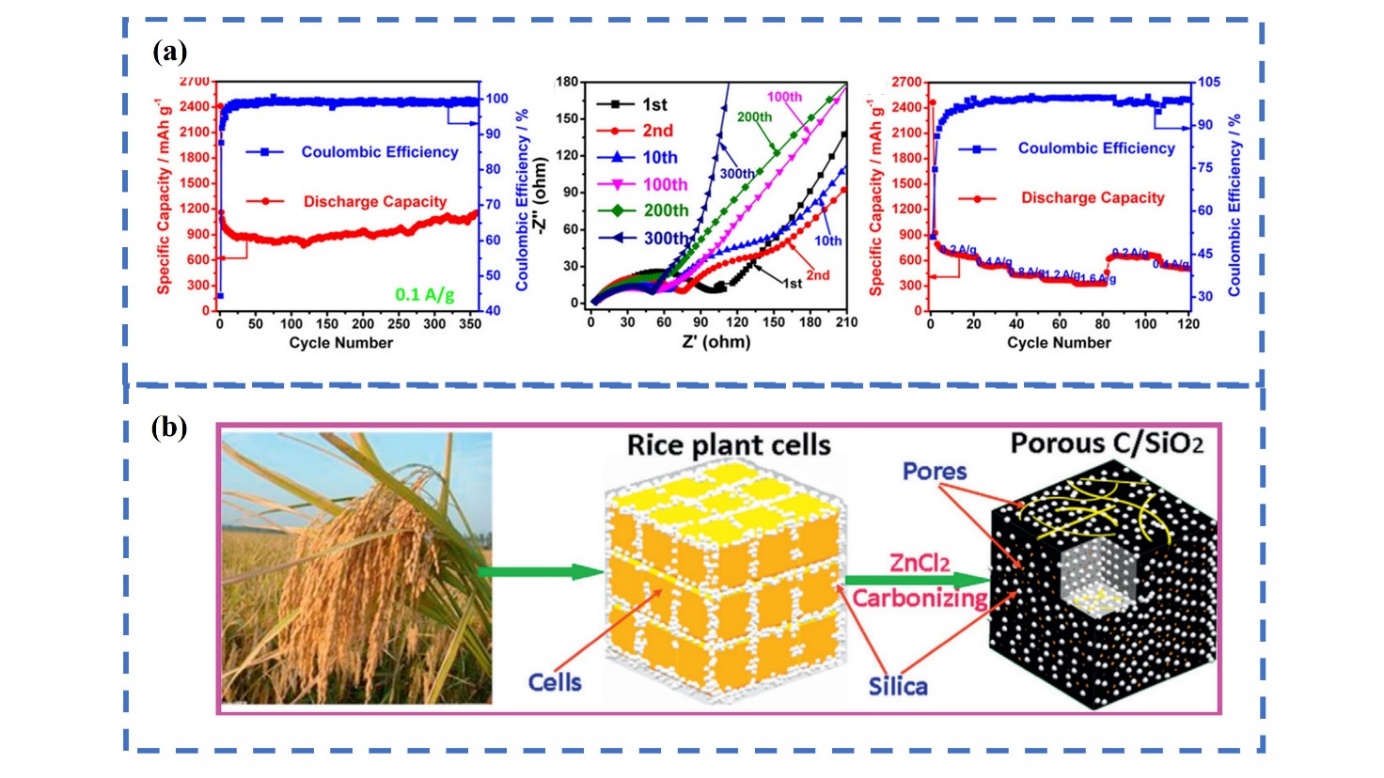
Figure 7 (a) Cycling performance, Nyquist plots under discharge conditions and rate performance of C/SiO2 anodes, (b) C/SiO2 composite formation process [33].
Some carbon materials in SiO2/C composites have low crystallinity, limiting their ability to improve the electrical conductivity of SiO2. Carbon nanotubes (CNTs) are a type of carbon material that has high crystallinity and good mechanical strength [87]. CNTs can also be used as a substrate to absorb mechanical stress from SiO2 due to lithiation/delithiation reactions. The unique structure of CNTs is not only effective as a buffer for SiO2 volume expansion, but also prevents direct contact between the active material and the electrolyte, thereby forming a stable SEI layer [88]. In addition, the carbon layer provides higher electrical conductivity. This structure can maintain the stability of the battery cycle [6].
Modification of SiO2 with CNTs can not only improve conductivity but also support volume changes during the charge/discharge process. Wang et al. [8] synthesized SiO2/C/CNTs composites through an in-situ chemical vapor deposition (CVD) method with a Co catalyst and produced good anode performance. The CV curve shows little difference over 100 cycles, confirming that the composite has stable structural stability. The SiO2/C/CNTs anode material has good rate capability and cycle performance, where the anode can maintain a capacity of 315.7 mAh/g for 1,000 cycles. CNTs with a one-dimensional structure can form a carbon conducting network that provides more electrical pathways between SiO2/C composite particles, which can improve the electrochemical performance of the composite. Wang et al. [79] also synthesized a carbon-SiO2@SiO2@CNTs composite through a carbonization method and produced a porous material as shown in Figure 8. This pore structure not only provides pathways for Li ion transfer but is also effective in reducing volume expansion during cycling. CNTs as a support framework in the material not only provide space for volume expansion but also contribute to electrolyte and Li ion diffusion. In addition, CNTs also have high electrical conductivity, which accelerates electron transfer and produces good electrochemical performance.
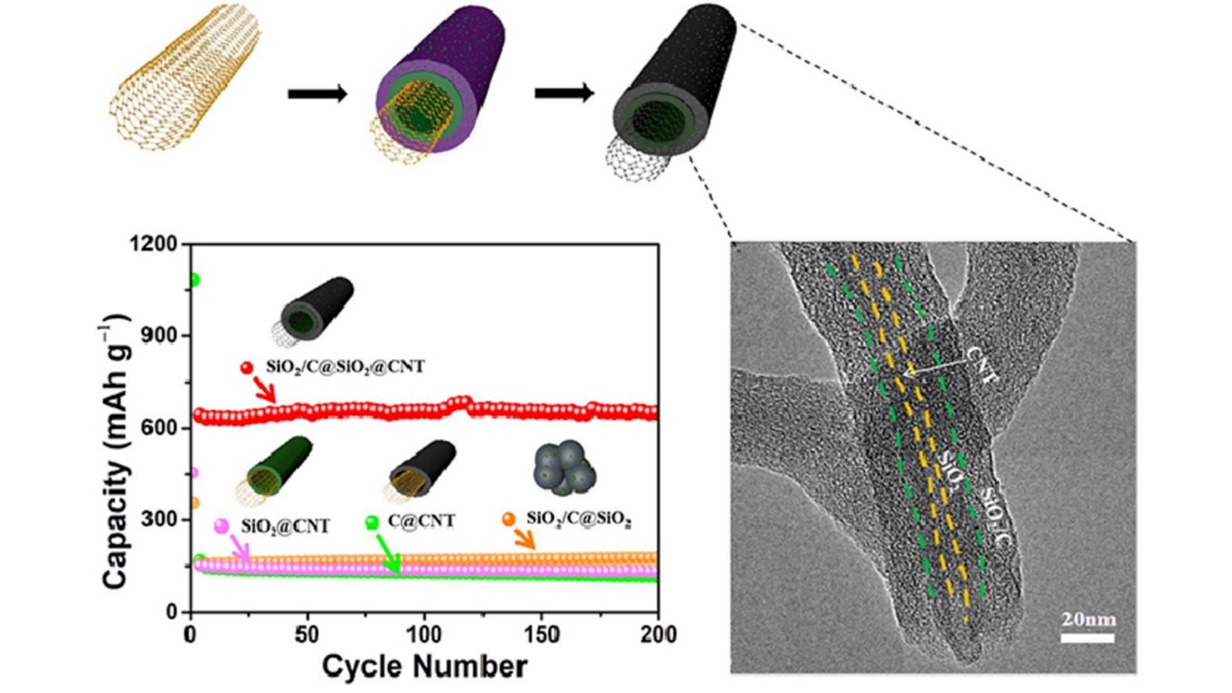
Figure 8 HRTEM image and performance of carbon-SiO₂@SiO₂@CNTs composite cycles [79].
Carbon materials with 1-dimensional architecture such as carbon nanofibers (CNFs), which have a large surface area, the ability to improve electrical conductivity, short diffusion distances, and strong resistance to pressure changes, have been considered as one of the supporting carbon materials for lithium-ion battery anode materials [89]. CNFs show great application prospects due to their unique electronic characteristics. CNF materials can provide flexible space, thereby suppressing volume changes and SEI formation [82].
Hyun et al. [80]. synthesized SiO2/CNFs composites using the vapor deposition method with Fe-Cu catalysts. The SiO2/CNFs composites synthesized without binders showed the highest charging and discharging capacities. The initial capacity of the composite (2,420 mAh/g) decreased to 2,092 mAh/g after 30 cycles at a retention rate of 86.4%. Free-standing SiO2/C nanofibers composites were also successfully synthesized by belgibayeva et al. [81]. using a 2-step heating electrospinning method. Figure 9 shows the SEM results of the composites, revealing the morphology of SiO2/C nanofibers under different heating treatments. The heating stage has a positive effect not only on the morphology of the material but also on the structure and electrochemical performance of the composite. SiO2/C nanofiber composites with preoxidation treatment showed a better capacity of 470 mAh/g after 50 cycles. In addition, free-standing SiO2/C nanofibers composites also showed better electrochemical performance than SiO2/C nanofibers electrodes prepared by coating on a current collector. The initial discharge and charge capacities of 1,800 and 984 mAh/g were due to shorter Li ion pathways. The diameter of the Nyquist EIS semicircle plot also decreased after continuous cycling compared to the fresh cell, indicating a decrease in charge transfer impedance. Recent research by Wang et al. [90]. prepared a self-standing anode from SiO2@Carbon Sphere/SiO2-CNF using the electrospraying-electrospinning technique. The anode produced an initial capacity of 633 mAh/g and maintained a coulombic efficiency of 70% over 1,000 cycles. The SiO₂/carbon nanofibers composite anode is an attractive anode alternative due to its characteristics and structure.
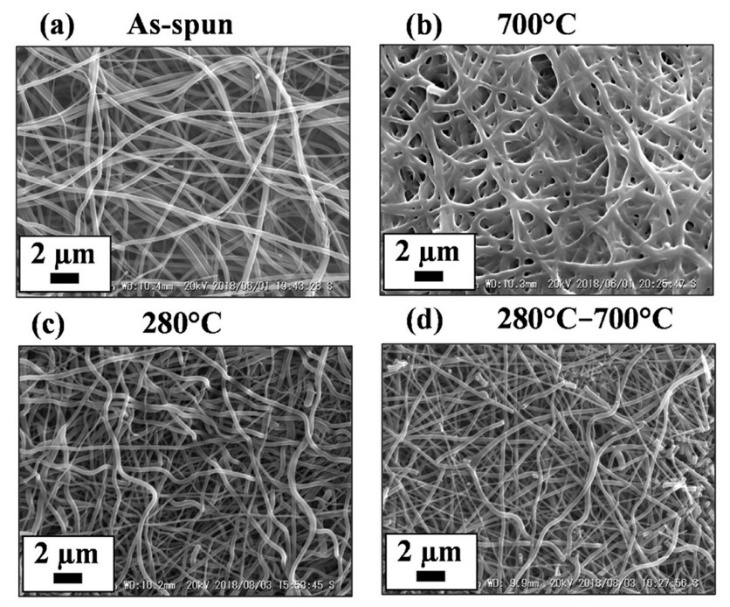
Figure 9 SEM results before and after heating treatment under different conditions [81].
SiO2/metal composite
SiO2 anodes have better cycle stability during the charge-discharge process compared to Si. The formation of Li2O and Li4SiO4 phases during initial lithiation, which are inert, helps reduce volume expansion [91]. However, the formation of these irreversible phases in the first cycle results in low initial coulombic efficiency (ICE). In addition, SiO2 anodes also have low electrical conductivity [92]. One strategy to overcome this challenge is to modify SiO2 using support materials that have high charge conductivity, such as Ni, Cu, Sn, and Sb [93].
Wu et al. [54] in their latest research successfully synthesized silica gel combined with zinc nanoparticles (SG@Zn) through ball milling and heat-melting methods as shown in Figure 10(a). The SG@Zn anode showed good cycle performance and rate capability. Zn has low volume expansion, good electrical conductivity, and large volume capacity, which can change the properties of the SiO2 anode. Figure 10(b) illustrates that the addition of Zn can significantly increase the capacity and cycle stability of the anode. In addition, the presence of Zn contributes to the Li+ ion diffusion process and increases ionic conductivity.
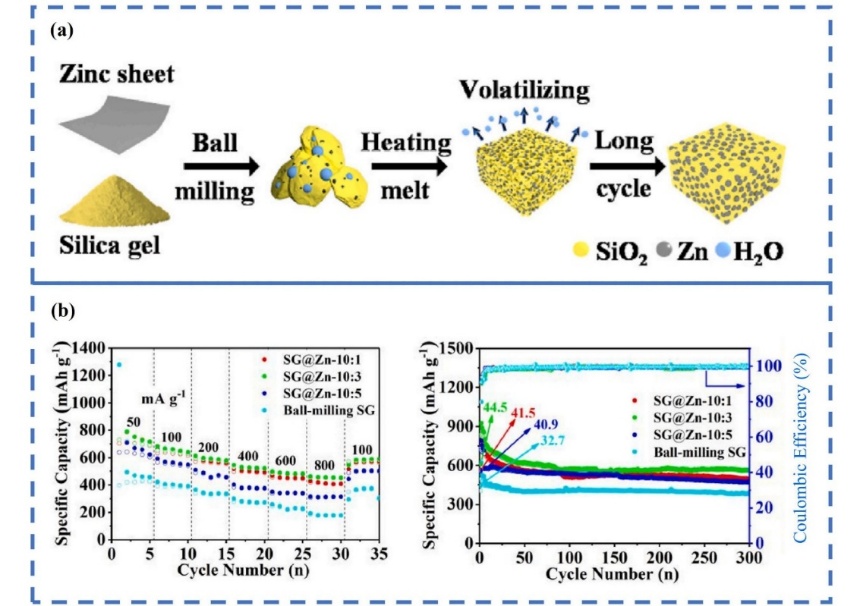
Figure 10 (a) Synthesis process scheme for SG@Zn anode material, (b) Rate performance and cycling performance of different SG@Zn anodes [54].
Modification of SiO2 using metal-based materials was also successfully carried out by Tang et al. [92] who synthesized Ni/SiO2 nanocomposites through a hydrothermal process to form nickel silicate and annealing. EIS results showed that Ni nanoparticles could increase the conductivity of the composite. In the synthesized composite, Ni nanoparticles were evenly distributed in the SiO2 matrix, forming electron conduction pathways. The nanosheet form of the Ni/SiO2 composite shortened the lithium ion diffusion pathway and increased the anode rate capability. Li et al. [94] also modified the properties of SiO₂ using Al as a composite through the melt-self-assembly method and produced good electrochemical performance. The unique structure of the SiO₂/Al composite produces good electrical conductivity and increases lithium ion diffusion capability. In addition, both materials have low discharge potential, which can increase the energy density of the anode.
Zhong et al. [95] synthesized SiO2/Co@N-doped carbon nanofibers composites using the electrostatic spinning method with high-temperature treatment. This method is simple but effective for distributing SiO2 and Co particles evenly in the carbon matrix. The SiO2/Co@N-doped carbon nanofibers composite showed good lithium storage performance, where the anode could maintain a discharge capacity of 552 mAh/g after 1,000 cycles at 1 A/g. Co nanoparticles are not electrochemically active but contribute to improving charge transfer and act as a catalyst that facilitates lithium release and provides energy for SEI and Li2O decomposition. The addition of Co to the composite also successfully increased the conductivity of the material and reduced resistance. In addition, the anode can maintain its structure after cycling at 0.5 A/g, indicating that the addition of Co can improve the structural stability of the composite. In a recent study by Zhong et al. [96] metal-organic frameworks (MOFs) were used to form Co/N-C@SiO2 composites. MOFs are known to have a large surface area, porous structure, and uniform component distribution, making them suitable for use as templates [97]. The hollow structure of the composite can help reduce the adverse effects caused by volume expansion. In addition, the presence of cobalt nanoparticles further enhances the conductivity and electrochemical performance of the Co/N-C@SiO2 composite. The electrochemical performance of SiO2/metals-based composite anodes over the past few years is shown in Table 3.
Table 3 Electrochemical performance of various SiO2/metal-based composite anodes.
Anode sample |
Method |
Battery configuration |
Electrochemical performance |
Ref |
|||||
Current density A/g |
Initial discharge capacity (mAh/g) |
Initial CE (%) |
Reversibel capacity (mAh/g) |
CE (%) |
Cycle |
||||
SG@Zn |
Melt-self-assembly |
Half cell |
0.1 |
1,865.6 |
45 |
590 |
- |
300 |
[54] |
Cu-Sn/nano-SiO2 |
Electrodeposition |
Half cell |
0.1 |
1,470.8 |
~50.76 |
358.6 |
- |
100 |
[98] |
Ni/SiO2 hollow spheres |
In situ reduction |
Half cell |
10 |
1,195 |
56.6 |
337 |
- |
1,000 |
[92] |
SiO2/Co@N-doped CNF |
Electrostatic spinning |
Half cell |
1 |
1,922 |
73 |
552 |
- |
1,000 |
[95] |
Co/N-C@SiO2 |
Carbonization |
Half cell |
5 |
~2,600 |
- |
337 |
- |
700 |
[96] |
Mxene@SiO2 |
Electrostatic self-assembling |
Half cell |
0.1 |
430.7 |
88.3 |
380.2 |
~99 |
600 |
[99] |
SiO2/Al |
Melt-self-assembly |
Half cell |
- |
1,698.2 |
46.8 |
696 |
- |
300 |
[94] |
CNT/(Fe@Si@SiO2) |
CVD, dip-coating |
Half cell |
1 |
1,787 |
53.8 |
804 |
83 |
500 |
[100] |
SiO2@SnO2@C |
Etching-free template |
Half cell |
0.2 |
1,822 |
51.6 |
923 |
99 |
340 |
[101] |
NiS@SiO2/graphene |
Electrostatic self-assembling |
Half cell |
0.1 |
1,275 |
68 |
~750 |
~100 |
100 |
[102] |
SiO2/TiO2 |
Plasma electrolytic oxidation |
Half cell |
- |
~550 |
88.7 |
400 |
- |
500 |
[103] |
SiO2@a-TiO2@Ag |
Sol-gel |
Half cell |
0.1 |
1,320 |
58 |
712 |
99 |
300 |
|
SiO2/other composite
Another strategy used to overcome the challenges of SiO2 anode applications is the creation of composites with 2-dimensional materials that can improve mechanical stability, reduce volume expansion, and promote the formation of inorganic components in SEI. MXene is a type of 2-dimensional transition metal carbide/nitride material that has attracted widespread attention in recent years due to its high electrical conductivity (6.76×10⁵ Sm−1), good mechanical properties, and low resistance to lithium diffusion (0.05 eV) [105]. In addition, the high number of functional groups on its surface (−O, −OH, −F) can contribute to the formation of inorganic species in the SEI bond, thereby increasing the adhesive strength of the composite [106]. This material has a crystal structure, surface, and chemical composition that are suitable for energy storage. The use of MXene/metal oxide composites such as SiO₂ as an anode can improve electrical conductivity, mechanical stability, and battery capacity [9]. However, research on the application of SiO₂/MXene composites has not been widely conducted.
Chen et al. [99] synthesized MXene@SiO2 composites as lithium-ion battery anodes through a pre-lithiation process. The mesoporous structure of MXene@SiO2 composites with uniform pore distribution at 4 - 25 nm can promote Li+ diffusion kinetics, while the presence of a conductive MXene layer will result in rapid charge transfer within the anode structure. After prelithiation for 1 day, the MXene@SiO2 anode showed an increase in reversible capacity of 380.2 mAh/g over 600 cycles at 100 mA/g, which is a contribution of the MXene coating effect and the prelithiation process that promotes the long-term cycling capability of the battery. Based on XPS analysis, the illustration of the SEI structure on the SiO2 and MXene@SiO2 anodes after pre-lithiation is shown in Figure 11(a). The ratio of inorganic Li₂CO₃ and LiF species formation continues to increase in the SEI layer, contributing to improved electrochemical performance and cycle stability due to the high ionic conductivity and structural strength of the MXene@SiO₂ composite.
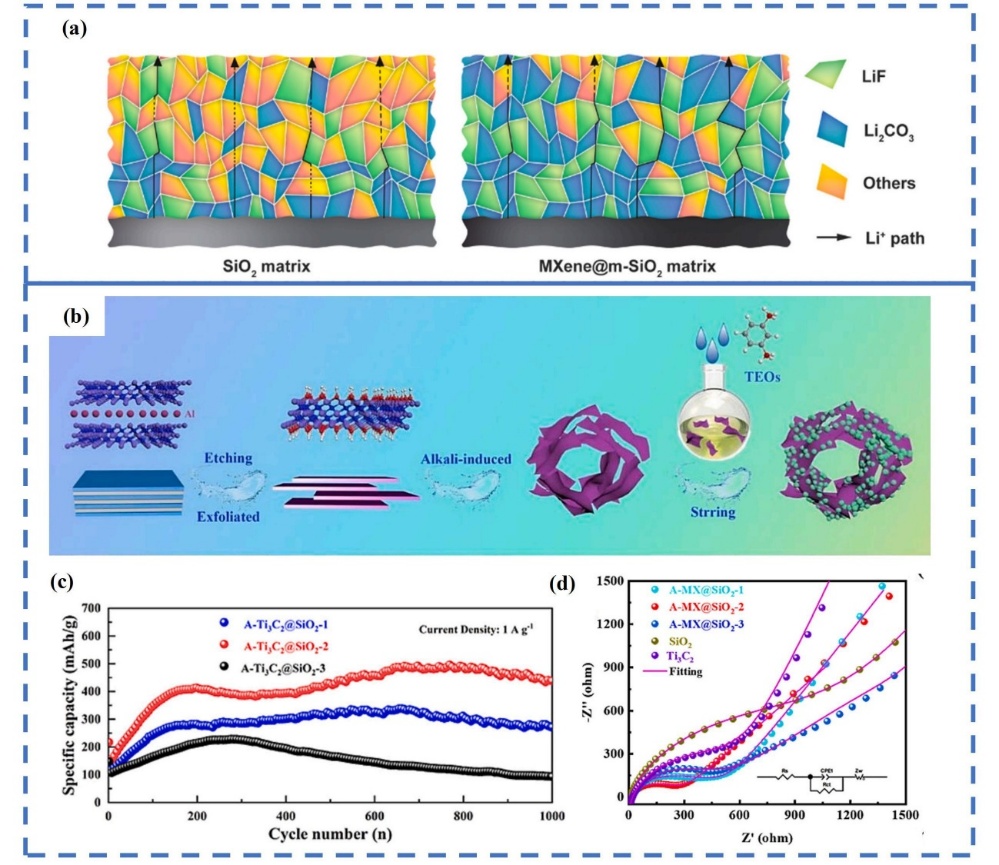
Figure 11 (a) Illustration of the SEI structure on SiO₂ and MXene@SiO₂ composites after pre-lithiation [99], (b) Schematic illustration of the preparation process for Ti₃C₂T_x@SiO₂ composites, (c) Cycling performance, and (d) Nyquist plots of Ti₃C₂T_x@SiO₂ composites [107].
Research related to MXene composites was also conducted by Wang et al. [107] who synthesized Ti3C2Tx@SiO2 composites as anodes using a low-temperature liquid phase method as shown in Figure 11(b) and provided good electrochemical performance. Ti3C2Tx is one of the MXene materials that has a structure similar to graphene, but has higher electrical conductivity, faster lithium ion diffusion rate, and lower ion diffusion resistance (0.07 eV) [108]. The Ti3C2Tx@SiO2 composite exhibits electrochemical performance with a specific capacity of 437.9 mAh/g at 1.0 A/g after 1000 cycles, as shown in Figure 11(c). This cycling capability is due to the stable structure of the composite. Additionally, the composite also exhibits good rate capability due to the conductive Ti3C2Tx network that facilitates electron transfer. Compared to the SiO2 anode, the composite exhibits lower charge transfer resistance and a higher diffusion coefficient, as shown in Figure 11(d). This is due to the addition of Ti3C2Tx, which can alter the electrical conductivity of the composite and reduce the diffusion path of lithium ions due to its unique structural design. Mu et al. [91] stated that the SiO2/MXene composite forms a unique structure. The flexible Mxene matrix can efficiently reduce the stress caused by the large volume expansion of SiO2. The Mxene layer not only provides a conductive 3D network to accelerate electron transfer but also enhances lithium ion diffusion. Their research on SiO₂/Mxene composite anodes yielded good electrochemical performance with a reversible capacity of 635 mAh/g at 1 A/g over 200 cycles. This indicates that the application of SiO₂/MXene composites as anodes holds promising prospects and warrants further development.
Conclusions
SiO2-based materials are alternative candidates for high-capacity lithium-ion battery anodes. Low initial coulombic efficiency (ICE), insufficient electrical conductivity, and volume expansion during the charge-discharge process are challenges faced by SiO2 anodes. Modifying SiO2 into composites with carbon or metal materials is an effective strategy to improve the electrochemical performance of SiO2 anodes. This article provides an overview of the electrochemical characteristics and lithium storage mechanisms of SiO2-based anode materials and focuses on the application and development of SiO2-based composites in improving the electrochemical performance of lithium-ion batteries to provide an overview of the challenges and prospects for the development of SiO2 anodes in lithium-ion batteries. Carbon materials are ideal for use as a matrix in SiO2/C composites due to their ability to reduce the volume expansion of the anode. Various types of carbon materials have been used to improve SiO2 performance, such as carbon nanotubes and carbon nanofibers. Meanwhile, in SiO2/metal composites, metals such as Ni, Al, and Co have excellent electrical conductivity and are effective in accelerating electron transfer due to the conductive network they form. In addition, the 2-dimensional structure of MXene can accommodate volume fluctuations during lithiation/delithiation and help maintain anode stability by reducing mechanical stress. The incorporation of carbon, metal, and MXene materials into the SiO₂ matrix appears to be equally effective in mitigating volume expansion, as well as enhancing electrical conductivity and cycling stability, particularly through the structural modification strategies employed. Nevertheless, challenges such as unstable SEI formation and low coulombic efficiency, which hinder the effective utilization of SiO₂-based materials, remain difficult to overcome. Although SiO2-based anode materials show promising electrochemical performance and cycle stability through composite material modification, their practical application still faces several challenges, such as the overall system cost being higher than conventional graphite anodes due to the complexity of the production process.
Future work
Research on SiO2-based composite materials is still in its early stages and further research is needed. Through proper structural design and modification, SiO2-based composite anodes exhibit good electrochemical performance. So far, various modifications and structural designs of SiO2-based anode materials have been attempted to improve structural stability and electrochemical performance. We hope that future research on SiO2 anodes will contribute to the development of lithium-ion battery anodes and focus on the following aspects.
(1) Studies on the reaction mechanism between SiO2 and lithium, as well as the formation of inactive phases (Li2O and Li4SiO4) and the growth of the solid electrolyte interface (SEI), need to be fully investigated in order to create better materials.
(2) Efforts to increase the ICE value through structural design engineering and pre-lithiation procedures for SiO2 anodes. Currently, SiO2-based composite anodes with carbon or metals still exhibit low ICE values. The effect of pre-lithiation treatment on SiO2 anodes on the resulting ICE needs to be studied further.
(3) Aspects such as conductive materials and innovative binders also need to be studied to improve the mechanical stability of anode materials during the charge/discharge process. In terms of binders, the impact of binders on SiO2-based anodes is still relatively insignificant. Innovative binders such as conductive polymer binders or dual functional binders should ideally be adaptive, so that they can provide higher ICE and reversible capacity values compared to traditional binders.
(4) Low-cost alternative materials, simple synthesis processes, and environmentally friendly processes will be important in future production processes. Green synthesis-based approaches and the utilization of natural resources could be long-term solutions. In addition, a comprehensive evaluation of the environmental impact and economic feasibility of SiO2-based anodes is needed. This study is important to ensure the sustainability of SiO2-based anode applications.
Acknowledgements
The authors would like to thank the Institute for Research and Community Service (LPPM) of Diponegoro University, Indonesia through the Riset Artikel Reviu (RAR) scheme, number 222-059/UN7.D2/PP/IV/2025 for the 2025 fiscal year.
Declaration of Generative AI in Scientific Writing
The corresponding author, on behalf of all authors, declares that there is no generative AI.
CRediT Author Statement
Yayuk Astuti: Writing - original draft, Writing - review & editing, Validation, Resources, Formal analysis, Data curation, Conceptualization. Yurike Candra Sefia: Writing - review & editing, Writing - original draft, Formal analysis, Investigation, Visualization, Data curation. Iis Nurhasanah: Writing - review & editing. All authors have read and agreed to the published version of the manuscript.
References
[1] P Lv, H Zhao, J Wang, X Liu, T Zhang and Q Xia. Facile preparation and electrochemical properties of amorphous SiO2/C composite as anode material for lithium ion batteries. Journal of Power Sources 2013; 237, 291-294.
[2] KM Abraham. How comparable are sodium-ion batteries to lithium-ion counterparts? ACS Energy Letters 2020; 5(11), 3544-3547.
[3] B Dunn, H Kamath and JM Tarascon. Electrical energy storage for the grid: A battery of choices. Science 2011; 334(6058), 928-935.
[4] K Askaruly, M Yeleuov, A Taurbekov, B Sarsembayeva, A Tolynbekov, N Zhylybayeva, S Azat, A Abdisattar and C Daulbayev. A facile synthesis of graphite-coated amorphous SiO2 from biosources as anode material for libs. Materials Today Communications 2023; 34, 105136.
[5] P Slowik, N Lutsey and CW Hsu. How technology, recycling, and policy can mitigate supply risks to the long-term transition to zero-emission vehicles. International Council on Clean Transportation 2020. https://doi.org/10.13140/RG.2.2.30613.35041
[6] S Cui, S Chen and L Deng. Si nanoparticles encapsulated in CNTs arrays with tubular sandwich structure for high performance Li ion battery. Ceramics International 2020; 46(3), 3242-3249.
[7] M Jiao, K Liu, Z Shi and C Wang. SiO2/Carbon composite microspheres with hollow core - shell structure as a high‐stability electrode for lithium‐ion batteries. ChemElectroChem 2017; 4(3), 542-549.
[8] S Wang, N Zhao, C Shi, E Liu, C He, F He and L Ma. In-situ grown CNTs modified SiO2/C composites as anode with improved cycling stability and rate capability for lithium storage. Applied Surface Science 2018; 433, 428-436.
[9] RR Arulanantham, AD Savariraj and V Ragupathi. MXene-Metal oxide composites: Prospectus, progress and challenges as anode material for lithium-ion batteries. Journal of Alloys and Compounds 2025; 1022, 179761.
[10] E Feyzi, AKMR, X Li, S Deng, J Nanda and K Zaghib. A comprehensive review of silicon anodes for high-energy lithium-ion batteries: Challenges, latest developments, and perspectives. Next Energy 2024; 5, 100176.
[11] YM Peralta, R Molina and S Moreno. Rice HUSK silica: A review from conventional uses to new catalysts for advanced oxidation processes. Journal of Environmental Management 2024; 370, 122735.
[12] F Adam, JN Appaturi and A Iqbal. The utilization of rice husk silica as a catalyst: Review and recent progress. Catalysis Today 2012; 190(1), 2-14.
[13] AJG Lunt, P Chater and AM Korsunsky. On the origins of strain inhomogeneity in amorphous materials. Scientific Reports 2018; 8(1), 1-9.
[14] PU Nzereogu, AD Omah, FI Ezema, EI Iwuoha and AC Nwanya. Silica extraction from rice husk: Comprehensive review and applications. Hybrid Advances 2023; 4, 100111.
[15] H Maleki, L Durães, CA García-González, P del Gaudio, A Portugal and M Mahmoudi. Synthesis and biomedical applications of aerogels: Possibilities and challenges. Advances in Colloid and Interface Science 2016; 236, 1-27.
[16] H Liu, W Sha, AT Cooper and M Fan. Preparation and characterization of a novel silica aerogel as adsorbent for toxic organic compounds. Colloids and Surfaces A: Physicochemical and Engineering Aspects 2009; 347(1-3), 38-44.
[17] Z Shariatinia and A Esmaeilzadeh. Hybrid silica aerogel nanocomposite adsorbents designed for Cd(II) removal from aqueous solution. Water Environment Research 2019; 91(12), 1624-1637.
[18] NH Embong, N Hindryawati, P Bhuyar, N Govindan, MHA Rahim and GP Maniam. Enhanced biodiesel production via esterification of palm fatty acid distillate (PFAD) using rice husk ash (NiSO4)/SiO2 catalyst. Applied Nanoscience 2023; 13(3), 2241-2249.
[19] DJ Boday, B Muriithi, RJ Stover and DA Loy. Polyaniline nanofiber-silica composite aerogels. Journal of Non-Crystalline Solids 2012; 358(12-13), 1575-1580.
[20] H Wang, P Wu, H Shi, W Tang, Y Tang, Y Zhou, P She and T Lu. Hollow porous silicon oxide nanobelts for high-performance lithium storage. Journal of Power Sources 2015; 274, 951-956.
[21] X Zhang, K Li, Y Li, J Liu, J Dai, Y Li and F Ai. Facile fabrication of SiO2 nanotubes coated with nitrogen-doped carbon layers as high-performance anodes for lithium-ion batteries. Ceramics International 2021; 47(1), 1373-1380.
[22] H Mi, X Yang, Y Li, P Zhang and L Sun. A self-sacrifice template strategy to fabricate yolk-shell structured silicon@void@carbon composites for high-performance lithium-ion batteries. Chemical Engineering Journal 2018; 351, 103-109.
[23] WS Chang, CM Park, JH Kim, YU Kim, G Jeong and HJ Sohn. Quartz (SiO2): A new energy storage anode material for Li-ion batteries. Energy and Environmental Science 2012; 5(5), 6895.
[24] B Gao, S Sinha, L Fleming and O Zhou. Alloy formation in nanostructured silicon. Advanced Materials 2001; 13(11), 816-819.
[25] Y Wang, K Xie, X Guo, W Zhou, G Song and S Cheng. Mesoporous silica nanoparticles as high performance anode materials for lithium-ion batteries. New Journal of Chemistry 2016; 40(10), 8202-8205.
[26] M Khan, S Yan, M Ali, F Mahmood, Y Zheng, G Li, J Liu, X Song and Y Wang. Innovative solutions for high-performance silicon anodes in lithium-ion batteries: Overcoming challenges and real-world applications. Nano-Micro Letters 2024; 16(1), 179.
[27] M Saleem, U Lassi, V Srivastava and S Tuomikoski. A review of silicon-carbon anode materials: The role of precursor and its effect on lithium-ion battery performance. Journal of Power Sources 2025; 641, 236879.
[28] Y Zhao, Z Liu, Y Zhang, A Mentbayeva, X Wang, MY Maximov, B Liu, Z Bakenov and F Yin. Facile synthesis of SiO2@C nanoparticles anchored on MWNT as high-performance anode materials for Li-ion batteries. Nanoscale Research Letters 2017; 12(1), 459.
[29] N Yan, F Wang, H Zhong, Y Li, Y Wang, L Hu and Q Chen. Hollow porous SiO2 nanocubes towards high-performance anodes for lithium-ion batteries. Scientific Reports 2013; 3(1), 1568.
[30] L Cao, J Huang, Z Lin, X Yu, X Wu, B Zhang, Y Zhan, F Xie, W Zhang, J Chen and H Meng. Amorphous SiO2/C composite as anode material for lithium-ion batteries. Journal of Materials Research 2018; 33(9), 1219-1225.
[31] J Tu, Y Yuan, P Zhan, H Jiao, X Wang, H Zhu and S Jiao. Straightforward approach toward SiO2 nanospheres and their superior lithium storage performance. Journal of Physical Chemistry C 2014; 118(14), 7357-7362.
[32] CO Tuck, E Pérez, IT Horváth, RA Sheldon and M Poliakoff. Valorization of biomass: Deriving more value from waste. Science 2012; 337(6095), 695-699.
[33] J Cui, F Cheng, J Lin, J Yang, K Jiang, Z Wen and J Sun. High surface area C/SiO2 composites from rice husks as a high-performance anode for lithium ion batteries. Powder Technology 2017; 311, 1-8.
[34] A Su, J Li, J Dong, D Yang, G Chen and Y Wei. An amorphous/crystalline incorporated Si/SiOx anode material derived from biomass corn leaves for lithium‐ion batteries. Small 2020; 16(24), 2001714.
[35] H Xu, S Zhang, W He, X Zhang, G Yang, J Zhang, X Shi and L Wang. SiO2-carbon nanocomposite anodes with a 3D interconnected network and porous structure from bamboo leaves. RSC Advances 2016; 6(3), 1930-1937.
[36] A Daulay, Andriayani, Marpongahtun and S Gea. Synthesis and application of silicon nanoparticles prepared from rice husk for lithium-ion batteries. Case Studies in Chemical and Environmental Engineering 2022; 6, 100256.
[37] L Zhang, K Shen, W He, Y Liu and S Guo. SiO2@graphite composite generated from sewage sludge as anode material for lithium ion batteries. International Journal of Electrochemical Science 2017; 12(11), 10221-10229.
[38] A Jumari, CS Yudha, H Widiyandari, AP Lestari, RA Rosada, SP Santosa and A Purwanto. SiO2/C composite as a high capacity anode material of LiNi0.8Co0.15Al0.05O2 battery derived from coal combustion fly ash. Applied Sciences 2020; 10(23), 8428.
[39] A Prasath and P Elumalai. Extraction of nanostructured SiO2 from glass waste: A potential anode source for lithium-ion batteries. ChemistrySelect 2016; 1(12), 3363-3366.
[40] H Widiyandari, AS Wijareni, R Ardiansyah, B Purnama and A Purwanto. Preparation of anode active material by utilizing of silica from geothermal sludge for li-ion battery application, Available at: https://ecommons.cornell.edu/server/api/core/bitstreams/bf6a3e9f-a204-4afb-819a-c472fbd2ff10/content
[41] K Thangaian, A Gaarud, IE Nylund and MV Blanco. Self-driven SiO2/C nanocomposites from cultured diatom microalgae for sustainable Li-ion battery anodes: The role of impurities. ACS Sustainable Resource Management 2024; 1(10), 2284-2293.
[42] H Huang, E Kelder, L Chen and J Schoonman. Electrochemical characteristics of Sn1−xSixO2 as anode for lithium-ion batteries. Journal of Power Sources 1999; 81-82, 362-367.
[43] C Ban, BB Kappes, Q Xu, C Engtrakul, CV Ciobanu, AC Dillon and Y Zhao. Lithiation of silica through partial reduction. Applied Physics Letters 2012; 100(24), 243905.
[44] CY Chou and GS Hwang. Lithiation behavior of silicon-rich oxide (SiO1/3): A first-principles study. Chemistry of Materials 2024; 25(17), 3435-3440.
[45] Y Zhang, Y Li, Z Wang and K Zhao. Lithiation of SiO2 in Li-ion batteries: In situ transmission electron microscopy experiments and theoretical studies. Nano Letters 2014; 14(12), 7161-7170.
[46] A Ostadhossein, SY Kim, ED Cubuk, Y Qi and ACT Van Duin. Atomic insight into the lithium storage and diffusion mechanism of SiO2/Al2O3 electrodes of lithium ion batteries: ReaxFF reactive force field modeling. Journal of Physical Chemistry A 2016; 120(13), 2114-2127.
[47] II Abate, CJ Jia, B Moritz and TP Devereaux. Ab initio molecular dynamics study of SiO2 lithiation. Chemical Physics Letters 2020; 739, 136933.
[48] Y Jiang, F Zhao, X Wu, L Zeng, L Yang, L Guan, Y Ren, X Zhou and Z Liu. Elucidation on abnormal capacity increase in SiO2@C core-shell nanospheres anode for lithium-ion battery. Langmuir 2024; 40(38), 20261-20272.
[49] MR Babaa, A Moldabayeva, M Karim, A Zhexembekova, Y Zhang, Z Bakenov, A Molkenova and I Taniguchi. Development of a novel SiO2 based composite anode material for Li-ion batteries. Materials Today: Proceedings 2017; 4(3), 4542-4547.
[50] C Zhao, Z Yang, X Zhou, Z Hao, J Chen, Z Wang, X Chen, X Wu, L Li, L Li, L Jiao and S Chou. Recent progress on electrolyte boosting initial coulombic efficiency in lithium‐ion batteries. Advanced Functional Materials 2024; 34(5), 2303457.
[51] X Li, X Sun, X Hu, F Fan, S Cai, C Zheng and GD Stucky. Review on comprehending and enhancing the initial Coulombic efficiency of anode materials in lithium-ion/sodium-ion batteries. Nano Energy 2020; 77, 105143.
[52] L Zhang, H Guo, R Rajagopalan, X Hu, Y Huang, SX Dou and HK Liu. One-step synthesis of a silicon/hematite@carbon hybrid nanosheet/silicon sandwich-like composite as an anode material for Li-ion batteries. Journal of Materials Chemistry A 2016; 4(11), 4056-4061.
[53] H Xia, Z Yin, F Zheng and Y Zhang. Facile synthesis of SiO2/C composites as anode materials for lithium-ion batteries. Materials Letters 2017; 205, 83-86.
[54] Y Wu, M Li, B Liu, Y Ren and X Ding. Silica gel combing with zinc nanoparticles as high-rate and long-cycle anodes for lithium-ion batteries. Journal of Physics and Chemistry of Solids 2025; 199, 112538.
[55] S Ozen, O Eroglu and N Karatepe. Electrochemically pre-lithiated SiO2@C nanocomposite anodes for improved performance in lithium-ion batteries. Nanotechnology 2023; 34(48), 485403.
[56] K Xu, X Liu, K Guan, Y Yu, W Lei, S Zhang, Q Jia and H Zhang. Research progress on coating structure of silicon anode materials for lithium‐ion batteries. ChemSusChem 2021; 14(23), 5135-5160.
[57] MS Al Ja’farawy, DN Hikmah, U Riyadi, A Purwanto and H Widiyandari. A review: The development of SiO2/C anode materials for lithium-ion batteries. Journal of Electronic Materials 2021; 50(12), 6667-6687.
[58] R Tian, N Alcala, SJK O'Neill, DV Horvath, J Coelho, AJ Griffin, Y Zhang, V Nicolosi, C O'Dwyer and JN Coleman. Quantifying the Effect of Electronic Conductivity on the Rate Performance of Nanocomposite Battery Electrodes. ACS Applied Energy Materials 2020; 3(2), 2966–2974.
[59] R Scipioni, L Stixrude and MP Desjarlais. Electrical conductivity of SiO2 at extreme conditions and planetary dynamos. Proceedings of the National Academy of Sciences 2017; 114(34), 9009-9013.
[60] X Ma, Z Wei, H Han, X Wang, K Cui and L Yang. Tunable construction of multi-shell hollow SiO2 microspheres with hierarchically porous structure as high-performance anodes for lithium-ion batteries. Chemical Engineering Journal 2017; 323, 252-259.
[61] Z Yuan, N Zhao, C Shi, E Liu, C He and F He. Synthesis of SiO2/3D porous carbon composite as anode material with enhanced lithium storage performance. Chemical Physics Letters 2016; 651, 19-23.
[62] HH Li, XL Wu, HZ Sun, K Wang, CY Fan, LL Zhang, FM Yang and JP Zhang. Dual-porosity SiO2/C nanocomposite with enhanced lithium storage performance. Journal of Physical Chemistry C 2015; 119(7), 3495-3501.
[63] MB Naikwade, PK Katkar and SW Lee. Understanding the impact of porosity on Li-ion diffusion enhancement in micro-sized silicon particles for advanced batteries. Ceramics International 2024; 50(24), 54778-54790.
[64] J Grill and J Popovic-Neuber. Long term porosity of solid electrolyte interphase on model silicon anodes with liquid battery electrolytes. Communications Chemistry 2024; 7(1), 1-8.
[65] S Suh, S Han, H Yoon, H Kim, J Kang, C Pak and HJ Kim. Facile one-step fabrication of 3-dimensional SiO2-C electrodes for lithium-ion batteries using a highly porous SBA-15 template and pore-forming agent. Electronic Materials Letters 2022; 18(2), 187-196.
[66] S Huang, D Yang, W Zhang, X Qiu, Q Li and C Li. Dual-templated synthesis of mesoporous lignin-derived honeycomb-like porous carbon/SiO2 composites for high-performance Li-ion battery. Microporous and Mesoporous Materials 2021; 317, 111004.
[67] X Wu, Z Shi, C Wang and J Jin. Nanostructured SiO2/C composites prepared via electrospinning and their electrochemical properties for lithium ion batteries. Journal of Electroanalytical Chemistry 2015; 746, 62-67.
[68] D Wang, M Gao, H Pan, J Wang and Y Liu. High performance amorphous-Si@SiO/C composite anode materials for Li-ion batteries derived from ball-milling and in situ carbonization. Journal of Power Sources 2014; 256, 190-199.
[69] Y Yao, J Zhang, L Xue, T Huang and A Yu. Carbon-coated SiO2 nanoparticles as anode material for lithium ion batteries. Journal of Power Sources 2011; 196(23), 10240-10243.
[70] X Lan, X Zhou, Jiao Z, H Zong, P Zhang, B Xu and Y Wang. SiO2 nanoparticles anchored on hollow porous carbon shells for high stability lithium-ion battery anodes. Journal of Alloys and Compounds 2024; 972, 172783.
[71] X Zhang, J Weng, C Ye, M Liu, C Wang, S Wu, Q Tong, M Zhu and F Gao. Strategies for controlling or releasing the influence due to the volume expansion of silicon inside Si−C composite anode for high-performance lithium-ion batteries. Materials 2022; 15(12), 4264.
[72] SJ Kim, SJ Ha, JU Lee, YP Jeon and JY Hong. Preparation of silicon oxide-carbon composite with tailored electrochemical properties for anode in lithium-ion batteries. C 2023; 9(4), 114.
[73] MR Buga, AA Spinu-Zaulet, CG Ungureanu, RA Mitran, E Vasile, M Florea and F Neatu. Carbon-coated SiO2 composites as promising anode material for Li-ion batteries. Molecules 2021; 26(15), 4531.
[74] X Dong, C Woo, S Oh, Y Kim, X Zhang, KI Kim, KH Choi, J Kang, J Jeon, HS Bang, HS Oh, HK Yu, J Mun and JY Choi. Effect of carbonization temperature on the electrochemical performance of monodisperse Carbon/SiO2 nanocomposites as lithium-ion batteries anode. Journal of Power Sources 2025; 631, 236291.
[75] S Butcha, P Paiplod, C Srisomwat, A Saengsrichan, S Youngjan, J Phanthasri, T Butburee and P Khemthong. Facile synthesis of SiO2/C composites derived from rice straw as high-performance anodes for lithium-ion batteries. Diamond and Related Materials 2025; 152, 112000.
[76] L Chu, C Yun, X Haohui, X Yang, H Xianhua, G Yongping, M Xiaochun, T Xinyong, H Hui, J Zhang, W Han and W Zhang. Embedding submicron SiO2 into porous carbon as advanced lithium-ion batteries anode with ultralong cycle life and excellent rate capability. Journal of the Taiwan Institute of Chemical Engineers 2019; 95, 227-233.
[77] S Ali, S Jaffer, I Maitlo, FK Shehzad, Q Wang, S Ali, MY Akram, Y He and J Nie. Photo cured 3D porous silica-carbon (SiO2-C) membrane as anode material for high performance rechargeable Li-ion batteries. Journal of Alloys and Compounds 2020; 812, 152127.
[78] Y Ren, H Wei, X Huang and J Ding. A facile synthesis of SiO2@C@graphene composites as anode material for lithium ion batteries. International Journal of Electrochemical Science 2014; 9(12), 7784-7794.
[79] L Wang, X Zhu, K Tu, D Liu, H Tang, J Li, X Li, Z Xie and D Qu. Synthesis of carbon-SiO2 hybrid layer @ SiO2 @ CNT coaxial nanotube and its application in lithium storage. Electrochimica Acta 2020; 354, 136726.
[80] Y Hyun, JY Choi, HK Park, JY Bae and CS Lee. Synthesis and electrochemical performance of mesoporous SiO2-carbon nanofibers composite as anode materials for lithium secondary batteries. Materials Research Bulletin 2016; 82, 92-101.
[81] A Belgibayeva and I Taniguchi. Synthesis and characterization of SiO2/C composite nanofibers as free-standing anode materials for Li-ion batteries. Electrochimica Acta 2019; 328, 135101.
[82] L Li, P Liu, K Zhu, J Wang, G Tai and J Liu. Flexible and robust N-doped carbon nanofiber film encapsulating uniformly silica nanoparticles: Free-standing long-life and low-cost electrodes for Li- and Na-Ion batteries. Electrochimica Acta 2017; 235, 79-87.
[83] N Sun, X Wang, X Dong, H Huang and M Qi. PVP-grafted synthesis for uniform electrospinning silica@carbon nanofibers as flexible free-standing anode for Li-ion batteries. Solid State Ionics 2022; 374, 115817.
[84] JF Ma, K Tamai, N Yamaji, N Mitani, S Konishi, M Katsuhara, M Ishiguro, Y Murata, M Yano. A silicon transporter in rice. Nature 2006; 440(7084), 688-691.
[85] L Wang, J Xue, B Gao, P Gao, C Mou and J Li. Rice husk derived carbon-silica composites as anodes for lithium ion batteries. RSC Advances 2014; 4(110), 64744-64746.
[86] H Chu, Q Wu and J Huang. Rice husk derived silicon/carbon and silica/carbon nanocomposites as anodic materials for lithium-ion batteries. Colloids and Surfaces A: Physicochemical and Engineering Aspects 2018; 558, 495-503.
[87] L Zhang, Z Wang, L Wang, Y Xing, X Li and Y Zhang. Electrochemical performance of ZnWO4/CNTs composite as anode materials for lithium-ion battery. Applied Surface Science 2014; 305, 179-185.
[88] D Shen, C Huang, L Gan, J Liu, Z Gong and M Long. Rational design of Si@SiO2/C composites using sustainable cellulose as a carbon resource for anodes in lithium-ion batteries. ACS Applied Materials and Interfaces 2018; 10(9), 7946-7954.
[89] JW Jung, CL Lee, S Yu and ID Kim. Electrospun nanofibers as a platform for advanced secondary batteries: A comprehensive review. Journal of Materials Chemistry A 2016; 4(3), 703-750.
[90] X Wang, N Sun, X Dong, M Qi and H Huang. Preparation of a SiO2@Carbon Sphere/SiO2−CNF multilayer self-standing anode prepared via an alternate electrospraying – electrospinning technique. Chemistry - An Asian Journal 2023; 18(6), e202201198.
[91] G Mu, D Mu, B Wu, C Ma, J Bi, L Zhang, H Yang and F Wu. Microsphere-like SiO2/MXene hybrid material enabling high performance anode for lithium ion batteries. Small 2020; 16(3), 1905430.
[92] C Tang, Y Liu, C Xu, J Zhu, X Wei, L Zhou, L He, W Yang and L Mai. Ultrafine nickel‐nanoparticle‐enabled SiO2 hierarchical hollow spheres for high‐performance lithium storage. Advanced Functional Materials 2018; 28(3), 1704561.
[93] H Wang, X Yang, Q Wu, Q Zhang, H Chen, H Jing, J Wang, SB Mi, AL Rogach and C Niu. Encapsulating silica/antimony into porous electrospun carbon nanofibers with robust structure stability for high-efficiency lithium storage. ACS Nano 2018; 12(4), 3406-3416.
[94] Q Li, J Zhao, W Yao, C Yu and X Ding. A SiO2@Al as stable and long-cycle anode for lithium-ion batteries. Materials Chemistry and Physics 2023; 305, 128015.
[95] Q Zhong, X Yang, Z Miao, L Liu, Y Xu, YX Meng, Z Yang and J Yu. SiO2/Co encapsulated in N-doped carbon nanofibers as anode materials for lithium-ion batteries. Materials Today Chemistry 2024; 35, 101919.
[96] Q Zhong, K Zhou, Z Yang and J Yu. ZIF-67-derived Co/N-C hollow nanocubes@SiO2 composite for high performance lithium-ion batteries. Journal of Energy Storage 2024; 97, 112784.
[97] J Lin, C Xu, M Lu, X Lin, Z Ali, C Zeng, X Xu and Y Luo. Trimetallic metal-organic framework nanoframe superstructures: A stress-buffering architecture engineering of anode material toward boosted lithium storage performance. Energy and Environmental Materials 2023; 6(1), e12284.
[98] M Wen, L Yu, S Nie and W Xiao. Improved electrochemical performance of Cu-Sn/nano-SiO2 composite anode materials for lithium-ion batteries fabricated by controlled electrodeposition. Electrochimica Acta 2024; 496, 144548.
[99] X Chen, Z Chen, H Xiao, H Wang, W Chen, C Chen and D Sun. Enhancing long-term cycling stability of lithium-ion batteries with prelithiated MXene@SiO2 anodes. International Journal of Electrochemical Science 2023; 18(9), 100232.
[100] M Zhang, L Li, X Jian, S Zhang, Y Shang, T Xu, S Dai, J Xu, D Kong, Y Wang and X Wang. Free-standing and flexible CNT/(Fe@Si@SiO2) composite anodes with kernel-pulp-skin nanostructure for high-performance lithium-ion batteries. Journal of Alloys and Compounds 2021; 878, 160396.
[101] Q Tian, Y Chen, F Chen, W Zhang, J Chen and L Yang. Etching-free template synthesis of double-shelled hollow SiO2@SnO2@C composite as high performance lithium-ion battery anode. Journal of Alloys and Compounds 2019; 809, 151793.
[102] Z Zhang, H Zhao, Z Zeng, C Gao, J Wang and Q Xia. Hierarchical architectured NiS@SiO2 nanoparticles enveloped in graphene sheets as anode material for lithium ion batteries. Electrochimica Acta 2015; 155, 85-92.
[103] P Lu, Z Zhang, M Yang, J Wu, L Chen and W Xue. Efficient synthesis and lithium storage performance of SiO2/TiO2 composite film anode by plasma electrolytic oxidation. Materials Letters 2024; 371, 136902.
[104] M Ding, X Miao, L Cao, C Zhang and Y Ping. Core-shell nanostructured SiO2@a-TiO2@Ag composite with high capacity and safety for Li-ion battery anode. Materials Letters 2022; 308, 131276.
[105] Y Li, H Shao, Z Lin, J Lu, L Liu, B Duployer, POÅ Persson, P Eklund, L Hultman, M Li, K Chen, XH Zha, S Du, P Rozier, Z Chai, E Raymundo-Piñero, PL Taberna, P Simon and Q Huang. A general Lewis acidic etching route for preparing MXenes with enhanced electrochemical performance in non-aqueous electrolyte. Nature Materials 2020; 19(8), 894-899.
[106] Y Yan, X Zhao, H Dou, J Wei, Z Sun, YS He, Q Dong, H Xu and X Yang. MXene frameworks promote the growth and stability of LiF-rich solid - electrolyte interphases on silicon nanoparticle bundles. ACS Applied Materials and Interfaces 2020; 12(16), 18541-18550.
[107] D Wang, Q Ma, X Li, Y Yu, Z Wang, Y Liu and C Liu. Coupling ultrafine SiO2 nanoparticles with three-dimensional porous Ti3C2Tx MXene as anode materials for high-performance lithium-ion batteries. Diamond and Related Materials 2023; 139, 110379.
[108] S Zhao, R Nivetha, Y Qiu and X Guo. Two-dimensional hybrid nanomaterials derived from MXenes (Ti3C2T) as advanced energy storage and conversion applications. Chinese Chemical Letters 2020; 31(4), 947-952.